Search This Blog

Saturday, February 6, 2021

Smartwatch can help detect progression of Parkinson's

 Using a smartwatch to help detect the progression of Parkinson’s disease

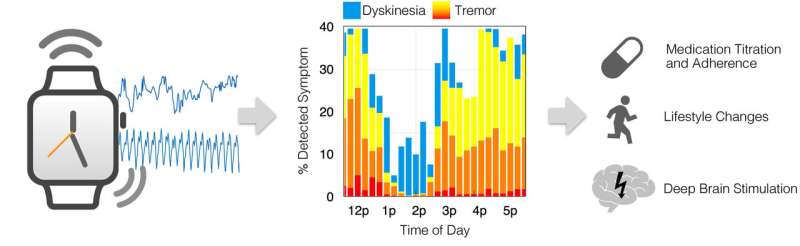
The smartwatch system is based on sensors that can capture changes in movement patterns and tremors, which can help clinicians tailor treatments such as medications and lifestyle changes. Credit: R. Powers et al., Science Translational Medicine (2021)

A team of engineers from Apple Inc. working with researchers from several institutions in the U.S. has found that smartwatches could provide a valuable resource in helping to track the progression of Parkinson's disease in patients. In their paper published in the journal Science Translational Medicine, the group describes a pilot trial of an app created for the Apple smartwatch and an informal experiment with 225 Parkinson's patients using the smartwatch and app for six months.

Parkinson's  is a progressive disease impacting the nervous system. As  in the brain degenerate, people with the disease begin to experience tremors, muscle problems and difficulty moving about. There is no cure for the disease, but there are several medications that slow its progression and reduce symptoms. Medical researchers have noted that one more data regarding the degree of symptoms a patient is experiencing could improve treatments, offering guidance to alter medication doses to meet individual needs. Currently, doctors must rely on tests and accounts from the patient that are conducted when patients come to the office for updates. These visits are often spaced many months apart. In this new effort, Apple and the team working with them looked into the possibility of using smartwatches to monitor movements characteristic of tremors around the clock, using data from the smartwatch gyroscope and accelerometer. The team created an app for Apple's smartwatch called Motor Fluctuations Monitor for Parkinson's Disease.

The team began with a  to determine whether their app worked as desired along with 118 volunteers and several clinicians trained to track Parkinson's symptoms. Emboldened by their results in the pilot, the researchers conducted a larger study with 225 Parkinson's patients who agreed to wear the smartwatch for six months. The researchers found that the smartwatches were able to spot some symptoms missed by their caregivers. They suggest that the smartwatch and app could be used as a tool to help doctors plot out medication dosages that align with symptoms as the disease progresses.

Apple has not announced whether it will proceed with testing of the device or attempt to conduct . If they do, the company will likely need to seek approval of their system by the FDA.

More information: Rob Powers et al. Smartwatch inertial sensors continuously monitor real-world motor fluctuations in Parkinson's disease, Science Translational Medicine (2021). DOI: 10.1126/scitranslmed.abd7865

https://medicalxpress.com/news/2021-02-smartwatch-parkinson-disease.html

PTC aims again for FDA review of Duchenne drug despite latest miss


  • PTC Therapeutics appears to have hit another hurdle in its quest to prove its Duchenne muscular dystrophy drug Translarna, reporting Thursday the treatment didn't significantly increase the amount of a key muscle building protein in a group of 18 boys.
  • The Food and Drug Administration has already rejected Translarna three times, but had agreed to consider new results under "accelerated review" procedures, leading to the data the biotech presented on Thursday. In spite of the miss, the company intends to discuss "potential approval pathways" for Translarna in the U.S. based on other data from the trial as well as earlier research. 
  • If that plan doesn't work, the company would need to wait until a bigger, placebo-controlled trial that can generate data, which is not expected to happen until the second half of 2022. Translarna is only approved for use the European Union.

Patients with Duchenne muscular dystrophy have limited treatment options. Sarepta's Exondys 51 and Vyondys 53 have been shown to spur production of small amounts of the muscle-building protein dystrophin in boys with specific mutations, while PTC's own Emflaza, a steroid, can increase muscle strength.

The promise of Translarna is its potential to boost dystrophin in a larger group of patients, those with so-called nonsense mutations. However, the FDA hasn't been persuaded. The agency refused to review it on two occasions and agreed a third time only after PTC invoked a rarely used rule allowing it to protest a refusal — an effort that resulted in an outright rejection and a request for more clinical data. 

Following that setback, PTC and the FDA agreed that if the company could show, using new analytical methods, that dystrophin production significantly increased in patients treated with Translarna, the results would be sufficient for review under accelerated approval. The company would then have to confirm those findings in a larger, placebo-controlled trial.

PTC, however, hasn't succeeded in the first part of that plan. In the 18 patients who completed the study, dystrophin production increased 9%, but not at a level that researchers considered statistically significant. PTC also didn't specify how much dystrophin subjects produced at the start of the trial, making any benefit difficult to gauge.  

Nonetheless, the company plans to go back to the FDA.

"We'll plan to discuss to discuss the dystrophin results, and the totality of the existing clinical and real-world data with the FDA to determine that there's a potential accelerated path to approval," CEO Stuart Peltz said in a call with Wall Street analysts.

Analysts were less optimistic. "We are cautious on the regulatory pathway forward given the primary miss here, and given the transition of the FDA commissioner, we are unclear how flexible the FDA could be," Cantor Fitzgerald analyst Alethia Young wrote in a note. RBC Capital Markets analyst Brian Abrahams added that the numbers seen weren't close to the bar the company believed the FDA has set.  

Abrahams, instead, deemed the results "more likely to be a component" of a future U.S. approval filing, should the placebo-controlled study produce positive results next year. 

Data from a trial of a Phase 1 Huntington's disease drug, due in the first half of this year, could be a more significant event for PTC, Young wrote, than another possible FDA review of Translarna. 

https://www.biopharmadive.com/news/ptc-duchenne-data-fourth-fda-review/594642/

Immune system key to Alzheimer’s?

 For nearly 30 years, the hunt for a cure for Alzheimer’s disease has focused on a protein called beta-amyloid. Amyloid, the hypothesis goes, builds up inside the brain to bring about this memory-robbing disorder, which afflicts some 47 million people worldwide.

Billions of dollars have poured into developing therapies aimed at reducing amyloid — thus far, to no avail. Trials of anti-amyloid treatments have repeatedly failed to help patients, sparking a reckoning among the field’s leaders.

All along, some researchers have toiled in the relative shadows, developing potential strategies that target other aspects of cells that go awry in Alzheimer’s: molecular pathways that regulate energy production, or clean up cellular debris, or regulate the flow of calcium, an ion critical to nerve cell function. And increasingly, some of these scientists have focused on what they suspect may be another, more central factor in Alzheimer’s and other dementias: dysfunction of the immune system.

With the field’s thinking narrowed around the amyloid hypothesis, immunological ideas have struggled to win favor — and funding. “There was no traction,” says MalĂș Tansey, a University of Florida neuroscientist whose work focuses on immunology of the brain. The committees that review grant applications didn’t want to hear about immunological studies, she says.

But over the past decade, the immune system connection to Alzheimer’s has become clearer. In several massive studies that analyzed the genomes of tens of thousands of people, many DNA variants that were linked to heightened Alzheimer’s risk turned out to be in genes involved in immunity — specifically, a branch of the body’s defenses known as the innate immune system. This branch attacks viruses, bacteria and other invaders quickly and indiscriminately. It works, in part, by triggering inflammation.

A further connection between inflammation and Alzheimer’s turned up in March 2020, in an analysis of electronic health records from 56 million patients, including about 1.6 million with rheumatoid arthritis, psoriasis and other inflammatory diseases. When researchers searched those records for Alzheimer’s diagnoses, they found that patients taking drugs that block a key molecular trigger of inflammation, called tumor necrosis factor (TNF), have about 50 to 70 percent lower odds of having an Alzheimer’s diagnosis than patients who were prescribed those drugs but did not take them.

This newer wave of studies opened people’s eyes to the idea that the immune system might be a major driver of Alzheimer’s pathology, says Sharon Cohen, a behavioral neurologist who serves as medical director at the Toronto Memory Program in Canada. Over time, Cohen says, researchers began thinking that “maybe inflammation is not just an aftereffect, but actually a pivotal, early effect.”

Tansey is trying to harness this growing realization to develop new therapies. A drug she helped to develop nearly 20 years ago relieved Alzheimer’s-like features in mice and recently showed encouraging results in a small study of people with the disease. “I think we were onto something way back when,” she says.

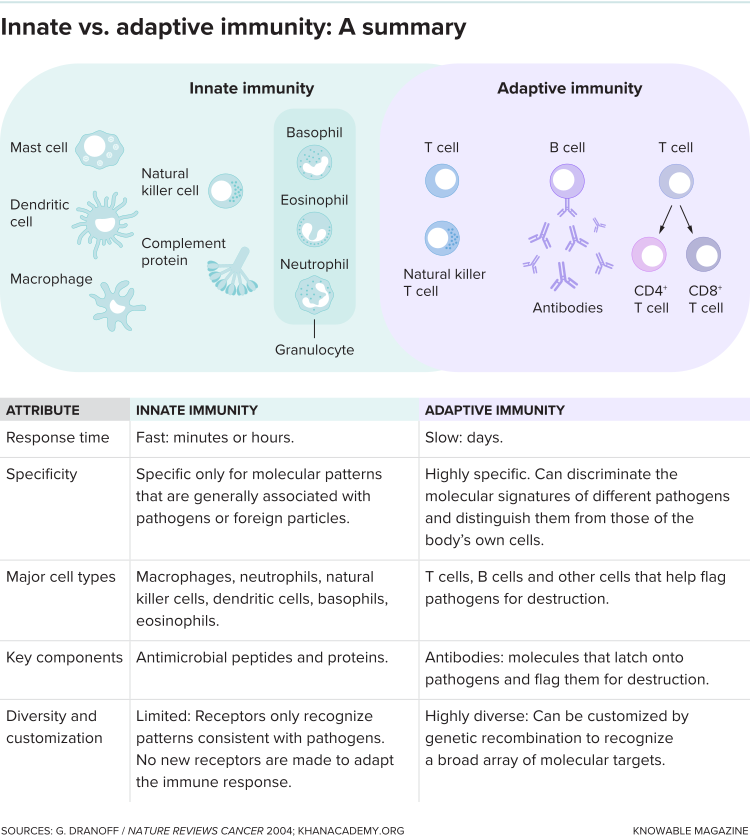
A graphic displays images of cells and molecules involved in innate and adaptive immunity. Underneath the image, a table lays out features of the two types of immunity, such as rapidity of response time, specificity and the major cell types involved.

Two branches of the immune system — innate and adaptive — cooperate to help the body fight disease. Here are some of the players and features of each branch.

Early hunch

Tansey got interested in neurodegenerative disease in the late 1990s, while working as a postdoctoral fellow at Washington University in St. Louis. Her research focused on molecules that promote the survival of certain neurons that degenerate in Parkinson’s disease — in lab dish experiments, anyway. But after six years on a meager postdoc salary, and with her husband about to start neurology training at UCLA, she took a job at a biotech company in the Los Angeles area, called Xencor. She tackled a project that the company had on the back burner: designing new drugs to inhibit that inflammatory molecule TNF.

At the time, doctors already used two such drugs to treat autoimmune disorders such as psoriasis and rheumatoid arthritis. But these drugs have harmful side effects, largely owing to TNF’s complicated biology. TNF comes in two forms: one that’s anchored to the membranes of cells, and a soluble form that floats around in the spaces in between. The soluble TNF causes inflammation and can kill cells infected with viruses or bacteria — it’s a necessary job but, in excess, destroys healthy tissues. The membrane-bound form of TNF, on the other hand, confers protection against infection to begin with. The drugs in use at the time inhibited both forms of TNF, leaving people at risk for infections by viruses, bacteria and fungi that typically only cause problems for people with weakened immune systems.

Using genetic engineering, Tansey and her Xencor colleagues designed a drug that prevents this potentially dangerous side effect by targeting only the harmful, soluble form of TNF. It gloms onto the harmful TNF and takes it out of circulation. In tests, injections of the drug reduced joint swelling in rats with a condition akin to arthritis.

By the time the work was published in Science in 2003, Tansey had returned to academia, starting up her own lab at the University of Texas Southwestern Medical Center in Dallas. And as she scoured the scientific literature on TNF, she began to think again about those experiments she’d done as a postdoc, on neurons destroyed during Parkinson’s disease. She read studies showing that the brains of Parkinson’s patients have high levels of TNF — and she wondered if TNF could be killing the neurons. There was a clear way to find out: Put the TNF-blocking drug she’d helped to develop at Xencor into the brains of rats that were manipulated to develop Parkinson’s-like symptoms and watch to see what happened.

Her hunch proved correct — the drug slowed the loss of neurons in Parkinson’s rats. And that led Tansey to wonder: Could TNF also be involved in the loss of neurons in other forms of neurodegeneration, including Alzheimer’s disease? Mulling over the nuanced roles of innate immune cells, which seem to help or hurt depending on the context, she started rethinking the prevailing amyloid hypothesis. Perhaps, she thought, amyloid ends up clumping in the Alzheimer’s brain because immune cells that would normally gobble it up get sluggish as people age: In other words, the amyloid accumulated as a consequence of the disease, not a cause.

The double-edged nature of immune activity also meant that our immune systems might, if unchecked, exacerbate problems. In that case, blocking aspects of immune function — specifically, inflammation — might prove helpful.

The idea that blocking inflammation could preserve cognition and other aspects of brain function has now found support in dozens of studies, including several by Tansey’s lab. Using an approach that induced Alzheimer’s-like neurological symptoms in mice, neuroscientist Michael Heneka, a researcher at Germany’s University of Bonn, and his colleagues found that mice engineered to lack a key molecule of the innate immune system didn’t form the hallmark amyloid clumps found in Alzheimer’s.

Tansey and colleagues, for their part, showed that relieving inflammation with the drug Tansey helped develop at Xencor, called XPro1595, could reduce amyloid buildup and strengthen nerve cell connections in mice with Alzheimer’s-like memory problems and pathology. Her team has also found that mice on a high-fat, high-sugar diet — which causes insulin resistance and drives up Alzheimer’s risk — have reduced inflammation and improved behavior on tests of sociability and anxiety when treated with XPro1595.

All told, hints from human genetic and epidemiologic data, combined with growing evidence from mouse models, “was shifting or pointing toward the role of the immune system,” says Heneka, who coauthored a 2018 article in the Annual Review of Medicine about innate immunity and neurodegeneration. And the evidence is growing: In 2019, a study of more than 12,000 older adults found that people with chronic inflammation suffered greater mental losses over a period of 20 years — a clue, again, that inflammation could be an early driver of cognitive decline.

The accumulating data convinced Tansey that it was time to test this idea in people — that “instead of targeting amyloid, we need to start targeting the immune system,” she says. “And it needs to be early.” Once too much damage is done, it may be impossible to reverse.

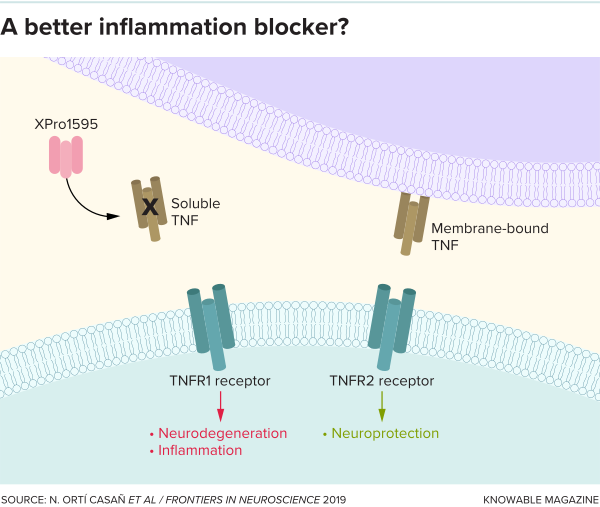
Schematic lays out the action of XPro1595

Researchers have been working on an experimental drug (XPro1595) that they hope will help block brain inflammation more efficiently than other anti-inflammatory medications and thus help to combat Alzheimer’s disease. XPro1595’s key feature is that it selectively blocks only one form of a molecule called tumor necrosis factor (TNF): the harmful, soluble form that is associated with neurodegeneration. On the left, a molecule of XPro1595 is blocking soluble TNF so that it cannot go on to bind to a receptor (TNFR1) and trigger inflammation. The membrane-bound TNF shown on right is left alone, enabling it to activate a second receptor (TNFR2), which has a neuroprotective role.

Targeting innate immunity

Immune-based strategies against Alzheimer’s are already being pursued, but most are quite different than what Tansey was proposing. Companies mostly work with the “adaptive” immune system, which attacks pathogens or molecules very specifically, recognizing them and marking them for destruction. Experimental therapies include antibodies that recognize amyloid and target it for removal.

INmune Bio, in La Jolla, California, is one of several biotech companies taking a different approach: trying to fight degenerative brain disease by targeting the less specific innate immune system. “The immune system is a 50-50 partnership,” says RJ Tesi, the CEO. “If you’re about to have a prize fight, you’re not going to jump in with one hand tied behind your back. Likewise, with Alzheimer’s or cancer, you don’t want to go into the ring with half the immune system being ignored.” To pursue this strategy, INmune Bio bought commercial rights to XPro1595. (Tansey is a paid consultant for INmune Bio but is not involved in any of the company’s trials.)

INmune Bio initially focused on cancer, so when it designed its Alzheimer’s trial, it used a strategy commonly used in cancer drug trials. In Tesi’s view, a key reason that experimental cancer drugs succeed far more often than experimental neurology drugs is the use of molecular disease indicators called biomarkers. These are measures such as genetic variants or blood proteins that help to distinguish patients who, from the outside, may all seem to have the exact same disease, but may actually differ from one another.

By using biomarkers to select participants, cancer researchers can enroll the patients most likely to respond to a given drug — but many neurology trials enroll patients based solely on their diagnosis. And that’s problematic, says Tesi, because scientists are coming to realize that a diagnosis of Alzheimer’s, for instance, might actually encompass various subtypes of disease — each with its own underlying biology and each, perhaps, requiring a different treatment.

In an ongoing trial of XPro1595, INmune Bio aims to enroll 18 people with mild to moderate Alzheimer’s disease, all of whom have elevated levels of biomarkers for excessive inflammation, including one called C-reactive protein. In July, the company reported early data from six participants who were treated with the TNF inhibitor once a week for 12 weeks and assessed for brain inflammation using a specialized magnetic resonance imaging (MRI) technique.

Over the 12-week period, brain inflammation fell 2.3 percent in three participants who received the high-dose TNF inhibitor — compared with a 5.1 percent increase in 25 Alzheimer’s patients whose data were collected previously as part of a major long-term study of Alzheimer’s disease. Three participants who got a low dose of XPro1595 had a smaller — 1.7 percent — increase in brain inflammation. In this small trial, the researchers did not track changes in cognition. But their MRI analysis showed that inflammation was reduced by about 40 percent in a particular bundle of nerve fibers called the arcuate fasciculus that is important for language processing and short-term memory.

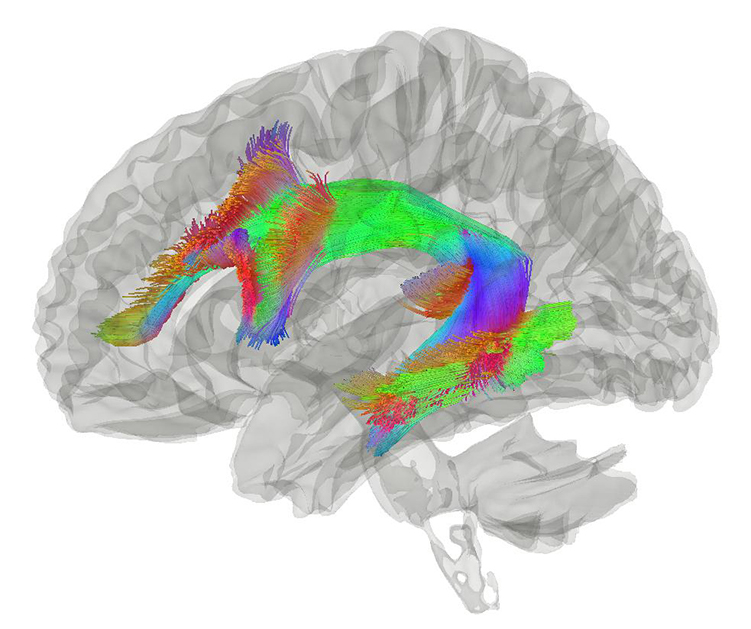
 An image of a brain. Certain parts of it are colored green, red and blue.

In a small trial of Alzheimer’s patients, an experimental drug slowed inflammation in a brain region called the arcuate fasciculus (colored), which is important for language processing and short-term memory.

CREDIT: F.C. YEH ET AL / NEUROIMAGE 2018

“It’s early days,” Cohen says — interim results in just six people. “However, in a small sample size like that, you might not expect to see anything.” Past studies of anti-inflammatory drugs did not show a benefit in Alzheimer’s patients, but scientists are now reexamining these trial failures, Cohen says. “Maybe the idea of the immune system is important, but our therapies were too blunt,” she says.

It’s not just INmune Bio that has researchers excited about the prospect of tinkering with innate immunity to tackle brain disease. Alector, a South San Francisco biotech company, is developing potential therapeutics to activate the innate immune system to fight Alzheimer’s. Some of their experimental drugs are intended to boost the activity of innate immune cells in the brain called microglia. Tiaki Therapeutics in Cambridge, Massachusetts, meanwhile, is using computational methods to identify potential treatments for people with neuroinflammatory diseases who have specific gene signatures. And another company, Shanghai-based Green Valley, is investigating a drug that includes a mix of seaweed sugars that, the company claims, alters gut bacteria to tamp down brain inflammation.

It’s encouraging to see so many different approaches to harnessing the innate immune system to fight Alzheimer’s, Heneka says. He predicts, however, that a variety of treatments will be needed to tackle such a multifaceted, complicated disease.

But Tansey suspects that chronic inflammation is a crucial factor that takes a toll on the brain over the course of many years. Although lowering inflammation will not solve everything, she says, “I think it will buy you a lot. Because it’s the dark passenger of the journey.”


https://knowablemagazine.org/article/health-disease/2021/could-immune-system-be-key-alzheimers-disease

China approves Sinovac Biotech COVID-19 vaccine for general public

 Sinovac Biotech said on Saturday that its unit’s COVID-19 vaccine has been approved for use by the general public by China’s medical products regulator.

It marks the second vaccine approved for public use in China, after one developed by a Beijing institute affiliated with state-owned China National Pharmaceutical Group (Sinopharm) was approved in December.

Both vaccines, as well as a third candidate from Sinopharm, have already been used in China’s vaccination program which has administered over 31 million doses, mainly targeting groups at higher infection risk. A fourth candidate from CanSino Biologics is being used among military personnel.

Indonesia, Turkey, Brazil, Chile, Colombia, Uruguay, and Laos have granted emergency authorisation for the CoronaVac vaccine developed by Sinovac Life Sciences, Sinovac said in a news release.

Approval of the two-dose regimen by China’s National Medical Products Administration is based on results from two months of late-stage clinical trials overseas, from which the final analysis data has not yet been obtained, Sinovac said.

Its Beijing-based unit Sinovac Life Sciences is expected to be able to produce over 1 billion doses per year in the form of bulk ingredient by February, it said.

Sinovac is also expanding its capacity to fill vaccine into vials and syringes, which currently lags its vaccine manufacturing capacity. It has also outsourced filling and finishing procedures to overseas partners.

China plans to provide 10 million vaccine doses to COVAX, a World Health Organization-backed global vaccine-sharing initiative that Sinovac, Sinopharm and CanSino have applied to join, the foreign ministry has said.

A Phase I and II trial in China showed the vaccine could safely trigger immune response for older participants and it is also being tested in participants aged three to 17.

Sinovac cautioned, however, that data for the protection rate among people aged 60 and above was “limited”.

“When the relevant institutions ...use this vaccine, the necessity of inoculating this product should be evaluated in consideration of the health status and exposure risk of this age group,” it added.

VARIED EFFICACY RATES

Sinovac’s vaccine is being tested in Phase III clinical trials in countries including Brazil, Turkey and Indonesia, where varied efficacy readings had been released separately, without sufficient details made available to public.

The vaccine was found 50.65% effective against COVID-19 disease in the Brazil trial which had recruited 12,396 medical workers older than 18 as of December 16 and recorded 253 cases, Sinovac said in a statement on Friday.

The success rate from the Turkey trial was 91.25%, local researchers said, based on a preliminary analysis of 29 cases. There was a 65.3% efficacy rate in the Indonesia trial.

Brazil’s more rampant epidemic, and the trial’s focus on medical workers, are among factors which Sinovac believe may have lowered the efficacy rate seen in data from there, a person familiar with the matter told Reuters last month.

The Brazil trial also found the vaccine was 83.7% effective against the disease that requires medical treatment, and 100% effective against hospitalization, severe cases and death in the same trial, Sinovac said on Friday.

The protection rate was nearly 70% based on observation of a smaller sub-group in the Brazil trial, in which participants received the two doses at a three-week interval rather than two weeks apart for most participants, Sinovac said last month.

https://www.reuters.com/article/us-health-coronavirus-vaccine-sinovac/china-approves-sinovac-biotech-covid-19-vaccine-for-general-public-use-idUSKBN2A60AY

Comparing Covid-19 vaccines developed by Pfizer, Moderna, Johnson & Johnson

 In an ideal world, a pandemic vaccine could be delivered in a single shot, so supplies could be stretched to cover a lot of people. It would trigger no side effect more significant than a sore arm. And it would be easy to ship and store.

Soon, it seems, this ideal of a Covid-19 vaccine will be within reach. 

Last Friday, Johnson & Johnson announced that a one-dose vaccine being developed by its vaccines division, Janssen Pharmaceuticals, had been shown to be 66% protective against moderate to severe Covid infection in a multicountry study. But, importantly, it was 85% effective in protecting against severe disease. And there were no hospitalizations or deaths among people in the vaccine arm of a large clinical trial. 

Overall efficacy varied a bit geographically, especially in South Africa, where a new variant appears to evade to some degree the immunity induced both by infection and by Covid vaccines, which were designed to target earlier strains of the SARS-CoV-2 virus.

Johnson & Johnson said it will apply to the Food and Drug Administration for an emergency use authorization this week. That means sometime later this month or early in March its vaccine will likely start to be used in the United States, though the company is not expected to be able to supply substantial numbers of doses until April.

Earlier STAT published a head-to-head comparison of the vaccines developed by Pfizer and its partner, BioNTech, and by Moderna, which have been in use in the country since December. We’re updating it here with information about the J&J vaccine, with the caveat that some data from this likely new entry to the U.S. vaccination program haven’t yet been made public.

Please note that in the initial rollout of vaccine, individuals are unlikely to be offered a choice of which vaccine they want. Supplies are too scarce. The vaccine available at the place where you are being vaccinated is the one you’ll get.

Vaccine types

The Pfizer and Moderna vaccines are made using messenger RNA, or mRNA, a technology that delivers a bit of genetic code to cells — in effect, a recipe to make the surface protein (known as spike) on the SARS-2 virus. The proteins made with the mRNA instructions activate the immune system, teaching it to see the spike protein as foreign and develop antibodies and other immunity weapons with which to fight it.

The J&J vaccine uses a different approach to instruct human cells to make the SARS-2 spike protein, which then triggers an immune response. It is what’s known as a viral vectored vaccine. A harmless adenovirus — from a large family of viruses,  some of which cause common colds — has been engineered to carry the genetic code for the SARS-2 spike protein. Once the adenovirus enters cells, they use that code to make spike proteins.  J&J employs this same approach to make an Ebola vaccine that has been authorized for use by the European Medicines Agency.

Target population

The Pfizer vaccine has been authorized for use for people aged 16 and older. Moderna’s has been cleared for use in people 18 and older, though the company is now testing its vaccine in 12- to 17-year-olds. J&J’s vaccine has been tested in people 18 and older, so for the time being, this vaccine won’t be available for use in children and teens under 18 either.

Vaccine efficacy

The Pfizer and Moderna vaccines have shown astonishing — and essentially equivalent — degrees of efficacy, at least in the early stages after vaccination. 

The Pfizer vaccine showed efficacy of 95% at preventing symptomatic Covid infection after two doses. The vaccine appeared to be more or less equally protective across age groups and racial and ethnic groups. 

The Moderna vaccine was 94.1% effective at preventing symptomatic Covid-19, after the second dose. The vaccine’s efficacy appeared to be slightly lower in people 65 and older, but during a presentation to the Food and Drug Administration’s advisory committee in December, the company explained that the numbers could have been influenced by the fact there were few cases in that age group in the trial. The vaccine appeared to be equally effective across different ethnic and racial groups.

But comparing efficacy in those vaccines to the efficacy of Johnson & Johnson’s is challenging because of differences in the designs of the Phase 3 clinical tests — essentially the trials were testing for different outcomes. Pfizer’s and Moderna’s trials were testing for slightly different criteria, with Pfizer counting cases from seven days after receipt of the second dose of vaccine and Moderna waiting till day 14 to start counting cases. Both tested for any symptomatic Covid infection.

J&J, by contrast, sought to determine whether one dose of its vaccine protected against moderate to severe Covid illness — defined as a combination of a positive test and at least one symptom such as shortness of breath, beginning from 14 or 28 days after the single shot. (The company collected data for both.) 

Because of the difference in the trials, making direct comparisons is a bit like comparing apples and oranges. Additionally, Pfizer and Moderna’s vaccines were tested before the emergence of troubling new variants in Britain, South Africa, and Brazil. It’s not entirely clear how well they will work against these mutated viruses.

The J&J vaccine was still being tested when the variants were making the rounds. Much of the data generated in the South African arm of the J&J trial involved people who were infected with the variant first seen in South Africa, called B.1.351.

The J&J one-dose vaccine was shown to be 66% protective against moderate to severe Covid infections overall from 28 days after injection, though there was variability based on geographic locations. The vaccine was 72% protective in the United States, 66% protective in South America, and 57% protective in South Africa.

But the vaccine was shown to be 85% protective against severe disease, with no differences across countries (eight) or regions (three) in the study, nor across age groups among trial participants. And there were no hospitalizations or deaths in the vaccine arm of the trial after the 28-day period in which immunity developed.

It’s not yet known if any of these vaccines prevent asymptomatic infection with the SARS-CoV-2 virus. Nor is it known if vaccinated people can transmit the virus if they do become infected but don’t show symptoms.

Number of doses/amounts of vaccine per dose

Both the Moderna and the Pfizer vaccines require two shots: a priming dose, followed by a booster shot. The interval between Moderna doses is 28 days; for the Pfizer vaccine, it’s 21 days.

Each dose of Pfizer’s contains 30 micrograms of vaccine. Moderna went with a much larger dose of vaccine, 100 micrograms. It means the company is using a little more than three times as much vaccine per person as Pfizer is. And yet, they aren’t getting better results. The government’s vaccine development program, formerly called Operation Warp Speed, has asked Moderna to test if it could lower the dosage of its vaccine without eroding the vaccine’s protection.

The J&J vaccine is, as mentioned, a single-dose vaccine. The company is also testing a two-dose regimen, with the two shots given eight weeks apart. The results from that 30,000-person trial aren’t expected until sometime in May.

Side-effect profile

In the vernacular of vaccinology, vaccines that trigger a range of transient side effects in a lot of recipients are known as reactogenic.

All of these vaccines — in fact, most if not all the Covid-19 vaccines that have reported data so far — fall into the reactogenic category. The Advisory Committee on Immunization Practices, an expert panel that helps the Centers for Disease Control and Prevention set vaccination policies, has advised hospitals they may want to stagger vaccinations among employees  — for instance, don’t vaccinate all emergency room staff at the same time — in case some feel too unwell to work the day after being vaccinated.

The most common side effects are injection site pain, fatigue, headache, muscle pain, and joint pain. Some people in the clinical trials have reported fever. Side effects are more common after the second dose; younger adults, who have more robust immune systems, reported more side effects than older adults.

To be clear: These side effects are a sign of an immune system kicking into gear. They do not signal that the vaccine is unsafe. To date there are no serious, long-term side effects associated with receipt of these vaccines, which will be closely monitored as their use expands.

There have been reports of severe allergic reactions to the mRNA vaccines. Both the Pfizer and Moderna vaccines appear, on rare occasions, to trigger anaphylaxis, a severe and potentially life-threatening reaction. People who develop anaphylaxis must be treated with epinephrine — the drug in EpiPens — and may need to be hospitalized to ensure their airways remain open. The CDC says people should be monitored for 15 minutes after getting a Covid-19 shot, and 30 minutes if they have a history of severe allergies. 

It will take time to come up with a firm estimate of how frequently this side effect occurs. The most recent data from the CDC suggest that anaphylaxis occurs at a rate of about 2.1 cases per one million doses given of the Moderna vaccine, and 6.2 cases per million doses of the Pfizer. Many of the people who have developed anaphylaxis have a history of severe allergies and some have had previous episodes of anaphylaxis. 

To date the J&J vaccine has not been associated with anaphylactic reactions.

Safety for those who are pregnant or lactating

None of the vaccines has been tested in these two groups.

Moderna has completed animal studies the FDA demanded of manufacturers; these studies look for evidence that the vaccine might harm the pregnancy or the developing fetus. The company said it saw no such signals.

Pfizer has only interim data from its animal studies, but said it saw no concerning signs either.

The CDC recommends until those studies are conducted, the choice of whether to get vaccinated should rest with the person who is pregnant or lactating. This is a more permissive stance than has been taken in some countries, which have said people who are pregnant should not be vaccinated with these vaccines.

The J&J vaccine hasn’t yet been through the regulatory process, so it’s too early to say what the FDA and the CDC will recommend. The company plans to include pregnant women in clinical trials in the near future, a spokesman told STAT.

Storage requirements

The mRNA vaccines require an elaborate cold chain, the term used to describe the conditions under which vaccines must be stored during distribution and when they are in the doctors’ offices, pharmacies, or public health clinics where they’ll be administered.

The J&J does not, which means this vaccine can be given easily anywhere, once supplies are adequate. Doctors’ offices, pharmacies, mass vaccination sites, public health clinics — this vaccine will be much easier to use. It can be stored for at least three months at the temperature of a regular refrigerator.

Of the mRNA vaccines, Moderna’s is far easier to use than Pfizer’s. For starters, Moderna’s must be shipped at -4 Fahrenheit; Pfizer’s must be shipped and stored at -94 Fahrenheit. The former is the temperature of a regular refrigerator freezer; the latter requires special ultracold freezers. Doctors’ offices do not have ultracold freezers; neighborhood pharmacies don’t either.

After thawing, a vial of the Pfizer vaccine must be used within five days; Moderna’s is stable at fridge temperature for 30 days and at room temperature for 12 hours. STAT asked J&J how long its vaccine will last once a vial has begun to be used, but so far the company has not provided that information.

Minimum purchase order

The ultracold storage requirement is not the only challenging aspect of the Pfizer vaccine. The minimum amount of vaccine a location can order is 975 doses. A large teaching hospital might need several of those. But there are plenty of places across the country that don’t need 975 doses to vaccinate the people currently eligible for vaccination — health workers and nursing home residents. This is the vaccine that needs to be kept at -94 F. The minimum order size will limit the locations in which this vaccine can be used.

The Moderna vaccine’s minimum order is 100 doses, a much more manageable number.

STAT asked J&J what its minimum order will be; it declined to say.

The Pfizer vaccine is shipped in six-dose vials. Moderna’s vaccine comes in 10-dose vials. J&J’s vaccine will be packaged in five-dose vials.

Durability of protection

Figuring out how long the protection provided by any of these vaccines will last will take time. It’s going to involve periodic blood draws from some volunteers to see what their antibody levels look like, though a decline in antibody levels doesn’t necessarily equate to loss of protection.

But a large part of this work will involve watching for reports that people who were immunized are starting to contract Covid in larger numbers, a development that would probably lead to recommendations to give people booster shots at some yet-to-be-determined interval.

https://www.statnews.com/2021/02/02/comparing-the-covid-19-vaccines-developed-by-pfizer-moderna-and-johnson-johnson/
Friday, February 5, 2021

In Pandemic, China Sent Millions Of Counterfeit Masks, Test Kits To US: Customs

 By Frank Fang via The Epoch Times,

China accounted for about 51 percent of counterfeit or substandard COVID-19-related products seized by U.S. customs officials from October 2019 to Sept. 30 last year, according to a newly-released report from the U.S. Customs and Border Protection (CBP).

Among the products seized by U.S. customs officials were over 12.7 million counterfeit masks, 177,356 COVID-19 test kits prohibited by the U.S. Food and Drug Administration (FDA), and 38,098 FDA-prohibited chloroquine tablets.

The effectiveness of the anti-malarial drug hydroxychloroquine and its closely-related chloroquine in treating symptoms of COVID-19, which is caused by the CCP virus (commonly known as the novel coronavirus), is of much debate.

The FDA initially issued an emergency use authorization for the two drugs, but later revoked the authorization in June last year, saying that they were “unlikely to be effective in treating COVID-19.”

However, there have been studies showing their effectiveness: one study showed hydroxychloroquine lowered the death rate of COVID-19 patients, while another study demonstrated a drug cocktail containing hydroxychloroquine could lower the hospitalization and death rate of patients infected by the virus.

The FDA currently has a database listing fraudulent COVID-19 products, including test kits. The list contains company names and the names of their products.

In December last year, customs officials in Cincinnati seized 10,080 counterfeit surgical masks, which were labeled “3M Mask Model 1860,” in a shipment originating from China, according to a press release. The boxes containing the masks were fraudulently labeled as “Made in the USA.”

If genuine, these fake 3M masks would have an estimated manufacturer’s suggested retail price of $65,520.

Counterfeit masks were also arriving in the United States from Hong Kong. Customs officials in Cincinnati seized 6,080 fake 3M masks in freight from Hong Kong on Dec. 6, 2020.

Another seizure took place in Chicago in September last year, when local customs officials stopped a shipment containing 500,000 counterfeit N95 masks. These masks were determined to have an estimated retail price of $474,905, if genuine. The shipment originated from the southern Chinese city of Shenzhen and was destined for a company in Manalapan, New Jersey.

Forced Labor Products

The CBP report also mentioned that customs officials issued a record number of 13 new withhold release orders, banning the imports of products made with forced labor, in the 12-month period that ended on Sept. 30, 2020.

Most of these targeted products—including disposable gloves, seafood, and cotton—originated from China. Together, these products were valued at nearly $50 million, according to the report.

On Jan. 13, the CBP issued a new withhold release order banning all imports of cotton, apparel, textiles, and tomato products from far-western China’s Xinjiang region.

Beijing has detained more than one million ethnic Muslims, including Uyghurs, Kazakh, and Kyrgyz people, in internment camps in Xinjiang. Detainees are subject to forced labor, torture, and political indoctrination sessions. Beijing claims these camps are “vocational training centers.”

In August last year, a U.S. company was fined $575,000 for importing stevia powder and derivatives there were made by prison labor in China. Several months later, in October, CBP asked all U.S. ports to seize stevia products made by an Inner Mongolia-based company, after evidence showed the company used convict, forced, or indentured labor to manufacture the products.

“Currently, CBP is enforcing 44 active withhold release orders and seven active findings,” according to the report.

General Products

Finally, the report concluded that CBP officials seized a total of 26,503 shipments with products found to have violated U.S. intellectual property rights, with China being the “top source” of such seizures. These products would have a total estimated manufacturer’s suggested retail price of over $1.3 billion.

In December last year, customs officials in Los Angeles seized three cargo shipments from China containing counterfeit products that could be worth over $32 million. Among the seized fake products were one million knockoff Viagra pills, footwear, belts, purses, and headphones.

Counterfeit toys from China that could be worth about $1.3 million were also seized at the Port of New York/Newark, the CBP announced on Dec. 21 last year.

https://www.zerohedge.com/geopolitical/during-pandemic-china-sent-millions-counterfeit-masks-test-kits-us-customs-data

Biden to send troops to California to help staff Covid vaccine sites

 Secretary of Defense Lloyd Austin has approved the deployment of more than 1,000 active-duty troops to help deliver Covid-19 vaccines across the U.S., a member of President Joe Biden’s coronavirus response team announced Friday.

Some of the troops will arrive in California within the next 10 days and begin operations by Feb. 15, with additional states to follow, Andy Slavitt, a senior advisor to Biden’s Covid-19 response team, told reporters.

“The military’s critical role in supporting sites will help vaccinate thousands of people per day and ensure that every American who wants a vaccine will receive them,” he said during the White House press briefing.

Biden is trying to pick up the pace of vaccinations in the U.S. after a slower-than-expected rollout under former President Donald Trump’s administration. The U.S. has distributed about 57.4 million vaccine doses, but only about 35.2 million have been administered as of Thursday at 6 a.m. ET, according to data compiled by the Centers for Disease Control and Prevention.

The Pentagon is working with the Federal Emergency Management Agency to expedite delivery of the shots and is also weighing a request to send up to 10,000 troops to support vaccination efforts across the country. FEMA and the Defense Department will jointly determine when active-duty members are no longer required.

The 1,110 active-duty service members will compose five teams and involve units from the Army, Navy, Air Force and Marine Corps, according to the Department of Defense. The troops will include nurses and medical staff who will help administer Pfizer’s and Moderna’s two-dose vaccines, according to the agency.

Slavitt also said the U.S. is using the Defense Production Act to help Pfizer meet its manufacturing targets for its vaccine. The company said Tuesday that it planned to deliver 200 million doses of its coronavirus vaccine to the U.S. by May, earlier than its initial forecast of July.

“I think the use of the Defense Production Act is one of the things that is allowing Pfizer to meet the targets,” he said. “They announced an acceleration of their targets of when they’ll be able to deliver vaccines. And I think our partnership with them is one of those reasons. I’m not going to say it’s the entire reason, but it’s certainly a critical factor.”

Federal officials are also pushing states to administer shots more quickly. On Monday, Slavitt said some health-care providers were regularly holding back vaccines for second shots, causing vaccine appointments to be canceled and preventing some Americans from receiving their first doses. 

“We want to be clear that we understand why health-care providers have done that, but that it does not need to happen and should not happen,” he told reporters Monday, adding that U.S. officials know Covid vaccine shipments to states were often unpredictable during the early rollout in late December.

“We completely understand that this has been a direct result of the lack of predictability many states and providers have had regarding how many doses that they would receive,” he said. “That’s one reason why last week we announced that the federal government will be providing a continual three-week window in the vaccines that will be shipped.”

U.S. officials are also hoping vaccine supply will increase after Johnson & Johnson’s Covid-19 vaccine is authorized for emergency use by the Food and Drug Administration, which could happen as early as this month. The FDA has scheduled a meeting of its Vaccines and Related Biological Products Advisory Committee on Feb. 26 to discuss the vaccine, and the U.S. could authorize the vaccine the next day.

Slavitt said the U.S. will use every option available to accelerate the manufacture of J&J’s vaccine.

“As is the case with other vaccines, we have not found that the level of manufacturing allows us to have as much vaccine as we think we need coming out of the gate,” he said.

https://www.cnbc.com/2021/02/05/covid-vaccine-biden-administration-to-send-troops-to-california-to-help-staff-covid-vaccine-sites.html