Search This Blog

Tuesday, April 6, 2021

CDC: Near 80% of teachers, childcare workers have at least 1 COVID vaccine dose

 Almost 80 percent of teachers, school staff and childcare workers had received at least one dose of the COVID-19 vaccine by the end of March, according to Centers for Disease Control and Prevention (CDC) data released Tuesday.

The CDC reported that more than 2 million teachers, school staff and childcare workers received vaccinations through the Federal Retail Pharmacy Program in March. Another 5 million to 6 million were inoculated as part of state programs. 

“Our push to ensure that teachers, school staff, and childcare workers were vaccinated during March has paid off and paved the way for safer in-person learning,” CDC Director Rochelle Walensky said in a release. 

“CDC will build on the success of this program and work with our partners to continue expanding our vaccination efforts, as we work to ensure confidence in COVID-19 vaccines,” she added. 

The CDC said its survey of nearly 13,000 responses from education staff and almost 40,000 from childcare workers “closely matched” national race, ethnicity and demographic data on the industry’s employees. 

Early in March, President Biden requested all states prioritize teachers and school staff in the vaccination process, saying that the country needs these employees to receive at least one shot before the end of last month. 

https://thehill.com/policy/healthcare/546790-cdc-almost-80-percent-teachers-childcare-workers-received-at-least-one

Big outdoor events OK under simplified Ohio pandemic orders: governor

 Ohio's newly simplified pandemic restrictions will continue requirements for wearing masks and social distancing in public but will ease rules for large outdoor gatherings such as graduations and festivals, state officials said Monday.

Though the state will no longer limit the size of such events, Republican Gov. Mike DeWine said participants would be asked to stay separated in groups of 10 or fewer - rather than merging into one huge crowd - to help reduce possible spread of the coronavirus.

CLICK HERE TO READ THE FULL ORDER

Asked how that would be enforced at a typically crowded festival, DeWine said: "People just need to use common sense.”

Indoor facilities are still limited to 25% of fixed seating capacity.

The Ohio restrictions issued throughout the pandemic are being updated and consolidated this week to make them simpler for residents and event organizers to understand, state officials said.

They emphasize the importance of wearing masks, social distancing, staying in smaller groups and sanitizing, health director Stephanie McCloud said.

DeWine also said the state doesn't intend to require a coronavirus vaccination for K-12 or college students next school year. But he urged those age 16 and up who are eligible for the vaccine to get it.

https://www.wlwt.com/article/expert-kids-going-back-to-school-could-face-new-anxiety/36036856

3 in 5 UK adults have had Covid shot: BBC


  1. Three in five UK adults have received a first dose of a coronavirus jab, the health secretary says.

    Some 31,622,367 have received a first vaccine, with 5,496,716 people now fully vaccinated thanks to a second dose - 10.4% of the adult population.

    Matt Hancock says it is "fantastic" news and has tweeted his thanks to "everyone involved in the vaccine rollout", saying "we're making great strides in our national effort".

California aims to fully reopen its economy June 15

 California is aiming to fully reopen its economy June 15, more than a year after the COVID-19 pandemic upended the lives and businesses of millions across the state.

Officials emphasize the move hinges on two factors: a sufficient vaccine supply and stable and low hospitalization numbers.

There also will not be a full return to pre-pandemic life. Notably, California’s mask mandate will remain in place.

But officials expressed confidence that the state, through continued improvement in its coronavirus metrics and the steady rollout of vaccines, is now positioned to begin actively planning for what comes after COVID-19.

“With the expectation of an abundance of doses coming in from the federal government through the end of this month and into May, we can confidently say by June 15 that we can start to open up as business as usual — subject to ongoing mask wearing and ongoing vigilance,” Gov. Gavin Newsom said during a news conference in San Francisco on Tuesday.

“So this is a big day.”

June 15 is expected to be the end of California’s current reopening roadmap, which sorts counties into one of four color-coded tiers based on three metrics: coronavirus case rates, adjusted based on the number of tests performed; the rate of positive test results; and a health-equity metric intended to ensure that the positive test rate in poorer communities is not significantly higher than the county’s overall figure.

“The entire state will move into this phase as a whole. This will not be county-by-county,” Dr. Mark Ghaly, California’s health and human services secretary, said in a briefing call with reporters.

In a statement, officials said those sectors included in the state’s reopening blueprint will be allowed to “return to usual operations in compliance with Cal/OSHA requirements and with common-sense public health policies in place, such as required masking, testing and with vaccinations encouraged. Large-scale indoor events, such as conventions, will be allowed to occur with testing or vaccination verification requirements.”

Ghaly emphasized that, “if we see any concerning rise in our hospitalizations, we will take the necessary precautions. But right now, we are hopeful in what we’re seeing as we continue to build on the 20 million vaccines already administered.”

Though state officials said they will keep a watchful eye on vaccine supply and hospitalizations — including how many fully vaccinated people end up requiring that level of care — they did not establish any hard benchmarks to determine whether California is ready to progress.

“We don’t have a specific number, per se, on the hospitalizations, but are looking at impacts on hospital capacity and the delivery systems’ ability to continue to deliver routine care,” Ghaly said.

On Monday, 1,989 coronavirus-positive patients were hospitalized in California — with 493 of them in intensive care. The state hasn’t seen numbers that low since last spring.

Part of the reason June 15 was chosen as the target date, Ghaly said, was that it falls two months after the state will extend vaccine eligibility to anyone 16 and older.

“We wanted to be able to provide at least a couple of weeks, two to three weeks, for individuals interested in getting vaccinated who suddenly become eligible on April 15 to get in line to get their vaccines started,” he said.

The timeline for full vaccination depends on what type of shot is administered. Ghaly noted that the longest time frame is associated with the Moderna vaccine — which has a four-week gap between first and second doses.

Health officials consider someone to be fully vaccinated two weeks after they receive their final dose.

To date, providers throughout California have doled out 20.3 million total COVID-19 vaccine doses, and 34.2% of residents have received at least one shot, according to data from the U.S. Centers for Disease Control and Prevention.

Roughly 18.1% of Californians are fully vaccinated.

Nationwide, 32.4% of Americans have received at least one dose, and 18.8% are fully vaccinated, CDC data show.

Along with progress on the vaccine front, officials noted that California has one of the lowest coronavirus case rates in the nation — a welcome development as other areas of the country contend with new spikes of the illness.

According to data from the CDC, California’s latest seven-day new case rate of 45.5 per 100,000 people per day is the fourth-lowest among all states and significantly below the nationwide rate of 133.8.

The highest recent Climbing case rates have been seen in Michigan with 471; New Jersey, 335; New York City, 307.7; the rest of New York state, 248.7; and Pennsylvania, 235.4.

Among larger states, the comparable rates over the same time period were 171.7 in Florida and 62.3 in Texas.

However, Newsom acknowledged that California could have to reapply restrictions if variants of the virus cause cases to significantly increase.

“This is really a race, these vaccines against the variants, against the mutations,” he said.

But with continued masking and safety precautions, the governor said he doesn’t anticipate California will reverse course.

“We’re always going to be led by data, led by reality and the lived experience on the ground,” Newsom said. “But our expectation is, if we’re vigilant, if we don’t spike the ball, if we don’t announce mission accomplished, and continue to do the good work that we’ve done, that by June 15, we’ll be beyond that blueprint and we’ll be back to a sense of normalcy.”

A successful statewide reopening in June poses a major political upside for the governor, who faces a likely recall election in the fall.

Newsom’s chances of surviving a recall could be higher if Californians have resumed some form of pre-COVID-19 life when they cast their ballots. Mass vaccinations and the return of in-person education are critical to that sense of normalcy.

Newsom was the first governor in the nation to issue a stay-at-home order in the early days of the pandemic last year, an action widely cast as the right call to protect California’s fragile healthcare system.

The governor hasn’t received the same praise for his handling of reopenings.

Health experts have said Newsom lifted restrictions too quickly and didn’t reinstate them fast enough when case numbers grew, adding to COVID-19 surges in the summer and winter. Health and Human Services Secretary Ghaly, one of the state’s top health officials, has said he would have slowed the pace of change last summer if he could do it all again.

Rescinding restrictions and launching a sweeping reopening create new risks for Newsom. If the virus surges again or unexpected problems arise, the whiplash of the governor’s constantly changing rules could be fresher in the minds of voters, who may blame him at the polls.

Political experts say the more Californians think of the pandemic in the past tense, the more likely Newsom is to keep his seat.

The announcement of the targeted reopening date came the same day that California hit its goal of administering 4 million COVID-19 vaccine doses in its most vulnerable communities — a milestone not only in the ongoing struggle to more equitably give out the precious shots, but in the push to further reopen the state’s economy, even ahead of June 15.

Upon hitting the target, the state redrafted its reopening roadmap to implement new criteria allowing counties to more quickly relax some of the restrictions on businesses and public spaces.

The tiers outlined in California’s current reopening strategy go from purple, in which coronavirus transmission is considered widespread, and indoor business operations are severely limited; to red, with fewer restrictions; to orange, with even fewer; and finally, yellow, in which most businesses can open indoors with modifications.

Before Tuesday, counties had to record fewer than 4.0 new cases per day per 100,000 people to move into the orange tier. With the 4-million dose target now achieved, the requirement has been loosened to under 6.0.

Under the new criteria, 15 counties — Contra Costa, El Dorado, Humboldt, Imperial, Mendocino, Monterey, Napa, Riverside, San Benito, San Bernardino, San Diego, Siskiyou, Sonoma, Tulare and Ventura — officially moved from the red to orange tier this week.

San Joaquin County escaped the purple tier, leaving only two counties, Inyo and Merced, still subject to the state’s strictest COVID-19 rules.

Even though the state also relaxed the criteria for reaching the most lenient yellow tier — to an adjusted daily new case rate of below 2.0 per 100,000 people, up from the previous requirement of less than 1.0 — only two counties, Alpine and Sierra, have made it that far.

All told, 32 of California’s 58 counties, representing roughly 80% of the state’s population, are now in the orange tier; and 22, home to nearly 19% of Californians, are in the red tier.

Moving into the orange tier has significant economic implications — though counties can always opt to maintain stricter rules in place, if they choose.

Counties can allow bars, which no longer are required to serve food, to reopen outdoors with some modifications.

Amusement parks can reopen at up to 25% capacity, and fan attendance is allowed at 33% capacity for outdoor sports and live performances.

Bowling alleys, card rooms and satellite wagering sites also can reopen, each at 25% capacity and with certain modifications.

Capacity restrictions can also be lifted in stores, although social distancing and other safety modifications still apply. Accommodations can also be increased at houses of worship, museums, zoos and aquariums; restaurants and movie theaters; and indoor gyms and yoga studios.

Offices in nonessential industries can reopen, though the state says workers should still be encouraged to work remotely.

The state-set goal of administering first 2 million, then 4 million doses in targeted communities — namely, those in the lowest quartile of a socioeconomic measurement tool called the California Healthy Places Index — is one aspect of a wider effort aimed at ensuring equitable access to COVID-19 vaccines.

California has for the last month earmarked 40% of its COVID-19 vaccine supply for residents in those disadvantaged areas, an allocation state officials said would not only help address inequities in the inoculation rollout, but make sure the shots are available to those most at risk from the pandemic.

https://www.latimes.com/california/story/2021-04-06/california-aims-to-fully-reopen-the-economy-june-15

246 infected, 3 dead from COVID-19 in Michigan despite being vaccinated

 At least 246 people in Michigan who were “fully vaccinated” against COVID-19 were later diagnosed with the virus, including 11 who were hospitalized and three who have died, according to the Michigan Department of Health and Human Services.  

More than 1.8 million Michigan residents have completed their COVID-19 vaccinations, according to the state. 

The case numbers, while minuscule, underscore two warnings made consistently by public health officials: that the vaccines provide no absolute guarantee against getting an infection, and that masks and other safety protocols remain important after being vaccinated as long as the pandemic continues to rage. 

The MDHHS data, released Monday, appears to contradict remarks made last week by Gov. Gretchen Whitmer, who touted the effectiveness of approved vaccines, but overstated their ability to help recipients avoid a hospital stay.

“Now, the good news is in our hospitals, we're seeing fewer people going into ICU, the median age has dropped,” Whitmer said Friday at a press event in Pontiac, where she toured a mass vaccination clinic. “Zero percent of the people in our hospitals right now have been vaccinated, which tells you the vaccines work.”

The state’s infection data had been collected through March 31, Sutfin told Bridge. It is not clear how many of the roughly 2,800 people hospitalized with COVID at the time of Whitmer’s remarks on Friday had been vaccinated.

Eight patients who had been “fully vaccinated” were being treated for COVID-19 at Beaumont Health’s hospitals on Monday, according to Dr. Nick Gilpin, Beaumont’s medical director for infection prevention.

At least some of them were there Friday, he said, though he added that he wasn’t sure if Whitmer had that data.

Of 156,430 people who have been vaccinated according to Beaumont’s records, 41 later tested positive for the virus — an “impressively low number when you consider how many patients we vaccinated,” Gilpin said.

So-called “breakthrough cases” are not surprising, he added. Michigan’s elderly and those with poor immune systems may not be able to mount a robust enough defense against the virus, even though the vaccines’ efficacy rate is “excellent.”

“Even if you are fully vaccinated, nothing is zero percent risk right now,” he said.

At Trinity Health Michigan, a dozen of more than 3,000 health care workers tested positive after being fully vaccinated, but none have been seriously ill, said Dr. Rosalie Tocco-Bradley, chief clinical officer.

She said the eight-hospital system is treating no patients for COVID who were vaccinated against it.

“I think it remains a real strong defense for becoming vaccinated,” Tocco-Bradley said.

The state has asked hospitals to send samples to the state from anyone who has tested positive for COVID after being fully vaccinated, she said.

According to MDHHS, 246 people tested positive for COVID-19 two weeks or more after their second Pfizer or Moderna doses or after their first and only dose of the one-dose Johnson & Johnson vaccine, Lynn Sutfin, department spokesperson, told Bridge Michigan Monday.

‘(L)ocal health departments are either early in their investigation or have yet to begin their case investigation,” Sutfin wrote in an email.

Of the three people who died, two died within three weeks of completing their vaccine, according to Sutfin. 

“While the majority of the population develops full immunity within 14 days of completion of their vaccine series, a small proportion appear to take longer to mount a full antibody response,” Sutfin wrote. 

The Pfizer and Moderna vaccines are considered 95 percent and 94 percent effective at preventing COVID-19 with symptoms, respectively. More than 1.8 million Michiganders to date have finished their vaccines. 

Clinical trials for the Johnson & Johnson vaccine concluded that it prevented serious outcomes from the infection, but the trials measured different outcomes so the vaccine efficacy can’t be directly compared to the rates for Pfizer and Moderna’s vaccines.

At least 100,000 Michiganders have received the Johnson & Johnson vaccine, according to state data.

Sutfin stressed that the rate of people who get infected with COVID-19 remains far lower among people who have been vaccinated than among those who have not. 

Sutfin said it may be some people in this vaccinated group were infected shortly before they received shots but only tested positive afterward. So too, vaccinated people with “breakthrough cases” of the virus were more likely to have few or no symptoms compared with people who were not vaccinated. 

Initial case information was collected through the Michigan Disease Surveillance System, which is used by public health officials across the state to track communicable diseases. 

https://www.bridgemi.com/michigan-health-watch/246-infected-3-dead-covid-19-michigan-despite-being-vaccinated

Invitae borrows against the future

 In a year that has so far been characterised by huge medtech takeovers Invitae yesterday delivered a bit of a swerve: of the two deals it signed it was the fund raising, rather then the acquisition, that was the more eye-catching.

The cancer testing group, a liquid biopsy player since its acquisition of Archer DX last year, bought the sequencing and lab services provider Genosity for $200m. More importantly, however, it closed a $1.2bn convertible debt financing, meaning that it now has over $1.5bn in gross cash. But it is still loss-making, and the risk of it taking on debt equal to some 15% of its market cap should not be ignored.

Still, Invitae seems determined to grow into a major player in a high-growth area, and more acquisitions to achieve this are likely.

In a pattern mirrored across the whole industry, Covid-19 took a toll on Invitae – this time last year its test sales had halved, and it suspended its 2020 guidance. This trend is expected to reverse as vaccination drives take effect and hospitals reopen, allowing more cancer patients to be seen and biopsies to be conducted. 

Invitae wants to be in a position to take advantage, and now has the firepower to do so. The debt deal, led by the Softbank subsidiary SB Management, comprises $1.15bn of convertible senior notes bearing 1.5% interest and maturing on April 1, 2028. The initial conversion price is $43.18, about $3 above Invitae's current price.

The clear risk is to equity holders, who could see future dilution should things not go to plan. Last year Invitae reported operating losses of $685m. The new cash is earmarked for in-house development as well as further acquisitions, the company said, and its stock rose 3% yesterday.

Next deal in the sequence

The question is whether future acquisitions will be large transformative deals like the $886m Archer DX move or tuck-ins like Invitae's other M&A – including its purchase of Genosity. Genosity makes software and data management services, which Invitae plans to use in the development of its personalised assay for minimal residual disease and cancer recurrence. 

The cash-and-stock deal also nets Invitae next-gen sequencing capability for both inherited and spontaneous oncogenic mutations. Genosity has historically offered these services to a range of customers, meaning there are parallels between this tie-up and Illumina’s acquisition of Grail, now delayed because of the FTC’s investigation (Illumina hits the antitrust wall – again, March 31, 2021).

Invitae is likely to escape similar trouble with the competition authorities, however. Genosity’s sequencing services are different from Illumina’s and it is not believed to have a dominant market share. 

It is of course possible that Invitae might decide to pull these services from the market, keeping them solely for itself. While not being anticompetitive per se, such a move might inconvenience its competitors. But it will take more than this to build a new cancer testing powerhouse; stand by for further dealmaking. 

Invitae's M&A history
DateTarget Value ($m)Financing structure
Apr 5, 2021Genosity200Cash and shares
Oct 2, 2020Archer DX1,400Cash and shares
Mar 10, 2020Diploid95Cash and shares
Nov 12, 2019Clear Genetics50Cash and shares
Jul 11, 2019Jungla50Cash and shares
Nov 14, 2017Combimatrix33Share exchange
Aug 4, 2017Good Start Genetics40Cash and shares
Jun 12, 2017Ommdom6Share exchange
Source: Evaluate Medtech, company releases.

https://www.evaluate.com/vantage/articles/news/deals/invitae-borrows-against-future

NY Vaccine Passport Program Already a Fail

 By Jordan Schachtel via 'The Dossier' substack,

Liberty advocates, rejoice! The idiocracy is going to save us from another form of COVID tyranny. Thanks to a combination of bungling authoritarians and decaying legacy corporations, these entities are simply too incompetent to pull off a functioning vaccine passport program.

New York’s rollout of its vaccine passport already has the markings of a five alarm dumpster fire. The New York State “Excelsior Pass” vaccine passport system, which was created by IBM, has so many issues that I wouldn’t be surprised if the program was scrapped altogether before the end of the calendar year. It has massive security flaws, a shrinking customer base by design, it remains incredibly impractical, and it’s incredibly easy to manipulate. Excelsior Pass sucks, thanks to the idiocracy that was responsible for its design and implementation.

A rigid system

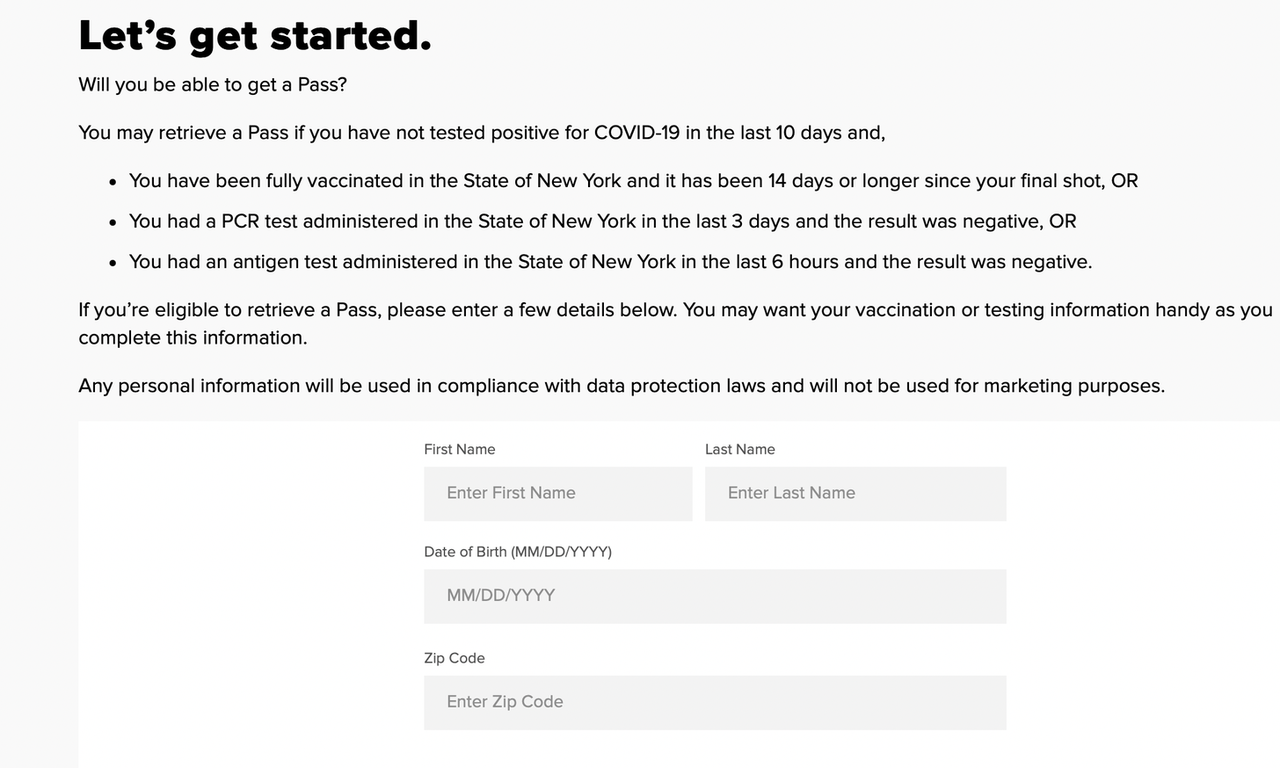
Say you want to attend a Knicks game this evening at Madison Square Garden, a partner to the Excelsior Pass program. It’s 9 a.m. and your event is at 7:30 p.m. If you don’t have the vaccine yet, that means you will need to obtain a negative COVID-19 test to receive your pass. Want to take that test this morning? Not so fast! The antigen test needs to have been administered within the last 6 hours, so you better plan your entire day around navigating that short window between your COVID test and the event this evening.

Just received your second dose and you’re ready to hit the town? Not so fast! You must wait at least two weeks before your green check mark appears on your vaccine passport. 

Has it been more than 90 days since your last dose? Rejected! You only have a 76 day window (more than 14 days, under 90 days) to acquire a vax pass, which has to be renewed every 30 days.

Received a vaccine or COVID test from out of state? Took a private at home test kit or a test from a provider that is not registered in the New York State central database? Looks like you’re out of luck. You will not be able to receive your prized Excelsior Pass, because your information never made it into the system.Are you an out of state resident looking to attend an event or enter an Excelsior Pass participating store? You’re out of luck! The New York system does not communicate with other databases, and other states plan on rewarding vaccine passport contracts to other companies.

Junk application

In order to download Excelsior Pass on your phone, you need the latest version of Android or iOS. For users of phones that are more than 4-5 years, this means you will not be able to access the application. If you have an iPhone 6 or earlier, you can’t download Excelsior Pass because it only runs on the latest operating system, which doesn’t work on these older phones.

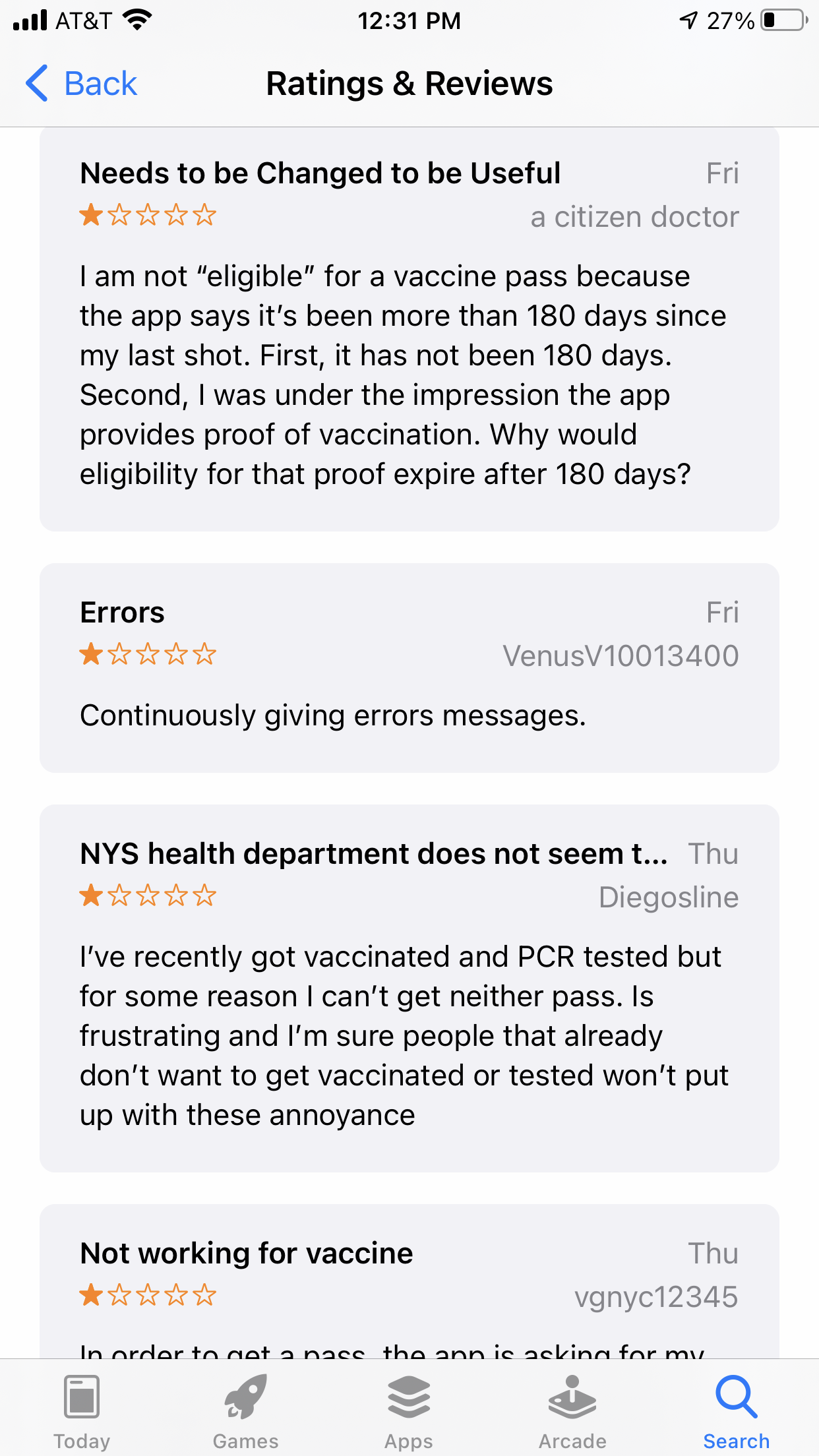
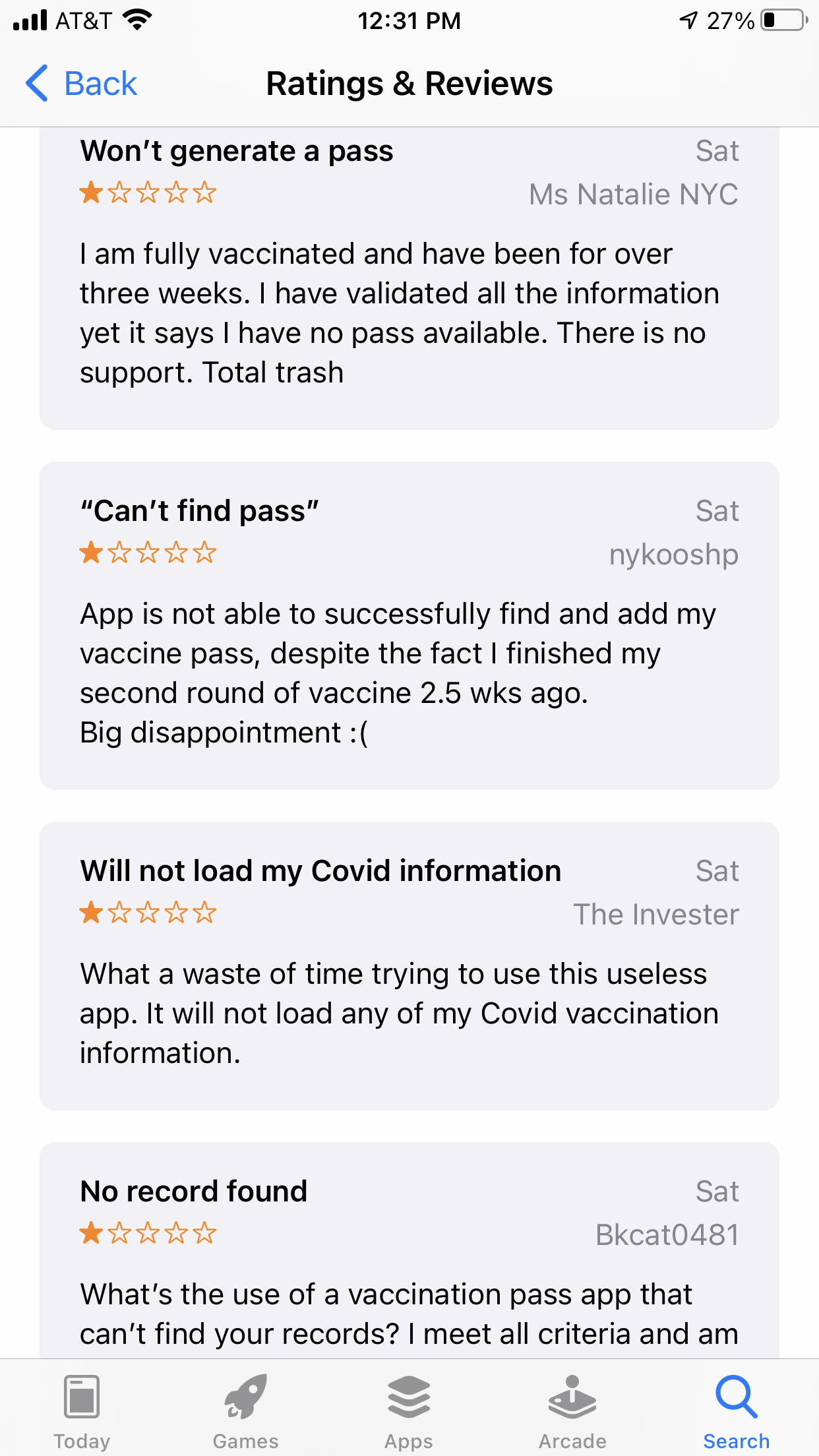
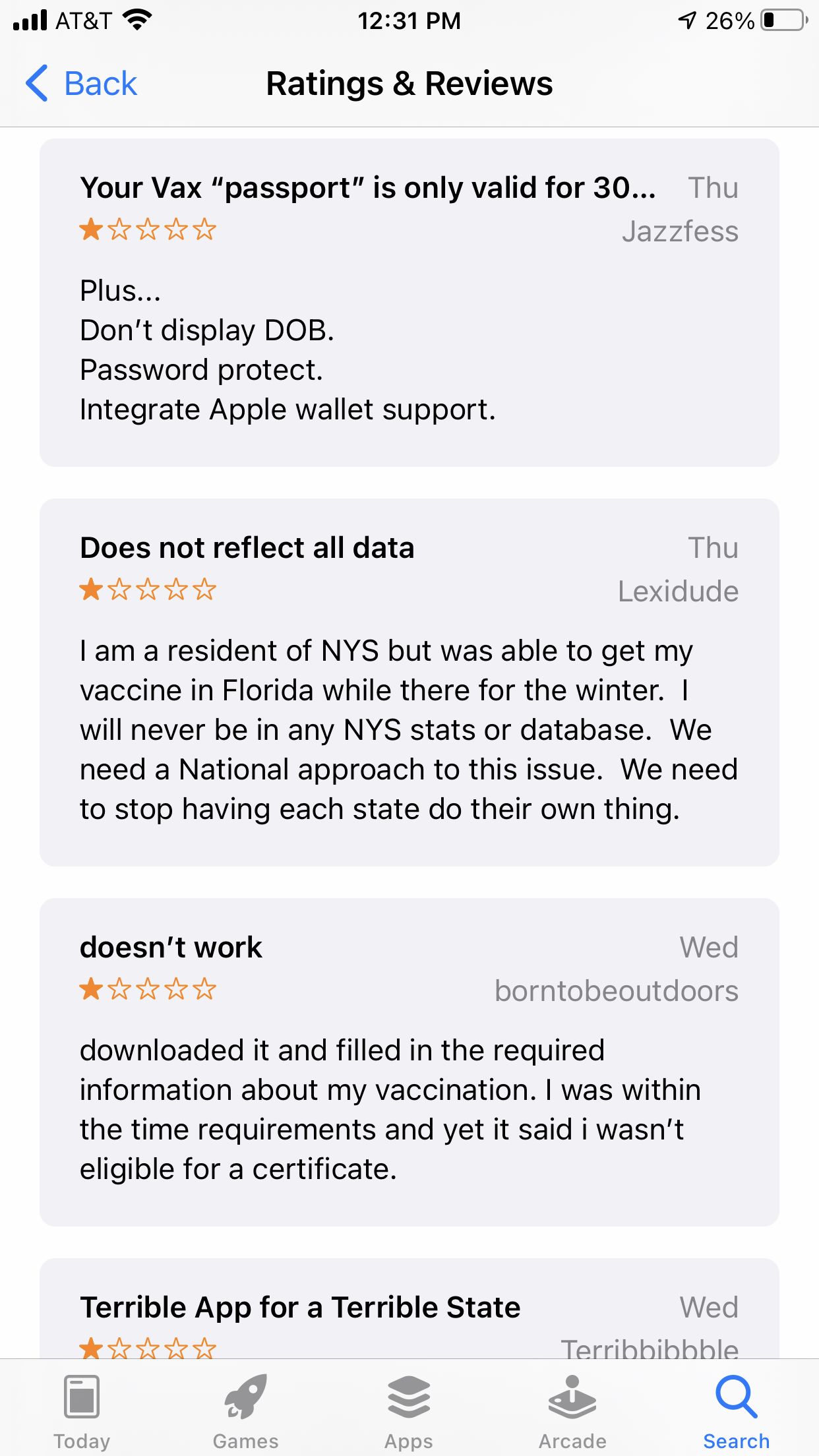
Users of the app are absolutely hammering it for its dysfunction. Of the 240 reviews for the application on iOS, over 100 reviews received 1 star out of 5.

Here’s a small sample size of user complaints from the last week:

IBM Sucks

New York’s Excelsior Pass was constructed on IBM’s Digital Health Pass platform. IBM claims that it keeps your data secure on its “blockchain technology” platform, which is a corporate buzzword excuse for a total lack of transparency about how it hosts your sensitive health records. In fact, a devastating February report on IBM’s Blockchain program showed it failed to produce anything meaningful, and the company has cut its staff by a reported 90 percent.

Overpromising and under delivering is nothing new for IBM. Before the blockchain hype, IBM promised it would help treat and cure cancer through its Watson artificial intelligence platform. Watson AI has been marketed for a decade, and it has produced almost nothing of substance. Both IBM Blockchain and IBM’s Watson AI has been catered specifically to health care applications, and neither has developed any substantial real world uses. Don’t be surprised if IBM’s vaccine passport program, which is part of its IBM Blockchain skeleton crew, meets the same fate.

Anyone can steal your information and take your Vax Pass

The IBM-New York vaccine passport system has incredibly lax security protocols, making it easy for a random individual to steal your identity and obtain Gov. Cuomo’s vaunted Excelsior Pass.

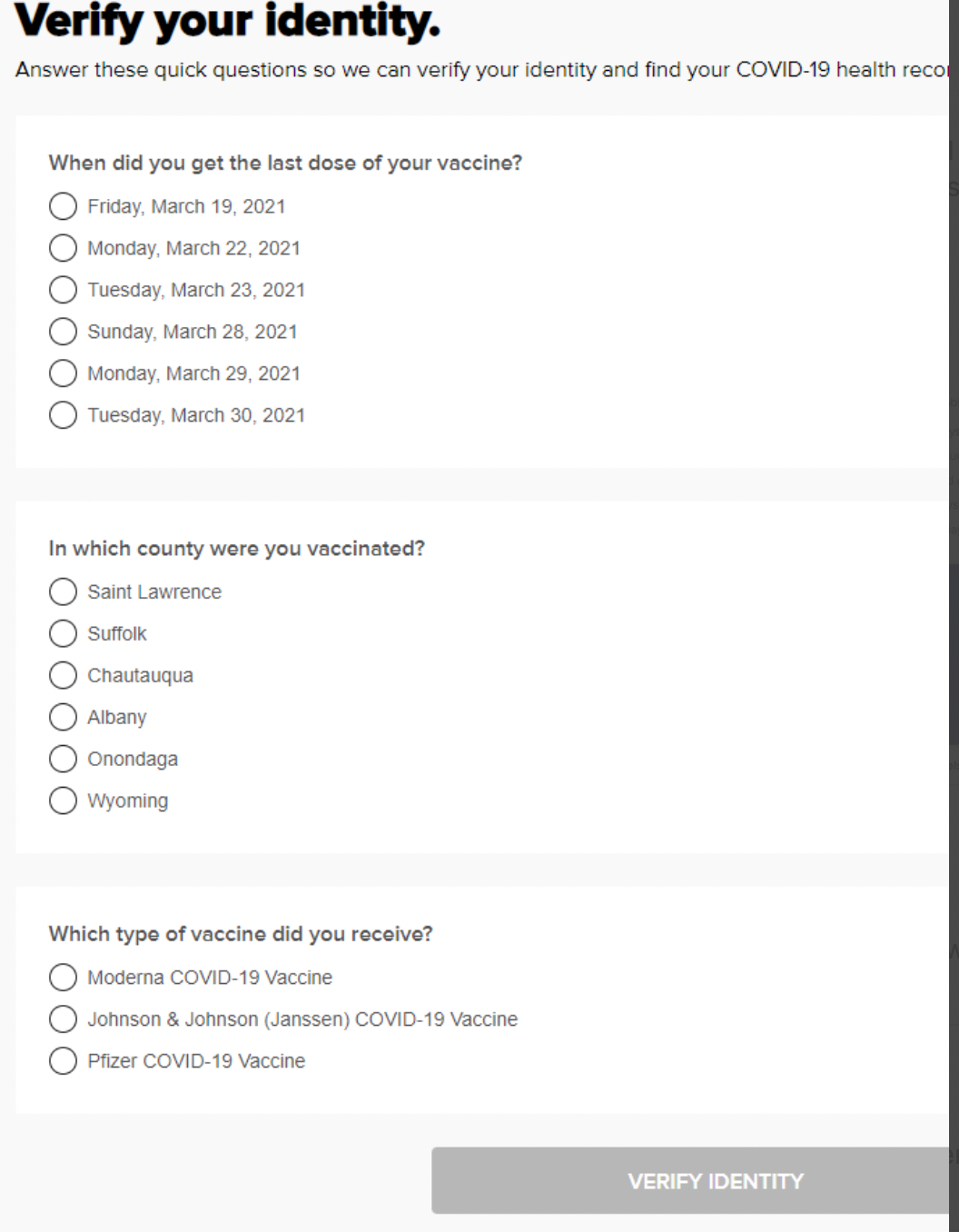
In order to see if someone is eligible for an Excelsior Pass (and acquire their COVID-19 health records), all you need is a first and last name, a date of birth, and a zip code (yes, not even their address, just their zip code). If you’re eligible for the pass, you then get taken to a second screen where you have to enter more relatively easily obtained information to “verify your identity.” Even if you get some questions wrong, it appears that you can go back in and answer an unlimited amount of times until you get the right combination. 

Failure imminent

Vaccine passports are inhumane, discriminatory, and will lead America on a direct path to a China-like social credit score system that restricts our unalienable rights. The good news for you New Yorkers is that the Cuomo Administration and IBM are the dream team of incompetence. Excelsior Pass will almost certainly fail, because a legacy governor and a legacy tech outfit are not sophisticated enough to produce a working totalitarian product for their COVID Safety Regime.

https://www.zerohedge.com/covid-19/new-yorks-vaccine-passport-program-already-failing