Denying natural immunity in the Centers for Medicare & Medicaid Service (CMS) vaccine mandates is “unprecedented in modern history,” a prominent public health expert said.
Dr. Scott Atlas, a former White House COVID-19 Task Force adviser during the Trump administration, made the remarks after the U.S. Supreme Court (SCOTUS) decide to uphold the CMS vaccine mandates in a Thursday ruling.
He told The Epoch Times that the ruling is “another serious denial of scientific fact” specifically mentioning the denial of natural immunity in CMS vaccine mandates.
“Our continued denial of superior protection in recovered individuals, with or without vaccination, compared to vaccinated individuals who’ve never had the infection,” he said.
“The denial of that is simply unprecedented in modern history, proven fact and decades of fundamental immunology are somehow denied.”
“If we are a society where the leaders repeatedly deny the fact, I’m very concerned about the future of such a society,” he added.
The Epoch Times reached out to the SCOTUS, CMS, and the White House for comments.
The Supreme Court on Thursday blocked the Biden administration’s private business vaccine mandate imposed by the Department of Labor’s Occupational Safety and Health Administration (OSHA). Meanwhile, America’s highest court decided to uphold the CMS vaccine mandate covering 10.4 million health care workers at 76,000 medical facilities.
In the 5–4 ruling in the CMS vaccine mandate, John Roberts and Brett Kavanaugh joined the Democrat-nominated trio of justices, while Clarence Thomas offered a dissent that was joined by Samuel Alito, Neil Gorsuch, and Amy Coney Barrett.
The majority of the court stated that the vaccine mandate “falls within the authorities that Congress has conferred upon” the Health and Human Service Secretary (HHS) Xavier Becerra.
CMS is part of the HHS.
The ruling also disagrees with the dozens of red states who said that CMS failed to consider the benefits of natural immunity.
“Given the rule-making record, it cannot be maintained that the Secretary failed to ‘examine the relevant data and articulate a satisfactory explanation for’ his decisions to require vaccination of employees with ‘natural immunity’ from prior COVID-19 illness,” read the majority opinion (pdf).
CMS applauded the SCOTUS ruling saying it’s “extremely pleased” for the results.
“We look forward to working with health care providers and their workers to protect patients. We will continue our extensive outreach and assistance efforts encouraging individuals working in health care to get vaccinated,” CMS Administrator Chiquita Brooks-LaSure said in a statement.
Affini-T Therapeutics, a new cell therapy company launched by researchers from Fred Hutchinson Cancer Center, made its public debut at the 2022 J.P. Morgan Healthcare Conference with a mission to target oncogenic driver mutations to deliver transformative therapies intended to cure patients.
First reported by Geek Wire, Affini-T, based in Boston, is harnessing T cell receptor technology to target cancer. In its presentation, the startup said it combines a validated TCR discovery platform with synthetic biology switches to attack tumor biology at its root cause. The company noted that it will engineer immune cells to target oncogenic driver mutations, like KRAS, the most prevalent oncogenic driver mutation in solid tumors, to “minimize potential tumor escape mechanisms.”
Affini-T takes a multi-pronged approach designed to target oncogenic driver mutations safely and precisely, allowing the company’s treatments to strike at the core of tumor biology. Affini-T said its technology is intended to “outsmart the immunosuppressive tumor microenvironment” to generate a sustained anti-tumoral response.
“We leverage these tools to optimize T-cell functions and rewrite the rules of the solid tumor microenvironment, enabling the potential for sustained clinical outcomes in patients,” the company said.
Although the company is young, Affini-T said its discovery platform had identified multiple TCR clinical candidates. According to its presentation deck, the company has already had multiple assets in development, with one lentiviral program ready to hit the clinic.
The new company is helmed by Jak Knowles, who previously served as Metagenomi’s chief business officer. Before Metagenomi, Knowles was vice president of Venture Investments at Leaps by Bayer. Before joining Bayer, Knowles served as CEO of CytoSen Therapeutics, where he worked to develop Natural Killer cell immunotherapies for oncology indications. In 2016, Knowles launched Exonics Therapeutics, a CRISPR gene-editing company.
The TCR approach undertaken by Affini-T is also being assessed by other companies, including T Knife Therapeutics. Bay Area-based T Knife is harnessing the capabilities of its proprietary HuTCR transgenic mouse platform to discover and develop a portfolio of TCR-T programs to treat patients with solid tumors. The company’s lead investigational candidate is TK-8001. That asset targets MAGE-A1 positive cancers. T-knife is planning a Phase I/II study in the first part of this year. In November, T Knife reported that preclinical data found that its TCRs “were found to be of higher affinity than human-derived TCRs and resulted in superior anti-tumor activity.”
Dr. Beatrice Mintz/courtesy ASU School of Life Sciences
On January 3, 2022, a marvel of intelligence and ingenuity departed from the life science community in the form of Beatrice Mintz, who passed three weeks before her 101st birthday. Born in the Big Apple on January 24, 1921, Dr. Mintz would grow up to become one of the pioneeringminds of modern embryology, whose trailblazing research would pave the way for current explorations of genetics.
Mintz was awarded her Doctorate by the University of Iowa in 1946, following which she taught as a professor at the University of Chicago until 1960. Afterward, she joined the Institute of Cancer Research (ICR) in Philadelphia and then became a professor at the University of Pennsylvania in 1965. Her work at the ICR continued through one name change, as it’s now known as the Fox Chase Cancer Center.
Described as inventive, detail-oriented, and passionate by her colleagues, Mintz preferred to direct her skills toward the thickest of scientific brambles, and often purported the big questions “the only ones worth considering”. She first drove her keen intellect deep into the mysteries of embryonic development, combining two genetically distinct strains of mouse cells together in the same embryo to create what she termed “allophenic” mice, although the nomenclature was later disposed of in favor of the term “chimeric”.
In doing so, Dr. Mintz solved a variety of technical problems involved in attempting this experiment, drafting and publishing the designs of simple equipment that would enable the handling and culturing of her doublet-embryos.
“Regarding this aspect of her career, Bea enjoyed telling the story about how, during the early 1970s, site visitors from National Institutes of Health were taken to Bea’s mouse room, and upon seeing an oddly striped mouse that resulted from her allophenic approach, awarded her the grant on the spot,” recounted Jonathan Chernoff, M.D., Ph.D., Cancer Center Director at Fox Chase Cancer Center. “It was a classic Bea moment.”
After discovering the hierarchical nature of normal embryonic development through her doublet-embryo experiments, Dr. Mintz turned her focus towards the potential roles of stem cells in cancer. She was able to again utilize her “allophenic” hybrid embryos to overturn the previous assumption that cancer arose from multiple mutant cells by showing that it was possible for cancers to arise from only a single, developmentally arrested stem cell.
“Observing that cancers develop from a single cell rather than a combination, she established clonal regulation as cancer’s fundamental unit of development,” saidMargaret Foti, Ph.D., MD (hc), CEO of the American Association for Cancer Research, in a story about Mintz that appeared in Temple Health Magazine.
Mintz went on to prove that tumors could be influenced by their microenvironment, and thusly that cancers themselves were not independent of their environment. This discovery opened up much of today’s pharmacological research into cancer biology.
Among her many accolades include the first Ernst Jung Gold Medal for Medicine, the National Medal of Honor for Basic Research by the American Cancer Society, and naturally, a Lifetime Achievement Award from the American Association for Cancer Research.
However, her obituary states that, “More than any of these honors, she was proudest of having been chosen for the Pontifical Academy of Science, where she advised Pope John Paul II about human embryonic stem cells”.
After a strong 2021 that included theacquisitionofGW Pharmaceuticals, the approval of acute lymphoblastic leukemia drug Rylaze and the achievement of $3 billion in annual revenue,Jazz Pharmaceuticalshas set its sights on nearly doubling that return by 2025.
At the virtual J.P. Morgan Healthcare Conference this week, Jazz Founder, Chairman and Chief Executive Officer Bruce Cozadd outlined the company’s vision for the next few years which includes annual revenue of $5 billion by 2025 and the approval of at least five novel products by the end of the decade. In an interview with BioSpace, Cozadd said the company has seen significant growth over the past year, and that growth is projected to continue based on the strength of its existing products and developmental pipeline.
“We are building on our track record and our patient-centered approach. We laid out vision 2025 in order to give investors and employees a better sense of where we’re going,” Cozadd said.
Jazz Pharmaceuticals sees itself as a company that has expertise in neuroscience, which includes sleep and movement disorders, as well as oncology
One of the approved drugs leading the way for Jazz is Xywav, a low-sodium treatment option approved by the U.S. Food and Drug Administration in 2020 for both cataplexy and excessive daytime sleepiness in people living with narcolepsy. Cozadd said the growth potential for Xywav is expected to be about $2 billion in annual revenue.
Last year, Xywav received the green light from the FDA for idiopathic hypersomnia, an uncommon sleep disorder where patients experience excessive sleepiness during the day, regardless of the amount of sleep received the night before. The approval marked the first drug approved by the regulatory agency for this indication, Cozadd said. Additionally last year, the FDA recognized seven years of Orphan Drug Exclusivity for Xywav.
“Xywav is proving itself to be an important product for us,” Cozadd said, adding that the latest approval builds on the company’s leadership in treating sleep disorders. Cozadd said the sales team is working hard to ensure that prescribers and patients understand the availability of Xywav for this indication.
“This is a proven therapy that made a real difference in clinical trials,” he said.
Additional revenue drivers for the company include epilepsy drug Epidiolex, the first plant-derived cannabinoid medicine ever approved by the FDA, which Jazz gained in the GW acquisition, as well as oncology assets Zepzelca and Rylaze, which was approved last year. Rylaze was approved for use alongside a chemotherapy regimen for the treatment of ALL or lymphoblastic lymphoma (LBL) in pediatric and adult patients. Since its approval, Rylaze has launched in the United States and Cozadd said the company is seeking approval in Europe and other locations.
Beyond the approved products, Cozadd said the company has more than 20 compounds in various stages of development, including the enrollment of a Phase II study of JZP150, a potential therapeutic for post-traumatic stress disorder. Cozadd noted that PTSD is a disorder where there is severe unmet need. JZP150 is a highly selective inhibitor of the enzyme fatty acid amide hydrolase (FAAH). It is designed to address the underlying causes of PTSD, which include impairment of fear extinction and its consolidation.
Currently, there are no approved therapeutics that have been developed to treat the root cause of the psychiatric condition. Cozadd said the Phase II study is a proof-of-concept trial, but the company believes JZP150 holds substantial promise in ways that are relevant to treating PTSD.
Jazz Pharmaceuticals has rapidly grown its pipeline in the past seven years. It has expanded four-fold since 2015 with 18 novel candidates currently in development. Additionally, the company has completed 11 licensing and M&A deals since 2019, which have added five programs to its developmental pipeline. One of those includes Zepzelca, a drug approved in 2020 for patients with metastatic small cell lung cancer (SCLC). Jazz and Spain-based PharmaMar entered into a collaboration for this medication the year prior to its approval. Cozadd said the company could see additional approvals of Zepzelca in the coming years. Jazz is collaborating with Roche to initiate a Phase III pivotal clinical trial in first-line extensive-stage SCLC in combination with that company’s immunotherapy product, Tecentriq.
Based on the extensive growth and development of the pipeline, Cozadd expressed confidence it will yield at least five additional novel product approvals in areas of critical unmet patient need.
One of those products may come from the acquisition of GW Pharmaceuticals. Jazz is assessing Nabiximols, which is marketed as Sativex in Europe where it has received Marketing Authorization, in Multiple Sclerosis-associated spasticity. Nabiximols is a THC plus CBD oral spray, extracted from cannabis sativa plant material, designed for the treatment of painful spasticity and neuropathic pain in MS. Nabiximols is being assessed in multiple Phase III trials.
As 2022 gets underway, Cozadd said the company is continuing to maintain its focus on its science, as well as its employees, many of whom are working remotely due to the ongoing COVID-19 pandemic. Cozadd said the company is focused on ensuring that its employees maintain their connection with each other, as well as to the mission and values of Jazz Pharmaceuticals. He noted the company has launched several initiatives during the pandemic to support its employees during these difficult times.
“Even though much of the company has been working remotely, we want to make sure that we stay connected with each other,” he said.
EvenBill Gates believes that omicron might finally mark the endof the COVID pandemic, but with his approval rating reaching new lows, President Biden is pulling out all the stops to assemble a group that will help protect the US from any future COVID variants.
Biden's new organization is called "The Pandemic Innovation Task Force", and it was created by the White House Office of Science and Technology Policy (or OSTP). It will focus on developing vaccines, treatments, diagnostic tests and other tools, according to officials familiar with the matter, who asked for anonymity as the details aren't yet public.
This will help prepare the US should new versions of SARS-CoV-2 surface, or should any new viral threats emerge in the coming years.
While some officials stressed the group wasn’t created specifically as a response to omicron, the timing certainly is notable. The omicron variant is driving more COVID infections than at any time since the first COVID cases were confirmed in the US, Bloomberg reports.
Health officials have warned that new variants could emerge that could scramble the body's protections.
Though studies suggest that omicron causes milder infections than earlier strains, many hospitals have seen an influx of patients filling beds.
Additionally, rapid tests have been in short supply, and businesses have been disrupted by infected employees having to isolate.
Unlike the White House Coronavirus Task Force, the new group won’t focus on day-to-day pandemic response or the omicron variant, or things like distribution of vaccines, testing and therapeutic treatments.
Instead, it will work on "preparedness projects" that could be used to manage waves of new variants that could emerge within six months to two years. It's also being designed to handle other viral threats.
Record spikes in Covid-19 Omicron cases across the country are causing a nationwide worker "sickout," as businesses from airlines to grocery stores are suffering from disruptions, even though the new variant is markedly far less severe - yet far more transmissible - than prior strains.
According to Delta Airlines CEO Ed Bastian, the past few weeks have been "hellacious," adding that around 10% of his workforce, or 8,000 of his employees, have contracted the virus in the past month. The shortages contributed to over 2,200 canceled Delta flights since December 24.
Although a precise count of the number of employees who are out sick or quarantining is hard to come by, about 5 million Americans could be isolating due to COVID-19 at the peak of Omicron, according to Andrew Hunter, senior U.S. economist at Capital Economics. That could reflect about 2% of the nation's workforce forced to stay home due to illness, he added.
Some employers report taking a harder hit. Stew Leonard Jr., chief executive of supermarket chain Stew Leonard's,said about 8% of his staff was out sick or quarantining last week. That affects what shoppers find on store shelves. -CBS News
"That's the highest we've ever had," said Leonard Jr. "What we are doing is the same as every other business — you have to limit your product line."
"Like I talked with my bakery director, and she said, 'I make a great crumb cake, and I also make a great apple crumb cake, but when I'm short on people I'm not able to make the apple crumb cake.' You'll get crumb cake, just not the apple crumb cake."
As we noted earlier this month, Omicron poses a major risk to Fed confidence about reaching maximum employment relatively soon.
It's even more obvious now that the CDC's revised December quarantine guidancefrom 10 days to 5 days (as long as symptoms aren't getting worse) was likely to grapple with Omicron's impending wave of sick-outs.
TD's Priya Misra predicted the pain - writing that the near certainty of the first rate hike in March is "very aggressive," adding that "the spike in infections should have a modest negative impact on the economy, and signs of slowing Q1 growth could be enough for the market to push out the start of the hiking cycle. This should help pull 2y yields lower in the near-term."
And as BofA chief economis Ethan Harris pointed out, "the challenge with Omicron is the dramatically higher case load, adding that a quick back of the envelope calculation illustrates the kind of labor shortages this could trigger.
Suppose that every infected person on average causes themselves and two other people to quarantine for five days. That means at the peak of omicron wave 30mn (= 2mn * 3 * 5) could be quarantined per day. Of course, many of these people either don’t work or can work from home. Roughly half of the population work and among them, according to a Gallup poll, about 30% always work in person. This suggests that 4.2 million (= 30 mil * 0.5 * 0.3) in-person workers per day will be absent due to quarantining. This number could be too high or too low, but a multi-million number seems very likely.
As we wrote at the time: "These calculations underscore not only that the US labor market problem is about to get much, much worse, but that the well-advertised worker shortages in the airline industry are not an isolated problem. Generally speaking these absences will not show up in official estimates of labor supply—if you are home sick, you are still employed. Nonetheless, they add (temporarily) to the record 11 million job openings."
At present, Covid cases are averaging nearly 1 million per day nationally based on a seven-day moving average reported by CBS News - the highest number since the pandemic began. The number is undoubtedly higher, of course, as milder Omicron symptoms combined with a shortage of testing means that cases are potentially vastly understated. That said, deaths have continued to remain remarkably low.
Last week, one CEO of a consumer packaged goods company said that they were cutting production lines by 20% to adjust to the high numbers of absent workers, according to Consumer Brands Association spokeswoman, Andrea Woods, citing an off-the-record call.
About 75% of consumer packaged goods companies in a recent survey said they had experienced an increase in absenteeism due to positive COVID-19 tests or exposure to someone with the virus, Woods added. -CBS News
"We are still dealing with a massive driver shortage — 80,000 and counting — with one truck available for every 16 loads. Omicron only intensifies that problem," said Woods. "Absenteeism in warehouses is resulting in late shipments, and retailers don't have the employee base to restock shelves."
That said, Omicron worker shortages may be over as quickly as they began...
Like many paediatricians, Dani Dumitriu braced herself for the impact of the SARS-CoV-2 coronavirus when it first surged in her wards. She was relieved when most newborn babies at her hospital who had been exposed to COVID-19 seemed to do just fine. Knowledge of the effects of Zika and other viruses that can cause birth defects meant that doctors were looking out for problems.
But hints of a more subtle and insidious trend followed close behind. Dumitriu and her team at the NewYork–Presbyterian Morgan Stanley Children’s Hospital in New York City had more than two years of data on infant development — since late 2017, they had been analysing the communication and motor skills of babies up to six months old. Dumitriu thought it would be interesting to compare the results from babies born before and during the pandemic. She asked her colleague Morgan Firestein, a postdoctoral researcher at Columbia University in New York City, to assess whether there were neurodevelopmental differences between the two groups.
A few days later, Firestein called Dumitriu in a panic. “She was like, ‘We’re in a crisis, I don’t know what to do, because we not only have an effect of a pandemic, but it’s a significant one,’” Dumitriu recalled. She was up most of that night, poring over the data. The infants born during the pandemic scored lower, on average, on tests of gross motor, fine motor and communication skills compared with those born before it (both groups were assessed by their parents using an established questionnaire)1. It didn’t matter whether their birth parent had been infected with the virus or not; there seemed to be something about the environment of the pandemic itself.
Dumitriu was stunned. “We were like, oh, my God,” she recalled. “We’re talking about hundreds of millions of babies.”
Although children have generally fared well when infected with SARS-CoV-2, preliminary research suggests that pandemic-related stress during pregnancy could be negatively affecting fetal brain development in some children. Moreover, frazzled parents and carers might be interacting differently or less with their young children in ways that could affect a child’s physical and mental abilities.
Lockdowns — which have been crucial for controlling the spread of the coronavirus — have isolated many young families, robbing them of playtime and social interactions. Stressed out and stretched thin, many carers also haven’t been able to provide the one-to-one time that babies and toddlers need.
“Everyone wants to document how this is impacting child development, and parent–child relationships and peer relationships,” says James Griffin, chief of the Child Development and Behavior Branch at the Eunice Kennedy Shriver National Institute of Child Health and Human Development in Bethesda, Maryland. “Everyone has concerns.”
Some of the teams looking into these issues around the world are starting to publish their findings. New studies have begun. Firm answers are hard to come by, not least because many child-development research laboratories shut down during the pandemic.
Some babies born during the past two years might be experiencing developmental delays, whereas others might have thrived, if carers were at home for extended periods and there were more opportunities for siblings to interact. As with many aspects of health during the pandemic, social and economic disparities have a clear role in who is affected the most. Early data suggest that the use of masks has not negatively affected children’s emotional development. But prenatal stress might contribute to some changes in brain connectivity. The picture is evolving and many studies have not yet been peer reviewed.
Some researchers propose that many of the children falling behind in development will be able to catch up without lasting effects. “I do not expect that we’re going to find that there’s a generation that has been injured by this pandemic,” says Moriah Thomason, a child and adolescent psychologist at the New York University Grossman School of Medicine.
A precipitous drop in play
One lab that managed to stay open during the COVID-19 pandemic was Brown University’s Advanced Baby Imaging Lab in Providence, Rhode Island. In it, Sean Deoni, a medical biophysicist, and his colleagues use magnetic resonance imaging (MRI) and other techniques to study how environmental factors shape brain development in infants.
Although the pandemic changed how they conducted their research — fewer visitors and more cleaning — they continued inviting babies to their lab, to track motor, visual and language skills as part of a seven-year National Institutes of Health study on early childhood development and its effects on later health.
However, as the pandemic progressed, Deoni began hearing worrying comments from his colleagues. “What our staff began to tell me, anecdotally, was ‘Man, it’s taking these kids a lot longer to get through these assessments,’” Deoni recalled.
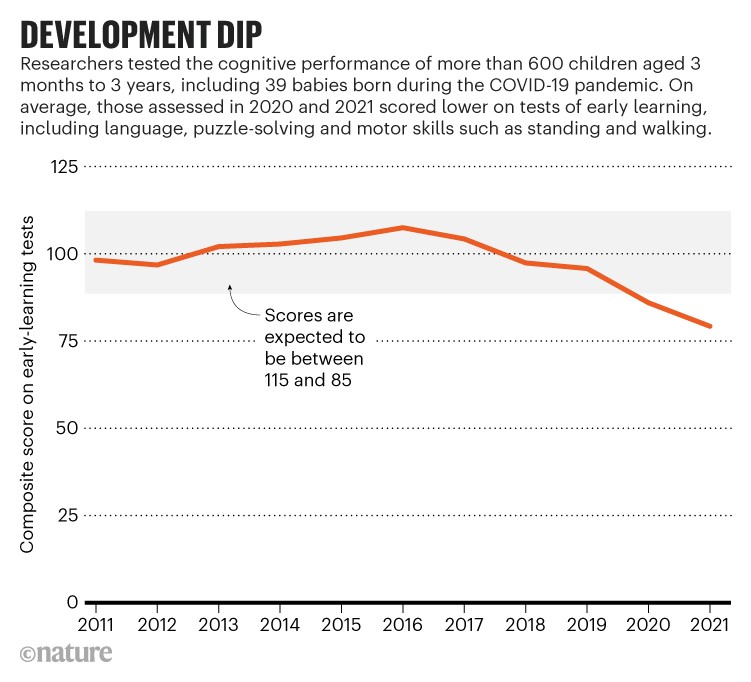
He was mystified, so asked his researchers to plot and compare the yearly averages and variances from the infants’ neurodevelopmental scores. That’s when they discovered that the scores during the pandemic were much worse than those from previous years (see ‘Development dip’). “Things just began sort of falling off a rock the tail end of last year and the beginning part of this year,” he said in late 2021. When they compared results across participants, the pandemic-born babies scored almost two standard deviations lower than those born before it on a suite of tests that measure development in a similar way to IQ tests. They also found that babies from low-income families experienced the largest drops, that boys were more affected than girls2 and that gross motor skills were affected the most.
Source: Ref. 2
At first, Deoni assumed that selection bias was at play: perhaps the families who made the effort to come in for testing during the pandemic were those whose children were at risk of developmental problems or were already showing them. But, over time, he grew convinced that selection bias wasn’t explaining the findings, because the children coming in did not have different backgrounds, birth outcomes or socio-economic statuses compared with previous participants.
These effects appeared drastic, but some researchers argue that they are not necessarily predictive of long-term problems. “IQ, as babies, doesn’t predict much,” says Marion van den Heuvel, a developmental neuropsychologist at Tilburg University in the Netherlands. “It’s really hard to say anything about what that will mean for their future.” She points to a study3 showing that Romanian girls who started life in orphanages but were then adopted by foster families before 2.5 years of age were less likely to have psychiatric problems at 4.5 years of age than were girls who remained in institutional care. That situation is different from a pandemic, but suggests that babies could make up for hardship once restrictions are lifted.
orryingly, however, Deoni has found that the longer the pandemic has continued, the more deficits children have accumulated. “The magnitude is massive — it’s just astonishing,” Deoni says of the findings, which are now under revision in JAMA Pediatrics.
When Deoni first posted his results on a preprint server2, there was a flurry of worrying media coverage — and backlash from the research community. There was “a real concern about the fact that these results were being put out without proper peer review,” Griffin says.
But, assuming the findings do have merit, why might babies born during the COVID-19 pandemic be experiencing significant cognitive — and especially motor — deficits? Deoni suspects that the problems stem from a lack of human-to-human interactions. In follow-up research that has not yet been published, he and his team have recorded parent—child interactions at home, finding that the number of words spoken by parents to their children, and vice versa, in the past two years has been lower than in previous years. He also suspects that babies and toddlers are not getting as much gross motor practice as usual because they aren’t regularly playing with other children or going to playgrounds. “And the unfortunate thing is that those skills kind of lay the foundation for all the other skills,” he says.
Other recent research supports the idea that lack of peer interactions could be holding some kids back. In a study published earlier this year, researchers in the United Kingdom surveyed 189 parents of children between the ages of 8 months and 3 years, asking whether their children received daycare or attended preschool during the pandemic, and assessing language and executive functioning skills. The authors found that the children’s skills were stronger if they had received group care during the pandemic, and that these benefits were more pronounced among children from lower-income backgrounds4.
Those most at risk seem to be children of colour or those from low-income families. For instance, a growing body of research suggests that among school-aged children, remote learning might be widening the already-large learning and development gaps between children from affluent and low-income backgrounds and between white kids and children of colour. In the Netherlands, researchers found that kids did worse on national assessments in 2020 — compared with the three previous years — and that learning losses were up to 60% larger for children from less-educated families5.
In parts of sub-Saharan Africa — including Ethiopia, Kenya, Liberia, Tanzania and Uganda — research suggests that some children have lost as much as a full year of learning6. And in the United States, after the first lockdown, a report by the consultancy firm McKinsey suggested that students of colour began school in autumn three to five months behind in learning, whereas white students were only one to three months behind (go.nature.com/3fauntp).
Masked effects
Children who have attended school or other group settings during the pandemic have typically been interacting with others who wore face masks. One important question is whether masks, which obscure parts of the face important for expressing emotions and speech, might also be affecting kids’ emotional and language development.
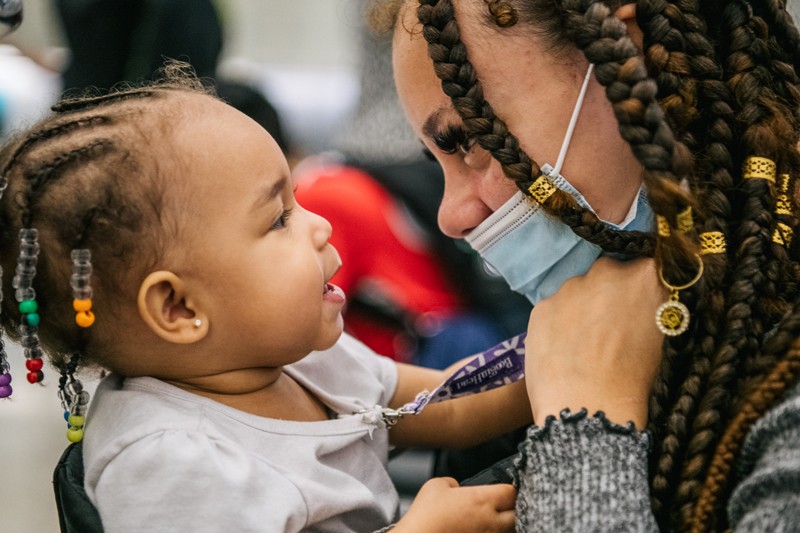
A mother with mask interacts with her daughter while waiting for her PCR results in Houston, Texas.Credit: Brandon Bell/Getty
Edward Tronick, a psychologist at the University of Massachusetts Boston, has been bombarded with e-mails from parents and paediatricians concerned about the potential developmental effects of masking. Tronick is famous for his 1975 ‘Still Face’ experiment, which showed that when birth parents suddenly remained straight-faced when interacting with their infants, their kids at first tried to get their attention, and then slowly withdrew and grew increasingly upset and wary7.
Tronick decided to see whether masks had a similar effect. With his colleague, psychologist Nancy Snidman, he conducted an experiment (which has not yet been peer reviewed) in which parents used smartphones to record interactions with their babies before, during and after they put on face masks. Although babies noticed when their parents put on masks — they would briefly change their facial expression, look away or point at the mask — they would then continue interacting with their parents as they had before8. The mask is blocking only one channel of communication, Tronick says. “The parent wearing a mask is still saying, ‘I’m interacting with you, I’m still here for you, I’m still connecting to you.’”
Face masks don’t seem to interfere all that much with emotional or language perception, either. A study published in May reported that two-year-olds were still able to understand words spoken by adults in opaque face masks9. Children “compensate for information deficits more readily than we think”, says study lead author Leher Singh, a psychologist at the National University of Singapore. Researchers in the United States found that, although face masks made it harder for school-age children to perceive adults’ emotions — about as difficult as when adults were wearing sunglasses — the kids were still, for the most part, able to make accurate inferences10.
“There’s a lot of other cues that kids can use to parse apart how other people are feeling, like vocal expressions, body expressions, context,” says study author Ashley Ruba, a postdoctoral fellow at the University of Wisconsin–Madison.
Pregnant and stressed
Other researchers are keen to know whether the pandemic could be affecting children’s development before they are born. Catherine Lebel, a psychologist who runs the Developmental Neuroimaging Lab at the University of Calgary in Canada, and her colleagues surveyed more than 8,000 pregnant people during the pandemic. Nearly half reported experiencing symptoms of anxiety, while one-third had symptoms of depression — a much higher percentage than in pre-pandemic years. How was this stress affecting babies in the womb?
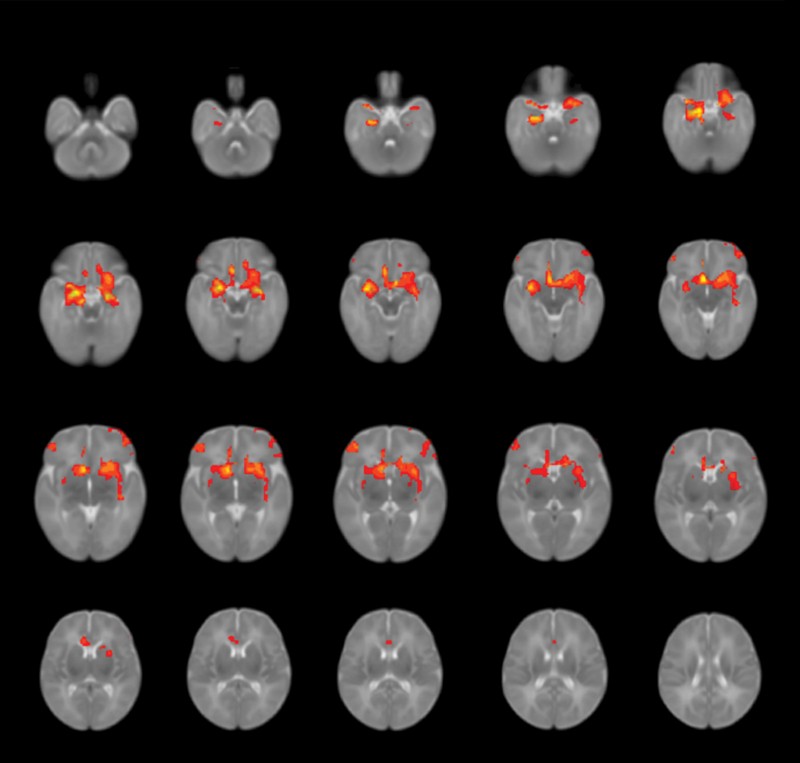
To find out, the researchers used MRI imaging to scan the brains of 75 of the babies 3 months after birth. In a preprint posted in October, they found that babies born to people who reported more prenatal distress — more anxiety or depression symptoms — showed different structural connections between their amygdala, a brain region involved in emotional processing, and their prefrontal cortex, an area responsible for executive functioning skills11.
Brain scans showing average connectivity patterns between the amygdala and other regions in infants. Pandemic-related stress during pregnancy weakened connections in some babies.Credit: Kathryn Manning
In a previous, small study, Lebel and her team had made the link between prenatal depression and brain connectivity differences in those same areas, and had suggested that in boys, these brain changes correlated with aggressive and hyperactive behaviour at preschool age12. Other teams have found that changes in connectivity between these areas in adults are risk factors for depression and anxiety13. “Those are the areas that are involved in emotion processing, and lots of different behaviours,” Lebel says.
Other research has found similar associations between prenatal pandemic stress and child development. Livio Provenzi, a psychologist at the IRCCS Mondino Foundation in Pavia, Italy, and his colleagues observed that three-month-old babies of people who reported experiencing more stress and anxiety during pregnancy had more problems regulating their emotions and attention — they were less able to maintain their attention on social stimuli, for instance, and were less easily soothed — than were babies of people who were less stressed and anxious during pregnancy14.
Thomason is running her own study to assess the effects of maternal stressors on children’s brains and behaviour. She notes that, although there is a lot of concern about how prenatal stress might affect pandemic babies, early findings such as these do not mean that children are going to struggle for the rest of their lives. “Children are so adaptive, and elastic. And we do expect that things are going to improve and that they should be able to be resilient to a lot of what’s happened,” she says.
Indeed, research on historical disasters suggests that, although stress in the womb can be harmful to babies, it doesn’t always have lasting effects. Children born to people who experienced considerable stress as a result of the 2011 floods in Queensland, Australia, showed deficits in problem-solving and social skills at six months of age, compared with children born to people who experienced less stress15. However, by 30 months, these outcomes were no longer correlated with stress, and the more responsive that parents were to their babies’ and toddlers’ needs after birth, the better the toddlers did16.
Caution and action
The research on pandemic babies presents a mixed picture, and scientists say it’s too early to draw meaningful interpretations. For one thing, some of these early, often unpublished findings might not reflect reality, says Catherine Monk, a medical psychologist who works with Dimitriu at NewYork–Presbyterian.
The parents who chose to participate in some early studies, for instance, might not be a representative sample, Monk says. Perhaps they were already worried about their kids on the basis of the behaviours they are seeing. Furthermore, she says, the results of in-person studies such as Deoni’s could be affected by the wearing of face masks — perhaps not a lot, but enough to skew results.
As Thomason wrote last year in a commentary17 in JAMA Pediatrics, the incentive to publish interesting findings might also be shaping these early studies. “Scientists are quick to go look for a harmful difference. It’s the thing that’s going to get the attention of the media; it’s the thing that’s going to get published in a high-impact journal,” she says.
Researchers and funders are launching large studies and collaborations that could help to build a clearer picture. The US National Institute on Drug Abuse is funding a handful of studies through its Healthy Brain and Child Development Study. These will look at how maternal stress and substance use during the pandemic affect child development. In addition, alliances and conferences have been formed to bring researchers together and share emerging data. In March 2020, Thomason launched the international COVID Generation Research Alliance, which brings together researchers from 14 countries studying families with young children during the pandemic. The alliance, which held a research summit in November 2021, includes researchers in North and South America, Europe, Australia, Asia, the Middle East and Africa.
Even if kids’ brains are truly being affected by the pandemic, there is still time to steer them back on course, Dumitriu notes. “We can totally get ahead of this becoming a public-health emergency,” she says. “The brains of six-month-olds are very plastic, and we can get in there, and we can change their trajectory.”
Parents can make headway by playing and talking with their young children regularly, and giving them opportunities to play with others in safe settings. Policy changes aimed at supporting families and children could make a difference, too. Lebel’s research11 found that meaningful social support, such as from a partner or close friend, during pregnancy resulted in much less prenatal distress. “We could do so much more of that in the prenatal care ecosystem,” says Monk. Researchers also argue for interventions that support families immediately after birth. Provenzi’s research14 has found that people who had just given birth and were visited at home by nurses and neonatologists experienced less stress and anxiety than those who did not receive these visits.
Overall, researchers maintain that most children will probably be OK — but more than usual might currently be struggling. And if we want to support those who are falling behind, we should ideally intervene soon. “Kids are certainly very resilient,” Deoni says. “But at the same time, we also recognize the importance of the first 1,000 days of a child’s life as being the crucial early foundations.” The first pandemic babies, born in March 2020 are, at this point, more than 650 days old.
Children “are a product of their environment”, Deoni says. “The more that we can stimulate them and play with them and read to them and love them — that’s what it’s going to take.”