Search This Blog

Saturday, January 15, 2022

McDonald's locations to cut hours by 10% due to staffing shortages: CEO

 McDonald's plans to cut operational hours in response to a lack of employees at a number of its U.S. locations. The Golden Arches, similar to many restaurants around the country, have struggled with consistent employee attendance during the COVID-19 surge brought on by the omicron variant. With infections reaching record levels, the fast-food chain suffered a dip in sales at the end of December.

Chris Kempczinski, McDonald's Corp. CEO who assumed the role back in November 2019, says adjusting during these times is one of many priorities for the company's growth and well-being. 

The pandemic hurt McDonald's flourishing breakfast business after a decline in morning commuters. It was able to bounce back after American cities allowed for drive-thru lanes to remain open, which led to a rise in sale levels since September 2016. The fast-food chain's sales returned to pre-pandemic levels by March 2021. 

TickerSecurityLastChangeChange %
MCDMCDONALD'S CORP.257.71-3.70-1.42%

Over the past two years, the company has embraced celebrity partnerships with rappers Travis Scott and Saweetie and Korean pop group BTS. While new menu items from these partnerships only lasted for a limited time, the promotions helped to boost sales past pre-pandemic levels. 

As far as the safety of employees, McDonald's has set up COVID tests for workers, but has no way to track whether someone has contracted the virus or not. Kempczinki says that should be the responsibility of a healthcare agency. 

He also did not agree with President Biden's attempt to make vaccinations a federal mandate for large companies. McDonald's employs close to 800,000 people. 

The Supreme Court said no to the mandate earlier this week. 

In a time where 2021 was dubbed The Great Resignation, due to a record-breaking year for Americans who quit their jobs, McDonald's works to pivot and make the necessary adjustments. As of now Chris Kempczinki says he'll continue to plan for the future of the company, but doesn't bank on longevity as leader of the company. 

"I’d say I’m a little bit more Zen about just everything that goes into the job," he says. 

McDonald's is not the only fast-food chain to be hit with staffing shortages as a result of COVID-19.  Wall Street Journal reports that Shake Shack Inc. noted its own December dip in productivity as well. 

https://www.foxbusiness.com/economy/mcdonalds-locations-cut-hours-staffing-shortages

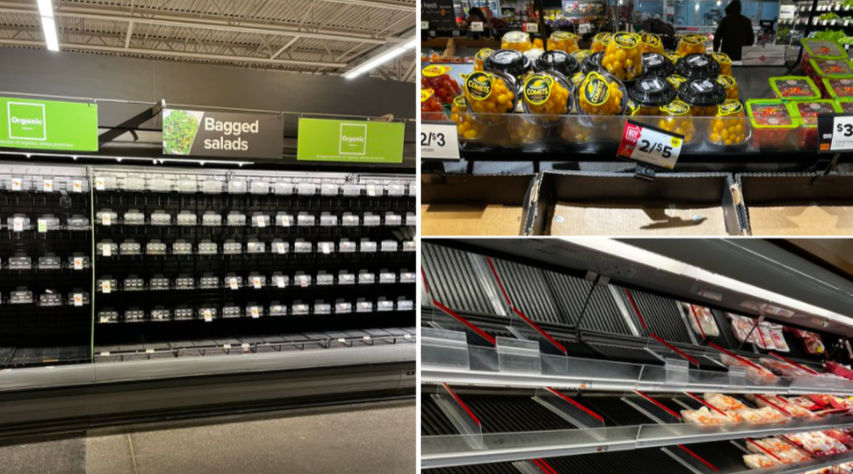
Supermarkets Slash Hours As Workers Call Out Sick; Store Shelves Remain Bare

 Labor shortages at supermarkets across the country have increased in recent weeks as the COVID-19 omicron variant continues to spread. Workers are calling sick, and there are not enough cashiers, baggers, and stockers, forcing some supermarket chains to slash hours of operations. Compounding labor woes, supply chains are still severely snarled as food shortages are being reported nationwide. 

WSJ reports supermarkets are having difficulty staying open as workers call out sick because of infection. Some grocers are frantically hiring new employees, using temporary employment agencies, and overworking current staff to keep stores from shuttering. 

The seven-store supermarket chain Stew Leonard's in Connecticut, New York, and New Jersey had 200 employees in quarantine or isolation as of last Thursday despite a 90% employee-vaccination rate. This represents about 7% of all employees. 

"We sort of feel like we've got to buckle down for round two," Chief Executive Stew Leonard Jr. said, adding that the loss of employees to infections has hampered operations. 

American supermarket chain Giant Eagle Inc. which operates 470 stores, has avoided closing locations amid the omicron surge by adjusting hours of operations. The company's chief compliance officer, Vic Vercammen, said the company had seen a spike in workers calling sick because of infection. 

Across Alabama and Georgia, Piggly Wiggly stores are overscheduling workers and using temporary work agencies to keep store shelves stocked as staffing woes developed this year because of the omicron spread. Operations have been affected, and store hours have been reduced in some locations. 

In the Southeast, Harris Teeter supermarkets, owned by Kroger Co., will close one hour earlier, effective Monday, so that employees can restock shelves due to the loss of stockers. 

Staffing shortages also impacted Fresh Encounter Inc., a 100-store supermarket chain based in Ohio. The chain is now closing at 10 pm local time versus 24 hours a day. 

Michael Needler Jr., the chain's chief executive of Fresh Encounter, said, "the staffing situation started out very tenuous. Layering in Omicron vacancies on top of that makes it very, very stressful." 

On top of staffing issues, supply-chain bottlenecks are plaguing supermarkets, resulting in bare shelves across the country. 

https://www.zerohedge.com/markets/supermarkets-slash-hours-workers-call-out-sick-store-shelves-remain-bare

23andMe Gets FDA OK on Direct-to-Consumer Genetic Test on Hereditary Prostate Cancer Marker


The clearance allows 23andMe to report on the G84E mutation in the HOXB13 gene, clinically shown to significantly increase the risk of developing prostate cancer in men with the mutation

 23andMe Holding Co. (Nasdaq: ME) (“23andMe”), a leading consumer genetics and research company, today received FDA clearance for a genetic health risk report on a hereditary prostate cancer marker.

This is the Company’s third cancer risk report clearance, following the FDA’s prior authorization for 23andMe’s BRCA1/BRCA2 (Selected Variants) Genetic Health Risk report and its clearance for MUTYH-Associated Polyposis (MAP), a hereditary colorectal cancer syndrome. These two reports along with the new Hereditary Prostate Cancer (HOXB13-Related) report have been included by the FDA in a single “Cancer Predisposition Risk Assessment System” regulation.

These three 23andMe reports are the only direct-to-consumer genetic health risk reports for inherited cancers that have been authorized by the FDA for use without prescription.

“We continue to work closely with the FDA in order to provide individuals with direct access to impactful health information that can help them make important life decisions,” said Anne Wojcicki, CEO and Co-Founder of 23andMe. “23andMe remains the only company with multiple FDA authorizations for direct-to-consumer genetic health reports. These reports provide our customers with the knowledge that they might be at risk for certain diseases, including hereditary cancers, empowering them to take appropriate preventative action with their healthcare provider.”

https://mediacenter.23andme.com/press-release/23andme-receives-fda-clearance-for-direct-to-consumer-genetic-test-on-a-hereditary-prostate-cancer-marker

1st-in-Human Trial with CAR Macrophages Shows Therapy May Be Safe, Feasible for Solid Tumors

  Preliminary findings from Penn Medicine in an ongoing first-in-human clinical trial examining the safety, tolerability and feasibility of chimeric antigen receptor macrophage (CAR-M) has helped to establish the viability of this innovative immunotherapy, which advances the trailblazing scientific discovery of CAR T cell therapy—also pioneered at Penn—for solid cancer tumors and offers a promising new strategy in the fight against cancer. Preliminary data from the Phase 1 multi-center clinical trial, which uses a novel, gene-based cancer therapy with CAR-engineered macrophages to target recurrent or metastatic HER2-positive solid tumors, was presented during the recent Society for Immunotherapy of Cancer (SITC) annual meeting.

“Existing immuno-oncology treatments have offered improved outcomes for some cancer patients, yet CAR-T cells, which are engineered to recognize tumor-specific antigens and are successful in some blood cancers, have not been effective in solid tumors to date,” said Saar Gill, MD, PhD, scientific co-director of the Cell Therapy and Transplant Program at the Abramson Cancer Center at the University of Pennsylvania and an associate professor of Hematology-Oncology in the Perelman School of Medicine. “Seeing macrophages show high CAR expression, viability, and purity, successfully manufactured from cancer patients and are well tolerated, has us excited to be conducting this trial to help us understand the impact CAR-M cells have on targeting solid tumors.”

CAR-M is an individualized therapy that begins with isolation of primary monocytes from blood drawn from a patient, which are then modified with the desired antigen-specific chimeric receptor—for example, anti-HER2. The resulting CAR-M modified cells are cryopreserved and will be infused back into the patient. CAR-M may be able to reach immunologically ‘cold’ tumors, or those that are typically undetectable or unresponsive to the immune system, to help activate them to be more receptive to treatment.

“We are motivated by the potential of CAR-M cell therapy for HER2-positive solid tumors,” said Kim A. Reiss, MD, an assistant professor of Hematology-Oncology at Penn and principal investigator of the trial. “Tumor cells alone are unable to stimulate the process of T-cell activation, but with macrophages, they engage the tumors differently by penetrating them to induce a reaction, making CAR macrophage therapy quite different than CAR T cells, and something we are enthusiastic about studying further.”

CAR T cell therapy, a form of immunotherapy that uses specially altered T cells – a part of the immune system that fights diseases, including cancer – was pioneered by a team led by Carl H. June, MD, the Richard W. Vague Professor in Immunotherapy in the department of Pathology and Laboratory Medicine at Penn and director of the Center for Cellular Immunotherapies. CAR T cell technology involves the collection of a patient’s T cells and genetically reprogramming them in the lab to recognize markers on specific cell types in the body. These specially targeted T cells can then be multiplied using cell culture techniques and re-infused into the patient to attack a specific cell type. The first CAR T cell therapy was developed by researchers from Penn and Children’s Hospital of Philadelphia and approved by the U.S. Food and Drug Administration in 2017 for use against certain leukemias – and later approved for lymphoma – that arise from immune cells called B cells.

The CAR-M platform was pioneered in Gill’s laboratory to capitalize on the ability of macrophages and monocytes to enter and survive within tumors – a major differentiator of this type of cell compared with T cells. In addition, Gill and colleagues engineered macrophages to express a chimeric antigen receptor akin to that present on CAR T cells, thus giving the macrophages the ability to specifically recognize tumor cells. Another difference between macrophages and T cells is their effector function: While T cells typically kill tumor cells by poking them full of holes, macrophages (a term for “big eaters”) tend to kill by engulfing and devouring tumor cells. Macrophages can also break down and digest the engulfed cells and use their byproducts to stimulate a broader immune response.

The preliminary data presented at SITC demonstrated that the CAR-M known as CT-0508 has the ability to alter the solid tumor microenvironment and change the composition of myeloid cells and T-cells. These findings also represent the first clinical data with genetically engineered macrophages in humans. The U.S. Food and Drug Administration recently granted Fast Track designation to CT-0508 for clinical trials evaluating the efficacy and safety of the therapy in patients with solid tumors.

Led by Dr. Gill, scientists at Penn engineered the human macrophages to express CAR constructs. The engineered CAR-M cells have the ability to target proteins on cancer cells and penetrate solid tumors, ingest malignant tissue, and stimulate adaptive immunity in mouse models. Dr. Gill, Dr. Michael Klichinsky, and Penn co-founded Carisma Therapeutics to further study and develop this technology through clinical research efforts.

This clinical trial is enrolling patients at the University of Pennsylvania, University of North Carolina, and City of Hope.

Dr. Saar Gill and Penn are both co-founders of Carisma and hold equity in the company. Carisma has licensed certain Penn-owned intellectual property from the University, and Penn’s Perelman School of Medicine receives sponsored research funding from the company in support of Dr. Gill’s laboratory and clinical trials at Penn, including the trial led by Dr. Reiss. Penn and Dr. Gill are entitled to receive future financial benefits from development and commercialization of technologies licensed and optioned to Carisma.

https://www.pennmedicine.org/news/news-releases/2022/january/first-in-human-trial-with-car-macrophages-shows-the-cell-therapy-safe-feasible-for-solid-tumors

Colo. Study: Pricier Diabetes Care for Low-Income Patients With Marketplace Insurance

For Coloradans with diabetes and lower incomes, those eligible for Medicaid saw better antidiabetic agent access than those covered by one of the state's subsidized Marketplace insurance plans, a new study found.

Looking at nearly 23,000 patients with diabetes living in the state, those on Medicaid had both higher prescription drug utilization and lower drug costs compared with individuals enrolled in one of Colorado's subsidized state-based Marketplace plans, Peggah Khorrami, MPH, of Harvard T. H. Chan School of Public Health in Boston, and colleagues reported in JAMA Network Open.

More specifically, those enrolled in a Marketplace plan had significantly lower rates of filling a dipeptidyl peptidase 4 inhibitor (DPP-4 inhibitor) prescription (adjusted difference -3.7%, 95% CI -5.3 to -2.1) or a sulfonylurea prescription (-6.6%, 95% CI -8.9 to -4.3) than those enrolled in Medicaid.

While rates of insulin use weren't significantly different between the two groups, there was a big difference when it came to out-of-pocket costs for the treatment.

On average, out-of-pocket costs for insulin ranged from 76.7% to 94.7% lower for Medicaid beneficiaries. Average yearly co-pays for all insulin brands were also higher with the Marketplace-based insurance than with Medicaid. Total annual costs for insulin were higher with the Marketplace insurance save for just three types of insulin (Humulin N, Humulin R, and Novolog 70/30).

As for non-insulin prescriptions, similar trends followed. On average, out-of-pocket medication costs were 84.4% to 95.2% lower with Medicaid, and total costs were 9.4% to 54.2% lower as well.

Not surprisingly, the biggest differences in adjusted monthly co-pays were seen with three categories of brand-name only drugs:

  • DPP-4 inhibitors: $21.93 higher with Marketplace
  • GLP-1 agonists: $50.03 higher with Marketplace
  • SGLT2 inhibitors: $20.72 higher with Marketplace

These differences are likely due to differences in drug pricing rules with Medicaid, Khorrami's group pointed out. "By statute, Medicaid programs receive the larger of a mandatory rebate and the best price that brand-name manufacturers offer to the private market as well as additional rebates to account for drug price increases over time that exceed inflation."

"Prices for brand-name oral noninsulin medications such as DPP-4 inhibitors and GLP-1 agonists have increased yearly since their introduction to the market starting in 2005, adding to the rebate that Medicaid programs receive," the researchers explained.

By contrast, they added, "brand-name manufacturers set drug prices for private markets at the level that they choose, and any negotiation that occurs with the Marketplace insurer or its pharmacy benefits manager results in smaller overall rebates."

Other than sulfonylureas, all drug classes had higher total monthly costs with Marketplace insurance, as well, the study showed.

Overall, an adjusted model found that patients with Marketplace plans shelled out an average of $225.14 more annually in total pharmacy out-of-pocket costs than Medicaid beneficiaries.

"The low out-of-pocket costs may reflect the better financial protection provided by Medicaid compared with subsidized private insurance (all of the Marketplace enrollees likely qualified for cost-sharing reductions under the [Affordable Care Act])," Khorrami's group suggested.

In addition, the researchers said, "although policy makers have voiced concerns about the scope of coverage in Medicaid compared with private insurance, in our study, this patient population with low income and at high risk of negative health outcomes appeared to have better access to newer (and more expensive) medications in Medicaid than in Marketplace plans and less financial burden in filling those prescriptions."

The cross-sectional study included data on 22,788 low-income patients between the ages of 19 and 64 with diabetes in Colorado. A total of 20,245 of these patients were enrolled in Medicaid and 2,543 were enrolled in a Marketplace plan.

All patients had incomes between 75% and 200% of the federal poverty levels between 2014 and 2015 (median 106% for the Medicaid-eligible group and 168% for the subsidized Marketplace plan-eligible group). Those insured by one of the Marketplace plans tended to be older and male.


Disclosures

The study was supported by grants from the Robert Wood Johnson Foundation's Policies for Action program, the Arnold Ventures, and the Harvard-MIT Center for Regulatory Science.

Khorrami reported no disclosures; co-authors reported relationships with the Robert Wood Johnson Foundation, NIH, Baylor Scott & White, the Commonwealth Fund, the Health Research & Educational Trust, the Urban Institute, AcademyHealth, the American Economics Journal, the Massachusetts Medical Society, and the Illinois Department of Healthcare and Family Services.

Erroneous early warning reported North Korea missile could hit US

 Initial telemetry readings from the United States suggested that a North Korean missile launched earlier this week could strike as far as the coast of California or the Aleutian Islands before U.S. and North American defense commands soon determined those initial reads were incorrect, CNN reported, citing two sources familiar.

Early morning local time in North Korea on Tuesday, the country launched a missile which initial reads suggested could hit the U.S. but actually landed in the sea between Japan and China. Sources believe that the missile was designed to avoid missile defenses and was similar to a hypersonic glide, according to CNN.

While it later became clear that the missile would not be hitting the U.S. and initial reads were tossed by NORAD, some West Coast fights were grounded by the Federal Aviation Administration (FAA) on Monday afternoon around the time of the missile launch.

“As a matter of precaution, the FAA temporarily paused departures at some airports along the West Coast on Monday evening. Full operations resumed in less than 15 minutes. The FAA regularly takes precautionary measures. We are reviewing the process around this ground stop as we do after all such events,” the FAA said in a statement.

A U.S. lawmaker who spoke to CNN and had been given a briefing of the events said that defense officials did not immediately “have a good feel” for the missile’s capabilities and called the situation surrounding the launch “ugly.”  

“NORAD followed established procedures to gather information and coordinate with other military commands, allies, and security partners. NORAD determined that there was no credible threat and therefore did not issue a warning of a missile threat to Canada or the United States," Pentagon spokesperson John Kirby said in a statement. 

"NORAD is committed to working closely with our interagency partners to ensure they understand normal process and procedures. We refer to FAA’s statement that they initiated a ground stop for less than 15 minutes as a precaution and are reviewing the process for their decision,” he continued. 

The revelations come as North Korea on Friday fired two more ballistic missiles, which South Korea detected. The United States, along with Albania, France, Ireland, Japan and the United Kingdom, previously issued a joint statement earlier this week condemning North Korea’s missile launches. 

“We call on the DPRK [Democratic People's Republic of Korea] to refrain from further destabilizing actions, abandon its prohibited WMD and ballistic missile programs, and engage in meaningful dialogue towards our shared goal of complete denuclearization,” the statement said.

https://thehill.com/policy/defense/589776-early-warning-systems-warned-north-korea-missile-could-hit-us-report

Major pharmacies to close some locations on weekends due to staffing shortages

 With swelling Omicron cases causing the great American sickout, major pharmacies like CVS, Walgreens and Rite Aid are being forced to temporarily close their doors on weekends due to intense staffing shortages. 

A CVS spokesman told the Wall Street Journal that the closures are “to help address acute staffing issues amidst both the Omicron surge and the workforce shortage affecting nearly every industry and company.”

There are more than 9,900 CVS locations and more than 9,000 Walgreens locations across the country and both companies stress the closures should only impact a small fraction of those locations. However, neither chain would specify how many locations are seeing reduced hours or weekend closures. 

“While the vast majority of our stores are open and operating with normal business hours, the ongoing labor shortage combined with the surge of COVID-19 cases has resulted in isolated instances in which we’ve had to adjust operating hours or temporarily close a limited number of stores,” Walgreens officials wrote in a statement to NewsNation. 

https://www.newsnationnow.com/health/coronavirus/major-pharmacies-to-close-some-locations-on-weekends-due-to-staffing-shortages/