Search This Blog

Monday, January 17, 2022

Biogen compiles buyout target list as Aduhelm woe deepens

 Biogen has found itself increasingly deeper in the quagmire that is the Alzheimer’s disease drug Aduhelm. Like any beleaguered company might do, the Big Biotech is said to be weighing several strategic options.

Biogen has tapped Goldman Sachs to compile a list of potential acquisition targets, Stat reports, citing a person familiar with the companies’ relationships.

Some smaller neuroscience players have featured on Goldman’s roster, according to Stat. These include Biohaven Pharmaceuticals, maker of fast-growing migraine therapy Nurtec ODT; autoimmune disease specialist Aurinia Pharmaceuticals, which has FDA-approved lupus therapy Lupkynis; and Amylyx Pharmaceuticals, which is gunning for an initial public offering amid an FDA filing for an amyotrophic lateral sclerosis candidate.

For now, the shopping list remains hypothetical: Biogen hasn’t engaged in deal talks with any of the companies, the person told Stat.

Biogen has found itself in its current position after the Centers for Medicare & Medicaid Services proposed to limit Aduhelm’s Medicare coverage to patients enrolled in approved clinical trials, a move that would significantly reduce the drug’s reach to just a few thousand patients.

Ahead of the CMS proposal, Biogen had already slashed Aduhelm’s price in half and started working over the details of a restructuring. The company plans to reveal details of the overhaul in the coming months and is targeting $500 million in annual cost cuts.

If the restrictive CMS policy is finalized, “additional waves” of reshuffling will come to protect the company’s bottom line, Biogen CEO Michel Vounatsos told investors during a conference call Thursday.

When asked about whether the company would consider other strategic options, Vounatsos said the management team is “engaging very closely with our board on tactical short-term measures but also strategic options.” He declined to comment further.

The abysmal situation means Biogen should be in the market buying, Mizuho analyst Salim Syed said in an interview with Fierce Pharma in December before the Medicare announcement. However, “I don’t have the confidence that they’ll do it,” Syed added. “It’s never been in their DNA for Biogen to go out and buy anything late stage.”

Biogen did buy British gene therapy biotech Nightstar Therapeutics for $800 million in 2019. Two eye disease gene therapies that came with the deal have since both failed in clinical trials. Syed pointed to that transaction to argue that Biogen tends to acquire early-stage candidates that “don’t really move the needle” in the near term.

For her part, Cantor Fitzgerald analyst Alethia Young wrote in a Friday note that she remains “skeptical about the possibility” of an M&A deal at Biogen—even though it may help the company’s pipeline.

Board tension could also complicate any major changes, Stat reports.

“They have so much conflict at a board level and at a management level that there’s too much gridlock to do anything other than beat the drum of ‘must sell aducanumab, must sell aducanumab,’” Baird analyst Brian Skorney said, as quoted by Stat.

Meanwhile, poor reception of Aduhelm among large hospital systems and now the negative Medicare draft have dealt serious blows to Biogen’s stock performance, which put the Big Biotech itself in a vulnerable position to be a buyout target.

Toward the end of 2021, a report from Korea said Biogen approached the Samsung Group for a potential $42 billion sale. Later, Samsung Biologics, the Korean conglomerate’s CDMO subsidiary with which Biogen has a biosimilar joint venture, came out with a statement denying the rumor.

The question is, who would want Aduhelm, which is a PR disaster and likely a big distraction for any potential acquirer?

“I highly doubt it,” Syed said of a potential Biogen takeover during the December interview. “Nobody wants to inherit Aduhelm.”

What’s more, unlike other large biopharma transactions in the past, Biogen’s other businesses are under pressure.

A potential takeout of Biogen remains “difficult to envision given the pipeline risk and challenges to base business,” RBC Capital Markets analyst Brian Abrahams wrote in a Thursday note. As Syed put it, “Nobody wants a decliner.”

https://www.fiercepharma.com/pharma/biogen-compiles-buyout-target-list-as-aduhelm-woe-deepens-stat

AstraZeneca Breast Cancer Med Granted US Priority Review

 AstraZeneca PLC said on Monday that its breast cancer drug, Enhertu, has been granted priority review by the U.S. Food and Drug Administration.

The London-listed pharmaceutical company said the supplemental Biologics License Application, sBLA, was for patients with HER2-positive metastatic breast cancer treated with a prior anti-HER2-based regimen.

HER2 is a growth-promoting protein seen on the surface of many types of tumors, including breast, gastric, lung and colorectal cancers.

Enhertu is being jointly developed by AstraZeneca and Daiichi Sankyo Co.

The company said the FDA grants Priority Review to applications for medicines that, if approved, would offer significant improvements over available options, and that the sBLA was being reviewed under the Real-Time Oncology Review program and Project Orbis. It added that both of these FDA initiatives are designed to bring effective cancer treatments to patients as early as possible.

"The Priority Review in the U.S. ... is so important because it speaks to the transformative potential of Enhertu based on the unprecedented progression-free survival benefit in this setting. The news reinforces the importance of bringing this potential new option to patients as quickly as possible," the company said.

https://www.marketscreener.com/quote/stock/ASTRAZENECA-PLC-4000930/news/AstraZeneca-s-Enhertu-Granted-Priority-Review-by-US-Regulator-37563719/

Israel study: FOURTH SHOT STILL NOT EFFECTIVE ENOUGH TO PREVENT OMICRON INFECTION

 THE STUDY, AMONG 150 SUBJECTS, ALSO SHOWS THAT FOURTH SHOT IS STILL NOT EFFECTIVE ENOUGH TO PREVENT OMICRON INFECTION

https://www.marketscreener.com/news/latest/THE-STUDY-AMONG-150-SUBJECTS-ALSO-SHOWS-THAT-FOURTH-SHOT-IS-STILL-NOT-EFFECTIVE-ENOUGH-TO-PREVENT--37567653/

ISRAEL Study: 4TH SHOT OF PFIZER/BIONTECH OR MODERNA VACCINE LEADS TO HIGHER LEVEL OF ANTIBODIES THAN AFTER 3RD SHOT

 PRELIMINARY STUDY AT ISRAELI HOSPITAL SHOWS FOURTH SHOT OF PFIZER/BIONTECH OR MODERNA VACCINE LEADS TO HIGHER LEVEL OF ANTIBODIES THAN AFTER THIRD SHOT

https://www.marketscreener.com/news/latest/PRELIMINARY-STUDY-AT-ISRAELI-HOSPITAL-SHOWS-FOURTH-SHOT-OF-PFIZER-BIONTECH-OR-MODERNA-VACCINE-LEADS--37567652/

Unilever Looking to Reposition Portfolio After GSK Consumer Healthcare Approach

 Unilever PLC said Monday that it has decided to expand its presence in higher-growth categories after it made an approach for GSK Consumer Healthcare over the weekend that could potentially be worth $68 billion.

The Anglo-Dutch consumer-goods group said that, following a review process, it has concluded that its future strategic direction lies in materially expanding its presence in higher-growth categories such as health, beauty, and hygiene. Such categories offer higher rates of sustainable market growth, with opportunities to drive growth through investment and innovation, and through leveraging the company's presence in emerging markets, it said.

As part of the plan, major acquisitions would be combined with the accelerated divestment of lower-growth brands and businesses.

Consumer health has good potential for synergies and GSK Consumer Healthcare would be a strong strategic fit, the company said. The acquisition of GSK Consumer Healthcare would create scale and a growth platform for the combined portfolio in the U.S., China, and India, with further opportunities in other emerging markets.

On Jan. 15, Unilever said it had approached GlaxoSmithKline PLC and Pfizer Inc. about a deal for their consumer-healthcare joint venture.

A major initiative to enhance performance will be announced later this month, the company said.

https://www.marketscreener.com/quote/stock/UNILEVER-PLC-9590186/news/Unilever-Looking-to-Reposition-Portfolio-After-GSK-Consumer-Healthcare-Approach-Update-37564040/

Supply chain middlemen ‘pocket half of US branded medicine spending’

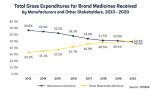
 In 2020, over half of total spending on brand medicines went to the supply chain, middlemen and other stakeholders, overtaking the amount going to drug manufacturers for the first time, according to a new study.

The report from Berkeley Research Group (BRG) – which was funded by the pharma industry trade group PhRMA – reveals a steady decrease in the proportion received by drugmakers from around 67% in 2013 to 49.5% in 2020.

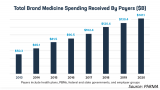
Over the same period, total gross expenditures on brand and generic medicines nearly doubled – from $268 billion to $517 billion, according to the report.
The data plays into the ongoing debate about the factors behind high medicine prices in the US, with pharma manufacturers and the middlemen – pharmacy benefit managers (PBMs) and the like – each pointing fingers at each other.

Drugmakers blame PBMs for pocketing the discounts they negotiate with companies instead of passing them onto patients, but PBMs say high list prices, pay-for-delay deals to keep generics off the market, and evergreening tactics to extend patent lives are at the root of the problem.

BRG – which says it aims to bring “clarity” to drug distribution and payment processes – said insurers, PBMs and government programmes received more than $141 billion in spending on brand medicines in 2020, up from $50 billion in 2013.

Growth in spending on branded medicines was driven “primarily by increases in payers’ statutory and negotiated rebates and fees,” it says.

That ties in with other research suggesting that rebates demanded by PBMs or required by federal schemes, such as the 340B drug discount programme – which provides vulnerable patients with medicines at a steep discount, provided at safety-net hospitals and clinics – are closely linked with rising list prices for drugs.

The argument has been made that reducing or eliminating rebates could result in lower list prices and reduce out-of-pocket expenses for patients.

“Negotiated rebates and discounts have continued to grow in recent years, increasing gross drug expenditures but reducing net spending to the health plans and PBMs that receive these payments.” says the report.

While these have offset price increases and kept net price growth roughly in line with inflation, there may be a knock-on effect on patients in the form of deductibles and co-pays that are pegged at the list price rather than the lower net costs paid by health plans.

BRG says the brand manufacturers are retaining a shrinking share of expenditures each year, and that trend “is expected to continue for the foreseeable future in the absence of legislation or regulation to reform the pharmaceutical supply chain.”

PhRMA president and chief executive Steve Ubl said that when half of what is spent on medicines goes to organisations that have nothing to do with making them, the system needs to change.

“It’s time that policymakers accurately diagnose the problems that exist across the supply chain and the challenges patients actually experience,” he asserted. “We must address what is really driving up costs for patients.”

https://pharmaphorum.com/news/supply-chain-middlemen-pocket-half-of-us-branded-medicine-spending/

Novo Nordisk moves to strengthen obesity efforts

 After securing FDA approval for Wegovy last year, Novo Nordisk is strengthening its position in the obesity space through a collaboration with EraCal Therapeutics.

Under the joint research plan, the Danish giant will work with EraCal to identify novel drug targets relevant for food intake regulation and additional metabolic phenotypes.

Although specific details of the collaboration are yet to be released, EraCal has confirmed that the duo will utilise its phenotypic drug discovery platform to identify potential targets.

Central nervous system-controlled behaviour, such as food intake, is notoriously difficult to explore in vitro. However, this research will be conducted in zebrafish larvae, an emerging vertebrate drug discovery platform that will help scientists gain insight into the signalling pathways of potential new targets underlying the control of metabolic health.

“The zebrafish platform offers a unique opportunity for unbiased, high-throughput phenotypic screening of human-relevant peptide and small molecule libraries stemming from our drug discovery efforts within obesity,” says Dr Kirsten Raun, scientific vice president, global obesity and LD research, Novo Nordisk A/S.

Founded in 2018 as a spin-off of the University of Zurich and Harvard University, EraCal is already using this technology to develop a novel anti-obesity drug, named Era-379.

“Combining EraCal’s phenotypic screening platform with Novo Nordisk’s expertise within pharmaceutical peptides and metabolic diseases will contribute to the discovery of novel drug candidates for the treatment of obesity,” said Josua Jordi, CEO of EraCal. “We are excited to join forces with the world-leading pharmaceutical company in the cardiometabolic space and together lead innovation to transform the standard of care.”

Partnering with EraCal builds upon the success of Novo Nordisk’s Wegovy (semaglutide) chronic weight management drug, which was approved by the FDA in June 2021.

Securing FDA approval was a huge development for the obesity space, marking the first approval for a weight management drug to be granted by the regulator since 2014.

Originally approved to treat diabetes, the drug works by mimicking a hormone called glucagon-like peptide-1 (GLP-1) that targets areas of the brain that regulate appetite and food intake. The medication dose must be increased gradually over 16 to 20 weeks to 2.4 mg once weekly to reduce gastrointestinal side effects.

https://pharmaphorum.com/news/novo-nordisk-moves-to-strengthen-obesity-efforts/