Search This Blog

Monday, January 17, 2022

China Halts All Foreign Mail Due To COVID Threat As Tianjin Reports 80 New Cases

 With the Winter Olympics in Beijing set to start in just a few weeks, the CCP is still struggling to suppress a handful of small but alarming outbreaks of COVID, several of which have involved cases of the omicron variant.

And now, in the capital city, Beijing officials are warning locals not to order items and products from abroad, because they're worried that COVID might be carried into the country on the outsides of these packages. Or at least that's what they want the public to think.

Chinese authorities have been warning for years that COVID might be spread on the packaging of foodstuffs and other goods shipped internationally, something that many scientists have questioned, but that Chinese authorities have nonetheless kept alive with their state-controlled media.

For example, all new arrivals to the city must take a virus test within a day of travel to show that they are testing negative, regardless of whether they have been vaccinated or not.

Health official Pang Xinghuo told reporters on Monday that the virus had been found on the surface of a letter the infected person had received from Canada, as well as inside the unopened letter, according to AFP.

Dozens of letters from the same batch were tested, and five showed positive traces of COVID, Pang said, including samples from inside unopened letters. Beijing's CDC said the possibility that the woman was infected by a parcel from another country could not be ruled out.

Nordea's economists still expect China's economy to grow at a pace of 5% over the next year, despite the risk posed by omicron. China's growth outlook stabilized in the last quarter of 2021.

The main factors that adversely affected China's growth prospects in the second half of 2021 were the tight COVID policy and the real estate sector slowdown. They are expected to continue to dampen. And on a positive note, the shortage of electricity has eased since the start of October. Beijing's real problem, according to Nordea, is that it doesn't seem to have an "exit strategy" from its "COVID Zero" lockdown-centric approach.

Meanwhile, in Tianjin, a port city that's just 130 Km from Beijing, another 80 local cases of COVID have been reported, the biggest daily jump yet. The city and the port are still open and running as authorities have locked down a handful of neighborhoods in the city.

For the record, Tianjin, which is situated about 30 minutes by train from Beijing, is one of China's largest cities by population and home to one of its most active ports. It is the "recommended" port of entry for goods for the Winter Olympics and operations have not been affected by the outbreak, according to the state-controlled local media.

https://www.zerohedge.com/covid-19/china-halts-all-foreign-mail-due-covid-threat-tianjin-reports-80-new-cases

Most Myeloma Patients Not Eligible for CAR-T in Real-World Setting

 In 2021, the FDA approved idecabtagene vicleucel (ide-cel; Abecma), the first chimeric antigen receptor (CAR) T-cell therapy for patients with relapsed/refractory multiple myeloma.

At the American Society of Hematology (ASH) annual meeting, researchers presented findings on what proportion of real-world myeloma patients, particularly older adults, would be eligible for this treatment.

In the video, courtesy of the Video Journal of Hematological Oncology (VJHemOnc)Luciano Costa, MD, PhD, of the University of Alabama at Birmingham, comments on the data.

Following is a transcript of his remarks:

So at this meeting, my colleague, Dr. Smith Giri, is presenting a very interesting paper in the format of an abstract. He used the Flatiron Health Electronic Health Record database with literally thousands of patients throughout the United States, both in the academic setting and the community setting. And he asked the question, how often are people likely to achieve the current indication for the CAR T-cell therapy that we have approved, which is ide-cel. And just to remind your audience that approval by the FDA is [after] four prior lines of therapy.

And what we learned is pretty concerning, that less than 15% of the patients reach that fourth line of therapy and are able to receive subsequent therapy. Most patients die from disease progression before getting to that point. And that proportion is even lower among the patients who are 70 or older, who are the vast majority of the myeloma patients.

So I think that should shed some light on the real-world applicability of CAR T-cell therapy and also the need to generate information, clinical information, on the use of such an impressive resource, in earlier lines of therapies as well in populations that are often not represented in clinical trials, particularly patients with renal dysfunction or other important comorbidities.

https://www.medpagetoday.com/meetingcoverage/ashvideopearlsmm/96675

Caution: Paxlovid Interacts With Many Heart Meds

 After looking closely at the drug-drug interactions listed for Pfizer's new oral COVID-19 drug ritonavir-nirmatrelvir (Paxlovid), I realized that a large percentage of my patients are taking medications on the list.

The antiviral was granted FDA emergency use authorization in late December for the treatment of mild-to-moderate COVID-19 in patients at high risk of severe illness.

Patients with hypertension, coronary artery disease, atrial fibrillation (Afib), and hyperlipidemia should pay close attention to what follows if they are considering starting the drug, as they likely will need to stop or modify their cardiac medications and monitor their blood pressure and heart rates closely while taking it.

Ritonavir has long been used to increase the levels of anti-HIV medications by strongly inhibiting the CYP3A system, which metabolizes many cardiac (and non-cardiac) drugs including nirmatrelvir, the active anti-SARS-CoV-2 antiviral.

Cardiac Rhythm Drug Interactions With Ritonavir-Nirmatrelvir

Cardiac patients taking antiarrhythmics are highly likely to experience significant drug-drug interactions if they take ritonavir-nirmatrelvir, and should consult with their cardiologist about the best approach.

The FDA's Health Information for Providers document on ritonavir-nirmatrelvir lists several drugs that are highly dependent on CYP3A for clearance and elevated concentrations are associated with serious and/or life-threatening reactions: ranolazine, amiodarone, dronedarone, flecainide, propafenone, quinidine, bepridil, and systemic lidocaine.

Note that ritonavir coadministration is contraindicated with dronedarone, encainide, flecainide, propafenone, and quinidine. The first four are used for the maintenance of sinus rhythm in patients with Afib. If a patient is on one of these, the choices would be:

  • Stop them if the increased risk of the development of Afib is acceptable, or
  • Use an alternative to ritonavir-nirmatrelvir
  • I don't use quinidine and haven't seen a patient on it for 15 years.

Amiodarone has unique pharmacokinetics and even if stopped for several days, would still be in the cardiac tissue and have effects for weeks to months. Whether any patient on amiodarone could safely take ritonavir-nirmatrelvir is debatable. Input from cardiology, pharmacy, and infectious disease would be warranted before giving ritonavir-boosted nirmatrelvir to a patient on amiodarone.

Many of my Afib patients take flecainide for the maintenance of sinus rhythm. Some of them will definitely go into fibrillation if they miss one or two dosages, so we will have to carefully weigh options and individualize the approach for each patient should they reach criteria for taking ritonavir-nirmatrelvir. Flecainide can be started and stopped safely as an outpatient and often restarting it converts patients safely back to normal rhythm.

The NIH COVID-19 Treatment Panel's statement on ritonavir-boosted nirmatrelvir lists disopyramide, dofetilide, and mexiletine as other antiarrhythmics warranting alternative COVID-19 therapy.

Statin Drug Interactions

FDA also lists lovastatin, simvastatin, atorvastatin, and rosuvastatin as also being influenced by ritonavir-nirmatrelvir.

Fortunately, there is no short-term risk to stopping these drugs, so my advice to patients will be to stop taking the four statins as soon as COVID-19 is diagnosed and resume them 7 days after stopping ritonavir-nirmatrelvir.

Calcium Channel Blockers

Calcium channel blockers are also included among ritonavir-nirmatrelvir's drug-drug interactions.

These drugs are predominantly utilized for hypertension, thus if levels increase then blood pressure can drop too low. We sometimes utilize diltiazem also for Afib or premature beats; higher levels of diltiazem could result in both lower blood pressure and heart rate.

If ritonavir-nirmatrelvir is started in a patient on a calcium channel blocker, the most reasonable approach (supervised by a physician) would be to cut the dose in half and have the patient monitor the BP at home during the 5 days of ritonavir-nirmatrelvir and for 3-5 days after.

Blood Thinners

Most patients with Afib are taking either warfarin or one of the newer direct oral anticoagulants (DOACs).

FDA flagged two anticoagulants for ritonavir-nirmatrelvir users. Those on warfarin have to be wary of any new medication and should have their INR checked to monitor levels. Of the multiple DOACs, rivaroxaban (Xarelto) is the only one that should be stopped, according to the FDA.

Apixaban (Eliquis) is the blood thinner I most often use in my patients with Afib. While it is not mentioned by the FDA document, the manufacturer has recommended when co-administering with another preparation containing ritonavir a dose reduction to 2.5 mg twice a day. If the patient is already on a 2.5 mg dose, concurrent use should be avoided.

Other Considerations

Much of what was reviewed in a detailed article from June of 2021 is relevant to ritonavir-nirmatrelvir and cardioactive medications.

The drug interactions with ritonavir range from insignificant to mild to strong. There are some differences from the NIH recommendations in this chart.

Note that caution is recommended if a patient is on the antiplatelet drug clopidogrel (Plavix) and ticagrelor (Brilinta) is contraindicated. These drugs (plus aspirin) are essential in the early months after placement of a drug-eluting coronary stent. Consultation with a cardiologist is mandatory before stopping them.

Some beta-blockers, commonly used for a variety of indications by cardiologists, are on the caution/monitor category as are two angiotensin receptor blockers widely used for hypertension.

Based on this information, I think it makes sense to monitor heart rate and blood pressure twice daily on any cardiac patient taking ritonavir-nirmatrelvir and adjust medications accordingly.

Ranolazine, an antianginal drug I almost never prescribe but frequently stop, is contraindicated with ritonavir-nirmatrelvir. Similarly, ivabradine, a drug I've never prescribed is contraindicated.

We still have some patients with permanent Afib on digoxin and I would advise halving the dosage for 10 days and monitoring heart rate for them if ritonavir-nirmatrelvir started.

These substantial and highly significant drug interactions mean that cardiac patients and their physicians must review medications carefully before beginning a course of ritonavir-nirmatrelvir.

Anthony C. Pearson, MD, is a noninvasive cardiologist and professor of medicine at St. Louis University School of Medicine. He blogs on nutrition, cardiac testing, quackery, and other things worthy of skepticism at The Skeptical Cardiologist, where a version of this post first appeared.

https://www.medpagetoday.com/opinion/skeptical-cardiologist/96692

Pharma R&D return on investment at highest level in 8 years

 The return on investment for pharmaceutical research and development has risen to its highest level since 2014, according to Deloitte's 12th annual pharmaceutical innovation report.

Deloitte's analysis focused on projected returns from the late-stage pipelines of the 12 largest drugmakers by 2009 research and development spending, according to a Jan. 12 news release. Here are four key findings from the report:

  1. In 2021, return on investment for pharmaceutical research and development rose to 7 percent, from 2.7 percent in 2020. This marks the largest annual increase since Deloitte began releasing its report in 2010.

  2. The average cost of developing a new drug dropped to $2 billion in 2021, down from $2.4 billion in 2020.

  3. The estimate for peak sales per asset rose to $521 million in 2021, up from $422 million in 2020.

  4. The average cycle time for developing a new drug decreased for the first time since 2016. The average cycle time was 6.9 years in 2021, down from 7.14 years in 2020.

Some hospitals revisit COVID-19 vaccination mandates as Supreme Court upholds CMS rule

 Some healthcare organizations had suspended their requirements as legal proceedings continued over CMS' COVID-19 vaccination mandate for healthcare workers. However, hospitals and health systems are reevaluating their policies after the Supreme Court upheld the CMS rule Jan. 13.

Cleveland Clinic said in a statement shared with Becker's Jan. 14 that it is requiring vaccinations after previously announcing Dec. 2, 2021, that it would pause implementation of its vaccination policy.

The health system is requiring employees and those who provide services with its facilities to receive their first dose of an mRNA vaccine or their one-dose Johnson & Johnson vaccine by Jan. 27 and the second vaccine by Feb. 28.

"Those who do not receive their vaccinations and who do not have an approved exemption will be placed on an unpaid leave of absence," the statement said.

"We are proud that the majority of our caregivers are already vaccinated, and we are encouraging those who are not yet vaccinated to receive their vaccine as quickly as possible."

University Hospitals, also based in Cleveland, indicated that it plans to comply, too.

"We believe, consistent with the scientific consensus, that COVID-19 vaccines and boosters are the most effective way to protect our caregivers, patients and community from severe illness resulting in hospitalization and death," the health system said in a statement shared with Becker's on Jan. 14. "The overwhelming majority of our caregivers are vaccinated, and we are grateful to them all for their service during this challenging time. We are reviewing the most recent ruling to ensure compliance with federal requirements."

Nashville, Tenn.-based HCA Healthcare, after announcing in December that it would pause its vaccination mandate — except for states in which it operates that have their own mandates — said in a Jan. 14 statement shared with Becker's that it plans to adhere to the CMS rule. The health system also said it has always encouraged its workers to get vaccinated and made shots readily available.

"To date, more than 90 percent of HCA Healthcare colleagues have been vaccinated against COVID-19 or have been approved for a vaccine exemption for medical or religious reasons," HCA said. "Given the recent Supreme Court ruling, we will implement, in accordance with the CMS mandate rules, the requirement to vaccinate our healthcare workers who are covered by this policy, unless they qualify for an exemption." 

Leaders at another for-profit hospital operator, Dallas-based Tenet Healthcare, had sent staff a letter Dec. 1, 2021, saying that, until further notice, they would not enforce the CMS rule for individuals working in its facilities but would continue to encourage vaccination and accept vaccination information and exemption requests. Tenet did not have an updated comment as of Jan. 14. 

Additionally, Chris Mitchell, president and CEO of the Iowa Hospital association, issued a statement after the Supreme Court decision, saying the group has "always believed that Iowa's hospitals and health systems are best positioned to implement policies or appropriate clinical responses in their communities and should be allowed to do so." But with the high court upholding federal requirements, the association will work with hospitals to achieve compliance, he said.

The CMS rule requires healthcare facilities participating in the Medicare and Medicaid programs to establish a policy ensuring eligible workers are fully vaccinated, with exemptions allowed based on religious beliefs or recognized medical conditions. 

https://www.beckershospitalreview.com/workforce/some-hospitals-revisit-covid-19-vaccination-mandates-as-supreme-court-upholds-cms-rule.html

Airlines ask Biden administration for 'immediate intervention' on 5G

 Executives from the nation's largest airlines asked the Biden administration for "immediate intervention" in the planned rollout of 5G technology near major airports on Wednesday, warning of dire transportation and economic consequences.

The representatives of 10 carriers asked the administration in a letter obtained by CNN to further delay the rollout near airports where Federal Aviation Administration flight restrictions take effect once the technology kicks in. The aviation world is concerned 5G signals will interfere with aviation technology including the radar altimeter onboard planes.
"The ripple effects across both passenger and cargo operations, our workforce and the broader economy are simply incalculable," the executives wrote. "To be blunt, the nation's commerce will grind to a halt."
      The letter says discussions between the airlines and the telecommunications industry are ongoing. Carriers Verizon (VZ) and AT&T (T), which owns CNN's parent company, first delayed the 5G rollout until January, and then agreed to a more limited airport-focused delay that expires this week.
          "Unless our major hubs are cleared to fly, the vast majority of the traveling and shipping public will essentially be grounded. This means that on a day like yesterday, more than 1,100 flights and 100,000 passengers would be subjected to cancellations, diversions or delays."
          Verizon and AT&T declined to comment.
          The letter was addressed to the White House, Transportation Department, Federal Communications Commission and FAA. Signatories to the letter include members of Airlines for America: executives with Alaska Airlines, American Airlines (AAL)Atlas Air (AAWW)Delta Air Lines (DAL), Hawaiian Airlines, JetBlue Airways (JBLU)Southwest Airlines (LUV), United Airlines, and the airline operations at FedEx (FDX) and UPS (UPS).

          Some commercial planes cleared

          Federal officials are easing up some of the restrictions on commercial airliners set to take effect this week when new 5G technology comes online.
          The FAA said it has cleared for use two radar altimeters used in some Boeing (BA) and Airbus jets, a move that it says will allow many US commercial aircraft to make low-visibility landings at some airports.
          Days ahead of the Wednesday activation, the FAA says it has lifted restrictions on about 45% of the US commercial aircraft fleet and that about 48 of 88 impacted runways will be eligible for low-visibility landings. The approvals include Boeing's 737, 747, 757, 767, MD-10 and MD-11 and the Airbus A310, A319, A320, A321, A330 and A350.
            "Even with these new approvals, flights at some airports may still be affected," the FAA said in a statement. "The FAA also continues to work with manufacturers to understand how radar altimeter data is used in other flight control systems."

            Pfizer CEO Predicts Life On Earth 'Will Return To Normal' In The Spring

             Just a few days ago, Bill Gates shared some of his (revised) thoughts on the COVID pandemic and the trajectory that omicron has left us on. Several weeks after warning that omicron's heightened infectiousness might send the pandemic into overdrive, the Microsoft founder postulated instead that omicron might hasten the end of the pandemic by leaving the human population with more antibodies against the virus. As a result, SARS-CoV-2 might enter its endemic stage more quickly, Gates suggested.

            This view, that the end of the pandemic might finally be at hand after two years of suffering, has become increasingly popular as of late. Take this piece from the BBC"Endemic COVID: Is the pandemic entering its endgame?".

            While the piece mostly focused on the UK, the sense is that the developed world more broadly is closer to the end because of its access to vaccines.

            So, is a new Covid-era truly imminent and what will that actually mean for our lives?

            "We're almost there, it is now the beginning of the end, at least in the UK," Prof Julian Hiscox, chairman in infection and global health at the University of Liverpool, tells me. "I think life in 2022 will be almost back to before the pandemic."

            What's changing is our immunity. The new coronavirus first emerged two years ago in Wuhan, China, and we were vulnerable. It was a completely new virus that our immune systems had not experienced before and we had no drugs or vaccines to help.

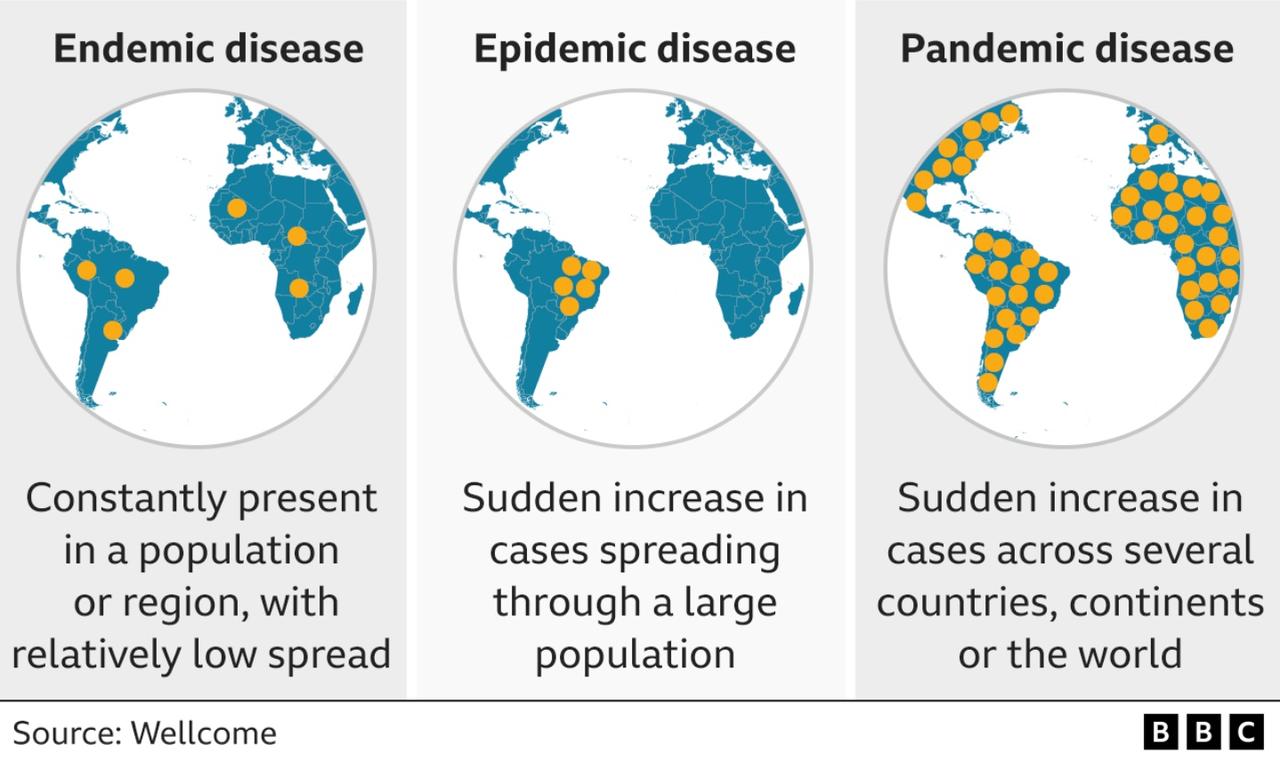
            It even came with his handy illustration depicting the difference between "pandemic" and "endemic" COVID:

            Source: The BBC

            Well, it appears the CEO of Pfizer has caught on to this narrative - and he approves. Speaking to the French media, Pfizer CEO Albert Bourla that while he expects COVID to continue to circulate for many years to come, he expects future waves won't cause the types of restrictions that people have become used to over the last two years, and that life will return to "normal" in the spring.

            Bourla told French news outlet Le Figaro in an interview published Jan. 16 that he expects a "return to normal life" at some point in spring of this year. However, he added the caveat that the mysterious dynamics of COVID's spread make accurate predictions more difficult.

            "We will soon be able to resume a normal life," Albert Bourla told the French paper. "We are well positioned to get there in the spring thanks to all the tools at our disposal: tests, very effective vaccines and the first treatments that can be taken at home."

            He also credited improvements in COVID testing, vaccines, and therapeutics for his optimistic outlook, telling BFM TV that he expects the current omicron-driven wave to be the "last with so many restrictions."

            But given its affinity for its human hosts, COVID will likely be "very difficult to get rid of," which is why Bourla expects it to become endemic, with the occasional seasonal flareup, like the flu.

            Finally, the Pfizer CEO shared details of local partnerships that he said would help France produce more of Pfizer's COVID fighting drug Paxlovid.

            With his approval rating at an all-time low, President Biden better hope the likes of Bourla and Gates are right. Ending the COVID pandemic might be the only thing that could help Biden regain some support among the tired and frustrated American electorate.

            https://www.zerohedge.com/covid-19/pfizer-ceo-predicts-life-earth-will-return-normal-spring