Search This Blog

Friday, January 21, 2022

JPMorgan Models War Between Russia And Ukraine: Sees Oil Soaring To $150, Global Growth Crashing

 With Morgan Stanley joining Goldman and calling for $100 oil, and Bank of America's commodity strategist Francisco Blanch one-upping both, and today laying out the case for $120 oil...

... on Friday afternoon JPMorgan trumped all of its banking peers with a report that is especially troubling if not so much for the implications from its "theoretical" modeling, but for the fact that Wall Street is now actively assessing what may be the start of World War 3.

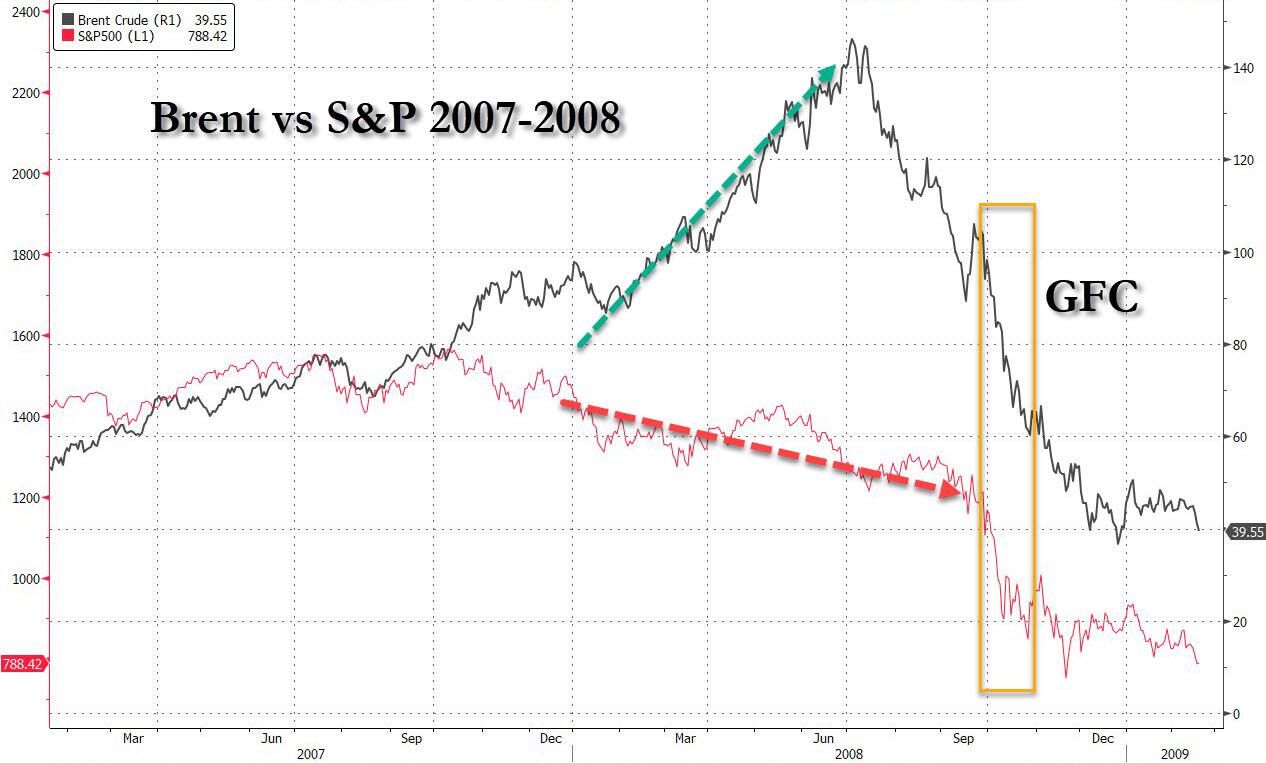
In a note from the bank's economists Joseph Lupton and Bruce Kasman (available to pro subs) which picks up where our article "Shades Of 2008 As Oil Decouples From Everything" left off, JPM writes that oil shocks have a long history of driving cyclical downturns, with US recessions often associated with oil price spikes...
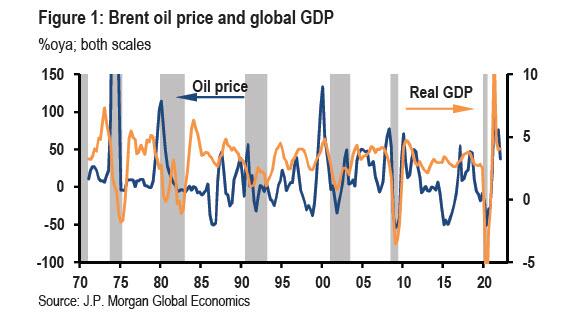
... most recently of course the surge in oil to all time highs in 2008, which some say sealed the fate of the global financial crisis.
So looking at the latest geopolitical tensions between Russia and Ukraine, JPM warns that "these raise the risk of a material spike this quarter." That this comes on the back of already elevated inflation and a global economy that is being buffeted by yet another wave of the COVID-19 pandemic, JPMorgan sees the risk of a kinetic war breaking out as adding "to the near-term fragility of what is otherwise a fundamentally strong recovery."

Drilling down, JPM considers a scenario in which an adverse geopolitical event between Russia and Ukraine materially disrupts the oil supply. This scenario envisions a sharp 2.3 million b/d contraction in oil output that boosts the oil price quickly to $150/bbl—a 100% rise from the average price in 4Q21.

Given that this would be solely a negative supply shock, the impact on output is to reduce global GDP by 1.6% the bank calculates based on its general equilibrium model. And with global GDP projected to expand at a robust 4.1%ar in 1H22, the economist due project that "this shock would damp annualized growth to 0.9% assuming the adjustment takes place over two quarters. Inflation would also spike
to 7.2%ar, an upward revision of 4%-pts annualized."

It gets worse: in addition to the drag from a sharp contraction in oil supply our models estimate, there are two other channels through which this shock could damage global growth.

  • The first relates to the repercussions of a Russian intervention in Ukraine. The US, coordinating with allies, would likely impose sanctions on Russia. While the possibilities vary widely in scope, they will likely impact negatively on sentiment and global financial conditions.
  • Second, JPM estimates incorporate the realized behavior of major central banks over the past two decades whereby oil price shocks associated with geopolitical turmoil have been perceived to pose a greater threat to growth than inflation.

Against the backdrop of a year of already elevated inflation and extremely accommodative policies, JPM warns that central banks may display less patience than normal—particularly in the EM, where rising global risk aversion may also place downward pressure on currency values.

To be sure, as with any Wall Street analysis that models war, JPM is quick to caveat its findings, noting that "it is important to recognize that the scenario of a jump in the oil price to $150/bbl is premised on a sharp and substantial shock to the oil supply. History has proven that such large and adverse shocks do material damage to the macroeconomy. In this regard, the results reported here should not be a surprise but seen as useful for quantifying the damage based on a carefully specified general equilibrium model using generally accepted elasticities."

Boilerplate language aside, what is notable is that for months we have been wondering what "latest and greatest" crisis will replace covid as the "green light" that central banks and governments need to perpetuate not only QE and NIRP, but also the all important helicopter money. Now we know.

https://www.zerohedge.com/markets/jpmorgan-models-war-between-russia-and-ukraine-sees-oil-soaring-150-global-growth-crashing

Low-cost drug Heparin effective and safe treatment for COVID-19

 Heparin, a widely available and affordable drug, has found to limit lung damage when inhaled by COVID-19 patients.

The world-first findings by researchers from The Australian National University with King's is published today in the British Journal of Clinical Pharmacology.

The researchers are coordinating multiple studies tracking hospital patients infected with SARS-CoV-2 in 13 countries who were given doses of inhaled heparin.

Researchers found breathing and oxygen levels improved in 70% of patients after inhaling a course of heparin. Heparin is unique as it has anti-viral, anti-inflammatory and anti-coagulant effects which are considered relevant for the treatment of patients with COVID-19.

Patients with severe COVID-19 disease develop blood clots in the lungs which can be lethal. Blood thinners, such as Heparin, can prevent such clots from forming. Because the drug has  properties and calms the immune system, it can be used at different stages of treatment. Indeed, treated patients included in the studies were not uniform in their COVID-19 disease severity, which suggests inhaled Heparin is safe and effective to use across the spectrum of COVID-19 disease.

Study lead Professor Frank van Haren, from The Australian National University, said: "This drug is already available in hospitals all over the world and it is a very inexpensive drug. If it is as effective as our early results suggest, it could have a major impact in our fight against COVID."

"Inhaled heparin has antiviral properties which work by binding to the spike proteins the coronavirus uses to enter the cells of the body. Inhaled heparin effectively stops the virus infecting cells in the lungs and could also stop people from getting the virus from others, states co-author Professor Clive Page, who is co-leading the global studies from the Institute of Pharmaceutical Science. He added: "It also works as an anti-inflammatory drug—the medicine has the ability to calm everything down when the body is mounting an exaggerated response to the virus. We already know heparin can reduce  caused by this inflammation and the immune response overdrive that we see in other lung diseases which could provide benefit to patients hospitalized with COVID-19.

He added: "There is no other drug that has these three different effects—anti-viral, anti-inflammatory and anti-coagulant."

Heparin is normally administered via injection, however when inhaled the drug shows promise as treatment for COVID-19. The authors will continue to collect evidence that inhaled heparin works as a treatment and prevention for COVID-19.

van Haren added: "Most COVID experts agree that vaccination alone is not going to stop the pandemic. This could really assist in poorer countries where vaccination is challenging and we think it could help front line workers who could use it as a preventative measure.

"Inhaled heparin is a promising new possibility to provide a low-cost, safe and effective treatment for COVID-19 that is available and affordable to low and middle-income countries around the globe."


Explore further

Nasal spray to fight COVID-19 heads to clinical trial

More information: Frank M. P. Haren et al, Inhaled nebulised unfractionated heparin for the treatment of hospitalised patients with COVID‐19: A multicentre case series of 98 patients, British Journal of Clinical Pharmacology (2022). DOI: 10.1111/bcp.15212
https://medicalxpress.com/news/2022-01-low-cost-drug-heparin-effective-safe.html

'Breakthrough infections spur strong antibody responses'

 A recent study looked at the strength, durability and breadth of neutralizing antibody responses generated by breakthrough infections in individuals vaccinated against SARS-CoV2.

The findings are published this week in Cell, one of the scientific journals of Cell Press. Alexandra Walls and David Veesler in the Department of Biochemistry at the University of Washington in Seattle led the project.

Characteristics of the delta and omicron coronavirus variants of concern include enhanced transmissibility and immune evasion even in non-immunologically naïve individuals, compared to the ancestral pandemic coronavirus.

These characteristics, and the waning of immunity from vaccines, have led to  in vaccinated individuals. For the most part, otherwise healthy people who are vaccinated against the SARS-CoV-2 usually do not have severe symptoms if they do end up contracting the virus.

The researchers wanted to understand what effect catching the virus after being vaccinated has on neutralizing , and to see how durable and broad these responses are. Their hope is that advancing such knowledge will help guide  and pandemic mitigation strategies.

Through their project the researchers learned that the degree of antibody response depended on whether a person has had one, two, three, or four exposures to the spike protein through , vaccination, or a mixture of the two. The scientists also checked antibody responses in groups of individuals who had been vaccinated after having COVID-19, those who were previously vaccinated and experienced a breakthrough infection, those who were vaccinated only, and those who were boosted and therefore vaccinated three times.

Among their study subjects, those who had completed a three-vaccination protocol, and those who had been vaccinated after recovering from COVID-19, and those with a breakthrough infection after vaccination launched almost comparable neutralizing antibody responses, in terms of magnitude and breadth. Their serum binding and antibody neutralizing responses to the spike protein in the current pandemic coronavirus variants were much more potent and lasting than those generated by people who had received only two doses of COVID-19 vaccine or who had a previous infection not followed by vaccination.

This observation suggested that the increased number of exposures to SARS-CoV-2 antigens, either through infection and vaccination or triple vaccination, enhanced the quality of antibody responses.

The researchers also looked at how broad the elicited antibodies could be. They investigated neutralization of the divergent omicron SARS-CoV-2 variant of concern, currently responsible for the majority of cases in the United States. Their findings showed that boosted individuals (or those that have a mixture of infection and double vaccination) have neutralizing antibodies at similar levels to subjects vaccinated twice against the original ancestral strain. This suggests a large amount of immune evasion, but that vaccine boosters can help close the neutralizing antibody gap caused by omicron.

Looking outside of the SARS-CoV-2 family shows a similar pattern, where repeated and multiple exposures improves the otherwise weak neutralizing antibody response to SARS-CoV. Finally, the authors did not identify improvements in antibody binding to common cold causing coronavirus spike proteins like OC43 or HKU1. This suggests that repeated SARS-CoV-2 exposure does not improve spike reactivity to more divergent coronaviruses. These findings support the development of broader sarbecovirus or coronavirus vaccines to be prepared in the event of a future spillover event.

The study groups consisted of about 15 people, from the Hospitalized or Ambulatory Adults with Respiratory Viral Infections, or HAARVI, project at the UW in Seattle. HAARVI, led by UW Medicine infectious disease physician Helen Chu, looks at recovered COVID-19 patients to study immune responses over time, to understand the long-term consequences of the infection, and to compare immune responses from vaccines and natural infections.

Researchers from the Department of Medicine and the Department of Laboratory Medicine and Pathology at the UW School of Medicine, and from Humabs Biomed SA, a subsidiary of Vir Biotechnology, also helped conduct the study.

The title of the Cell paper is "SARS-CoV-2 breakthrough infections elicit potent, broad and durable neutralizing ."


Explore further

Persistent T cell response to omicron after infection and vaccination

More information: Alexandra C. Walls et al, SARS-CoV-2 breakthrough infections elicit potent, broad and durable neutralizing antibody responses, Cell (2022). DOI: 10.1016/j.cell.2022.01.011
https://medicalxpress.com/news/2022-01-breakthrough-infections-spur-strong-antibody.html

IBM to sell Watson Health assets to Francisco Partners

 IBM on Friday announced a deal with Bay Area-based Francisco Partners to sell off healthcare data and analytics assets from its Watson Health business.

WHY IT MATTERS
Financial terms of the deal were not disclosed by the companies involved, but Bloomberg reports the price tag was more than $1 billion. The parties say they expect to close the sale in the second quarter of 2022.

With the acquisition, the Francisco Partners will acquire "extensive and diverse" datasets and technology products amassed and built by IBM and its various healthcare acquisitions over the years, such as Clinical Development, Health Insights, MarketScan, Micromedex, Social Program Management and other imaging and radiology tools.

The agreement will create a new standalone company that will continue serving existing provider, imaging, life sciences, payer and other healthcare clients, according to IBM and Francisco Partners.

With more than $30 billion in assets and a two-decade list of investments in hundreds of technology companies, the private equity firm's current and past investments in the digital health sector include firms such as Availity, Capsule, GoodRx, Trellis and Zocdoc.

"Partnering with corporations to execute divisional carve-outs has been a core focus of Francisco Partners," said Justin Chen, principal at Francisco Partners, in a statement. "We look forward to supporting the talented employees and management team, helping the standalone company focus on growth opportunities to realize its full potential, and delivering enhanced value to customers and partners."

THE LARGER TREND
Like another recent acquisition, this deal is not exactly a surprise. Discussion about the broad contours of what such a sale might look like had been circulating this month – and, indeed, as far back as early last year. (A potential Oracle-Cerner merger, meanwhile, had first been mooted way back in 2008.)

Unlike Oracle's big-ticket buy, however, this one – which, as IBM was hoping, found a winning bidder by January, apparently for the price it was seeking – is more about getting out of the healthcare space than digging a deeper foothold.

Watson was the subject of a lot of early hype, of course, with not a few big promises about its potential for AI-powered clinical decision support. And over the past decade, IBM has spent billions scooping up businesses – Merge Healthcare, Phytel, ExplorsysTruven Health Analytics and others – to build out the Watson Health portfolio.

But challenges with Watson have been well documented.

"The goal would have been to apply IBM’s AI tools to derive advanced insights but IBM evidently could not bring that vision to fruition," said analyst Paddy Padmanabhan, founder and CEO of Damo Consulting, in a statement sent to Healthcare IT News.

"IBM’s decision to sell its data assets is an indication that it’s not just enough to have the data," he said. "Applying advanced analytics on the data to generate insights that can make a difference in real-world applications is where the true value lies."

And now it's up to Francisco Partners to find profitability from those datasets and analytics tools.

IBM, meanwhile, has been loudly signaling its intent to shift focus toward what it sees as a "$1 trillion hybrid cloud opportunity," in CEO Arvind Krishna's words. And it has backed that goal with deals such as its $34 billion acquisition of Red Hat in 2018.

Krishna has promised "a maniacal focus on our open hybrid cloud platform and AI capabilities," and pledged that "day by day, product by product, project by project – we are dedicated to helping our clients unlock the immense value this represents."

Adding a billion dollars or so to the balance sheet, and freeing up other assets that haven't been paying dividends in the healthcare space, appears to be the next step in pursuit of this goal.

"The AI space has also been evolving and the industry leaders have invested in harnessing data and generating insights in new and innovative ways, especially with cloud-based models," said Padmanabhan. "Selling off the data assets essentially means an end to the Watson Health experiment. However, it may allow IBM as an organization to refocus and develop a new approach to healthcare."

ON THE RECORD
"Today's agreement with Francisco Partners is a clear next step as IBM becomes even more focused on our platform-based hybrid cloud and AI strategy," said Tom Rosamilia, senior vice president of IBM Software.

"IBM remains committed to Watson, our broader AI business, and to the clients and partners we support in healthcare IT," he added. "Through this transaction, Francisco Partners acquires data and analytics assets that will benefit from the enhanced investment and expertise of a healthcare industry focused portfolio."

https://www.healthcareitnews.com/news/ibm-sell-watson-health-assets-francisco-partners

FDA OKs 2nd Indication for AbbVie SKYRIZI in Psoriatic Arthritis

 SKYRIZI® (risankizumab-rzaa) met the primary endpoint of ACR20 at week 24 in two pivotal studies, demonstrating significant improvement in joint symptoms, including swollen, tender and painful joints, compared to placebo[1,2,3]

- SKYRIZI also showed improvement in dactylitis and enthesitis - inflammation of fingers, toes and sites at which tendons or ligaments attach to bone[1,2,3]

- SKYRIZI is now the only IL-23 inhibitor approved for adults with moderate to severe plaque psoriasis and active psoriatic arthritis that can be administered with a single injection four times a year (after two starter doses at weeks 0 and 4)[1]

https://finance.yahoo.com/news/u-fda-approves-second-indication-213000353.html

Hochul deploys mental health teams to NYC after fatal subway shove

 Gov. Kathy Hochul is speeding up the deployment of mental health workers to help address homelessness in the New York City subway system in the wake of a fatal shove at the Times Square stop.

The state’s Office of Mental Health will send 12 rapid-response teams of eight to 10 members to the Big Apple to help deal with often-ignored illnesses that have led to some of the more horrific crimes recently.

The initial two-team deployment to New York City will see 20 members in the subway system as early as next week, Hochul’s office said. The members will double by spring across four teams and eventually swell to at least 96 staffers by the summer.

An additional eight teams will be deployed to other cities across the state by the end of the year, the governor’s office said.

The announcement comes just days after Michelle Go was pushed to her death at a Times Square subway station, allegedly by Martial Simon, 61, who was ordered to a psychiatric facility after appearing in court.

Michelle Go
Michelle Go was pushed to her death at a Times Square subway station.

The teams, dubbed “safe options support,” will be comprised of social workers sent throughout the subway system and will be rolled out as soon as next week.

The news came Friday with the state posting a request for proposals online, allowing nonprofits to submit bids on the program.

“Working with our partners in New York City, we’re taking action to help make our streets and subways safer,” Hochul said in announcing the rollout.

Martial Simon, 61, allegedly pushed Go in front of an oncoming subway train.
J.C.Rice

“Too many New Yorkers are sleeping on our streets and subways — they need resources and support to get back on their feet. By deploying outreach professionals to targeted areas, we will help improve safety and ensure New Yorkers experiencing homelessness have the support they need.”

The expansion fulfills a promise from Hochul’s state of the state speech.

The initial plan for a $21 million annual investment into new mental health services was announced two weeks ago by the governor and Mayor Eric Adams. In this fiscal year, the program will come with an $11 million price tag. 

A man collects bottles in the 34th street N/R/Q/W subway station.
Gov. Kathy Hochul is deploying mental health workers to New York City in the wake of a fatal subway shove in Times Square that killed Michelle Go.
Stephen Yang

Adams praised the speedy rollout Friday, calling homelessness a nationwide problem that requires “collaboration across all levels of government” to address. 

“We applaud Governor Hochul for this new initiative focused on reaching and supporting fellow New Yorkers experiencing unsheltered homelessness, and we look forward to building on our partnership to identify new and compassionate ways in which we can help some of our city’s most vulnerable residents get back on their feet,” Adams said. 

The teams will be assisted by the MTA, NYPD, NYC Homeless services and other city agencies, the mayor added. 

https://nypost.com/2022/01/21/hochul-deploys-mental-health-teams-to-nyc-after-fatal-subway-shove/

Israel to scrap quarantine for children exposed to COVID-19 carriers

 Israel will ditch mandatory quarantine for children exposed to COVID-19 carriers, the government said on Thursday (Jan 20), citing a need to relieve parents and schools as case numbers spiral due to the fast-spreading but low-morbidity Omicron variant.

Prime Minister Naftali Bennett said that as of Jan 27, children will instead be required to take twice-weekly home antigen tests for the virus and, if they prove positive or feel unwell, absent themselves from school until they recover.

"Children are returning to continuity in schooling," he said during a televised address with his health and education ministers, adding that medical experts had determined that the young were on sufficiently "safe ground" to warrant the review.

The home kits will be supplied free of charge, he said.

https://www.channelnewsasia.com/world/israel-scrap-quarantine-children-exposed-covid-19-carriers-2449146