Search This Blog

Sunday, January 23, 2022

Megabanks Including Citi & JPM Order Workers Back To The Office In London & NYC

 In the latest sign that the "elites" have finally had enough of pretending to care about COVID safety precautions, two American megabanks announced on Friday new plans to recall workers to the office.

First, Citigroup (which unveiled a draconian vax mandate earlier this month with a deadline of compliance that has already passed) emailed a notice to staffers in the Greater NYC area asking them to start preparing to return to the office. It even set a preliminary date of Monday, Feb. 7 as the new 'first day back' for offices in NY, NJ & CT.

Citi has said it plans to continue to closely monitor local health data wherever it has offices across the US. Meanwhile, across the pond, the bank has asked its London staff to report to their office desks at least three days a week once the British government has finally decreed that Britons no longer need to work from home, according to Bloomberg.

For the record, the NYC-based bank asked its workers to revert to working from home at the start of the year as the US CDC's case numbers soared.
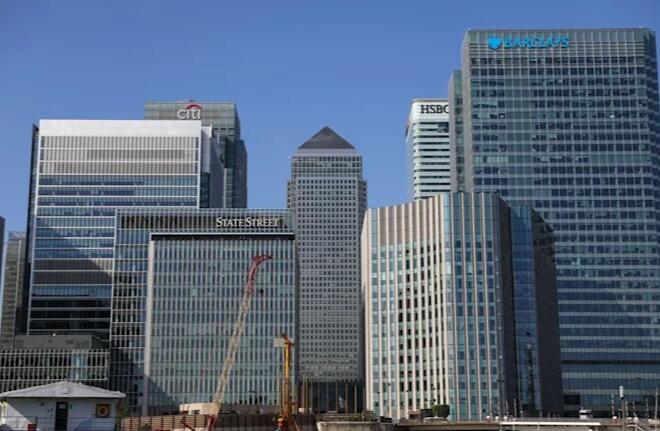
Citigroup has long said it will embrace remote work even after the pandemic subsides, and that the majority of its workers will be able to work from home some times - although they will still need to report to the office, too.

JP Morgan, meanwhile, has joined "a flurry of banks" telling staffers to get ready to head back into their offices in London once PM Boris Johnson finishes rolling back "Plan B" COVID restrictions - including COVID-19 passes, mask mandates, and work-from-home requirements - in England.

JPM, which just revealed that it's hiking the pay of Chairman/CEO Jamie Dimon, told staff in a memo (a copy of which was seen by Bloomberg) on Friday that it expects them to work "at least some days in the office every week" starting Feb. 1. The firm strongly encouraged staff to get vaccinated, but said that it isn't a requirement to enter the building (unlike its buildings in Manhattan).

While at least one "expert" quoted by BBG said staffers might be "reluctant" to return, others - including some of the bank's traders - never actually left.

While key workers including some traders have never left the office, many staff have been working remotely since the U.K. government introduced guidance to do so in December when the omicron variant was spreading rapidly. That was unwound on Wednesday and rules mandating people wear face masks in shops and on public transport will be dropped from Jan. 27.

[…]

That may be easier said than done. Allison English, deputy chief executive officer of workplace research firm Leesman, predicts that some employees will be reluctant to return.

"After two years at home, readapting to the office and bringing back commuting is going to throw some people off kilter," she said in an interview. "Sudden change is difficult and that can have an impact on employees' well-being and pose operational challenges for employers.'"

This is great news for the City of London, where shops, restaurants and other small businesses have suffered due to the area becoming like "a ghost town" for the past two years. But with DB, HSBC, Lloyds and practically every other bank operating in the City calling workers back to the office, establishments that had until recently seemed practically abandoned will likely be booming again.

https://www.zerohedge.com/markets/american-megabanks-including-citi-jpm-order-workers-back-office-london-nyc

Rising coffee tide lifts boats of Starbucks, Dunkin', Dutch Bros

 Americans have started grabbing their morning cup of coffee outside the house again, according to new data, in the latest signal that consumers are slowly reverting to pre-pandemic normalcy. 

Research from data analytics firm Placer.ai shows that foot traffic at chains like Dunkin', Starbucks (SBUX) and Dutch Bros. Coffee (BROS) topped the dining sector's in 2021. The firm referred to the morning coffee routine as a "proven necessity" based on customers' visits during the COVID-19 pandemic, despite shifts in daily schedules, and many white-collar professionals working from home. 

Foot traffic at the top ten performing coffee chains was up 2.8% compared to two years ago in June 2021, Placer.ai found, but dining visits were down 4.6%. By the end of last year, the contrast grew more apparent: In November, the coffee space saw an 8.4% jump in foot traffic compared to 2019 levels, while December saw a 7.5% increase. 

Meanwhile, the dining sector saw a decline of 6.4% and 1.8% compared to 2019, reflecting the rise of new COVID-19 variants.

"The numbers reveal that necessity and convenience are not the only two drivers of coffee shop foot traffic," Placer.ai said, with many customers opting to pay for a cup of joe outside of their homes. 

"For the many coffee-drinkers working from home, making coffee in their kitchen is no replacement for the experience of a trip to the coffee shop," the report added.

However, at-home coffee brands like Dunkin' and Cafe Bustelo from J.M. Smuckers (SJM) have also seen a boost from customers opting to drink their coffee at home. 

In an interview in late November, CEO Mark Smucker told Yahoo Finance the "entire business benefits from folks having stayed at home and continuing to stay at home as we go back to a new normal, where folks will probably work more time from home than away from home or in the office."

Dutch Bros muscles its way into the coffee convo

(Courtesy: Placer.ai)

When comparing foot traffic levels to 2019, newcomer Dutch Bros may be giving well-known players like Dunkin' and Starbucks a run for their money according to Placer.ai. Throughout 2021, the Oregon-based coffee chain saw a major spike in monthly visits compared to 2019, a jump that hit a high of 160% in December of 2021. 

Starbucks and Dunkin', meanwhile, only saw foot traffic increase by less than 20% throughout March to December, with declines in both January and February.

Ethan Chernofsky, CMO of Placer.ai, told Yahoo Finance LIVE in a recent interview that "beyond seeing visits going up over time, we see that visits per location number going up, which really indicates that loyalty" for the Dutch Bros brand.

"They're really focused on getting the product out in a really positive way, drive-thru and a fast service model that enables them to grow really quickly in a really efficient manner," he added.

In the past five and half years, Dutch Bros expanded its presence from 250 stores to nearly 500 stores, with plans to reach 800 stores by 2026. 

However, "expansion isn’t having a significant impact on visits to the current kings of coffee," Placer.ai noted in its report. Despite a smaller jump in foot traffic for the major brands throughout March to December compared to Dutch Bros, both companies have topped pre-pandemic levels. 

(Courtesy: Placer.ai)

According to Placer.ai's white paper, the "significant increase" in visits last March may be attributed to the release of spring menus. On top of that, warmer weather may have spurred cravings cold beverages which "often require special equipment and ingredients" that they may not have at home. 

Starbucks — where cold drinks currently dominate sales — continues to benefit from "pumpkin spice latte season." Foot traffic at the coffee giant was up 14.6% last November, the start of a holiday surge marked by the return of seasonal red cups.

Placer.ai believes that the overall well-being of major brands proves that the "the days of one coffee brand monopolizing a given region are drawing to a close." Dunkin' is seeing major growth in California, and Starbucks has gotten a boost in New York compared to two years ago.

"The coffee demand is strong enough that it can sustain several national leaders," the firm noted. "In fact, the data shows that multiple chains can be part of a single individual’s coffee mix by providing different values and products depending on the demand." 

Late morning effect

NORWELL, MA. - MARCH 17:  A Dunkin' worker hands a coffee out of a drive-thru window wearing gloves and a mask as the Coronavirus continues to spread on March 17, 2020 in Norwell, Massachusetts. (Staff Photo By Matt Stone/MediaNews Group/Boston Herald)
NORWELL, MA. - MARCH 17: A Dunkin' worker hands a coffee out of a drive-thru window wearing gloves and a mask as the Coronavirus continues to spread on March 17, 2020 in Norwell, Massachusetts. (Staff Photo By Matt Stone/MediaNews Group/Boston Herald)

One lasting "COVID-induced shift" is late morning visits to coffee shops. Last quarter, 26.2% of consumers visited their go-to coffee shops during the hours of 9 AM-12 PM, Placer.ai found. But in Q1 of 2020, a little more than 23 percent of customers visited during that time, with more customers opting to go midday (12 PM-3 PM), or in the late afternoon (3 PM-6 PM).

The report noted that in Q4, "this rise in late morning visits seems to come at the expense of visits in the late afternoon – between 3 PM and 6 PM" which have yet to return to pre-pandemic levels. 

This could have potential for coffee chains to rethink their offerings, depending on what they may crave.

"Early morning coffee seekers may look for different products and a different spatial layout than late afternoon and evening ones," the report indicated. It could allow chains to identify the needs of customers currently compared to the needs of what Placer.ai calls "pre-pandemic patrons," giving them a possible "leg up on the competition."

As the world looks to return to work, the concept of the "third place" may see a boost long-term as workers seek hybrid work models. 

"As more people looked for ways to meet with friends and family outdoors, buying a coffee to-go and sitting on an outdoor bench transformed from a lame date idea to a popular rendezvous concept," the report noted.

https://finance.yahoo.com/news/starbucks-dunkin-see-more-customers-than-pre-pandemic-levels-surpassing-dining-sector-120053873.html

Japan approves Pfizer COVID vaccine for children aged 5 to 11

 Japan’s health ministry has authorised the use of Pfizer and BioNTech COVID-19 vaccine in children aged between five and 11.

The vaccine, Comirnaty, is claimed to be the first in Japan to be approved for use in this age group. Once the Ministry of Health, Labor and Welfare grants special approval, Japan will join the UK and US in efforts to reduce the impact of COVID-19 in children.

Until now, the mRNA vaccine has only been available to individuals over the age of 12 in the country. However, with this approval, approximately seven million children will be eligible to receive a dose of the vaccine.

According to ministry officials, inoculations could begin as early as March once specific details of the roll-out are finalised.

“We’d like to carefully explain the safety (of the vaccine) and start inoculation as soon as possible to those who wish to receive it,” Noriko Horiuchi, minister in charge of promoting vaccine roll-outs, said at a press conference.

“It is a big thing to have an inoculation option when some children are infected with the Omicron strain,” she said.

While there are similarities in the active ingredients used to manufacture vaccines for both age groups, this version of the vaccine has been specifically developed for use in children.

According to the ministry, the Pfizer-BioNTech COVID-19 Vaccine for children aged five to 11 is administered three weeks apart as a two-dose primary series. It is a lower dose (10 micrograms) than is used for individuals 12 years of age and older (30 micrograms).

Clinical trial data from studies conducted by Pfizer in the US and other nations showed that the vaccine was 90.7% effective in preventing infections related to COVID-19 in children aged 5 to 11.

Moreover, while trial results did show side effects, including sore arms, fatigue and headaches in the patients the next day, these disappeared quickly, and there were no reported safety issues.

In February 2021, Pfizer’s mRNA vaccine against COVID-19 became the first to gain formal approval for use in Japan.

https://pharmaphorum.com/news/japan-approves-pfizer-covid-vaccine-for-children-aged-5-to-11/

Discovering Paxlovid

 BY DEREK LOWE

I'd like to recommend this article at C&E News by Bethany Halford on the development of Pfizer's coronavirus protease inhibitor, Paxlovid (nirmatrelvir). You'll see how the company had a terrific leg up on the problem via its work on the earlier SARS virus, which led to a protease inhibitor candidate that was never used, since the virus had disappeared from the human population by the time it was developed. The graphic at left (via C&E News) shows Paxlovid at top, then the earlier compound, and at bottom an advanced candidate that dropped out in favor of the final structure.

It's a good look at the sort of optimization that goes on in any med-chem project. The SARS compound was not orally available, for example, and the team knew that they had to fix that in order to make a real impact on the pandemic. Oral availability and gut permeability is a problem with several levels, but in this case a clear place to start was getting rid of the (many) hydrogen bonds in that earlier candidate. Pfizer's Dafydd Owen is also quoted in the article about that fused cyclopropyl ring, saying (and he's absolutely right, of course) that "You either win big or you lose big" when you tie things back into a ring in a med-chem optimization. But in this case, it looks like the potency didn't change much (in fact, it went down just a bit), but that was still a win, because it got rid of the leucine from the earlier compound and tying things back onto the next nitrogen got rid of another hydrogen bond donor.

Losing that one, though, meant losing a critical contact in the binding site, which is where that trifluoroacetamide came in. The team tried a number of different groups up there to pick up a new interaction where that methoxyindole used to be, and the TFA amide was the best in oral bioavailbility and potency. The article quotes a former colleague of mine, Jeremy Green, to the effect that this wouldn't be most chemist's first choice, and he's sure right about that - I'm sure many medicinal chemists' eyebrows went up when they first saw the Paxlovid structure. Trifluoroacetamides are just about the easiest amides to cleave off a nitrogen, actually; they're quite base-sensitive, but in the stomach and small intestine they're not going to hit the pH that will do the job (and human blood is very carefully buffered so it doesn't get that basic, either).

In fact, Pfizer has just today shared more preclinical information about the compound. Its affinity to the protease is good (Ki about 1 nanomolar), and it maintains potency against the Omicron variant just fine. Pfizer says that its data suggest the the compound should be able to maintain blood levels many times higher than needed to stop Omicron replication in cells, so the pharmacokinetics are in the right range, trifluoroacetamide notwithstanding.

Finally, there was the "warhead" group. It turns out that the chiral center next to the benzothiazole compound was more likely to epimerize than the one next to the nitrile, and the latter looked far easier to scale up. That last detail is, of course, a tremendous tiebreaker in a situation like this. Pfizer's chemists spent the whole optimization of the compound constantly looking over their shoulders at the manufacturing issues that each change would introduce, and I'm told that there were a number of ideas that they just didn't even bother with because they would have introduced too many scale-up problems compared to the available alternatives. Paxlovid itself, the article tells us, was first synthesized on July 22nd of last year, with 1.4 kilos prepared by earlier November for tox studies. The fact that it's already being shipped out to pharmacies is mind-boggling. Production is of course still ramping up (see this blog post for some thoughts on that process), but this is the hands-down all-time champion example of accelerated drug development, and I know of nothing that even comes close.

But remember, it was only possible because of that earlier work on the closely related SARS protease - and remember, at the time (and for some years thereafter!) that work looked like wasted effort for the most part. After all, there was no SARS to treat, and there were no other related coronaviruses out there causing trouble. But that's science: once you discover something, it stays discovered (or it had better, anyway), and that knowledge is out there waiting to be put to a new use. And also remember that there was some luck involved here, too, because there always is. You can bet that the Pfizer team was practically holding their breath as this compound went into tox studies, because (as I like to say) if you're not holding your breath then you haven't been doing drug discovery for very long. Anything can happen as you go into animal studies and into human trials, and we are very fortunate that this compound passed both of them cleanly. That's another reason this will surely remain the record holder for fast development: Paxlovid had as big a head start as you could possibly have, it is in the therapeutic area that has the fastest and most relevant preclinical models of anything in drug discovery, and it dodged every out-of-the-blue failure mode once it went into development. It was primed for quick emergency authorization by the FDA. And it had the backing of a huge company with huge resources, with thousands of very experienced and highly competent people going flat-out to make this drug a reality. 

So (unfortunately) Paxlovid does not herald some new era where it's just going to take us a few months to crank out the wonder drugs. No, we have the same issues that we always do. But everything came together for this one!


https://www.science.org/content/blog-post/discovering-paxlovid

Aduhelm and Medicare

 BY DEREK LOWE

Biogen (and a lot of other people) have been waiting to see what Medicare makes of their FDA-approved antibody therapy for Alzheimer's, Aduhalem (aducanumab). Medicare is going to be a big driver of the spending on any Alzheimer's drug, naturally, and normally an FDA approval would make Medicare's approval for payment almost automatic. Not this time. I won't recapitulate the entire story, but the approval of Aduhelm has been. . .controversial. And the launch of the drug has been a mess as well, with many insurance companies and hospitals saying that they won't pay for it. So the Medicare decision is an even bigger deal than ever, because many organizations are going to take their own cue from it.

Yesterday the Centers for Medicare and Medicaid Services (CMS) finally announced their decision: they will not pay for Aduhelm outside of its use in a controlled clinical trial. I think that's an excellent call, and I can recommend the full CMS document as a summary of the state of Alzheimer's research and therapy. It goes into the reasons to believe that amyloid is an appropriate target for treating the disease, and it goes into the reasons to doubt that idea. "The role of A-beta as cause versus marker of disease remains controversial", it concludes, and boy does it ever. It also notes that the therapeutic landscape is barren, and that existing medications "do not prevent, halt, or slow - let alone reverse - the disease". That's the hard truth, too, and they get to another one when reviewing anti-amyloid antibodies in general: "To date, no trial of an antiamyloid mAb has confidently demonstrated a clinically meaningful improvement in health outcomes (i.e., cognition and function) for AD patients. Thus, there is insufficient evidence to conclude that the use of monoclonal antibodies directed against amyloid is reasonable and necessary for the treatment of Alzheimer’s disease.  . ." What's more, given the side effects seen in the clinical trials of such agents, CMS concludes that evidence so far does not support the idea that the benefits - if any - outweigh the harms involved.

And as for Biogen's own arguments that their trial data showed a benefit to patients, the document says:

"Many published expert opinions and reports have questioned Biogen’s secondary analysis of trial data and its conclusions regarding aducanumab’s effectiveness. Most experts believed there was little, if any, reliable evidence to answer the key question of clinical benefit.. . .Our conclusion is that Biogen’s secondary analysis cannot overturn, definitively confirm, or substitute for, the RCT evidence. With conflicting results from two RCTs (EMERGE and ENGAGE), and a secondary analysis that did not resolve the difference between the two RCTs, CMS believes that the available evidence is insufficient to establish that the treatment is reasonable and necessary. . ."

I could not agree more. The CMS document goes on to spell out exactly the sort of clinical evidence that it believes is necessary for full reimbursement, and exactly the sort of clinical trial that it will approve the use of Aduhelm for in order to generate such data. But they're not approving payment for it for anything else. All this simply makes the FDA's approval decision more inexplicable, and (and many have pointed out) it opens the biggest gap that I think we have ever seen between a Medicare recommendation and the FDA. I've said many times that I think the Aduhelm approval was one of the biggest mistakes I've ever seen the agency make, and this is more evidence for that position. 

Biogen, of course, is out with statements about how this will restrict so many Alzheimer's patients from getting this FDA-approved drug, how can you do this to people in need, and so on. That same link has a statement from the industry trade group PhRMA: "With this proposal, CMS is writing off an entire class of medicines before multiple products have even been reviewed by FDA, positioning itself and not FDA as the key arbiter of clinical evidence." And that is some crap, let me tell you. You know what's been writing off this entire class of medicines? Their clinical trial results, which have been relentlessly negative. Believe me, if one of the other anti-amyloid antibodies shows up at the FDA with (for once) actual positive evidence of benefit and a favorable risk analysis, I'm sure CMS will cover that gladly. This is a decision about Aduhelm, based on its own clinical data and the class data that have been generated so far. Got something better? Roll it out and let's have a look. No, that PhRMA statement is shameful obfuscation and it's even more evidence of the harm that the Aduhelm approval is doing. PhRMA should want drugs that work; instead, they're coming out in favor of drugs that are approved and are reimbursed by insurance, and Aduhelm is evidence that those categories are not the same. I wish they were. I wish a lot of things.


https://www.science.org/content/blog-post/aduhelm-and-medicare

Will COVID Quickly Develop Resistance To New Pills From Pfizer And Merck?

 If it wasn't already bad enough that several experts have warned that US regulators are overlooking safety risks associated with the new generation of COVID therapeutic pills from Pfizer and Merck, researchers and regulators are also apparently worried that they might not even work - at least, not for long.

According to a report in WSJ, researchers and academics are already taking steps to keep an eye out for signs that COVID is evolving in response to exposure to pills like Paxlovid and Molnupiravir.

The hope is that the pills will save more lives, especially now that the vaccines and boosters have been surprisingly ineffective at prevent transmission and infection with the virus.

"We know this is likely to happen at some point, so we need to beat it to the punch and nip it in the bud before it gets out of hand and starts to take over," said Katherine Seley-Radtke, a medicinal-chemistry professor at the University of Maryland, Baltimore County, whose lab is studying antiviral combination therapies.

The manufacturers of the pills say that the length of a course - which is taken over just five days, too short for the virus to develop immunity, they say. Then again, nobody knows for sure.

Some believe what we know about how other viruses react to drugs might offer some insights: for example, HIV is more likely to develop a resistance to treatments consisting of a single drug, hence the use of cocktails. But HIV is a chronic disease, not an acute infection like COVID.

For what it's worth, researchers working for Pfizer and Merck say they saw no signs of resistance emerging during their clinical trials. But those only included a few hundred people. And there's always the question of whether efficacy will fade when faced with new variants.

"As with any virus, SARS-CoV-2 being no exception, there is a potential for the emergence of resistance that can impact existing therapies," the agency said. "As such, the FDA put mechanisms in place as part of the authorizations to help the agency understand the potential impact of variants on these products."

Independent researchers cited by WSJ say they suspect Paxlovid might be more likely to cause resistance to develop. That's because Paxlovid stops the virus by blocking an enzyme—called protease which is involved in replication.

Molnupiravir, on the other hand, is in a different class of antivirals. It stops the virus from multiplying by tricking an enzyme that SARS-CoV-2 needs to replicate into inserting errors into the genome of the coronavirus, short-circuiting the replication process and killing the virus.

Using a combination of drugs might help prevent resistance from developing. But as things stand, with these new drugs still in short supply, that might not be realistic.

Not to worry: Big Pharma is already looking at combining the new drugs with older (and less effective) treatments like remdesivir.

With so much research needed, researchers are preparing to conduct nearly 20 new trials seeking to enroll more than 100 participants each will be starting in the near future.

https://www.zerohedge.com/covid-19/researchers-worry-covid-will-quickly-develop-resistance-new-pills-pfizer-and-merck

Coronavirus case surge hindering economic recovery

 An omicron-driven surge of COVID-19 is hindering the economic recovery from the pandemic. 

The swift, record-shattering spike in coronavirus cases has dampened consumer activity, spurred layoffs and forced millions of Americans out of work to take care of themselves or a sick family member. Private sector data on dining and travel, rising weekly jobless claims, widespread staffing issues and school closures are all pointing to dismal January job gains and slower first quarter growth. 

While economists say the omicron variant will not derail the economy as a whole, millions of frontline workers, working parents and service sector businesses are staring down another brutal pandemic winter. 

"It's pretty clearly doing things that are bad to the economy,” said Claudia Sahm, macroeconomic research director at the nonprofit Jain Family Institute. 

“The underlying pace of the recovery is in a place where it can weather the storm. But there are clearly some workers and some families and some small businesses that are not going to weather the storm." 

A slowing recovery driven by rising COVID-19 cases is a major challenge for President Biden, who ran for the White House on a pledge to end the pandemic and rebuild the economy. The president’s approval ratings on his handling of COVID-19 and the economy have fallen steadily as both virus cases and consumer prices spiked. 

Biden’s sweeping social services and climate plan — a pillar of his economic agenda — is on ice after Sen. Joe Manchin (D-W.Va.) torpedoed the package in December and insisted Thursday negotiations must start “from scratch.” The Supreme Court also struck down Biden’s private sector vaccine mandate last week, disarming the president’s most aggressive attempt to curb the pandemic. 

While the White House is scrambling to send out millions of rapid tests and masks, omicron has already taken a toll on consumer sentiment and economic activity.  

Fifty-nine percent of adults believe normal activities pose “moderate” or “large” health risks, according to a poll from Ipsos and Goldman Sachs Investment Research, the highest total since March 2021. Those fears are likely behind a sharp drop in Transportation Security Administration airport throughput and OpenTable’s dining tracker. 

“Employers with public-facing workers, like schools and emergency service providers, appear to have had particularly large shares of their labor force isolate due to the virus,” wrote economists at Goldman Sachs in a Thursday research note. 

Roughly 12 million Americans missed work in the first ten days of January either to care for a loved one with COVID-19 or to avoid contracting it, according to a Moody’s Analytics analysis of Census Bureau data released Wednesday, twice the total during the same period in December. 

Weekly jobless claims also rose by 55,000 to a seasonally adjusted total of 286,000 last week, according to the Labor Department, reaching the highest level since October. 

Both the claims data and the Census Bureau survey cover the period when the Bureau of Labor Statistics (BLS) calculates the federal monthly jobs report—a foreboding sign for January employment growth. 

“With so many workers out, odds are high that the BLS will report employment declined in January,” tweeted Mark Zandi, chief economist at Moody’s Analytics. 

“The worker shortages will likely also give wages and inflation another temporary boost.” 

Higher pressure on wages could be cold comfort for low-earning workers struggling with both the toll of frontline jobs during the pandemic and the strain of higher prices. While omicron’s relatively tamer symptoms may limit its overall impact, infection could still mean severe consequences for low-wage and frontline workers.  

"There's a lot of focus on the fact that omicron often leads to mild symptoms. But for a worker, especially a parent, the implications are still extremely disruptive,” said Molly Kinder, a fellow at Brookings Institution who studies the impact of COVID-19 on low-wage workers.  

Workers without paid sick leave or the ability to work from home could lose significant income even from a mild case of COVID-19, Kinder said, without the safety net of federal protections or unemployment benefits that lapsed last year.  

"A lot of frontline workers just simply don't have a cushion to draw on to be able to compensate for that," she continued "And if you're a parent, what you worry about then is your child can get it or could be forced to quarantine as well and not go to school or not go to daycare." 

Omicron could also delay the return to the labor force for millions of workers who’ve remained on the sidelines because of health concerns or childcare responsibilities.   

Despite the intense pressure facing some households and businesses, Congress is unlikely to send another major relief package to Biden’s desk. While lawmakers are discussing additional spending for public health measures such as mask and test distribution, the relative strength of the economy and high inflation makes more fiscal relief a non-starter.

“I do not think that we need any additional COVID spending. We've had too much government spending and the problems of inflation and stagnant labor force supply that we're seeing are, in part, really driven by excessive amounts of fiscal support,” argued Michael Strain, director of economic policy studies at the American Enterprise Institute, a right-leaning think tank.  

While Sahm said the Biden administration and Congress should have never allowed pandemic unemployment aid to lapse, she acknowledged the limits of broader fiscal aid in curbing the blow of omicron. 

Even so, she and Kinder both warned against attempting to push through pandemic by forcing potentially infectious workers to come back. 

“It's a very shortsighted policy to not give workers enough leave to stay home until they're healthy, because all that's going to do is encourage workers to come back to work while they're still contagious,” Kinder said. 

“Shortchanging that because you're worried about not enough workers could shoot yourself in the foot.” 

https://thehill.com/policy/finance/590884-coronavirus-case-surge-hindering-economic-recovery