A fourth dose of COVID-19 vaccine given to people over 60 in Israel made them three times more resistant to serious illness than thrice-vaccinated people in the same age group, Israel's Health Ministry said on Sunday.
The ministry also said the fourth dose, or second booster, made people over 60 twice as resistant to infection than those in the age group who received three shots of the vaccine.
A preliminary study published by Israel's Sheba medical centre last Monday found that the fourth shot increases antibodies to even higher levels than the third but "probably" not to the point that it could completely fend off the highly transmissible Omicron variant.
Israel began offering a fourth dose of the Pfizer/BioNtech vaccine to people over 60 earlier this month as Omicron swept the country.
The ministry said on Sunday the study it conducted with several major Israeli universities and the Sheba centre compared 400,000 people over 60 who received the second booster with 600,000 people in the age group who were given a third shot more than four months ago.
As elsewhere, Israel has seen COVID-19 cases spiral due to Omicron. But it has logged no deaths from the variant.
The U.S. State Department announced Sunday it was ordering diplomats' family members to leave Ukraine, as U.S. President Joe Biden weighed options for boosting America's military assets in Eastern Europe to counter a buildup of Russian troops.
The order, which also allowed U.S. diplomats stationed at the embassy in the Ukrainian capital Kyiv to leave voluntarily, was one of the clearest signs yet that American officials are bracing for an aggressive Russian move in the region.
"Military action by Russia could come at any time," the U.S. Embassy said https://www.reuters.com/world/us/us-orders-departure-ukraine-embassy-staff-family-members-2022-01-23 in a statement. Officials "will not be in a position to evacuate American citizens in such a contingency, so U.S. citizens currently present in Ukraine should plan accordingly," it added.
Tensions in Ukraine have been increasing for months after the Kremlin massed some 100,000 troops near Ukraine's borders, a dramatic buildup the West says is preparation for a war to prevent Ukraine from ever joining the NATO Western security alliance.
The Kremlin has repeatedly denied planning to invade, but the Russian military already tore off a chunk of Ukrainian territory when it seized Crimea and backed separatist forces who took control of large parts of eastern Ukraine eight years ago.
The State Department's announcement comes a day after British authorities said they had information the Russian government was considering a former Ukrainian lawmaker https://www.reuters.com/world/uk/uk-accuses-kremlin-trying-install-pro-russian-leader-ukraine-2022-01-22 as a potential candidate to head a pro-Russian leadership in Kyiv.
The Russian Foreign Ministry dismissed the British allegation as "disinformation," accusing NATO of "escalating tensions" over Ukraine.
TROOPS AND SANCTIONS
Biden has begun considering options for boosting America's military assets in the region, senior administration officials said, after meeting with top national security aides at his Camp David retreat on Saturday.
The New York Times said Biden was mulling plans to send 1,000 to 5,000 troops to Eastern European countries, with the possibility of increasing the number should tensions flare further.
A senior administration official declined to confirm the numbers on Sunday but said "we are developing plans and we are consulting with allies to determine options moving forward."
The United States has sent military assistance to Ukraine but has so far held back from sending American personnel.
U.S. Secretary of State Antony Blinken has rebuffed calls to immediately impose economic sanctions on Russia, saying on Sunday that doing so would undercut the West's ability to deter potential Russian aggression against Ukraine.
Blinken was due to meet virtually with members of the European Union's Foreign Affairs Committee on Monday.
As U.S. troop deployments were discussed, a separate senior administration official said U.S. economic penalties on Russia would have far-reaching consequences should it drive any further into Ukraine.
The United States would use the Foreign Direct Product Rule to restrict the export to Russia of products incorporating microelectronics based on U.S. equipment, software or technology.
Britain has also promised stiff sanctions, with British Deputy Prime Minister Dominic Raab telling the UK's Sky News there would be "very serious consequences if Russia takes this move to try and invade."
British officials say they have information the Russian government was considering former Ukrainian lawmaker Yevhen Murayev as a potential candidate to head a pro-Russian government in Kyiv.
Murayev poured cold water on the notion.
"This morning I already read in all the news publications this conspiracy theory: absolutely unproven, absolutely unfounded," Murayev told Reuters https://www.reuters.com/world/uk/ukrainian-politician-mocks-stupid-uk-claims-he-could-lead-kremlin-puppet-2022-01-23 in a video call, adding he was considering legal action.
He denied having any contact with Russian intelligence officers and dismissed the idea that he could be in league with the Kremlin as "stupid," given he was placed under Russian sanctions in 2018.
Although he says he wants Ukraine to be independent from Russia as well as the West, Murayev https://www.reuters.com/world/who-is-yevhen-murayev-named-by-britain-kremlins-pick-lead-ukraine-2022-01-23, 45, has promoted some views that align with the Kremlin's narratives on Ukraine.
The British foreign ministry declined to provide evidence to back its accusations.
In a message to Reuters, Mykhailo Podolyak, a Ukrainian adviser to the presidential office, said there was doubt among Ukrainians as to whether Murayev was "too ridiculous a figure" to be the Kremlin's pick to lead Ukraine.
But Russia had propped up previously minor figures in leadership positions in annexed Crimea and separatist-held eastern Ukraine, he added.
Therefore "one should take this information as seriously as possible," he said.
The omicron variant spreads so rapidly that sometimes it feels as if resistance is futile. It’s disheartening to hear of omicron infecting people who are up-to-date on their shots and wear an N95 mask every time they leave home. Even some well-known public health experts are getting infected. But that doesn’t mean everyone is going to get it.
What it does mean is that life is profoundly unfair. In some of us, the Covid-19 vaccines work quite robustly, even against omicron. In others, the vaccines’ effect is weaker. Chalk this up to the spectacular diversity of the human immune system, which is partly regulated by some of the most varied genes in the human body.
A recent Harvard-MIT led study, to be published in the journal Cell, showed that about 20% of people get much poorer protection from their vaccines against omicron. They’re still better off than completely unvaccinated people, but this variability could account for some of the fully vaccinated people who’ve been hospitalized in the omicron wave.
The researchers looked at blood samples from 76 volunteers to examine the part of the immune system known as the T-cells. While antibodies wane over time, T-cells last longer and provide a second line of defense by identifying and killing infected cells. In vaccinated people, T-cells are primed to fight Sars-CoV-2 and can usually clear the infection within a couple of days. Many experts consider them the most critical part of our defenses against omicron.
The researchers took volunteers’ T-cells and pitted them against different variants of SARS-CoV-2 in test-tube experiments. They found that in four out of five people, vaccination resulted in T-cells that worked that cleared up omicron infections just as readily as they stopped earlier variants. But in one out of five people, the vaccine-induced T-cells were much less effective at clearing up omicron, even as they worked fine against the original variants.
That doesn’t mean the vaccines are pointless against omicron, as some vaccine-skeptics have been arguing. It’s still a good idea to get vaccinated, because 80% of us will get good protection. Boosters are also important — in the study, they improved everyone’s ability to respond to the virus. But they didn’t help everyone equally.
“I think what our study really shows is that 80% of those people should still have a backstop with their T-cells against this new variant," said the paper’s lead author, immunologist Guarav Gaiha, who works for the Ragon Institute, a collaboration with Harvard, MIT, and Massachusetts General Hospital. The exact number might be different in a larger or more diverse sample of volunteers, but some level of variability is baked into the human immune system. Why? Because T-cells take a slightly different form in each of us as the vaccine proteins interact with our unique genetics, he explained.
When our cells encounter the SARS-CoV-2 spike protein, either through an infection or a vaccine, they display parts of the viral protein on the outside; imagine a cell waving a little distress flag. That process relies on proteins called HLA. Each of us have different genes coding for HLA – these are the genes that need to be similar between organ donors and recipients to avoid rejection. Each of us will make different HLA in response to an infection or vaccine, which stick to different fragments of the viral spike protein. In other words, that little distress flag looks different in each of us.
When the process works, these distress flags trigger T-cells to jump into action. A T-cell that encounters an infected cell makes millions of copies of itself. These clones include so-called killer T-cells, capable of finding new infected cells, boring into them and killing them — or as Guarav puts it, sending in a protein that signals the infected cells to kill themselves.
Omicron’s spike protein is different from the one the vaccines were targeted to fight, and that’s why we’re seeing news stories that the vaccines are “less effective." It would be more accurate to say that some people’s vaccines will continue to offer strong protection against getting sick with omicron, but that others’ offer much less. We just don’t know who.
The diversity in our immune-regulating HLA genes is a feature, not a bug, of our immune systems. It increases the odds that a species will survive a new infectious disease, and it’s a trait we share with other vertebrates, from goldfish to goldfinches. There are even some studies showing that humans are more sexually attracted to people with the HLA genes most different from our own. Varying HLA genes might also offer a clue as to why some people develop “long Covid."
Research like Gaiha’s could inform the design of next generation of Covid-19 vaccines. Right now, it’s not clear whether drug companies should try to create new boosters specific to omicron, or go with a broader vaccine booster that would target different parts of the virus, including those that haven’t changed from one variant to the next. That’s what Gaiha’s lab is working on — trying to get a universal vaccine. If they succeed, it’s even more reason to hope we won’t all get Covid after all.
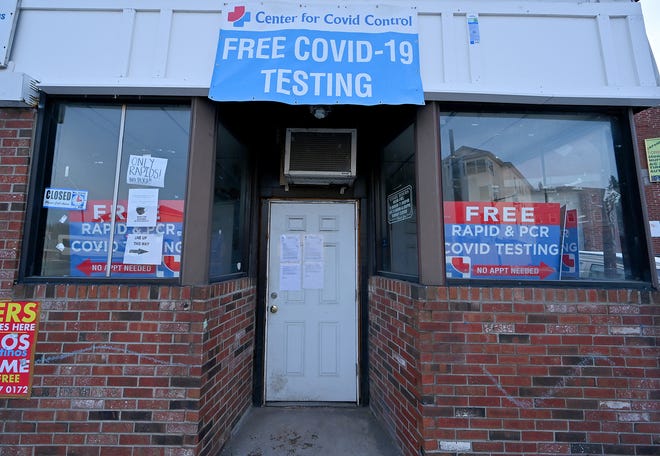
The FBI on Saturdaysearched the headquarters of a nationwide string of coronavirus testing sites known asthe Center for COVID Control.
The company and its main lab, which has been reimbursed more than $124 million from the federal government for coronavirus testing, are under investigation by state and federal officials. The company and lab are registered at the same address in Rolling Meadows, Illinois.
"The FBI was conducting court-authorized law enforcement activity in Rolling Meadows yesterday," Siobhan Johnson, a spokesperson for the FBI's Chicago office, told USA TODAY Sunday.
A Center for COVID Control spokesperson did not immediately respond to request for comment.
Asked about the law enforcement activity, Annie Thompson, a spokesperson for the Illinois Attorney General's Office, said the attorney general "is absolutely committed to protecting residents from those who attempt to profit off of the deadly COVID-19 pandemic."
"We are working with the FBI and other law enforcement partners and will not comment on ongoing investigations as we work to hold accountable individuals who engage in unlawful conduct," Thompson said.
The search comes days after the Minnesota Attorney General's Office filed a consumer-protection lawsuit against the company and its primary laboratory, Doctors Clinical Lab. The complaint alleges the company and lab "provide inaccurate and deceptive" test results and have fraudulently reported negative test results.
Longtime entrepreneurs Akbar Syed, 35, and his wife, Aleya Siyaj, 29, run the Center for COVID Control and, in recent months, have been sharing photos and videos on social media of their growing wealth. Syed has shared images of two Lamborghinis, a 2018 Ford GT, a Ferrari Enzo and a new $1.36 million mansion.
At its peak, the Center for COVID Control had more than 300 locations across at least 26 states and collected more than 80,000 tests a day, according to the company.
USA TODAY began investigating the company in early January, after a reporter encountered a "pop-up" testing site operating out of a generator-powered shack in Chicago. Since then, dozens of people across at least 18 states have reached out to USA TODAY expressing concerns about the testing sites, and multiple agencies have launched investigations.
The Center for COVID Control is also under investigation by the Illinois Attorney General's Office and the Centers for Medicare and Medicaid Services, part of the U.S. Department of Health and Human Services. The Oregon Department of Justice is investigating the company on suspicion of Unfair Trade Practices Act violations.
The Centers for Medicare and Medicaid Services has documented numerous "deficiencies" at the lab, which has been reimbursed through the federal COVID-19 uninsured program, according to public data. Private health insurers also paid the lab.
According to the Minnesota complaint, Center for COVID Control and Doctors Clinical Lab staff "represented to the federal government that Minnesota consumers with private or public insurance were actually uninsured."
The company and lab instructed employees to examine consumers' reported insurance information and to select the appropriate insurance from a drop-down menu with a limited list of companies, including a "default" option of "uninsured," according to the complaint.
The drop-down menu did not contain "most, if not all," Minnesota insurance companies, so the company and lab instructed employees to simply select "uninsured," which the company and lab used to support submitting a claim to the federal government for reimbursement, according to the complaint.
"Defendants, through owner Siyaj, instructed employees to 'streamline' data entry by entering the name of a patient and immediately hit a series of keys that would input defaults for the remaining entries, including defaulting a patient’s insurance information to 'uninsured,'" the complaint says.
If you have more information about the Center for COVID Control or Doctors Clinical Lab, contact reporter Grace Hauck at ghauck@usatoday.com. People can also contact the Minnesota Attorney General's Office at 651-296-3353.
Federal regulators are considering limiting the authorization of certain monoclonal antibody treatments that have not proved effective against theOmicron variant of the coronavirus, a source familiar with the decision-making told CNN.
The US Food and Drug Administration could decide in the coming days to take steps to curb the use of antibody treatments produced by Eli Lilly and Regeneron, the source said, pointing to the growing body of evidence that shows their monoclonal therapies don't effectively neutralize the virus' Omicron variant.
The National Institutes of Health had recently updated its guidelines to advise clinics against using these treatments on patients with mild to moderate Covid-19 due to their diminished effectiveness against the Omicron variant.
This past week, senior health officials in the administration, including Dr. David Kessler, chief science officer of the White House's COVID Response Team, and assistant secretary for Health Dr. Rachel Levine, called the offices of governors and state health officials. They urged against using these treatments with Omicron now accounting for nearly all positive cases, a source familiar with the calls said.
The Centers for Disease Control and Prevention estimates more than 99% of cases nationwide have the Omicron variant.
The treatments have remained popular among some governors, who continue to push them despite the recent data. Over the last two weeks, states have distributed nearly 110,000 doses of the Lily and Regeneron treatments, according to a federal database maintained by the Department of Health and Human Services.
Enter your email to sign up for the Stress, but less newsletter.
Earlier this month, amid a record-breaking surge of new coronavirus cases in Florida, Gov. Ron DeSantis assailed the Biden administration for pausing shipments of the monoclonal antibodies, and has pushed for the treatment to remain widely available.
During a January 3 press conference, DeSantis contended his administration had seen the treatments work on Omicron patients, though he didn't provide further evidence.
"Omicron is not the only variant that's out there," DeSantis said. "And it's something that we actually have seen applied with Omicron patients and we have seen symptoms resolved."
Omicron has accounted for more than 95% of cases in the Southern region of the US since the week of December 19, according to the CDC. Regeneron has publicly stated its monoclonal antibody treatment is not effective against the Omicron variant.
Nearly 13,000 doses of Regeneron were used in Florida over the past two weeks, more than any three other states combined. DeSantis' office did not immediately respond to a request for comment on Saturday.
DeSantis has made monoclonal antibodies a cornerstone of his response to surges of coronavirus cases in his state, often pushing the treatment more vigorously than vaccines. Last summer, he introduced new clinics where individuals could receive the treatment at the onset of symptoms or exposure to someone with Covid-19. His news conferences often feature first-hand accounts of people who have recovered from coronavirus after receiving treatment.
Other states followed DeSantis' lead. Texas Gov. Greg Abbott last year opened state-sponsored "infusion centers" where Covid-positive patients could receive monoclonal antibody treatment. Abbott himself received Regeneron's monoclonal antibody therapy treatment when he tested positive for coronavirus in August when its Delta variant was predominant.
The fast-spreading Omicron variant was first detected in the US on December 1, and quickly became the predominant variant.
The Biden administration agreed to provide shipments of the Regeneron and Lily treatments in the weeks to follow while Delta remained a prevalent, albeit diminishing, variant. The potential for a positive outcome in the small percentage of Delta patients was a calculated trade-off to potentially giving an Omicron patient ineffective treatment, a senior official said. The vast majority of coronavirus cases are not sequenced to determine the variant, and doctors often make treatment decisions without knowing which strand of the virus the patient is infected with.
But with Delta now accounting for a very small share of cases in most regions, the Biden administration had hoped most states would have moved away from the monoclonal antibody treatments, a senior official said.
There are also concerns widespread use of the treatments could put people at unnecessary risk for the adverse effects from receiving monoclonal antibodies. According to the National Institutes of Health, some patients have reported rashes, diarrhea, nausea and dizziness after treatment. A small percentage of patients had severe allergic reactions.
The Biden administration has pushed for states to pivot to other treatments that have demonstrated greater effectiveness against the Omicron variant, including the Merck and Pfizer antiviral pills, GlaxoSmithKline's monoclonal antibody, AstraZeneca's pre-exposure prophylaxis, and commercially available remdesivir.
On Friday, the US Food and Drug Administration expanded the use of the antiviral remdesivir for treatment of mild to moderate Covid-19 to children and people who aren't hospitalized.
Research issued late Thursday by the American Hospital Association shows the number of facilities dropped to 6,090 in 2019 -- the most recent year data were available -- from 6,146 the previous year.
The years preceding the pandemic saw a drop in the number of U.S. hospitals and beds, and the cost of caring for Covid-19 patients could push those totals even lower, according to a trade group report.
Research issued late Thursday by the American Hospital Association shows the number of facilities dropped to 6,090 in 2019 -- the most recent year data were available -- from 6,146 the previous year. Hospital beds also decreased, to around 920,000 in 2019 from 924,000 in 2018, continuing a decades-long trend.
The explosion of Covid-19 has not only overwhelmed staff and facilities but pushed more hospitals into financial distress as they limited more profitable elective procedures and faced the “astronomical” costs of preparing for an influx of infected patients, the group said. Covid-19 cases “tend to be incredibly resource intensive,” the report added.
Even the $175 billion providers received from the CARES Act “falls far short of covering these losses,” according to the report.
The U.S. has reported 24.5 million cases and more than 400,000 deaths from the pandemic as intensive care beds have filled across the nation, according to data collected by Johns Hopkins University and Bloomberg News.
The AHA estimated last spring that hospitals would tally at least $323 billion in losses due to the virus through the end of 2020. But that didn’t account for certain expenses like costs for protective equipment or surging cases that continue to roil the country, it said. The long-term impact on care will be “severe, and in many cases, catastrophic,” according to the report. The viability of rural hospitals, many of which were suffering from declining revenues before the pandemic, is of “particular concern.”
The number of rural community hospitals declined by 16 in 2019, to 1,805, according to the AHA.
But that’s not their only issue, said James Wesp, principal of health-care consultancy Oasis LLC. “Small, rural facilities do not have the staff or certain, critical specialists and equipment to effectively treat the influx of Covid patients,” he said.
The first round of the virus bypassed rural areas, and hospitals there furloughed workers or saw staff depart to take lucrative jobs in epicenters, Wesp said. “When the next wave hit these rural centers, they were not prepared from a staffing standpoint or with the necessary supplies, including PPE.”
Carhartt may be one of the rare brands that appeals to both rural workers and urban hipsters with its rugged outdoor gear, but it now finds itself at the center of a controversy that is dividing its customer base: Workforcevaccine mandates.
Some customers are vowing to boycott Carhartt products after a January 14 internal memo from CEO Mark Valade surfaced on social media. The memo focuses on the Dearborn, Michigan-based company's response to the Supreme Court ruling on the Biden administration's vaccine rules for large workforces — which the high court struck down. Despite the ruling, Valade wrote, Carhartt would maintain its corporate policy of requiring its 5,500 workers to be vaccinated.
"Many of you have asked how the recent Supreme Court decision on the OSHA mandate for large employers will impact our associates so we want to provide some clarity," he wrote in the memo, which was confirmed by Carhartt to be authentic. "The ruling does not change Carhartt's mandatory vaccination program, which went into effect on January 4th."
He added, "An unvaccinated workforce is both a people and business risk that our company is unwilling to take."
The memo has sparked both support and calls for a boycott, with the division coming down to whether consumers support vaccination requirements or see them as an intrusion on personal freedom. The unvaccinated are among the minority of Americans, given that 63% of the nation is fully vaccinated. But those who are unvaccinated tend to be higher in Republican-leaning areas, according to the Kaiser Family Foundation.
One Twitter user called Carhartt's vaccination stance "insane given their target market" and professed they were "done purchasing any of their stuff." Another wrote that she was "impressed and I will be purchasing from a company that cares about protecting all its workers."
Even though the Supreme Court ruled earlier this month that the Occupational Safety and Health Administration (OSHA) had overstepped its bounds by requiring employers with more than 100 employees to either vaccinate or test their workers, that doesn't prohibit private companies from requiring their staff from getting the jab, according to legal experts.
About 36% of Americans say their employers require them to get a COVID-19 vaccination, while another 43% say their bosses are encouraging the shot but not requiring it, Gallup found last month. Companies including Citigroup and airlines such as United and Delta have instituted vaccine mandates for their workers.
Conservatives have traditionally supported the right of private companies to operate their businesses as they see fit, without government regulations calling the shots. Yet the issue of vaccinations and other COVID-19 health regulations have become deeply politicized, with some corporations aiming to sidestep the issue by stating that their aim is to keep both workers and customers from feeling the worst impact of the coronavirus.
Even so, some conservatives were having none of it: "Went from "Buy Carhartt" to "Bye Carhartt" real quick!," tweeted conservative writer Ashley St. Clair, who also called Carhartt's vaccine mandate "medical tyranny."
Carhartt told CBS MoneyWatch that the "vast majority" of its employees are vaccinated, and that it has given some exemptions for medical and religious reasons.
"Carhartt made the decision to implement its own vaccine mandate as part of our long-standing commitment to workplace safety," the company said in an emailed statement. "Our recent communication to employees was to reinforce that the Supreme Court ruling does not affect the mandate we put in place."
It added that it "fully understands and respects the varying opinions on this topic, and we are aware some of our associates do not support this policy."
Carhartt said that it has extended the vaccination deadline to February 15.
"We stand behind our decision because we believe vaccines are necessary to protect our workforce," the company said in the statement.