Search This Blog

Tuesday, January 25, 2022

89bio, trying to rise from NASH failures, gains in disease severity, cardiovascular health in small data set

 89bio is climbing over the rubble of fallen nonalcoholic steatohepatitis (NASH) treatments with new top-line data from a limited number of patients that show its candidate spurred improvements in disease severity based on several measures.

Pegozafermin, previously known as BIO89-100, is being tested in a phase 1b/2a trial in NASH patients who have liver fibrosis in stages F2 or F3, the stages before cirrhosis. Patients received the therapy once a week for 20 weeks. The data come from 19 out of 20 patients in an expansion cohort who received end-of-treatment biopsies to confirm results.

The results show that 63% of patients achieved a two-point improvement in disease severity without fibrosis worsening, which was based on a scale developed to assess nonalcoholic fatty liver diseases. This was the main goal of the trial. 89bio also said 74% of patients achieved the two-point improvement alone.

NASH resolution without worsening of fibrosis was observed in 32% of patients, and 47% experienced NASH resolution or fibrosis improvement.

89bio also reported that pegozafermin improved a series of cardio-metabolic measures such as glycemic control, lipids and body weight, all of which can be crucial to the management of NASH patients.

The full study features 83 patients, and 89bio reported that safety and tolerability has been steady in the larger group. No adverse events have been reported, and just one patient has discontinued due to the treatment.

Expectations for 89bio’s top-line results were high, as so many companies have crashed in front of them. Bristol Myers Squibb recently abandoned a midstage asset after getting a look at early phase 2b data. The Big Pharma is continuing on with another NASH candidate called Hsp47.

Metacrine walked away from a phase 2 treatment in October after a mixed bag of results from a trial. Enanta Pharmaceuticals did the same that month.

That left 89bio, as well as Akero, to turn up results that could finally lead to a treatment for the disease, which causes fat to build up in the liver, resulting in inflammation and damage.

89bio is evaluating pegozafermin in a phase 2b trial called ENLIVEN that will include 200 patients with a follow-up biopsy performed after 24 weeks of treatment. The therapy is also being tested in patients with severe hypertriglyceridemia in a phase 2 trial called ENTRIGUE. The trials are expected to read out in the first half of 2023 and the second half of 2022, respectively.

https://www.fiercebiotech.com/biotech/89bio-trying-to-rise-from-ashes-nash-failures-sees-improvement-disease-severity

Capricor to take DMD cell therapy to phase 3 with $30M from Nippon, hunts for partners in other regions

 After showing its cell-based therapy slowed disease progression in Duchenne muscular dystrophy last September, Capricor Therapeutics is now ready to take the drug into a phase 3 trial with $30 million upfront from Nippon Shinyaku to help out. 

San Diego-based Capricor will receive up to $705 million in milestones in exchange for Nippon distributing and commercializing the drug in the U.S., should it gain approval. Capricor is also actively seeking out partners for the treatment in Europe and Asia, said Linda Marbán, Ph.D., CEO and president, in an interview.

The Japanese pharma is no stranger to the rare muscle degeneration disease having gained FDA approval for Viltepso in August 2020, setting it up to compete with Sarepta's Vyondys 53 in the same patient population. 

That market experience alongside a rare disease focus and appetite for new pipeline assets were three key attributes Capricor looked for when shopping around for partners, Marbán said.

Capricor will handle the pivotal trial for the cell therapy, dubbed CAP-1002, in which the biotech will look at improving upper limb strength and cardiac function in approximately 70 patients, Marbán said. The company is initiating sites and will begin enrolling patients "as soon as we can" for the HOPE-3 study, the CEO promised. The treatment will be given every three months for a total of four doses, according to ClinicalTrials.gov. 

Marbán is hoping that CAP-1002 can help tame potentially dangerous immune responses that occur in DMD patients, perhaps in conjunction with some of the new gene therapies being developed by the likes of Pfizer and Sarepta someday. 

CAP-1002 takes from donated heart muscle with the goal of regenerating skeletal and cardiac muscle cells in boys and young men. 

"Even if [the gene therapies] were successful, you would need a drug like CAP-1002 to modulate and mediate the profound inflammatory responses to Duchenne muscular dystrophy," the CEO said. "So, we knew this was going to be a product that would have longevity in the space that was highly anticipated by the community and that payers would be interested in reimbursing for because of this strong bioactivity and also our good clinical trial data.” 

Gene therapies for DMD have raised a lot of hopes in the patient community, but the road through the clinic has been bumpy. Pfizer announced late last year that a patient in an early-stage trial of the gene therapy PF-06939926 had died. Sarepta is also working on gene therapies for DMD. 

Pfizer delayed a data readout on its gene therapy from 2022 to the first quarter of 2023. Meanwhile, Sarepta could ask the FDA as soon as next year to approve its fourth DMD treatment, a gene transfer therapy. 

Back at Capricor, the biotech is also developing CAP-1002 for treatment of hospitalized patients with severe COVID-19 who are on supplemental oxygen. The company will report data from the 60-patient phase 2 Inspire trial by the end of this quarter, the CEO said. 

After that, Capricor will work with the FDA on a development path, whether that's a pivotal trial or filing for emergency use authorization, Marbán said. 

https://www.fiercebiotech.com/biotech/capricor-lines-up-705m-biobucks-deal-for-phase-3-dmd-therapy-nippon-a-dmd-drugmaker

Monday, January 24, 2022

Thousands needed to try new Covid antiviral treatments in UK

 Over-50s and younger adults with underlying health conditions are being urged to participate in a study of life-saving treatments for Covid-19.

The study is open to those who test positive for Covid and had symptoms develop in the previous five days.

Volunteers will be given pills to take at home.

The study will help decide how antiviral drugs will be used, Prof Sir Jonathan Van-Tam, the deputy chief medical officer for England, said.

Health Secretary Sajid Javid asked everyone eligible to "step forward" and "help us to learn more about medicines which could save thousands of lives".

Antivirals were "part of our approach as we learn to live with Covid, by preventing the most vulnerable from being hospitalised", he said.


Those to be used in the Panoramic trial are:

  • molnupiravir, made by Merck, Sharp and Dohme (MSD)
  • paxlovid, made by Pfizer and taken alongside another drug, ritonavir

The UK regulator has licensed both for treating Covid, with molnupiravir the first to be given the green light, in November.

Both have completed clinical trials and shown promising results at reducing the risk of serious illness or death.


The study will give doctors an idea of the potential benefits to vaccinated patients - and help the NHS plan how they can be used.\Launched in December, it already has 4,500 people signed up but needs 6,000 more as soon as possible.

You can sign up at the study website now or your GP may contact you to ask you to participate if you test positive for Covid.

Charities, including the British Liver Trust, Kidney Care UK and the Cystic Fibrosis Trust, are urging anyone vulnerable to Covid to sign up.

Fiona Loud, from Kidney Care UK, said antiviral treatments would be "a vital tool to give more protection to people who are most at risk from Covid-19, including those with kidney disease".

People with the following health conditions are also encouraged to sign up:

  • chronic respiratory disease (including chronic obstructive pulmonary disease (COPD), cystic fibrosis and asthma requiring at least daily use of preventative and/or reliever medication) 
  • chronic heart or vascular disease 
  • chronic liver disease
  • chronic neurological disease (including dementia, stroke, epilepsy) 
  • severe and profound learning disability 
  • Down's syndrome
  • type-1 or type-2 diabetes
  • morbid obesity (body mass index (BMI) over 35) 
  • severe mental illness 

Pippa Erskine, a double lung transplant recipient with cystic fibrosis, was treated with antivirals after testing positive for Covid at the start of January.

Knowing the drugs would help ease her symptoms and prevent complications was "a huge relief", she said.

"With restrictions easing, it's so important that those vulnerable to Covid-19 have the best possible chance of staying protected against the virus and, most importantly, staying out of hospital," Ms Erskine added.


https://www.bbc.com/news/health-60117313

NY judge strikes down Hochul’s mask mandate

 A New York judge on Monday ruled that Gov. Kathy Hochul’s effort to reinstate the state’s mask mandate is unlawful and "therefore void and unenforceable."

Hochul announced in December that masks will be required in all indoor public places in the state unless the businesses implement a vaccine requirement. The move came shortly after the emergence of the omicron variant. \State Supreme Court Judge Thomas Rademaker said the state Department of Health did not have the legal authority to implement the mandate—and should have been approved by the state Legislature.

Kathy Hochul, governor of New York, speaks during a new conference at the Albany NanoTech Complex in Albany, New York, U.S., on Monday, Jan. 24, 2022. Photographer: Angus Mordant/Bloomberg via Getty Images

Kathy Hochul, governor of New York, speaks during a new conference at the Albany NanoTech Complex in Albany, New York, U.S., on Monday, Jan. 24, 2022. Photographer: Angus Mordant/Bloomberg via Getty Images (Angus Mordant/Bloomberg via Getty Images)

Former Gov. Andrew Cuomo instituted the mask mandate in the early stages of the outbreak, citing emergency powers. The mandate was dropped for those who were vaccinated in June 2021. Fox 5 NY reported that Hochul said her mandate\ would be in effect for at least a month. Then earlier this month, the Health Department said the mandate would be in place until Feb 1.

A person visits a Covid-19 testing site along a Manhattan street on January 21, 2022 in New York City. (Photo by Spencer Platt/Getty Images)

A person visits a Covid-19 testing site along a Manhattan street on January 21, 2022 in New York City. (Photo by Spencer Platt/Getty Images) (Spencer Platt/Getty Images)

Hochul issued a statement obtained by Fox News that said it is her responsibility to protect New Yorkers and the measures "help prevent the spread of COVID-1 and save lives." She said she will fight the decision.

Reuters pointed out that Rademaker wrote that his decision did not intend to take sides in the mask debate, but wrote that "enacting any laws to this end is entrusted solely to the State Legislature."

https://www.foxnews.com/politics/new-york-judge-hochul

Large, Peer-Reviewed Research Study Proves Ivermectin Works Against COVID-19

 Via FLCCC Alliance,

The results are in from the world’s largest study of ivermectin for COVID-19.

Researchers in Brazil found that regular use of ivermectin as a prophylactic agent was associated with significantly reduced COVID-19 infection, hospitalization and mortality rates.

The study was conducted in Itajaí, a port city in the state of Santa Catarina, between July and December 2020. Study authors include FLCCC physicians Dr. Flavio Cadegiani and Dr. Pierre Kory. Lead author Dr. Lucy Kerr was approached by the mayor of Itajaí, after the city began to experience a severe outbreak of COVID.

The entire population of Itajaí was invited to participate in the program, which involved a medical visit to compile baseline, personal, demographic, and medical information. In the absence of contraindications, ivermectin was offered as a preventative treatment, to be taken for two consecutive days every 15 days at a dose of 0.2 mg/kg/day.

Of the 223,128 citizens of Itajaí considered for the study, a total of 159,561 subjects elected to participate: over 70% opted to take ivermectin, and 23% chose not to.

Reduced infection and hospitalization rates

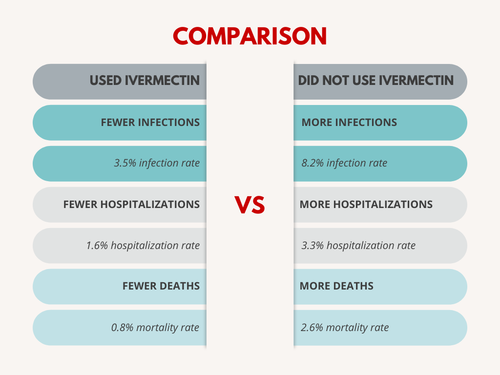
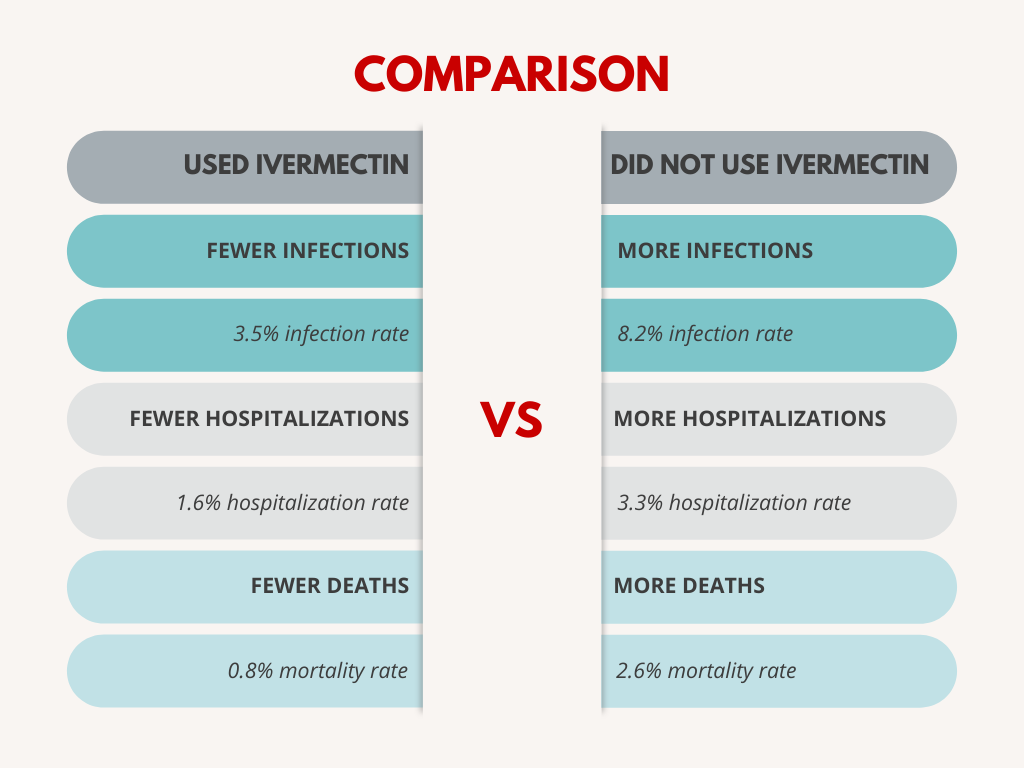
The study found a 44% reduction in COVID-19 infection rate in favor of the group that took ivermectin (3.5% versus 8.2%).

In cases where a participating citizen of Itajaí became ill with COVID-19, they were recommended not to use ivermectin or any other medication in early outpatient treatment. Of those who did become infected, two equal-sized, highly matched groups (one that used ivermectin as a prophylaxis and one that did not) were compared. The regular use of preventative ivermectin led to a 68% reduction in COVID-19 mortality (0.8% versus 2.6%), and a 56% reduction in hospitalization rate (1.6% versus 3.3%).

The regular use of preventative ivermectin led to a reduction in COVID-19 infection, hospitalization and mortality.

Study methods

Since vaccines were not available at the time, and few prophylactic alternatives existed in the absence of vaccines, Itajaí initiated a population-wide government program for COVID-19 prophylaxis. This was a prospective observational study that allowed subjects to self-select between treatment vs. non-treatment. The use of ivermectin was optional and based on patients’ preferences, given its benefits as a preventative agent was unproven.

To ensure the safety of the population, a computer program was developed to compile and maintain all relevant demographic and clinical data. All subjects were weighed to be able to accurately calculate the correct dose of ivermectin. In addition, a brief medical evaluation was conducted to record past medical history, comorbidities, use of medications and contraindications to drugs.

The following variables were analyzed and adjusted as confounding factors or used for balancing and matching groups for propensity score matching:

  • Age

  • Sex

  • Previous diseases (myocardial infarction and stroke)

  • Pre-existing comorbidities (type 2 diabetes, asthma, chronic obstructive pulmonary disease, hypertension, dyslipidemia, cardiovascular diseases, cancer [any type], and other pulmonary diseases)

  • Smoking

Patients who presented signs or the diagnosis of COVID-19 before July 7, 2020, were excluded from the sample. Other exclusion criteria included contraindications to ivermectin and age (subjects below 18 years of age were excluded).

During the study, subjects who were diagnosed with COVID-19 underwent a specific medical visit to assess clinical manifestations and disease severity. All subjects with symptoms were recommended not to use ivermectin, nitazoxanide, hydroxychloroquine, spironolactone, or any other drug claimed to be effective against COVID-19. The city did not provide or support any specific pharmacological outpatient treatment for subjects infected with COVID-19.

Intriguing findings

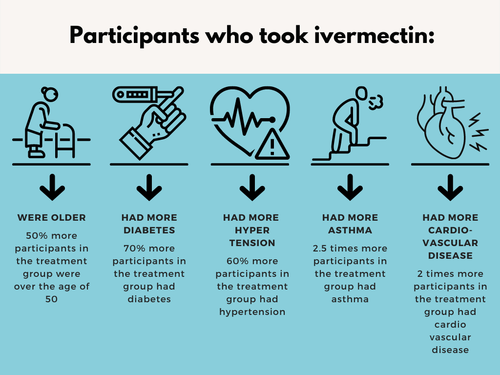
Interestingly, the group who self-selected to take ivermectin was older and had more comorbidities than the group who opted for no treatment. These results show that prophylactic ivermectin may be a mitigating factor in groups with higher risk of morbidity.

The results show prophylactic ivermectin may be a mitigating factor for high-risk groups.

The belief that preventative and early treatment therapies would cause people to relax their caution of remaining socially distanced, leading to more COVID-19-related infections, is not supported here.

The data demonstrate that using preventative ivermectin significantly lowers the infection rate, and that benefits outweigh the speculated increased risk of changes in social behaviors.

https://www.zerohedge.com/covid-19/large-peer-reviewed-research-study-proves-ivermectin-works

Genentech’s Evrysdi Granted FDA Priority Review for Spinal Muscular Atrophy


Interim data submitted to the FDA show majority of pre-symptomatic babies treated with Evrysdi for at least one year were able to sit, stand and walk within timeframes typical of healthy babies, as well as maintain swallowing –

– Evrysdi is approved in 70 countries and submitted in a further 31 with more than 4,500 patients treated to date –

Genentech, a member of the Roche Group (SIX: RO, ROG; OTCQX: RHHBY), today announced that the U.S. Food and Drug Administration (FDA) has granted priority review of a supplemental new drug application (sNDA) for the use of Evrysdi® (risdiplam) to treat pre-symptomatic babies under two months of age with spinal muscular atrophy (SMA). The sNDA submission incorporates interim data from the RAINBOWFISH study, which shows the majority of pre-symptomatic babies treated with Evrysdi achieved key milestones such as sitting, standing, walking and maintained the ability to swallow following 12 months of treatment.

Mark Cuban launches online pharmacy in bid to help consumers find cheaper meds

 Billionaire Mark Cuban launched an online pharmacy on Monday in what the company said was a bid to "drastically expand access to affordable pharmaceuticals."

In a press release, the Mark Cuban Cost Plus Drug Company (MCCPD) said it hopes to shield consumers from inflated drug prices.

The pharmacy, which will sell generic drugs, said it will "bypass middlemen and outrageous markups" and charge consumers the manufacturers' prices, in addition to a flat 15 percent markup and pharmacist fee.

Quoting one example of its prices, the company said that it will sell Imatinib — a drug used to treat leukemia with a retail price of $9,657 per month, or $120 with a common voucher — at a price of $47 per month.

"We will do whatever it takes to get affordable pharmaceuticals to patients," MCCPD CEO Alex Oshmyansky said.

"The markup on potentially lifesaving drugs that people depend on is a problem that can't be ignored. It is imperative that we take action and help expand access to these medications for those who need them most," he added.

The company added that it will negotiate drug prices directly with manufacturers to lower costs for consumers.

The company said it will not accept health insurance, but claimed the prices could still be lower than what people would typically pay via their insurance deductibles and co-pays. 

The high price of pharmaceuticals has become a politically hot-button issue. Reducing the cost of pharmaceuticals for U.S. families also formed a key pillar of President Biden's stalled Build Back Better agenda. 

https://thehill.com/policy/healthcare/other/591126-mark-cuban-launches-online-pharmacy-in-bid-to-help-consumers-find