Search This Blog

Friday, March 4, 2022

‘COVID zero’ regions struggle with vaccine complacency

 For the handful of places around the world that effectively stopped COVID-19 transmission, vaccine complacency has become an unintended side effect of their success. Although some regions have managed to blunt transmission of the highly infectious Omicron variant of SARS-CoV-2, others are experiencing considerable outbreaks in populations with low vaccination rates.

Nowhere is this more apparent than in Hong Kong. Its ‘dynamic zero COVID-19’ policy is being put to the test as daily confirmed cases of COVID-19 climbed to 56,000 this week and deaths reached 246 on 1 March.

“With the low vaccination rate we have currently, I’m really concerned,” says Benjamin Cowling, an epidemiologist at the University of Hong Kong. “Omicron, we know it’s a little bit milder, but actually in people that are not vaccinated, it’s not that mild.” People with severe disease will spend weeks in hospitals, which are already overwhelmed.

The situation was very different a year ago, when weekly confirmed COVID-19 cases averaged 17 a day and didn’t go above 60 a day for the rest of the year. In February 2021, Hong Kong started offering vaccines to the public. But uptake has been slow: by 1 January this year, only 62% of its population was fully vaccinated and as of 7 February only 33% of people over 80 years old had received one dose. A study in June 2021 by academics at Hong Kong Baptist University found that more than half of 2,753 people surveyed were hesitant about or resistant to getting the vaccine.

“One important reason for vaccine hesitancy is the absence of perceived benefit from vaccination when there is no risk at all,” says Chunhuei Chi, director of the Center for Global Health at Oregon State University in Corvallis. Studies show that people are less likely to get vaccinated against SARS-CoV-2 if they feel they are at low risk of catching COVID-19. Researchers have found a similar effect during past infectious-disease outbreaks, including the H1N1 influenza outbreak in 2009–10.

Other regions using strategies to suppress and almost eliminate COVID-19 — including Taiwan, Macau, the Chinese mainland, Tonga and Western Australia — have also experienced vaccine complacency.

Older people

In Taiwan, vaccination rates for people over 75 years of age are the lowest of any age group. As of 7 February, only 69% of people over 75 had received two doses of a vaccine, compared with 88% of people aged between 18 and 29 years.

A study of people in Taiwan who were hesitant to get a vaccine found several reasons for this, including the feeling among older participants that they were not at high risk of catching the virus because they didn’t go out and encounter others as much as young people. Some thought that younger people should be vaccinated first, according to the results, which were published in January by researchers at National Taiwan University.

“My conjecture is that the perception of risk of being infected by COVID-19 can trump many other factors, especially in Hong Kong and Taiwan,” says Chi.

Some public-health researchers are optimistic that Taiwan will not see as many COVID-19 cases as Hong Kong. Around two local cases of COVID-19 are confirmed daily, but these numbers are expected to rise when entry restrictions for non-resident business travellers are relaxed this month. Chiou Shu-Ti, an epidemiologist and founding president of the Health and Sustainable Development Foundation in Taipei, thinks local governments and the public will be able to stamp out any Omicron outbreaks quickly.

But others are sceptical. “It’s so difficult to stop Omicron,” says Cowling. A single superspreader event can get out of control quickly, he says.

When complacency is a factor, governments need to drive vaccine demand with strategies that address people’s concerns and barriers to vaccination, says Katie Attwell, a social scientist at the University of Western Australia in Perth, Australia, who studies vaccine hesitancy. “In those countries where people were complacent, I would suggest governments were complacent,” she says.

Overcoming complacency

Several regions with few reported COVID-19 cases have been able to overcome vaccine complacency and prevent large rises in confirmed infections.

One of those is Tonga, which kept the virus at bay until this year. The country started rolling out vaccines in April 2021, but there was some degree of complacency at the time, says Mark Jacobs, who is the World Health Organization Representative to the South Pacific and is based in Fiji.

To counter this, the Tongan Ministry of Health, supported by the World Health Organization and the United Nations children’s charity UNICEF, visited every village — including those on remote outer islands — to speak to people about vaccines and answer questions. Jacobs says the country’s first case of COVID-19, detected in quarantine in October 2021, motivated more people to get vaccinated, as did the first cases of community transmission this February.

“I think it’s clear that the virus being present in a community does a certain amount of PR for the vaccine,” says Attwell. As of 19 February, 90% of the Tongan population over 12 years old is fully vaccinated and 100% of people over 80 have received at least one dose, according to Jacobs.

But even with high rates of vaccination, COVID-19 cases there have increased, with more than 700 reported since 3 January. The nation is also recovering from a gigantic volcanic eruption on 15 January that released large amounts of ash and gave rise to a tsunami, which caused widespread devastation at the same time as the country is trying to control the outbreak.

doi: https://doi.org/10.1038/d41586-022-00554-0

https://www.nature.com/articles/d41586-022-00554-0

SARS-CoV-2-infected individuals could have different variants hidden in different parts of the body

 People suffering from COVID-19 could have several different SARS-CoV-2 variants hidden away from the immune system in different parts of the body, finds new research published in Nature Communications by an international research team. The study's authors say that this may make complete clearance of the virus from the body of an infected person, by their own antibodies, or by therapeutic antibody treatments, much more difficult.

COVID-19 continues to sweep the globe causing hospitalisations and deaths, damaging communities and economies worldwide. Successive variants of concern (VoC), replaced the original virus from Wuhan, increasingly escaping immune protection offered by vaccination or antibody treatments.

In new research, comprising two studies published in parallel in Nature Communications, an international team led by Professor Imre Berger at the University of Bristol and Professor Joachim Spatz at the Max Planck Institute for Medical Research in Heidelberg , both Directors of the Max Planck Bristol Centre of Minimal Biology, show how the virus can evolve distinctly in different cell types, and adapt its immunity, in the same infected host.

The team sought to investigate the function of a tailor-made pocket in the SARS-CoV-2 spike protein in the infection cycle of the virus. The pocket, discovered by the Bristol team in an earlier breakthrough, played an essential role in viral infectivity.

"An incessant series of variants have completely replaced the original virus by now, with Omicron and Omicron 2 dominating worldwide." said Professor Imre Berger. "We analyzed an early  discovered in Bristol, BrisDelta. It had changed its shape from the original virus, but the pocket we had discovered was there, unaltered." Intriguingly, BrisDelta, presents as a small subpopulation in the samples taken from patients, but appears to infect certain cell-types better than the virus that dominated the first wave of infections.

Dr. Kapil Gupta, lead author of the BrisDelta study, explains: "Our results showed that one can have several different virus variants in one's body. Some of these variants may use kidney or spleen cells as their niche to hide, while the body is busy defending against the dominant virus type. This could make it difficult for the infected patients to get rid of SARS-CoV-2 entirely."

The team applied cutting-edge synthetic biology techniques, state-of-the-art imaging and cloud computing to decipher viral mechanisms at work. To understand the function of the pocket, the scientists built synthetic SARS-CoV-2 virions in the test tube, that are mimics of the virus but have a major advantage in that they are safe, as they do not multiply in human cells.

Using these artificial virions, they were able to study the exact mechanism of the pocket in viral infection. They demonstrated that upon binding of a fatty acid, the spike protein decorating the virions changed their shape. This switching 'shape' mechanism effectively cloaks the virus from the immune system.

Dr. Oskar Staufer, lead author of this study and joint member of the Max Planck Institute in Heidelberg and the Max Planck Centre in Bristol, explains: "By 'ducking down' of the spike protein upon binding of inflammatory fatty acids, the virus becomes less visible to the . This could be a mechanism to avoid detection by the host and a strong immune response for a longer period of time and increase total infection efficiency."

"It appears that this pocket, specifically built to recognize these fatty acids, gives SARS-CoV-2 an advantage inside the body of infected people, allowing it to multiply so fast. This could explain why it is there, in all variants, including Omicron" added Professor Berger. "Intriguingly, the same feature also provides us with a unique opportunity to defeat the , exactly because it is so conserved—with a tailormade antiviral molecule that blocks the pocket." Halo Therapeutics, a recent University of Bristol spin-out founded by the authors, pursues exactly this approach to develop pocket-binding pan-coronavirus antivirals.


Explore further

Researchers create minimalistic SARS-CoV-2 virions and discover the spike protein switching mechanism

More information: Kapil Gupta et al, Structural insights in cell-type specific evolution of intra-host diversity by SARS-CoV-2, Nature Communications (2022). DOI: 10.1038/s41467-021-27881-6

Oskar Staufer et al, Synthetic virions reveal fatty acid-coupled adaptive immunogenicity of SARS-CoV-2 spike glycoprotein, Nature Communications (2022). DOI: 10.1038/s41467-022-28446-x


https://medicalxpress.com/news/2022-03-sars-cov-infected-individuals-variants-hidden-body.html

Correction, Mr. President: This Is a Deadly Pandemic of the Vaccinated Too

 Despite promises from President Biden and top health officials that COVID-19 vaccines would prevent severe illness, death, and perhaps even transmission of the virus, data indicate that thousands of Americans are dying from the illness even after having been vaccinated.

Striking evidence comes from California, Georgia, and Illinois, where a third of people dying with COVID had been vaccinated – even some who had received a third booster shot. In the absence of publicly available federal data, the three states offer some of the best numbers on the post-vaccine impact of a pandemic that has claimed 950,000 American lives.  

Some health experts say such deaths were predictable. After all, initial reports on the Pfizer, Moderna, and Johnson & Johnson jabs promised vaccine efficacy rates in the 90%-plus range – not perfection. So even if a substantial percentage of the population is vaccinated, vaccinated people will still die. And the vaccines were designed to combat a strain of the virus before the delta and omicron variants appeared, suggesting the new scourges may have played a major role in the vaccines’ disappointing effectiveness.

(AP Photo/Alex Brandon, File)
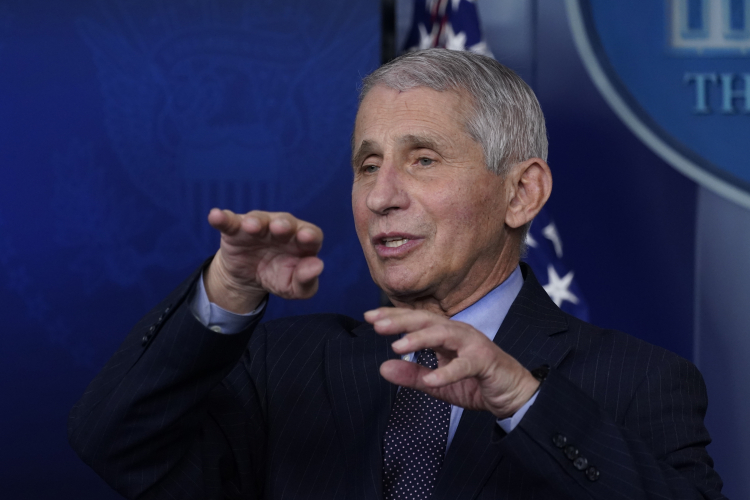
Dr. Anthony Fauci: “The vaccines are very effective in protecting you and extremely effective in protecting you against severe disease.”

Nevertheless, on July 21, 2021, President Biden assured Americans at a Cincinnati town hall that “If you are vaccinated, you are not going to be hospitalized, you are not going to be in the ICU unit, and you are not going to die.”

Dr. Anthony Fauci, director of the National Institute of Allergy and Infectious Diseases, echoed his remarks in an interview later that month: “The vaccines are very effective in protecting you and extremely effective in protecting you against severe disease.”

The president has largely held to his stance, allowing during his State of the Union address on Tuesday that new vaccines might be needed, even as reality increasingly undermined it. In December, he asserted, “This is a pandemic of the unvaccinated” – words soon to become an administration mantra.

He would later warn: “We are looking at a winter of severe illness and death for the unvaccinated – for themselves, their families and the hospitals they'll soon overwhelm.”

With such debatable claims, authorities have arguably harmed the vaccinated and unvaccinated alike. The vaccinated – especially the elderly or immunocompromised – have been given a false sense of invincibility. The unvaccinated have been not only scapegoated; some have lost their jobs as the administration’s pronouncements were used to enforce inflexible employer vaccine mandates.

It is true that COVID mortality statistics are uncertain. They are clouded in many cases by failures to distinguish those who died from COVID versus those who died with COVID, and by variations in how “unvaccinated” is defined – with numerous deaths classified as unvaccinated up until two weeks after a victim’s second jab.

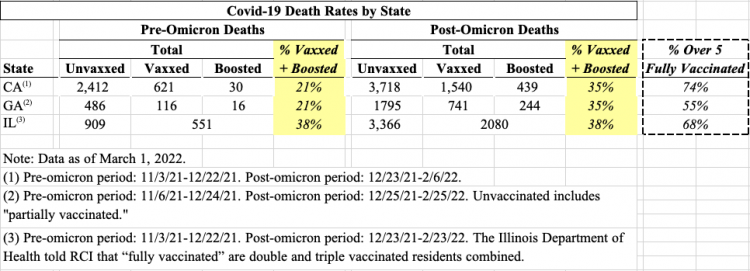
But the fairly detailed and unambiguous data from CaliforniaGeorgia, and Illinois show the vaccinated making up a significant percentage of those dying from COVID as the new strains became prevalent. When the delta strain circulated from mid-November to mid-December of last year, the vaccinated accounted for 21% of all COVID-related deaths in California and Georgia, and 38% in Illinois. After delta was overtaken by the omicron variant, the proportions in California and Georgia rose substantially to over 33% -- a level comparable to Illinois, which remained at its already higher rate.

California, Georgia, and Illinois Departments of Health
California, Georgia and Illinois data show a substantial proportion of deaths among the vaccinated.

The paucity of overall national data was illustrated by a remarkable Feb. 20 New York Times story, in which COVID reporter Apoorva Mandavilli wrote that the Centers for Disease Control and Prevention “has published only a tiny fraction of the data it has collected.” She quoted an official speaking anonymously saying that the CDC was “reluctant” to make detailed information about hospitalizations sorted by vaccination status available because it "might be misinterpreted as the vaccines being ineffective.”

New York Times
Reportedly wary of releasing statistics that “might be misinterpreted as the vaccines being ineffective.” 

Yet available state and other statistics suggest just that -- at least when measured against the original Biden standard that the vaccinated "are not going to die": The proportion of fully vaccinated and/or boosted deaths against the number of total deaths is substantial, and appears to have been gradually increasing in recent months at least in several states.

Of the eight states publishing detailed, so-called "breakthrough" death data on the vaccinated to the present, RealClearInvestigations found that Massachusetts – with a substantial 75% fully vaccinated rate – suffered the highest percentage of vaccinated deaths: 55% from January 1 to February 12, 2022.

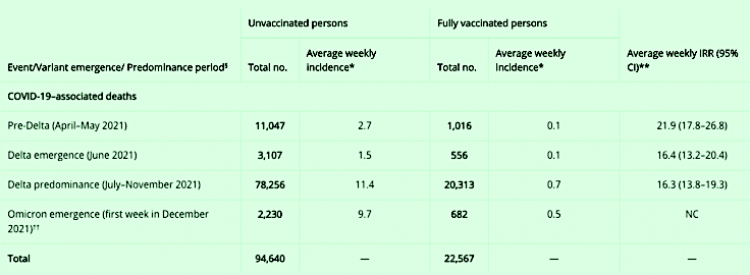
Even a recent little-publicized and less comprehensive CDC report notes that among those 18 years of age or older across 25 U.S. jurisdictions, from early April to late December 2021, there were approximately 7 million COVID cases and 95,000 deaths among the unvaccinated, versus approximately 3 million cases and 23,000 deaths among the vaccinated. That one in five deaths were associated with the vaccinated, according to the study, suggests protection weaker than the public has been led to believe.

CDC
CDC figures indicate 20% of deaths among the vaccinated largely before omicron occurred.

But in a Jan. 19, 2022 op-ed in The Hill, Dr. Lyndon Haviland of the CUNY School of Public Health castigated dissenters for making much of vaccinated deaths:

sph.cuny.edu
Dr. Lyndon Haviland: Vaccines "achieving the desired outcome."

By trumpeting the term “breakthrough cases,” public health authorities are spreading the impression that these infections are novel, unique and unanticipated by the scientific community. In fact, the vaccine was designed precisely with this likelihood in mind, and it is working exactly as intended. With cases of hospitalization and death largely isolated among the unvaccinated population, it clearly shows the vaccines are doing their job and achieving the desired outcome.

But given the significant and rising proportions of double- and triple-vaccinated deaths, this assertion – representative of much of the U.S. public health establishment – is obviously misleading. Haviland did not reply to a request for comment from RealClearInvestigations.

CNN
Dr. Peter Hotez, Baylor medical dean: "Fully vaccinated" should be redefined given the waning protection of vaccines over time.

Dr. Peter Hotez, Dean of the National School of Tropical Medicine at Baylor College of Medicine, urged a rethinking of the term “fully vaccinated” as it applies to severe illness.

“I think the key here is to understand that by last fall it was clear that ‘fully vaccinated,’ meaning 2 doses, was anything but,” he said. Hotez points out that by six months past the second dose, CDC data have shown “only 57% protection vs hospitalizations and 38% vs ER visits.” He says mRNA vaccines should be viewed as a three-dose series and people with two doses “only partially vaccinated.” He cites data showing that after three doses, there is a “90% reduction in hospitalization and 82% reduction in ER visits. … Those who receive three doses are highly protected against hospitalization and presumably death as shown by the CDC.”

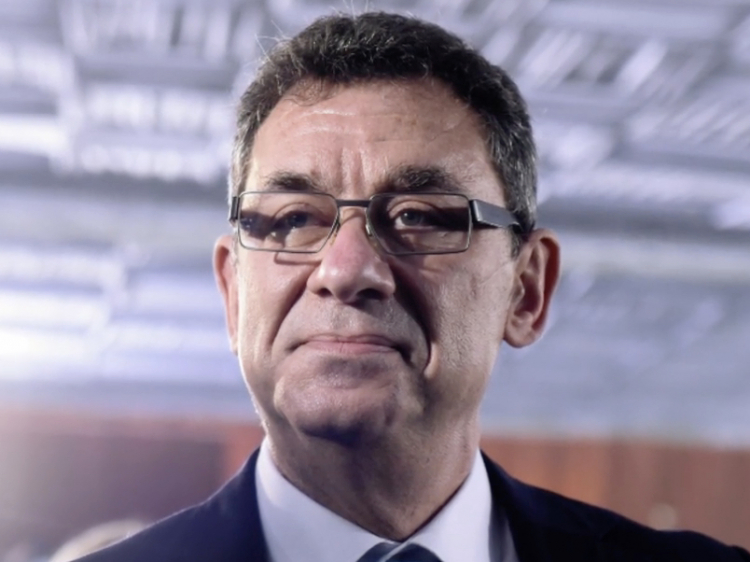
Pfizer CEO Albert Bourla made the same point more bluntly in an interview with Yahoo News on January 10, 2022. “We know that two dose[s] of the vaccine offer very limited protection, if any,” he said. “The three doses with a booster … offer reasonable protection against hospitalization and deaths, and against deaths I think very good.” On Feb. 11, the Washington Post reported that a new CDC study shows booster protection against hospitalization waning to 78% after four months.

The Hill
Albert Bourla, Pfizer CEO: Two doses "offer very limited protection, if any." 

At a recent press briefing, Dr. Fauci stated: “The potential future requirement for an additional boost or a fourth shot for mRNA or a third shot for J&J is being very carefully monitored in real time and recommendations, if needed, will be updated.”

Dr. Fauci did hint at the need for boosters very early on; as early as January 2021, he was contemplating the need for updated shots to handle new variants. But he, the president, and the media pushed the widespread uptake of shots designed to stymie the original Wuhan strain.

RealClearInvestigations asked for comment from the authorities on issues of vaccine messaging and effectiveness, including the White House, Dr. Fauci’s NIAID, and the CDC. They did not respond.

If nothing else, it seems clear that this is not a pandemic of the unvaccinated. A question that remains to be answered is whether public health officials had an obligation to be more forthright about the vaccines’ limitations.

(AP Photo/Carolyn Kaster)
President Biden and his top health authorities did not respond to RealClearInvestigations' inquiries.

Meanwhile, the administration has been keen to call for the censorship of those it views as peddling pandemic misinformation – linking them to “violent extremist attacks during 2021” in a recent Department of Homeland Security bulletin. Largely unacknowledged is a variety of research papers from leading institutions, dating back to at least December of 2020, suggesting that mutations could undermine the effectiveness of coronavirus vaccines.

In Tablet Magazine on Feb. 14, Dr. Vinay Prasad, an oncologist and public health researcher at the University of California, San Francisco, decried the politicization of the Centers for Disease Control: “The agency is not in fact impartial (and thus not sufficiently scientific), but captured by the country’s national political system.”

“This is a precarious situation” he wrote,” as it undermines trust in federal agencies and naturally leads to a trust vacuum, in which Americans feel forced to cast about in a confused search for alternative sources of information.”

https://www.realclearinvestigations.com/articles/2022/03/02/correction_mr_president_this_is_a_pandemic_of_the_vaccinated_too_819385.html

Biden's science agenda is imploding

 President Biden promised to reinvigorate American science. After a tumultuous four years in which a populist upsurge, a bombastic president, and the worst public health crisis in a century had pushed the social contract between science and the public to the breaking point, he pledged to restore science to a place of preeminence in the federal government. Yet now, barely over a year into the Biden administration, the president’s science policy agenda is imploding. And it’s not — or not only — because of COVID-19, but because of poor leadership.

In the beginning, there were grand aspirations. Once in office, Biden unveiled a budget that would inject hundreds of billions of dollars into U.S. federal scientific institutions. He announced a “cancer moonshot.” He proposed two new federal science agencies — ARPA-H and ARPA-C, modeled on the Defense Department’s Defense Advanced Research Projects Agency (DARPA) — devoted to biomedical and climate research, respectively. And he established a task force to “protect the integrity of government science.”

Biden also elevated the White House’s Office of Science and Technology Policy (OSTP) to a cabinet-level department, led by Eric Lander, the famed mathematician and geneticist. Lander, whom Biden charged with “reinvigorating American science,” would be the first White House science adviser with a background in the life sciences, and the first to sit in the president’s cabinet. He was confirmed in May 2021 and assumed leadership of the president’s science policy agenda.

Then, less than a year after taking up his post, Lander resigned after Politico reported that an internal investigation into Lander’s workplace conduct had found him guilty of bullying and demeaning staff. After mounting public pressure, Lander tendered his resignation — the first Biden cabinet official to leave office. 

OSTP’s problems don’t end there: Jane Lubchenco, who was rumored to be a potential pick for Lander’s replacement, herself came under scrutiny for violating scientific integrity principles. Apparently, Lubchenco — who, ironically, co-chairs OSTP’s Scientific Integrity Task Force — failed to disclose key conflicts of interest that contributed to the retraction of an influential paper in the prestigious journal Proceedings of the National Academies of Science.

To quell the storm, the White House announced two interim appointments. Francis Collins, who retired from his longtime role as director of the National Institutes of Health (NIH) last year, will temporarily serve as Biden’s top science adviser and co-chair the president’s Council of Advisors on Science and Technology. Lander’s former job effectively will be split in two, with Alondra Nelson, the current OSTP deputy director for science and society, stepping in as OSTP director until a permanent replacement is found. 

The embattled OSTP now joins the ranks of other key science and technology agencies that currently lack (or only lately have acquired) permanent leadership.

Despite an ongoing global public health crisis, it took Biden over a year to finally succeed in appointing a commissioner for the Food and Drug Administration (FDA). And the search continues for a new NIH director. Meanwhile, the Patent and Trademark Office, vital to our nation’s innovation ecosystem, remains without a permanent director. Kathi Vidal, whom Biden nominated only last fall, still awaits confirmation. This, despite a recent Supreme Court decision requiring that the patent office director assume additional oversight of the agency’s administrative patent judges.

So, what of Biden’s ambitious science policy goals? ARPA-C found a cool reception among policymakers in Washington and was quickly and quietly taken off the agenda. Proposals to boost federal science funding became embroiled in political disagreements and are still slogging their way through Congress. And with Lander gone, the president’s signature science agenda items — from ARPA-H to the cancer moonshot to an ambitious new pandemic preparedness plan — all face uncertain futures.

Upon his election, Biden had a unique opportunity to help restore science to a place of respectability in federal politics. Now, leaderless, the administration’s science agenda risks collapsing, thanks to poor administrative decisions and staffing errors. Today, the hope that a new administration would usher in a golden age for American science appears to have dimmed. Sadly, a president whom the scientific community welcomed with “relief” after four years of Donald Trump, has managed to draw heavy criticism from that same community only one year into his presidency.

So much for reinvigorating American science.

M. Anthony Mills is a senior fellow at the American Enterprise Institute, and a senior fellow at the Pepperdine School of Public Policy.

https://thehill.com/opinion/healthcare/595021-president-bidens-science-agenda-is-imploding

Almost a third of the COVID-19 infected report lingering symptom for 6-12 months

 Almost a third of people report at least one ongoing symptom between 6 and 12 months after their coronavirus infection, a survey of 152,000 people in Denmark has found.

The study includes one of the largest groups yet of people who were not hospitalized with COVID, and followed them for longer than other major studies, the researchers from Denmark’s State Serum Institute (SSI) said.

The questionnaire-based study suggested that the most commonly reported long-term symptoms were changes in sense of smell and taste, as well as fatigue.

Conducted between September 2020 and April 2021, well before the recent Omicron variant surge, the survey compared the responses of 61,002 people who had tested positive for the coronavirus six, nine or 12 months before with those of 91,878 people who had tested negative.

In total, 29.6% of the respondents who had tested positive reported at least one ongoing physical symptom 6 to 12 months after infection, compared to 13% in the control group.

Just over half (53.1%) of those with positive tests said they had experienced either mental or physical exhaustion, sleep problems or cognitive problems within the 6 to 12 months after infection. That compared to 11.5% in the control group.

New diagnoses of anxiety and depression were also more common among those with a history of SARS-CoV-2 infection, the study showed.

The study was published as a pre-print and has not yet been peer reviewed.

Study author Anders Peter Hviid, an epidemiology professor at SSI, said the results are another sign that the long tail of COVID-19 should be considered by policy makers.

“It’s something you should take into account when you are weighing up the risks and benefits of… the interventions you are making, and vaccinations,” he said in a phone interview, stressing that more studies are needed.

Estimates on the prevalence of what is known as long COVID vary. The World Health Organization (WHO) calls the syndrome Post-COVID-19 condition and defines it as ongoing symptoms – including fatigue or shortness of breath, among others – three months after the initial infection that last at least two months.

The WHO estimates that between 10% and 20% of people are affected by that point and says more work is needed on the longer-term prognosis.

David Strain, lecturer at the University of Exeter Medical School in the UK who was not involved in the study, called the report “really concerning.”

“If Omicron is causing long COVID at the same rate as these earlier variants, we could be looking at a major crisis over the next 12 months given the number of people who have been exposed to this virus,” he said.

https://o.canada.com/health/almost-a-third-of-the-covid-19-infected-report-lingering-symptom-for-6-12-months-study

Pfizer recalls 2nd blood pressure med in a week, again on potential carcinogen fears

 Pfizer issued a second round of Canadian recalls this week as the country’s drug regulator continues to weed out meds with an excess of potential cancer-causing impurities.

Pfizer Canada has recalled all lots of the blood pressure drug Accuretic because of the presence of higher-than-allowed levels of a type of nitrosamine called N-nitroso-quinapril. The recall covers eight Accuretic batches across 10/12.5-mg, 20/12.5-mg and 20/25-mg strengths, Health Canada said.

The product pull comes just three days after Pfizer Canada said it was recalling 15 lots of another blood pressure drug, Inderal, on similar nitrosamine impurity concerns.

Nitrosamines, which are harmless at lower levels, crop up in various foods, drinking water and the air. Their potential to cause cancer requires long-term, high-level exposure, which Health Canada defines as “every day for 70 years.”

The regulator said there’s no immediate risk in continuing to “temporarily” take Pfizer’s recalled med. In fact, patients can continue to take Accuretic as prescribed and don’t need to return the drug to the pharmacy. They should, however, talk to a doctor about treatment alternatives, Health Canada said in its recall notice.

“Not treating your condition may pose a greater health risk,” the regulator added.

All but one of the Accuretic lots in question were set to expire in July. Lot FM9526, meanwhile, was meant to be good until the end of August 2023.

All three product strengths covered in the recall are in short supply, according to Drug Shortages Canada.

The recall earlier this week of Inderal covered four dosing strengths, which are also in short supply in Canada.

Health Canada has been working to get a handle on the nitrosamine impurity situation since the summer of 2018. It’s directed companies to complete detailed evaluations of their manufacturing processes and test products if their reviews pinpoint potential nitrosamine formation.

“As this work progresses, additional products may be identified and recalled as appropriate,” Health Canada added.

Over the past few years, myriad drugmakers have had to recall valsartan blood pressure meds and metformin diabetes drugs over the presence of another type of nitrosamine called N-Nitrosodimethylamine.

Excess levels of nitrosamines were also responsible for last year’s Chantix recall. Pfizer halted global distribution of the smoking cessation med in June. By September, the company was recalling all batches of the drug at the 0.5-mg and 1-mg doses in the U.S.

https://www.fiercepharma.com/pharma/pfizer-recalls-second-blood-pressure-med-week-again-potential-carcinogen-fears

FDA APPROVES EXPANDED USE OF BRISTOL MYERS CANCER DRUG OPDIVO

 U.S. Food and Drug Administration Approves Opdivo® (nivolumab) With Chemotherapy As Neoadjuvant Treatment for Certain Adult Patients With Resectable Non-small Cell Lung Cancer.

https://www.cmlviz.com/stocks/BMY/news/b/2022/03/04/fda-approves-expanded-use-of-bristol-myers-cancer-drug-opdivo