Airline EasyJet is expected to cancel more flights in the coming days due to high levels of staff absence.
Around 60 flights to and from the UK are likely to be grounded on Tuesday following 62 cancellations on Monday.
British Airways also cancelled 62 flights on Monday as travellers faced frustration on journeys ahead of Easter, the first holiday since the end of coronavirus travel restrictions.
EasyJet said staff absences were double their normal levels due to Covid.
It said it had decided to cancel more flights in advance "in order to give customers notice".
"We are contacting customers directly and providing them with their options," it said.
"We expect to make similar levels of pre-emptive cancellations over the coming days, due to the ongoing high level of sickness."
Covid-related absences are compounding staff shortages at airports and airlines. The industry is struggling to recruit staff quickly enough to meet resurgent passenger demand, after thousands of jobs were lost and many workers left the industry during the pandemic.
It's led to long delays at security and check-in at some airports, with travellers at Birmingham Airport complaining of "chaos" on Monday.
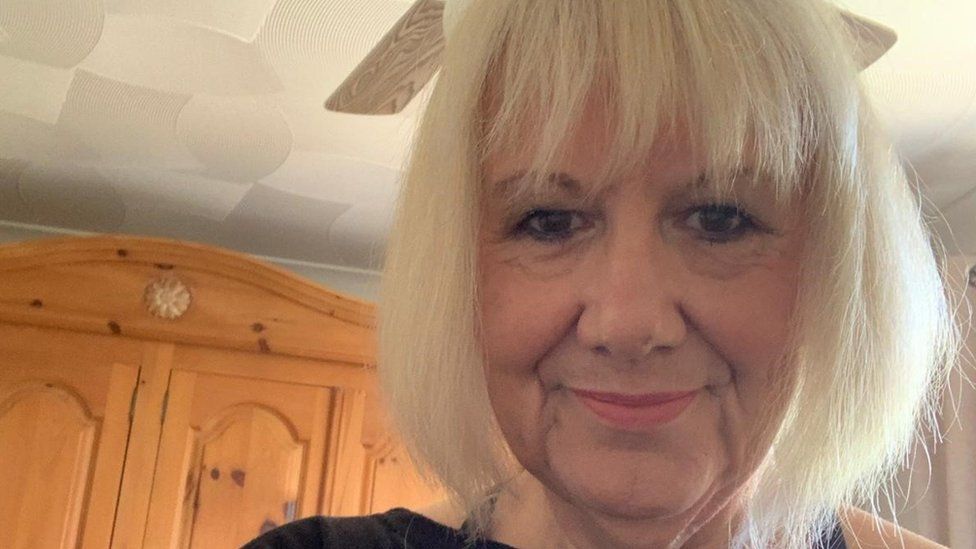
Lesley Offley was due to fly to Austria with her family to celebrate her husband's 60th birthday on Tuesday.
But the 62-year-old from Surrey was told on Monday morning their Gatwick flight had been cancelled.
"We've spent all morning unravelling all our travel plans for my husband's 60th birthday - first time we've attempted to travel since 2019 - and [I'm] completely fed up," she told the BBC.
"It's been phone calls and emails all day, accommodation is lot more money so we've lost out there and we're still trying sort out the travel insurance.
"We've re-booked for next week but I don't feel confident at all."
On top of this, Ms Offley said they have been refused a refund on their parking booking because they cancelled less than 24 hours before they were due to park.
IMAGE SOURCE,PA MEDIA
John Strickland, director of transport consultancy JLS Consulting, said the situation for airlines was going to be "very difficult" over the next couple of months.
"I think certainly the next month or two are going to be very difficult," he told the BBC's Wake Up To Money.
"We know that Manchester has said that passengers should expect queues for one to two hours for the next several weeks while they undertake additional training."
According to the data firm Cirium, a total of 1,143 flights were cancelled to and from the UK in the week up to 3 April, with 382 of them grounded over the weekend.
Cirium said British Airways cancelled 662 flights to and from the UK last week, while EasyJet cancelled 357.
British Airways took the decision two weeks ago to remove some flights, mostly short-haul routes, from its schedules until May.
Aside from flight disruption, travellers hoping for an Easter getaway have also been affected by delays to the Eurotunnel and to ferry services.
What are my rights if my flight is cancelled?
Passengers who receive little or no notice about their cancelled flight, and ultimately arrive much later at their destination, may be entitled to extra compensation payments.
With many of the flights cancelled fewer than seven days before the scheduled departure, airlines are obliged to inform those affected of their rights - which can include putting them on a flight with a different carrier or getting a full refund.
Rory Boland of consumer group Which? said passengers affected on Monday may be entitled to at least £220 compensation to cover out of pocket costs, depending on the circumstances, and airlines should provide refreshments and accommodation as required while their customers await their new flight.
Full details of the Civil Aviation Authority rules are here. A guide from Which? is here.
As Benito Luna-Herrera teaches his 7th grade social studies classes, he is on alert for signs of inner turmoil. And there is so much of it these days.
One of his 12-year-old students felt her world was falling apart. Distance learning had upended her friendships. Things with her boyfriend were verging on violent. Her home life was stressful. “I’m just done with it,” the girl told Luna-Herrera during the pandemic, and shared a detailed plan to kill herself.
Another student was typically a big jokester and full of confidence. But one day she told him she didn’t want to live anymore. She, too, had a plan in place to end her life.
Luna-Herrera is just one teacher, in one Southern California middle school, but stories of students in distress are increasingly common around the country. The silver lining is that special training helped him know what to look for and how to respond when he saw the signs of a mental emergency.
Since the pandemic started, experts have warned of a mental health crisis facing American children. That is now playing out at schools in the form of increased childhood depression, anxiety, panic attacks, eating disorders, fights and thoughts of suicide at alarming levels, according to interviews with teachers, administrators, education officials and mental health experts.
In low-income areas, where adverse childhood experiences were high before the pandemic, the crisis is even more acute and compounded by a shortage of school staff and mental health professionals.
Luna-Herrera, who teaches in a high poverty area of the Mojave Desert, is among a small but growing number of California teachers to take a course called Youth Mental Health First Aid. It teaches adults how to spot warning signs of mental health risks and substance abuse in children, and how to prevent a tragedy.
Benito Luna, a 7th-grade social studies teacher at California City Middle School, poses for a photo outside the California City Middle School in California City, Calif., on Friday, March 11, 2022.AP
The California Department of Education funds the program for any school district requesting it, and the pandemic has accelerated moves to make such courses a requirement. The training program is operated by the National Council for Mental Wellbeing and available in every state.
“I don’t want to read about another teenager where there were warning signs and we looked the other way,” said Sen. Anthony Portantino, author of a bill that would require all California middle and high schools to train at least 75% of employees in behavioral health. “Teachers and school staff are on the front lines of a crisis, and need to be trained to spot students who are suffering.”
Experts say while childhood depression and anxiety had been on the rise for years, the pandemic’s unrelenting stress and grief amplified the problems, particularly for those already experiencing mental health issues who were cut off from counselors and other school resources during distance learning.
For children, the issues with distance learning were not just academic, said Sharon Hoover, professor of child psychiatry at the University of Maryland School of Medicine and co-director of the National Center for School Mental Health.
Child abuse and and neglect increased during the pandemic, according to Hoover. For children in troubled homes, with alcoholic or abusive parents, distance learning meant they had no escape. Those who lacked technology or had spotty internet connections were isolated even more than their peers and fell further behind academically and socially.
Many children bounced back after the extended isolation, but for others it will take longer, and mental health problems often lag a stressor.
“We can’t assume that ‘OK we’re back in school, it’s been a few months and now everyone should be back to normal.’ That is not the case,” said Hoover.
Taya Bruell’s journal that she kept as part of her literature class assignment is photographed in Santa Barbara, Calif., Wednesday, March 9, 2022.AP
Returning to school after months of isolation intensified the anxiety for some children. Teachers say students have greater difficulty focusing, concentrating, sitting still and many need to relearn how to socialize and resolve conflicts face-to-face after prolonged immersion in screens.
Kids expected to pick up where they left off but some found friendships, and their ability to cope with social stress, had changed. Educators say they also see a concerning increase in apathy — about grades, how students treat each other and themselves — and a lot less empathy.
“I have never seen kids be so mean to each other in my life,” said Terrin Musbach, who trains teachers in mental health awareness and other social-emotional programs at the Del Norte Unified School District, a high-poverty district in rural Northern California. “There’s more school violence, there’s more vaping, there’s more substance abuse, there’s more sexual activity, there’s more suicide ideation, there’s more of every single behavior that we would be worried about in kids.”
Many states have mandated teacher training on suicide prevention over the last decade and the pandemic prompted some to broaden the scope to include mental health awareness and supporting behavioral health needs.
But school districts nationwide also say they need more psychologists and counselors. The Hopeful Futures Campaign, a coalition of national mental health organizations, last month published a report that found most states are struggling with mental health support in schools. Only Idaho and the District of Columbia exceed the nationally recommended ratio of one psychologist per 500 students.
In some states, including West Virginia, Missouri, Texas and Georgia, there is only one school psychologist for over 4,000 students, the report says. Similarly, few states meet the goal of one counselor per 250 students.
President Joe Biden has proposed $1 billion in new federal funding to help schools hire more counselors and psychologists and bolster suicide prevention programs. That followed a rare pubic advisory in December from U.S. Surgeon General Vivek Murthy on “the urgent need to address the nation’s youth mental health crisis.”
An unidentified student rests on his desk as the Mojave Unified School District Superintendent Katherine Aguirre, center rear, addresses students before their spring break at California City Middle School in California City, Calif., on Friday, March 11, 2022.AP
In early 2021, emergency room visits in the U.S. for suspected suicide attempts were 51% higher for adolescent girls and 4% higher for adolescent boys compared to the same period in 2019, according to research cited in the advisory.
Since California began offering the Youth Mental Health First Aid course in 2014, more than 8,000 teachers, administrators and school staff have been trained, said Monica Nepomuceno, who oversees mental health programming at the California Department of Education.
She said much more needs to be done in the country’s largest state, which employs over 600,000 K-12 staff at schools.
The course helps distinguish typical adolescent ways of dealing with stress — slamming doors, crying, bursts of anger — from warning signs of mental distress, which can be blatant or subtle.
Red flags include when a child talks about dying or suicide, but can be more nuanced like: “I can’t do this anymore,” or “I’m tired of this,” said Tramaine El-Amin, a spokesperson for the National Council for Mental Wellbeing. More than 550,000 K-12 educators across the country have taken the Youth Mental Health First Aid course since it launched in 2012, she said.
Changes in behavior could be cause for concern — a child who stops a sport or activity they were passionate about without replacing it with another one; a typically put together child who starts to look regularly unkempt; a student whose grades plummet or who stops handing in homework; a child who eats lunch alone and has stopped palling around with their friends.
After noticing something might be wrong, the course teaches the next step is to ask the student without pressuring or casting judgment and letting them know you care and want to help.
Bruell, right, and wife, Jenny, sit for a photo with an urn containing the ashes of their daughter, Taya, in Santa Barbara, Calif., Wednesday, March 9, 2022.AP
“Sometimes an adult can ask a question that causes more harm than good,” said Luna-Herrera, the social studies teacher at California City Middle School, a two-hour drive into the desert from Los Angeles.
He took the course in spring 2021 and two weeks later put it to use. It was during distance learning and a student had failed to show up for online tutoring but he spotted her chatting online on the school’s distance learning platform, having a heated dispute with her then-boyfriend. Luna reached out to her privately.
“I asked her if she was OK,” he said. Little by little, the girl told Luna-Herrera about problems with friends and her boyfriend and problems at home that left her feeling alone and desperately unanchored.
The course tells adults to ask open-ended questions that keep the conversation going, and not to project themselves into an adolescent’s problems with comments like: “You’ll be fine; It’s not that bad; I went through that; Try to ignore it.” What might seem trivial to an adult can feel overwhelming for a young person, and failure to recognize that can be a conversation stopper.
The 12-year old told Luna-Herrera she had considered hurting herself. “Is that a recurring thought?” he asked, recalling how his heart started racing as she revealed her suicide plan.
Like CPR first-aid training, the course teaches how to handle a crisis: Raise the alarm and get expert help. Do not leave a person contemplating suicide alone. As Luna-Herrera continued talking to the girl, he texted his school superintendent, who got the principal on the line, they called 911 and police rushed to the home, where they spoke to the girl and her mother, who was startled and unaware.
“He absolutely saved that child’s life,” said Mojave Unified Superintendent Katherine Aguirre, who oversees the district of about 3,000 students, the majority of whom are Latino and Black children from economically disadvantaged families.
Taya Bruell’s pencil drawings of her face and self-harm are seen in her journal she kept as part of her literature class assignment in Santa Barbara, Calif., Wednesday, March 9, 2022.AP
Aguirre recognized the need for behavioral heath training early in the pandemic and through the Department of Education trained all of her employees, from teachers to yard supervisors and cafeteria workers.
“It’s about awareness. And that Sandy Hook promise: If you see something, say something,” she said.
That did not happen with 14-year-old Taya Bruell.
Taya was a bright, precocious student who had started struggling with mental health issues at about 11, according to her father, Harry Bruell. At the time, the family lived in Boulder, Colorado where Taya was hospitalized at one point for psychiatric care but kept up the trappings of a model student: She got straight As, was co-leader of her high school writing club and in her spare time taught senior citizens to use computers.
For a literature class, Taya was assigned to keep a journal. In it, she drew a disturbing portrait that showed self-harm and wrote about how much she hated her body and was hearing voices she wanted to silence.
Her teacher read the assignment and wrote: “Taya, very thorough journal. I loved reading the entries. A+”
Three months later in February 2016, Taya killed herself. After her death, Taya’s parents discovered the journal in her room and brought it to the school, where they learned Taya’s teacher had not informed the school counselor or administrators of what she had seen. They don’t blame the teacher but will always wonder what if she had not ignored the signs of danger.
“I don’t think the teacher wanted to hurt our daughter. I think she had no idea what to do when she read those stark warning signs in Taya’s journal,” said her father, who has since relocated with the family to Santa Barbara, California.
He believes legislation to require teacher training in behavioral health will save lives. “It teaches you to raise the alarm, and not just walk away, which is what happened to Taya.”
The largest-ever study of genetics in Alzheimer’s disease patients has identified 42 new genes that appear to be linked to the neurodegenerative disorder.
The new genes takes the total number associated with Alzheimer’s to 75, opening up new avenues for research of ways to diagnose and treat the conditions, and suggest that immunological dysfunction may have a greater role to play than previously thought.
In particular, the findings suggest that disruption to innate immunity – the first line of defence against pathogens – as well as overly aggressive activity of white blood cells in the central nervous system called microglia.
Another revelation is that the tumour necrosis factor alpha-dependent signalling pathway is involved in disease, something that was not known before. Drugs that inhibit TNF are already widely used to treat inflammatory diseases like rheumatoid arthritis, psoriasis and Crohn’s disease.
The study brought together researchers from eight countries – including France, the US, UK and other European nations – and was led by Prof Jean-Charles Lambert, research director at France’s National Institute of Health and Medical Research (Inserm).
The uncovered genes also confirmed the importance of amyloid beta and tau proteins, which have been the focus of much of the drug discovery effort in Alzheimer’s for the last couple of decades, albeit with limited results and just one approved therapy – Biogen’s Aduhelm (aducanumab) – whose efficacy is a topic of considerable debate.
Lambert said the discovered genes are being studied to “give them meaning in relation to our clinical and biological knowledge, and thereby gain a better understanding of the cellular mechanisms and pathological processes at play.”
The study was carried out using the genomes of 100,000 people with Alzheimer’s and 600,000 healthy individuals. While it is known that lifestyle factors like diet, exercise and smoking can have an effect on the risk of developing the disease, there is a strong genetic component, accounting for 60% to 80% of cases.
According to Prof Julie Williams of Cardiff University and the UK Dementia Research Institute, one of the study’s authors, the work is “a major leap forward in our mission to understand Alzheimer’s, and ultimately produce several treatments needed to delay or prevent the disease.”
The researchers also devised a genetic risk score that they reckon will predict which patients with cognitive impairment will go on to develop Alzheimer’s within three years.
“While this tool is not at all intended for use in clinical practice at present, it could be very useful when setting up therapeutic trials in order to categorise participants according to their risk and improve the evaluation of the medications being tested,” said Lambert.
That could be invaluable as drugmakers try to demonstrate the benefit of their amyloid and tau-targeting therapies, which are expected to have the greatest chance of showing efficacy when used very early on in the disease process.
The findings have been published in the journal Nature Genetics.
Commenting on the study, Dr Susan Kohlhaas, the director of research at Alzheimer’s Research UK, said: “Creating an extensive list of Alzheimer’s disease risk genes is like having the edge pieces of a puzzle put together, and while this work doesn’t give us the full picture, it provides a valuable framework for future developments.”
She cautioned however that the work also reveals just how complex Alzheimer’s is, with several different mechanisms implicated in the development of the disease.
“It’s going to take a concerted and global effort to develop life-changing treatments, but this seminal study also gives us hope that research will win, and it gives us the opportunity to work on new treatment targets.”
Korra Elliott has tried to avoid seeing a doctor while waiting to get on Medicaid. She worries she can't afford more bills without any insurance coverage. But in early March — five months, she said, after applying and with still no decision about her application — a suspected case of the flu sent her blood pressure soaring and landed her in the emergency room.
The 28-year-old mother of four from Salem, Missouri, is among the tens of thousands of uninsured Missourians stuck waiting as the state slogs through a flood of applications for the state-federal health insurance program. Missouri expanded the program last year after a lengthy legal and political battle, and it now covers adults who earn up to 138% of the federal poverty level — about $18,800 annually for an individual.
Missouri had nearly 72,000 pending Medicaid applications at the end of February and was averaging 119 days to process one, more than twice the maximum turnaround time of 45 days allowed by federal rules. Adding people to Medicaid is labor-intensive, and the jobs require training and expertise. The program covers many populations — children, people with disabilities, seniors, adults who are pregnant or have children, and some without children. Different rules dictate who qualifies.
Missouri simply doesn't have the workers to keep up. Last fiscal year, 20% of its employees who handled Medicaid applications left their jobs, said Heather Dolce, a spokesperson for the Missouri Department of Social Services. And the average number of job applications received for each opening in the department's Family Support Division — which oversees enrollment — dropped from 47 in March 2021 to 10 in February 2022.
Just about every industry is struggling to find workers now, but staffing shortages in state Medicaid agencies around the country come at a challenging time. States will soon need to review the eligibility of tens of millions of peopleenrolled in the program nationwide — a herculean effort that will kick off once President Joe Biden's administration lets the covid-19 public health emergency declaration expire. If Missouri's lengthy application backlogs are any indication, the nation is on course for a mass-scale disruption in people's benefits — even for those who still qualify for the insurance.
"If you don't have people actually processing the cases and answering the phone, it doesn't matter what policies you have in place," said Jennifer Wagner, director of Medicaid eligibility and enrollment for the Center on Budget and Policy Priorities, a left-leaning think tank in Washington, D.C.
Federal officials have said they will give states 60 days' notice before ending the public health emergency, so it's unlikely to expire before summer. Once it does, enrollees won't be kicked off immediately: States can take up to 14 months to complete renewals, although budget pressures may push many to move faster. A bump in federal Medicaid funds to states, provided by Congress through covid relief legislation in 2020, will end shortly after the emergency's expiration.
Ultimately, workers are needed to answer questions, process information confirming someone's Medicaid enrollment should be renewed, or see whether the person qualifies for a different health coverage program — all before the benefits lapse and they become uninsured.
State Medicaid officials have said staffing is one of the top challenges they face. In a January meeting of the Medicaid and CHIP Payment and Access Commission, an outside panel of experts that advises Congress, Jeff Nelson said 15% to 20% of the Utah Department of Health's eligibility workers were new. "We've got a fifth of the workforce that potentially doesn't know what they're doing," said Nelson, who oversees eligibility for Utah's Medicaid program.
Eligibility worker vacancies at the Texas Health and Human Services Commission quadrupled over roughly two years — 1,031 open positions as of late February compared with 260 as of March 31, 2020, according to spokesperson Kelli Weldon.
Medicaid renewals are less labor-intensive than initial applications, but it takes time before an eligibility worker knows the ins and outs of the program, Wagner said.
"It's months before you are fully functional," said Wagner, who previously oversaw the Illinois Department of Human Services' offices that determine applicants' eligibility for Medicaid, the Supplemental Nutrition Assistance Program that provides food stamps, and other assistance programs.
Other social services may be gummed up in the process because many workers also handle applications for other programs. In addition to Medicaid, workers for Kentucky's Department for Community Based Services handle SNAP and child care assistance applications.
Consumer advocates who connect people to safety-net programs worry that an overwhelmed workforce won't be able to keep up.
"It's going to be a lot of work for everyone," said Miranda Brown, who helps people apply for benefits as outreach coordinator for the Kentucky Equal Justice Center, a legal aid group.
Brown said she recently called a state office on behalf of a client toward the end of the day. She waited on hold for an hour only to be told by a caseworker that the agency couldn't process any more cases that day.
"I even have a [phone] line that I get through faster than a consumer calling for themselves," she said. "If it's hard for me, it's very hard for consumers who are trying to call on their lunch break at work."
South Carolina planned to hire "a couple hundred workers" beginning this spring to help manage renewals at the end of the public health emergency, said Nicole Mitchell Threatt, deputy director of eligibility, enrollment, and member services at the Department of Health and Human Services. The turnover rate among eligibility workers was about 25% from July 2020 to June 2021, jumping from a 15% rate in the previous 12 months.
In Missouri, Dolce said her department hopes a recently approved pay increase will help recruit more workers and improve staff morale and retention. The department is being sued over delays in enrollments for SNAP benefits, which it also oversees.
Kim Evans, director of the Missouri Department of Social Services' Family Support Division, told the state Medicaid oversight committee in February that her division was offering overtime and she was even offering to buy pizza to speed up the processing of applications. But the department is enrolling fewer than 3,000 people per week, leaving tens of thousands waiting and delaying their care.
In the suburbs of Kansas City, Missouri, Stacey Whitford, 41, applied in December for Medicaid for herself and her 13-year-old son. Her son needs hearing aids that she said cost $2,500 apiece without insurance. She also lined up a support worker for the boy, who has autism, through the Department of Mental Health but said she was told the worker can begin only once her son is enrolled in Medicaid.
"It's just like hanging a golden ticket right in front of your face and saying, 'Here it is, but you can't touch it,'" she said in early March.
Whitford spent hours on the phone trying to sort out the status of their applications, then on March 31, just shy of four months after applying, they were finally approved.
"I am so excited! We can run with scissors now," she joked.
But Elliott, the mother of four in Salem, is still waiting. She gave up calling the state's Medicaid helpline after growing frustrated from spending hours on hold and being disconnected because of high call volumes. Instead, she checks on her application through the enrollment specialists at the clinic where she applied.
She was sent home from the ER with ibuprofen and Tamiflu and has yet to see a bill. If her Medicaid application is approved, her coverage will be backdated to the month she applied, likely covering her ER trip. But if her application is rejected, that cost will be added to her medical debt, which Elliott estimates is already tens of thousands of dollars.
"It makes me feel like it's a joke," Elliott said of Missouri's expansion of Medicaid. "Like they're just throwing it out there to get all these people to apply for it, but they're not going to really help anybody."