Search This Blog

Friday, June 10, 2022

Facebook allows 10 strikes before booting gun sellers from platform: report

 Facebook is allowing marketplace buyers and sellers to violate its ban on gun purchases 10 times before they are kicked off the platform, according to a Thursday report from The Washington Post. 

The Post reported that Facebook’s guidelines also include a five-strikes system for gun sellers and buyers who call for violence or voice support for a “known dangerous organization” before they lose Facebook access. Facebook reportedly banned the private sale of guns on its website more than five years ago but has not publicly explained in much detail how the company enforces the ban. 

Facebook spokesman Andy Stone told the Post that the company takes down posts that violate its policy quickly and applies increasingly severe consequences for repeat offenders, up to permanently suspending an account. 

“If we identify any serious violations that have the potential for real-world harm, we don’t hesitate to contact law enforcement,” Stone said. 

He said almost 90 percent of those who receive one strike will not receive more than one additional one, adding that violators are mostly unaware of Facebook’s policies and don’t violate them again once they are told about it. 

But the Post reported that Facebook did not dispute that it has a 10-strikes rule. 

After the story was published, Stone responded on Twitter, saying the article “distorts” the company’s approach to penalizing violators. 

The Post reported that Facebook’s system for enforcing the ban is “shrouded in secrecy,” but Stone posted that the guidelines are available online. They lay out the penalties for up to “five or more” violations but do not mention the 10-strike system. The story does mention this system but states the website does not explain what warrants a full ban or how certain types of policy violations are compared to others.

Stone wrote that penalties become more severe for repeated violations and most violations are unintentional, which the Post included in its story. He wrote the story “excluded key examples” but did not clarify what they might be. 

Stone added that there are “one-and-done” violations and said the story mischaracterized how strikes and “other factors” cause an account to be removed at one strike. The Post’s story does note that users who post child pornography or terrorist images are immediately removed. 

The two reporters on the story spoke to six current and former employees about the policy on condition of anonymity. Two of them said the strike threshold for gun sale violations was more than 10 until 2020, but it was reduced to 10 after some argued it was too high. 

The company introduced a five-strike rule for gun sellers with other types of violations late last year. A user will be immediately removed and referred to law enforcement for making a direct or “credible” threat to kill a specific person, but this happens rarely, the employees said.

The story came amid renewed discussions on gun violence following the latest rash of mass shootings.

https://thehill.com/policy/technology/3519049-facebook-allows-10-strikes-before-booting-gun-sellers-from-platform-report/

How we should be diagnosing long COVID

 For those who have struggled to obtain a diagnosis for chronic illnesses such as chronic fatigue syndrome/myalgic encephalomyelitis or endometriosis, a familiar process is now playing out for a large portion of the population who are struggling to get a long COVID-19 diagnosis.     

Chronic fatigue syndrome/myalgic encephalomyelitis patients often wait up to five years for a diagnosis. The condition remains a diagnosis of exclusion, which often means patients are subjected to many time-consuming and costly tests. Endometriosis has an average diagnostic delay of seven to 10 years from the onset of symptoms. These diagnostic delays are due to a variety of factors, from outdated clinical definitions and a lack of health care provider education to complicated and prohibitive coding and referral systems. We must heed these lessons and not repeat the same mistakes when diagnosing long COVID patients.      

A correct diagnosis doesn’t just give patients a name for their ailments. A correct diagnosis unlocks treatment options, eligibility for clinical trials and financial coverage through insurance. A diagnosis also allows some to seek necessary disability benefits or work accommodations from the agencies that determine benefit eligibility. A  meta-analysis by the Brookings Institution suggested that long COVID may be responsible for over 1 million workers being out of the labor force at any given time. Misdiagnosis or delayed diagnosis of chronic illness is a critical public health issue. 

The first challenge is to create a universal and inclusive clinical definition of long COVID and subsequent medical coding. Long COVID is presently known by several other names, including long-haul COVID, chronic COVID and post-acute sequelae of COVID-19. Yet using terms such as “post,” “chronic” or “syndrome” can cause assumptions about the underlying physiological processes associated with the condition, which still largely remain unclear.     

The lack of a single name and clinical definition causes problems for epidemiological data reporting, research, policy and treatment. But this must also be balanced against the need to provide an inclusive definition that ensures that no long COVID patients are left behind.

In October 2021, long COVID was recognized with a diagnostic ICD-10 code known as U09.9 Post Covid Condition, an important step for patients who need their care and treatment to be reimbursed by insurance providers. Guidelines for use of the code state that it should be used for patients who experienced a probable or confirmed COVID-19 infection. This is an important distinction as unequal access to testing at different stages of the pandemic means that many patients may not have serological proof of SARS-CoV-2 infection. 

Unfortunately, this code also excludes any potential long COVID patients who experienced an asymptomatic COVID-19 infection. It is now well understood that the severity of the initial infection has no bearing on the severity of long COVID symptoms. A recent analysis of medical records in California found that 32 percent of patients with long COVID symptoms had asymptomatic infections. This unnecessary criterion could prevent thousands of long COVID patients from accessing treatment and care. The code also needs to better represent the broad range of symptoms associated with long COVID.

The next challenge is developing screening systems and educating health care providers on the full spectrum of symptoms and experiences. The symptoms associated with long COVID continue to evolve and grow. One Lancet study lists up to 200 symptoms. In addition to collaborating with researchers and physicians to develop guidelines for diagnosis, treatment and care, the Centers for Disease Control and Prevention (CDC) and other physician groups should be working with patient advocacy groups to fully understand the barriers to care and the breadth of the patient experience living with this condition.

Health care provider education should be ongoing. Since long COVID spans so many medical specialties, we also need to break down silos that exist between different physician groups to share resources and collaborate. Only then can we create comprehensive guidance and pathways for physicians to make long COVID diagnoses.                                         

Between 10 percent to 30 percent of COVID-19 cases are now resulting in long COVID symptoms. This growing population means that screenings for long COVID symptoms should be integrated into annual primary care checkups. In particular, cardiovascular complications from COVID-19 are becoming increasingly common. This is true even for patients without previous cardiovascular disease, comorbidities and an otherwise low risk of cardiovascular disease. We need to ensure that cardiovascular issues are picked up at the earliest possible stage to avoid severe disease.     

Another complex challenge is the institutional change required for doctors to work most effectively with long COVID patients. Many physicians are heavily restricted by the amount of time they can spend with patients due to insurance reimbursements and a fee-for-service payment model. The average 15-minute primary care doctor appointment mandated by many insurance companies is barely enough time to take a medical history for a condition as complex as long COVID let alone conduct an exam and order tests or make referrals.       

Long COVID care should be integrated and patient-centered and utilize a multidisciplinary team. Primary care doctors who may not have the expertise required to diagnose or care for certain long COVID patients should have a network of local specialists and treatment clinics available for referrals.         


Only by addressing these challenges can we begin to move forward toward an inclusive, swift and accurate diagnosis process for long COVID patients that leaves no one behind.   

William Haseltine is president of ACCESS Health International. An infectious disease expert, Haseltine was formerly a Harvard Medical School professor and founder of the university’s cancer and HIV/AIDS research departments.

https://thehill.com/opinion/healthcare/3518812-this-is-how-we-should-be-diagnosing-long-covid/

Starbucks might restrict public access to bathrooms: CEO

 Starbucks might be taking its bathrooms private again.

The coffee chain, which opened its café bathrooms to the non-purchasing public after a high-profile incident in 2018, could soon be walking back its restroom policy in order to maintain a “safe environment” for patrons and staff, CEO Howard Schultz said.

Schultz hinted at the policy change Thursday, in an interview at The New York Times’ DealBook D.C. policy forum.

“There is an issue of just safety in our stores, in terms of people coming in, who use our stores as a public bathroom, and we have to provide a … safe environment for our people and our customers,” Schultz said during a conversation with The Times’ Andrew Ross Sorkin.

Schultz broached the topic during a discussion regarding mental health, which he claimed to be the “No. 1 issues” that Starbucks is dealing with “as a company.”

“[The] mental health crisis in this country is severe, acute and getting worse,” Schultz said.

When asked by Ross Sorkin how the company plans to “deal” with the issue, Schultz responded by saying Starbucks needs to train its employees and “harden” its stores.

“I don’t know if we can keep our bathrooms open,” he said.

Starbucks had previously announced its open-bathroom policy in the wake of a 2018 incident at a Philadelphia location, where two Black men were arrested while waiting to meet with a business acquaintance in the store. One of the men had previously asked to use the restroom but was denied, the Associated Press reported at the time.

Starbucks previously had no fixed policy on bathroom access, Schultz said in the wake of the arrests, and decisions were ultimately up to individual stores.

After the incident, Schultz himself said Starbucks bathrooms would be open to all, as would the café areas, regardless of whether someone makes a purchase or not.

“We don’t want to become a public bathroom,” said Schultz, “but we’re going to make the right decision a hundred percent of the time and give people the key.”

Starbucks also included the directive in its “third place” policy, which aimed to position its cafes as welcoming spaces for the public, so long as visitors use the spaces lawfully and respectfully.

On Thursday, however, Schultz appeared to express uncertainty that Starbucks would be able to provide safe spaces for the public, especially during what he feels is a worsening mental-health crisis in the country.

“Again, Starbucks is trying to solve a problem and face a problem that is the government’s responsibility,” Schultz said. “And when I think about the issues that we, our business is facing and the challenge that our people are facing, almost every, every question you ask is a question about what the government’s responsibility is, and what I realize more and more, the government is no longer gonna solve any of these problems.”

https://thehill.com/news/wire/3519069-starbucks-might-restrict-public-access-to-bathrooms-ceo-suggests/

Outstanding questions overshadow GSK’s respiratory syncytial virus win

 The soon-to-be pure-play pharma company GSK desperately needed a hit in respiratory syncytial virus – the vaccine for older adults is considered its most valuable pipeline project. Relief all round then at news of success for the phase 3 Aresvi 006 trial, though lack of detail makes the extent of the win unknowable. GSK described the result as “statistically significant and clinically meaningful”, adding that the effect size was consistent across secondary endpoints and in those aged 70 and above. The company has previously described efficacy above 50% as clinically meaningful, 70% very good and above 80% outstanding; analysts want to see at least 70%, believing that anything less would leave GSK susceptible to projects coming behind. Durability of response is another consideration, with some analysts concerned that regulators might want to see data over more than one RSV season. GSK is confident that its vaccine, which uses the same adjuvant as Shingrix, will provide long-term protection; this is an issue that all contenders must address, of course, and could be an important differentiator in the long term. With Pfizer and J&J also expecting pivotal readouts later this year, the race to market will soon be on.

Late-stage pipeline of adult RSV vaccines
ProductCompanyDescriptionDetails 
GSK3844766AGSKProtein subunit vaccine, adjuvantedPh3 Aresvi in adults ≥60 toplined positive June 2022
RSVpreF ((PF-06928316)PfizerProtein subunit vaccinePh3 Renoir trial in adults ≥60, data due H2 2022 
Ad26.RSV.preFJ&JAdenovirus type 26 viral vector vaccine Ph3 Evergreen trial in adults ≥60, data due H2 2022
MVA-BN RSVBavarian NordicRecombinant antigen vaccinePh3 trial in adults ≥60, data due H2 2023
mRNA-1345ModernamRNA vaccine encoding RSV glycoprotein FPh3 portion of ph2/3 ConquerRSV trial in adults ≥60 began Feb 2022
Source: Evaluate Pharma.

https://www.evaluate.com/vantage/articles/news/trial-results-snippets/outstanding-questions-overshadow-gsks-respiratory

Worried UK households cut back on energy and food

 More than half of UK homes have reduced the amount of gas and electricity they use as worries about the cost of living grow, new data shows.

The Office for National Statistics (ONS) also found that high numbers of people are spending less on food.

The rate of inflation is rising at its fastest rate in decades due to factors such as high energy prices.

The ONS said around three-quarters of households were "somewhat worried" or "very worried" about growing costs.

Wage growth is failing to keep up with inflation - the rate at which prices rise - leaving many households struggling.

Inflation reached a 40-year high of 9% in April.


In a survey covering 25 May to 5 June, the ONS said 52% of respondents said they were using less energy around the house.

The survey also found that 41% were spending less on food and "essentials".

Around 9 in 10 adults said their cost of living had risen over the past month, with food shopping, gas and electricity bills and the price of fuel the most common reasons given.


Higher manufacturing and supply costs are lifting food prices. The war in Ukraine, which is a major provider of grains and fertilizer globally, has had a major impact.

Russia, which launched an assault on Ukraine in February, is one of the world's largest oil suppliers and is facing widespread sanctions following its attack.

The ONS said 40% of those questioned said that they were cutting back on non-essential journeys in their vehicles. This week, petrol prices in the UK reached a new high, meaning it now costs £100 to fill a 55-litre car.

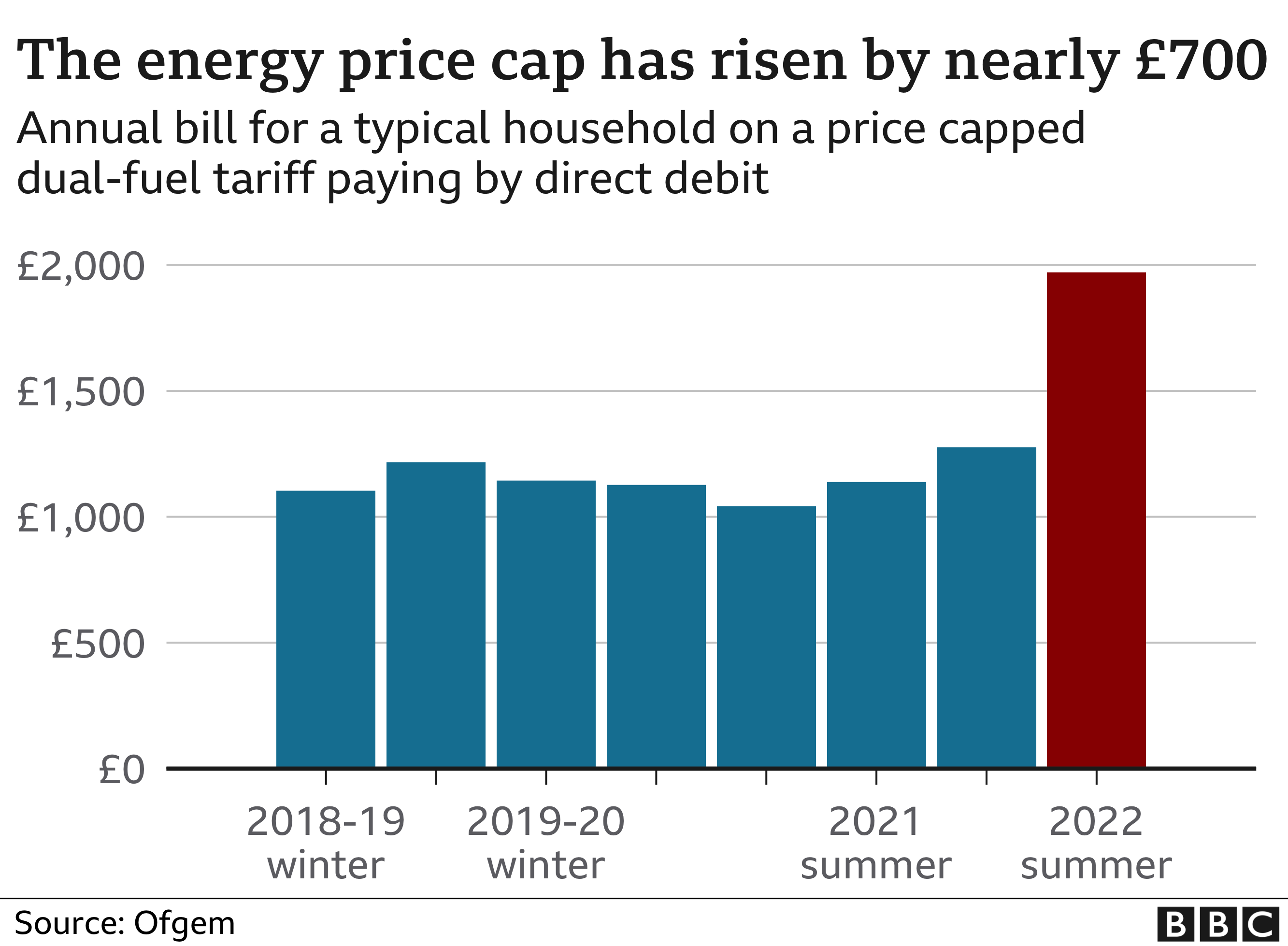
Graphic showing how the energy price cap has changed

Meanwhile, energy bills have soared, with the average household seeing a 54% increase in April when the price cap - the maximum amount per unit suppliers can charge in England, Scotland and Wales - rose. Bills are expected to rise even further in October.

The government has announced a range of measures to help people cope with rising costsincluding a £400 discount on fuel bills for all UK households in October.

More than eight million low-income households will also get an additional £650.


https://www.bbc.com/news/business-61757183

UAE's VPS Healthcare launches Burjeel Holdings to 'scale next-gen growth'

 On the sidelines of the World Economic Forum Annual Meeting, the UAE-based private healthcare services platform commits 50 pediatric stem cell transplantations to refugees of the Ukraine conflict

The UAE-based VPS Healthcare has announced the launch of Burjeel Holdings on the sidelines of the World Economic Forum Annual Meeting in Davos on Sunday to consolidate its healthcare offerings in the UAE, Oman, and across the GCC. As an intermediary holding company established under VPS Healthcare, Burjeel Holdings will build on the organization's legacy of providing an unparalleled continuum of compassionate care across its network of hospitals, specialized clinics, and allied services.

"Burjeel Holdings enables us to consolidate our healthcare offerings under one platform to create an integrated ecosystem, which will continue our vision to offer end-to-end health solutions under a single window. As we embark on our expansion journey, the platform will provide the foundation to scale up operations in new geographies in the GCC and beyond. It will also enable us to take strategic corporate actions needed to drive our future growth," said Dr. Shamsheer Vayalil, Chairman and Managing Director, VPS Healthcare. "We are proud to launch this exciting next phase of growth on the sidelines of the World Economic Forum Annual Meeting in Davos as a representation of our vision to explore, expand, and grow our capabilities."

Burjeel Holdings will operate nearly 60 assets catering to all socio-economic segments across a range of brands, including Burjeel Hospitals, Medeor Hospital, LLH Hospital, Lifecare Hospital, and Tajmeel. Its flagship facility, Burjeel Medical City, is the largest private hospital in the UAE and the only ESMO-accredited center. In addition to having renowned world-class centers of excellence, Burjeel Holdings consolidates the largest diagnostic network in the UAE and the largest comprehensive cancer center in the nation. Burjeel Holdings will be instrumental in continuing VPS Healthcare's mission of delivering quality and inclusive medical care to people around the world.

Connecting care, scale, and community to benefit refugees from Ukraine

Dr. Shamsheer began his entrepreneurial career with a vision to ensure healthcare equity. In his journey towards fulfilling this vision, he has also focused on outreach through humanitarian efforts. Alongside the launch of Burjeel Holdings, Dr. Shamsheer, a highly regarded philanthropist, announced a commitment of 50 pediatric stem cell transplantations to support Ukraine as well as additional support on behalf of those who join the pledge of support at Burjeel House in Davos.

Dr. Shamsheer and VPS Healthcare have been at the forefront of many humanitarian initiatives over the last 15 years. In 2018, VPS Healthcare enabled the treatment of Yemeni war victims at its hospitals in India. The organization offered the '100 Free Heart Surgeries' initiative for those in need as a tribute to the late H.H. Sheikh Zayed bin Sultan Al Nahyan.

"I am pleased to announce our commitment of support for those affected by the conflict in Ukraine. This contribution is being made toward the important task of rebuilding a strong community in the war-torn region. We have seen that children, especially those undergoing cancer treatment, are suffering the most in this very unfortunate conflict. Burjeel Holdings will look to provide them with the care they desperately need," said Dr. Shamsheer.

VPS Healthcare announced the launch of Burjeel Holdings and its commitment to supporting the Ukrainian refugees at the Burjeel House on the sidelines of the World Economic Forum Annual Meeting in Davos. The Burjeel House will convene intentional, collaborative dialogues on topics like catalyzing equitable health training, and advancing medical innovation.

https://www.prnewswire.com/news-releases/uae-powerhouse-vps-healthcare-launches-burjeel-holdings-to-scale-the-next-generation-of-its-growth-301553819.html

Biden Admin Dropping COVID-Testing Requirements For International Travel

 The Biden administration has finally dropped a Covid-19 testing requirement for travelers entering the country, the White House announced on Friday.

The rule, established during the Trump administration and later enhanced by Biden, required all inbound travelers - including US citizens - to show proof of negative Covid test before boarding flights headed for the US.

As CNBC notes, airlines and others in the travel industry have pushed Biden to drop testing for months, arguing that it was hurting their bottom line.

The change will take effect at 12:01 am Sunday.

According to the Centers for Disease Control and Prevention, they will reassess the decision in 90 days.

"If there is a need to reinstate a pre-departure testing requirement — including due to a new, concerning variant — CDC will not hesitate to act," said one Biden administration official.

https://www.zerohedge.com/covid-19/biden-admin-dropping-covid-testing-requirements-international-travel