Search This Blog

Friday, June 10, 2022

Shanghai Returns To Lockdown For Mass Testing Just Days After Reopening

 Just over a week after we reported that "Shanghai was finally lifting its Covid lockdown", China's commercial capital is once again backsliding into the warm embrace of Wuhan's proudest export, and will "briefly" lock down most of the city this weekend for mass testing as Covid-19 cases continue to emerge, causing more disruption and triggering a renewed run on groceries days after exiting a grueling two-month shutdown.

According to Bloomberg, the plan emerged from one area with a handful of cases, then spread in hours to 15 of the financial hub’s 16 districts, and now encompasses almost all of the city’s 25 million residents as health officials use testing to root out any silent transmission of the virus, a key tool in China’s "Covid Zero" arsenal.

The instant escalation reflects the worry that continues to shroud Shanghai (and also Beijing), which implemented one of the world’s strictest lockdowns in late March after a sluggish initial response to its outbreak. The newest move follows a rebound in infections within the community to six on both Thursday and Friday, up from zero a day earlier. Residents will be released after taking the tests, but they’ll be back under lockdown if new infections are found in their compounds.

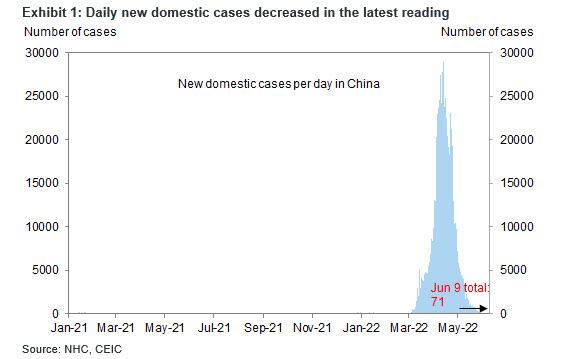
There were 5 additional infections found among people in quarantine on Thursday, for a total of 11 cases in the financial hub, health officials said. Nationwide, China added 71 infections a far cry from the record high near 30,000 in April.
The threat of disruptive measures also returned to Beijing, where testing turned up 21 new local cases as of 3 p.m. on Friday. More than 4,400 people who were in close contact with those who were infected have been sent to government-mandated quarantine facilities.

As Bloomberg details, several neighborhoods in the capital’s key Chaoyang district, home to company headquarters and embassies, were on alert after a flareup in a local bar ended a five-day streak of zero community spread on Thursday. There were two new infections found outside of quarantine there on Friday.

The return of restrictions and mass testing in China’s biggest cities underscores the difficulty of eliminating the virus while the rest of the world accepts it as endemic. The disruption wrought by pandemic curbs have impacted production at companies like Sony Group Corp. and Tesla, with the electric-car maker only now normalizing operations at its factory in southern Shanghai. 

The latest moves hit home quickly for residents. It led some to flee their apartment complexes and sparked a run on grocery stores after many struggled to get fresh fruits and vegetables in the early days of the original lockdown. While the latest curbs may lift in as little as a few hours if no new infections are found, two more weeks of isolation may be imposed for areas where new chains of transmission are uncovered.

Most economists say it will be tough for China to meet its annual growth target this year because of lockdowns. By having zero tolerance for new cases, the country risks being in a constant loop of imposing and easing restrictions.

Still, President Xi Jinping continues to emphasize the country’s adherence to a policy that has delivered one of the lowest Covid death rates in the world. Xi called for Covid Zero to be adhered to “unwaveringly” in a visit to Sichuan province Thursday, according to the official Xinhua news agency, while stating that it should be achieved in balance with the needs of the economy.

For now, the renewed restrictions aren’t yet having a significant impact on the financial markets.China's benchmark CSI 300 Index rose 1.52%, paring earlier losses. For the week, it’s up about 3.5%.

“Investors are watching but there is not much reaction at the moment given its just flare ups,” said Kevin Li, fund manager at GF Asset Management (Hong Kong) Ltd. “If it expands into more areas that affect people turning to work, then it will lead to some volatility.”

https://www.zerohedge.com/markets/shanghai-returns-lockdown-weekend-mass-testing-just-days-after-reopening

GOP Press FDA On Why COVID-19 Vaccines Would Be Authorized For Young Children

 by Zachary Stieber via The Epoch Times (emphasis ours),

A group of members of Congress is pressing the U.S. Food and Drug Administration (FDA) for answers before the regulator decides whether to authorize COVID-19 vaccines for young children.

All Americans aged 5 and older can get a COVID-19 vaccine. The FDA is scheduled to meet with its advisory panel on June 15 to discuss whether to grant emergency use authorization (EUA) for the Moderna and Pfizer vaccines for children aged 6 months to 4 years old.

A bicameral group of members of Congress, led by Sen. Ted Cruz (R-Texas) and Rep. Bill Posey (R-Fla.), are questioning whether an EUA makes sense, given how little risk COVID-19 poses to young children and how the vaccines have plunged in effectiveness against infection as new virus variants have emerged during the pandemic.

The broad approach of the CDC and FDA to date has been a one-size fits all policy—get the vaccine regardless of age, risk factors, the underlying health of the individual, or previous infection,” the members wrote to FDA Commissioner Robert Califf and members of the advisory panel in a June 7 letter obtained by The Epoch Times. “Yet, to date there remain many unanswered questions about these EUA-approved COVID-19 vaccines and only a small percentage of the safety data about these vaccines that are in the possession of the FDA and the manufacturers has been released for review.”

The members noted that nearly 70 percent of children aged 1 to 4 have recovered from COVID-19, according to the Centers for Disease Control and Prevention (CDC). That recovery gives the children a level of protection against re-infection that studies show is better than the protection from the vaccines. The members also pointed out that children who contract COVID-19 have a high survival rate and have little risk of experiencing severe disease.

The group asked the FDA to answer a series of questions before issuing its decision on the EUA requests from Moderna and Pfizer. They want to know, among other details, the cardiac risk factor for children getting the vaccines; whether the FDA will commit to sticking with a 50 percent effectiveness threshold it outlined in 2020; and whether there is a possibility children who get the vaccines will face higher risk from future variants of the virus that causes COVID-19.

The data show that the risks of serious adverse outcomes for COVID for children five and under is very low and as such the standard for evaluating EUA interventions must be very high,” the group wrote. “We believe each question raised above is not just important, but essential questions for the FDA, VRBPAC and the CDC when it comes to doing a thorough job of evaluating the potential benefits and potential risks of the vaccines for which you have been asked to consider granting an Emergency Use Authorization.”

VRBPAC stands for the Vaccines and Related Biological Products Advisory Committee. It is the FDA’s advisory panel on vaccines.

The group who wrote the letter also includes Sen. Ron Johnson (R-Wis.), Rep. Louie Gohmert (R-Texas), Rep. Ralph Norman (R-S.C.), Rep. Mary Miller (R-Ill.), Rep. Andy Biggs (R-Ariz.), Rep. Chip Roy (R-Texas), Rep. Dan Bishop (R-N.C.), Rep Lauren Boebert (R-Colo.), Rep. Andrew Clyde (R-Ga.), Rep. Thomas Massie (R-Ky.), Rep. Warren Davidson (R-Ohio), Rep. Jeff Duncan (R-S.C.), Rep. Diana Harshbarger (R-Tenn.), Rep. Matt Rosendale (R-Mont.), Rep. Vicky Hartzler (R-Mo.), and Rep. Bob Good (R-Va.).

The FDA did not respond to a request for comment.

“I am concerned that in a rush to mandate a ‘one-size-fits-all’ policy, the FDA is failing to consider that this age group is least at risk for complications from COVID and that the CDC estimates 68% of those under five have already had COVID. Common sense would suggest that VRBPAC members have already asked these questions, so we would expect a response by the time they meet. If we don’t receive answers, it is right to assume they haven’t asked basic benefit and risk questions about using this vaccine for millions of children who are at very little risk from COVID,” Posey said in a statement.

“We are in our third year with COVID-19, and we know vastly more about the virus now than we did in 2020. One of the most important things we know is that this virus poses minimal risk for children. Before the FDA approves an Emergency Use Authorization for a children’s vaccine, parents should be able to see the data and paperwork they would use to justify this decision. This is the least the FDA can do for families in Texas and across the country so parents can make the best decisions for their children,” Cruz added.

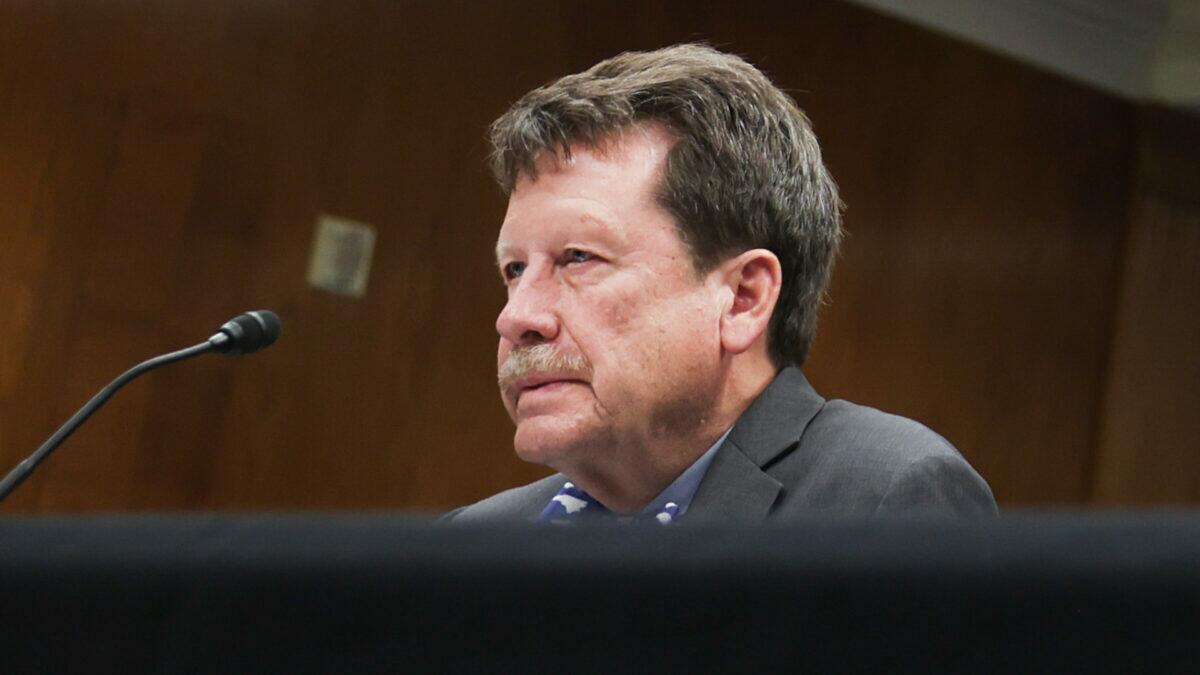
Food and Drug Administration (FDA) Commissioner Robert Califf testifies during a Senate Agriculture, Rural Development, Food and Drug Administration, and Related Agencies Subcommittee hearing on Capitol Hill in Washington on April 28, 2022. (Kevin Dietsch/Getty Images)

Given the high survival rate of children, the unknown long-term side effects of the shots, and the post-vaccination heart inflammation cases that were only detected after the vaccines were authorized, “the push for vaccine approval seems absolutely reckless,” Gohmert said.

Just last month, the FDA essentially announced that people should no longer take the Johnson and Johnson vaccine due to dangerous blood clotting side effects. This, after telling us the J&J vaccine was safe and effective for over a year. As Americans, we have every right to demand that the utmost safety and efficacy standards be implemented and rigorous studies and testing be performed before these injections are approved for anyone, especially innocent children,” he added.

After Rep. James Clyburn (D-S.C.) reported being told by Dr. Peter Marks, a top FDA vaccine official, in May that the agency would not withhold authorization solely because a vaccine was not at least 50 percent effective. An FDA spokesperson told The Epoch Times in an email that the agency “will evaluate any data submitted in the context of the ongoing public health emergency and will only authorize vaccines for the youngest children that meet our standards and for which the known and potential benefits outweigh the known and potential risks.”

Experts and parents are divided on whether vaccines are needed for children, especially healthy children.

Based on research and the effect of COVID-19 on youth, “childhood vaccination should not be considered unless a child has significant co-morbidities like cystic fibrosis, severe Type I diabetes, etc.,” Dr. Steven Hatfill, a virologist, told The Epoch Times in an email.

Dr. Moira Szilagyi, president of the American Academy of Pediatrics, said in a statement that U.S. authorities should “move with all possible speed” to review the data on vaccines for young kids, adding, “Children are not immune from COVID, which can cause severe and long-term illness, hospitalizations and even death.”

https://www.zerohedge.com/political/republicans-press-fda-why-covid-19-vaccines-would-be-authorized-young-children

Time For Joe Biden To Exit The Ring

 by Jim Bovard via The Libertarian Institute/Mises.org,

President Biden often looks like a punch-drunk old fighter sent into the ring once too often. At this point, the only thing lower than Biden’s approval numbers is his energy level. Is Uncle Joe too old to rebound?

At this point, Biden is running on little more than fumes and righteousness. In his televised antigun speech Thursday night, Biden proclaimed that he expected most people “to turn your outrage into making this issue [assault weapons] central to your vote.” Biden’s histrionic spiel was far more likely to turbo-charge gun owners than gun banners and could be another coffin nail for Democratic candidates in middle America. Biden perennially tells audiences that banning assault weapons is justified because the Second Amendment didn’t permit Americans to own cannons—a falsehood that even The Washington Post has repeatedly derided.

Inflation is the top issue by a wide margin for Americans nowadays. Biden’s inflation will soon have inflicted a 10 percent cut in the purchasing power of Americans’ paychecks. But Biden is indignant at criticism of his policies. When Peter Doocy of Fox News asked about the impact in January, Biden called him “a stupid son of a bitch.” In a March speech to Democratic members of Congress, Biden raged at being blamed for inflation: “I’m sick of this stuff!…We have to talk about it because the American people think the reason for inflation is the government spending more money. Simply. Not. True.”

Biden first tried to blame greedy corporations for inflation and then began railing about “Putin’s price hikes.” Didn’t work. Last week, The Washington Post revealed that Biden now blames White House aides who “were not doing a good job explaining the causes of inflation and what the administration is doing about it.” But his aides have a hell of a challenge when Biden boasts “a gallon of gas is down 14 percent today”—as he claimed based solely on a happy fantasy on March 9. Even wackier? Last Friday, Biden boasted that Americans feel more “financially comfortable,” thanks to his policies.

Biden won in 2020 in part because he promised in the final debate: “I’m going to shut down the virus.” Biden bet his presidency on covid vaccines. When their efficacy faded, Biden dictated a “jab or job” ultimatum to more than a hundred million Americans. The Supreme Court rebuffed most of that mandate but not before the omicron variant was causing a million new cases a day and obliterating Biden’s covid victory boasts. Last month, the White House predicted up to a hundred million new covid cases this fall—after the Centers for Disease Control and Prevention admitted that almost half of covid fatalities now are among the fully vaxxed. In lieu of more reliable vaccines, Team Biden is pressuring social media companies to crack down on “disinformation” that casts doubts on presidentially ordained injections.

Biden has a long DC reputation for trampling the facts. His first presidential bid collapsed in the late 1980s, thanks to his brazen plagiarism of a British politician. But the Democrats in 2020 were desperate to find someone who could defeat Donald Trump. Their verdict: “He’s a pathological liar, but he’s our pathological liar.” During the 2020 presidential campaign, Biden was shielded by a phalanx of media allies and former government honchos who helpfully buried issues such as the damning revelations of Hunter Biden’s laptop (first exposed by the New York Post).

But, regardless of how often Biden flees back to Delaware, he is in the limelight far more than during the campaign. He struggled to find his way off stage after a speech, and the video of him attempting to shake hands with invisible people on stage was jolting. A decade ago, Biden seemed mentally quick and verbally agile in battering Rep. Paul Ryan (R-WI) in the vice presidential debate. But Biden’s verbal and mental struggles make that stellar performance seem like a thousand years ago.

The Biden White House discloses little or no verified medical information on the president’s health, mental or physical. Instead, Biden’s apologists in the media insist that he is doing fine—the same way that much of the press corps covered for President Woodrow Wilson after he was debilitated by a stroke.

Last month, The Washington Post reprinted a column by Bloomberg’s Jonathan Bernstein demanding that Americans “Stop Smearing Biden’s Mental Capacity.” Bernstein described doubts about Biden’s acuity as “one of the many ugly things that’s happened during Joe Biden’s presidency.” Bernstein rests his defense of Biden on the trustworthiness of the Washington elite: “To believe that Biden is impaired requires a belief in a massive conspiracy…by thousands of people.”

Like the notion that Iraq had weapons of mass destruction—a Bush scam to justify a war that was supported in lockstep by most of the media and the Washington establishment? Or the notion that the Federal Reserve flooding the nation with increasingly worthless currency is good for America—another beloved myth embraced by the Beltway?

A poll last month showed that 53 percent of Americans doubted whether Biden was “mentally fit” for the presidency. Who knew that antigeezer prejudice would explode during Uncle Joe’s reign? But even 51 percent of senior citizens doubt Biden’s mental competence for office. That the official scorekeepers ruled that Biden won eighty-one million votes in the 2020 election is supposedly the only proof of “competence” that matters.

Perhaps there is only one proof of Biden’s mental capacity that matters in Washington: he is delivering the conflict with Russia that the Democratic Party has craved since Hillary Clinton made anti-Russia agitation a linchpin of her 2016 presidential campaign. Biden’s hysterical denunciations of Vladimir Putin have endeared him to DC insiders itching to drag this nation into a military conflict that they know most Americans would not support if the full facts and risks were presented to them.

The White House, State Department, CIA, and Pentagon have provided almost zero credible evidence on how the military conflict between Russia and Ukraine is proceeding. Instead, Biden has been the front man for a fairy tale that pretends that providing almost unlimited U.S. government aid and weapons to a corrupt regime in Kiev will create a historic victory for democracy everywhere.

But Russia’s unjust invasion and atrocities against civilians do not purify a Ukrainian regime that has been abusing its own people for decades. In effectively opposing any peace talks between Putin and Volodymyr Zelenskyy, Team Biden has simply assured more pointless deaths on both sides.

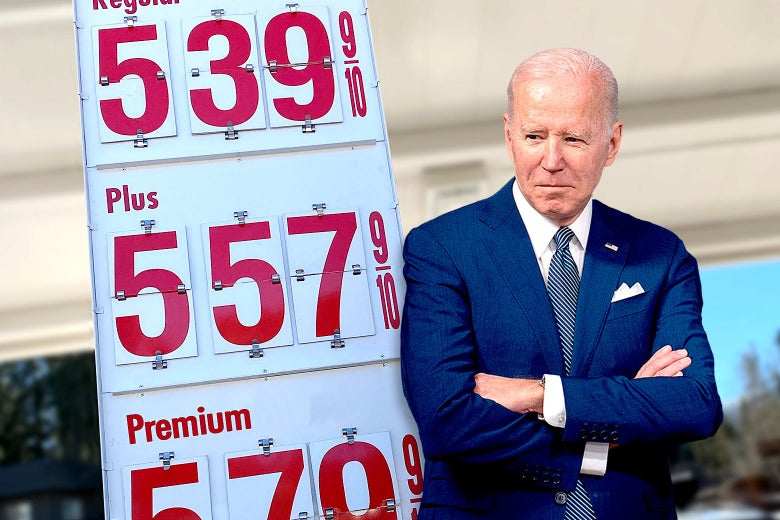
Biden is a listless president surrounded by aides with broken compasses. Biden’s worst pummeling could occur if Democrats lose control of Congress in November. Republican committees will be investigating an array of potential abuses of power that Team Biden has successfully buried (at least according to media scorekeeping) so far. Unless Biden can make it a hate crime to attach “I did this!” stickers to gas pumps, his support will keep draining away every time Americans fill up their tanks.

https://www.zerohedge.com/political/jim-bovard-its-time-joe-biden-exit-ring

COVID-19 cases are still rising in many states this summer

 The U.S. has officially kicked off the third summer of the pandemic with a sixth wave of COVID-19 cases.

Compared to previous surges, health experts say this one looks more like a swell.

The rise in reported cases seen in the Northeast in recent weeks appears to have peaked but upward trends continue in at least 21 states, according to a U.S. TODAY analysis of Johns Hopkins University data. Health experts say cases are likely higher due to underreported home tests.

Although cases are rising, health experts say hospitalizations are remaining in check. The U.S. is reporting about 350 deaths per day based on a 7-day average, which is more than a hundred deaths less than this time last summer, according to Johns Hopkins University data.

"We're only about 10 to 15 cases higher than what we were a year ago as far as hospitalizations and there are fewer patients requiring ICU care, which is encouraging," said Dr. Adia Ross, chief medical officer of Durham Regional Hospital. "Even though cases are up, the hospitalizations are not as high as they have been."

Here's what else is different going into the third pandemic summer:

Those who avoided COVID are getting it for the first time

If it feels like everyone in your circle is getting sick, you're not wrong.

COVID-19 is everywhere and many who successfully avoided the virus are getting it for the first time this summer, said Dr. Stuart Ray, professor of medicine in the division of infectious diseases at Johns Hopkins University.

After more than two years adhering to , health experts say pandemic fatigue has set in, with more people attending social gatherings and traveling without wearing a mask.

"When you lower your guard at a time when the rates are high, you're pretty likely to encounter someone who is positive," Ray said.

Public health officials have been warning of high case rates in recent months but that hasn't appeared to impact people's behavior, which experts say is driving cases higher.

"The reason why it doesn't feel as urgent to people is because everyone knows someone who has had COVID or has had it themselves. And in people who are immunized, most cases are relatively mild," said Dr. Paul Sax, professor of medicine at Harvard Medical School and clinical director of the division of infectious diseases at Brigham and Women's Hospital.

But for every person who has a mild case of COVID-19, somewhere in the chain of transmission is someone who may have developed severe disease.

"The problem is that there's so much COVID out there that the people who are most vulnerable are still getting quite sick," Sax said.

Most report mild disease, but not everyone is so lucky

Compared to previous waves, experts say the average American can expect a mild bout of COVID-19 if they're infected with the virus this summer, as most people are immunized through vaccination, previous infection or both.

People can expect some of the same symptoms from Omicron as previous coronavirus variants, such as fever and fatigue. But some distinctive COVID-19 symptoms are becoming less common, health experts say, including coughing and a loss of taste or smell.

Despite, these anecdotal differences, Sax said physicians should still be on guard for the common signs of COVID-19.

"Symptoms (may) vary from variant to variant," Sax said. "But these generalizations are not enough to make that much of a difference clinically."

Those who are unvaccinated are still more likely to develop severe disease compared to the vaccinated, experts say. But the majority of hospitalizations are occurring among the elderly, those who are immunocompromised or patients with underlying conditions, with a "smattering of people who are unvaccinated," Ray said.

"We are no longer naïve to this virus either because of vaccination or prior infection or both. The fact that we've seen it before makes the subsequent cases milder," Sax said. "This is not the holy grail herd immunity but it's related to that, meaning the background immunity in the population is making the disease less severe."

People already sick with Omicron are getting it, again

Although many people are at least partly immunized against the virus, reinfections are occurring regardless of vaccination status.

Reinfections are expected as data shows immunity from previous infection and from the vaccines wanes overtime, experts say. But they are surprised people are catching the same variant again.

"Reinfections are not surprising," said Dr. Cameron Wolfe, an associate professor at Duke University School of Medicine and infectious disease specialist at Duke Health. "What has been a little disappointing to me at least is we're starting to see reinfections of people who had Omicron getting Omicron again."

Previously, people were mostly only susceptible to reinfection from a new variant.

While Omicron has remained predominant since the beginning of the year, it has spawned sublineages including BA.2, BA.2.12, and BA.2.12.1. Experts say these subvariants may be different enough to evade immunity from a previous infection, or the immunity derived from Omicron may just not be as protective as other variants.

"It seems immunity generated by Omicron isn't quite as strong as we would have hoped," Wolfe said.

The basics remain the same

Despite the differences from previous pandemic summers,  say the basics of COVID-19 haven't changed.

They urge Americans to avoid infection as the long-term consequences of the disease are still unknown. Researchers continue to study post-COVID conditions, commonly known as long COVID.

"I don't think we have enough time and experience to know what the long-term effects of having had COVID," Ray said. "I'm not interested in taking on an unknown risk."

The CDC says post-COVID conditions can include a wide range of ongoing physical and neurological health problems including fatigue, difficulty breathing, joint pain and brain fog. The agency defines "long COVID" as symptoms persisting at least four weeks after infection.

Americans should get vaccinated and wear masks during periods of high transmission to protect those vulnerable to , experts say.

"There's a significant proportion of the population that are immunocompromised and it's a serious virus to them," Sax said. "What I'm advising people is that they understand the risks of what they're doing and always remember the vulnerable."


Explore further

What will COVID-19 look like this summer? Health experts say the virus won't be endemic, yet

How to better understand and treat those suffering from long COVID


A new study published in today’s issue of PLoS Pathogens is the first to link SARS-CoV-2 specific T cells to lung function and those who suffer from long-term COVID symptoms (PASC). Long-covid currently affects hundreds of millions of Americans.

The study found that patients suffering from long COVID had virus-specific T cell levels more than 100 times higher than those who recovered from the disease.

“The persistence of high numbers of virus-specific T cells in individuals with long COVID suggests that there may be hidden viral reservoirs that are maintaining and leading to long-term symptoms. Current treatments for long COVID, out of necessity, are focused on addressing specific symptoms and not the root cause of the illness. This evidence points toward the reservoirs as a significant factor causing long COVID, which can guide future treatments,” said the paper’s senior author Brent Palmer, PhD, associate professor of allergy and clinical immunology at the University of Colorado School of Medicine on the University of Colorado Anschutz Medical Campus.

The findings could shift treatment recommendations to focus on vaccines and antiviral medications that could reduce long COVID symptoms and help clear the virus from people’s system.

The study addressed the cause of long COVID by better understanding the adaptive immune response to the SARS-CoV-2. The research team’s findings linked systemic inflammation, persistent pulmonary symptoms and reduced lung function to the presence of high numbers of SARS-CoV-2 specific T cells. During the primary infection, these virus-specific T cells are important for controlling infection but in the context of long COVID, they are associated with ongoing symptoms, shortness of breath and lung damage. 

Brookings Institution estimates more than one million Americans are out of work due to long COVID. In addition, with over 500 million people infected during the pandemic so far, and 20-30 percent of them developing long COVID, that leaves upwards of 15 million people suffering from long COVID worldwide. This represents a serious burden to the population and healthcare system.

“Our findings hope to help change treatment focus to therapies that improve viral clearance. For example, antiviral medications like Paxlovid could help reduce symptoms in those burdened by long COVID, helping to clear the virus out of their system and get them back to a more normal life,” said Palmer.

The study also looked at two key biomarkers that are used to measure inflammation in the body. Researchers found that the higher the levels of SARS-CoV-2 T cells the higher the measure of inflammation, indicating that these T cells could also play a role in driving chronic inflammation and other long COVID symptoms.

Without continued studies that focus on the origin of long COVID, Palmer said people, the workforce and the healthcare system will continue to suffer.

“It’s clear that kitchen sink symptomatic treatments have not solved this problem. We need to continue this research in order to develop specific treatments for those whose lives have been completely uprooted because of a virus we are still working to understand,” Palmer adds.

Palmer and his team have applied for a National Institutes for Health (NIH) grant to further this research. If approved, they would be able to wash cells out of the lungs using a noninvasive procedure that would allow them to compare the cells of patients with long COVID to the cells of people without the virus.

About the University of Colorado Anschutz Medical Campus

The University of Colorado Anschutz Medical Campus is a world-class medical destination at the forefront of transformative science, medicine, education and patient care. The campus encompasses the University of Colorado health professional schools, more than 60 centers and institutes, and two nationally ranked independent hospitals - UCHealth University of Colorado Hospital and Children's Hospital Colorado - that treat more than two million adult and pediatric patients each year. Innovative, interconnected and highly collaborative, the University of Colorado Anschutz Medical Campus delivers life-changing treatments, patient care and professional training and conducts world-renowned research fueled by over $650 million in research grants. For more information, visit www.cuanschutz.edu.

###


SHIELD program a model for effective pandemic management

 In the fall of 2020, the University of Illinois Urbana-Champaign welcomed students back for in-person instruction amid the powerful first wave of the COVID-19 pandemic. The university successfully maintained operations throughout the semester – with zero COVID-19-related deaths or hospitalizations in the campus community – thanks to its “SHIELD: Target, Test, Tell” program.  

In a sweeping report, the team behind the campuswide collaboration details the innovations in modeling, saliva testing and results reporting that helped mitigate the spread of the virus, and shares the data collected and lessons learned through the process. The paper appears in the journal Nature Communications.

“We were able to rally together and keep the university open safely. We stayed open, and we didn't cause increased deaths within our community, and therefore showed others that it was possible,” said SHIELD team member Dr. Martin D. Burke, a professor of chemistry at Illinois and a member of the Carle Illinois College of Medicine, as well as a medical doctor. “This is Illinois at its best. This paper hopefully will be a useful resource for other groups and communities to confidently play offense when it comes to the next pandemic.”

Comparing COVID-19 outcomes from July 6, 2020 to Dec. 23, 2020 in all 251 counties in the U.S. that host a large university, the number of COVID-19 cases in Champaign County, where the university is located, was roughly a third less than expected, the researchers report in the paper. Moreover, Champaign County had the greatest reduction in deaths – more than four times less than would be predicted based on other counties’ numbers.

“We don't know what would have happened in Champaign-Urbana if we didn't do this, but if we look at similar communities that have large universities, large student populations, we overperformed by a lot,” said epidemiologist Rebecca L. Smith, a professor in the College of Veterinary Medicine and SHIELD team member.

The center of the SHIELD program is a rapid-yet-sensitive, saliva-based test. Illinois chemists developed the test as an alternative to the invasive nasal swabs that were standard at the time. They found that by heating the samples, they could deactivate the virus and skip the step of extracting its genetic material – the most costly, supply-chain-taxing and time-consuming part of PCR testing. The testing protocol has now received emergency use authorization from the U.S. Food and Drug Administration and has been deployed in schools, organizations and communities throughout the nation through the University of Illinois System spinoff organizations SHIELD Illinois and Shield T3.

“We deployed the test on a massive scale here, demonstrating that it was possible,” said chemistry professor Paul Hergenrother, who led the test development team. “We were processing almost 20,000 tests on some days. Now it’s been used around 15 million times worldwide.”

However, the university had to determine whom to test and how often. Based on early indicators that the virus can be spread through aerosols and by asymptomatic individuals, the “Target” arm of the program deployed extensive modeling that pointed to testing everyone on campus twice a week as the optimal way to detect infections before they became symptomatic. The vast amounts of real-time data generated by the widescale testing allowed the researchers to update their models and campus leaders to adjust procedures as time went on.  

“The predictions of models changed as new trends emerged, so it was essential that we had real-time data to give the right input to policymakers in public health and the campus,” said physics professor and SHIELD team member Nigel Goldenfeld. “For example, those with high levels of social activity have more opportunity to transmit COVID, and by using our real-time data analysis, we could identify the locations where excess transmission was occurring and test those people more frequently.”

Rapid, large-scale testing also requires fast and confidential reporting of test results – the “Tell” portion of the program. Working closely with the Champaign-Urbana Public Health District, campus engineers and designers developed a smartphone app, Safer Illinois, to deliver test results, notify of possible exposures and facilitate communication.

The university also implemented a policy that required each person to provide evidence of their negative test status via the app or a web portal to gain access to campus buildings, which encouraged compliance.

“The Safer Illinois app provided users personalized testing results and reminders of their scheduled testing, along with a display of their current testing status, all without showing any personalized health information to personnel assigned to university building entrances,” said landscape architecture professor and SHIELD team member William Sullivan, who led the team that developed the app.

“We tried to lower as many barriers as possible,” said veterinary clinical medicine professor Timothy Fan, who oversaw the diagnostic lab. “And many of those were just practical – eliminating supply chain bottlenecks, the ease of giving saliva samples, having the app right at your fingertips – so that really allowed us to be successful.”

One crucial finding that emerged from the data was that the infection rate among undergraduate students was completely unrelated to the infection rate in surrounding Champaign County, indicating that outbreaks at the university did not spread to the community.

“We saw that cases among undergrads followed a regular pattern with the academic calendar, rather than county and statewide trends, and didn't spill over into the surrounding community. Preliminary analysis of the data from subsequent semesters and variants hold to that pattern as well. The adaptive layered mitigation has proved to be robust and generalizable,” said civil and environmental engineering professor and SHIELD team member Ahmed Elbanna.

“That’s why we called it SHIELD – the entire program was designed to achieve the protection, to both our campus and surrounding community, that we saw in our data,” Burke said.

Editor’s notes: To reach Martin Burke, call 217-244-8726; email: mdburke@illinois.edu.  

The paper “Mitigation of SARS-CoV-2 transmission at a large public university” is available online. DOI: 10.1038/s41467-022-30833-3


U.S. Supreme Court will soon decide whether to hear Bayer's weedkiller case


The U.S. Supreme Court could announce as soon as Monday whether it will hear Bayer's bid to dismiss claims its Roundup weedkiller causes cancer as the company seeks to avoid potentially billions of dollars more in damages and payouts.

Bayer is seeking review of an appeals court decision that upheld $25 million in damages awarded to California resident Edwin Hardeman, a user of glyphosate-based weedkiller Roundup, who blamed his cancer on the product.

How the court acts will help determine whether thousands of similar cases go forward.

The nine justices at their private conference on Thursday were scheduled to discuss whether to hear the case, according to the court docket. The court is due to announce action on pending appeals on Monday morning, although sometimes a case is held over for various reasons, including if the justices are inclined to hear it.

Bayer has asked the Supreme Court to find that federal approval of Roundup's product label by the Environmental Protection Agency meant that the suit could not be brought forward under California's state law.

The court's decision will come after the administration of Democratic President Joe Biden urged the justices last month to reject the petition, reversing the position taken by the administration of Republican former President Donald Trump, which had largely backed Bayer.

The company's shares dropped more than 6% that day but have since recovered even as Bayer braces for up to $4.5 billion in additional litigation costs from the other claims if snubbed by the court.

It set money aside accordingly last year having already paid out a big portion of the $11.6 billion previously allocated for settlements and litigation over the matter.

The Supreme Court does not have to follow the U.S. administration's advice but usually does, with the federal government's top Supreme Court lawyer, the solicitor general, dubbed the "tenth justice" for that reason.

Credit Suisse analysts said on Thursday they see a low probability of the case being heard, noting, along with the Biden administration's stance, that the highest U.S. court accepts less than 1% of petitioned cases.

Bayer has lost three trials, awarding Roundup users tens of millions of dollars each, but has also won two. It said earlier this year it had resolved 107,000 cases out of about 138,000 overall.

Bayer, which also makes aspirin, Yasmin birth-control pills and the stroke prevention drug Xarelto, has argued that the cancer claims go against sound science and repeated product clearance from regulators in the United States and elsewhere across the globe.

It has said it should not be penalised for marketing a product on which the U.S. environmental regulator would not allow a cancer warning to be printed.

MONSANTO PURCHASE

Roundup-related lawsuits have dogged Bayer since it acquired the brand as part of its $63 billion purchase of agricultural seeds and pesticides maker Monsanto in 2018.

Bayer struck a settlement deal in principle with plaintiffs in June 2020 but failed to win court approval for a separate agreement on how to handle future cases.

The company has said it is preparing "to move on, put the uncertainty behind us", even if ignored by the Supreme Court, taking steps to contain the risk of further litigation.

It plans to offer cancer patients who in future consider suing Bayer participation in a programme that would make payments to claimants that meet certain criteria and who waive plaintiff attorney representation, drawing on the money it has set aside.

To head off further claims, Bayer plans to replace glyphosate in weedkillers for non-professional gardeners in the United States with other active ingredients.

Another Bayer case is pending with the highest U.S. court after the company in March asked it to overturn a California state appeals court decision last year that upheld an $86 million verdict that found Bayer responsible for a couple's cancer.

In this case, Bayer also raises a new legal question on the punitive damages, which it argues are excessive and not justified because it acted in accordance with federal regulation.

https://www.marketscreener.com/quote/stock/BAYER-AG-436063/news/U-S-Supreme-Court-will-soon-decide-whether-to-hear-Bayer-s-weedkiller-case-40687750/