Search This Blog

Saturday, June 11, 2022

RI in 1st human donor pasteurized milk program to combat baby formula shortage

 Kent Hospital’s Women’s Care Center has launched Rhode Island’s first pasteurized human milk program.

The goal is to provide breastfeeding families an option to supplement breast milk through the program, which opens against a backdrop of a shortage of baby formula in the US, the Providence Journal reported.

“Kent Hospital’s commitment to a pasteurized donor human milk program, as a bridge to exclusive breastfeeding, will help our postpartum mothers achieve their breastfeeding goals, and ensure that our babies get off to their best start,” said Susan Bryant, lactation consultant at the Women’s Care Center,

The milk is provided by the Newton, Massachusetts-based Mother’s Milk Bank Northeast. Donor milk can be shipped to the bank or dropped off at one of several depots.

https://nypost.com/2022/06/11/rhode-island-launches-1st-human-donor-milk-program-to-combat-baby-formula-shortage/

Michigan Sheriff's Department Reduces 911 Call Responses Due To Exhausted Funds For Gas

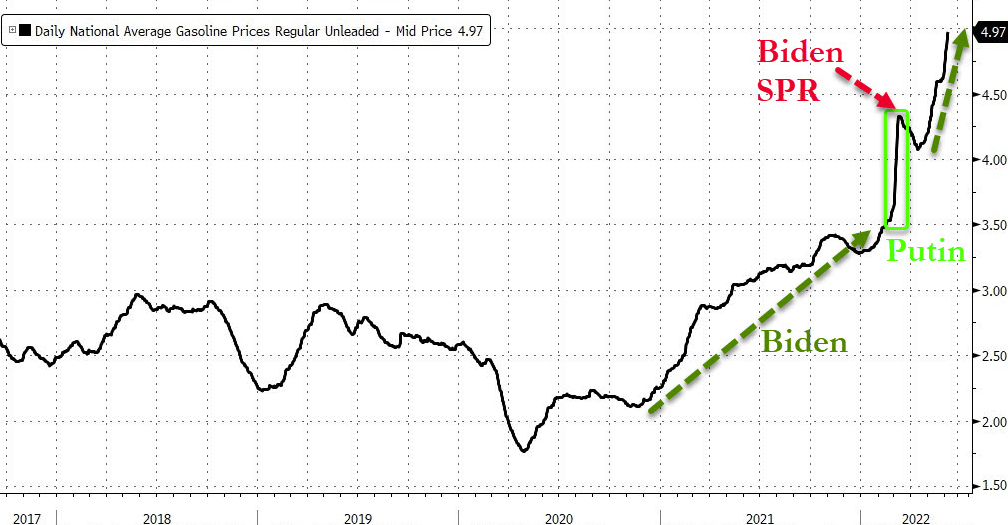
 With regular gasoline prices climbing over $5 a gallon, a sheriff's office in Michigan announced that it has blown through its fuel budget and will avoid responding to non-urgent 911 calls. 

"Isabella County Sheriff's Office is feeling the pain at the pump as well. We have exhausted what funds were budgeted for fuel with several months to go before the budget reset. 

"I have instructed the deputies to attempt to manage whatever calls are acceptable over the phone. This would be non-in-progress calls, non-life-threatening calls, calls that do not require evidence collection or documentation.

"Deputies will continue to provide patrols to all areas of the county, they will respond to those calls that need to be managed in person. Any call that is in progress with active suspects will involve a response by the deputies. I want to assure the community that safety is our primary goal, and we will continue to respond to those types of calls," Isabella County Sheriff Michael Main said in a Facebook post on Tuesday. 

The announcement comes as the average price of gasoline in the US hit another milestone of $5 a gallon this week and reached as much as $5.22 in Michigan. 

Fuel prices are set to keep rising as refining bottlenecks and robust consumer demand during peak driving season have depleted national stockpiles for refined products, such as gasoline, diesel, and jet fuel. 

So now Biden's inflation is jeopardizing public safety

https://www.zerohedge.com/political/michigan-sheriffs-department-reduces-911-call-responses-due-exhausted-funds-gas

Why America Doesn't Trust the CDC

 People don't trust the CDC. Here's one example illustrating why. Two weeks ago, with no outcomes data on COVID-19 booster shots for 5-to-11-year-olds, the Centers for Disease Control (CDC) vigorously recommended the booster for all 24 million American children in that age group. The CDC cited a small Pfizer study of 140 children that showed boosters elevated their antibody levels—an outcome known to be transitory.

When that study concluded, a Pfizer spokesperson said it did not determine the efficacy of the booster in the 5-to-11-year-olds. But that didn't matter to the CDC. Seemingly hoping for a different answer, the agency put the matter before its own kangaroo court of curated experts, the Advisory Committee on Immunization Practices (ACIP).

I listened to the meeting, and couldn't believe what I heard. At times, the committee members sounded like a group of marketing executives. Dr. Beth Bell of the University of Washington said "what we really need to do is to be as consistent and clear and simple as possible," pointing out that the committee needed "a consistent recommendation which is simple."

Other committee members similarly emphasized the importance of a universal booster message that applies to all age groups. Dr. David Kimberlin, editor of the American Academy of Pediatrics Red Book, speaking on his own behalf, said "Americans are yearning for, are crying out for a simpler way for looking at this pandemic." He suggested that not recommending boosters for young children would create confusion that "could also bleed over to 12-to-17-year-olds, and even the adult population."

The committee also debated how hard to push the booster recommendation, discussing whether the CDC should say that 5-to-11-year-olds "may" get a booster versus "should" get it.

Exhibiting classic medical paternalism, committee member Dr. Oliver Brooks of the Watts Healthcare Corporation said "I think may is confusing and may sow doubt," adding "if we say should more people will get boosted versus may, then we may have more data that helps us really define where we're going." Dr. Brooks was essentially suggesting that boosting in this age group would be a clinical trial conducted without informed consent

That doesn't sound like following the science to me.

ACIP's medical establishment representatives were on hand for the meeting. They included members of the trade association Pharmaceutical Research and Manufacturers of America and the American Medical Association (AMA). Dr. Sandra Fryhofer, an internist representing the AMA, summarized the tone of the many legacy stakeholders present with a passionate plea: "I urge the committee to support a 'should' recommendation for this third dose."

The committee promptly approved the booster for young children by an 11-1 vote, with one obstetrician abstaining because he missed some of the discussion.

Rochelle Walensky and Anthony Fauci
Rochelle Walensky, Director of the US Centers for Disease Control and Prevention (CDC) and Anthony Fauci, director of the National Institute of Allergy and Infectious Diseases, listen during the Senate Health, Education, Labor, and Pensions Committee hearing on Capitol Hill in Washington,DC on July 20, 2021.STEFANI REYNOLDS / POOL / AFP/GETTY IMAGES

The one dissenting vote came from Dr. Keipp Talbot of Vanderbilt University, who courageously said vaccines, while extremely effective, "are not without their potential side effects." She questioned the sustainability of vaccinating the population every six months. Many experts agree with her, but they don't have a platform to speak. In fact, nearly 40 percent of rural parents say their pediatricians do not recommend the primary vaccine series for children. Those pediatricians were not represented on the committee.

The CDC has a history of appointing like-minded loyalists to its committees. Last year, it dismissed a member of its vaccine safety group, Harvard professor of medicine Dr. Martin Kuldorff, for dissenting from its decision to pause the J&J vaccine. A year ago, Joe Biden appointed party devotees to his COVID-19 task force. Reaching a consensus is easier that way.

The Food and Drug Administration's (FDA) vaccine advisory committee, comprised of the nation's top vaccine experts, have made similar public statements as Dr. Talbot. But the committee was not involved in approving boosters for children. The FDA actually bypassed it days prior—the third time over the last year that the FDA made sweeping and controversial authorizations without convening its vaccine experts.

Most remarkably, it didn't seem to matter to the CDC that 75.2 percent of children under age 11 already have natural immunity, according to a CDC study that concluded in February. Natural immunity is certainly much more prevalent today, given the ubiquity of the Omicron variant since February. CDC data from New York and California demonstrated that natural immunity was 2.8 times more effective in preventing hospitalization and 3.3 to 4.7 times more effective in preventing COVID infection compared to vaccination during the Delta wave. These findings are consistent with dozens of other clinical studies. Yet natural immunity has consistently and inexplicably been dismissed by the medical establishment.

When the CDC voted, director Dr. Rochelle Walensky declared that the booster dose is safe for kids ages 5-11. Yes, the complication rate is very low, and we think it's safe, but how can anyone know from only a short-term follow-up of 140 children? The more appropriate assessment is that we believe it's safe but we can't be sure yet from the data we have so far. Unfortunately, the strength of the CDC recommendation to boost all children 5 and up will trigger some schools and summer camps to blindly mandate a third dose for healthy children who don't need it.

Instead of pushing boosters on healthy children who are already immune, public health officials should focus on recommending the primary COVID vaccine series to high-risk children who don't have any immunity.

Public health officials are expected to recommend COVID vaccines for children under 5 as soon as June 21st, despite the fact that the vast majority of children already have natural immunity. In a recent Kaiser survey, only 18 percent of parents said they were eager to vaccinate their child in that age group.

If the CDC is curious as to why people aren't listening to its recommendations, it should consider how it bypassed experts to put the matter before a Kangaroo court of like-minded loyalists. The Biden administration should insist that we return to the standard process of putting all major vaccine decisions before a vote of the FDA's leading vaccine experts.

The Biden administration promised to listen to the scientists. But the truth is, it only seems to listen to the ones who say what it wants to hear.

Marty Makary M.D., M.P.H. (@MartyMakary) is a professor at the Johns Hopkins School of Medicine and author of The New York Times Bestselling Book, The Price We Pay: What Broke American Health Care and How To Fix It.

https://www.newsweek.com/why-america-doesnt-trust-cdc-opinion-1713145

NRx Update on Breakthrough Therapy Designation Request

 NRx Pharmaceuticals, Inc. announced that the U.S. Food and Drug Administration (FDA) denied the Breakthrough Therapy designation (BTD) request for ZYESAMI® (aviptadil) and emphasized its focus on the company's NRX-101 BTD compound for Bipolar Depression associated with Suicidality. The request for BTD was submitted based on the positive finding of a post-hoc subgroup analysis of patients who in addition to Aviptadil or placebo were also treated with Remdesivir and whose respiratory failure due to Critical COVID-19 continued to progress.

https://www.marketscreener.com/quote/stock/NRX-PHARMACEUTICALS-INC-38908842/news/NRx-Pharmaceuticals-Inc-Provides-Update-on-Breakthrough-Therapy-Designation-Request-for-ZYESAMI-40699499/

Social Security Trustees’ report is optimistic — and misleading

 When the 2022 Social Security Trustees’ report was released last week, media coverage celebrated a slight improvement in the short- and long-term financial conditions of the program. The exhaustion date for the trust funds was moved back from 2034 to 2035 and the 75-year actuarial deficit was reduced from 3.54 percent of payroll to 3.42 percent.

A deeper dig into the report, however, finds these improvements are based on an unrealistically low short-term inflation forecast and an overly optimistic long-run forecast of a fertility bounce-back. More realistic estimates explained below show that the exhaustion date will instead be 2033 and the actuarial deficit is about 3.9 percent.

The trustees said that they based their 2022 assessment of improved conditions on two main factors — an improving economy affecting the short-run, and lower rates of disability affecting the medium- and long-run. In particular, the notion that the economy emerged out of recession quicker and more fully than expected last year, thereby raising employment and wages, and increasing payroll tax revenues. And that disability claims and awards continue to fall below prior projections, despite the recession and initially high unemployment.

The generous pandemic payments from the government, as well as temporarily expanded access to Medicaid, and closed Social Security field offices during the pandemic, might have been thought to explain the recent lull in disability claims, as people had other sources of support and health insurance and found the claim process more difficult. Nevertheless, the trustees decided that longer-term trends in increasing workplace accommodations and easier work conditions were sufficient causes to lower the disability assumption.

The trustees also assumed that the cost of living adjustment (COLA) for benefits, based on third quarter to third quarter changes in the consumer price index, would only be 3.8 percent next year (it was 5.9 percent this year) and 2.5 percent the year following, before returning to the assumed long-term rate of 2.4 percent. While the trustees say that their 2022 assumptions were made in mid-February, the high rate of inflation experienced in late 2021 and early 2022 can only be reconciled with a 3.8 percent annual forecast if it were thought that inflation would rapidly fall later in the year, an unreasonable forecast even at the time. In any event, the chief actuary of Social Security now says that eight percent is a better forecast for the next COLA, which will be announced in October.

Actually, at current monthly rates of inflation, 10 percent might be an even better forecast. But let’s use eight percent instead, and optimistically suppose that the Federal Reserve gets control of price inflation quickly enough to justify the following year’s 2.5 percent forecasted COLA, and assume there are no other changes in trustee assumptions.

In this situation, the increase in program expenses resulting from higher benefits would be, on average, about $45 billion a year. For context, the cost of the program was $1,145 billion in 2021. This would deplete the trust fund two years earlier than projected in the current report. While it is possible that net interest on trust fund investments will be a bit higher than projected in the report, and that wages could also come in somewhat higher, the report projects a robust 6.5 percent increase in the average wage index (AWI) next year. That’s higher than the approximate five percent rate of increase recently experienced in hourly wages. Furthermore, a 4.8 percent increase in AWI is projected for 2023, with no recession.

The assumed long-range fertility rate was surprisingly increased to 2.0 expected lifetime births per woman in the 2021 Trustees’ Report — a change from 1.95 in the 2020 Report. This increase in the overall birth rate came despite a rapid drop in the fertility rate over the last 15 years when it fell to 1.64 in 2020. The trustees have maintained their 2.0 assumption in the current report. The Congressional Budget Office however projects a 1.8 fertility rate.

Indeed, new survey evidence and analysis of the expectations for women having children over their lifetimes is consistent with an overall fertility rate closer to 1.7 or 1.8, and not just a delay in the timing of women having children. Based on my calculations from the data in the report, a 1.8 fertility rate leads to a much larger actuarial deficit, 3.9 percent of payroll, than the currently stated 3.42 percent. The impact is especially noticeable towards the end of the 75-year horizon — used by the trustees for their long-range-projections — when the deficit would be 5.8 percent instead of 4.25 percent in 2096.

It is also a shame that after six years, we still have vacancies among the public trustees who oversee the production of the reports. The American public and policymakers require a reasonable assessment of the programs’ financial status and prospects as it is clear that changes will need to be made to both programs sooner rather than later.

Mark J. Warshawsky is a senior fellow at the American Enterprise Institute. He previously served as a senior official at the Social Security Administration and at the Treasury Department.

https://thehill.com/opinion/finance/3518875-the-2022-social-security-trustees-report-is-optimistic-and-misleading/

CDC: 'No Evidence Monkeypox Is Airborne'

 There is currently no evidence that monkeypox is airborne, CDC officials said on Friday.

To date, 45 cases across 15 states and Washington, D.C. have been reported -- and not all are linked to international travel -- but no deaths have been associated with the outbreak, CDC Director Rochelle Walensky, MD, said on a conference call with reporters.

She reiterated that the virus transmits either through "direct contact" with an infected person via sores on the body, contact with materials that have touched those sores, or "respiratory secretions" during close face-to-face contact. It is unclear whether it spreads through semen or vaginal fluids, or whether asymptomatic people can spread the virus, she added.

However, Walensky noted that monkeypox is not thought to "linger in the air" or spread via "casual conversation" or quick encounters, such as passing someone at the grocery store.

Reporters were quick to point out that this is what CDC said about COVID early in the pandemic.

"All of the cases we've seen to date in this outbreak are related to direct contact, either through skin-to-skin contact or through bed sheets," Walensky said, with the caveat that it is "nearly impossible" to separate skin-to-skin contact via sexual contact from face-to-face contact.

Officials acknowledged the potential for "droplet transmission," similar to COVID, where the virus is transmitted via large respiratory droplets, such as coughing or sneezing, but not merely breathing. Walensky said an airborne virus is usually defined as "small viral particles that become suspended in the air and can stay there for long periods of time."

"We have not seen documentation of that with this virus," she noted.

When pressed by a reporter, Capt. Jennifer McQuiston, DVM, deputy director of CDC's Division of High Consequence Pathogens and Pathology, acknowledged that there were "just a few" cases who were "not sure how they acquired monkeypox." At least 75% of the individuals reported international travel, she said.

McQuiston added that cases have been from multiple states, and no area in the U.S. has been implicated in an urban outbreak of the virus, like Montreal. She said that community spread would be undetectable at this level, unless patients reported their symptoms to a healthcare provider.

As in prior briefings, McQuiston emphasized that recent cases of monkeypox have been reported without the preceding flu-like symptoms that were typical of "classic" monkeypox cases in Africa. Walensky said that some cases present with a rash around their genitals or anus prior to flu-like symptoms, whereas others never develop other symptoms.

"This has prompted concerns that monkeypox may go undiagnosed," she said.

Walensky urged clinicians to be suspicious of any "blister-like" rash, and cautioned not to rule out those with sexually transmitted infections, as there have been reports of monkeypox co-infections with syphilis, gonorrhea, chlamydia, and herpes.

McQuiston also said that CDC is working to expand upon the clinical symptoms of monkeypox to include some more unusual ones, such as proctitis, which is inflammation of the rectum, which can cause pain during defecation. She said the agency hopes to have additional information for clinicians next week.

For patients with monkeypox or close contacts at high-risk of contracting the virus, there are 72,000 doses of the Jynneos vaccine available in the strategic national stockpile, with 300,000 doses expected to be available over the course of several weeks, government officials said.

McQuiston stressed the importance of testing, adding that this will help to determine the extent of community spread if it happens, and Walensky agreed.

"We want to help everyone make an informed decision to protect their health and the health of their community," Walensky said.

https://www.medpagetoday.com/infectiousdisease/generalinfectiousdisease/99181

HCA Healthcare Faces Second Antitrust Lawsuit in North Carolina

 Across western North Carolina, frustrations linger following HCA Healthcare's acquisition of the nonprofit Mission Health in 2019. Now, the city of Brevard has filed an antitrust lawsuit against HCA -- the second of its kind in less than a year -- alleging that the sprawling, Nashville, Tennessee-based system has hurt competition in local markets and artificially inflated healthcare prices.

Brevard operates a self-funded health insurance plan for its city employees and their families, and said in its complaint that it continues to be injured by HCA's anticompetitive conduct. It is seeking to represent a class of similarly situated North Carolina health plans, including self-funded and commercial insurers.

"This action is brought at a time when providing affordable healthcare insurance plans for working families and governmental employees, such as firefighters, police, and teachers, and controlling healthcare costs have been top priorities for plaintiff and members of the proposed class, the business communities they serve, and state and local governments in western North Carolina," the city wrote in its complaint. "Defendants' conduct has impeded these objectives by impairing competition in the healthcare markets ... and substantially and artificially inflating healthcare prices paid by plaintiff and proposed class member health plans."

Specifically, the city of Brevard alleged that HCA has illegally maintained and enhanced monopoly power in the market for inpatient general acute care in hospitals and the market for outpatient care, and that it continues to dominate those markets in the Asheville region and its outlying region. HCA controls more than 85% of the general acute care market in the Asheville region and more than 70% in each of the counties in the outlying region.

Anticompetitive conduct by HCA has included "all-or-nothing" arrangements that require health plans to contract with all of HCA's general acute care and outpatient services as a bundle; exclusive dealing requirements that prevent insurance companies from steering insureds to less expensive and/or higher-quality options; "gag" clauses that deliberately impede price transparency and inhibit employers from knowing the prices they pay for healthcare; and other conduct related to the negotiation of pricing for general acute care services, according to the complaint.

The scheme "has enabled defendants to raise prices substantially above competitive levels, to reduce healthcare choices, to reduce quality through dramatically worsened facility conditions and patient service, and to reduce patient access to [general acute care] and outpatient services in the relevant markets," the city noted in its complaint.

HCA has also refused to comply with the federal price transparency rule from CMS that was implemented at the beginning of last year.

"Ensuring that our community has affordable, easily accessible, and high-quality healthcare is a top priority of city leadership," Maureen Copelof, mayor of Brevard, told MedPage Today in an email. "We filed this lawsuit because the monopoly and the predatory practices demonstrated by HCA result in higher pricing and fewer choices. I want our community to have a choice of where they get medical services and want to see costs controlled and quality maintained through competition. This isn't the case right now. Any type of monopoly is a concern but when it involves healthcare, it becomes a critical concern that demands action."

She called the lawsuit "a culmination of issues over the past two and a half years," and said that the community has expressed concern and frustration with HCA since the first town hall was held on the topic at the beginning of 2020.

"Since then there have been continuing issues that have impacted the ability of our community to receive accessible, affordable, and high-quality healthcare," Copelof added. "Some of these include the departure of physicians from the HCA system, lack of a permanent general surgeon at [Transylvania Regional Hospital], closure of the cancer center, billing issues, reduced staffing, [and] high cost of services. These issues have been raised in additional community forums, in letters to HCA, in letters and conversations with the North Carolina Attorney General, and now some are being addressed via this lawsuit."

In an emailed statement to MedPage Today, Nancy Lindell, director of public and media relations for HCA's North Carolina Division, wrote, "Once we have been served with the lawsuit, we will respond appropriately through the legal process."

"This lawsuit is beyond disappointing, especially since, at the request of Mayor Copelof, our company's CEO Sam Hazen had a positive and productive meeting with Mayor Copelof and other community leaders less than a month ago," she noted. "We hoped that meeting would be the beginning of a thoughtful and ongoing dialogue about healthcare in the city of Brevard and the broader Transylvania County region. In fact, we provided information requested during the meeting and hosted our first community council meeting just this week. At no point did Mayor Copelof mention this apparently long-planned lawsuit, which is frustrating and undermines what we thought were sincere efforts to build open, constructive relationships and lines of communication."

Lindell said that HCA would now turn its attention to "vigorously defending the lawsuit, while continuing to provide excellent healthcare to the citizens of western North Carolina," adding that the health system is "proud of our commitment to western North Carolina and the significant investments we have made to serve Brevard and improve patient care."

She said that some of these efforts have included:

  • Providing more than $277 million in charity care and uninsured discounts -- $124 million more than in 2018, the year before the purchase of Mission Health
  • Investing more than $14 million at Transylvania Regional Hospital for infrastructure projects, such as renovations of three operating rooms, replacing both the MRI and CT machines, and adding a new helipad
  • Providing access to new specialties at Transylvania Regional, such as recently adding five new primary care providers to the area and renovating primary care practices

In the meantime, another antitrust case brought against HCA -- also related to its purchase of Mission Health -- is awaiting judgment on whether it can move forward in Buncombe Superior Court, the Citizen Times reported.

This earlier lawsuit, filed by a group of community members in August 2021, is aimed at the flagship operation in Asheville, and alleges exorbitant prices for care, as well as declining quality, according to the Citizen Times. Notably, it has garnered support from North Carolina Attorney General Josh Stein, who filed an amicus brief in the case.

As for the suit brought by Brevard, the city stated in its complaint that it is concerned about the future of care in western North Carolina.

"Without this court's intervention, the future of healthcare competition in western North Carolina -- traditionally a destination for many, including retirees from across the nation, in part because of its prior reputation for high-quality, low-cost healthcare -- is at risk."

https://www.medpagetoday.com/special-reports/exclusives/99182