Search This Blog

Friday, June 17, 2022

Centene raises profit forecast betting on higher Medicaid premiums

 Health insurer Centene Corp raised its forecast for full-year adjusted profit on Friday, betting on higher premiums from its government-backed Medicaid health insurance plans.

The company has performed well on the federal Obamacare marketplace - where it offers insurance plans - so far in the second quarter, it said in prepared remarks for its investor day.

It now expects a profit of $5.55 to $5.70 per share for the full year, compared with its earlier forecast of between $5.40 and $5.55 per share.

The company said its board has decided to increase its existing share buyback program by $3 billion and launch a $1 billion debt repurchase program, as the insurer prepares for the upcoming divestitures of two of its pharmacy businesses.

Centene said last month it would sell the units for about $2.8 billion as part of its strategy to exit the pharmacy benefit management space.

https://news.yahoo.com/centene-raises-profit-forecast-betting-110724580.html

Acadia halted for review of NUPLAZID supplemental New Drug Application for Alzheimer’s

 Acadia Pharmaceuticals Inc. (Nasdaq: ACAD) today announced that Nasdaq has halted trading of the company’s common stock.

The U.S. Food and Drug Administration's Psychopharmacologic Drugs Advisory Committee is meeting virtually today to review the resubmitted NUPLAZID (pimavanserin) supplemental New Drug Application for the treatment of hallucinations and delusions associated with Alzheimer’s disease psychosis.

The Advisory Committee meeting is scheduled for 8:45 a.m. ET. The briefing materials and access to the live video can be found on the FDA’s website here.

The target action date for the application is August 4, 2022.

https://finance.yahoo.com/news/acadia-pharmaceuticals-stock-trading-halted-110500509.html

Thursday, June 16, 2022

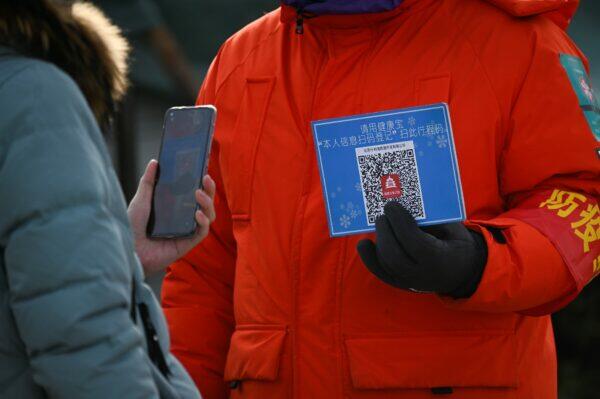
Chinese Banks Freeze Billions In Deposits: Officials Use Health QR Code To Bar Protestors

 Chinese local banks are freezing deposits. Protestors cannot go near banks as their health app for COVID-19 turns red. Authorities provided no explanation...

As The Epoch Times' Dorothy Li reports, several depositors told The Epoch Times on June 14 that the health code on their COVID-19 app turned red as soon as they scanned venue barcodes at Zhengzhou, the provincial capital city of central China’s Henan Province.

A red health code - indicating a potential COVID-19 patient - means the carrier is barred access to all public places from public toilets to shops to train stations, and faced mandatory quarantine in centralized isolation centers.

They are among tens of thousands of bank depositors who have fought to recover their savings for more than two months. The crisis started in April when at least four lenders in Henan froze cash withdrawals, citing internal system upgrades. But customers said neither these banks nor officials have since offered any information on why or how long, prompting angry protests outside the office of the banking regulator in Zhengzhou in May.

An estimated 1 million customers were reportedly affected, which has left many residents’ life savings at stake and patients unable to pay for regular medical care.

Depositors have been cut off for at least 39.7 billion yuan ($5.91 billion), according to Sanlian LifeWeek, a state-run magazine.

Aggrieved depositors across the country planned another protest in Zhengzhou on June 13 to demand an answer, though previous gatherings were met with silence from local authorities and violence from plain-clothes police.

...

Their plan, however, was thwarted again as their health code turned red at the city’s train stations or highway entrance.

A red code indicates the highest level of risk, meaning the person tests positive, has been close to a COVID-19 patient, or has visited high COVID-risk areas in the past 14 days. Residents with red code face two weeks of centralized isolation.

...

“They [officials] are like robbers,” said a third bank customer who was stopped by police at Zhengzhou train station on June 12 and required to leave.

“We’re all legal depositors … Why couldn’t we even have an explanation?”

...

“It’s so scary,” one user commented.

“If the health code is abused … it could be putting digital handcuffs on us. Everyone will become a prisoner from now on and could be stopped anywhere, anytime.”

Read more here...

https://www.zerohedge.com/political/chinese-banks-freeze-billions-deposits-officials-use-health-qr-code-bar-protestors

Over 1/4 of asthmatics still over-use rescue inhalers, putting them at increased risk of severe attacks

 Asthma is a common lung condition that affects 5.4 million people in the UK and can lead to symptoms such as coughing, wheezing or feeling breathless. Asthma is best controlled by regular use of a corticosteroid inhaler, which prevents symptoms from occurring. People with asthma may also use rescue or 'SABA' (short-acting beta-agonist) inhalers to quickly relieve symptoms when needed.

However, research has shown that it's common for people with asthma to overuse SABA inhalers (defined as six or more prescriptions per year), and that relying on SABA for relief instead of using corticosteroids to prevent symptoms is linked to poor asthma control and an increased risk of severe asthma attacks and hospital admissions. The National Review of Asthma Deaths in 2014 found evidence of overuse of or over-reliance on reliever inhalers in people who died of asthma. Electronic surveillance of prescribing in primary care was recommended as a matter of urgency.

In East London, where Queen Mary University of London is based, hospitalisation for acute asthma is 14% above the London average. Given the impact this has on our community, researchers at Queen Mary's Clinical Effectiveness Group (CEG) analysed over 700,000 anonymised patient records at 117 GP practices in East London. They found that 26% of patients with asthma are still overprescribed SABA inhalers. Out of this group, a quarter of those were also underusing preventative (corticosteroid) inhalers, raising concerns about inadequate prevention in a group of people with significant asthma.

Anna De Simoni, Lead author and GP and Clinical Lecturer in Primary Care at Queen Mary University of London, said:

"Working with patients to improve regular use of preventative inhalers should be central to reducing asthma-related hospital admissions. There is still significant room for improvement -- we calculated that supporting patients who use more than 12 SABA inhalers per year to reduce their use to 4-12 could result in 70% fewer asthma-related hospital admissions in that group.

"There is also a need to provide GPs and pharmacists with the right tools to support patients to do this. In the next phase of this research programme, we plan to provide practices with tools to support the identification and management of high-risk patients based on prescribing records."

The study also revealed that prescribing varies significantly between GP practices, with some overprescribing to 6% of their asthma patients and some overprescribing to as many as 60%. Further analysis of the variation revealed that overprescribing was strongly linked to repeat dispensing (where prescriptions are issued automatically by community pharmacists).

Paul Pfeffer, co-author and Consultant Respiratory Physician with special interest in asthma at Barts Health NHS Trust, said:

"There is an ongoing major burden of inappropriate and dangerous rescue inhaler overuse in asthma, and our paper highlights the complexity of the problem with multiple reasons patients are over-prescribed SABA inhalers. The findings are a call for more detailed research into interventions to reduce inappropriate SABA overuse in different patient groups."


Story Source:

Materials provided by Queen Mary University of LondonNote: Content may be edited for style and length.

Journal Reference:

  1. Anna De Simoni, Hajar Hajmohammadi, Paul Pfeffer, James Cole, Chris Griffiths, Sally A Hull. Reducing SABA overprescribing in asthma: lessons from a Quality Improvement prescribing project in East LondonBritish Journal of General Practice, 2022; BJGP.2021.0725 DOI: 10.3399/BJGP.2021.0725

Repairing and regenerating heart muscle cells

 Researchers at the University of Houston are reporting a first-of-its-kind technology that not only repairs heart muscle cells in mice but also regenerates them following a heart attack, or myocardial infarction as its medically known.

Published in the Journal of Cardiovascular Aging, the groundbreaking finding has the potential to become a powerful clinical strategy for treating heart disease in humans, according to Robert Schwartz, Hugh Roy and Lillie Cranz Cullen Distinguished Professor of biology and biochemistry at the UH College of Natural Sciences and Mathematics.

The new technology developed by the team of researchers uses synthetic messenger ribonucleic acid (mRNA) to deliver mutated transcription factors -- proteins that control the conversion of DNA into RNA -- to mouse hearts.

"No one has been able to do this to this extent and we think it could become a possible treatment for humans," said Schwartz, who led the study with recent Ph.D graduate Siyu Xiao and Dinakar Iyer, a research assistant professor of biology and biochemistry.

Synthetic mRNA Contributes to Stem Cell-Like Growth

The researchers demonstrated that two mutated transcription factors, Stemin and YAP5SA, work in tandem to increase the replication of cardiomyocytes, or heart muscle cells, isolated from mouse hearts. These experiments were conducted in vitro on tissue culture dishes.

"What we are trying to do is dedifferentiate the cardiomyocyte into a more stem cell-like state so that they can regenerate and proliferate," Xiao said.

Stemin turns on stem cell-like properties from cardiomyocytes. Stemin's crucial role in their experiments was discovered by Iyer, who said the transcription factor was a "game changer." Meanwhile, YAP5SA works by promoting organ growth that causes the myocytes to replicate even more.

In a separate finding published in the same journal, the team will report that Stemin and YAP5SA repaired damaged mouse hearts in vivo. Notably, myocyte nuclei replicated at least 15-fold in 24 hours following heart injections that delivered those transcription factors.

Bradley McConnell, professor of pharmacology, and graduate student Emilio Lucero in the UH College of Pharmacy, collaborated on the study by producing the infarcted adult mouse model.

"When both transcription factors were injected into infarcted adult mouse hearts, the results were stunning," Schwartz said. "The lab found cardiac myocytes multiplied quickly within a day, while hearts over the next month were repaired to near normal cardiac pumping function with little scarring."

An added benefit of using synthetic mRNA, according to Xiao, is that it disappears in a few days as opposed to viral delivery. Gene therapies delivered to cells by viral vectors raise several biosafety concerns because they cannot be easily stopped. mRNA-based delivery, on the other hand, turns over quickly and disappears.

A Limited Number of Cardiomyocytes

Schwartz and Iyer worked on this study for several years, and Xiao focused on this research throughout her doctoral studies at UH. She graduated in fall 2020.

"I feel honored and lucky to have worked on this," Xiao said. "This is a huge study in heart regeneration especially given the smart strategy of using mRNA to deliver Stemin and YAP5SA."

The findings are especially important because less than 1% of adult cardiac muscle cells can regenerate. "Most people die with most of the same cardiomyocytes they had in the first month of life," she said. When there is a heart attack and heart muscle cells die, the contracting ability of the heart can be lost.

The study was funded in part through the University of Houston, a Cullen Endowed Chair, the Texas Higher Education Coordinating Board, Leducq Foundation and a sponsored research agreement from Animatus Biosciences, LLC.

Other study contributors include Rui Lang from UH; and Zhishi Chen and Jiang Chang from the Texas A&M Institute of Biosciences and Technology.


Story Source:

Materials provided by University of Houston. Original written by Rebeca Trejo. Note: Content may be edited for style and length.


Journal Reference:

  1. Siyu Xiao, Rui Liang, Azeez B. Muili, Xuanye Cao, Stephen Navran, Robert J. Schwartz, Dinakar Iyer. Mutant SRF and YAP synthetic modified mRNAs drive cardiomyocyte nuclear replicationThe Journal of Cardiovascular Aging, 2022; 2 (3): 29 DOI: 10.20517/jca.2022.17

A glucose meter could soon say whether you have SARS-CoV-2 antibodies

 Over-the-counter COVID tests can quickly show whether you are infected with SARS-CoV-2. But if you have a positive result, there's no equivalent at-home test to assess how long you're protected against reinfection. In the Journal of the American Chemical Society, researchers now report a simple, accurate glucose-meter-based test incorporating a novel fusion protein. The researchers say that consumers could someday use this assay to monitor their own SARS-CoV-2 antibody levels.

Vaccines against SARS-CoV-2 and infection with the virus itself can guard against future infections for a while, but it's unclear exactly how long that protection lasts. A good indication of immune protection is a person's level of SARS-CoV-2 antibodies, but the gold standard measurement -- the enzyme-linked immunosorbent assay (ELISA) -- requires expensive equipment and specialized technicians.

Enter glucose meters, which are readily available, easy to use and can be integrated with remote clinical services. Researchers have been adapting these devices to sense other target molecules, coupling detection with glucose production. For example, if a detection antibody in the test binds to an antibody in a patient's blood, then a reaction occurs that produces glucose -- something the device detects very well. Invertase is an attractive enzyme for this type of analysis because it converts sucrose into glucose, but it's difficult to attach the enzyme to detection antibodies with chemical approaches. So, Netzahualcóyotl Arroyo-Currás, Jamie B. Spangler and colleagues wanted to see whether producing a fusion protein consisting of both invertase and a detection antibody would work in an assay that would allow SARS-CoV-2 antibody levels to be read with a glucose meter.

The researchers designed and produced a novel fusion protein containing both invertase and a mouse antibody that binds to human immunoglobulin (IgG) antibodies. They showed that the fusion protein bound to human IgGs and successfully produced glucose from sucrose. Next, the team made test strips with the SARS-CoV-2 spike protein on them. When dipped in COVID-19 patient samples, the patients' SARS-CoV-2 antibodies bound to the spike protein. Adding the invertase/IgG fusion protein, then sucrose, led to the production of glucose, which could be detected by a glucose meter. They validated the test by performing the analysis with glucose meters on a variety of patient samples, and found that the new assay worked as well as four different ELISAs. The researchers say that the method can also be adapted to test for SARS-CoV-2 variants and other infectious diseases.

The authors acknowledge funding from The Johns Hopkins University School of Medicine, the Emerson Collective Cancer Research Fund and the National Institutes of Health.


Story Source:

Materials provided by American Chemical SocietyNote: Content may be edited for style and length.


Journal Reference:

  1. Elissa K. Leonard, Miguel Aller Pellitero, Boris Juelg, Jamie B. Spangler, Netzahualcóyotl Arroyo-Currás. Antibody–Invertase Fusion Protein Enables Quantitative Detection of SARS-CoV-2 Antibodies Using Widely Available GlucometersJournal of the American Chemical Society, 2022; DOI: 10.1021/jacs.2c02537

Data-Tracking Tech Used During Pandemic At Risk Of Abuse: Australian Privacy Expert

 by Nina Nguyen via The Epoch Times (emphasis ours),

The COVID-19 pandemic has given rise to tech-based surveillance, opening up opportunities for the government and corporations to harvest citizens’ data under the radar, says a technology policy director.

The comment comes after media reports in Australia in early June revealed the state government of Victoria—known for spending the longest number of days in lockdown globally—had been using a data agency, which was initially set up to inform pandemic decision-making, to monitor Victorians’ everyday activities beyond COVID-19.

In late May, Human Rights Watch found that 89 percent of educational technologies (EdTech) used for remote learning exploited their access to children by harvesting their personal, location, or learning data.

Many of these apps and websites are endorsed by the Australian government, such as Zoom, Minecraft Education and Microsoft Teams, which remained in place after COVID-19.

Dhakshayini Sooriyakumaran, Director of Tech Policy at Reset Australia, an independent think tank working to counter digital threats, said the pandemic has seen various data extraction technologies get set up as “emergency measures.”

However, she noted these technologies usually come without adequate data protection safeguards or clear purpose limitations, creating loopholes for data abuse.

There’s no kind of public engagement about what the citizen feels comfortable with in terms of how the government is using that data,” she told The Epoch Times.

“And because of the power differential between institutions and individual citizens, data is used and abused. And we see really dire consequences as a result.”

According to a recent investigation by The Herald Sun, the Victorian government’s data agency Insights Victoria has collected citizens’ public, sensitive, and “commercial-in-confidence” data in an attempt to become the “single truth source” of the government.

Full access was given to Victoria’s police chief commissioner, chief health officer, emergency management commissioner and Premier Dan Andrews’s private political staff.

The revelation came after following calls to withdraw the government’s Information Sharing Bill 2021. The bill has been alleged to undermine a patient’s privacy rights by creating a system “where a person’s most private medical information can be shared on an electronic database without their consent.”

Roger Clarke, secretary of the Australian Privacy Foundation, an NGO formed to protect privacy rights, told The Epoch Times that “it’s hard to tell when a government is being secretive, just what they’re hiding.”

“The factual information that’s publicly available appears to be minimal. And that alone is a serious concern,” Clarke said.

“Decisions about what the law says are subject to parliamentary approval, not a politician’s whim. And decisions about public policy measures require public information and public debate.”

However, some digital privacy experts are divided in terms of how much Australians should be concerned about their privacy rights. Adjunct Professor for Cyber Security Research and Innovation Centre Damien Manuel argued that “the public doesn’t place value on data and the digital trail they leave behind.”

If people use Facebook as an example, they need to understand they are the product, hence why the service is free. Even using mapping services on mobile phones enable commercial entities to track where people go, yet there is no outcry by the public, but when a government does the same, we seem to be up in arms.”

“If governments had access to rich data sources, under the appropriate oversight, it could be used to deliver improved services for Australians.”

While it might be too far to say the government and corporations have leveraged the pandemic to collect data, institutions could be “opportunistic,” said Reset Tech Policy Director Sooriyakumaran.

“We are living in an economy where data is one of the most valuable resources any institutional entity can actually capture,” she said.

“Government, like corporations, has been trying to fly under the radar and extract as much data as possible.”

Sooriyakumaran further described data-driven decision-making as “a kind of philosophy that institutions are adopting across all sectors and industries.”

The digital privacy expert pointed to a broader trend of widescale data extraction that is taking place across all of the government services, such as Australia’s COVID-19 tracking app, QR code, robot debt, social welfare, Centrelink, employment services, and disability support.

“But I think more and more, particularly with the pandemic, people are starting to understand, oh, governments and corporations are actually quite intertwined when it comes to the value chain of data extraction.”

https://www.zerohedge.com/technology/data-tracking-technology-used-during-pandemic-risk-abuse-australian-privacy-expert-warns