Search This Blog

Friday, June 17, 2022

Why Scholar Rock is Trading Highr


  • Scholar Rock Holding Corp (NASDAQ: SRRKannounced new data from the Phase 2 TOPAZ trial extension period evaluating apitegromab in non-ambulatory patients with Types 2 and 3 Spinal Muscular Atrophy (SMA) receiving an SMN therapy.

  • The trial assessed patient outcomes after 24 months of treatment.

  • All 35 non-ambulatory patients (Cohorts 2 and 3) and 12 of 23 ambulatory patients (Cohort 1) were receiving Biogen Inc's (NASDAQ: BIIB) Spinraza (nusinersen) maintenance therapy.

  • The mean change from baseline in HFMSE was 4 points in pooled non-ambulatory patients at 24 months. At 12 months, the change stood at 3.6 points.

  • The HFMSE is a validated measure for assessing gross motor function in SMA.

  • The mean change from the baseline in RULM was 1.3 points at 12 months and 1.9 points at 24 months.

  • RULM is validated to evaluate upper limb motor performance.

Comera Life Sciences: What to Know


  • The stock price of Comera Life Sciences Holdings Inc (NASDAQ: CMRA) surged over 240% during intraday trading Monday. These are some details you should know.

The stock price of Comera Life Sciences Holdings Inc (NASDAQ: CMRA) surged over 240% during intraday trading Monday. There were no noticeable filings or news reports that appear to be driving up the stock price today. However, there has been an increase in chatter about the potential for driving momentum in the stock as it has a relatively low float. 

Comera Life Sciences is a company that is developing a new generation of bio-innovative biologic medicines to improve patient access, safety, and convenience. And the company announced the completion of its business combination with OTR Acquisition Corp. (Nasdaq: OTRAU, OTRA, and OTRAW), a publicly-traded special purpose acquisition company (SPAC). 

Comera Life Sciences Holdings officially commenced trading on the Nasdaq Capital Market under the symbol “CMRA” on May 20, 2022. And OTR’s shareholders approved the transaction on May 10, 2022. The deal was previously approved by Comera’s shareholders. And Comera’s management team continued to be led by Jeff Hackman, Chief Executive Officer and Chairman of Comera.

Hackman noted at the time that transforming the delivery of biologics from intravenous to subcutaneous forms could reduce healthcare costs and improve patient quality of life by offering patients self-injectable treatments that support greater independence.  And with multiple pharmaceutical partnerships already in place, the company is executing on a long-term strategy to leverage the SQore platform.

https://pulse2.com/comera-life-sciences-cmra-stock-price-surges-over-240-today-details-you-should-know/

Molecule Produced During Exercise that Reduces Obesity IDd

 Researchers from the Baylor College of Medicine, part of the Stanford School of Medicinediscovered a molecule produced during exercise in mice that suppresses feeding and obesity. The results of the study were published in Nature on Wednesday.

The Centers for Disease Control and Prevention reports that the prevalence of obesity in the U.S. is 41.9%. Obesity can lead to severe health conditions, including heart disease, stroke, Type II Diabetes and some types of cancer, all of which can lead to premature death. 

Historically, physicians and health agency officials have recommended exercise to combat and prevent obesity. The CDC recommends that people working on weight management should work their way up to 150 minutes of moderate-intensity aerobic activity, 75 minutes of vigorous-intensity aerobic exercise or an equivalent mix of both to maintain weight, with diet adjustments recommended for those looking to lose weight. And to no one's surprise, researchers overarchingly have found that physical activity increases energy expenditure and decreases total body fat, leading to weight loss.

However, researchers have aimed to understand the process of exercise at a molecular level to perhaps one day harness that process as a potential therapeutic. Corresponding authors Jonathan Long, M.D., and Yong Xu, Ph.D., reported in Nature that their team discovered an exercise-inducible metabolite known as N-lactoyl-phenylalanine (Lac-Phe) that suppresses feeding and obesity in mice models.

The researchers analyzed blood plasma compounds from mice that participated in intense treadmill running. They found that the most significantly-induced molecule during the exercise period was Lac-Phe. Lac-Phe is synthesized from lactate, which is produced during strenuous exercise, and phenylalanine, a building block of protein.

Later, the team replicated these findings in both racehorses and humans, leading the researchers to conclude that metabolite is part of a system that regulates feeding, influences systemic energy balance and is associated with physical activity in many species. 

Taking their findings a step further, the researchers then used mice with diet-induced obesity to see if Lac-Phe was capable of helping the mice lose weight. Without modifying the mice’s movement or energy expenditure, administering Lac-Phe was associated with reduced cumulative food intake and reduced body weight from the loss of body fat, while also improving glucose tolerance over the course of ten days. The research group also found mice that lacked an enzyme called CNDP2 did not lose as much weight on an exercise regimen as mice with the enzyme, as CNDP2 is important in the production of Lac-Phe.

Xu told Medical Xpress that the team plans to continue researching the molecule and investigating how it mediates its effects on the body and the brain. The ultimate goal for the group is to modulate the exercise pathway for therapeutic interventions.

The team envisions a future therapeutic being able to benefit individuals who suffer from conditions that make exercise more difficult and harder to achieve, such as those with heart disease, osteoporosis and other disabilites.

https://www.biospace.com/article/study-molecule-produced-during-exercise-reduces-obesity-in-mice/

FTC Unanimously Agrees to Keep Close Eye on PBMs

 The U.S. Federal Trade Commission unanimously agreed to keep a closer eye on the role pharmacy benefits managers (PBMs) play in pricing prescription drugs. The vote came a little over one week after the FTC announced it would probe claims regarding the role the middlemen play in determining retail prices of prescription drugs.

When beginning its probe earlier this month, the FTC acknowledged the impact that PBMs have on the pricing structure of prescription drugs, including what medications can be covered by insurance programs. The examination comes at a time when prescription drug prices continue to soar. 

A report published in JAMA showed that the median price of a new drug launched last year was $180,000. That study, conducted by researchers at Brigham and Women’s Hospital, shows that unadjusted mean launch prices for new medicines have spiked 20% per year since 2008.

“These rebate and fee agreements may incentivize PBMs and other intermediaries to steer patients to higher-cost drugs over less expensive alternatives. This practice could lead to increased costs for both patients and payers, including increased out-of-pocket costs at the point of sale,” the FTC said Thursday in a new policy announcement. “It may also insulate more expensive drugs from competing with less expensive alternatives. Nothing prevents drug manufacturers, PBMs, and health plans from negotiating good-faith rebates and fees for legitimate services that increase value to payers and patients.”

The FTC noted that for years, it had received complaints regarding the rebates and fees paid by drug manufacturers to PBMs. These discounts favor high-cost prescription drugs that ultimately generate greater rebates and fees but are not always shared with consumers. The commission said those rebates and fees “may shift costs and misalign incentives in a way that ultimately increases patients’ costs and stifles competition from lower-cost drugs, especially when generics and biosimilars are excluded or disfavored on formularies.”

The FTC paid close attention to the increasing insulin costs that have caused many diabetes patients to ration their life-saving medications. According to a 2020 report from the U.S. Department of Health, the average gross manufacturer price for a standard unit of insulin in 2018 was more than 10-times the cost of insulin in 32 other countries, and around eight times higher than all other countries. The FTC said the list price for a year’s supply of insulin has risen to nearly $6,000. Out-of-pocket costs averaged $1,288 for uninsured patients and $613 for insured patients, as of 2017. 

In addition to other factors, the FTC said there are concerns that high rebates and fees to PBMs may incentivize higher list prices for insulin and discourage coverage of low-cost insulin operations. 

The FTC said it would use its authority to closely scrutinize the impact of rebates and fees on patients and payers to determine whether any of these provisions have been violated. Additionally, the FTC stated that it will monitor private litigation and “file amicus briefs where it can aid courts in analyzing unlawful conduct that may raise drug prices.”

“The commission recognizes the life-and-death stakes of this work and is committed to acting expeditiously. As it has done throughout its history, the FTC will bring an interdisciplinary approach, using resources and expertise from throughout the agency to combat unlawful practices in the prescription drug industry,” the government agency said in a statement. 

The PBMs at the center of the FTC’s inquiry are CVS Caremark, Express Scripts, OptumRx, Humana, Prime Therapeutics LLC and MedImpact Healthcare Systems, Inc.

https://www.biospace.com/article/ftc-unanimously-agrees-to-more-closely-scrutinize-pbms/

FDA Grants Orphan Drug Designations to VBI, Hepion Cancer Drugs

 VBI Vaccines and Hepion Pharmaceuticals received Orphan Drug Designations from the U.S. Food and Drug Administration Friday for their experimental cancer drugs.

Orphan Drug Designations are granted for drugs that show promise for treatment, prevention or diagnosis of orphan diseases, which in the U.S. is defined as affecting fewer than 200,000 people. It comes with certain incentives, including tax credits for qualified clinical trials, user fees exemption and potential seven years of market exclusivity after approval.

Based in Cambridge, MA, VBI received its designation for a bivalent cytomegalovirus gB/pp65 enveloped virus-like particles (VLPs) designed to treat glioblastoma, a type of brain cancer. The company focuses on developing VLPs, leveraging a proprietary enveloped VLP (eVLP) platform technology. These are so-called cancer vaccines that act by mimicking viruses with the intention of stimulating the human immune system.

Earlier this month, the company presented new tumor response and overall survival (OS) data from the ongoing Phase IIa trial of VBI-1901 in recurrent glioblastoma. It was included in a poster presentation at the 2022 American Society of Clinical Oncology (ASCO) Annual Meeting.

David E. Anderson, Ph.D., chief scientific officer of VBI, said at the time, “We continue to be motivated by the data seen in this Phase IIa study of VBI-1901 as we endeavor to provide new treatment options to patients with very few available to them. Considering the high mortality rate among GBM patients, particularly in the recurrent setting, median overall survival of approximately 13-15 months seen in our two study arms suggests an additional survival benefit of nearly six months in comparison with historical control data in the recurrent population after treatment with a monotherapy.”

He added, “Moreover, the correlation of tumor responses and clinical response benefit observed in tandem is very encouraging. We remain in close discussion with our study investigators and scientific advisors as we move toward the next stages of development in both the recurrent and frontline GBM settings, and look forward to advancing this development program as diligently as possible.”

Hepion received the designation for rencofilstat for hepatocellular carcinoma. Rencofilstat is the company’s lead oral drug candidate for nonalcoholic steatohepatitis (NASH) and viral hepatitis-induced liver disease.

The drug binds to Cyclophilin A, which blocks it from binding to specific inflammatory cell receptors. This decreases the infiltration of the inflammatory cells into the tissue and lessens harmful inflammatory responses that can cause damage to the liver.

It also blocks the actions of Cycophilin B, which regulates collagen production in stellate cells, causing fibrosis (scarring) in the liver. And it binds to Cyclophilin D, preventing or reversing the formation of pores in the mitochondrial membrane that causes the mitochondria to rupture. This allows the mitochondria to resume normal energy production and helps liver cells survive.

In January, Hepion, headquartered in Edison, NJ, announced the results of a nonclinical research study of rencofilstat that decreased liver tumor growth and extended mouse survival when combined with an anti-PD-1 antibody, or immune checkpoint inhibitor. The effects were seen in fatty livers, which may be associated with less ant-PD-1 efficacy in hepatocellular carcinoma (HCC). This suggests that the drug may improve the treatment potential of anti-PD-1 treatment in human liver cancer. Examples of anti-PD-1 drugs include Merck’s Keytruda (pembrolizumab) and Bristol Myers Squibb’s Opdivo (nivolumab).

At the time, Daren Ure, Ph.D., Hepion’s chief scientific officer, noted, “Anti-PD-1 therapies that stimulate immune cell attack on cancer cells are approved and effective in many types of cancer, but they have had limited success in HCC clinical trials. The lack of clinical outcomes success may be partly due to the occurrence of HCC in individuals that also have non-alcoholic fatty liver disease (NAFLD) or the more advanced form of the disease, NASH."

He added, "NAFLD and NASH are both highly prevalent across the globe, and recent reports indicate that a fatty liver environment blocks the efficacy of anti-PD-1 drugs, and perhaps other checkpoint inhibitors. In addition, as successful treatments for viral hepatitis have been implemented, NASH has been quickly becoming the leading cause of HCC."

https://www.biospace.com/article/fda-approves-orphan-drug-designations-for-vbi-hepion-cancer-drugs/

WTO Approves Patent Waivers to Increase Worldwide Access to COVID-19 Vaccines

 On Friday, the World Trade Organization approved vaccine patent waivers to increase the availability of COVID-19 vaccines to lower-income countries.

Pfizer, BioNTech, Moderna and other pharmaceutical companies that have developed their own COVID-19 vaccines own the intellectual property rights for the vaccines, which gives them the power to control the distribution, manufacturing and pricing of the injection. In an effort to prioritize access, the WTO is introducing vaccine patent waivers, which would help to loosen the intellectual property rights that pharma companies have on COVID-19 vaccines. Lower-income countries will have the legal ability to reproduce the vaccinations themselves, allowing for more equitable distribution.

In September 2021, the World Health Organization determined that by mid-2022, 70% of the global population should be vaccinated against COVID-19. At the time of the announcement, only 3% of lower-income countries had been vaccinated with at least one dose, as compared to 60% of higher-income countries.

The United Nations reported in March that of the 10 billion doses of the vaccine administered worldwide, only 1% had been administered to lower-income countries. In fact, in August 2021, WHO called for a moratorium on booster shots around the world to increase the supply of vaccines to poorer countries whose populations had yet to receive one dose of the vaccine series.

While pharma giants have made considerable profit from the vaccines, some have made efforts to increase the affordability and accessibility of their products for poorer countries. In March, Moderna took steps to create vaccine equity, pledging that it would not enforce COVID-19 vaccine patents in 92 low- and middle-income countries. The company also announced it would partner with Kenya to host an mRNA manufacturing facility to produce up to 500 million doses of the vaccine for the country’s population.

In May, Pfizer launched “An Accord for a Healthier World,” an initiative that seeks to improve health equity for people living in 45 lower-income countries. The program intends to provide all current and future patent-protected medicines and vaccines on a not-for-profit basis.

Even so, intellectual property is only one part of vaccine equity. Another global problem is vaccine hoarding, or the practice of stockpiling an abundance of doses in higher-income countries in excess of actual need.

In May, Danish health officials announced that the country would be discarding and destroying 1.1 million excess COVID-19 vaccines, as they had reached their expiration date. According to Aljazeera, Danish health officials stated that their efforts to donate them to developing countries failed, although the country has previously donated 9 million doses to said countries.

As Omicron subvariants BA.4 and BA.5 cause an increase in cases throughout the European Union and the United States, the call for vaccine equity will only become louder.

https://www.biospace.com/article/wto-approves-covid-19-vaccine-patent-waivers-to-help-poor-countries/

Six months after authorization, what do we know about Paxlovid?

 It has now been over six months since the FDA authorized Paxlovid in December 2021 “for the treatment of mild-to-moderate COVID-19 in adults and pediatric patients (12 years of age and older weighing at least 40 kg) with positive results of direct SARS-CoV-2 viral testing who are also at high risk for progression to severe COVID-19.” 

At the time of authorisation, the United States federal government had already purchased 10 million doses of the drug. That number soon doubled to 20 million. It’s unclear how many of those doses have been administered, but according to numbers from Pfizer, usage ramped up steadily between February and April to 80,000 doses per week.
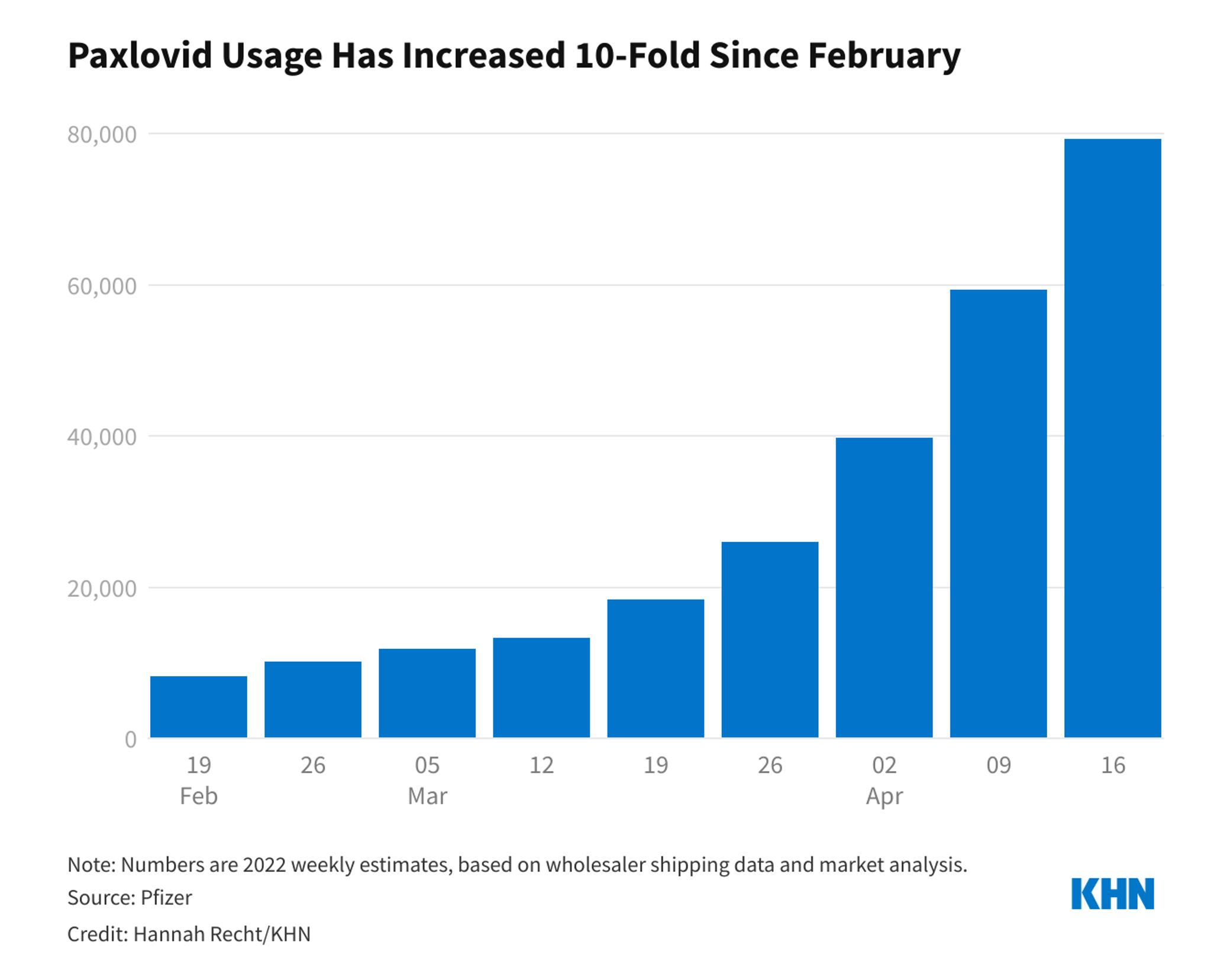
Paxloid Usage

As COVID-19 cases rise once again and the federal government gears up to increase distribution of Paxlovid, we thought we’d take this opportunity to review information about the drug and share new information that has come to light since it was first approved.

What is Paxlovid and how was it developed?

Paxlovid was the first oral antiviral the FDA authorized to treat COVID-19. Not only is it effective but it can be taken at home, which is much more convenient than getting an IV infusion. Paxlovid is used to treat adults and children over 12 years old with mild-to-moderate coronavirus disease who are at high risk for progression to severe disease. Developed by Pfizer, Paxlovid was granted emergency use authorization (EUA) to treat COVID-19 patients based on the EPIC-HR study which showed it reduced the risk of hospitalization or death by almost 90 percent.

Paxlovid can be prescribed for anyone age 12 and older who weighs at least 88 pounds. The patient must have tested positive for COVID-19 and be considered high risk to develop severe COVID-19. High-risk patients have certain medical conditions that may predispose them to progression to severe disease. It is taken for five days, and treatment must be started within the first five days of when symptoms first appeared. Paxlovid consists of two different drugs, nirmatrelvir 150mg tablets co-packaged with ritonavir 100mg tablets. Nirmatrelvir 300mg (two tablets) is taken with ritonavir 100mg twice a day for five days.

How does the drug work?

The active drug is nirmatrelvir, a protease inhibitor, which helps keep the SARS-CoV-2 protein from replicating. SARS-CoV-2-3CL protease is an enzyme COVID-19 needs to replicate and spread. Ritonavir is another protease inhibitor, but its primary function is to keep nirmatrelvir in the body longer so that it can do its thing. Ritonavir has been around for decades and was originally approved to treat HIV.

What are its side effects?

Paxlovid seems well tolerated for now, although studies are ongoing. The drug has been in the news recently because of incidents of dysgeusia — a bad, metallic taste in the mouth. In clinical trials, 5.6 percent of patients who received Paxlovid experienced dysgeusia.

While very unpleasant, this side effect is temporary and not cause for concern. It’s a much greater issue with HIV patients, who take ritonavir for a longer period of time. There isn’t much patients can do about the taste other than wait it out.

Other possible side effects include allergic reactions, liver problems, diarrhea, high blood pressure and muscle aches. Paxlovid interacts with a long list of medications which may cause serious complications, so physicians should have a complete list of medications the patient is on.

How effective is Paxlovid?

Paxlovid is highly effective for acute COVID-19 as it reduces the risk of hospitalization by nearly 90 percent. However, there are still many unanswered questions about how effective the drug is in certain scenarios, as additional studies have not been published since emergency use authorization was granted.

A major blind spot in the data is how effective Paxlovid is at treating vaccinated patients who contract COVID-19. Since the EUA trial only focused on unvaccinated adults, we still are unable to quantify how effective the drug is for individuals who have had at least one shot, are fully vaccinated or have been boosted.

Finally, long COVID has been an area where there hasn’t been much advance in terms of remedies. Paxlovid is no exception as it has not been studied to treat long COVID.

What is “Paxlovid Rebound”?

There have been reports of “Paxlovid rebound” where patients that have taken Paxlovid, may see a recurrence of symptoms after a brief recovery. In addition, researchers have found in some cases, those with rebound infection can be contagious. Limited information from case reports seem to show these rebound infections have resulted in only mild illness thus far. The CDC has issued a Health Alert Network Health Advisory to warn of the potential risk of COVID-19 recurrence after Paxlovid treatment and advises patients to isolate for at least five days after recurrence.

Although preliminary trial data from Pfizer found rebound in 1 to 2 percent of patients, it occurred in both placebo and treatment groups. The extent of how often “Paxlovid rebound” occurs is unknown at this point as we’re not even 100 percent sure this rebound is caused by the drug. Pfizer will continue to monitor data from ongoing clinical trials and post-authorization safety surveillance. The CDC continues to recommend Paxlovid for early-stage treatment of mild to moderate COVID-19 in people that are at high risk for progression to severe disease.

How can people  in the US access Paxlovid and what is the cost?

The federal government oversees the allocation to state health departments for distribution to pharmacies, hospitals, urgent cares and other entities. Paxlovid is available by prescription from a healthcare provider and is available at no cost to the patient during the COVID-19 public health emergency.

Are changes needed to make Paxlovid more widely available?

Since February, supply has kept up with demand. Although there may be an assumption that there is not enough of this drug around, I do not believe availability is an issue thus far as recent Health and Human Services data shows more than half of the doses of Paxlovid ordered are sitting on shelves not being used.

There may be different reasons for this underutilization. The omicron variant does not seem to be as severe as previous strains, so some might think they don’t need a drug like Paxlovid since they don’t believe their mild symptoms will get much worse. Lack of advertisement probably contributes to the lack of awareness of treatments such as Paxlovid. Pfizer cannot advertise this treatment since Paxlovid is only authorized for emergency use and not available on the commercial market. It may also be hard to know where Paxlovid is available.

The U.S. Department of Health and Human Services Office of the Assistant Secretary for Preparedness and Response has created a COVID-19 Therapeutics Locator website, but not many people may know about it. I’m not sure if policy changes are needed at this point, but a plan to educate the masses on Paxlovid and how to get the drug may help.

Rob Louie is EVP, Clinical Services at RemedyOne, a formulary and rebate optimization and part of Goodroot, a community of companies dedicated to reinventing healthcare one system at a time. He has more than 30 years of experience as a pharmacist.

https://pharmaphorum.com/market-access-2/six-months-after-authorization-what-do-we-know-about-paxlovid/