In the dark days of the early COVID-19 pandemic, when there was no known therapy,COVID-19 convalescent plasma(CCP) brought a ray of hope. COVID-19 survivors, community organizers, clinicians, regulators, and blood bankers collaborated to quickly bring CCP to patients. First used at the end of March 2020 in the U.S.,40% of all hospitalized patientswere being treated with CCP by October 2020, considerable progress for a treatment without pharmaceutical industry support.
Since those early days, CCP use has largely fallen off based on insufficient evidence of efficacy in hospitalized patients and the availability of other therapies. But growing evidence has shown benefits of CCP in a population with diminished treatment options and vaccine responses: the immunocompromised. This population encompasses about3% of the populationand their needs have been relatively neglected in treatment guidelines during the COVID-19 pandemic.
A Review of CCP History and Data
Guided by historical principles of antibody therapy dictating early use that were increasingly affirmed by contemporary data, more clinicians began to treat COVID-19 patients with CCP as rapidly as possible after hospital admission during the beginning of the pandemic. The FDA issued an Emergency Use Authorization (EUA) for inpatient CCP use in August 2020. However, several randomized controlled trials (RCTs) then reported no benefit of CCP in hospitalized COVID-19 patients. These trials, conducted mostly abroad, tested CCP in critically ill patients, some using CCP units without sufficient antibody content. Negative results from these trials were generalized to all COVID-19 patients, irrespective of their stage of disease, contributing to a precipitous decline in CCP use by early 2021. The concurrent approval and increased availability of remdesivir, which is also most effective in the early stage of COVID-19 infection, may also have contributed to diminished CCP demand.
As the pandemic progressed, further evidence showing that CCP was effective when used early and with high antibody content emerged, strengthening support for the FDA EUA in specific groups. However, with evidence of widespread benefit being considered insufficient in the broader patient population, CCP was largely branded as ineffective, collections dropped, and little or no CCP was available when Omicron surged in early 2022.
Unfortunately, Omicron defeated most monoclonal antibodies that were effective in ambulatory patients earlier in the pandemic. The loss of monoclonal antibody therapies was a serious blow to immunocompromised patients, especially those with B cell deficiencies who cannot make their own neutralizing antibody responses or respond to vaccines, which may lead COVID-19 to recur or persist in a smoldering form.
CCP in the Immunocompromised
What other therapies are available for immunocompromised patients? These patients respond well to CCP, including much later in their illness than non-immunocompromised patients. The continued needs of immunocompromised patients and the discovery that CCP obtained from vaccinated convalescent donors possess extremely high levels of antibodies that neutralize all known variants to date, including Omicron, have promoted a CCP comeback. CCP use is now recommended for immunocompromised patients by multiple major professional organizations, including the Infectious Diseases Society of America (IDSA) and the Association for the Advancement of Blood and Biotherapies (AABB).
In December 2021, the FDA expanded its CCP authorization to include ambulatory, as well as hospitalized, immunocompromised patients. CCP is polyclonal, making it more resistant to viral escape than monoclonal antibodies, which bind a single viral determinant. As such, CCP may have added value in immunocompromised patients who may harbor and/or develop viral mutants that are resistant to monoclonal antibodies or even antiviral drugs. CCP evolves with the virus such that recently collected plasma contains antibodies to circulating viral strains. Increasing population-wide immunity and vaccination makes collection of high titer CCP with activity against current variants feasible. Old CCP with inadequate titers against new variants is not necessarily thrown away since it can be used as regular plasma.
When the first SARS-CoV-2 variants emerged, the concern that CCP could select for variants was raised. This idea was fueled by case reports of the identification of antibody-resistant variants in CCP-treated patients, with the caveat that in such reports, low titer CCP was used. Over time, new variants still emerged even though CCP use ceased. This is consistent with continued viral evolution in the setting of widespread viral transmission. In fact, based on theory and accumulating evidence, high titer CCP, which binds a multitude of viral determinants, is less likely to lead to emergence of antibody-resistant variants than monoclonal antibodies, which only bind one viral determinant. Typically, recently collected convalescent plasma binds ancestral and novel variants. In keeping with this broad activity, CCP successfully eliminated resistant virus that arose in immunocompromised patients treated with monoclonal antibodies. Therefore, we believe CCP is the best option in immunocompromised patients with high viral loads who are at risk for selecting resistant variants. In this regard we note that monoclonal antibody therapies have significantly reduced activity against the newer omicron variants.
Our group works with organizations representing the needs of immunocompromised patients to provide educational materials and insure continued CCP availability. These efforts are necessary to sustain an infrastructure sufficient to identify and collect CCP units for ongoing use. As we learned during the Omicron wave when CCP was suddenly scarce, the infrastructure for CCP supply is dependent upon extraordinary efforts by a blood banking industry already stretched to the limit to meet ongoing demands for blood products. Continued CCP availability amid continued viral evolution requires an informed patient community that knows of this treatment, clinicians who know when and how to use it effectively, and an infrastructure that can support its use.
The authors comprise the leadership group on the COVID-19 Convalescent Plasma Project (CCPP19). Arturo Casadevall, MD, PhD, is a Bloomberg Distinguished Professor and chair of the Department of Molecular Microbiology and Immunology at Johns Hopkins University School of Public Health. Jeffrey P. Henderson, MD, PhD, is associate professor of medicine and molecular microbiology at Washington University School of Medicine. Brenda J. Grossman, MD, MPH, is medical director of transfusion medicine services and a professor at Washington University. Michael J. Joyner, MD, is Caywood Professor of Anesthesiology at the Mayo Clinic. Shmuel Shoham, MD, is a professor at Johns Hopkins School of Medicine. Nigel Paneth, MD, MPH, is Emeritus University Distinguished Professor of Epidemiology & Biostatistics and Pediatrics & Human Development at Michigan State University. Liise-anne Pirofski, MD, is Selma and Dr. Jacques Mitrani Chair in Biomedical Research and professor and chief of the Division of Infectious Diseases at Albert Einstein College of Medicine and Montefiore Medical Center.
Disclosures
Casadevall disclosed participation on the Scientific Advisory Board of SAB Biotherapeutics; receiving payments as a speaker for Ortho Diagnostics; and payments for Data and Safety Monitoring Board (DSMB) work from Bristol Myers Squibb. Shoham disclosed research funding from Ansun, F2G, and Zeteo, and consulting and DSBM participation with Adamis, Adagio, Immunome, Celltrion, Karyopharm, and Intermountain Health. Henderson disclosed receiving payments for consulting from Immunome and payments for DSMB work from Apellis.
After a leaked Supreme Court draft decision indicated the high court is poised to overturn the landmark Roe v. Wade decision, which would effectively eliminate federal abortion protections and lead to bans in a number of states, some state and local officials have said they will not prosecute abortion-related cases.
The draft ruling published by Politico in May would give individual states authority over abortion access. According to abortion rights advocacy group Guttmacher Institute, 13 states have so-called trigger laws in place that would almost immediately ban or severely restrict abortion if Roe v. Wade is overturned and another 9 still have laws or constitutional amendments against the procedure in place from before the 1973 decision.
A number of states have also moved to restrict abortion access in anticipation of the Supreme Court’s decision on the matter.
But some state and local officials, even in states that have the trigger laws in place, have said they are not intent on prosecuting people over the matter, possibly putting officials at odds with one another.
Below is a list of local and state officials who have said they do not plan enforcing abortion bans. (Note, this list may not be entirely cumulative and may change):
DeKalb County, Ga.
The district attorney for DeKalb County has said she would not prosecute abortion providers or those seeking an abortion after six weeks of pregnancy, according U.S. News & World Report.
Background on Georgia’s current abortion laws: A federal judge blocked legislation initially passed in 2019 that would ban abortions as early as six weeks into pregnancy, when a fetal heartbeat is detected, ruling that it violated a precedent established in Roe v. Wade, U.S. News & World Report noted. But that law could likely proceed forward should the high court overturn Roe v. Wade.
Orleans Parish, La.
Orleans Parish District Attorney Jason Rogers Williams said in a letter in May that he did not plan to prosecute cases related to abortion.
“My office is focused on pursuing accountability and justice for the most serious, violent crimes committed against our people. I cannot and will not shift the priority from tackling shootings, rapes and carjackings to investigating the choices women make with regard to their own bodies,” he wrote to several councilmembers in a letter he shared on Twitter.
Louisiana has a trigger law: Should Roe v. Wade no longer apply, the measure would bar anyone from prescribing pregnant women abortion medication or performing an abortion.
Michigan
Michigan Attorney General Dana Nessel (D) told The Guardian in an interview this month that she would not enforce an abortion ban in her state.
“I don’t want to see politicians removing the rights I had during the course of my pregnancy for other women,” she told the news outlet.
“I don’t want to see medical emergencies, where women are literally left to die on an operating table, because of an ectopic pregnancy, or complications in a pregnancy. I don’t want the doctor saying, ‘I’m out. I’m not going to risk losing my license … or going to jail,’” she added.
Background on where things stand in Michigan: The state has a 1931 law on hold, which Nessel says she does not intend to enforce, that makes it a crime to advertise or sell abortion medications and a felony to provide an abortion unless it’s for the purpose of saving the patient’s life, the Detroit Free Press noted.
A handful of Democratic prosecutors in the state have also said they do not plan on enforcing the 1931 law, according to PBS NewsHour.
Durham County, N.C.
Durham County District Attorney Satana Deberry has said she will not prosecute abortion providers or those seeking to terminate pregnancies.
“Criminalizing personal health care decisions around abortion creates untenable choices for women – particularly those experiencing sexual assault and domestic violence – and undermines trust and fairness in our criminal legal system,” she said in a statement issued by her office over Twitter in May.
Background on the legality of abortions in the state: Abortions can be performed in North Carolina, though there are restrictions in place, according to Guttmacher Institute.
Radnor Township, Pa.
An ordinance was passed earlier this week by Radnor Township that police cannot file criminal charges, make arrests or assist in the prosecution regarding cases of abortion, WPVI reported.
Background on legality of abortions in the state: Abortions can performed in the state before 24 weeks. According to Guttmacher, abortions can only be performed after that point in situations of health or life endangerment.
Austin and Bexar County, Texas
Austin City Council member Chito Vela has offered a proposal that would make it less of a priority to make arrests for and criminally enforce abortions.
“The City of Austin must do everything we can to protect abortion rights. That includes decriminalizing abortion locally, an approach similar to our policy towards marijuana arrests. No enforcement, no investigations, no arrests,” he tweeted in May.
His proposed resolution would limit the resources used for reporting and investigating abortions and instruct police to make arresting people over and enforcing laws against the procedure their lowest priority, according to Politico.
Meanwhile, Bexar County District Attorney Joe Gonzales has said he will not enforce abortion cases.
“The only boss I have are the citizens of Bexar County. The only boss I have are the people standing here — the voters,” he said, according to Texas Public Radio. “They make the decision about whether or not I’m doing the right job. I’m not worried about Ken Paxton. I’m not worried about Governor Abbott or anybody else in Austin.”
Texas’ abortion law: Abortions are not legal in the state beginning when a fetal heartbeat can be detected, as early as six weeks into pregnancy. Private citizens can sue those who are found aiding someone in getting an abortion.
Fairfax County, Va.
Fairfax County Commonwealth’s Attorney Steve Descano said in May he would never prosecute someone seeking an abortion.
Current status of abortion in Virginia: During the first and second trimesters of a person’s pregnancy, abortions are allowed in the state, according to The Washington Post, while the procedure must be certified by three doctors when there is a health or life risk to be legally performed in the third trimester.
Current law in the state: Abortion is permitted, with some restrictions, for the first 20 weeks after fertilization, according to Guttmacher Institute. After that point, it can only legally be performed if the life of there is a risk to the life of the pregnant person or their risk is severely compromised.
STEPHANOPOULOS: Well, you expect it to come down but prices are going to go up before they go down, right? Again, most economists expect the inflation rate to move up to around 7 percent by the end of the year. Does that sound about right to you?
YELLEN: Well, we have had high inflation in first half of this year and that locks in high inflation really for the entire year, but I do expect in the months ahead that the pace of inflation -- it's likely to come down, although remember there are so many uncertainties relating to global developments and we're united with our allies in certainly wanting to take the steps necessary to address, to, you know, punish Russia for what it's doing in Ukraine and there are some spillovers to us as well.
Virologist Sissy Sonnleitner tracks nearly every COVID-19 case in Austria’s rugged eastern Tyrol region. So, when one woman there kept testing positive for months on end, Sonnleitner was determined to work out what was going on.
Before becoming infected with SARS-CoV-2 in late 2020, the woman, who was in her 60s, had been taking immune-suppressing drugs to treat a lymphoma relapse. The COVID-19 infection lingered for more than seven months, causing relatively mild symptoms, including fatigue and a cough.
Sonnleitner, who is based at a microbiology facility in Außervillgraten, Austria, and her colleagues collected more than two dozen viral samples from the woman over time and found through genetic sequencing that it had picked up about 22 mutations (see ‘Tracking spike’s evolution’). Roughly half of them would be seen again in the heavily mutated Omicron variants of SARS-CoV-2 that surged around the globe months later1. “When Omicron was found, we had a great moment of surprise,” Sonnleitner says. “We already had those mutations in our variant.”
Source: Ref. 1
Omicron did not arise from the woman’s infection, which doesn’t seem to have spread to anyone. And although no definitive links have been made to individual cases, chronic infections such as hers are a leading candidate for the origins of Omicron and other variants that have driven COVID-19 surges globally. “I don’t think there can be any doubt in anyone’s mind that these are a source of new variants,” says Ravindra Gupta, a virologist at the University of Cambridge, UK.
Researchers want to understand how the virus might evolve the ability to spread from person to person more easily, to evade the immune response, or to become more or less severe. Some or all of these qualities might be forged during the course of a chronic infection. “We don’t quite understand what can evolve in a single individual — and what cannot,” says Alex Sigal, a virologist at the Africa Health Research Institute in Durban, South Africa.
The odds are remote that this knowledge could help to predict the next deadly strain or even to trace variants such as Omicron to their origin. Still, virologists hope that by improving their understanding of viral evolution, they will be able to anticipate what future variants might look like — and potentially find better ways to treat chronic infections. “It’s such an important problem, given that we don’t want another variant that we can’t handle,” says Sigal.
Deadly competition
Since late 2019, scientists have sequenced the genomes of more than 11 million samples of SARS-CoV-2 taken from people. These efforts have drawn an evolutionary tree that is remarkable in its breadth, showing how the virus has changed during its march around the planet, gaining just a couple of stable mutations per month as it moves from person to person.
“But that’s only one part of the evolutionary story,” says Sarah Otto, an evolutionary biologist at the University of British Columbia in Vancouver, Canada. Each person’s infection is its own universe, where new mutations arise as the infection spreads from cell to cell. Most of these changes won’t matter to the virus, and many will do it harm. But some might give it a slight advantage over other versions of the virus in that person’s body, enhancing its ability to spread or providing some resistance to immune defences. These two traits — infectivity and immune evasion — are the main ways in which SARS-CoV-2 has evolved since it first emerged in 2019.
In acute SARS-CoV-2 infections, which generally last a week or two before being cleared by the immune system, versions of the virus with advantageous mutations have little time to outcompete those that lack them. The odds of a virus with such an advantage being transmitted to another individual are therefore small. Studies suggest that only a few virus particles — maybe even just one — are needed to seed a new infection2. “Which of those viruses happens to be in the aerosol droplet you sneeze out at the time someone walks by and breathes in is largely a matter of luck,” says Jesse Bloom, a evolutionary biologist at the Fred Hutchinson Cancer Center in Seattle, Washington. “So, most of the beneficial mutations that have arisen in a patient are lost, and then evolution has to start up all over again.”
This ‘transmission bottleneck’ is the reason SARS-CoV-2 picks up around two mutations per month globally, on average. But in chronic infections, which last for weeks to months, viruses with advantageous mutations have time to outcompete others.
Compared with acute cases, these long-term infections also allow time for much more viral diversity to develop. And through a process called recombination, which can shuffle the genomes of SARS-CoV-2 particles together, mutations that are beneficial in one part of the body, such as the upper airways, might show up in viruses bearing other useful properties, says Andrew Rambaut, an evolutionary biologist at the University of Edinburgh, UK. “If the result is a fitter virus, it can suddenly take off.”
As a result of chronic infections, globally, “this virus has opportunities not just to evolve in one way, in one direction, but literally thousands, maybe tens of thousands of directions over months”, Otto says.
Targeting spike
No two chronic infections are identical. But in dozens of case reports, researchers have begun to identify common signatures of long-term infection. One of the most striking, says Otto, is the large number of amino-acid changes that accrue in the virus’s spike protein, which helps it to infect cells and is a primary target for the body’s immune response.
Many of these mutations map to regions of the spike that are targeted by antibodies, such as its receptor binding domain (RBD) and the N-terminal domain, which are involved in recognizing and infecting host cells. This makes sense, says Darren Martin, an evolutionary virologist at the University of Cape Town in South Africa. If a person’s immune system fails to clear an infection fully, the surviving viruses are likely to bear immunity-evading mutations that helped them to survive the attack. One study3, which has not been peer reviewed, found that the most common mutation in chronic infections is at a position in the spike protein’s RBD called E484. Changes at this site can prevent some potent infection-blocking antibodies from attaching to the virus.
Some mutations don’t work particularly well on their own. Last year, Gupta and his team described a 102-day infection in a man in his 70s who had a compromised immune system, and who ultimately died from the infection4. After doctors had treated him with convalescent plasma — the antibody-containing portion of blood donated by people who had recovered from COVID-19 — Gupta’s team found that viruses with a pair of spike-protein mutations were thriving in the man’s airways.
SARS-CoV-2 particles (green) in infected olfactory epithelial cells.Credit: NIAID/NIH/SPL
One of the mutations, called D796H, conferred resistance to antibodies — but this benefit came at a cost to the virus. When the researchers engineered a non-replicating ‘pseudotype virus’ to carry the D796H mutation and measured how well it could infect cells in the lab, they found that this mutation alone made the pseudotype virus significantly less infectious. But when the pseudotype virus also contained a second mutation found in the same person — a two-amino-acid deletion at sites 69 and 70 — infectivity was restored almost completely4. Such compensatory mutations, which have more time to emerge in chronic infections, allow the virus to make evolutionary leaps, says Gupta. “Viruses struggle to do that when they’re jumping between hosts very quickly.”
n some cases, mutations have made sense only with hindsight. In late 2020, Jonathan Li, a physician-scientist at Brigham and Women’s Hospital in Boston, Massachusetts, and his colleagues released the first detailed report of a chronic SARS-CoV-2 infection: an ultimately fatal case in a 45-year-old man who had a rare autoimmune disease5. The virus developed mutations linked to antibody resistance, including E484K, and another spike mutation called N501Y, which lab studies had suggested improves the virus’s ability to bind to host-cell receptors, potentially boosting infectivity6.
The significance of the N501Y change became apparent when it was detected in a trio of fast-growing lineages later named the Alpha, Beta and Gamma variants of concern (VOCs). Omicron bears this mutation, as well as several others identified in the man’s infection. “He really was the harbinger of what was to come,” Li says.
Seeking variant origins
Alpha, identified in the United Kingdom in late 2020, was the first SARS-CoV-2 variant suspected to have emerged from a chronic infection. But that wasn’t the only possible explanation, says Rambaut. The variant might have arisen in a region — probably outside the United Kingdom — that had little capability to conduct genomic surveillance of SARS-CoV-2. Alternatively, Alpha could have evolved in an animal reservoir (the variant’s N501Y mutation enables it to infect mice, rats and mink).
A chance discovery nevertheless suggests that a chronic infection was the most likely source of Alpha. Rambaut and Verity Hill, an evolutionary biologist at the University of Edinburgh, reported in a March preprint the discovery of an intermediate version of Alpha in UK sequencing data7. The sequence was collected from a person in southeast England in July 2020, two months before Alpha was first detected in the same region.
The virus had acquired the N501Y mutation, as well as several other hallmarks of Alpha, but it lacked the full suite of changes. “It’s accumulating these mutations. It was probably a bit rubbish at spreading,” Hill says. Only once the Alpha intermediate gained further mutations did it have the capacity to take off, she suggests.
Combinations of mutations are seen in Omicron, too. That variant — which includes several sub-lineages with many overlapping mutations — is brimming with genetic changes linked to both immune escape and infectivity that had been spotted before. But what stood out to Martin was that the BA.1 subvariant that set off most countries’ Omicron waves has a collection of 13 spike mutations that scientists had rarely seen individually, let alone all together in a single virus.
Martin and his colleagues hypothesize8 that, among this unique set of mutations, are some that helped to offset the evolutionary costs associated with the mutations that hastened Omicron’s spread. “Those trade-offs take a long time to resolve and those require, in my opinion, chronic infections,” says Martin. These could be in humans or in animals, he adds.
Another characteristic of Omicron — the reduced severity of disease — could also be a product of chronic infection. Lab studies have suggested that Omicron’s relative mildness could be a result of its preference for infecting cells in the upper airways, as opposed to those in the lung9. The variant probably evolved from a strain that adeptly infected both upper and lower airways. Gupta suspects that Omicron’s shift probably depended on the kind of coordinated evolution that occurs when a virus spends months in a single person’s body. But what’s not clear are the evolutionary forces that propelled such a shift, he adds.
On the lookout
Chronic infections could be the best explanation for how variants such as Omicron and Alpha evolved. But it’s not obvious how one of the defining characteristics of most variants — their ability to spread like wildfire between people — might evolve in a single individual. “That’s a real mystery,” says Bloom. “When something’s not under selection, you often lose it. During a chronic infection there’s no longer selection for transmissibility.”
One possible explanation is that the same molecular mechanisms that help SARS-CoV-2 to infect a person’s airways, lungs and other organs are also important for enabling the virus to spread to others. “The same transmission dynamics are required when it’s inside you as when it’s going from one person to another,” says Martin.
But there is a difference between a virus that merely retains the ability to transmit, and one such as Omicron or Alpha that can cause a global surge in cases. A massive boost in transmissibility or the capacity to infect previously immune people might be what sets a dangerous VOC apart, says Rambaut. “It’s not that all chronic infections are going to produce VOCs. It’s going to be one in a million.”
Isolating people with long-term infections probably won’t suppress new variants of concern.Credit: Ina Fassbender/AFP/Getty
That means that surveillance is unlikely to detect a variant at its point of emergence. In a May preprint, researchers spotted an Omicron strain that had picked up other spike mutations during chronic infection in an immunocompromised individual, and showed that it had spread to several people in the same hospital, as well as in the local community10. But wider spread of such infections seems exceedingly rare. A February preprint documenting 27 people with chronic infections reports no evidence that any had spread the virus to other individuals11. If VOCs so rarely emerge from chronic infections, it will be difficult to prevent them without reducing overall rates of infection around the world, says Adi Stern, an evolutionary virologist at Tel Aviv University in Israel, who led the study.
Nevertheless, there is an urgent need to understand the viral factors that contribute to chronic infections. “We need to go beyond the case reports and understand what the virus is actually evolving during this time,” says Sigal.
Sigal and his team are tracking people with advanced HIV, whose immune systems can be severely compromised, to identify factors associated with chronic SARS-CoV-2 infection. HIV infects immune cells called CD4+ T cells, which also support the production of antibodies against viruses such as SARS-CoV-2. In unpublished work, Sigal and his colleagues have found that low levels of CD4+ T cells are associated with a risk of chronic SARS-CoV-2 infection, and that many of the cases are mild, with few or no respiratory symptoms.
On the basis of the sheer number of people living with HIV — nearly 40 million globally — and the likelihood that most people have already been infected with SARS-CoV-2, it seems likely that some cases of persistent infection are contributing to the emergence of new variants, says Otto. “From an Occam’s razor point of view, we know that should be a source.”
People with compromised immune systems aren’t the only potential source of variants. Researchers have documented SARS-CoV-2 infections lasting multiple weeks in people with healthy immune systems. From the perspective of natural selection, even a relatively short three-week infection provides exponentially more opportunities for the virus to evolve, compared with an acute infection lasting a week, says Martin.
People with relatively healthy immune systems might also provide the virus with more selection pressure than individuals who have impaired immune responses, says Hill. But how to identify people who are susceptible to such infections or what their symptoms might look like is an open question. “I would suspect they’re a lot more common than we realize,” says Hill.
Last year, Gonzalo Bello, a virologist at the Oswaldo Cruz Institute in Rio de Janeiro, Brazil, and his colleagues identified several strains of SARS-CoV-2 circulating in Amazonas state in Brazil12. These carried some — but not all — of the mutations found in the Gamma variant that drove the region’s ferocious second wave in 2021. But each of the Gamma-like strains also had their own unique mutations: evidence, Bello says, that Gamma might have evolved not from a single chronic infection, but from transmission chains of medium-length infections involving relatively healthy people.
Such transmission chains could have contributed to the diversity of Omicron lineages, Bello suggests. “Maybe these individuals are where some of the steps in the origin of VOCs are happening,” he says. And if chronic infections in healthy people are a likely source of VOCs, improving global vaccination rates could help to prevent new ones emerging, Hill adds. “When you’ve got these huge uncontrolled waves of infection, you’re sowing the seeds for the next.”
Antiviral drugs and other treatments taken during a chronic infection could also be playing a part in the virus’s evolution. One trait scientists are looking out for is resistance to COVID-19 drugs such as Paxlovid (nirmatrelvir–ritonavir) and molnupiravir. (Resistance to the antiviral remdesivir has already been documented in chronic infections13.) The drugs affect highly conserved viral proteins — for which the barrier to drug resistance is high — but evolutionary leaps that characterize chronic infections could buy the virus time to come up with a way around that, says Gupta.
In unpublished laboratory experiments, a team led by virologist David Ho at Columbia University in New York City has found that SARS-CoV-2 can take numerous paths to Paxlovid resistance. Some involve gaining compensatory mutations that allow the virus to overcome the costs of Paxlovid resistance, allowing them to thrive, at least in the lab. Such mutations are unlikely to be behind anecdotal reports of recurring SARS-CoV-2 symptoms after Paxlovid treatment, says Ho (who himself experienced such a rebound). But if the treatment, which is normally taken for five days, is administered for a longer period to treat a chronic infection, there is a good chance resistance will emerge.
There is also an urgent need to identify effective treatments for chronic infections — particularly in people with immune-system impairments, who don’t always mount a strong response to vaccines. Most approved monoclonal antibody drugs are not effective against Omicron and its offshoots, and researchers have shown in a preprint that resistance to these therapies can emerge when they’re used to treat chronic infections14.
Convalescent plasma should create a higher evolutionary barrier than monoclonal antibody therapies, says Arturo Casadevall, a microbiologist at John Hopkins Bloomberg School of Public Health in Baltimore, Maryland. Plasma that contains high levels of diverse antibodies has been shown to be effective at treating COVID-19, and some physicians are now giving it to people with compromised immune systems15.
Antiretroviral drugs that target HIV can also help people living with that virus to clear chronic SARS-CoV-2 infections, but adherence to the drugs can be a challenge, Sigal notes.
Last October, UK clinicians reported a case in which a person’s chronic infection was cleared after they received a COVID-19 vaccine16. For the Austrian woman whom Sonnleitner and her colleagues studied, the end of her seven-month infection also followed vaccination. But it’s impossible to know if the vaccine is what helped her to recover.
That outcome is rare for people with chronic infections, however; many reports end in death. “They really are heartbreaking cases,” Stern says. As many parts of the world attempt to move on from the pandemic, with some healthy people shrugging their shoulders at ‘mild’ Omicron infections, Stern says we must do more to protect those who are most at risk of a chronic SARS-CoV-2 infection. “It’s dangerous for them — and it’s dangerous for us as a society.”
The number of coronavirus patients in serious condition in Israel reached 140 on Friday, marking a near 70% rise since last week, with health experts warning that the current situation was “unstable.”
While Israel has seen rising infection numbers for a few weeks, a rise in seriously ill patients marks a real concern as the country deals with the spread of the new variant BA.5, with experts warning that hospitals may need to reopen COVID wards. The number was up from 85 seriously ill patients on Friday last week.
Some 7,313 Israelis tested positive for the virus on Friday, the Health Ministry said. The reproduction number (R) stood at 1.31 as of Friday. The figure measures how many people each coronavirus carrier infects on average, with any number above 1 meaning the spread of COVID-19 is increasing. It first began to rise above 1 in mid-May, having stayed below that threshold for nearly two months.
The death toll stood at 10,882, including six fatalities over the past week.
“The data definitely indicates that the disease is active in the community,” immune system expert Prof. Cyrille Cohen of Bar Ilan University told the Ynet news site.
“The real indication is the number of patients in serious condition because we know much of the morbidity is not detected as people don’t go and get tested, and that should also be taken into account,” he said.
“The thing that determines the policy is not necessarily the number of confirmed patients but the condition of seriously ill patients. We need to understand whether they are experiencing the disease in a more severe way — and whether we will need to get ready to reopen COVID wards this summer,” he added.
Empty beds in the intensive care unit at the Coronavirus ward of Shaare Zedek hospital in Jerusalem on October 14, 2021. (Olivier Fitoussi/Flash90)
Despite the warning, Cohen said it’s too early to know the severity of the variant that mutated from Omicron, known as BA.5, and whether or not it will develop into a new wave.
“We don’t know exactly what this wave will look like and whether we can call it a wave at all,” he said. “We are following the events in Portugal because variant BA.5 is the dominant one there and because its population is similar to Israel in size with many people vaccinated, even more so than in Israel.”
Cohen noted that morbidity and mortality rates rose in Portugal at the same time the BA5 variant started spreading.
“We need to realize that’s going to happen here as well,” he said, urging lawmakers to take action. “It’s an unpredictable and unstable situation regarding COVID. It will take months and even years before there is a significant decrease and we reach a more predictable scenario. But one must also be careful with making estimations,” he added.
Cohen said the effort should be concentrated on “actively encouraging herd immunity among the vulnerable and older population” by “calling people who haven’t received the vaccine and encouraging them to get it.”
He also advised wearing masks in crowded places like on buses and at shopping centers.
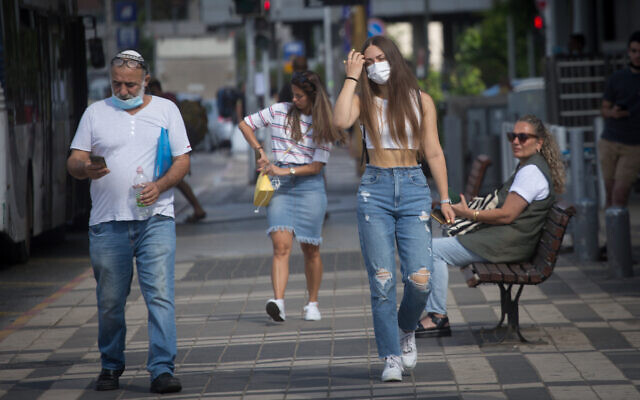
Israelis, some wearing face masks, walk in Tel Aviv on July 22, 2021. (Miriam Alster/Flash90)
On Wednesday, coronavirus czar Prof. Salman Zarka said the new variant BA.5 is quickly gaining traction and is more resistant to vaccines than previous strains.
“The BA.5 strain currently accounts for about 50 percent of patients,” he said. “The strain caused relatively mild illness among young people, but we can see a rise in hospitalizations.”
He said BA.5 was replacing Omicron as the dominant variant, and that it will continue to gain ground.
Israel scrapped its indoor mask requirement in April as infection numbers dropped off sharply. Outdoor masks have not been required since April of last year.
Salman Zarka also said Israelis may soon be able to be officially recognized as COVID-19 patients based solely on a home test, under certain conditions, while at the same time the Health Ministry was working to expand test facilities.