Search This Blog

Wednesday, June 22, 2022

SC Medical Ethics Law Said to Prompt Concern Re LGBTQ Healthcare

 A new South Carolina law that allows physicians, medical students and nurses to refrain from doing procedures that violate their conscience has prompted concern that the measure will restrict healthcare options for the state's LGBTQ population.

Signed into law by Republican Gov. Henry McMaster on June 17, the "Medical Ethics and Diversity Act" gives medical practitioners, health care institutions and health care payers protection for objecting to performing a procedure that goes against their moral, ethical or religious views. The law does not apply to emergency procedures where such life-saving services must be provided per federal regulation. Physicians are also not required to make a referral should they deny care.

The bill allows doctors to do their job "in a way that doesn't contradict with their best medical judgement or their moral and religious beliefs," Brandon Charochak, the governor's deputy communications director, said in an email. "It's important that South Carolinians receive the best care possible from providers who fully believe in the work they're doing.

South Carolina joins several other states that have moved recently to protect "conscience" objections for medical providers. In March 2021, Arkansas Gov. Asa Hutchinson signed a similar proposal into law. Earlier this year, the Nebraska legislature considered another such measure.

Commonly rejected procedures listed in other states include abortion, certain contraception, genetic experimentation, death penalty executions and the sterilization of minors, according to Republican state Sen. Larry Grooms.

Proponents in South Carolina said that the law allows providers to opt out of specific procedures — not discriminate against specific patients.

"If you have a moral religious or ethical objection to a particular procedure, then that would mean you're opposed to that procedure for all patients," Grooms said last month as the state Senate originally debated the bill.

But when specific types of care are disproportionately necessary for certain groups of people — gender-affirming hormone therapy for a transgender person or fertility treatments for a same-sex couple, for example — then the law is discriminatory, according to Ivy Hill, a leader in the SC United for Justice and Equality coalition.

"We already face so many additional barriers in accessing healthcare and this just adds another one," Hill, who is the community health program director with the Campaign for Southern Equality, told The Associated Press.

Last month, a group of 50 healthcare professionals urged the governor in a letter to veto the bill. The group warned that the measure would negatively impact LGBTQ people, who might already face barriers to accessing services such as HIV prevention and treatment, gender affirming care and family planning services.

Upon the state House's passage of the bill in April, the Human Rights Campaign, the nation's largest LGBTQ civil rights organization, issued a statement opposing the measure.

"It is disturbing that some politicians in South Carolina are prioritizing individual providers' beliefs ahead of patient health and wellbeing. This legislation is dangerously silent in regards to the needs of patients and fails to consider the impact that expanding refusals can have on their health," Sarah Warbelow, the Human Rights Campaign's legal director, said in a statement in April.

The Roman Catholic Diocese of Charleston supported the law in a Friday press release.

"Every American has the freedom to live according to his or her ethical and religious beliefs –- doctors, nurses, and medical care providers must not be treated differently," the diocese said in a statement. "When freedom of conscience is compromised, patient care is compromised."

State senators debated whether or not the measure would improve efforts to expand healthcare services across the state. Speaking against the proposal, Democrat state Sen. Vernon Stephens suggested that rural patients who lack easy access to healthcare facilities might struggle to find alternatives should a doctor deny their procedure.

Grooms said the bill would help the state retain physicians — particularly older ones — who fear discipline for not performing procedures to which they object.

Hill pointed transgender people in South Carolina concerned about healthcare access to the Campaign for Southern Equality's "Trans in the South" guide.

"For LGBT folks and for trans folks in South Carolina, I want them to know that they're not alone," Hill said.

'James Pollard is a corps member for the Associated Press/Report for America Statehouse News Initiative. Report for America is a nonprofit national service program that places journalists in local newsrooms to report on undercovered issues.'

https://www.medscape.com/viewarticle/976037

Brentuximab Vedotin Boosts Survival in Untreated Hodgkin Lymphoma

 Replacing bleomycin with brentuximab vedotin (Adcetris) in the standard treatment regimen of doxorubicin, bleomycin, vinblastine, and dacarbazine (ABVD) significantly improved overall survival (OS) in untreated stage III/IV Hodgkin lymphoma, a researcher reported.

In an OS analysis of the phase III ECHELON-1 trial, treatment with brentuximab vedotin, doxorubicin, vinblastine, and dacarbazine (A+AVD) resulted in a 41% reduction in the risk of death versus standard ABVD (HR 0.59, 95% CI 0.396-0.879, P=0.009), reported John Radford, MD, of the University of Manchester in England.

At a median follow-up of 73 months, the estimated 6-year OS rates were 93.9% for A+AVD and 89.4% for ABVD, according to the findings presented at the European Hematology Association annual meeting.

"The ECHELON-1 study shows that A+AVD is the first regimen to show an improvement in a head-to-head comparison in terms of overall survival compared with six cycles of standard ABVD," Radford said. "We believe A+AVD should be considered a preferred first-line treatment option for patients with previously untreated stage III or IV Hodgkin lymphoma."

Analyses of ECHELON-1 after 5 years of follow-up demonstrated a progression-free survival (PFS) benefit with A+AVD over ABVD, which held up in the current analysis as well (6-year PFS rates of 82.3% vs 74.5%, respectivey; HR 0.68, 95% CI 0.53-0.86, P=0.002).

"That really has been very stable over the last several years," Radford noted.

Brentuximab vedotin gained FDA approval in 2018 as treatment for adults with previously untreated stage III/IV classical Hodgkin lymphoma in combination with chemotherapy based on findings from the trial.

The OS benefit was generally consistent across prespecified subgroups, he explained, with significant benefit in the following:

  • Stage IV at diagnosis: HR 0.478 (95% CI 0.286-0.799)
  • PET-negative at cycle 2: HR 0.583 (95% CI 0.338-0.856)
  • PET-positive at cycle 2: HR 0.163 (95% CI 0.037-0.717)
  • From North America: HR 0.327 (95% CI 0.153-0.699)

Radford cautioned that none of these subgroups were powered to draw meaningful conclusions, however, but noted that the OS benefit with A+AVD "was preserved" in multivariable analysis that adjusted for baseline demographic and disease factors (HR 0.53, 95% CI 0.34-0.83).

A look at subsequent therapy among the study population showed that 20% of patients in the brentuximab vedotin arm had further treatment compared with 24% of patients in the bleomycin arm, and there was "substantial use of subsequent brentuximab vedotin in the ABVD arm," Radford pointed out.

"So it would appear that using ABVD in combination with chemotherapy upfront is a more desirable option than using brentuximab vedotin in the setting of a salvage approach," he observed.

As for long-term safety outcomes, the investigators found that fewer second malignancies were reported in the brentuximab vedotin arm (3.5% vs 4.8%). A greater number of female patients in the brentuximab vedotin group had pregnancies (49 vs 28) and live births (42 vs 19) compared to the bleomycin group, and there were no stillbirths reported during the study.

Incidence of peripheral neuropathy was higher in the brentuximab vedotin group at the completion of therapy (67% vs 43%) but neuropathy resolved or continued to improve in 86% and 87% of the two groups, respectively.

ECHELON-1 was conducted in 21 countries across six continents and randomized in 1,334 previously untreated adults with stage III/IV classical Hodgkin lymphoma 1:1 to either standard treatment of six cycles of ABVD or six cycles of A+AVD. Patients all had an ECOG performance status of ≤2 and underwent follow-up every 3 months for 36 months, then every 6 months until study closure. At the present analysis, there were 39 deaths in the A+AVD arm compared with 64 deaths in the ABVD arm.


Disclosures

The study was funded by Takeda and Seagen. Some co-authors are Takeda or Seagen employees.

Radford disclosed relationships with, and/or support from, Takeda, ADC Therapeutics, Kite Pharma, and AstraZeneca.

COVID-19 Recrudescence after Nirmatrelvir/Ritonavir Treatment

 Aaron F Carlin, Alex E Clark, Antoine Chaillon, Aaron F Garretson, William Bray, Magali Porrachia, AsherLev T Santos, Tariq M Rana, Davey M Smith


DOI:  https://doi.org/10.1093/cid/ciac496


PDF: https://academic.oup.com/cid/advance-article-pdf/doi/10.1093/cid/ciac496/44139162/ciac496.pdf


We isolated a SARS-CoV-2 BA.2 variant from a person with COVID-19 recrudescence after nirmatrelvir/ritonavir treatment. Antiviral sensitivity and neutralizing antibody testing were performed with both parental SARS-CoV-2 and multiple variants of concern. We found that neither NM resistance nor absence of neutralizing immunity were likely causes of the recrudescence.

https://academic.oup.com/cid/advance-article/doi/10.1093/cid/ciac496/6611663


New warning on pot products: California may require labels of risks, including mental health

 California may soon require labels on all cannabis products that warn buyers of the risks to their overall health and safety.

SB 1097, the Cannabis Right to Know Act, would require warnings to be added to each product.

In part, the bill is aimed at creating larger warnings for consumers of cannabis, much like nicotine product warnings.

“I think that would be probably good… well at least so you know what you’re ingesting I guess right,” said Robby Taggart, a 35-year cannabis user.

Warnings would include DUI risks, adolescent use and brain development, mental health risks including schizophrenia, and increased suicidal thoughts and attempts.

Some of the warnings would read as follows:

  • “WARNING: Do not buy illegally sold cannabis as it is more likely to contain unsafe additives or harmful contaminants such as mold or pesticides.”

  • “WARNING: Do not use if pregnant or breastfeeding. Exposure to cannabis during pregnancy may harm your baby’s health, including causing low birth weight.”
  • “WARNING: Cannabis use may contribute to mental health problems, including psychotic disorders such as schizophrenia. Risk is greatest for frequent users and when using products with high THC levels.”
  • “WARNING: Cannabis use may contribute to mental health problems, including increased thoughts of suicide and suicide attempts. Risk is greatest for frequent users.”

Lawmakers pushing for the new warnings also want sellers to distribute informational brochures to first-time customers explaining health risks.

“That’s something that we’ve actively been trying to do I actually like to remind people like don’t do this while you’re in the car, don’t do it before you drive, the pregnancy risks same thing as alcohol,” said GM of Green Solutions, Forrest Heise.

Heise said he does not believe the current warning labels are often read.

Heise believes since California’s legalization, many people have forgotten products are medicinal.

“We help out a tremendous amount of people with things like epilepsy and their cancer treatments, we’re very close to Sutter Hospital over here so we get some overlap with those patients,” Heise said.

Lawmakers pushing for the Cannabis Right to Know Act say cannabis poses risk to children and certain adults, warning high concentrations of THC, cause potential mental health effects, including psychiatric disorders.

A recent study from Molecular Psychiatry said eliminating marijuana use in adolescents would reduce global rates of schizophrenia by 10%.

The condition affects roughly 20 million across the world— and though discussion between cannabis and schizophrenia is widely debated, medical journals do nod at the fact they connect in some way.

“That is something that I would definitely, especially for my child, that I would want on the label and would want them to read before they consume anything like that…it’s the kind of responsible thing to do,” said Michael Sapien, of Sacramento.

If the bill is passed, product warning labels would change January 1, 2025.

https://www.kcra.com/article/new-warning-pot-products-california-may-require-labels-risks-including-mental-health-risk/40343490#

Novartis, Precision Ink Deal to Develop Potential Sickle Cell Cure

 Precision BioSciences has entered into an exclusive global in vivo gene editing research and development collaboration and license deal with Novartis. The two companies will work to develop a potential cure for hemoglobinopathies such as sickle cell disease and beta-thalassemia.

Precision will develop a custom ARCUS nuclease and run in vitro studies. Novartis will then handle all subsequent research, development, manufacturing and commercialization operations. Novartis picks up an exclusive license to the custom ARCUS nuclease and will pay Precision $75 million upfront. Precision will then be eligible for up to $1.4 billion in potential milestone payments, as well as some research funding and possible tiered royalties from the mid-single digits to low-double digits.

“We are excited to collaborate with Novartis to bring together the precision and versatility of ARCUS genome editing with Novartis’ gene therapy expertise and commitment to developing one-time, potentially transformative treatment for hard-to-treat inherited blood disorders,” Michael Amoroso, chief executive officer at Precision, said in a statement. “This collaboration will build on the unique gene insertion capabilities of ARCUS and illustrates its utility as a premium genome editing platform for potential in vivo drug development. With this Agreement, Precision, either alone or with world-class partners, will have active in vivo gene editing programs for targeted gene insertion and gene deletions in hematopoietic stem cells, liver, muscle and the central nervous system showcasing the distinctive versatility of ARCUS.”

The opportunities for gene therapies for beta-thalassemia and sickle disease are huge, with a few companies on the cusp of approval. Tuesday, CRISPR Therapeutics reported its plans to file a Biologics License Application (BLA) for CTX001, a potential cure for transfusion-dependent beta-thalassemia and severe sickle cell disease. CTX001 (exa-cel) is a CRISPR-Cas9-based gene editing therapy.

Earlier in June, CRISPR and its partner Vertex Pharmaceuticals reported positive data for exa-cel in both indications. In the first, data showed that 42 of 44 TDT patients who received the therapy remained transfusion free for up to 37.2 months. In SCD, all 31 patients were free of recurrent vaso-occlusive crises after treatment, with a duration of up to 32.3 months.

And on June 10, the U.S. Food and Drug Administration’s Cell, Tissue and Gene Therapies Advisory Committee voted positively on bluebird bio’s two lentiviral vectors (LVV) gene therapies for beta-thalassemia and cerebral adrenoleukodystrophy.

For betibeglogene autotemcel (beti-cel) for the treatment of beta-thalassemia, the committee voted 13 to 0 in favor of the therapy. Beti-cel is a one-time gene therapy in beta-thalassemia patients who require regular red blood cell transfusions. Late-stage trials showed that 89% of patients receiving the therapy achieved transfusion independence.

For elivaldogene autotemcel (eli-cel), bluebird’s LVV gene therapy for cerebral adrenoleukodystrophy (CALD), the advisory committee voted 15 to 0 in favor of the treatment. CALD is a serious neurological disorder caused by ABCD1 gene mutations. It is rare, progressive, X-linked, and ultimately fatal. The therapy uses ex vivo transduction with the Lenti-D lentiviral vector to insert functional copies of the ABCD1 gene into a patient’s hematopoietic stem cells.

Derek Jantz, Ph.D., co-founder and chief scientific officer of Precision said, “The in vivo gene editing approach that we are pursuing for sickle cell disease could have a number of significant advantages over other ex vivo gene therapies currently in development. Perhaps most importantly, it could open the door to treating patients in geographies where stem cell transplant is not a realistic option. We believe that the unique characteristics of the ARCUS platform, particularly its ability to target gene insertion with high efficiency, make it the ideal choice for this project, and we look forward to working with our partners at Novartis to bring this novel therapy to patients.”

https://www.biospace.com/article/precision-partners-with-novartis-on-sickle-cell-disease-cure-in-1-4b-deal/

House panel 'condemns influence' of Trump pandemic adviser Atlas

 A report released by the House Select Subcommittee on the Coronavirus Crisis rebuked the influence that physician Scott Atlas had in the Trump administration during his time as a pandemic adviser and accused him of undermining the government’s efforts to fight COVID-19.

During his time working with the Trump administration, Atlas frequently garnered controversy over his promotion of practices that seemingly contradicted pandemic mitigation methods recommended by other health officials in the federal government.

The subcommittee’s report, titled “The Atlas Dogma,” listed numerous instances in which the Trump administration embraced what the panel referred to as “dangerous and discredited” approaches to handling the pandemic, including the herd immunity strategy which Atlas is a proponent of.

Atlas was regularly accused of seeking to downplay the severity of the pandemic, with him characterizing the government’s early response to COVID-19 as an “overreaction.” He was a frequent critic of mask-wearing and social distancing and often mocked other health authorities and politicians who encouraged these practices.

Atlas’s influence on the Trump administration appeared to start before he was brought on as an adviser, according to the report, with the panel saying his involvement was concealed for several weeks after he was hired.

The report said Jared Kushner, former White House adviser and son-in-law to former President Trump, instructed Atlas to not announce himself during conference calls and hide his White House identification, even from former White House Coronavirus Response Coordinator Deborah Birx.

The report further claimed that Atlas was able to successfully encourage the Trump administration to weaken testing by the Centers for Disease Control and Prevention (CDC) as well as reduce overall testing.

“Administration officials used the ‘Atlas Dogma’ to justify their downplaying of the virus before the November presidential election and their continued deprioritization of the crisis as they worked to overturn the election results,” read the report.

It added that the embrace of the so-called Atlas Dogma, a name that Birx used to refer to his influence on the White House, impaired the U.S.’s ability to effectively respond to the pandemic when vaccines and antivirals were still unavailable.

It was also noted that other COVID-19 officials in the Trump White House appeared to not be as receptive to Atlas’s presence as those within Trump’s inner circle.

Birx told the panel that Atlas may have given leaders in the White House “biased” data. Former CDC Director Robert Redfield also apparently butted heads with Atlas, telling the House subcommittee that Atlas spoke “aggressively” to him when his agency restored its original testing guidance, with the physician apparently “enraged” by the decision.

This is not the first time that Atlas’s disagreements with other health officials in the former administration have been noted. Emails leaked last year revealed that Birx and chief White House medical adviser Anthony Fauci both thought that Atlas’s views on the pandemic were “dangerous.”

https://thehill.com/policy/healthcare/3532453-house-panel-condemns-influence-of-trump-pandemic-advisor/

Did The Recession Start Three Months Ago?

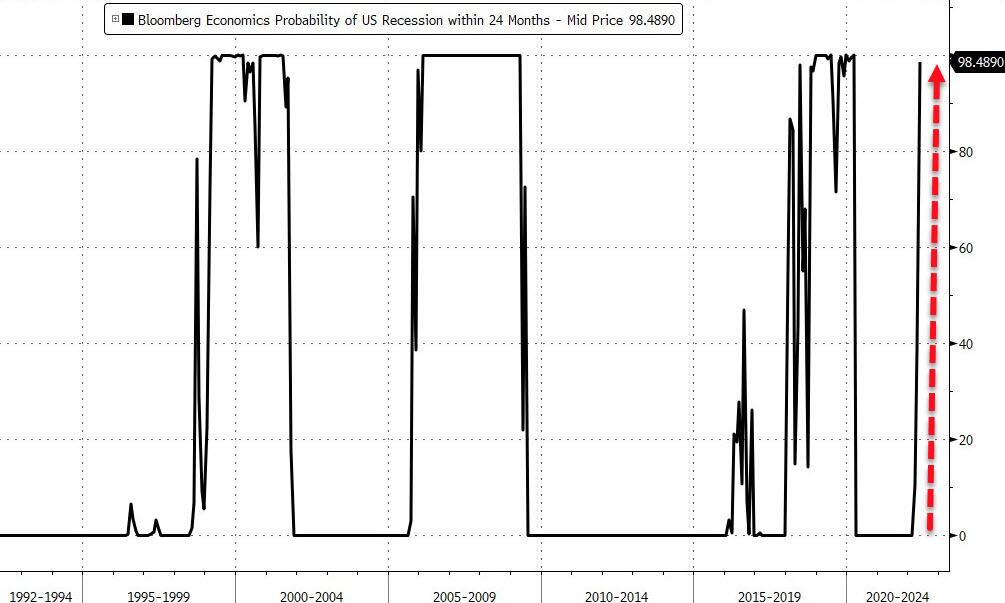
 Jay Powell has spent the last 3 hours in the Senate answering questions how long until the US slides into recession (really, it's mostly been a filibuster by Dems on the Senate Banking Committee explaining to Powell how Biden is not responsible for soaring inflation), but a much better question is "whether the US is already in a recession", especially since the .Bloomberg Econ model now sees 98% odds of a recession in 24 months (up from 75% just a few days ago).

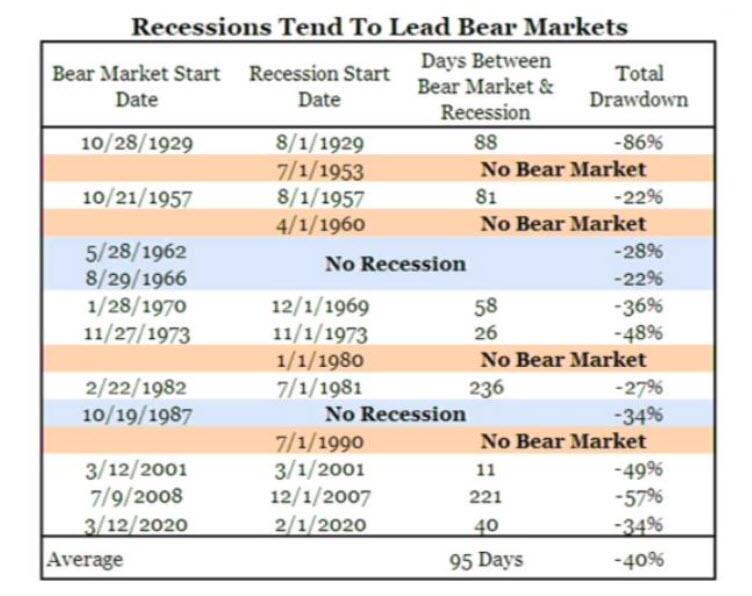
The first to answer this question is Piper Sandler, which answers "perhaps" and shows that the typical bear market follows the start of a recession with a delay of 95 days, and eventually exhaust itself with an average total drawdown of 40%...

... which means that current recession probably already started some time in March and has another 20% or so to go (to hit the 3,000 bogey that so many have mentioned in recent days).

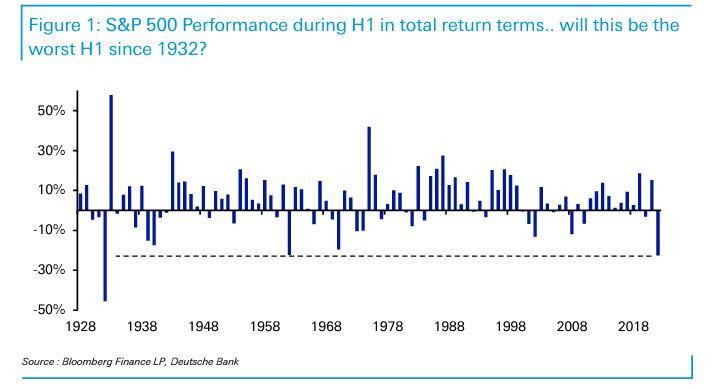
Of course, following the worst start for stocks to a year since the Great Depression...

... and also the worst start since 1932 in total return terms across all asset classes...

... one would be excused to ask if instead of a garden variety recession, the US isn't rushing straight into a depression.

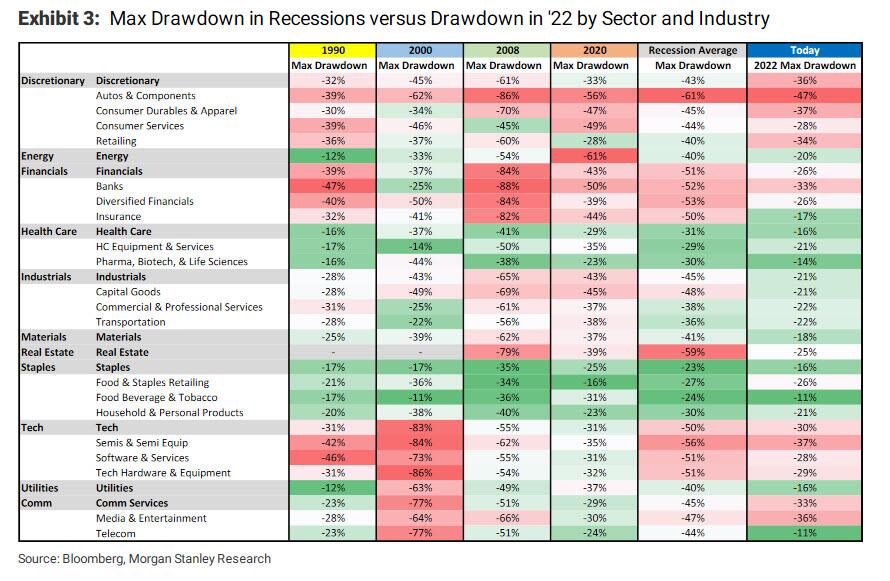
A slightly different perspective comes from Morgan Stanley, whose chief equity strategist Michael Wilson writes that the bank's clients continue to debate whether we will see a recession in the next 12 months (one which may have already started), and whether it be a formal economic recession or an earnings recession. Understandably, the second most popular question asked by clients is what is the floor value - or worst case scenario - in terms of price. How low can equities trade in the event of a recession and what is already priced?

Morgan Stanley responds to these question in terms of industry group drawdowns during the past four recessions. The first thing to note is that price action suggests that equities have already drawn down ~60% of the recessionary average...

... with today's price action relatively similar to recent recessions in terms of leadership, albeit less severe up to this point.

Consumer Discretionary and Food & Staples Retailing are the closest to a typical recessionary drawdown at 86% and 95% of average. On the flip side, the industry groups that are holding up the best in 2022 relative to the average recession are Telecom at 26% (which underperformed by 37% in 2021), Insurance at 34%, and Utilities at 41%.

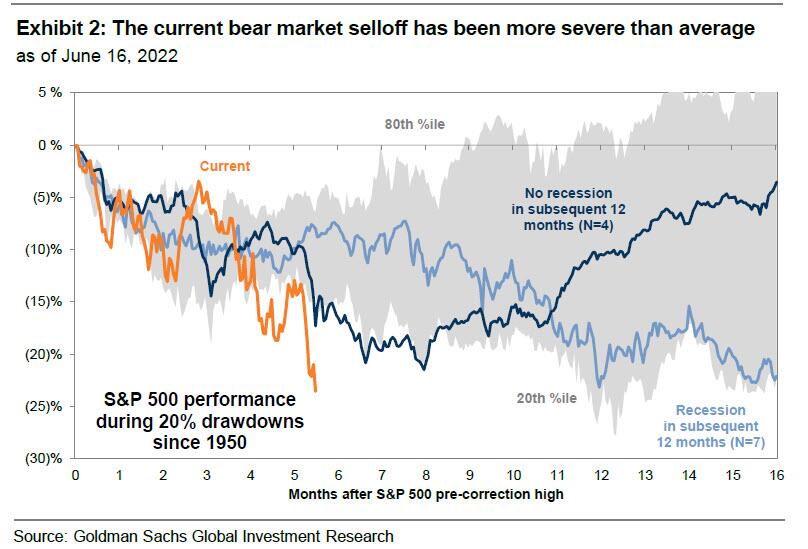
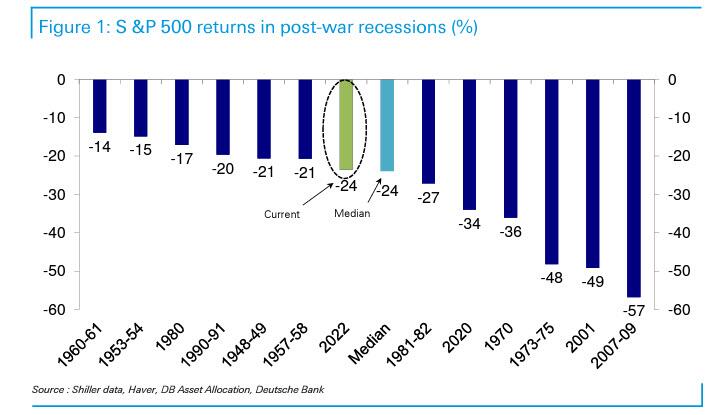
Finally, we turn to Deutsche Bank whose head of thematic research Jim Reid writes that following the latest selloff which dragged the market down 24% from its all time high, the S&P 500’s correction moved in line with the median correction seen in post-WWII recessions, and is now in fact the fourth worst non-recession correction over the same period. This is shown in a chart first used by DB's equity strategist Binky Chadha a few weeks ago at the same time of his call that the S&P was likely to hit the median recession correction levels equivalent to 3650 in the coming weeks. Well, last week we did just that.

That said, as with Morgan Stanley, so Deutsche Bank notes that the timing of the recession is a hot topic at the moment, and when it hits, both Reid and Chadha expect the S&P 500 to be down -35 to -40% from the highs. The rationale being that the initial overvaluation was more extreme than normal cycles, with the additional comment that this recession marks a regime shift from decades of declining inflation to higher structural levels: "This deserves a bigger de-rating than average."

However, the timing of that recession is important. According to Reid, if it occurs this year then markets will have a very tough H2 (spoiler alert: it will). However if miraculously the recession doesn’t happen until deeper into 2023, then markets can have notable relief rallies on the way (Reid still leans toward next year).

And if there is still anyone out there who thinks we can avoid a recession completely, then the three biggest post-WWII non-recession corrections are the -26.6% (May 1946-), -28% (Dec 1961-) and -33.5% (Aug 1987-). The last of these included the 1987 stock market crash. So if we don’t get a recession, we are getting close to extreme territory.

Unfortunately, we will...

https://www.zerohedge.com/markets/did-recession-start-three-months-ago