Search This Blog

Sunday, October 9, 2022

'Alzheimer's Might Not Actually Be a Brain Disease'

 The pursuit of a cure for Alzheimer's disease is becoming an increasingly competitive and contentious quest with recent years witnessing several important controversies.

In July 2022, Science magazine reported that a key 2006 research paper, published in the prestigious journal Nature, which identified a subtype of brain protein called beta-amyloid as the cause of Alzheimer's, may have been based on fabricated data.

One year earlier, in June 2021, the US Food and Drug Administration had approved aducanumab, an antibody-targeting beta-amyloid, as a treatment for Alzheimer's, even though the data supporting its use were incomplete and contradictory.

Some physicians believe aducanumab never should have been approved, while others maintain it should be given a chance.

With millions of people needing an effective treatment, why are researchers still fumbling in this quest for a cure for what is arguably one of the most important diseases confronting humankind?

Escaping the beta-amyloid rut

For years, scientists have been focused on trying to come up with new treatments for Alzheimer's by preventing the formation of brain-damaging clumps of this mysterious protein called beta-amyloid.

In fact, we scientists have arguably got ourselves into a bit of an intellectual rut concentrating almost exclusively on this approach, often neglecting or even ignoring other possible explanations.

Regrettably, this dedication to studying the abnormal protein clumps has not translated into a useful drug or therapy. The need for a new "out-of-the-clump" way of thinking about Alzheimer's is emerging as a top priority in brain science.

My laboratory at the Krembil Brain Institute, part of the University Health Network in Toronto, is devising a new theory of Alzheimer's disease.

Based on our past 30 years of research, we no longer think of Alzheimer's as primarily a disease of the brain. Rather, we believe that Alzheimer's is principally a disorder of the immune system within the brain.

The immune system, found in every organ in the body, is a collection of cells and molecules that work in harmony to help repair injuries and protect from foreign invaders.

When a person trips and falls, the immune system helps to mend the damaged tissues. When someone experiences a viral or bacterial infection, the immune system helps in the fight against these microbial invaders.

The exact same processes are present in the brain. When there is head trauma, the brain's immune system kicks into gear to help repair. When bacteria are present in the brain, the immune system is there to fight back.

Alzheimer's as autoimmune disease

We believe that beta-amyloid is not an abnormally produced protein, but rather is a normally occurring molecule that is part of the brain's immune system. It is supposed to be there.

When brain trauma occurs or when bacteria are present in the brain, beta-amyloid is a key contributor to the brain's comprehensive immune response. And this is where the problem begins.

Because of striking similarities between the fat molecules that make up both the membranes of bacteria and the membranes of brain cells, beta-amyloid cannot tell the difference between invading bacteria and host brain cells, and mistakenly attacks the very brain cells it is supposed to be protecting.

This leads to a chronic, progressive loss of brain cell function, which ultimately culminates in dementia – all because our body's immune system cannot differentiate between bacteria and brain cells.

When regarded as a misdirected attack by the brain's immune system on the very organ it is supposed to be defending, Alzheimer's disease emerges as an autoimmune disease.

There are many types of autoimmune diseases, such as rheumatoid arthritis, in which autoantibodies play a crucial role in the development of the disease, and for which steroid-based therapies can be effective. But these therapies will not work against Alzheimer's disease.

The brain is a very special and distinctive organ, recognized as the most complex structure in the Universe. In our model of Alzheimer's, beta-amyloid helps to protect and bolster our immune system, but unfortunately, it also plays a central role in the autoimmune process that, we believe, may lead to the development of Alzheimer's.

Though drugs conventionally used in the treatment of autoimmune diseases may not work against Alzheimer's, we strongly believe that targeting other immune-regulating pathways in the brain will lead us to new and effective treatment approaches for the disease.

Other theories of the disease

In addition to this autoimmune theory of Alzheimer's, many other new and varied theories are beginning to appear. For example, some scientists believe that Alzheimer's is a disease of tiny cellular structures called mitochondria – the energy factories in every brain cell.

Mitochondria convert oxygen from the air we breathe and glucose from the food we eat into the energy required for remembering and thinking.

Some maintain that it is the end-result of a particular brain infection, with bacteria from the mouth often being suggested as the culprit. Still others suggest that the disease may arise from an abnormal handling of metals within the brain, possibly zinc, copper, or iron.

It is gratifying to see new thinking about this age-old disease. Dementia currently affects more than 50 million people worldwide, with a new diagnosis being made every three seconds. Often, people living with Alzheimer's disease are unable to recognize their own children or even their spouse of more than 50 years.

Alzheimer's is a public health crisis in need of innovative ideas and fresh directions.

For the well-being of the people and families living with dementia, and for the socioeconomic impact on our already stressed health-care system coping with the ever-escalating costs and demands of dementia, we need a better understanding of Alzheimer's, its causes, and what we can do to treat it and to help the people and families who are living with it.The Conversation

Donald Weaver, Professor of Chemistry and Director of Krembil Research Institute, University Health Network, University of Toronto

https://www.sciencealert.com/alzheimers-might-not-actually-be-a-brain-disease-expert-says

Our ancestors ate a Paleo diet. It had carbs

 What did people eat for dinner tens of thousands of years ago? Many advocates of the so-called Paleo diet will tell you that our ancestors’ plates were heavy on meat and low on carbohydrates—and that, as a result, we have evolved to thrive on this type of nutritional regimen.

The diet is named after the Paleolithic era, a period dating from about 2.5 million to 10,000 years ago when early humans were hunting and gathering, rather than farming. Herman Pontzer, an evolutionary anthropologist at Duke University and author of Burn, a book about the science of metabolism, says it’s a myth that everyone of this time subsisted on meat-heavy diets. Studies show that rather than a single diet, prehistoric people’s eating habits were remarkably variable and were influenced by a number of factors, such as climate, location and season.

In the 2021 Annual Review of Nutrition, Pontzer and his colleague Brian Wood, of the University of California, Los Angeles, describe what we can learn about the eating habits of our ancestors by studying modern hunter-gatherer populations like the Hadza in northern Tanzania and the Aché in Paraguay. In an interview with Knowable Magazine, Pontzer explains what makes the Hadza’s surprisingly seasonal, diverse diets so different from popular notions of ancient meals.

This interview has been edited for length and clarity.

What do today’s Paleo diets look like? How well do they capture our ancestors’ eating habits?

People have developed many different versions, but the original Paleo diet is quite meat-heavy. I would say the same is true of the predominant Paleo diets today—most are very meat-heavy and low-carb, downplaying things like starchy vegetables and fruits that would only have been seasonally available before agriculture. There’s also an even more extreme camp within that, which says that humans used to be almost entirely meat-eating carnivores.

But our ancestors’ diets were really variable. We evolved as hunter-gatherers, so you’re hunting and gathering whatever foods are around in your local environment. Humans are strategic about what foods they go after, but they can target only the foods that are there. So there was a lot of variation in what hunter-gathers ate depending on location and time of year.

The other thing is that, partly due to that variability, but also partly due just to people’s preferences, there’s a lot of carbohydrate in most hunter-gatherer diets. Honey was probably important throughout history and prehistory. A lot of these small-scale societies are also eating root vegetables like tubers, and those are very starch- and carb-heavy. So the idea that ancient diets would be low-carbohydrate just doesn’t fit with any of the available evidence.

So how did “Paleo” come to represent meat-heavy and low-carb eating?

I think there are a couple of reasons for that. You have a kind of romanticizing of what hunting and gathering was like. There is a sort of macho caveman view of the past that permeates a lot of what I read when I look at Paleo diet websites.

There are also inherent biases in a lot of the available archaeological and ethnographic data. In the early 1900s, and even before, a lot of the ethnographic reports were written by men who focused on men’s work. We know that traditionally that’s going to focus more on hunting than on gathering because of the way a lot of these small-scale societies divide their work: Men hunt and women gather.

On top of that, the available ethnographic data is heavily skewed toward very northern cultures, such as Arctic cultures—since the warm-weather cultures were the first ones to get pushed out by farmers—and they do tend to eat more meat. But our ancestors’ diets were variable. Populations that lived near the ocean and moving rivers ate a lot of fish and seafood. Populations that lived in forested areas or in places rich in vegetation focused on eating plants.

There is also a bias toward hunting in the archaeological record. Stone tools and cut-marked bones—evidence of hunting—preserve very well. Wooden sticks and plant remains don’t.

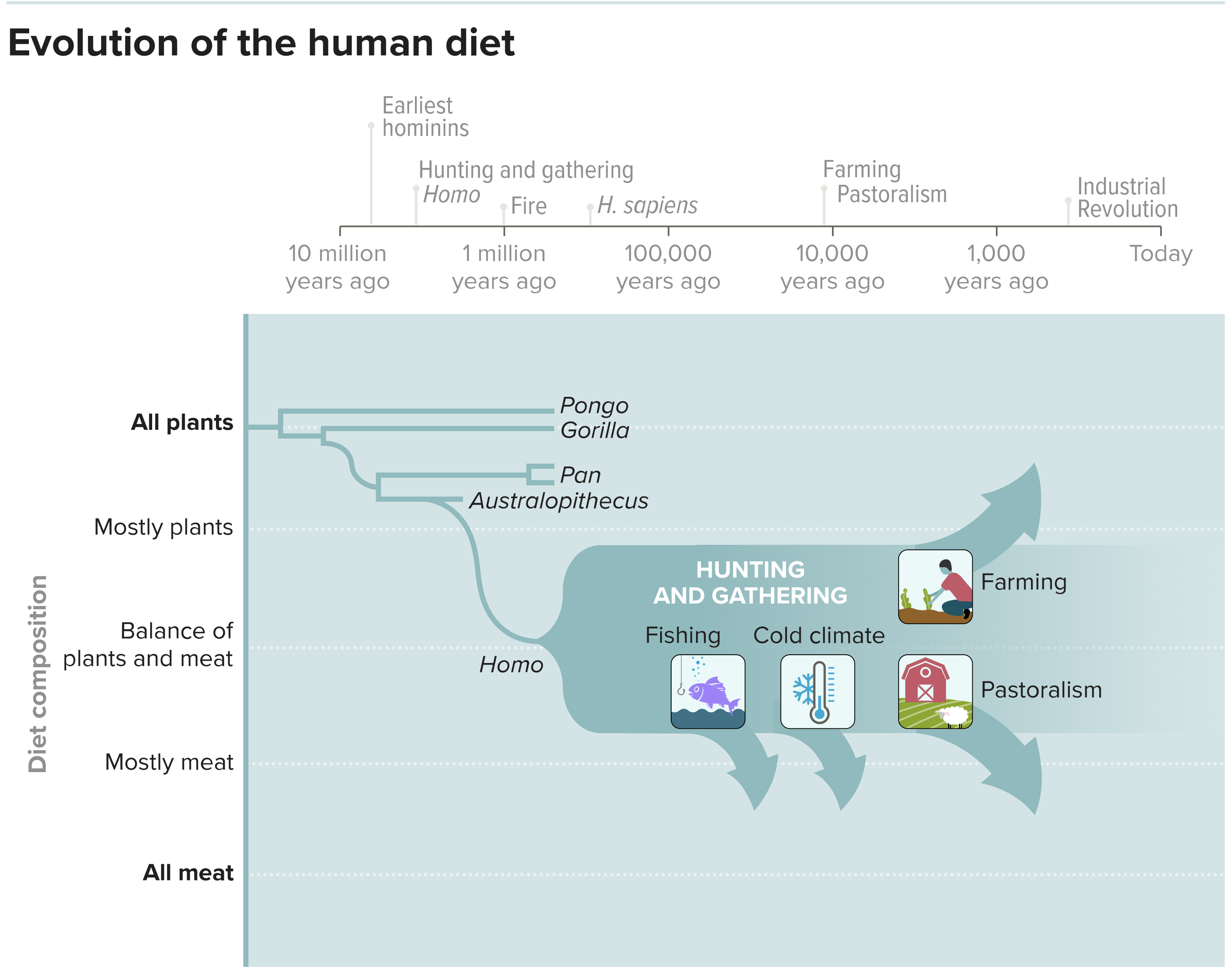
The human diet is much broader than that of our ancestors or great apes such as orangutans, gorillas or chimps. Depending on circumstances, hunter-gatherer populations can eat diets ranging from heavily plant-based to heavily animal-based. The development of agriculture pushed diets more firmly toward plants for farmers and animal products for pastoralists. (Adapted from H. Pontzer & B.M. Wood/ AR Nutrition 2021)
Enlarge / The human diet is much broader than that of our ancestors or great apes such as orangutans, gorillas or chimps. Depending on circumstances, hunter-gatherer populations can eat diets ranging from heavily plant-based to heavily animal-based. The development of agriculture pushed diets more firmly toward plants for farmers and animal products for pastoralists. (Adapted from H. Pontzer & B.M. Wood/ AR Nutrition 2021)
Your research has focused a lot on a group called the Hadza. Who are the Hadza and what has studying their diets taught us to date?
The Hadza are a community of a few hundred traditional hunter-gatherers in northern Tanzania. They live in a sort of semi-arid savanna landscape. Some of the population has started to do some farming or to live in villages. But a quarter of them are still hunting and gathering and get all their food from wild game and plants. Men hunt with bow and arrow, and women gather plant foods by hand or with digging sticks. They are this really wonderful community of folks to work with, but they’re also really valuable in terms of giving us a snapshot of what hunting and gathering really looks like, day to day, in real life.

People have been working with the Hadza for decades now, so we have these long-term records, papers published from 30 or 40 years ago up through to today. We can understand from those data how variable diet can be: We’ve seen how the amount of meat changes with the seasons. It’s more skewed toward plants during wet seasons, for example. We’ve seen how different plant species, such as berries and tubers, contribute to diet in different ways over the course of a year. We’ve also learned that honey is a really big part of their diet.

What does the overall picture of their diet look like?

It’s a balance between calories from animals and calories from plants. The long-term average is around 50:50, but it varies. Sometimes they’re eating a lot of meat, sometimes very little. The one surprising thing from working with the Hadza—and it’s not just the Hadza, but a lot of the work there kind of sparked this—is how important honey is. It can make up as much as a fifth of the group’s calories, on average. Honey is just sugar and water—pretty high-carb and definitely not part of most modern “Paleo” diets.

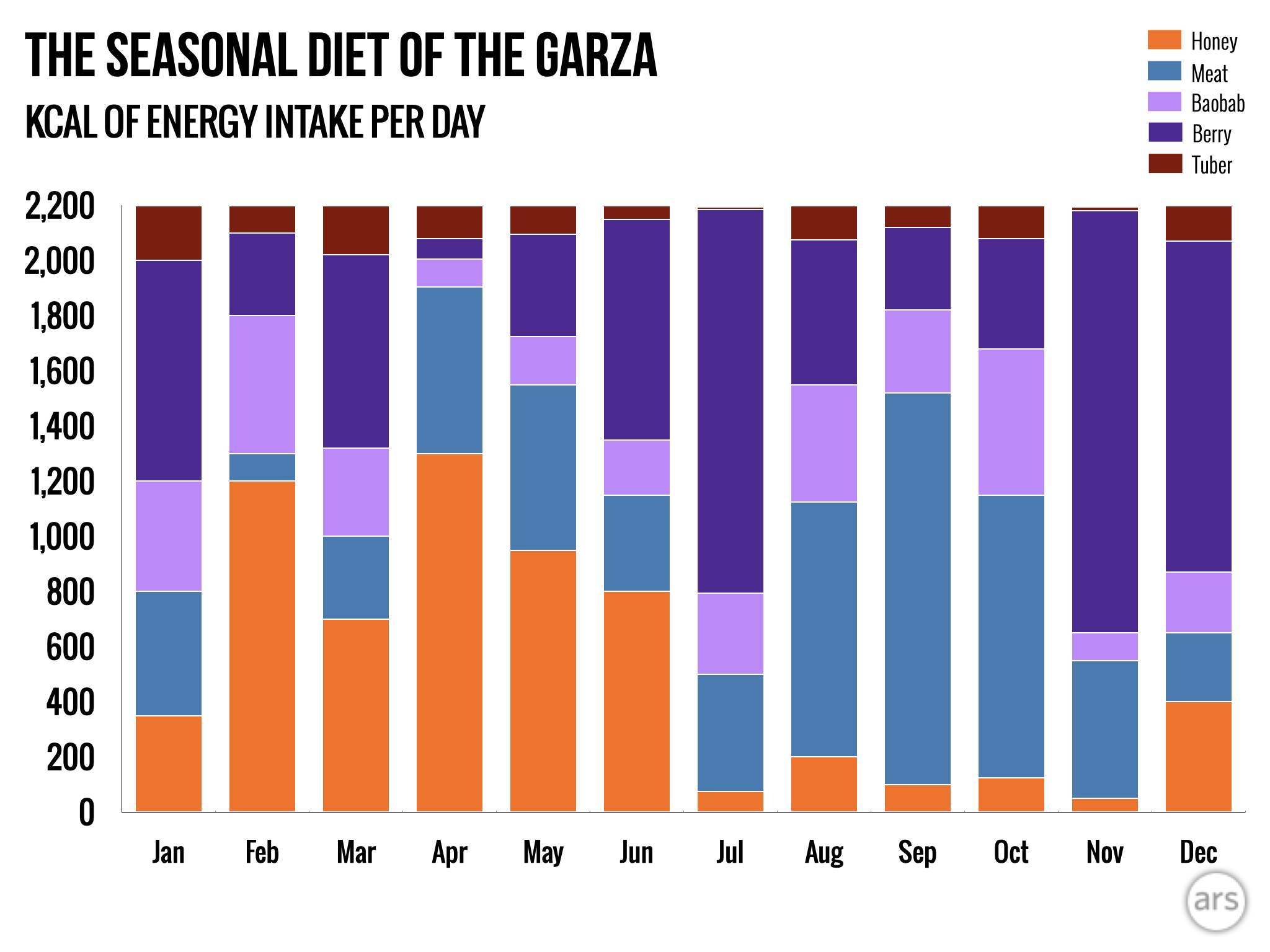
Month-by-month studies show that the Hadza diet varies dramatically through the year. In February, people get most of their calories from honey, in July from berries and in September from meat. Adapted from H. Pontzer and B.M. Wood / AR Nutrition 2021.
Enlarge / Month-by-month studies show that the Hadza diet varies dramatically through the year. In February, people get most of their calories from honey, in July from berries and in September from meat. Adapted from H. Pontzer and B.M. Wood / AR Nutrition 2021.
Ars Technica

Why do the Hadza eat so much honey?

It tastes really good, and it’s packed full of calories. So they seek it out, just like we seek out good-tasting food in our environments. And in a lot of these habitats, it’s available year-round in big quantities.

Some of the Hadza make use of a bird called the honeyguide bird, whose entire foraging niche is dependent on honey-gathering by humans. I’ve had a chance to go out with the Hadza men while they were working with these honeyguide birds. It almost seems like the men are absentmindedly whistling while they’re walking, but they’re not. They’re doing this to attract the honeyguide bird. When they hear one of these birds, which make a kind of whirring, chirping sound, the Hadza men just walk directly toward the sound—and the bird will be calling and making a big fuss in the tree where the bees are.

The Hadza guys will look at this tree and confirm that there’s actually honey. Then they chop into the tree limb with their hatchets to get to the hive. Honeyguide birds are good at not just pointing to beehives—they’re good at pointing to big ones. So the Hadza get more honey when they are able to use a honeyguide bird. Of course, as they’re chopping into the tree and bringing out big chunks of hive, lots of pieces of comb and larvae get exposed and become the honeyguide bird’s meal. It’s a win-win situation.

The birds have adapted to a world in which humans get a lot of honey. I think that’s really telling.

How can you be sure that the way that people hunt and gather today looks the same as thousands of years ago? Maybe historically, hunter-gatherers used to eat more meat.

Recently, there’s been some really cool work looking at the little bit of plaque and calculus stuck to the teeth in fossilized hominids. If you look at that, you’ll find remains of plants and starches. So we actually do have preserved evidence that early humans are eating lots of starchy vegetable foods. There’s even some evidence of a primitive flourlike substance that’s made out of grains. That kind of thing is anathema to most Paleo diets, which say that you can’t eat grains because grains are a farmed food.

And you can look at the human body and see how we’ve adapted relative to our ape relatives—what’s changed in us in terms of how we digest food. You can look at things like gut anatomy and tooth shape. And if you look at that, again, the signal is kind of omnivorous. It isn’t particularly meat-heavy.

What can communities like the Hadza teach us about what we should—or shouldn’t—be eating?

I think this adds to the evidence that humans can be healthy on a wide range of diets. I hope it helps tamp down some of the yelling on both sides about how you have to have a plant-based diet or you have to have a meat-based diet, or you have to have another kind of diet. These are really narrow views about what a human is built to consume.

Humans evolved to be adaptable. We are very much dependent on learning and developing these complex hoarding strategies to survive. And different people follow different paths. I think this adaptability is part of this whole package of how we live as a species. We’re built to be flexible. And flexibility means diversity.

That’s why people who follow these “Paleo diets” that aren’t really paleo can often be really healthy. And people who are vegan, and eat no meat at all, can do really well, too.

I think the one thing that they never have in a hunter-gatherer diet is the heavily processed foods that we are surrounded with. In processed foods, you get these combinations of sugars, salts and fats that never occur in nature. You take out a lot of things like fiber and protein that make you feel full, and put in a lot of things that make your brain’s reward systems light up, like flavoring. Processed foods seem to be a big driver of obesity.

So maybe the one thing we can all agree on is to avoid that junk. But beyond that, eat whatever kind of diet that works for you and keeps you healthy.

DOI: Science, 2022. 10.1146/knowable-092722-1 (About DOIs).

https://arstechnica.com/science/2022/10/our-ancestors-ate-a-paleo-diet-it-had-carbs/

The Power of Brief Mental Health Therapies

 Last year, a survey by the American Psychological Association found that the demand for psychotherapy has increased dramatically since the start of the Covid pandemic, with 68% of therapists reporting that their waiting lists have increased and more than 40% saying they are unable to keep up. with the request. But help doesn’t have to mean years of traditional psychotherapy. Research has shown that even short interventions — targeted, time-limited programs to improve thinking and behavior at critical moments — can have significant benefits.

These interventions, which can be as short as 30 minutes of online training, are not a substitute for psychotherapy. But given the rising rates of anxiety, depression, stress, substance abuse and suicide among American adults and teens, they can be powerful ways to prevent challenges from escalating.

After one meeting, people reported that their feelings of hopelessness and anxiety improved significantly.

A study published in the online preprint library PsyArXiv in July by Gina Song, a doctoral student in psychology at Stony Brook University, and colleagues found that even one healthcare session with a counselor can be beneficial for people on psychological treatment waiting lists. In the sessions, 65 participants were asked to think about their most important goals, steps they could take to achieve them, and potential obstacles they might have to overcome. After one meeting, people reported that their feelings of hopelessness and anxiety improved significantly.

Brief interventions can also reduce suicide risk, explains David Jobs, a psychologist at Catholic University who developed the Collaborative Assessment and Suicide Management (CAMS) Program, an evidence-based clinical intervention to help people avoid falling into suicidal thoughts. Over the course of six to eight sessions, the therapist helps the patient identify the difficulties that trigger suicidal feelings and develop a coping plan.

Dr. Jobs led a study published in the Journal of Psychiatry in 2017 that included 148 US military personnel who reported suicidal thoughts. They were divided into two groups, one receiving CAMS and the other receiving treatment as usual. The study found that CAM participants were “significantly less likely” to have suicidal thoughts after three months. “People are really good at getting better if you give them the right tools,” Dr. Jobes said.

Chronic pain is another problem that has been shown to respond well to short interventions. A study published in JAMA Open Network in 2021, led by Beth Darnall, director of the Pain Relief Innovations Lab at Stanford University, showed that for people with chronic low back pain, a single two-hour session teaches pain self-management skills. It was as effective as eight weeks of conventional cognitive behavioral therapy. Dr. Darnall’s Empowered Relief program teaches people to notice distressing thoughts and emotions, then practice accepting their symptoms rather than blowing them up. After three months, participants reported significant improvement in pain management and sleep disturbances.

Brief interventions are particularly promising as a way to help children and adolescents.

Brief interventions are particularly promising as a way to help children and adolescents. A report published by the Centers for Disease Control and Prevention in March found that the Covid pandemic has accelerated the rise in mental health problems among teens, with 37% reporting they experienced poor mental health during 2021.

In the early months of the pandemic in 2020, Jessica Schleider, a psychologist and assistant professor at Stony Brook University, and her colleagues launched the YES! Which offers free online half-hour interventions for teens with symptoms of stress, depression and anxiety.

In addition to learning skills to promote resilience, participants answered questions about their own experiences and were asked to jot down takeaways to share with other young people. In a study published in Nature in 2021, Dr. Schleider looked at more than 2,400 teens who participated and found that the interventions helped reduce depression and eating disorder, and the benefits persisted three months later.

Dr. Schleider, a former elementary school teacher, points out that “children, in particular, don’t really have options to choose when, where, or how to get support.” Brief, accessible interventions can help achieve long-term improvements in mental health: “Long-term change is a series of small changes, and every small change counts,” she says.

Another elementary teacher, psychologist David Yeager of the University of Texas, Austin, and his collaborators developed a 30-minute online training session for first-year college students. Participants also heard stories from older students, who emphasized that college can feel challenging at first but improve over time. Then the early years were asked to write their own letters offering hope to future students.

“You can get people to absorb big, powerful ideas in a short amount of time by inviting them to process the information and share it with others,” says Dr. Yeager. In a study published in Nature in 2021 involving more than 4,000 students, he and his colleagues discovered that online training was associated with fewer mental health symptoms, even during Covid lockdowns.

Research led by Jeremy Jamison of the University of Rochester found that a short training session on “stress reassessment” can also help students deal with anxiety. In a study of 339 community college students published in the Journal of Experimental Psychology in July, those who were taught to think about symptoms of anxiety such as increased heart rate and sweaty palms as a natural response to stress performed better on academic exams. Dr. Jamieson explains that his interventions are meant to act as a prop to prevent stress from escalating into depression.

Dozens of studies also highlight the potential for single-session interventions to reduce drinking problems. A study led by Felicia Chi, senior research analyst at Kaiser Permanente, published in the journal Drug and Alcohol Dependence in 2022, looked at a sample of more than 300,000 adults and found that a brief intervention reduced the average number of days participants participated in. Excessive drinking by 26%.

Jeffrey Cohen, a professor at Stanford Graduate School of Education and author of Belonging, a new book about brief interventions to improve social inclusion, describes those interventions as literal opportunities for people to perform to their full potential, which is far more effective than trying to convince them of something.

“It’s almost like walking into a party where you don’t know anyone, but the host greets you warmly, calming your nerves so you feel more able to socialize,” says Dr. Cohen. The growing body of evidence for success with short interventions shows that mental health and psychotherapy should not be considered in terms of all or nothing.

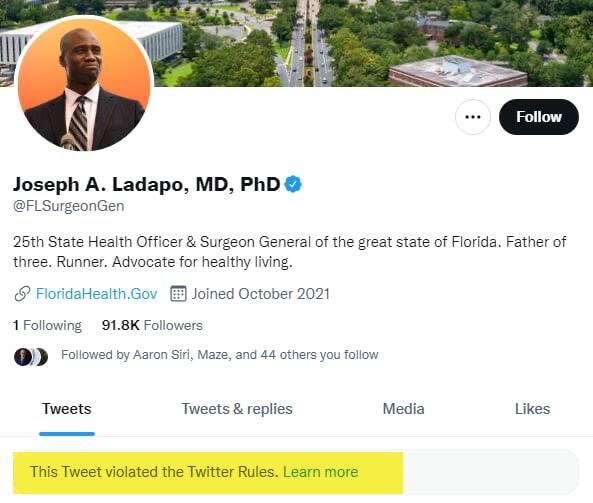
Twitter Removes Florida Surgeon General's Vaccine Warning Tweet

 Update (Sunday): 

Twitter appears to have re-instated the post in question after outcry on the social media site about the censoring. As of about noon on the East Coast Sunday, the Tweet was once again showing up under Florida Surgeon General Dr. Joseph Ladapo's feed.

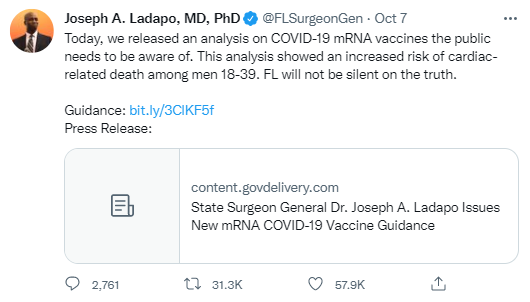
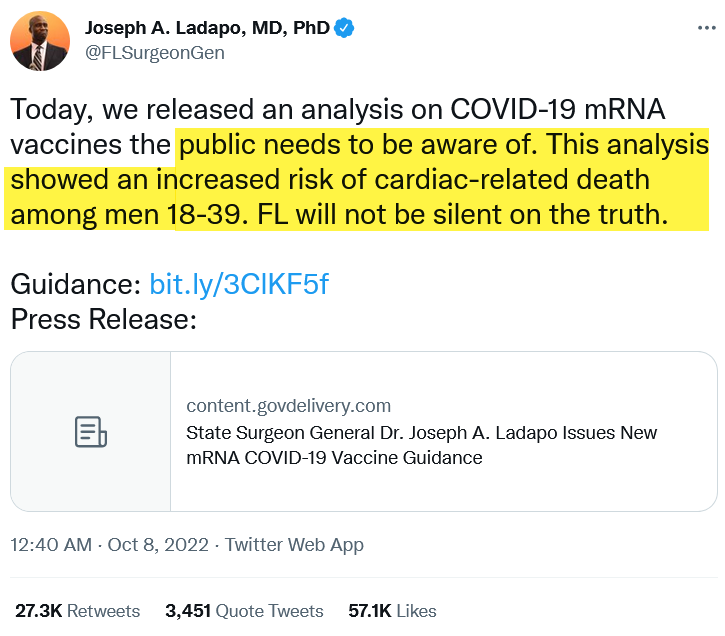
Earlier in the day we reported that Twitter censored Florida Surgeon General Dr. Joseph Ladapo's tweet about a new Covid vaccine study that "the public needs to be aware of." He said, "this analysis showed an increased risk of cardiac-related death among men 18-39. FL will not be silent on the truth." 

It hasn't even been a full 24 hours since Ladapo tweeted it out. And now, the tweet is removed and replaced with a message from Twitter that reads: "This Tweet violated the Twitter Rules." A backlink was also provided that reads: "Learn more." 

There was no explanation of why the tweet was removed, though the backlink said the content "may contain disputed or misleading information." 

People were furious on Twitter for the big tech's censorship of a government official. 

That is a very good point.  

Hmmm. 

*  *  *

Authored by Mimi Nguyen Ly via The Epoch Times,

Florida’s Surgeon General, Dr. Joseph A. Ladapo, announced new guidance on messenger RNA (mRNA) vaccines on Friday, specifically recommending against mRNA COVID-19 vaccines for males aged 18 to 39.

Messenger RNA is the technology utilized by both the Pfizer and Moderna COVID-19 vaccines, the most administered vaccines in the United States and a number of other countries.

The new guidance came after the Florida Department of Health carried out an analysis to evaluate vaccine safety, the department said in a bulletin on Friday.

The statewide analysis of vaccinated Florida residents aged 18 years or older (pdf) found an 84 percent increase in the relative incidence of cardiac-related deaths among males aged 18–39, within 28 days of mRNA vaccination.

“Non-mRNA vaccines were not found to have these increased risks,” the Florida Department of Health noted.

Given the high level of global immunity to COVID-19, the benefit of vaccination with mRNA vaccines “is likely outweighed by this abnormally high risk of cardiac-related death among men in this age group,” the department said.

“As such, the State Surgeon General recommends against males aged 18 to 39 from receiving mRNA COVID-19 vaccines,” it said. “Those with preexisting cardiac conditions, such as myocarditis and pericarditis, should take particular caution when making this decision.”

“Far less attention has been paid to safety and the concerns of many individuals have been dismissed—these are important findings that should be communicated to Floridians,” Ladapo said in a statement, referring to the analysis.

In the new guidance (pdf), Florida’s health department said it also “continues to stand by” its guidance for pediatric COVID-19 vaccines it issued in March. That guidance (pdf) recommends against COVID-19 vaccination for healthy children and adolescents aged 5–17. It now also recommends against COVID-19 vaccination among infants and children under five years old.

Statewide Analysis

The analysis from the Florida Health Department that informed Ladapo’s latest recommendation had sought to “evaluate the risks of all-cause and cardiac-related mortality following COVID-19 vaccination.”

Residents in Florida aged 18 years or older who died within 25 weeks of having received a COVID-19 vaccine, since the start of the vaccination roll-out in the state—Dec. 15, 2020—were included. The study end date was June 1, 2022.

People were excluded from the study if they had a documented COVID-19 infection, had a COVID-19 associated death, had received a COVID-19 vaccine booster, or had received their last COVID-19 vaccine after Dec. 8 2021. The last criterion was put in place to make sure that each person was followed up after 25 weeks.

The study found that COVID-19 vaccination “was not associated with an elevated risk for all-cause mortality,” but “was associated with a modestly increased risk for cardiac-related mortality 28 days following vaccination.”

“Results from the stratified analysis for cardiac-related death following vaccination suggests mRNA vaccination may be driving the increased risk in males, especially among males aged 18–39,” according to the analysis.

It also noted that the risk for both all-cause and cardiac-related deaths was “substantially higher 28 days following COVID-19 infection.”

As such, the study concluded that people should weigh the risk associated with mRNA vaccination with the risk associated with COVID-19 infection.

The analysis was a self-controlled case series (SCCS), which is a study design originally developed to evaluate vaccine safety, the department stated. The SCCS method uses individuals as their own control, such that comparisons are made within individuals.

The U.S. Food and Drug Administration’s authorization of the Pfizer-BioNTech and Moderna COVID-19 vaccines for emergency use in 2020 marked the first time it did so for vaccines that use mRNA technology.

According to the FDA, the mRNA vaccine contains a small piece of the SARS-CoV-2 virus’s mRNA that instructs cells in the body to make the distinctive spike protein of the virus. When a person receives the vaccine, their body produces copies of the spike protein which “does not cause disease, but triggers the immune system to learn to react defensively, producing an immune response” against the virus, according to the agency.

The mRNA-based COVID-19 vaccines from Pfizer-BioNTech and from Moderna have both been linked with heart inflammation, including myocarditis and pericarditis, data from around the world have suggested. Younger populations, especially young men, have been observed to experience these conditions at much higher than expected rates, data from the Centers for Disease Control and Prevention (CDC) previously suggested. A small number of deaths from heart inflammation after COVID-19 vaccine have also been reported.

The primary regimens of the vaccines, which are two doses administrated several weeks apart, were insufficient to protect against infection and showed waning efficacy in protecting against hospitalization amid newly-emerging variants. This prompted the governments of many countries to recommend boosters and subsequent boosters throughout the COVID-19 pandemic.

https://www.zerohedge.com/covid-19/florida-surgeon-general-recommends-against-mrna-covid-19-vaccines-males-aged-18-39