Search This Blog

Monday, October 10, 2022

'Inconvenience:' Cyberattack Hits Websites Of Major US Airports

 Early Monday morning, alleged hackers from 'within the Russian Federation' unleashed cyberattacks on websites of major US airports, according to ABC News, citing a senior US official. 

Luckily, the attacks did not disrupt systems that handle air traffic control, internal airline communications and coordination, or transportation security. 

"It's an inconvenience," the senior official said, adding the cyberattacks resulted in "denial of public access" to certain airport websites that report flight wait times and congestion. 

The attacks were first detected around 0300 ET when the Port Authority contacted the Cybersecurity and Infrastructure Security Agency that LaGuardia Airport was hit. Chicago O'Hare International Airport, Des Moines International Airport, and Los Angeles International Airport were also targeted. 

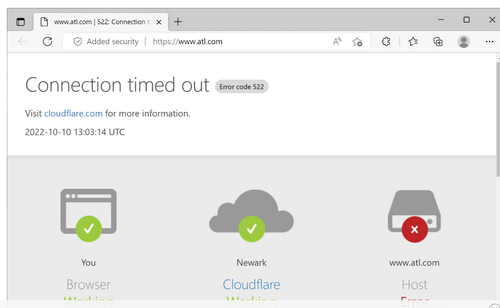
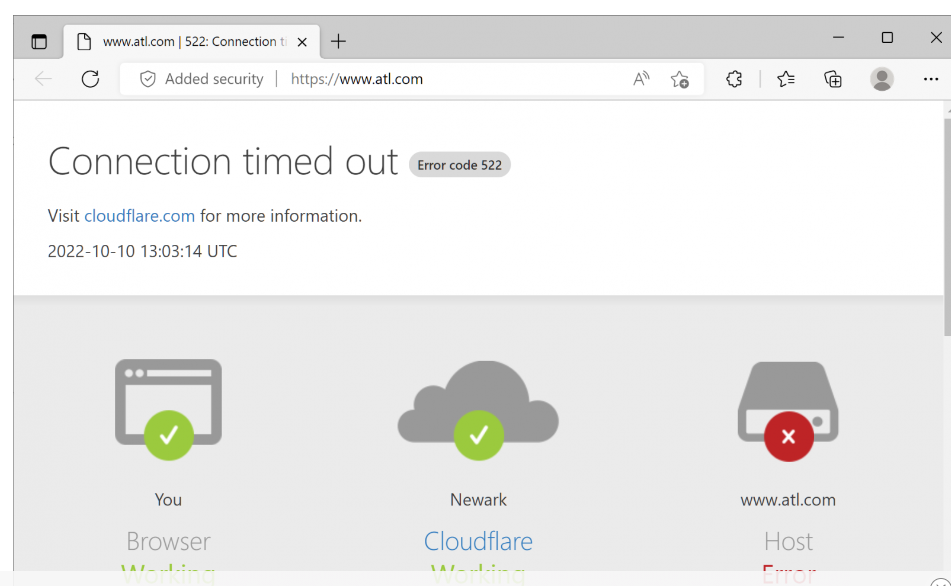
Hartsfield-Jackson Atlanta International Airport had its website restored as of 1030 ET. This is what ATL's website looked like earlier... 

Source: Bleeping Computer 

None of the cyberattacks disrupted flights as engineers and programmers worked with airports to patch websites. 

Bleeping Computer said, "pro-Russian hacktivist group 'KillNet' is claiming large-scale distributed denial-of-service (DDoS) attacks against" US airports. 

*Developing...

https://www.zerohedge.com/geopolitical/its-inconvenience-cyberattack-hits-websites-major-us-airports

Challenge 'doctor knows best' attitude, bereaved mother says

 Merope Mills, an editor at the Guardian, has questioned doctors' attitudes after her 13-year-old daughter Martha's preventable death in hospital.

Martha had sustained a rare pancreatic trauma after falling off a bike on a family holiday, and spent weeks in a specialist unit where she developed sepsis.

An inquest concluded that her death was preventable, and the hospital apologised.

Ms Mills said her daughter would be alive today if doctors had not kept information from the parents about her condition, because they would have demanded a second opinion.

She added that doctors' attitudes "reeked of misogyny", citing a moment when her "anxiety" was used as an argument to not send critical care to Martha.

"Martha was warm, she was witty, she was bright and she was determined," she said. "But above all, she had so much joy in the world."

In a statement, Prof Clive Kay, chief executive of King’s College Hospital NHS Foundation Trust said he was "deeply sorry that we failed Martha when she needed us most".

"Our focus now is on ensuring the specific learnings from her case are used to improve the care our teams provide - and that is what we are committed to doing."

https://www.bbc.com/news/av/uk-63159193

Honeywell announces new ethanol-to-jet fuel technology

 Tech firm Honeywell International Inc will roll out technology that could increase supplies of lower-carbon aviation fuel produced from ethanol, the company said on Monday, as the Biden administration calls for the aviation industry to reduce emissions.

Honeywell's technology can increase production efficiency of sustainable aviation fuel (SAF) to lower costs. The airline sector is considered one of the most difficult to decarbonize as fuel cannot be easily replaced with other kinds of power. Oil refiners have been trying to increase production of SAF to try to lower emissions.

"As demand for SAF has increased, we've been looking at different ways to make more SAF economically that people can adopt and adopt at large-scale and produce to displace significant fractions of the jet and diesel pools," Kevin O'Neil, senior business leader for renewable fuels at Honeywell UOP, said.

The company says, depending on the type of ethanol feedstock used, that its technology can cut greenhouse gas emissions by 80% on a total lifecycle basis compared with petroleum-based jet fuel. Ethanol is primarily made from corn in the United States.

SAF plants using Honeywell's technology can be modularized offsite, enabling lower costs and faster and less labor-intensive installation, the company's news release said.

Through this approach, producers can build new SAF capacity more than a year faster than traditional construction, the release said.

The new technology would also enable oil refiners and other fuel producers to convert current or idle facilities into SAF production plants, it said.

In September 2021, the Biden administration launched an effort to boost output to at least 3 billion gallons of SAF per year by 2030 and have enough SAF by 2050 "to meet 100% of aviation fuel demand, currently projected to be around 35 billion gallons a year."

The recent Inflation Reduction Act, a climate bill that includes incentives for lower-carbon fuels, is also likely to accelerate demand for SAF feedstocks.

Many producers have chosen to make sustainable aviation fuel from feedstocks with lower carbon-intensity, such as grease and animal fat.

https://www.marketscreener.com/quote/stock/HONEYWELL-INTERNATIONAL-I-4827/news/Honeywell-announces-new-ethanol-to-jet-fuel-technology-41973857/

Blackouts after Russian strikes deepen Ukraine's concerns before winter


Russian missile strikes on Ukraine's power network caused blackouts in many parts of the country on Monday, deepening fears of outages this winter and prompting Kyiv to halt electricity exports.

Attacks that killed at least 11 civilians and wounded 64 left four regions temporarily without electricity, and supplies were disrupted in several other areas, the State Emergency Service said.

Authorities in Kyiv asked civilians and businesses to limit energy use, and the energy ministry said it was halting electricity exports to the European grid after the biggest attack on the energy system since the war began in February.

Long queues formed at petrol stations in some areas.

"It is clear now that most of the missiles hit the power systems of different cities," Kyrylo Tymoshenko, the deputy head of the presidential office, said on the Telegram messaging app.

He warned civilians that "you need to be prepared for the consequences of such shelling, up to rolling blackouts."

Power was later restored in Lviv in western Ukraine but it was not immediately clear when it would be fully back in the other regions without electricity - Ternopil in the west, Sumy in the northeast and Poltava in central Ukraine.

Kyiv city authorities called on residents and businesses to limit electricity consumption from 5 p.m. until 10 p.m. and urged owners of advertising signs to turn off their lights during this time.

"We also appeal to Kyiv residents to refrain from using energy-consuming appliances whenever possible. Help the city survive critical loads on the power grid!" the municipal authorities said in a statement.

GRIM WINTER AHEAD

With no end in sight to the war, Ukrainian authorities had already been warning of Russian attacks on critical infrastructure and preparing for a grim winter. Monday's attacks increased those concerns.

Ukrainian military intelligence said the main goal of the attacks was to destroy thermal power plants as well as to "create panic among Ukrainians and intimidate the European public."

Ben Hodges, a retired U.S. general, said the intensity and volume of the attacks indicated they were planned before the weekend's explosion on a bridge linking Russia and annexed Crimea for which President Vladimir Putin said he was seeking revenge.

"To launch as many missiles as they did today, that's not something you wake up in the morning and decide to do," Hodges, who commanded U.S. Army forces in Europe, told Reuters.

The war has wrought huge damage to the energy network, and the Zaporizhzhia nuclear power plant in southern Ukraine is in "cold shutdown" after being occupied by Russian forces. The plant usually produces about one-fifth of Ukraine's electricity.

Officials have been urging people to stock up on everything from firewood to electric generators, and fear disruptions to the centralised home-heating season that are hard to prepare for because so many different things could go wrong.

https://www.marketscreener.com/quote/currency/US-DOLLAR-RUSSIAN-ROUBL-2370597/news/Blackouts-after-Russian-strikes-deepen-Ukraine-s-concerns-before-winter-41973963/

Merck’s Sotatercept Shows Stellar Performance in Phase III

 Top-line data from the Phase III STELLAR trial revealed that Merck’s activin receptor candidate sotatercept reached its primary endpoint in pulmonary arterial hypertension (PAH), the company announced Monday.

Patients treated with sotatercept saw a statistically significant and clinically meaningful increase in 6-minute walk distance (6MWD) at the 24-week follow-up. Merck’s PAH hopeful also elicited multicomponent improvement, a composite endpoint comprising 6MWD, N-terminal pro-B-type natriuretic peptide levels and functional class.

Sotatercept also met almost all of STELLAR’s secondary endpoints, including a longer time to patient death or the first occurrence of a clinical worsening event.

The only metric that sotatercept failed to improve upon was the score in the Cognitive/Emotional impacts domain of the PAH-SYMPACT questionnaire, a disease-specific tool used to assess the symptoms and impacts of PAH.

Dean Li, president of Merck Research Laboratories, said in a statement that STELLAR’s primary and secondary efficacy findings underline the potential of sotatercept “to transform the treatment of patients with PAH.” The company is working on sotatercept’s regulatory applications.

Enrolling more than 320 adult PAH patients, STELLAR is a randomized, double-blinded and parallel-group trial that compared sotatercept against placebo as an add-on to background therapy. Aside from efficacy, STELLAR also evaluated sotatercept’s safety and found that it had a tolerability profile consistent with Phase II findings. STELLAR’s results will also be presented at an upcoming scientific conference.

The $11B Gambit Pays Off

Sotatercept is a first-in-class compound composed of the extracellular domain of the activin receptor type IIA fused to the Fc domain of IgG1. Merck’s candidate works by restoring the balance between the pro-proliferative and anti-proliferative signaling pathways in the pulmonary arterial wall and right ventricular remodeling, both central to PAH pathology. The FDA granted sotatercept the Orphan Drug Designation in 2019.

Sotatercept was first discovered and developed by the rare disease biotech Acceleron Pharma. In September last year, rumors started circulating that Merck was looking to acquire Acceleron at around $180 per share.

After a slight delay due to objections from Acceleron’s stakeholders, the Big Pharma finalized the deal two months later, in November, eventually dropping $11.5 billion to complete the buyout—and ultimately besting other bidders for Acceleron, including fellow giant Bristol Myers Squibb.

The buyout gave Merck the rights to sotatercept, boosting its own existing PAH pipeline, which includes Adempas (riociguat), a compound that stimulates the soluble guanylate cyclase (sGC) and was first approved by the FDA for PAH in 2013. Merck won Adempas in a licensing agreement with Bayer. Merck also owns MK-5475, an inhalable sGC stimulator that is currently being assessed in a Phase II/III trial in PAH.

https://www.biospace.com/article/merck-s-sotatercept-shows-stellar-performance-in-phase-iii/

Biden admin requires trans women to register for draft if they were born male

 The Biden administration's requirements for who must register for Selective Service in the event that there is a draft includes those persons that identify as trangender but are born male. "Almost all male US citizens and male immigrants, who are 18 through 25, are required to register with Selective Service," and that includes males who identify as transgender.


"US citizens or immigrants who are born male and changed their gender to female are still required to register. Individuals who are born female and changed their gender to male are not required to register," reads the guidance on requirements from the Selective Service System.

As soon as Biden took office, he enacted an executive order, one of many, that said that those who identify as transgender should be treated by the military according to their gender identity and not according to their biological sex. This could mean that those transgender males who identify as women would serve alongside women, in women's units, in the event that they were called up by Selective Service.

The way that the Office of Personnel Management (OPM) defines transgender is "people whose gender identity and/or expression is different from the sex assigned to them at birth (e.g. the sex listed on an original birth certificate)." In several states, people can legally change their original birth certificate to align with their gender identity and not their actual sex.

Interestingly, the Selective Service does not require those who were born female but identify as transgender to register for the draft, only those who were born male. For those who were born female but identify as transgender, Selective Service asks that they provide a letter explaining that this is the reason they do not have to register for the draft.

"Individuals who have changed their gender to male will be asked to complete a Status Information Letter (SIL) request form and provide a copy of their birth certificate," they write.

Status Information Letter gives the individual the opportunity to "describe, in detail, the circumstances you believe prevented you from registering and provide copies of documents" showing those reasons why. 

"OPM Guidance further explains that the term 'transgender woman' is typically used to refer to someone who was assigned the male sex at birth but who identifies as a female. Likewise, OPM provides that the term 'transgender man' typically is used to refer to someone who was assigned the female sex at birth but who identifies as male," the Selective Service states.

The CDC offers their own definition of "transgender persons," saying that "Transgender is an umbrella term for persons whose gender identity or expression (masculine, feminine, other) is different from their sex (male, female) at birth."


The CDC goes on to define "Gender identity" as that which "refers to one’s internal understanding of one’s own gender, or the gender with which a person identifies. Gender expression is a term used to describe people’s outward presentation of their gender."

For the Biden administration, "gender identity" is irrelevant when it comes time to register for Selective Service. Biden spoke on this year's Trans Day of Visibility telling parents and their "transgender" children they were "so brave," and urging parents to "affirm" their kids.


The Biden administration, and Joe Biden in particular, have been heavily promoting transgender and gender ideology since taking office in 2021. On his first day in office, he signed an executive order requiring that all federal agencies find ways to be more inclusive of gender identity in their policies and programs.

The Biden administration's inclusion of biologically male transgender persons in those required to register for Selective Service belies their ongoing initiative to demand that Americans believe that males who say they are female are really, fully female and should be treated as such. 

FDA Makes Argument to Withdraw Covis' Makena from the Market

 The FDA's Center for Drug Evaluation and Research issued its briefing documents arguing for the market withdrawal of Covis Pharma's Makena. The agency will discuss the drug on Oct. 17-19.

Makena (hydroxyprogesterone caproate), as well as five generic forms of the drug, is the only drug approved by the FDA to decrease the risk of preterm birth in women with a singleton pregnancy with a history of spontaneous preterm birth. AMAG Pharmaceuticals marketed the drug until Covis acquired it in Oct. 2020.

Specifically, the drug is an injectable progestin therapy to decrease preterm births, or births that occur before 37 weeks of pregnancy have been completed. Preterm babies can develop health issues, including respiratory distress syndrome, neonatal sepsis and intraventricular hemorrhage.

The drug received accelerated approval from the FDA in 2011 based on data from a single clinical study that demonstrated a 42% reduction in the rate of recurrent preterm birth. Under accelerated approval pathways, the company is required to conduct post-marketing studies to verify or prove clinical efficacy, or the drug could be pulled from the market.

In October 2020, the FDA proposed withdrawing the approval. The proposal came after reviewing data collected by Covis over a nine-year period.

In the FDA briefing documents, the agency stated, "Makena has not been shown to improve neonatal outcomes from premature birth, is no longer shown to be effective for its approved use and has known risks. The 1,708-person confirmatory trial designed to verify Makena's clinical benefit instead failed to show that Makena has any benefit to newborns."

The FDA also noted that the study did not show that the drug reduced the risk of recurrent preterm birth.

The FDA argues that "there is no basis to retain Makena's approval but narrow its indicated population to a subgroup of 'high-risk' patients, as Covis suggests because the evidence does not show that this — or any — subset of Makena's indicated population responds more favorably to Makena than any other subset."

Francesco Tallarico, general counsel at Covis, told BioSpace that the Meis study demonstrated clinical benefit, and the PROLONG trial confirmed Makena's safety profile.

Tallarico added that more than a decade of post-marketing surveillance led Covis to believe "there is no sound public health reason to deprive access to the only available FDA-approved treatment to reduce the risk of preterm birth in pregnant women with a history of spontaneous preterm birth."

A recent report issued by the U.S. Department of Health and Human Services Office of Inspector General found that of 278 accelerated approvals from 1992 to 2021, 104 failed to have completed confirmatory trials. Makena was one of four approvals cited in the report as being particularly delayed, about 64 months past the originally planned date.

Tallarico added that "Covis stands ready to discuss data-driven next steps with the Agency to fully explore Makena's benefits for U.S. patients at high-risk, for preterm birth." He also looks forward to presenting data to the FDA's Obstetrics, Reproductive and Urologic Drugs Advisory Committee in October.

Noting that "premature birth is a significant public health concern with unmet medical need," the FDA argued that the benefit-risk profile of the drug doesn't support continued approval. The risks include blood clots, which "are unacceptable in light of the lack of evidence of clinical benefit."

Covis has proposed conducting a prospective, randomized, double-blind, placebo-controlled trial in 1,000 to 3,000 women, primarily in the U.S., with a prior spontaneous preterm birth earlier than 34 weeks. This is a study that the FDA believes would be the only way to "overcome the negative trial result of Trial 003."

However, Covis proposes keeping Makena on the market while the study is performed. The FDA believes that the availability of the drug makes it less likely for women to enroll in the trial.

The FDA stated that "Even if such a trial could be conducted, it could not be completed in a timely manner. Trial 003 took nearly a decade to complete. A new trial — which, as a practical matter, could occur in the U.S. only if Makena is withdrawn from the market — would likely take at least as long. Retaining Makena's approval in the interim would mean that a drug indicated to treat a serious condition would likely remain FDA-approved for at least another 10 years, even though the drug has not been shown to be effective."

https://www.biospace.com/article/fda-makes-argument-to-withdraw-covis-makena-from-the-market/