Search This Blog

Sunday, October 16, 2022

Buckle up: the worst is yet to come


Key Takeaways

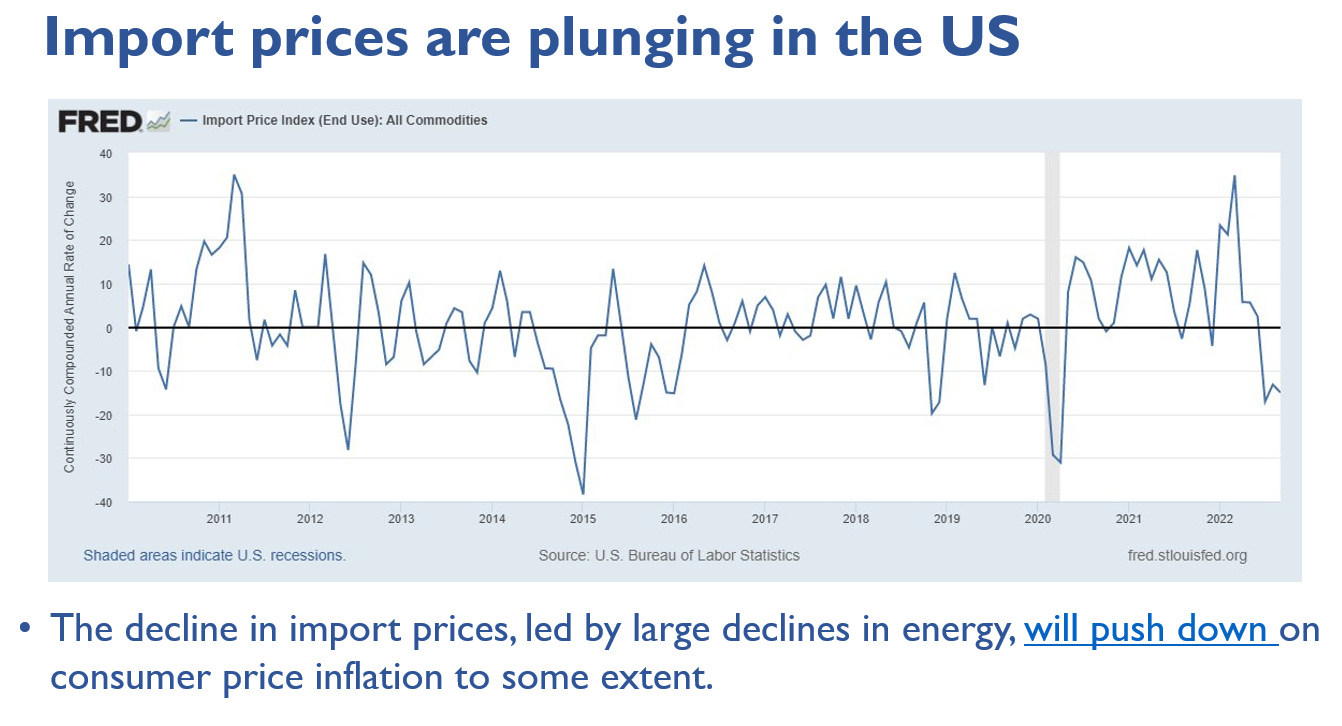
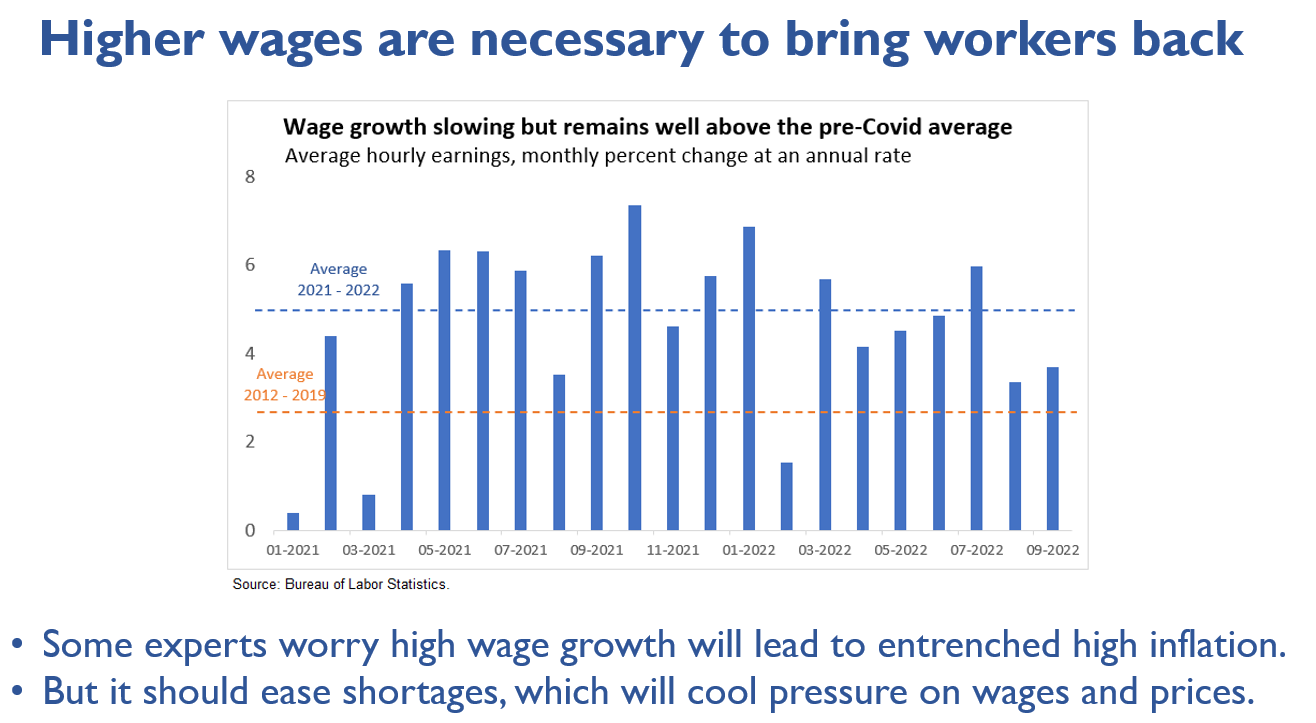
  • Downward pressure on future U.S. inflation is mounting from many sources.

  • The U.S. recession will likely be mild; Europe’s severe; China’s growth stagnant.

  • Why will it likely be milder in the United States? The strong labor market.

  • Fedspeak is starting, albeit too slowly, to be open about the global risks.

INFLATION! INFLATION! INFLATION


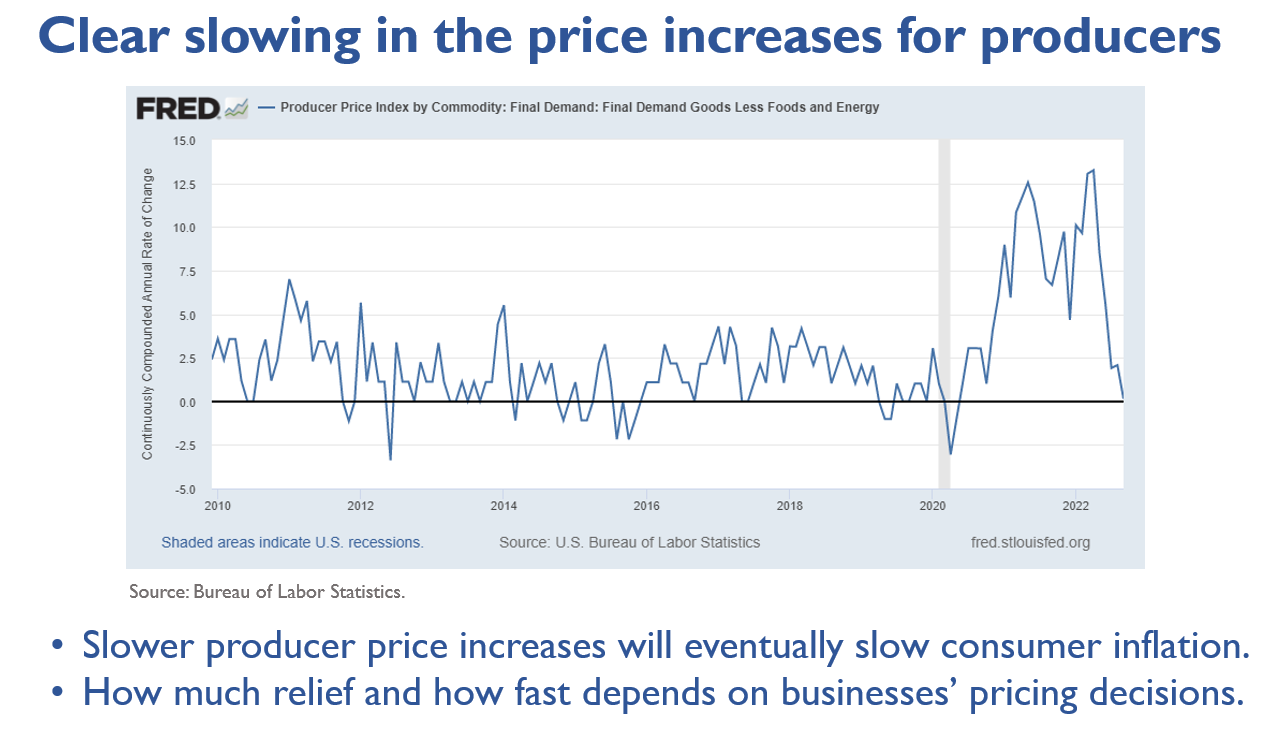
Consumer price inflation will come down in the United States, but it may not be soon enough to stop the Fed. The Fed must pick its head up and look at the data! Unlike last summer when a false hope that the vaccines would kill Covid—then came delta, Omicron, and a mind-numbing string of variants—and glimmers of supply chain easing caused a head fake on transitory inflation. Now we see a myriad of forces that will push down inflation. Taken together, they will be a lot of downward pressure. It’s uncertain how long it will take, but it will happen.

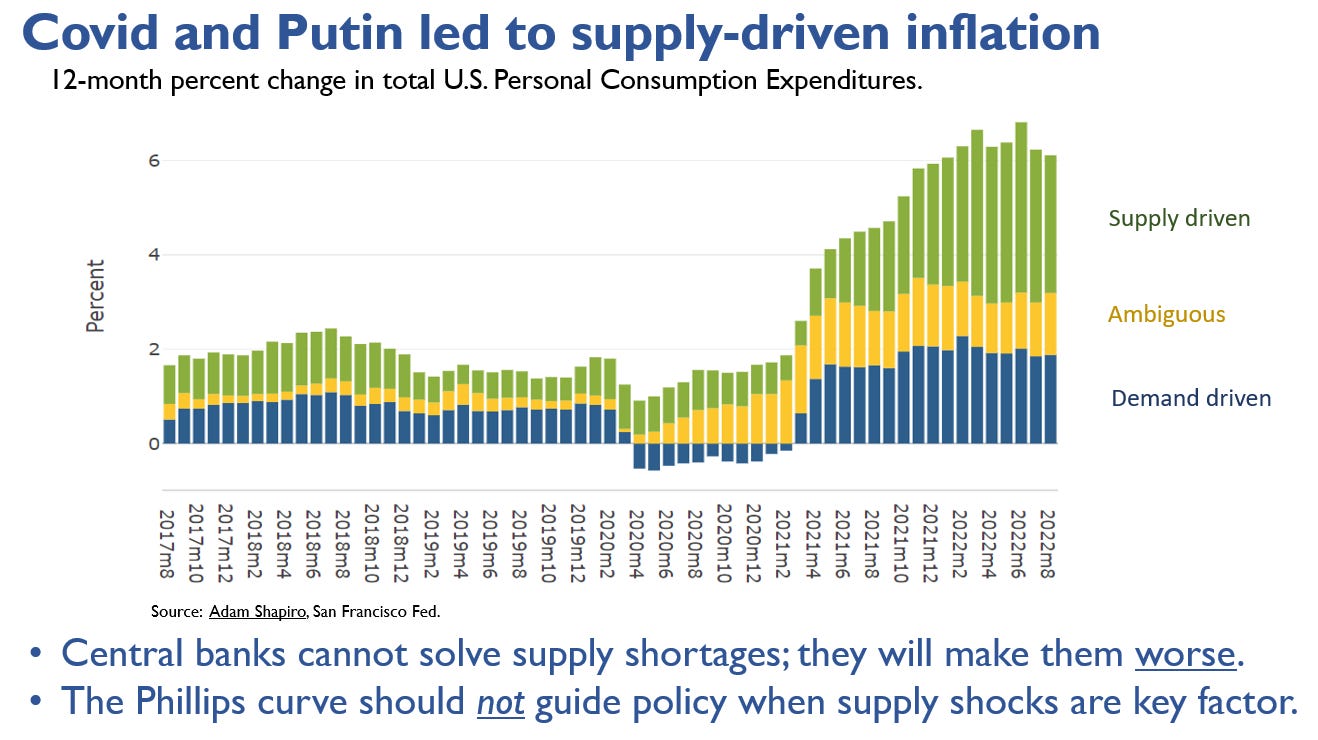
First, let’s level set the sources of inflation. Repeat after me: Covid and Putin are the roots of all evil. Today is not like the 1970s; it’s more like 1918. A pandemic and a war in Europe are calamities beyond living memory.
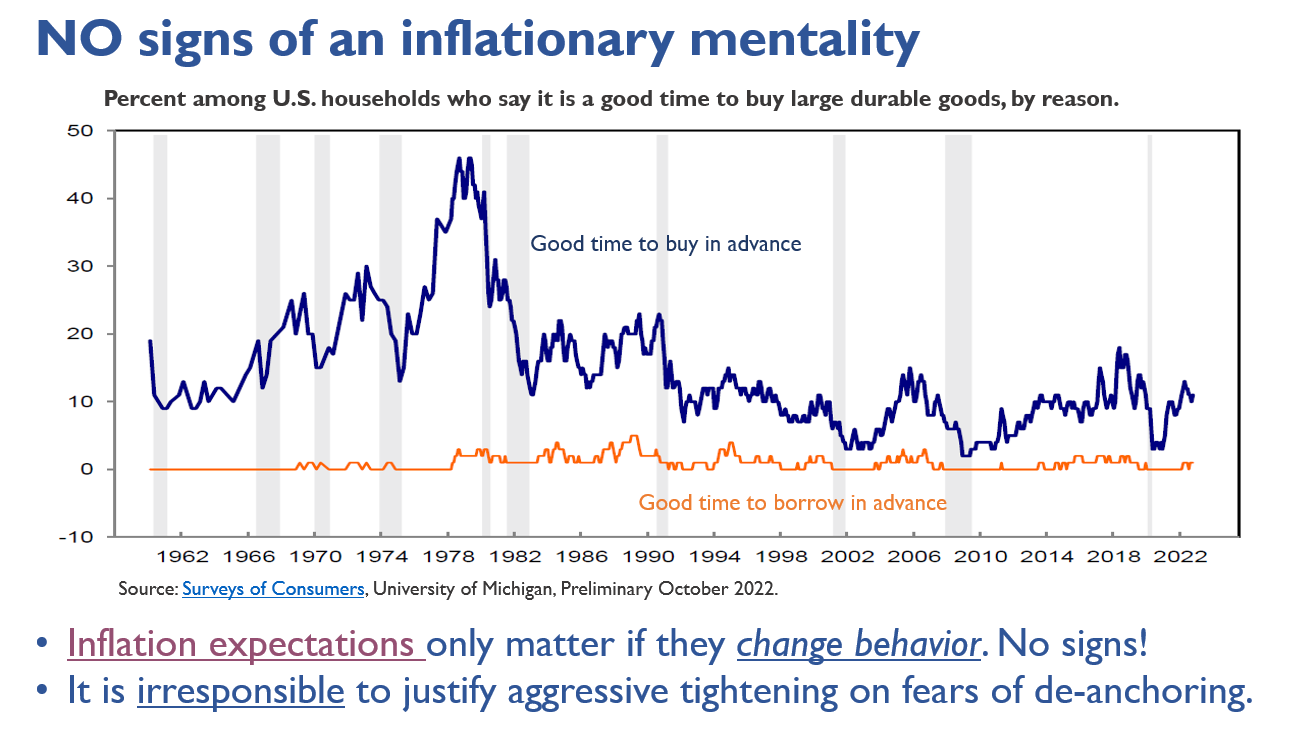
Central banks worldwide are justifying reckless tightening—fast and large increases in interest rates—with the specter of inflation expectations becoming “unanchored,” that is, people expecting inflation to be persistently high. It’s insane, especially in Europe. Central banks are on track to tank the global economy in the United States and abroad, causing immense human suffering and potentially undermining the war efforts on a fear that is nowhere in sight.
Now here are many sources of disinflation coming toward the U.S. economy.
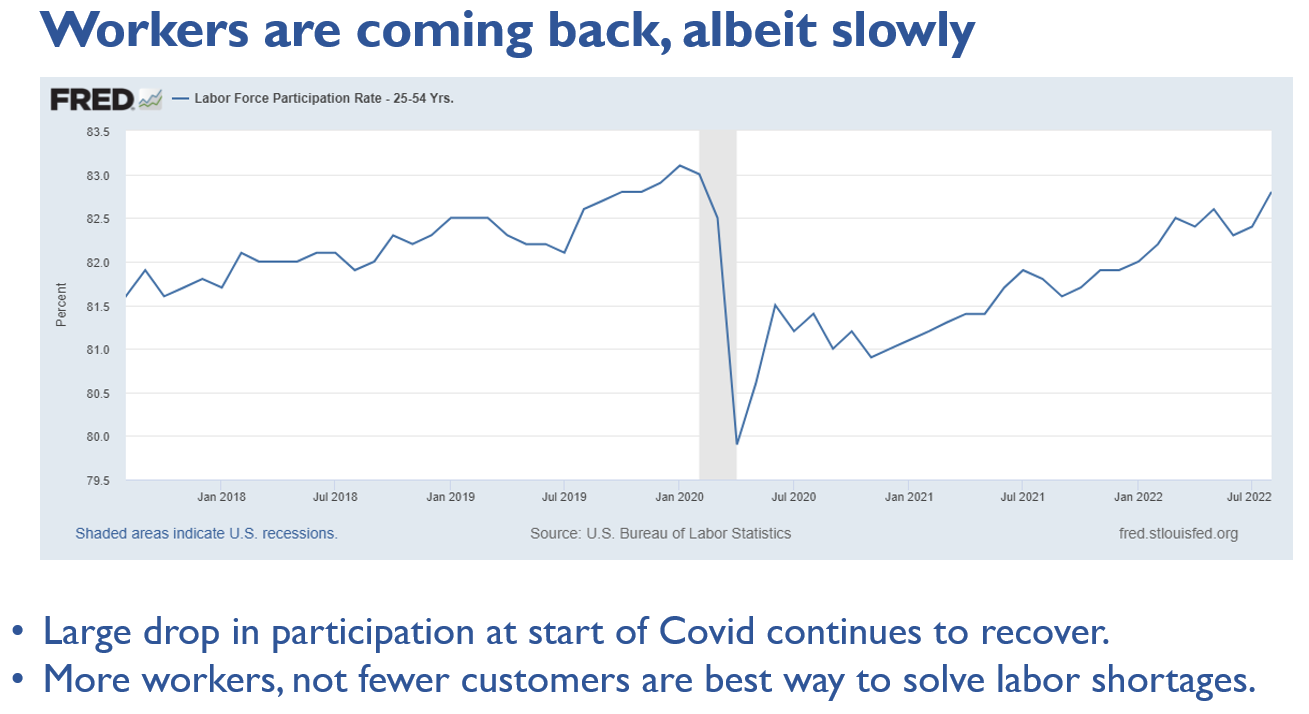
RECESSION WATCH

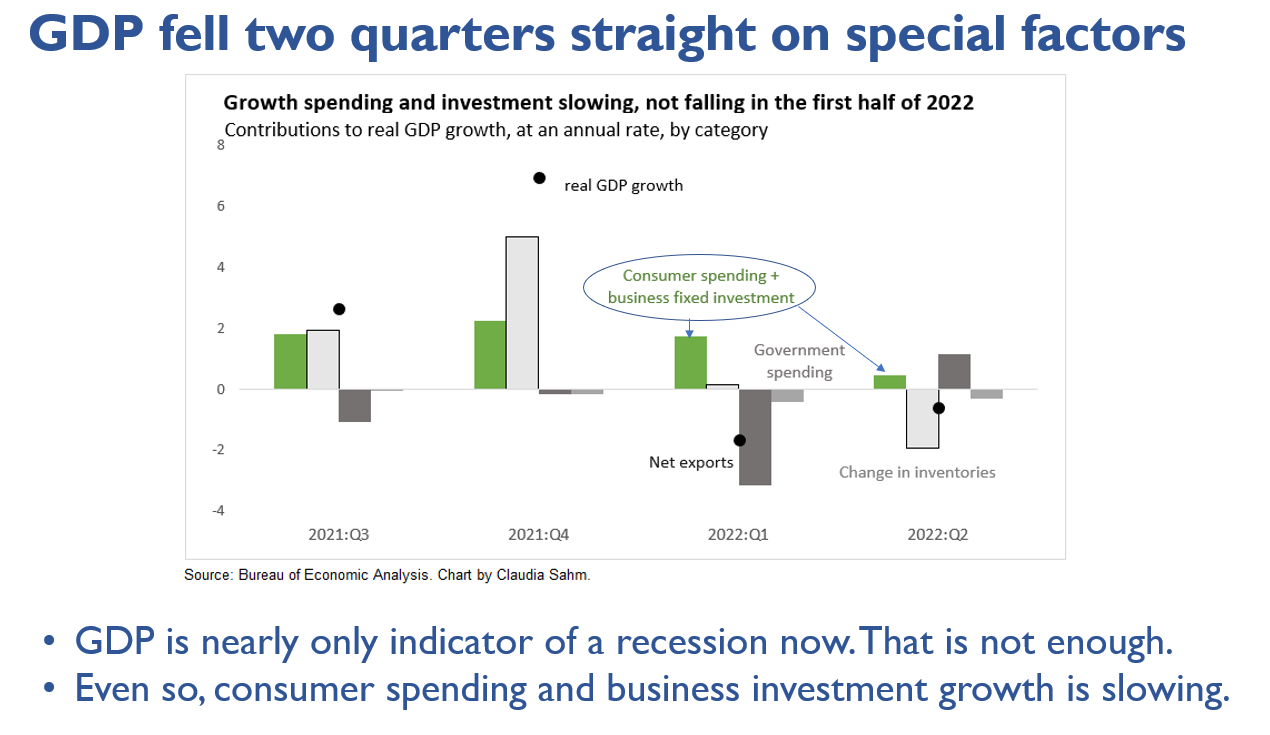
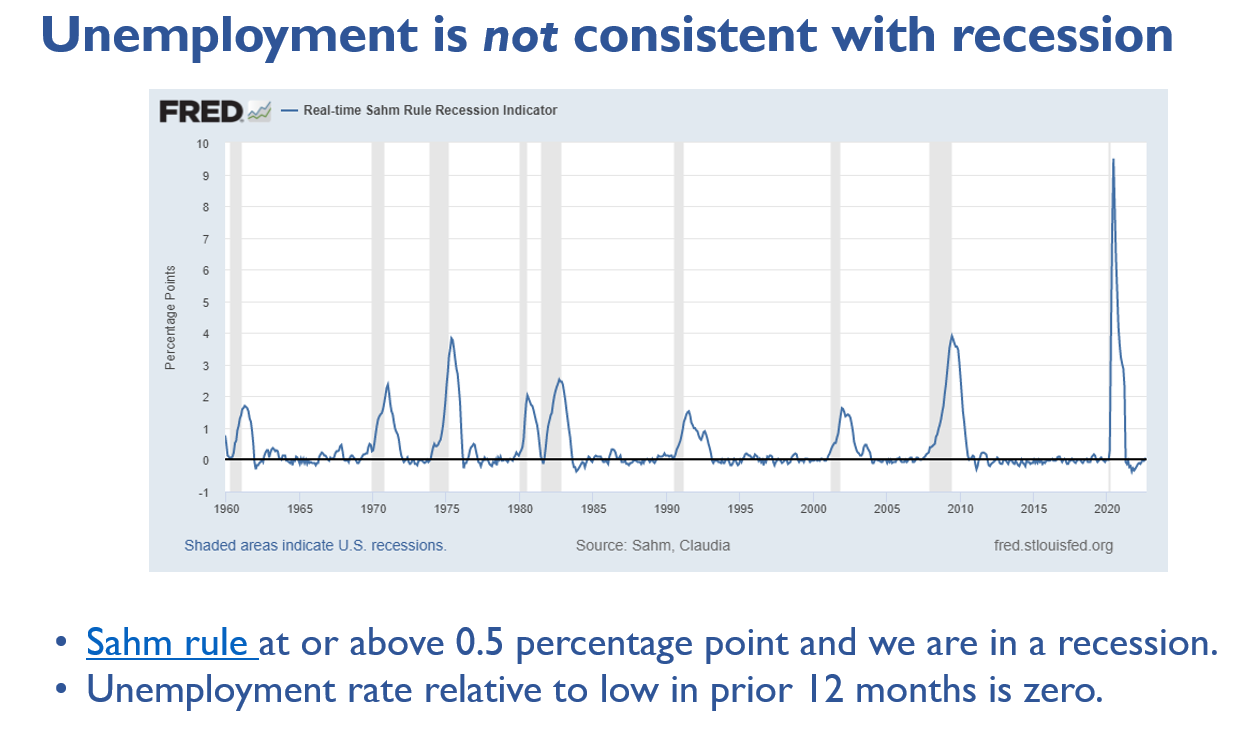
We’re not in a recession but may get there. Two-quarters of a decline in GDP this year is not enough, especially given its drivers. The labor market is strong. No recession!
JOBS! JOBS! JOBS!


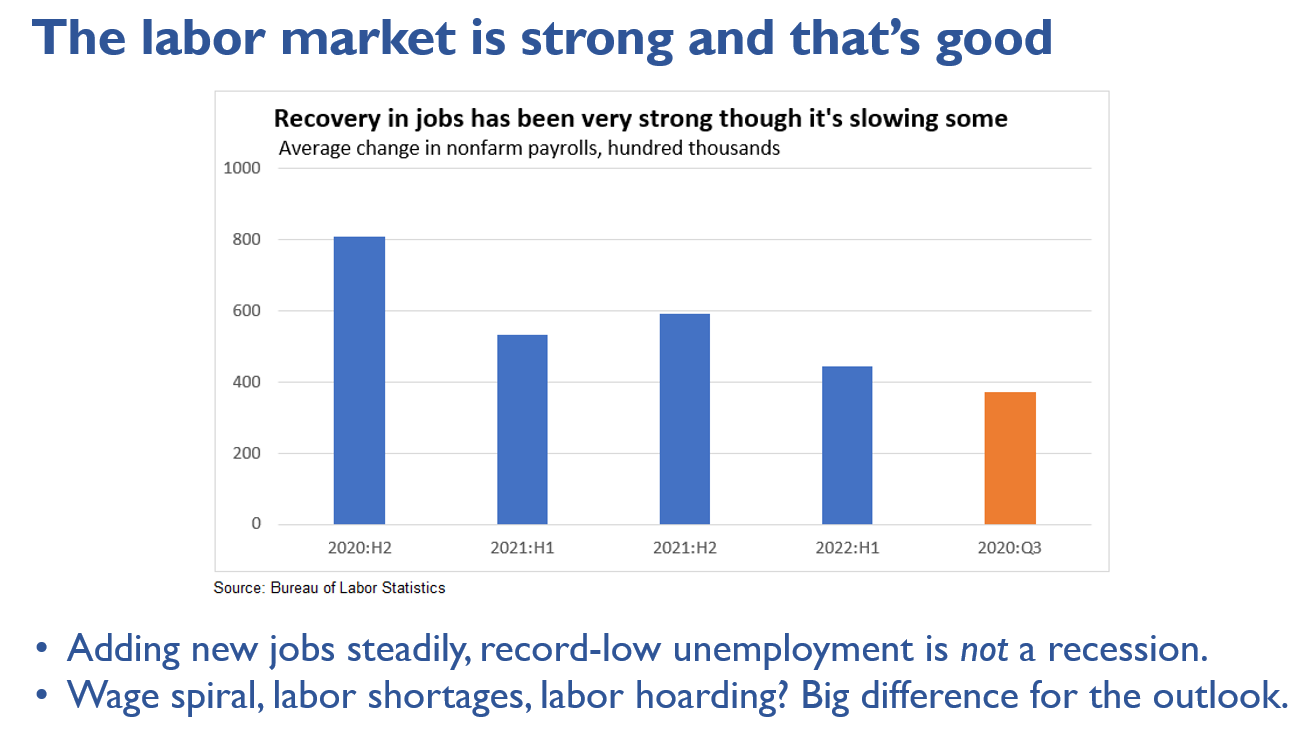
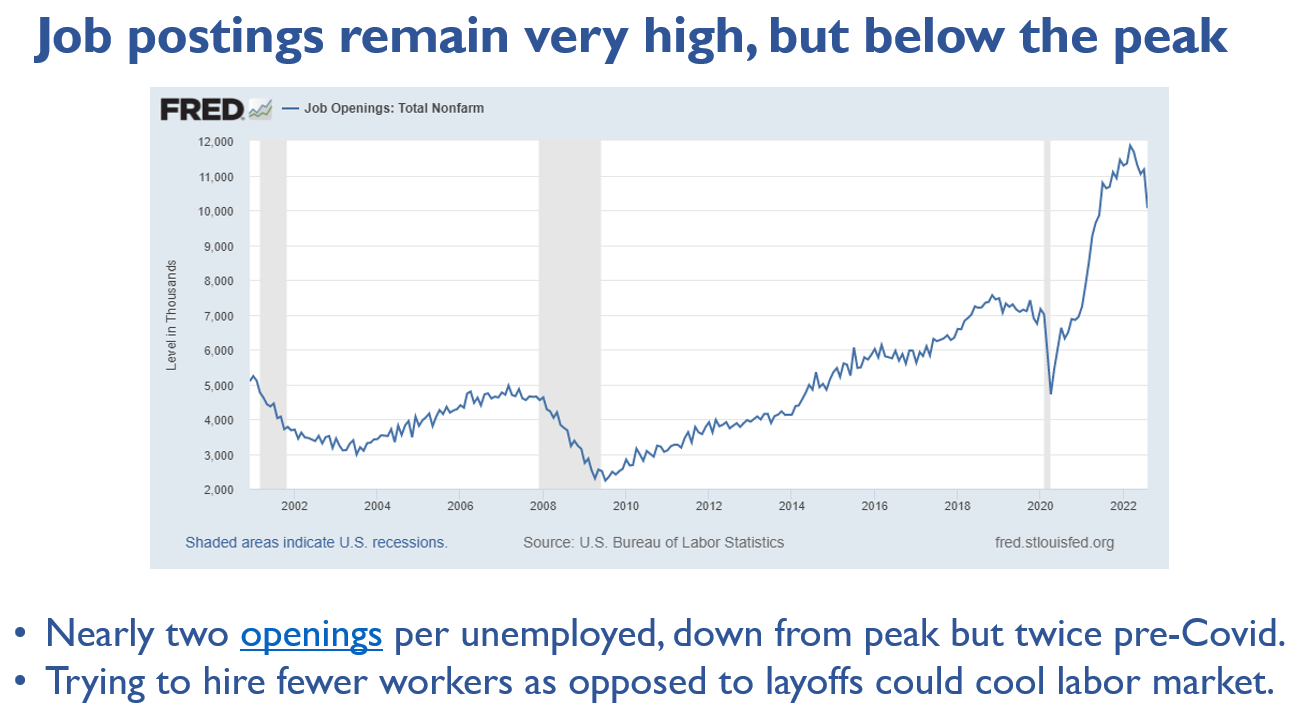
The bright spot is the U.S. labor market. Despite the Fed’s best efforts to cool it off in its ‘war on workers,’ we are adding jobs every month, people are getting raises, and there are opportunities for workers to get ahead in their careers. Now, it is not invincible. We sure better hope the labor market is as strong as the Fed complains it is when the full effect of the rate hikes hits the economy next year.
Faint glimmers of a pause at the Fed

I am a hopeful person. I believe the Fed will do the right thing, though the window is closing fast for it to matter. They must slow down, if not stop now. The U.S. economy will not withstand a severe European recession and stagnant growth in China. It will take time to come back to the United States, but it will. The Fed knows it will.

We finally see the Fed start to plant the seeds of a pause. The most encouraging was Vice-Chair Lael Brainard's speech last Monday, and it’s important to hear it come from her. Read the entire speech.
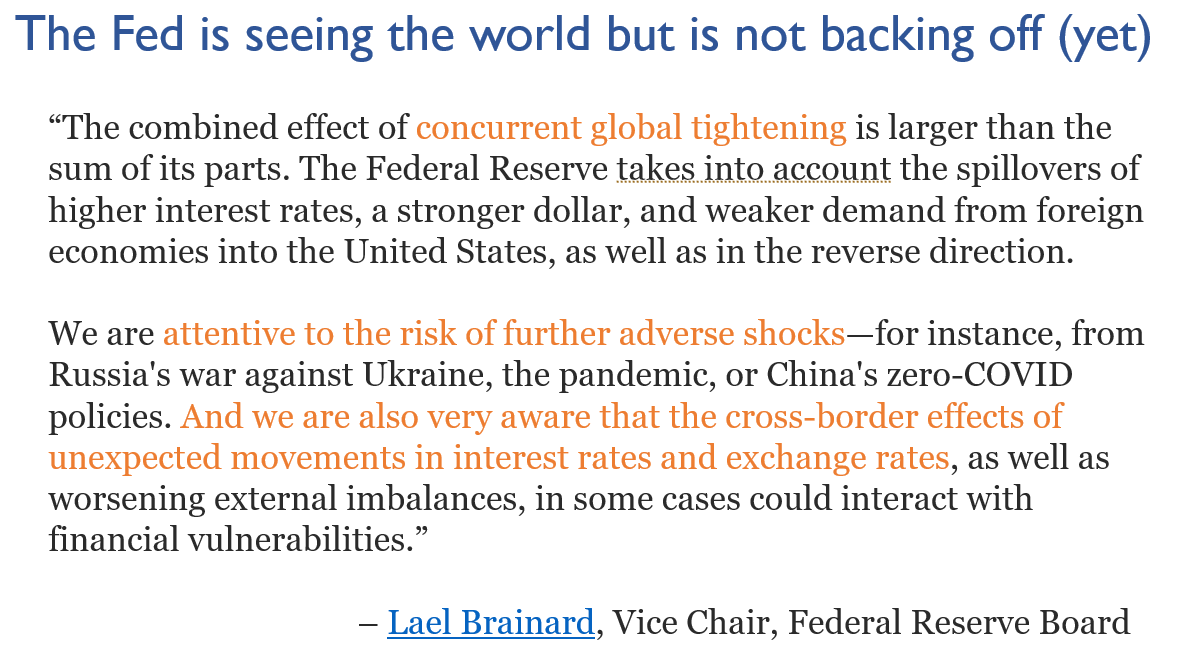
Hopeful-me expects 50 basis points at the Fed’s next meeting in early November. Realistic-me expects 75. Even so, big, new trouble overseas and any seizing up in U.S. financial markets will get you 50 or maybe even 0. I want the Fed to stop and be patient, but I don’t want to see the world events that would make it happen.

Wrapping up

The world is bad and will worsen at home and abroad before it gets better. I am not panicking. That is never productive. I am very worried, as are many economists I know, including former Fed officials, skilled real-world business economists, and several top academics. It’s time for the Fed to do the right thing and slow down too much is on the line if it doesn’t.


Claudia Sahm

Founder of Stay-at-Home Macro (SAHM) Consulting, former Federal Reserve and White House economist.


https://stayathomemacro.substack.com/p/buckle-up-the-worst-is-yet-to-come

Without support for direct home care, seniors risk unwanted nursing home admissions

 The need for direct home care workers — health professionals who work with individuals in their homes — is growing, and demand outpaces supply. In the US, states can use American Rescue Plan funds to expand their direct care workforce, but this funding expires in 2025. Without a sustainable plan to recruit and retain direct care workers, aging Baby Boomers are at risk of unwanted nursing home admissions.

Direct care workers include personal care aides, home health aides, and certified nursing assistants (CNAs). All provide assistance with activities of daily living — tasks like feeding or bathing oneself. Home health aides and CNAs perform additional tasks, including monitoring vital signs, transferring individuals from a bed to a chair, and wound dressing. Depending on the state, they may assist with medication administration. All of these activities facilitate independent living in one’s home or community, the settings where the majority of older adults prefer to receive long-term care. Demand for the services of direct care workers continues to grow.

Despite their critical role in independent living, direct care workers generally receive low salaries and are undervalued by society. In 2021, the median pay for a home health aide or personal care aide was $14.15/hour ($29,430/year). It was only slightly higher for nursing assistants. Salaries meeting the federal minimum wage were not guaranteed until 2015. Low salaries, along with limited opportunities for career advancement and the potential for on-the-job injuries contribute to high rates of turnover. Forty to sixty percent of direct care workers leave their jobs annually. The work is important, but difficult and inadequately compensated.

In recognition of these issues, the 2021 American Rescue Plan provided states with Medicaid funding to “enhance, expand, or strengthen” their home and community-based care services, including those provided by direct care workers. Funding for direct care workers is intended to support recruitment and retention of staff and can be used to increase worker compensation. States have flexibility in how they use the funds — example strategies include investments in loan repayment, tuition assistance, hiring bonuses, career ladder development, and enhanced training. The ability to use these funds was recently extend to 2025, but there are no long-term plans to sustain improvements in infrastructure and wages.

To meet the growing demand for the services of direct care workers, long-term funding is needed to identify and sustain effective strategies targeting their recruitment and retention. Economic models suggest that increasing compensation of direct care workers to state-specific living wages would improve both recruitment and retention. Participants in loan repayment programs targeted to health care professions report high satisfaction with the programs, but data limitations make it difficult to draw conclusions about their effect on recruitment. A comprehensive approach that focuses on compensation, career advancement, improved working conditions and recognition of the value of direct care workers is likely needed.  Where possible, states should monitor the recruitment and retention approaches used and evaluate whether they have had the intended effect on the direct care workforce. Best practices identified by one state can inform other states’ resource allocation decisions.

The population continues to age. By 2035, more than 1 in 10 United States residents will be age 75 or older. The need to secure resources and identify strategies to allow individuals to receive care at home when desired while supporting the workforce that makes this possible is greater than ever.

Melissa Garrido, PhD, is the Associate Director of the Partnered Evidence-based Policy Resource Center (PEPReC) at the Boston VA Healthcare System, U.S. Department of Veterans Affairs, and a Research Associate Professor with the Department of Health Law, Policy, and Management at Boston University School of Public Health. 

Research for this piece was supported by Arnold Ventures.

https://theincidentaleconomist.com/wordpress/direct-home-care-workers/

Lawsuit To Block Student Loan Bailout Can Set Stage For Solving Debt Crisis

 by Elaine Parker via RealClear Wire,

"Here's the thing. People think that the President of the United States has the power for debt forgiveness. He does not.... [H]e does not have that power. That would have to be an act of Congress."

Is this the perspective of a conservative legal analyst? A Republican politician? Nope. Those are the words of none other than House Speaker Nancy Pelosi, explaining to reporters last year why President Biden doesn't have the authority to end student debt.

Biden obviously didn't get the memo. His plan to bail out up to $20,000 of student loans per borrower is proceeding. This week, the administration previewed its loan forgiveness application website.

To hold the Biden administration accountable for this illegal executive overreach, Job Creators Network Foundation’s Legal Action Fund filed a lawsuit this week to block the counterproductive, inflationary, and unfair student loan bailout from taking effect.

Our suit argues that the Department of Education has flagrantly violated the Administrative Procedure Act's notice-and-comment requirements by crafting this massive and arbitrary debt jubilee behind closed doors without the traditional public comment period.

Courts have ruled the APA's requirements are vital "to ensure that unelected administrators, who are not directly accountable to the populace, are forced to justify their quasi-legislative rulemaking before an informed and skeptical public." The APA provides a critical check on "the dangers of arbitrariness and irrationality in the formulation of rules."

Our lawsuit features two plaintiffs who are directly harmed by this APA violation and deprived of their right to participate in and influence the rulemaking. Because their perspectives were ignored, these two former students who have college debt aren't eligible for complete or any relief due to their loan circumstances not meeting the Biden administration's arbitrary criteria. Both plaintiffs are examples of how the program arbitrarily chooses who is in, who is out, and how much those in the program get. And neither plaintiff got to make their case for where the lines should be.

By striking down this debt forgiveness, JCN's lawsuit can lay the groundwork to actually solve the student debt crisis and hold its college perpetrators accountable.

Bailing out student debt bails colleges out of their culpability in this crisis. It does nothing to reverse runaway college tuition, which is the root cause of the student loan problem. The nonpartisan Committee for a Responsible Federal Budget concludes that college debt levels will return to today's level within five years.

Between 2008-09 and 2020-21, greedy and unaccountable colleges raised tuition by 54% (26%, adjusted for inflation). College tuition has increased even faster than healthcare costs. Colleges have used outrageous tuition to fund worthless degree programs, administrative bloat, five-star amenities, seven-figure president compensation packages, and eight-figure athletic coach salaries, and to preserve their $700 billion collective endowment.

Taxpayers shouldn't pay for this. College endowments should.

Policymakers can fix the college debt crisis by involving the government less, not more, in higher education. This would force colleges to lower tuition, improve quality, and operate more efficiently to attract students. Biden's bailout, by contrast, just kicks the can down the road.

This bailout will also worsen inflation at the worst possible time by injecting $426 billion into the economy. On Thursday, the Labor Department announced that core inflation grew by 6.6% in September, the fastest rate in 40 years. Biden's massive debt forgiveness will hamstring the Federal Reserve's efforts to reduce runaway prices.

"Suppose your child at this time did not want to go to college, but you're paying taxes to forgive somebody else's obligations," continued Pelosi in her riff to reporters last year. "You may not be happy about that."

Indeed not. The bailout is fundamentally unfair to most Americans who never earned an associate's or bachelor's degree or have scrimped and saved to pay back their loans. Expect the bailout backlash to be felt on Election Day.

And expect the legal lashing in response to JCNF's lawsuit to begin even before then.

https://www.zerohedge.com/political/lawsuit-block-student-loan-bailout-can-set-stage-solving-debt-crisis

Novel Head-Up CPR Position Raises Odds of Survival of Out-Of-Hospital Heart Attacks

 Individuals who experience out-of-hospital cardiac arrest (OHCA) with nonshockable presentations have a better chance of survival when first responders use a novel CPR approach that includes gradual head-up positioning combined with basic but effective circulation-enhancing adjuncts, as shown from data from more than 2000 patients.

In a study presented at the American College of Emergency Physicians (ACEP) 2022 Scientific Assembly, Paul Pepe, MD, medical director for Dallas County Emergency Medical Services, in Texas, reviewed data from five EMS systems that had adopted the new approach. Data were collected prospectively over the past 2 years from a national registry of patients who had received what Pepe called a "neuroprotective CPR bundle" (NP-CPR).

The study compared 380 NP-CPR case patients to 1852 control patients who had received conventional CPR. Control data came from high-performance EMS systems that had participated in well-monitored, published OHCA trials funded by the National Institutes of Health. The primary outcome that was used for comparison was successful survival to hospital discharge with neurologically intact status (SURV-NI).

Traditional CPR supine chest compression techniques, if performed early and properly, can be lifesaving, but they are suboptimal, Pepe said. "Current techniques create pressure waves that run up the arterial side, but they also create back-pressure on the venous side, increasing intracranial pressure (ICP), thus compromising optimal cerebral blood flow," he told Medscape.

For that reason, a modified physiologic approach to CPR was designed. It involves an airway adjunct called an impedance threshold device (ITD) and active compression-decompression (ACD) with a device "resembling a toilet plunger," Pepe said.

The devices draw more blood out of the brain and into the thorax in a complementary fashion. The combination of these two adjuncts had dramatically improved SURV-NI by 50% in a clinical trial, Pepe told Medscape.

The new technology uses automated gradual head-up/torso-up positioning (AHUP) after first "priming the pump" with ITD-ACD-enhanced circulation. It was found to markedly augment that effect even further. In the laboratory setting, this synergistic NP-CPR bundle has been shown to help normalize cerebral perfusion pressure, further promoting neuro-intact survival. Normalization of end-tidal CO2 is routinely observed, according to Pepe.

In contrast to patients who present with ventricular fibrillation (shockable cases), patients with nonshockable presentations always have had grim prognoses, Pepe said. Until now, lifesaving advances had not been found, despite the fact that nonshockable presentations (asystole or electrical activity with no pulses) constitute approximately 80% of OHCA cases, or about 250,000 to 300,00 cases a year in the United States, he said.

In the study, approximately 60% of both the NP-CPR patients and control patients had asystole (flatline) presentations. The NP-CPR group had a significant threefold improvement in SURV-NI compared to patients treated with conventional CPR in the high-functioning systems (odds ratio [OR], 3.09). In a propensity-scored analysis matching all variables known to affect outcome, the OR increased to nearly fourfold higher (OR, 3.87; 95% CI, 1.27– 11.78), Pepe said.

The researchers also found that the time from receipt of a 911 call to initiation of AHUP was associated with progressively higher chances of survival. The median time for application was 11 minutes; when the elapsed time was less than 11 minutes, the SURV-NI was nearly 11-fold higher for NP-CPR patients than for control patients (OR, 10.59), with survival chances of 6% vs 0.5%. ORs were even higher when the time to treatment was less than 16 minutes (OR, 13.58), with survival rates of 5% vs 0.4%.

The findings not only demonstrate proof of concept in these most futile cases but also that implementation is feasible for the majority of patients, considering that the median time to the start of any CPR by a first responder was 8 minutes for both NP-CPR patients and control patients, "let alone 11 minutes for the AHUP initiation," Pepe said. "This finally gives some hope for these nonshockable cases," he emphasized.

"All of these devices have now been cleared by the Food and Drug Administration and should be adopted by all first-in responders," said Pepe. "But they should be implemented as a bundle and in the proper sequence and as soon as feasible."

Training and implementation efforts continue to expand, and more lives can be saved as more firefighters and first-in response teams acquire equipment and training, which can cut the time to response, he said.

The registry will continue to monitor outcomes with NP-CPR ― the term was suggested by a patient who survived through this new approach ― and Pepe and colleagues expect the statistics to improve further with wider adoption and faster implementation with the fastest responders.

recent study by Pepe's team, published in Resuscitation, showed the effectiveness of the neuroprotective bundle in improving survival for OHCA patients overall. The current study confirmed its impact on neuro-intact survival for the subgroup of patients with nonshockable cases.

One other take-home message is that head-up CPR cannot yet be performed by lay bystanders. "Also, do not implement this unless you are going to do it right," Pepe emphasized in an interview.

Advanced CPR Solutions provided some materials and research funding for an independent data collector. No other relevant financial relationshps have been disclosed.

American College of Emergency Physicians (ACEP) 2022 Scientific Assembly: Abstract 3. Presented October 1, 2022.

https://www.medscape.com/viewarticle/982409