Search This Blog

Thursday, January 5, 2023

CDC Puts Itself in Charge of Language Too

 The Centers for Disease Control and Prevention (CDC) has come out with a guide for how we are all to speak and write. This can be found on the website titled, “Preferred Terms for Select Population Groups & Communities.” It is clear that this list is being read and distributed broadly – from medical institutions, hospitals, scientific communications, doctor’s offices, schools and universities, as well as other US Government agencies and institutes.

The CDC is the arm of the US Government tasked with disease control and prevention. It is not tasked with correcting wrong-speak.

Now, how exactly this guide fits in with the CDC mission is beyond me. Here is what the CDC lists as their mission on their website:
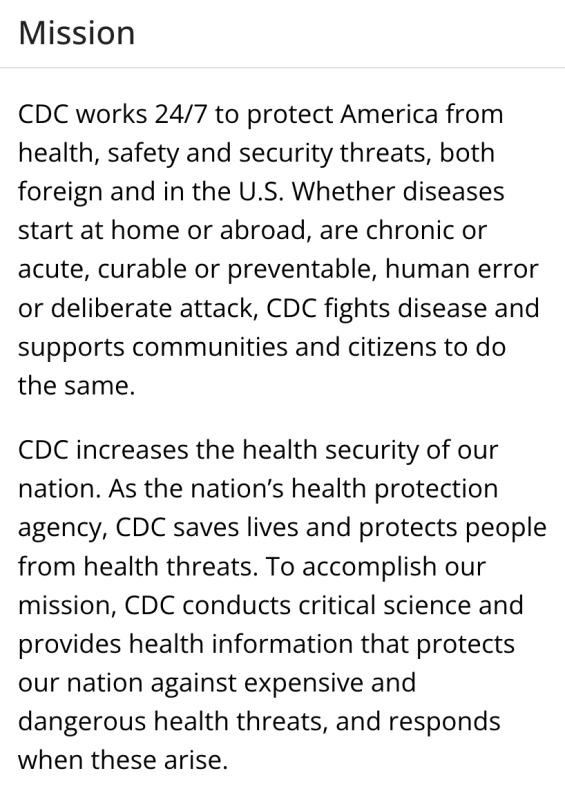
Do you read anything in the above that suggests that political correctness or correcting wrong-speak is part of the CDC mission? When did the CDC decide that they should take on the progressive left’s cause to reshape American language (oh, I used that “forbidden” word -”America”, which according to Stanford University- that is now verbotten). 

I dunno – Maybe there should be some sort of jail penalty for those of us who just can’t get it right. Or maybe, the government should just revoke social media “privileges” or stop people from being allowed to make payments via internet banking services, such as PayPal has done on occasion.

According to the website, the CDC has put together this very extensive “list” to protect people from “stigmatizing language.”

The problem is that the CDC evidently believes that there should be no social stigmas. That if one commits a crime, is in prison, is an addict, or is involved in behaviors that most find offensive or are illegal, it is not ok to use a term to directly describe that activity because societal judgment might hurt someone’s feelings.

So, the CDC is apparently afraid that we might hurt people’s feelings by using unapproved terms, and that this would lead to a threat to public health. This comes down to a new, popular opinion among mental health care professionals that “Harmful language ultimately increases stigma on the individual, which reduces one’s belief in the ability to change as well as their motivation to ask for help.” I went to Pubmed and tried to find data to support this hypothesis.

A quick review of Pubmed shows that it has over 1,300 publications with the keywords “stigmatizing language.” What I found was a lot of first-person stories and case studies about how healthcare professionals have either witnessed or been harmed by hurtful words. But what I didn’t find was clear evidence that calling someone an addict, prisoner, smoker, handicapped, underserved, rural and a vast myriad group of words that are now labelled as being inappropriate by the CDC actually do harm. Now, there must be studies out there? But I couldn’t actually find any, so I couldn’t evaluate the quality of the research. My basic search does imply that whatever evidence is out there isn’t very strong or it would be cited by a multitude of studies.

The article “Words Matter: Addiction and Stigmatizing Language: When it comes to addiction, stigmatizing language shouldn’t be the norm.” is a fairly typical example of the articles and studies I found. This article is in a large, mainstream magazine (Psychology Today) and is all about the feelings and beliefs of health care professionals about the harms of stigmatizing language. Yet, not a single study is cited in the article. 


So, let’s take a closer look at this list of words from the CDC website and compare them to real-life examples at the CDC. The question being: does the CDC use the forbidden words on their own list? The answer is an unequivocal ”yes,” they do and they use them a lot. Another case of “good for thee but not for me.” An internet search shows that their website and spokespeople have no issues using these words themselves. Seems to me what is good for the goose should be good for the gander.

Some examples. 

According to the CDC, we are no longer to use the word “smoker,” as it might offend those who smoke. 
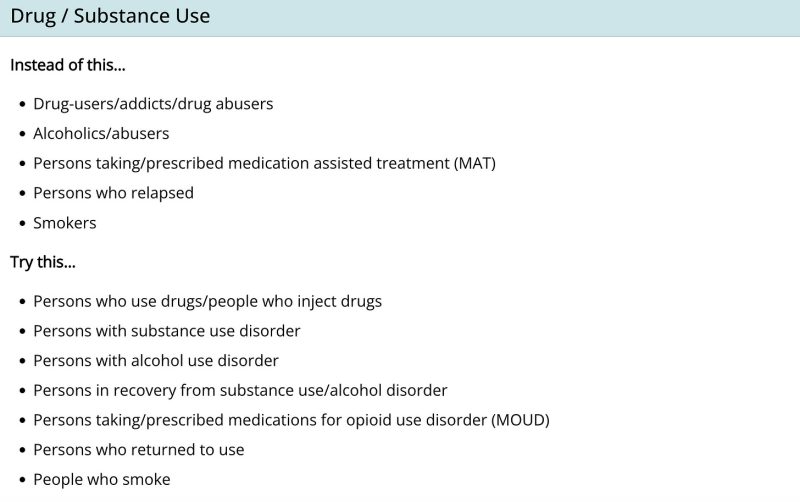
Yet, here are images from the CDC website – using the word “smoker.” In fact, they even have a registered trademark for the phase:

So, please folks – don’t do like the CDC. The proper term is “people who smoke.” We wouldn’t want to offend smokers…

The CDC’s attempt to be non-judgmental for people who are addicted is also interesting. As they now categorize addiction as a disease, this means any reference to people who are addicted being called “addicted” is wrong-speak. For instance, instead of “relapse,” we should say “people who return to use.” Because relapse implies that the behavior is stigmatizing and we shouldn’t stigmatize disease.

But the CDC conflates the fact that addiction and addicts hurts society, families and individuals. Being an addict is not healthy and is harmful.

The CDC has even developed a special abbreviation for injectable drug addicts (I mean people who inject drugs):
As a society, as individuals, we have every right to judge those who hurt families, children, communities and themselves. Addicts hurt themselves and others. Let’s not sugarcoat it. Yes, there are addicts who are mentally ill, but it is often a self-inflicted wound. 

Many treatment programs and practitioners do insist that the addict confront themselves and the damages done by their addiction. This is not a malicious or bad thing. Not “sugarcoating” addiction is often part of the treatment and healing process. 

“Person who relapsed” versus “person who returned to use.” Why? Because we wouldn’t want to put any judgement on addiction? Where does their idiocy end?
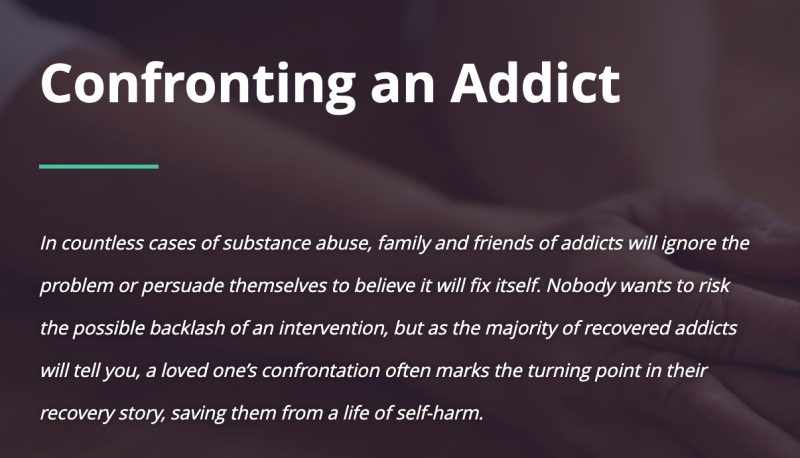

Then of course, there are all those tried and true public health phrases that aren’t supposed to be used anymore.
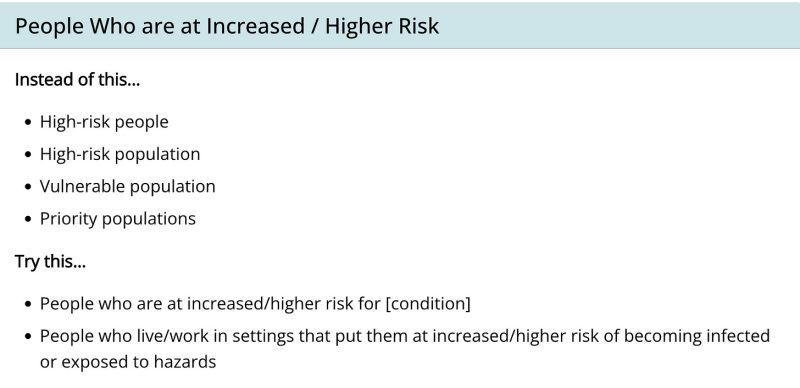
Except the CDC uses these terms also. From the CDC website:

Another group of words what are now wrong-speak is how people who are incarcerated are to be discussed:

From the CDC Website:
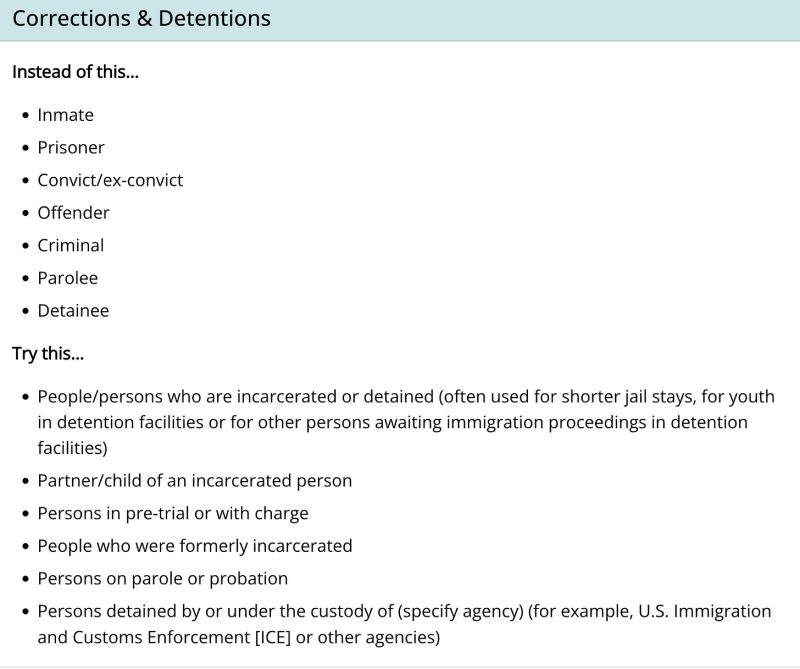
The CDC believes that people who are incarcerated will be offended, and they might have their mental health status endangered by using terms such as inmate, prisoner, convict, ex-convict, criminal, parolee or detainee. 

Because we wouldn’t want someone detained or convicted of a murder to have their feelings hurt, would we?

So, calling Bryan Kohberger a “detainee” for the murder of four innocent college students would be considered a wrong-speak crime. Good to know.


There are many words that are truly offensive. We all know of them. None of those words made it to the CDC list. 

Please, go to the CDC website and read for yourself. Their list of unapproved versus approved words and phrases is quite remarkable. 

Where does this end?

Robert W. Malone is a physician and biochemist. His work focuses on mRNA technology, pharmaceuticals, and drug repurposing research. You can find him at Substack and Gettr

https://brownstone.org/articles/cdc-in-charge-of-language/

Fate: Ends Collaboration Agreement with Janssen; Pipeline Prioritization

 Ended 2022 with Approximately $475 Million in Cash, Cash Equivalents & Receivables; 3-year Operational Runway Provided through Pipeline Prioritization and Expense Reduction

Advancing Second-generation CD19-targeted CAR NK Cell Program with Five Novel Synthetic Controls Designed to Increase Potency, Extend Functional Persistence, and Reduce Patient Conditioning for Treatment of Hematologic Malignancies and Severe Autoimmune Disorders; IND Submission Planned in Mid-2023 for NHL in Combination with CD20-targeted mAb; FT596 Product Candidate to be Discontinued

Ongoing Phase 1 Study of FT576 CAR NK Cell Program for MM to Accrue Patients in Higher-dose, Multi-dose Treatment Cohorts; Combination with CD38-targeted mAb Designed to Enable Dual-antigen Targeting and Mitigate Risk of Rejection by Selectively Depleting Activated Host Immune Cells

2023 IND Submission under Ono Collaboration Planned for FT825/ONO-8250 HER2-targeted CAR T-cell Product Candidate; Solid Tumor Program Incorporates Seven Novel Synthetic Controls Designed to Promote Effector Cell Function, Trafficking, and Resistance to Immunosuppressive Tumor Microenvironment

Ongoing FT819 Phase 1 Study of First-ever iPSC-derived CAR T-cell Therapy to Continue Dose and Dose Schedule Optimization for NHL; Single-dose and Novel Split-dose Treatment Schedules to Compare Pharmacokinetic, Safety, and Response Profiles

https://finance.yahoo.com/news/fate-therapeutics-announces-termination-collaboration-220000222.html

After cartel’s deadly Mexico prison break, fear of escapees fleeing into the US

 A notorious cartel enforcer, who led a bloody New Year’s Day jailbreak in a Mexican frontier city, was killed in a standoff with police Thursday — as security experts worried that his two dozen-plus accomplices could take advantage of the chaos at the southern border to slip into the US.

Ernest Alfredo Piñon de La Cruz, known by his underworld moniker “El Neto,” was tracked by Mexican intelligence officers in Ciudad Juarez four days after his daring and bloody escape from Cereso #3 State Prison. He and 29 other inmates had broken out in a mass shooting that left 19 dead, including 10 guards.

“He was located, chased. He was injured, but on the way [to the state attorney general’s offices] he died,” Chihuahua state governor Maru Campos said on Twitter Thursday of Piñon de La Cruz.

Police and security forces in Mexico launched the manhunt for the escapees earlier this week. At least seven people, including police officers, were killed in another confrontation on Monday, according to Mexican news reports.

“They have to be worried that the other escaped prisoners are going to take advantage of the chaos at the border to cross into the US, through the holes in the border fence,” Robert Almonte, a security consultant and former El Paso cop and narcotics investigator, told The Post. “They’re going to make their way to other cells in other cities in the US.”

A prison break in Cuidad Juarez, Mexico, on Jan. 1 has security experts fearing that escapees could slip across the border.
REUTERS
Escapee Ernest Alfredo Piñon de La Cruz, known as "El Neto," was killed in a standoff with Mexican police Thursday.
Escapee Ernest Alfredo Piñon de La Cruz, known as “El Neto,” was killed in a standoff with Mexican police Thursday.
Newscom/MEGA

In the last several weeks, tens of thousands of migrants have crossed the southern border from Ciudad Juarez to El Paso, overwhelming the Texas city of more than 600,000 residents, where the mayor declared a state of emergency last month. US Customs and Border Protection reported more than 2.4 million “encounters” with migrants — a record high — along the nearly 2,000-mile southern border in fiscal year 2022.

Piñon de La Cruz, 32, headed up Los Mexicles, a brutal gang that worked with the Sinaloa Cartel once headed by Joaquin “El Chapo” Guzman, who is serving a life sentence in a maximum-security Colorado prison. Piñon de La Cruz was serving a 224-year sentence for murder, kidnapping and drug trafficking at the state prison on the Mexican border, where he continued to organize kidnappings of rival drug members, according to reports.

Ten guards were left dead after the New Year's Day prison break.
Ten guards were left dead after the New Year’s Day prison break.
AFP via Getty Images
Family members of a prison guard killed in the riot cry over his coffin.
REUTERS
A security officer stands guard outside the Cereso number 3 prison.
REUTERS

He also recruited members for his Los Mexicles gang from jailed Mexican and Central American migrants who had been deported to Mexico after trying to cross the border multiple times, according to reports.

“It’s a good place to recruit them,” Almonte told The Post of the prison. “Migrants have no choice when they are confronted with traffickers. If they don’t work with them, they die.”

Considered “extremely dangerous” by Mexican authorities, Piñon de La Cruz lived in a VIP cell at the prison. “It was well stocked with television and with very different conditions from other cells,” said General Secretary Luis Cresencio Sandoval, Mexico’s secretary of national defense, in a press conference earlier this week. After the escape, authorities found the equivalent of tens of thousands of dollars in pesos in a strongbox as well as 84 cellphones and drugs, including marijuana, cocaine, heroine, fentanyl and methamphetamines.

Security experts suggest chaos at the border could lead to a cover for escapees.
Security experts suggest chaos at the border could provide cover for escapees.
REUTERS
As a teenager, Piñon de La Cruz developed a brutal signature in the Mexican underworld: He regularly ordered the decapitation of his enemies, placing their heads in coolers marked with “FEM” — the Spanish-language acronym of the Special Forces of Los Mexicles, his brutal gang of cartel enforcers.

Last August, Piñon de la Cruz led a riot at his prison along with coordinated attacks across Ciudad Juarez in order to protest his transfer to a high-security federal prison. Known as “Black Thursday,” the Aug. 11 riot resulted in 11 deaths and succeeded in blocking El Neto’s transfer.

https://nypost.com/2023/01/05/security-experts-fear-mexican-prison-escapees-fleeing-into-the-us/

NJ hospital still recovering from December cybersecurity incident

 Freehold, N.J.-based CentraState Medical Center is no longer diverting patients to other facilities after a Dec. 30 IT security issue caused the hospital to experience technical problems, but some outpatient services are still affected, Asbury Park Press reported Jan. 4. 

Lori Palmer, CentraState spokesperson, told the news outlet that hospital operations have mostly returned to normal after the incident, but some outpatient appointments are still being postponed or canceled. 

On Dec. 30, the incident caused the hospital to divert ambulances and patients to other locations for inpatient and emergency treatment as a precautionary measure. 

The hospital also notified the state department of health and FBI about the incident, but no further details on the IT problem have been disclosed.

As a result, the following outpatient services have been affected: outpatient radiology, radiation treatment, mammography and CentraState Labs. 

https://www.beckershospitalreview.com/cybersecurity/new-jersey-hospital-still-recovering-from-december-cybersecurity-incident.html

Paxlovid use ebbs amid lack of funds, unclear rebound risk

 Millions of Paxlovid packets haven't been used, which could be tied to COVID-19 rebound risks, less federal funds and diminishing public concern about the pandemic, according to an article published Jan. 3 in Nature

In July, data from life science analytics company Airfinity showed that supply of Pfizer's COVID-19 antiviral drug — which rapidly dominated the COVID-19 drug scene after its emergency use authorization — had 70 million packets of its 120 million capacity in storage. Of the 10 million packets sold to the U.S., more than 3 million have gone unused, according to Nature

Physicians have prescribed the drug in about 13 percent of new U.S. COVID-19 cases, according to Airfinity data cited by Nature. From January through November, there have been 46,564,722 new COVID-19 infections in the U.S. since Paxlovid was first delivered, and 853,686 of those cases are "known treatment uptake" — meaning 1.83 percent of most U.S. cases in 2022 used Paxlovid. 

There are multiple factors that could be playing into the falling use of Paxlovid. The risk of symptoms rebounding and another positive test popping up days after taking the treatment is still unclear — most research says the risk is low, but there's no consensus yet

There's also the case of dwindling federal funding for COVID-19 vaccines and treatments as most pharmaceutical companies and providers expect the COVID-19 public health emergency to end this spring. Plus, there's a nasty aftertaste coined as "Paxlovid mouth." 

The FDA first authorized the five-day, two-drug regimen for people at high risk for COVID-19 in late 2021 before later expanding its emergency use label for moderate risk as well. So far, the U.S. has covered the cost, with the most recent shipment costing $530 per packet, but it's likely to enter the public market this year.

https://www.beckershospitalreview.com/pharmacy/paxlovid-use-ebbs-amid-lack-of-funds-unclear-rebound-risk.html

Staffing shortages spur Massachusetts hospital to divert ambulances

 Framingham, Mass.-based MetroWest Medical Center diverted local ambulances from its hospital the past three weekends, citing staffing issues, the Framingham Source reported Jan. 4.

The hospital, owned by Dallas-based Tenet Healthcare, reported it was short staffed in labor and delivery and did not want ambulances to bring in pregnant women. It has closed several service lines in the last few years, and some worry labor and delivery is next on the chopping block, according to the report.

Previously, the hospital was warned by the Massachusetts Department of Public Health not to divert ambulances after it did so for multiple days in April. CEO Ava Collins, MetroWest's CEO at the time, wrote the hospital had IT issues and needed to go "code black,"according to the report; the state said that was unacceptable.

This time, MetroWest Medical Center informed the mayor of the first weekend of labor and delivery ambulance diversions, saying it would occur for only one shift. However, the Framingham Source said its sources said it happened for the last three weekends.

According to the report, some labor and delivery shifts over those holiday weekends had no registered nurses on shift or only one or two for the department.

"With regard to the hospital, I've been aware for several weekends now that they've been on diversion, especially for labor and delivery patients," Framingham Mayor Charlie Sisitsky told the Framingham Source. "And, we didn't even know about it at first. … And then I learned that it happened again over the New Year's Eve weekend and then today in the mail I got an anonymous letter from a delivery room nurse who quit on the spot. … She feels it was so bad she filed an anonymous complaint with the Department of Public Health."

https://www.beckershospitalreview.com/care-coordination/staffing-shortages-spur-massachusetts-hospital-to-divert-ambulances.html

NJ earmarks $15M for healthcare facilities that offer abortion services

 New Jersey has set aside $15 million for healthcare facilities that offer a full spectrum of reproductive care to use for facility upgrades and security enhancements. 

In a Dec. 5 news release, Gov. Phil Murphy's office announced $10 million in zero-interest loans is available to support facility improvements, with $6 million already awarded to 15 applicants. Applicants can apply for loans of up to $750,000 from the remaining $4 million funding pool through Jan. 6. 

Separately, healthcare facilities that "can demonstrate a high security risk" can apply for grants of up to $100,000 from a $5 million pool to support enhanced measures. Those applications will be open through Feb. 28, according to Mr. Murphy's office. 

Healthcare facilities must provide a "full spectrum of reproductive health services," including abortion and basic infertility services, to be eligible for the funding. New Jersey is among states that have added protections for providers who perform abortions and reproductive health services for out-of-state residents who live where the procedure is banned or restricted and travel to receive services. 

https://www.beckershospitalreview.com/public-health/new-jersey-earmarks-15m-for-healthcare-facilities-that-offer-abortion-services.html