Search This Blog

Friday, January 6, 2023

eFFECTOR Therapeutics Up After Clinical Update Of Investigational Cancer Drug


  • eFFECTOR Therapeutics Inc  provided an update on its ongoing clinical development programs for zotatifin, in Phase 2 expansion cohorts for estrogen receptor-positive breast cancer (ER+ BC) and KRAS non-small cell lung cancer (KRAS NSCLC) as well as Phase 1 development for COVID-19, and tomivosertib, in Phase 2b trial for non-small cell lung cancer (NSCLC) in combination with pembrolizumab.
  • In the cohort receiving zotatifin, fulvestrant, and abemaciclib (ECBF+A), two patients experienced confirmed partial responses (PRs), and a third patient had stable disease continuing beyond 24 weeks for an objective response rate (ORR) of 29% and a clinical benefit rate (CBR) of 43%).
  • ORR and CBR data for the remaining 11 patients is anticipated in 1H of 2023.
  • In the ECBF cohort receiving zotatifin and fulvestrant, one patient experienced a confirmed PR, and another had a stable disease beyond 24 weeks. 
  • Zotatifin was generally safe and well-tolerated in doublet and triplet combinations.
  • The company is deferring initiation of the Cyclin D1 amplified cohort in ER+ BC and pausing enrollment in the KRAS G12C lung cancer cohort until completion of dose escalation.
  • Enrollment challenges have persisted across both cohorts for Tomivosertib Program, resulting from staffing issues across clinical sites and competition from other trials. Topline data from the frontline PD-L1>50% cohort is anticipated to read out in 2H of 2023.
  • The company is discontinuing further enrollment of the PD-L1>1% maintenance cohort.
  • eFFECTOR Therapeutics expects existing cash resources to provide a cash runway into Q1 of 2023.

Rani Therapeutics Receives FDA Feedback For Osteoporosis Candidate


  • Rani Therapeutics Holdings Inc  completed a pre-Investigational New Drug (IND) meeting with the FDA regarding RT-102, the RaniPill GO containing a proprietary formulation of human parathyroid hormone (1-34) analog (PTH) for the potential treatment of osteoporosis.
  • Following feedback, Rani believes that a 505(b)(2) pathway is suitable for developing RT-102 in the U.S. 
  • In addition, Rani obtained guidance from the FDA on its preclinical and clinical development plans for RT-102, including the Phase 2 clinical trial, which is expected to initiate in 2H of 2023.
  • Rani held approximately $99 million in cash and equivalents as of December 31, 2022.

In Policy Reversal, China to Ease "3 Red Lines" Rule To Kickstart World's Biggest Asset Bubble

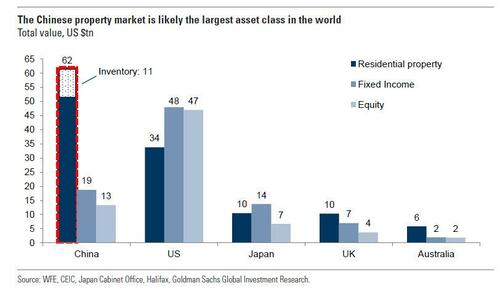
 Back in 2020, around the time Xi Jinping decided to burst the Chinese housing bubble, which as a reminder was estimated by Goldman at the time to be the world's single largest asset class (and bubble) at over $62 trillion, larger than either the US equity and bond markets...
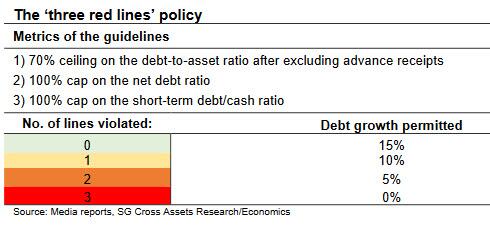
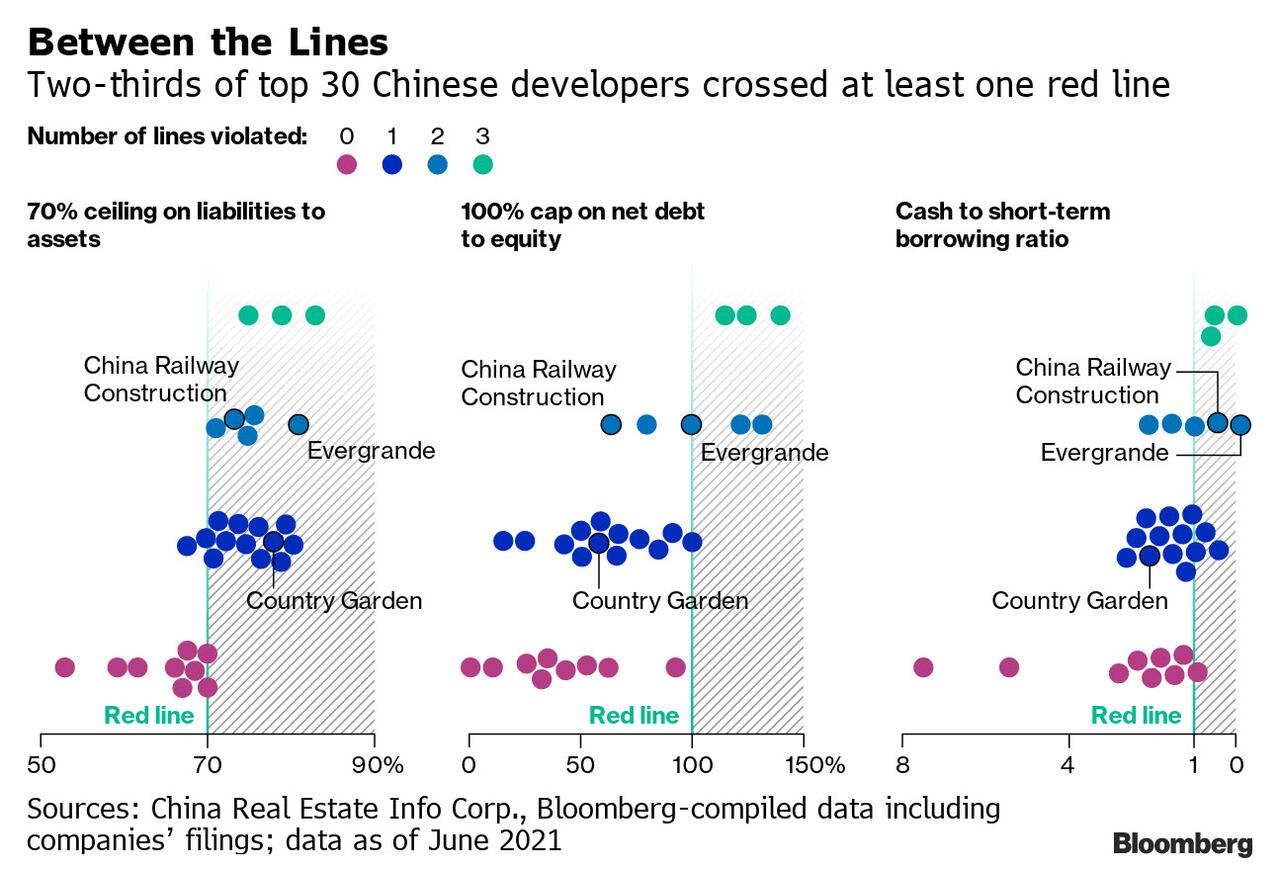
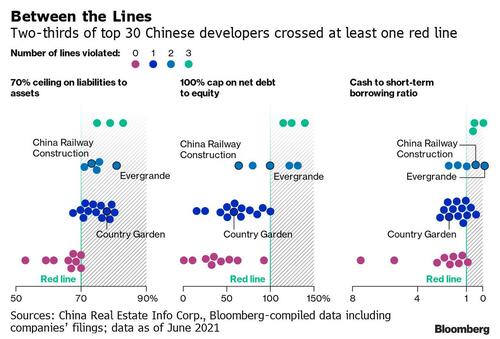
... China unveiled the so-called "three red lines" policy, which sought to reduce developers’ leverage, lower risk in the financial sector and make homes more affordable as part of President Xi Jinping’s common prosperity push and practically meant that only companies that have very little debt (which basically meant nobody) were allowed to grow their debt at a max of 15%, and since most Chinese developers were in the 2 or 3 red lines category, it prohibited them from growing debt (a full breakdown of the three criteria is shown below),
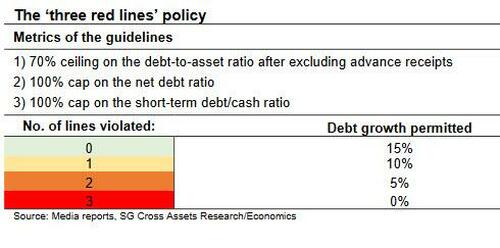
The measures, which imposed strict debt and cash-flow targets on real estate firms, choked off liquidity for the highest-leveraged developers, contributing to the avalanche of defaults and construction halts that sparked mortgage boycotts and plunging sales across the nation.

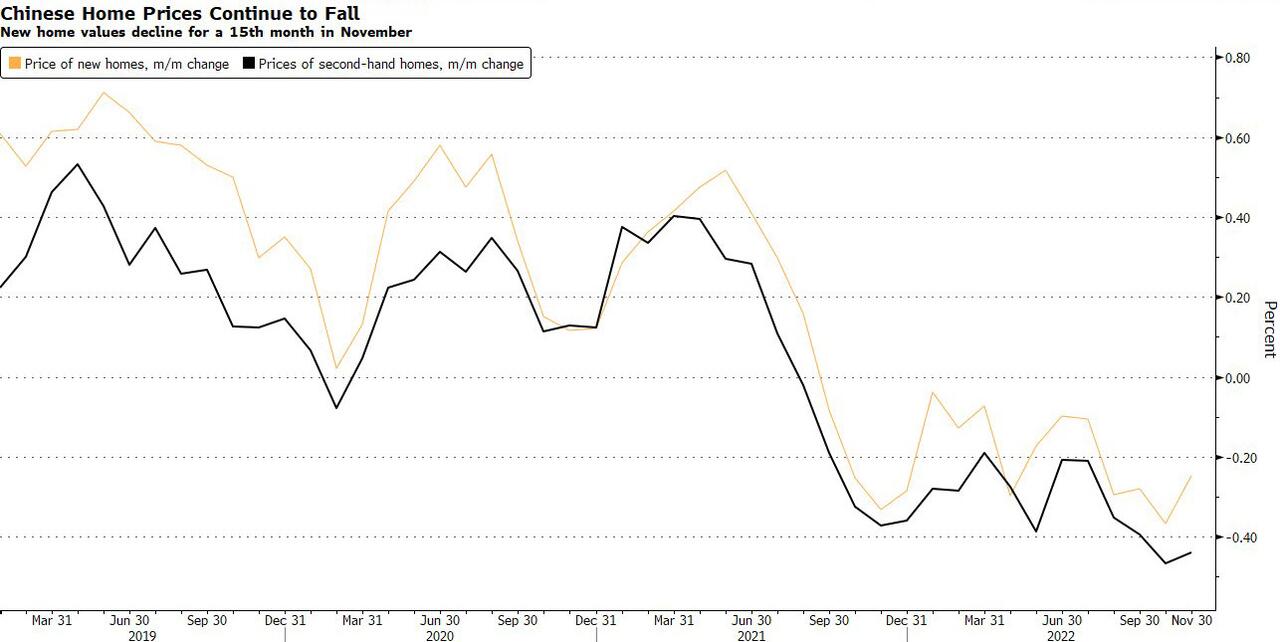
The outcome result was the biggest shock for China's property sector, which quickly took down giant housing developer Evergrande and numerous of its undercapitalized peers, impoverished countless real estate billionaires (some say this was Xi's plan all along), sent home prices sliding and hammered household consumption across China's middle class, whose biggest asset - their home - was no longer appreciating at double digits every year and in fact was contracting for the first time in a decade.

So fast forward to today when just weeks after China's shocked the world with the speed and magnitude of its "covid-zero" reversal, Beijing - in its pursuit of a powerful, and generously credit funded, economic rebound appears set to unleash the full power of the country's real estate bubble because as Bloomberg reported overnight, "China is planning to relax restrictions on developer borrowing, dialing back the stringent “three red lines” policy that exacerbated one of the biggest real estate meltdowns in the country’s history."

According to BBG sources, Beijing would allow "some property firms to add more leverage by easing borrowing caps", and push back the grace period for meeting debt targets set by the policy. The deadline could be extended by at least six months from the original June 30 date.

Such easing could mark "the most dramatic shift in China’s real estate policy, adding to a clutch of measures issued since November to bolster the battered sector that accounts for about a quarter of the nation’s economy." Indeed, within the span of just a few weeks, the government has softened its stance for sectors from chips and coal imports to internet platform businesses, underscoring Beijing’s resolve to refocus on economic growth.

“This is a signal from the top regulators in an attempt to help restore market confidence in the real estate sector and create a positive feedback loop between the homebuyers, developers, and the physical market,” said Zerlina Zeng, senior credit analyst at Creditsights Singapore LLC.

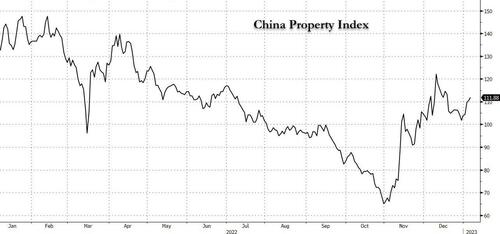
The news helped push China's property index higher by 1.5% and nearly 100% above its late October low when Chinese assets saw a widespread global liquidation amid covid zero fears and Xi's escalating crackdown on asset markets. Prices for China dollar high-yield notes, a sector dominated by property firms, have reached levels last seen in January 2022 at an average 75 cents on the dollar.
The offshore yuan surpassed its 200-day moving average for the first time since April after the news.

What does this policy reversal mean for China's property markets, and economy in general? Well, consider that with access to credit markets largely closed since 2020, developers had defaulted on more than 140 bonds in 2022, according to data compiled by Bloomberg. Overall, developers missed payments on a combined $50 billion in domestic and global debt based on issuance amount.

All of that is about to go into reverse.

In the meantime, however, China Evergrande Group, once the country’s biggest developer and a poster child for the property crackdown, was labeled a defaulter in December 2021 after it missed payments on several bonds. Others followed suit, including Kaisa Group Holdings Ltd. and Sunac China Holdings. The defaults crushed what was once the most active and lucrative high-yield bond market in the world.
Fears of further contagion meantime weakened consumer confidence and roiled global investors who had long assumed the government would bail out the real estate titans. The crisis spooked buyers, driving home sales down by the most in at least two decades, while home prices declined for 15 straight months.
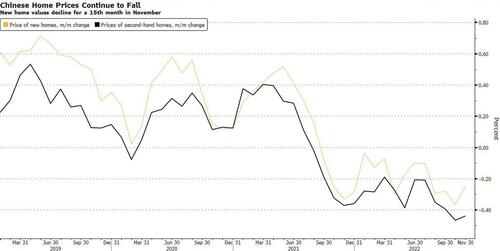
But now, very suddenly and unexpectedly, after almost two years of housing market pain Beijing is changing its stance. Under the new proposal, China will ease restrictions on debt growth for developers depending on how many red lines they meet. According to Bloomberg sources, companies that meet all three thresholds will no longer have borrowing caps and can use letter of guarantees from banks to pay land purchase deposits.

To be sure there had been vocal opposition to China's credit crackdown: as recently as last month, the head of a leading Chinese think tank had signaled Beijing needed to rethink what he called the mistaken “three red lines.”

“Using such harsh policies toward the sector was a total mistake,” said Yao Yang, dean of the National School of Development at Peking University, in an interview. “We had companies whose business was more or less healthy, but because of the “three red lines,” their business became a problem.”

As Bloomberg also notes, the policy reversal comes on the heels of a slew of directives aimed at reviving the housing sector, which accounts for as much as 70% of household assets in some parts of the country. The recent measures include:

  • Lower mortgage rates for first-home buyers if newly constructed house prices drop for three consecutive months
  • A nationwide cap on real estate commissions to boost demand
  • Allowing private equity funds to raise money for residential property developments
  • Pledging 200 billion yuan ($29 billion) in special loans to ensure stalled housing projects are delivered
  • A 16-point plan unveiled in November that ranged from addressing the liquidity crisis to loosening down-payment requirements for homebuyers

Officials have signaled further support. In an interview with Xinhua News Agency, China’s housing minister Ni Hong pledged further efforts to take a “sound approach” to address the risk of “capital chain breaks” among developers, and steer the industry onto a “high-quality development path” in 2023.

The various easing measures have sparked a sharp rally in property stocks and bonds, boosting confidence in the sector as some of the stronger firms like Country Garden Holdings Co. regain access to credit and equity markets to pay debt and resume construction.

That said, the sweeping measures have yet to arrest the slump in China’s housing sector, which has also been slowed by Covid lockdowns and more recently, a surge in virus cases. New home sales dropped 31% in December from a year earlier. Citigroup Inc. analysts including Griffin Chan expect sales to fall another 25% in 2023, as recovery will be constrained by reduced supply, and buyers’ expectations will take time to turn around.

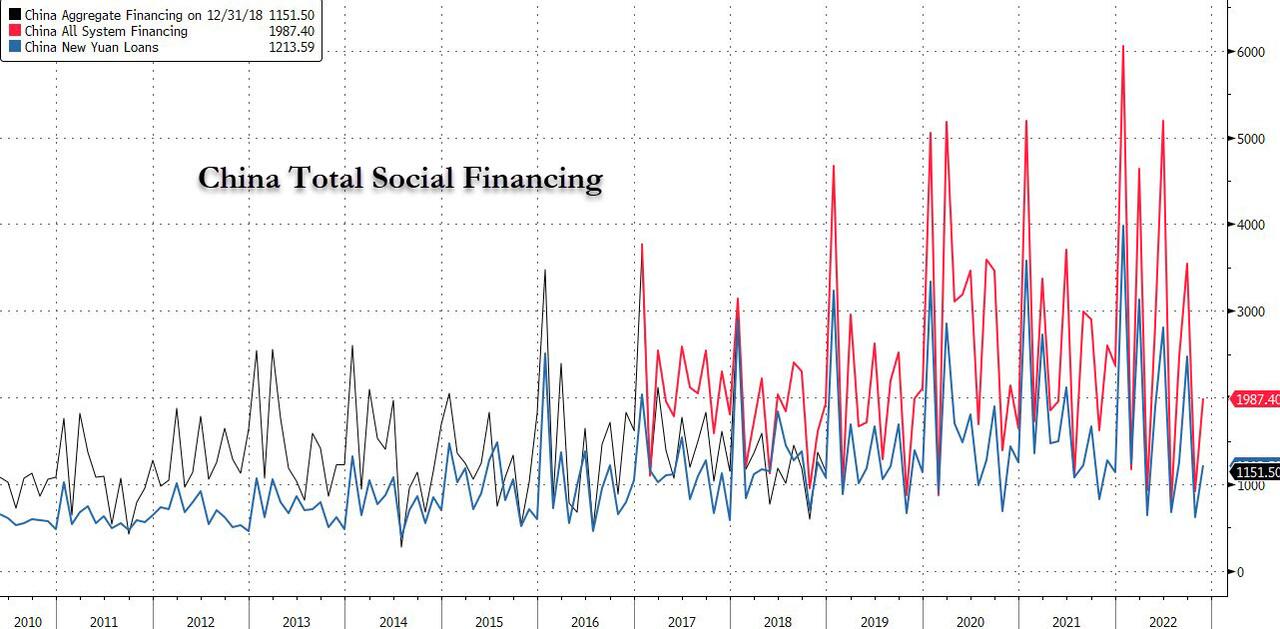
Finally, what China's reversal means for the rest of the world is that a tidal wave of new credit is about to be unleashed, and as a recent report in Economic Information Daily said, the amount of new credit China issues is likely to reach another record high this year, while interest rates for longer-term loans could decline further. In other words, prepare for a surge in Chinese Total Social Financing as Beijing finally ends its latest experiment with austerity and is finally set to unleash the biggest credit expansion in history.
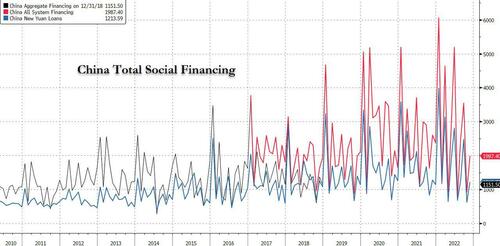
And yes, it will be inflationary, which means that China - just like Putin before it - is about to control what happens in US capital markets because the last thing the Fed can do is stop hiking just as China is about to go into credit-funded overdrive.

https://www.zerohedge.com/markets/huge-policy-reversal-china-will-ease-three-red-lines-rule-kickstart-worlds-biggest-asset

Nearly 80% Of COVID Cases Among International Arrivals In South Korea Are From China

 by Lisa Bian via The Epoch Times,

On Jan. 3, the South Korean government announced that travelers from Hong Kong and Macau must provide a negative COVID-19 test from Jan. 7, in addition to arrivals from mainland China, and 76 percent of positive COVID-19 cases at the South Korean border were in Chinese people.

The Korea Disease Control and Prevention Agency (KDCA) said that from Saturday, visitors from Hong Kong and Macau would be required to show proof of a negative PCR test within 48 hours of departure, or a negative rapid antigen test within 24 hours when entering Korea. Travelers would be required to upload test results on the Q-CODE website before boarding the plane.

Travelers from Hong Kong and Macau are only required to take a pre-departure test for COVID-19 and are not restricted from applying for a short-term visa. However, if there are any symptoms, a COVID-19 test must be done after entry into the country, and those found positive at the airport must quarantine for seven days at their own expense.

According to the KDCA, the number of imported COVID-19 cases in South Korea on Jan. 3 was 172, the highest in three months, of which 131 (76.2 percent) were from China. In the previous week, 31 percent of imported COVID-19 cases were from China. South Korea started to test all travelers from China for the disease on Jan. 2.

Cho Kyu-hong, minister of health and welfare and the first director of the KDCA, said at a meeting on Jan. 4, “We need to be on high alert for the pandemic in China at this time.”

In the absence of transparent information about the current outbreak in mainland China, many countries around the world have adopted entry restrictions on Chinese travelers.

On Dec. 30, 2022, the South Korean government announced the temporary suspension of short-term visas from mainland China to Korea; the suspension of additional flights from mainland China; the requirement for pre-departure tests for travelers from China; and that those testing positive upon arrival must undergo a seven-day quarantine at an isolation facility designated by the South Korean government at their own expense.

In a regular press conference, Lim Sook-young, the head of the situation coordination team at the KDCA, explained on Jan. 4 that the South Korean government considered the differences between mainland China, Hong Kong, and Macau in terms of pandemic data. In particular, the discontinuation of the publication of statistics on COVID-19 in China makes it difficult to get an accurate picture of the pandemic. Owing to the lack of transparency in China, the South Korean government took stronger measures on arrivals from China than from Hong Kong and Macau.

The Chinese Communist Party abolished its zero-COVID policy in early December, and in the midst of a major outbreak in China, the regime’s Health Commission suspended the release of daily pandemic data on Dec. 25. The World Health Organization has repeatedly asked Chinese authorities to share specific information on the outbreak in real time.

South Korean authorities plan to monitor the flow of the pandemic in Hong Kong and Macau and decide whether to introduce additional prevention measures.

Regarding the possibility of Chinese travelers presenting forged negative COVID-19 tests and flying on passenger planes, Lim said that there have been some cases of forged PCR test results being used.

In addition, South Korea started to strengthen its measures against mainland China on Jan. 2. Just one day after that, according to the Incheon Police Department, a Chinese visitor to South Korea tested positive at Incheon International Airport on the evening of Jan. 3 and was placed in a quarantine facility at a nearby hotel. He escaped during the transfer to the quarantine site and is now being pursued by police.

In addition, there is a shortage of cold and fever medicine, after the outbreak in mainland China. The South Korean government said it is concerned about the shortage of cold medicine in the country owing to massive purchases of medicine by Chinese people. Authorities established a purchase limit on cold medicine sold in pharmacies on Dec. 30 last year, while stepping up efforts to crack down on the smuggling of cold medicine through airports and parcels.

According to Korean outlet NEWSIS, one Chinese man bought 6 million won (about $4,700) of antipyretic and cold medicine at a pharmacy in the city of Hanam, Gyeonggi Province.

https://www.zerohedge.com/crypto/nearly-80-covid-cases-among-international-arrivals-south-korea-are-china

FDA OKs lecanemab Under Accelerated Approval for Treatment of Alzheimer's

 Accelerated Approval is based on Phase 2 data showing a reduction in amyloid-beta plaques in early AD patients treated with LEQEMBI™

Treatment with LEQEMBI should be initiated in patients with mild cognitive impairment or mild dementia stage of disease, the population in which treatment was initiated in clinical trials

https://finance.yahoo.com/news/fda-approves-leqembi-lecanemab-irmb-193000095.html

Phio Pharma Gets Regulatory Clearance of Cancer Trial

 Phio Pharmaceuticals Corp. (Nasdaq: PHIO) today announced their clinical development partner, AgonOx, Inc. has received confirmation from the FDA that their planned Phase 1 clinical trial in patients with advanced solid tumors may proceed. The initial Phase 1 clinical trial is designed to assess safety and to study the potential for an enhanced therapeutic benefit from the administration of Phio's PH-762 treated "double positive" (DP) CD8 tumor infiltrating lymphocyte (TIL) in patients with melanoma and other advanced solid tumors.

Phio is a clinical stage biotechnology company whose proprietary INTASYL™ RNAi technology is designed to make immune cells more effective in killing tumor cells. Phio's PH-762 is an INTASYL compound that reduces the expression of PD-1, a protein that inhibits T cells' ability to kill cancer cells. By decreasing PD-1 expression, the T cells have increased capacity to kill cancer cells.

AgonOx, in collaboration with the Earle A. Chiles Research Institute, a division of Providence Cancer Institute of Oregon, has shown that DP CD8 T cells sorted from human solid tumors (AGX148) are highly enriched for tumor-reactivity leading to increased tumor killing when compared to the other CD8 tumor infiltrating lymphocyte (TIL) subsets.

Preclinical data from in-vitro studies using autologous human tumor cells demonstrated that treating AGX148 with Phio's PH-762 increased by two-fold their tumor killing activity. The trial will be conducted at Providence under the leadership of Dr. Weinberg and Principal Investigator Brendan Curti, MD, Medical Oncologist and Robert W. Franz Endowed Chair for Clinical Research.

https://finance.yahoo.com/news/phio-pharmaceuticals-announces-regulatory-clearance-183000281.html

Allogene upped to Outperform from Neutral by Baird

Target $12

https://finviz.com/quote.ashx?t=ALLO&ty=c&ta=1&p=d