Search This Blog

Thursday, January 12, 2023

Simple spray could keep COVID away

 What if preventing respiratory illnesses such as COVID-19 and influenza could be as easy as a quick spritz of nasal spray every morning?

Numerous bacteria and viruses, including those that cause COVID-19 and influenza, enter the body through the lungs when people breathe, resulting in illness. Johns Hopkins engineers have created thin, thread-like strands of molecules called supramolecular filaments that are designed to be sprayed into the nose, blocking those harmful viruses from entering the lungs.

"The idea is that the filaments will work like a sponge to absorb the COVID-19 virus and other viruses before they have the chance to bind to cells in our airways. Even if the therapeutic can block the virus for an hour or two, that can be helpful when people must be in a public setting," said research team leader Honggang Cui, core researcher at the Institute for NanoBioTechnology and associate professor of chemical and biomolecular engineering at Johns Hopkins Whiting School of Engineering.

The team's results appeared recently in Matter, and the work was done through a collaboration with Hongpeng Jia, assistant professor of surgery, and other researchers at Johns Hopkins School of Medicine.

The key to this approach is the way that the filaments carry a receptor called angiotensin converting enzyme-2, or ACE2. These receptors are also found in cells in the nasal lining, the  surface, and , and have many biological roles, such as regulating blood pressure and inflammation. The novel coronavirus enters our bodies primarily through interactions with this receptor. The virus's characteristic spike protein clicks into this receptor, much like a key going into a lock, allowing it to enter the cell and replicate. Once the virus is locked into the cell, it prevents the cell from executing its normal functions, leading to and exacerbating infections.

Researchers have long known that adding extra ACE2 into airways can block virus entry, essentially preventing the virus from binding with ACE2 in the lungs. However, since ACE2 has , simply delivering more ACE2 to the body may have unforeseeable complications. The research team's newly engineered filament, called fACE2, serves as a decoy binding site for the virus, with each filament offering several receptors for the COVID-19 spike protein to attach to, and silences ACE2's biological functions to avoid potential side effects.

"Our plan is that this would be administered as a nasal or oral spray, allowing it to be suspended in the lungs or settle on the surface of airways and lungs. When a person breathes in the COVID-19 virus, the virus will be fooled into binding to the decoy receptor and not the ACE2 receptors on cells," Cui said.

And because the  attract SARS-CoV-2's characteristic spike protein, it should work equally well on any current or future variants, the researchers predict.

The team tested its design in mouse models and found their filament was not only present in the rodents' lungs up to 24 hours later, but also elicited no inflammation or obvious damage to the lungs' structures, suggesting that fACE2 may be retained in the lungs for a period of time, and is safe.

While the team's original approach was to design a preventative therapeutic, they say that it also may have the potential to treat people with active COVID-19 infections by thwarting replication of newly acquired viruses.

"We think that fACE2 could also be used on other respiratory  that use the ACE2 receptor to infiltrate cells. The   is versatile and can be modified to carry various therapeutic proteins that target different receptors," Jia said.

More information: Caleb F. Anderson et al, Supramolecular filaments for concurrent ACE2 docking and enzymatic activity silencing enable coronavirus capture and infection prevention, Matter (2022). DOI: 10.1016/j.matt.2022.11.027


https://medicalxpress.com/news/2023-01-simple-spray-covid.html

Cal. ERs report 1800% rise in pot-related visits for seniors

 There’s been a surge in the number of senior citizens visiting the ER because of marijuana use — and experts say it’s partly because boomers are shocked to find out how much stronger weed is in 2023.

A new study from the University of California San Diego, revealed a stunning 1,808% increase in cannabis-related emergency room visits among Californians ages 65 and up from 2005 to 2019. Physicians said that the number should spark widespread concern and drug screenings for all seniors.

“It’s troubling,” Dr. Michael D. Levine, director of medical toxicology at UCLA Health, told The Post. “It corresponds to an overall increase in drug trends and increased marijuana use over the past decade. And I think it’s problematic for multiple reasons.”

At UCLA Health’s Toxicology Clinic in Los Angeles, where Levine has treated many pot-impaired elderly patients, some were so stoned they didn’t even realize why they were seeing a doctor in the first place.

A new study revealed an 1,808% increase in cannabis-related emergency room visits among Californians age 65 and up, from 2005 to 2019.
A new study revealed a 1,808% increase in cannabis-related emergency room visits among Californians ages 65 and up from 2005 to 2019.
Getty Images/iStockphoto

“For example, one that was over their grandson’s house who ate a brownie, not realizing that it was a cannabis brownie,” Levine recalled.

The unwitting grandfather, who reported feeling dizzy and sedated, ended up undergoing MRIs and CT scans to rule out a stroke or early signs of dementia — culminating with a hefty emergency room bill, Levine said.

Many times, he added, “They come in dizzy and vomiting and it’s unclear [why]. No one knows their history.”

Elderly marijuana users also regularly report being confused or suffering nasty falls, Levine said. The higher amounts of tetrahydrocannabinol — or THC, the psychoactive compound in cannabis — in current strains is likely driving the disturbing trend, Levine said.

“Many elderly people who used marijuana when they were teenagers or in their 20s in the 1960s have tried using it now and the potency of THC is substantially higher compared to what it was,” Levine continued. “So, it’s not the same marijuana that they’re used to.”

Marijuana currently cultivated and sold contains three times more THC compared to levels 25 years ago, according to the Department of Health & Human Services.

Stroke and dementia first have to be ruled out when seniors come into the ER for marijuana-related incidents, experts say.
Shutterstock

“The higher the THC amount, the stronger the effects on the brain — likely contributing to increased rates of marijuana-related emergency room visits,” the website reads.

Cannabis use is also “associated with increased risk for psychosis, delirium, paranoia and other acute psychiatric symptoms,” according to data cited by the 15-year study published Monday in the Journal of the American Geriatrics Society.

A growing number of states — 21, plus the District of Columbia — have legalized small amounts of recreational cannabis. Sales at state-licensed facilities started Tuesday in Connecticut, and New York’s first legal shop opened in Manhattan on Dec. 29.

Chronic marijuana use is “associated with increased risk for psychosis, delirium, paranoia and other acute psychiatric symptoms,” according to data for the study.
Shutterstock

The pot-related emergency department (ED) visits in California for patients 65 and older increased sharply between 2013 and 2017 before leveling off after the implementation of Proposition 64, which legalized the use, sale and cultivation of recreational cannabis in late 2016.

“Therefore, the availability of recreational cannabis does not appear to correlate with a higher rate of increase in cannabis-related [ER] visits among older people,” the study found. “However, high [ER] rates among older adults with high comorbidity are concerning as cannabis has been associated with acute cardiac, respiratory and psychiatric effects.”

Dr. Asma Jafri, chair of family medicine at UC Riverside, said she’s treated elderly patients who reported feeling extremely paranoid or agitated after smoking, vaping or ingesting marijuana. Others spoke incoherently or made unseemly statements, prompting immediate medical care, she said.

Many elderly Californians who use pot assume if it’s available without a prescription it must be safe, but that’s not necessarily the case, a doctor said.
Many elderly Californians who use pot assume that because marijuana is available without a prescription, it must be safe.
Getty Images

“Family members say they’re off, you know, they have problems being appropriate,” Jafri told The Post. “They would be disoriented to themselves and also to people around them and use terms they normally wouldn’t use and respond inappropriately socially.”

The ripped retirees are typically turning to marijuana to treat underlying conditions, Jafri said, like chronic pain, sleep deprivation, depression or anxiety.

“They want to try something since other medications are not helping them,” she said. “So they say, ‘Why not try marijuana?’ It’s there, it’s available.”

Many elderly Californians who use pot assume if it’s available without a prescription it must be safe, but that’s not necessarily the case, Jafri said.

“They’ve tried other things or haven’t been adequately treated for their underlying condition — mainly pain,” she continued. “They use it for pain control and haven’t had good luck with what we are prescribing them.”

Dr. Asma Jafri reported family members coming in and saying stoned seniors "have problems being appropriate."
Dr. Asma Jafri reported family members coming in and saying stoned seniors “have problems being appropriate.”
UC Riverside

In New York, where lawmakers approved pot for personal use in 2021, ER visits for cannabis-related diagnoses for patients 65 and older soared from 10 in 2011 to 162 in 2019 — a 1,520% increase, according to the Department of Health data obtained by The Post.

That spike “may appear large,” agency officials acknowledged, but noted only 10 visits were tallied in the baseline year of 2011.

In Colorado — where recreational weed was legalized in 2014 along with Washington, the first state to do so — the rate of hospital discharges for seniors with marijuana-related billing codes was 52.3 per 100,000 in 2011. That figure nearly tripled to 154.2 by 2021, according to data provided by the Colorado Department of Public Health and Environment.

A co-author of the study, meanwhile, told The Post she believed the findings were primarily driven by the flourishing availability of cannabis.

“And so people are using it more than they used to,” said Dr. Alison Moore, chief of UC San Diego School of Medicine’s division of Geriatrics, Gerontology, and Palliative Care. “And with that can come some unsafe use.”

In New York, ER visits for cannabis-related diagnoses for patients 65 and older soared from 10 in 2011 to 162 in 2019.
Shutterstock

But Moore acknowledged the 1,808% leap in emergency room trips for California’s creaky chronic crowd is staggering by any measure.

“Yeah, it’s huge,” Moore told The Post. “And it’s definitely rising … but I do think it’s because it’s increasingly available, less stigmatized and more potent.”

https://nypost.com/2023/01/12/california-ers-report-1800-rise-in-pot-related-senior-visits/

US Releases Stockpiled Tamiflu Supplies Amid Cold, Flu Treatment Shortages

  US health officials have released supplies of the flu drug Tamiflu from a national stockpile as shortages of cold and respiratory medications persist nationwide.

More than 52,000 treatment courses were sent to 10 states and one territory, according to an official from the Department of Health and Human Services who spoke on condition of anonymity. All states that requested Tamiflu received supplies, according to the official, who asked not to be named discussing matters that aren’t public.

Medicines used to treat influenza and bacterial infections have been in short supply for months amid a difficult season that’s included respiratory syncytial virus and Covid-19. Tamiflu, mainly sold under the generic name oseltamivir, has been hard to find since November. Major generic manufacturers told Bloomberg News that the shortages occurred after buyers that distribute the drug to pharmacies didn’t order sufficient quantities of oseltamivir far enough in advance.

The drug is typically used in the first 48 hours after flu symptoms start and can speed recovery up by a day. It’s particularly helpful to people at high risk of serious flu infections, such as young children and the frail elderly.

The US Strategic National Stockpile is generally used during pandemics and other emergencies, such as the 2009 H1N1 swine flu outbreak. States received federal permission in December to use their own stockpiles, and eight have done so, according to the HHS official. Soon after, the department made the national stockpile available as supply concerns continued. While flu has begun to abate, the season has been difficult with hospitalizations from the illness reaching levels not seen in more than a decade.

Dawn O’Connell, the HHS assistant secretary for preparedness and response, said that the deployment of Tamiflu courses across the country demonstrates that “the Strategic National Stockpile has made good on HHS and ASPR’s commitment to provide states with the support that they need this winter.”

Scarce Resource

Arizona, which doesn’t have its own state stockpile, approached the US government for help when it faced a surge in demand for Tamiflu over the winter.

“We heard from multiple counties in the state that, due to the increased demand, they needed assistance for a scarce resource,” said Theresa Ehnert, Arizona’s bureau chief for public health emergency preparedness, in an interview.

Arizona requested 42,000 adult courses of treatment on Dec. 20. It was granted a little more than 10,300, of which 6,000 have been sent to long-term-care pharmacies, tribal nations, hospitals and health centers. The state plans to request more when the supply runs out, Ehnert said.

Among reasons for the shortages is that commercial distributors can return unsold generic Tamiflu to manufacturers for a refund, drugmakers said, which encourages them to produce only as much as distributors ask for. Some customers returned supplies of the drug during the previous two flu seasons, when Covid-19 mitigation measures also limited the spread of flu, leading to lower demand, according to Lupin Ltd. and Amneal Pharmaceuticals Inc., two of the largest manufacturers of the drug for the US.

Amneal told distributors they would need to order more this season, but the orders didn’t come in time, leading to the shortages, Co-Chief Executive Officer Chirag Patel said in an interview.

Tamiflu remains in short supply, according to the University of Utah’s Drug Information Service, which tracks shortages. On Wednesday, the service posted a report showing that eight companies had supply limitations for some doses of the generic medicine and there were no issues with the branded drug. The FDA is not listing an overall shortage of the drug.

https://www.yahoo.com/news/us-releases-stockpiled-tamiflu-supplies-211734490.html

"This Is Election Interference": House Oversight Veteran On Biden Classified Documents

 by Nathan Worcester via The Epoch Times (emphasis ours),

A House Oversight Committee veteran said the delay in publicizing President Joe Biden’s retention of classified documents from his time as vice president amounts to election interference.

“The documents were allegedly discovered on Nov. 2. The midterms are on Nov. 8. To me, this is election interference by omission,” Mike Howell said in a Jan. 11 interview with The Epoch Times.

“Does anyone think if this had been President Trump or any other Republican, the news wouldn’t have been leaked immediately for political gain? We needn’t wonder—just look at all the affirmative updates, releases, and leaks in the Trump case,” he said in a Jan. 10 statement.

Howell was an attorney for the Department of Homeland Security under President Donald Trump. He previously worked as a lawyer on the House Oversight Committee as well as the Senate Homeland Security and Governmental Affairs Committee.

He now leads the Oversight Project at The Heritage Foundation, a conservative think tank.

Heritage Oversight is, in Howell’s words, “suing the Biden administration aggressively” over Freedom of Information Act (FOIA) requests.

We’re gathering as much as we can and hoping that Congress makes use of it,” he said, noting that FOIA lawsuits are just one of the organization’s tactics.

Notably, Heritage Oversight obtained an email to Secretary of Homeland Security Alejandro Mayorkas that shows that he knew Haitian migrants weren’t whipped by Border Patrol agents at Del Rio, Texas, by Sept. 24, 2021.

Yet during a press conference that same day, Mayorkas offered no clarification on the whipping allegations, instead saying that the images “painfully conjured up the worst elements of our nation’s ongoing battle against systemic racism.”

FOIA Requests Filed

“He [Mayorkas] chose to ignore the information to preserve the far-left narrative on this whole incident,” Howell said in a 2022 Heritage Foundation interview.

Heritage Oversight filed FOIA requests with the Department of Justice and the National Archives and Records Administration (NARA) regarding the classified materials found at the Penn Biden Center.

Why was this information not made public prior [to] the election? It likely would have had substantial electoral salience,” Howell wrote in his FOIA request to the Department of Justice.

Democrats have frequently accused Republicans of election interference, citing everything from voter I.D. laws to state-level election integrity legislation.

Now, Republicans are zeroing in on the apparently coordinated suppression of stories prior to national elections in an election interference narrative of their own.

The Penn Biden Center incident, which could have broken before the 2022 midterm election, comes just two years after the Hunter Biden laptop story was shut down in the run-up to the 2020 election.

“People need to be aware that our elections, when things like this happen, are not free and fair,” Howell said.

Comes Alongside House Oversight Requests

Heritage Oversight’s FOIA requests come as the House Oversight Committee, now under Republican control, launches its own investigation into the Biden documents.

In a Jan. 10 letter to White House counsel Stuart Delery, Rep. James Comer (R-Ky.) wrote that the committee he now leads is “concerned that President Biden has compromised sources and methods with his own mishandling of classified documents.”

“The committee expects President Biden will receive equal treatment under the law given that he maintained classified documents in his unsecured office for several years with access to an unknown number of people,” the letter reads.

Rep. James Comer (R-Ky.), then-ranking GOP member of the House Oversight Committee, during a hearing in Washington on July 27, 2022. (Drew Angerer/Getty Images)

Howell thinks Heritage Oversight’s FOIA requests will complement the House Oversight Committee’s accommodation process.

“The accommodation process” refers to constitutionally sound negotiations between different branches of government, particularly when the legislative branch seeks information from the executive branch.

The House Judiciary Committee has described the accommodation process as “the bedrock of congressional investigative activity.”

“Now, the Biden administration is forced to deal with document requests from two different angles in two different legal proceedings,” Howell said.

He foresees a long, tough fight to get answers.

“This is going to be the most obstructive administration in history,” Howell said.

He expects obstructionism from NARA, recently in the headlines over its referral to the Justice Department regarding documents at former President Donald Trump’s Mar-a-Lago—the basis for a subsequent search warrant served by the FBI.

https://www.zerohedge.com/political/election-interference-house-oversight-veteran-biden-classified-documents

Spikes Out: A COVID Mystery

 Welcome to Impact Factor, your weekly dose of commentary on a new medical study. I'm Dr F. Perry Wilson of the Yale School of Medicine.

It's pretty clear at this point that myocarditis — inflammation of the heart muscle —is a complication, albeit a very rare one, of the mRNA COVID vaccines. The big question, of course, is why?

To date, it has been a mystery, like Glass Onion. And in the spirit of all the great mysteries, to get to the bottom of this, we'll need to round up the usual suspects.

Appearing in Circulation, a new study does a great job of systematically evaluating multiple hypotheses linking vaccination to myocarditis, and eliminating them, Poirot-style, one by one until only one remains. We'll get there.

But first, let's review the suspects. Why do the mRNA vaccines cause myocarditis in a small subset of people?

There are a few leading candidates.

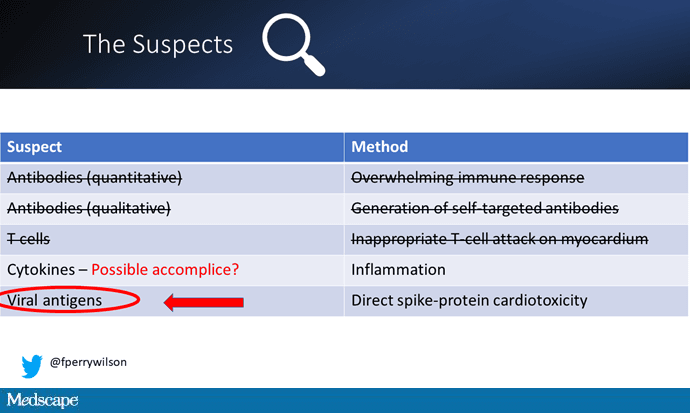
Number one: antibody responses. There are two flavors here. The quantitative hypothesis suggests that some people simply generate too many antibodies to the vaccine, leading to increased inflammation and heart damage.

The qualitative hypothesis suggests that maybe it's the nature of the antibodies generated rather than the amount; they might cross-react with some protein on the surface of heart cells for instance.

Or maybe it is driven by T-cell responses, which, of course, are independent of antibody levels.

There's the idea that myocarditis is due to excessive cytokine release — sort of like what we see in the multisystem inflammatory syndrome in children.

Or it could be due to the viral antigens themselves — the spike protein the mRNA codes for that is generated after vaccination.


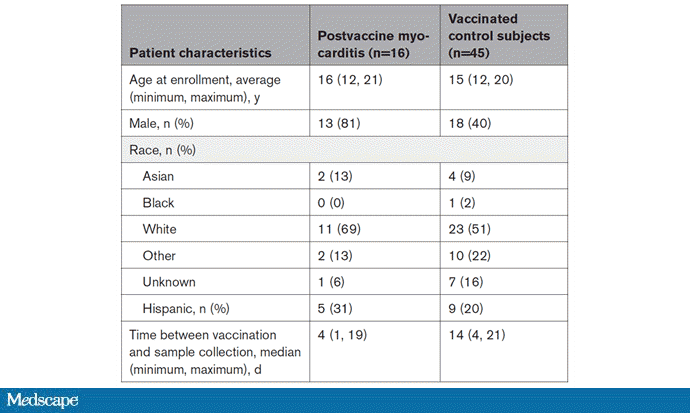
To tease all these possibilities apart, researchers led by Lael Yonker at Mass General performed a case-control study. Sixteen children with postvaccine myocarditis were matched by age to 45 control children who had been vaccinated without complications.


The matching was OK, but as you can see here, there were more boys in the myocarditis group, and the time from vaccination was a bit shorter in that group as well. We'll keep that in mind as we go through the results.


OK, let's start eliminating suspects.

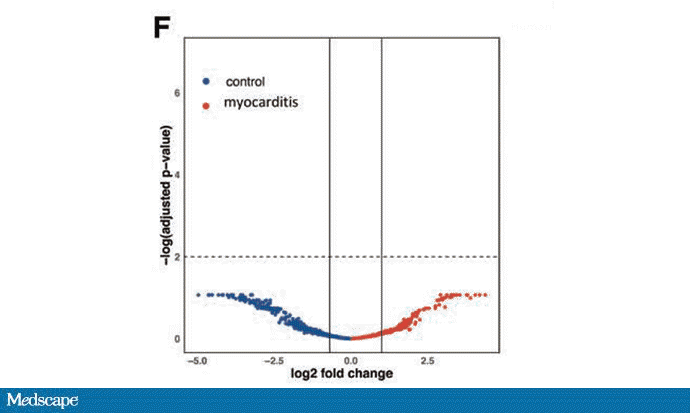
First, quantitative antibodies. Seems unlikely. Absolute antibody titers were really no different in the myocarditis vs the control group.


What about the quality of the antibodies? Would the kids with myocarditis have more self-recognizing antibodies present? It doesn't appear so. Autoantibody levels were similar in the two groups.


Take antibodies off the list.

T-cell responses come next, and, again, no major differences here, save for one specific T-cell subtype that was moderately elevated in the myocarditis group. Not what I would call a smoking gun, frankly.


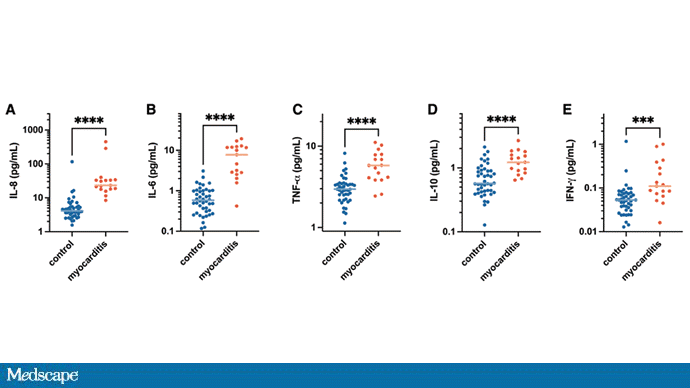
Cytokines give us a bit more to chew on. Levels of interleukin (IL)–8, IL-6, tumor necrosis factor (TNF) alpha, and IL-10 were all substantially higher in the kids with myocarditis.


But the thing about cytokines is that they are not particularly specific. OK, kids with myocarditis have more systemic inflammation than kids without; that's not really surprising. It still leaves us with the question of what is causing all this inflammation? Who is the arch-villain? The kingpin? The don?

It's the analyses of antigens — the protein products of vaccination — that may hold the key here.

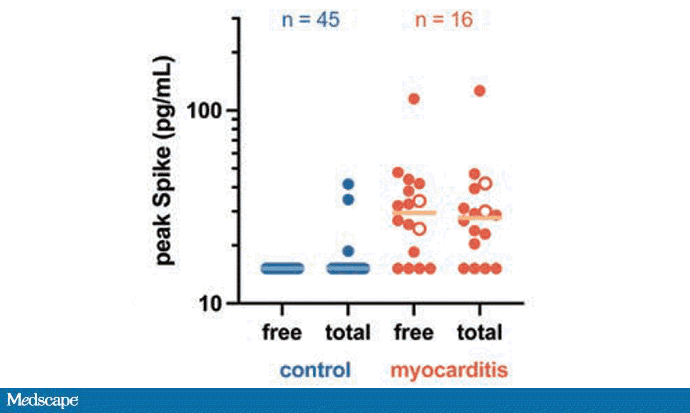
In 12 out of 16 kids with myocarditis, the researchers were able to measure free spike protein in the blood — that is to say spike protein, not bound by anti-spike antibodies.


These free spikes were present in — wait for it — zero of the 45 control patients. That makes spike protein itself our prime suspect. J'accuse free spike protein!


Of course, all good detectives need to wrap up the case with a good story: How was it all done?

And here's where we could use Agatha Christie's help. How could this all work? The vaccine gets injected; mRNA is taken up into cells, where spike protein is generated and released, generating antibody and T-cell responses all the while. Those responses rapidly clear that spike protein from the system — this has been demonstrated in multiple studies — in adults, at least. But in some small number of people, apparently, spike protein is not cleared. Why? It makes no damn sense. Compels me, though. Some have suggested that inadvertent intravenous injection of vaccine, compared with the appropriate intramuscular route, might distribute the vaccine to sites with less immune surveillance. But that is definitely not proven yet.

We are on the path for sure, but this is, as Benoit Blanc would say, a twisted web — and we are not finished untangling it. Not yet.

For Medscape, I'm Perry Wilson.

F. Perry Wilson, MD, MSCE, is an associate professor of medicine and director of Yale's Clinical and Translational Research Accelerator. His science communication work can be found in the Huffington Post, on NPR, and here on Medscape. He tweets @fperrywilson and his new book, How Medicine Works and When It Doesn't, is available for pre-order now.

https://www.medscape.com/viewarticle/986610

More Guidance Needed for Cancer Screening in Rheumatology Patients

 Some of the diseases that rheumatologists treat are associated with malignancies. The most well known of these is the inflammatory myopathies. The association between myositis and malignancy was described in a review article in 1976; we now know that there are disease characteristics, such as NXP2 or TIF1 gamma antibody positivity, that should lead us to consider the possibility of a malignancy.


Sjögren syndrome predisposes to malignancy. Higher disease activity, recurrent parotid gland swelling, presence of cryoglobulins, and hypocomplementemia at baseline indicate a higher likelihood of developing lymphoma. Systemic sclerosis is also associated with a risk for malignancy, including lung cancer and hematologic malignancies, especially in those who develop disease at an older age and who test positive for anti-RNA polymerase antibody. Patients with rheumatoid arthritis have a higher risk for lymphoma and lung cancer compared with the general population. Patients with lupus are at an increased risk for lymphoma and cervical neoplasia as well.

Paraneoplastic Syndromes

Then there are patients with paraneoplastic syndromes. Sometimes these are well established. For example, no article on paraneoplastic rheumatic syndromes would be complete without a discussion of hypertrophic osteoarthropathy, although it has been about a decade since I last made a diagnosis of a malignancy based on that presentation, perhaps because of the advent of low-dose CT screening of patients with a significant smoking history. RS3PE (remitting seronegative, symmetric synovitis with pitting edema) is another example of a well-established paraneoplastic syndrome, although the majority of patients with this diagnosis do not actually have an associated malignancy. Eosinophilic fasciitis and palmar fasciitis with polyarthritis are other rheumatic conditions commonly thought of as possibly paraneoplastic.

Other times, however, the paraneoplastic nature of a presentation isn't obvious. In general, when a presentation seems unusual — explosive-onset polyarthritis in an older individual, or polymyalgia rheumatica that is not responding to steroids as expected — the clinician has to wonder whether they are dealing with a malignancy masquerading as an arthritic condition.

Malignancies Associated With Medications

Besides our diseases, our medications have also been associated with malignancies. Cyclophosphamide increases the risk for bladder cancer, myelodysplastic syndrome, and myeloproliferative disorders. Both methotrexate and azathioprine have been associated with an increased risk for lymphoma and nonmelanoma skin cancer (more likely in patients who are on azathioprine for post-organ transplant immunosuppression). The ORAL Surveillance study demonstrated that tofacitinib (Xeljanz) at any dose conferred an increased risk for malignancy, compared with anti-tumor necrosis factor (TNF) agents. And while physicians argue over the (unlikely) risk for solid tumors, lymphoma, or melanoma with anti-TNF agents, these drugs do confer increased risk for nonmelanoma skin cancer.

Limitations to Age-Appropriate Cancer Screening

It vexes this rheumatologist, then, that we don't have established guidelines regarding who among our patients should be screened for malignancy and how that screening should be done. In 2017, the British Society for Rheumatology published guidelines for Sjögren syndrome which included a recommendation, with little evidence but with substantial agreement in the Delphi exercise, to encourage patients to report firm and painless glandular swelling (level of evidence IV/D) and to investigate suspicious lesions with imaging (level of evidence III/C). Guidelines that come from specialty societies — internal medicine, dermatology, oncology, gynecology — are meant for the general population and are not tailored to rheumatology patients. Age-appropriate cancer screening, a staple recommendation in our SOAP notes, means mammograms, Pap smears, colonoscopies, and maybe a prostate-specific antigen, at the right age cut-off. But if we limit ourselves to these tests, not only would we miss lymphomas and lung cancer, the most common malignancies in patients with rheumatoid arthritis, we would also be searching for the malignancies that seem reduced in frequency among patients with rheumatoid arthritis (ie, breast and colon).

This makes so-called counseling tricky. You might tell your patient starting on an anti-TNF agent that they need to get an annual skin check (I certainly do), but the US Preventive Services Task Force has found insufficient evidence to recommend for or against screening for skin cancer in asymptomatic patients, and the American Academy of Dermatology recommends yearly screening only if patients have a history of either basal cell or squamous cell cancer.

So, what's a rheumatologist to do?

Cancer Screening in Patients With Myositis

At the American College of Rheumatology Annual Meeting last year, guidelines regarding cancer screening for patients with myositis were presented. The guidelines, developed by the International Myositis Assessment and Clinical Studies Group, recognize that within myositis there are specific disease characteristics that are associated with malignancy. In this schema, patients are put into low-, intermediate-, or high-risk groups depending on disease features. Someone with antisynthetase syndrome, for example, who does not have NXP2 or TIF1 gamma antibody positivity, would not need to undergo imaging beyond chest radiography, whereas a patient with dermatomyositis and one of these two antibodies would get CT imaging in addition to the "basic" evaluation that they recommend. The guidelines also speak to when it may be necessary to proceed with upper and lower GI endoscopy, nasopharyngeal endoscopy, and PET scanning.

Time will tell how these guidelines perform; like other guidelines, they are likely to evolve. But it does seem like a great first step in the right direction, one that will impact healthcare overall and help us to take better care of patients. And in the absence of established guidelines outside of myositis, it remains up to the rheumatologist to determine how best to care for the rest of our patients.

Karmela Kim Chan, MD, is an assistant professor at Weill Cornell Medical College and an attending physician at Hospital for Special Surgery and Memorial Sloan Kettering Cancer Center in New York City. Before moving to New York City, she spent 7 years in private practice in Rhode Island and was a columnist for a monthly rheumatology publication, writing about the challenges of starting life as a full-fledged rheumatologist in a private practice.

https://www.medscape.com/viewarticle/986631