Search This Blog

Friday, January 13, 2023

Tiny upstate town faced with NYC-like migrant influx

 In the small town of Jamestown, NY — about as far as one can get from the southern border without entering Canada — residents are bracing for an influx of migrants that could cause a crisis similar to the one that has New York City facing a fiscal cliff.

“If a city of 8 million people can be overwhelmed by a couple thousand migrants, imagine what a couple hundred can do to overwhelm a small rural community upstate?” warned state Sen. Joe Borrello (R-Jamestown).

“It wouldn’t take many migrants to overwhelm the system,” he added.

At least 35 migrants from Colombia are known to have arrived in the tiny upstate city since late last year, with others believed to be living and the shadows and more certainly on the way, a leading Hispanic advocate told The Post.

Locals learned about the new arrivals after a volunteer with the Chautauqua County Hispanic Community Council overheard one speaking with a Colombian accent inside a Tops supermarket last month, council president Max Martin said.

1of6
Jamestown is 285 miles from New York City, which has been overwhelmed by migrants.
Columbian Migrants Brenda 32, who fled Columbia with her two young children, and Ricaurte, 52, speak with Max Martin, President of the Hispanic Community Council.
At least 35 migrants from Colombia are known to have arrived in the tiny upstate city since late last year.
Advertisement
Until the migrants arrived, the Hispanic community was almost exclusively Puerto Rican.
The city’s population is 28,393, with 10.6% of it Hispanic, according to the US Census.
A leading activist expects more migrants to arrive in Jamestown.
Most of the migrants traveled to Jamestown on their own after learning about the city from fellow border-crossers in El Paso, Texas.
Advertisement

The city’s population is 28,393, with 10.6% of it Hispanic, according to the US Census. Until the migrants arrived, the Hispanic community was almost exclusively Puerto Rican, Martin said.

“The Colombians are already here and more are coming. What is the government going to do about it?” Martin asked. “They need housing and transportation or be allowed to work and get a driver’s license.”

But without assistance, Martin warned, “they will have to work illegally to survive.”

“Many of them have already been offered fake Social Security numbers and cards. I worry they may be forced to turn to crime like selling drugs,” he said.

Most of the migrants traveled to Jamestown on their own after learning about the city from fellow border-crossers in El Paso, Texas, several told The Post in Spanish translated by Martin.

“I was in detention for two months,” a migrant named Paola said. “When I was in detention I met a Colombian who told me to come to Jamestown.”

Paola, 29, is sharing a three-bedroom, one-bathroom house with 10 other migrants, including two young children and two teens.

The housemates include a married couple, Mayerly and David, both 23, who work with Paola at a local thrift store where they spoke to The Post.

Carlos worked as a construction worker in Ibagué.
Carlos shares a three bedroom, one bathroom apartment he shares with 12 others in Jamestown.
Dan Cappellazzo for NY Post

Mayerly said their house is so crowded that, “I have to make an appointment to use the bathroom.”

“The kids go first in the morning so they can get to school,” she said.

Her husband said they wound up living around 70 miles south of Buffalo because, “At the border, we needed to give them an address of someone who would receive us.”

“A friend told us about Jamestown,” David said. “We spent our last money on a flight from El Paso to Buffalo.”

A 30-year-old woman named Brenda — whose sister is one of the first migrants to have arrived in Jamestown — said she and her two kids followed her sibling there and arrived in November.

Brenda told him about Jamestown while they were in detention together.
Brenda and her kids share a run-down house with another migrant named Ricaurte.
Dan Cappellazzo for NY Post

“More Colombians are coming to Jamestown,” Brenda said in Spanish. “A family arrived two weeks ago. I know another family with kids coming from Texas now.”

Brenda, who was a nurse in Ibagué, about 50 miles west of the capital of Bogota, said that her husband was “still in the military in Colombia” and that she would “apply for asylum for the security of my children.”

“It is very dangerous in Colombia for my kids because of the gangs,” she said. “There is nothing there for my kids. It is safer here for my kids in Jamestown.”

Brenda and her kids share a run-down house with another migrant named Ricaurte, 52, who said she told him about Jamestown while they were in detention together.

The house is owned by an Amish construction boss who’s friends with Max Martin.

“In immigration, they asked for a phone number of someone in America. I gave them Brenda’s sister’s phone number and address in Jamestown,” Ricaurte said.

Ricaurte said he served in the military under the government that was replaced when leftist former M-19 rebel Gustavo Petro was elected president in June.

“When the new government made a peace treaty with the guerrillas, the guerrillas want to kill the military who was against them. If I stay in Colombia, my life is in danger,” he said.

The Jamestown community has become home to over 30 families from Columbia and growing.
Carlos said his wife and two daughters lived with him until he sent them to stay with his wife’s brother in Chicago.
Dan Cappellazzo for NY Post

The Post also visited a three-bedroom, one-bathroom house that’s home to 13 migrants, including six children between 3 and 15, and had three beds in the living room.

During the deadly blizzard that buried the region last month, the place had no heat for three days, most likely due to a frozen gas pipe, said a resident Carlos, 33.

“We put plastic over the windows and wore coats inside,” Carlos said. “The kids kept going to the [hot air] vents, looking for warmth.”

Carlos said his wife and two daughters lived with him there until he sent them away from the cramped conditions to stay with his wife’s brother in Chicago.

“I’m worried I won’t be able to afford rent. I don’t want my kids to be homeless,” he said.

Carlos, who worked as a construction worker in Ibagué, said he didn’t “want to take a chance on working illegally because I risk being deported.”

And if he went to Chicago, Carlos said, “I’m afraid I might have to start the immigration process all over again. My papers say Jamestown.”

Martin, the community council president, said, “It has been a shock to see the amount of Latinos from Colombia coming to Jamestown.”

“The reason is the open border,” he said. “I would do the same thing, by the way, because of the freedom and opportunity we have in America. You can come here poor and become rich if you work your butt off.

“The cold weather and the language barrier won’t make them leave,” he added.

Democratic Jamestown Mayor Eddie Sundquist didn’t immediately respond to an interview request from The Post.

But Republican Chautauqua County Executive PJ Wendel said he was concerned by the situation unfolding in Jamestown and had sought help from Gov. Kathy Hochul and US Senate Majority Leader Chuck Schumer (D-NY), whose assistants didn’t offer any.

“Even if it’s 100 families, our school districts are small,” Wendel said. “Those schools don’t have the resources. If they don’t have a Spanish teacher, what are they going to do?”

Wendel added: “It could be overwhelming for us because how are we supposed to be helping these people?”

Spokespeople for Hochul and Schumer didn’t immediately return requests for comment.

https://nypost.com/2023/01/13/tiny-upstate-new-york-town-faced-with-nyc-like-migrant-influx/

Supreme Court Roe v. Wade leak probe narrows potential suspects list

 Investigators examining the leak of a draft opinion in the case that overturned Roe v. Wade have narrowed down their list of possible suspects to include at least one law clerk, the Wall Street Journal reported Friday.

Despite the progress, the culprit who disclosed the draft written by Justice Samuel Alito has not yet been identified. It was not immediately clear how many people were still considered potentially responsible for the extraordinary breach of high court protocol.

The leaked draft opinion by Justice Samuel Alito in the case of Dobbs v. Jackson Women’s Health Organization was published by Politico on May 2 of last year — almost eight full weeks before the final decision came down June 24. Its release prompted protests by abortion rights activists around the country and Chief Justice John Roberts ordered an investigation led by the court’s marshal, Gail Curley.

The Supreme Court’s in-house police force, which is largely tasked with physical security of the justices and the court building and has limited investigative experience, has been helped by investigators from other agencies.

SUPREME COURT
Protesters demonstrate in front of the Supreme Court after the court’s decision to overturn Roe v. Wade.
AP/Jacquelyn Martin
Members of the Supreme Court
The leaked draft opinion by Justice Samuel Alito in the case of Dobbs v. Jackson Women’s Health Organization was published by Politico.
AP/Erin Schaff

According to the Journal, the field of potential suspects had been “significantly narrowed” by early summer of last year, but it’s unclear how much progress has been made since.

One source told the Journal that some of the interviews were surface-level, with investigators asking questions like “Did you do it?” and “Do you know anyone who had a reason to do it?”

The outlet also reported that investigators had partially relied on publicly available information about court employees to develop theories of the case.

In September, Justice Neil Gorsuch told judges and attorneys of the Denver-based 10th Circuit Court of Appeals that investigators would have a report on the leak “soon,” though he did not say whether it would be made public.

Supreme Court Associate Justice Neil M. Gorsuch
Supreme Court Associate Justice Neil M. Gorsuch made a comment regarding the leak needing to be reported.
REUTERS/Evelyn Hockstein

Congressional Republicans have expressed frustration with the slow progress of the investigation and the lack of information, after many characterized the leak as an attempt to pressure the justices into keeping Roe in place. (Alito’s final opinion ultimately hewed closely to the leaked draft, which was dated from February of last year.)

“For some reason this individual has certainly been sheltered and there is absolutely evidence that there are specific people who know who this person is,” Rep. Scott Fitzgerald, (R-Wis.) told a House Judiciary Committee hearing in December.

With Republicans in charge of the committee, the panel is likely to open its own investigation into the leak.

https://nypost.com/2023/01/13/supreme-court-roe-v-wade-leak-probe-narrows-suspects-list/

'Normalization' Of Emergency Use Authorizations Concerns Health Professionals

 by Marina Zhang via The Epoch Times (emphasis ours),

The Food and Drug Administration (FDA) has approved an unprecedented number of emergency use authorizations (EUAs) for drugs, tests, and medical devices since the beginning of the pandemic.

Between March 2020 and June 2021, more than 600 EUAs were authorized, according to Fortune.

This has caused concern among healthcare professionals, with some studies claiming that overreaction by regulators may have led to a decline in industry standards (12).

As clarified in the journal Yale Medicine, “An EUA can only be granted when no adequate, approved, available alternatives exist, and when the known and potential benefits outweigh the potential risks. A EUA also only lasts as long as the public health emergency for which it was declared.”

Prior to 2020, the public health emergency that allowed the highest number of EUAs was the 2009 H1N1 pandemic, with 22 EUAs overall for personal protective equipment (PPE), antivirals, and diagnostic tests. The only emergency-authorized vaccine prior to the 2020 pandemic was the anthrax vaccine.

Given the drastic increase in EUAs, experts worry that this time, the FDA has gone too far.

The Normalization of EUA Drugs and Lack of Informed Consent

Cardiologist Dr. Jack Askins has pointed out that the unprecedented onslaught of emergency authorizations in drugs, vaccinations, medical devices, COVID tests, and PPE has normalized EUA drugs and products as being fully FDA-approved rather than being investigational.

Prof. Linda Wastila from the University of Maryland School of Pharmacy, whose expertise is in pharmacotherapy and drug policy, told The Epoch Times that the torrent of 600 EUAs makes it very difficult for healthcare professionals to remain informed of the approval statuses of new drugs.

For example, Askins previously told The Epoch Times that he noticed some of his colleagues who prescribe Paxlovid lacked adequate awareness of the many interactions and contraindications Paxlovid has with other drugs.

Paxlovid can interact with 43 different drug classes and over 550 active drug ingredients.

Even before the pandemic, it was hard for clinicians and pharmacists to keep up, given that around 40 novel therapeutics are approved by the FDA yearly, not counting generic drugs.

Wastila said that compared to traditional FDA-approved products, there has been less informed consent with the EUA products during the pandemic.

Informed consent is defined as “the process in which a health care provider educates a patient about the risks, benefits, and alternatives of a given procedure or intervention,” and patients must make their own voluntary decision.

Informed consent is especially important with EUA products as they are investigational products. Articles on EUAs have compared taking these products to participating in experimental trials (12).

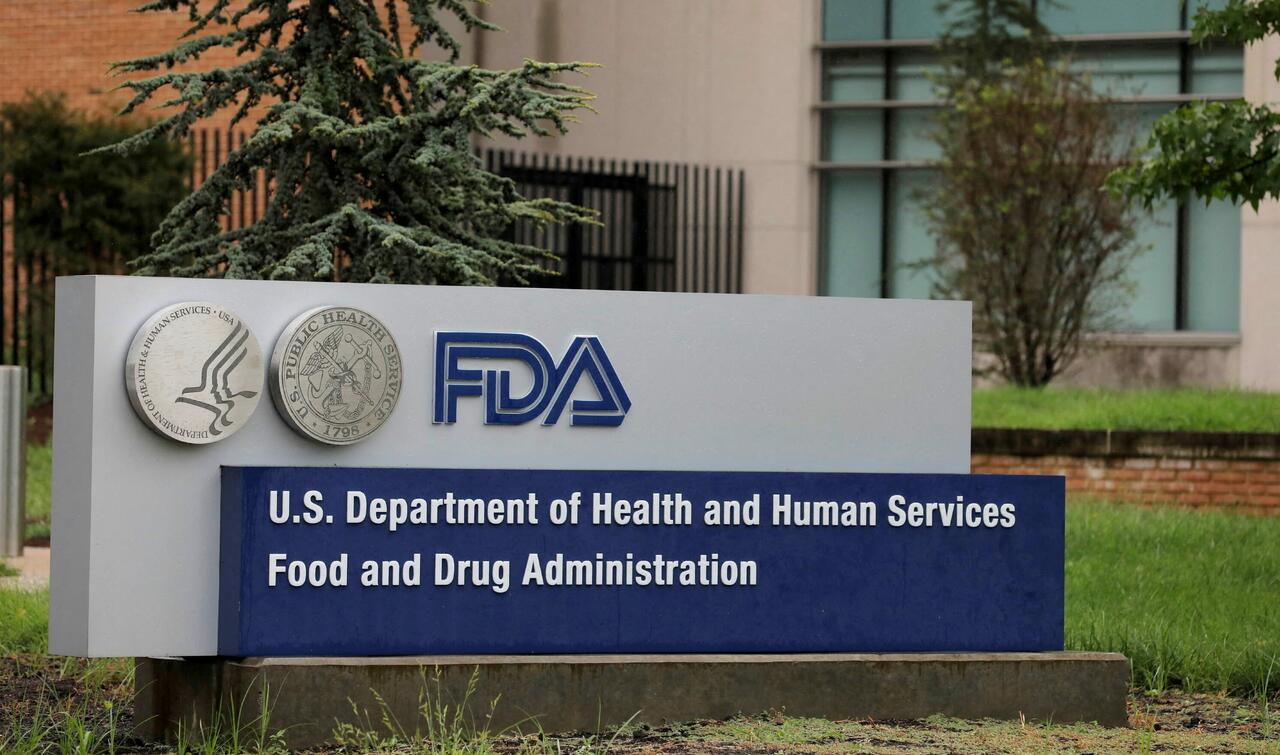
Signage is seen outside of the Food and Drug Administration headquarters in White Oak, Maryland, on Aug. 29, 2020. (Andrew Kelly/Reuters)

Part of informed consent is letting patients know that what they are taking is experimental and that they have the right to refuse.

But Askins highlighted that very few patients were provided informed consent when they took EUA products such as the vaccine.

He said that three patients, each of whom received the bivalent booster as a fourth shot, were admitted to his clinic. He asked all three if they were given information on the potential risks and the emerging data on concerns and problems with it.

“All three said no,” he said, “I do not think they understand emergency use authorization versus full FDA approval.

It also should be noted that EUAs do not come with long-term safety data.

While drugs fully approved by the FDA come with a densely written package insert on side effects and drug mechanisms, for many EUA products, such as the COVID-19 vaccines, these sections are left blank.

A Johnson & Johnson spokesperson said this was intentional, leaving it to consumers to search online for the most up-to-date information on safety and effectiveness as the data is published.

However, Wastila sees this lack of information as potentially dangerous.

“To me at least, [it] conveys the fact that they don’t really know whether a product is safe and effective when it’s an EUA product.”

The Erosion of Drug Safety Standards

Dr. David Bell, formerly a medical officer with the World Health Organization, said that the overuse of EUAs during the pandemic has lowered drug safety standards put in place to protect patients.

EUA products are very different from FDA-approved drugs. However, public health agencies’ encouragement to use EUAs has blurred the separation between EUAs and FDA-approved drugs.

Wastila fears that EUA is replacing FDA approval as the norm.

[EUAs] have lost all meaning,” said board-certified internist and nephrologist Dr. Richard Amerling. “People don’t hear ‘emergency use;’ they only hear ‘authorized.’”

Askins argued that there has been intentional public messaging from the FDA to make EUA appear just as safe and equivalent to a fully tested and licensed product.

In August 2021, the FDA approved the Pfizer COVID-19 vaccine under the label of Comirnaty.

Having an FDA-approved vaccine should have nullified the EUA for other COVID-19 vaccines, or at the very least, the Pfizer EUA vaccine.

Yet, the Pfizer EUA vaccine remains on the U.S. market. The FDA also wrote that for the Pfizer vaccine, “doses distributed under the EUA are interchangeable with the licensed doses.”

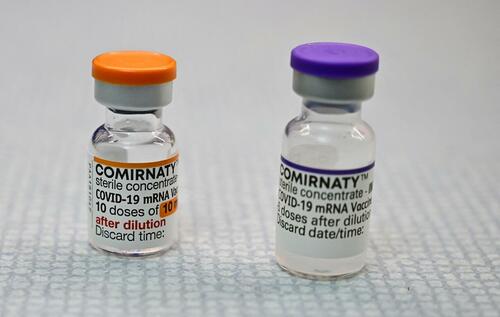
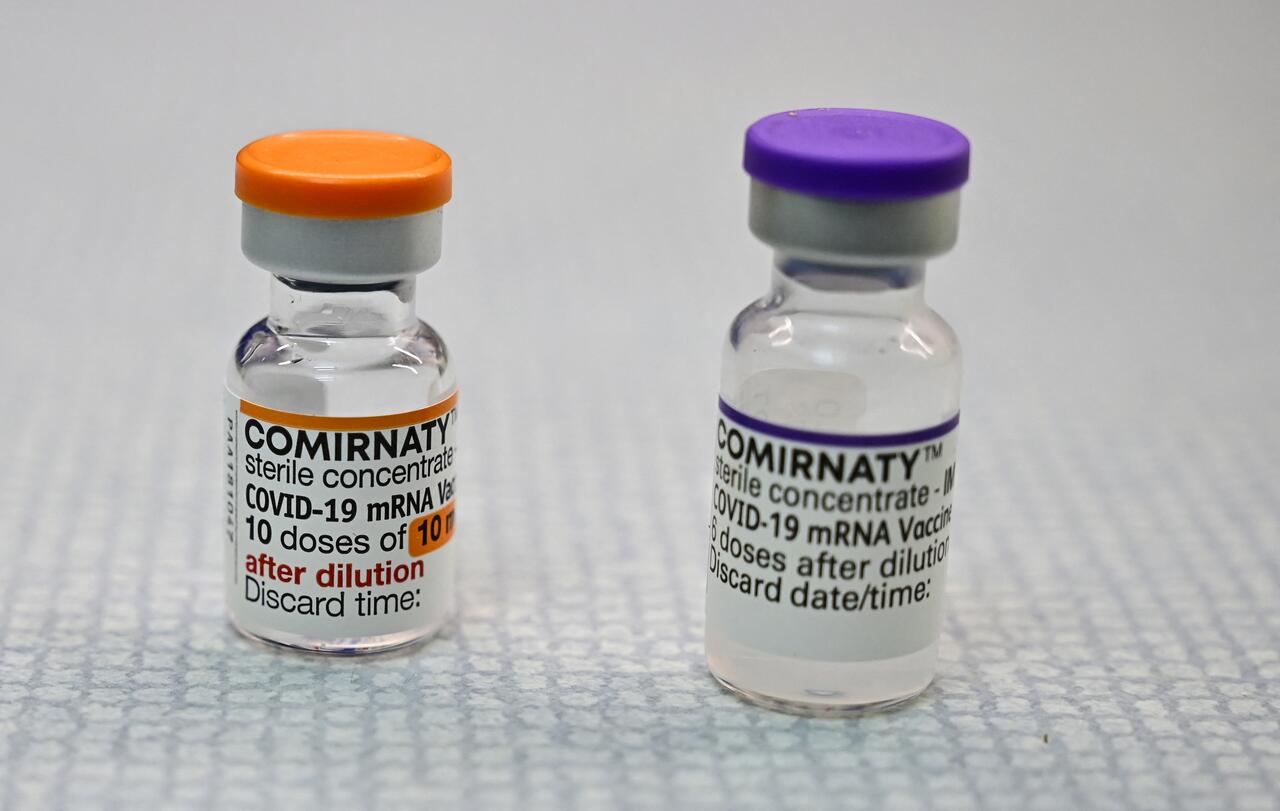
COVID-19 vaccine vials marked Comirnaty in Berlin, Germany, in a file image. (Tobias Schwarz/AFP via Getty Images)

An order issued in November 2021 by Judge Allen Windsor of the U.S. District Court for the Northern District of Florida rejected this claim, stating that while the two versions may be medically interchangeable, they are not legally interchangeable.

Judge Windsor’s order also mentioned that FDA officials could not prove that Comirnaty vaccines even exist in the United States.

Nevertheless, the full FDA approval of Comirnaty has led many health providers to assume that the Pfizer injections being administered are the licensed versions.

Wastila recounted an experience at her former local pharmacy.

She was picking up some antibiotics and, while chatting with the pharmacist, she asked about the uptake of Pfizer and Moderna vaccines.

“[The pharmacist] goes, ‘Oh, they’re great. Everyone’s so happy that they’re FDA approved,’” Wastila recounted. “That’s literally a quote from the pharmacist’s mouth.”

“I said, ‘They’re not FDA approved, though.’ She goes, ‘Oh, Pfizer is.’”

So Wastila asked to see an unopened package of the vaccine, and the pharmacist showed the doctor a vial.

The pharmacist presented an EUA vaccine; it did not have the Comirnaty label, which would be printed according to labeling requirements.

Wastila told the pharmacist that the pharmacy was still using the EUA vaccines.

“[The pharmacist] was just like kind of amazed,” said Wastila, “But there’s no informed consent if even your dispensers aren’t aware that it is EUA or FDA approved.”

More Emergency Declarations and EUAs Likely To Come

Health experts argue that COVID-19 pandemic management has already lowered the standards for future emergency declarations and EUAs.

Dr. Robert Malone, biochemist and one of the inventors of the mRNA drug platform, said that monkeypox, which was declared a public health emergency in August 2022 with no deaths in the U.S. at the time, is a good example of this reduced standard.

Given that the disease almost exclusively affects men who have sex with men, a specific population demographic, and has led to 20 deaths in the United States thus far, Bell and Wastila both said that it was ludicrous that it was deemed a public health emergency.

“Now the cat’s out the bag, [public health emergency declarations] can be used really easily now because there are precedents [such as] COVID-19 and monkeypox that were not very severe,” Bell said.

The smallpox vaccine, commercially labeled as JYNNEOS, was also rapidly given EUA approval in a matter of days.

The FDA wrote that it was “inferred” that a smallpox vaccine would be effective against monkeypox, given that both viruses are from the same family.

However, according to a statement made by the CDC on Oct. 19, 2022, there was no data on the effectiveness of JYNNEOS or ACAM2000, an alternative to JYNNEOS, for monkeypox.

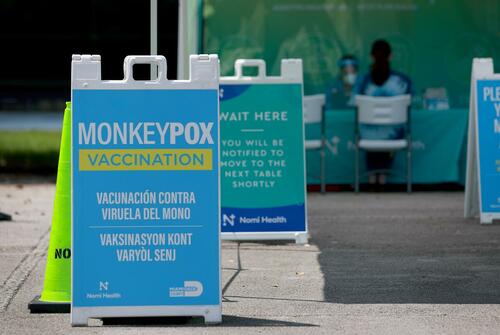
A sign announcing monkeypox vaccination is set up in Tropical Park by Miami-Dade County and Nomi Health in Miami, Fla., on Aug. 15, 2022. (Joe Raedle/Getty Images)

The vaccine also has cardiological side effects. Pooled data across 22 studies showed that of the more than 7,800 people vaccinated, six developed cardiac-related adverse events that were determined to be causally related to vaccination.

Concerns have been raised about the respiratory syncytial virus, known as RSV, in children. Though the virus has not been declared a national public health emergency, declarations have been made in Oregon and Colorado, and some health experts have urged a national declaration.

“We’ve had RSV and the flu every year, and all of a sudden, it’s become a big issue again, and it’s because we’re afraid of every viral infection, [we’re] normalizing being fearful of every contagion,” said Wastila.

Loss of Trust in Public Health

As a pharmacotherapy professor who is in contact with pharmacists and staff working with the FDA, Wastila confessed that the pandemic has been a “rude awakening” for her.

“Physicians, dispensers, and pharmacists just blindly follow the safety and effectiveness of a product just because it has the FDA seal of approval, even if that ‘approval’ is an EUA.”

Though financial backdoor dealings have been suspected and discussed for decades, Malone argues that the pandemic has brought “corruption” to the surface.

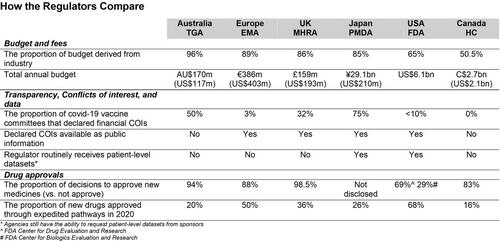
Financially, 65 percent of the FDA’s budget comes from pharmaceutical companies, with a large proportion of this money coming through sponsorship for drug approval applications.

Comparing major drug regulators on conflicts of interest, according to data by Maryanne Demasi (The Epoch Times)

The 1992 Prescription Drug User Fee Act, also known as the PDUFA, requires pharmaceutical companies to pay the FDA for drug approvals.

Wastila said that after speaking to colleagues and students who work in the FDA, she senses that the PDFUA may have established “a culture of entitlement” from the drug companies to have their drugs approved and marketed.

“The sponsors feel like, hey, we’ve paid for this,” she said, “It’s like a pay-for-play situation.”

Many members of drug evaluation boards also receive financial payments from drug companies.

When evaluating a drug, there needs to be “zero conflict of interest,” said Amerling. “Declaring that you have a financial conflict of interest doesn’t make it go away.”

Bell said that the low uptake of vaccines in children under five years of age is a sign that people no longer trust public health agencies.

“They [The FDA] were unable to produce any solid data showing that there’s an all-cause benefit to those children,” said Bell.

For healthcare professionals and members of the public who once trusted the FDA, some feel that they no longer have a place to go for advice on treatments.

Amerling said this would force clinicians to be very conservative with their treatment.

As the Chief Academic Officer at The Wellness Company, Amerling educates doctors to prescribe only medications with a safety record of at least several years.

“Don’t be that person to jump on the bandwagon with a new product,” he said, “Post-marketing experience can reveal unanticipated adverse events, and you’re not going to see them even with the initial studies, even if they’re well done.”

“When medium and long-term risk is unknown, it’s best to err on the side of caution, especially if benefits are small.”

Wastila added that there has been a considerable information gap on drug safety since the pandemic, with little scrutiny from drug regulators.

https://www.zerohedge.com/medical/normalization-emergency-use-authorizations-concerns-health-experts