Search This Blog

Saturday, January 14, 2023

COVID Vaccines "Obviously Dangerous," Should Be Halted Immediately, Say Senior Swedish Docs

 by Dr. Johan Eddebo via The Daily Sceptic,,

There follows a public statement by a group of five senior Swedish doctors who, in collaboration with Dr. Johan Eddebo, a researcher in digitalisation and human rights, are raising the alert about the Covid vaccines, which they describe as “obviously dangerous”. They say there should be an “immediate halt” to the mass vaccination pending “thorough investigations” of the true incidence and severity of adverse effects.

The true character and scope of the harm caused by the unprecedented mass vaccinations for COVID-19 is just now beginning to become clear. Leading scientific journals have finally begun publishing data corroborating what the underground research community has observed over the last two years, especially in relation to complex problems of immune suppression.

Truly concerning numbers pertaining to both births and mortality are also emerging.

At this moment in time, a new, allegedly super-infectious Omicron variant is all over the headlines. A sub-variant of XXB, this strain is said to possess immune escape capabilities of precisely the type that some independent researchers predicted would follow on the heels of the mass vaccinations’ narrow antigenic fixation. 

The WHO maintains that worldwide, 10,000 people still die due to Covid every single day, an implausible death toll more than ten times that of an average flu. It reiterates the urgent need for vaccinations, especially in light of China’s reopening and allegedly falsified data on mortality and infections.

The EU has even called an emergency summit in light of the purported Chinese “Covid chaos” that “calls to mind how everything began in Wuhan, three years ago”.

In Sweden, the Minister for Health and Social Affairs has said he cannot rule out new restrictions, and states that everyone must take “their three doses”, since “only” 85% of the population is ‘fully inoculated’.

That such an extensive vaccine coverage has not yielded better results after nearly two years is a remarkable fact. Even more so in light of some individuals receiving four or more repeated exposures to the same vaccine antigen, yet still contracting the disease they are supposedly immunised against.

At the same time, even more ominous warning signs abound.

One such warning sign is the fact that average mortality in many Western states is still at a remarkably high level, in spite of the direct effects of the coronavirus being marginal for more than a year. Data from EuroMOMO indicate a marked excess mortality in the EU for all of 2022, and the German Bureau of Statistics reports that the country’s mortality in October was more than 19% over the median value of the preceding years.

Is this due to Covid, as the WHO’s ’10 000 per day’ figure would seem to indicate?

Blame is placed at the feet of ‘Long Covid‘ as well as the regular acute infections, but according to the EuroMOMO and Our World in Data stats, the bulk of the excess deaths in Europe during 2022 are actually not due to clinically manifest coronavirus infections.

Moreover, we shouldn’t see continued excess deaths from a respiratory virus of this kind after three years of global exposure due to the inevitable consolidation of natural immunity.

If such a situation persists, the hypothetical connection to a vaccine-related immunity suppression that just now has come into focus becomes pertinent to investigate in detail. 

If, as has been argued, the vaccinations, and especially the boosters, alter the immune profile of recipients such that Covid infections get ‘tolerated’ by the immune system, it’s possible that vaccinated individuals will tend towards a situation of long-term, repeat infections that do not get cleared, and do not present with obvious symptoms, while still promoting systemic damage. 

The literature now indicates an extensive substitution in the vaccinated of virus-neutralising antibodies for non-inflammatory ones, a ‘class switch’ from antibodies that work towards clearing the virus from our system, to a category of antibodies whose purpose is to desensitise us to irritants and allergens.

The net effect is that the inflammatory response to Covid infection gets down-regulated (reduced). This means that full-blown infections will present with milder symptoms, and that they won’t get cleared as effectively (partly since fever and inflammation are essential to your body getting rid of a pathogen).

That these developments alone aren’t cause for an immediate halt to the mass vaccinations, as well as thorough investigations, is astonishing.

There is of course another, and more well-known, potential partial explanation of the surprising excess mortality. We have indications of clotting disorders connected to the Covid vaccines, evident in a new major Nordic study, while repeated studies evidence a clear correlation between heart disease and Covid vaccination (see Le Vu et al.Karlstad et al. and Patone et al.).

A newly published Thai study moreover indicated that almost a third of the vaccinated youth enrolled exhibited cardiovascular manifestations, and a yet unpublished Swiss study suggests that as many as 3% of everyone vaccinated manifest heart muscle damage.

And as stated above, we also see signals pertaining to fertility disturbances connected to the Covid vaccines.

An Israeli study shows impaired motility and sperm concentrations after both Pfizer and Moderna vaccination. The safety committee of the European Medicines Agency has also affirmed that the vaccines may cause menstrual disturbances, and Pfizer’s own studies indicate that the lipid nanoparticles of the mRNA-vaccines cluster in the reproductive organs.

The hypothesis that COVID-19 vaccinations influence fertility is supported by a significant and unprecedented decline in the Swedish birth rate during the first months of 2022. According to Swedish demographers, the decline is ”surprising”.

There are similar data from many other Western countries, and to continue the mass vaccinations for low-risk groups such as children or pregnant women is utterly irresponsible – especially since the vaccinations do little or nothing to stop the spread as was initially promised, and is often still falsely maintained.

One hopes that the hypothesis of a decline in birth rates due to the vaccinations can be falsified through a thorough and independent investigation as soon as possible. The numbers are truly worrying.

Yet the fact that Pfizer’s data pertaining to fertility disturbances had been hidden away and needed to be discovered through a FOIA request is typical for the entire situation.

There’s almost no independent public debate on these issues, and critical perspectives are actively suppressed by the major digital platforms.

Public watchdogs such as the European Medicines Agency are funded by the pharmaceutical industry and often base their recommendations on Big Pharma’s in-house studies. The independence of our scientific and academic institutions is threatened, and we see a confluence between scientific research, private corporate interests and political and ideological objectives on every level.

To place a digital filter of censorship on top of all of this, where proprietary algorithms micromanage the flow of information and the public debate in accordance with the intentions of their owners, in practice means to abolish the open democratic society and independent scientific research.

Recent disclosures also show that the digital platforms have actively worked towards suppressing critical perspectives on the Covid policies and the mass vaccinations. Twitter has for this purpose developed clandestine censorship strategies and employed so-called ‘shadowbanning’ with the effect of an almost undetectable suppression of the visibility of posts and accounts connected to undesirable perspectives and analyses. Facebook took down more than seven million posts to influence the debate on Covid only during the second quarter of 2020. YouTube has banned publishing of video material that contains critical perspectives on the Covid vaccinations. Such content is designated ‘misinformation’ and ‘disinformation’ whether or not it is supported by relevant data.

These kinds of measures have very serious consequences. Digitalisation’s centralised control of the flow of information doesn’t just affect policy on the local and regional level, but also influences the way in which scientific and journalistic work can be designed and carried out. It creates structures that immediately repress heterodox views and silences critical voices through fear and indirect persecution.

Public trust in our common institutions will inevitably be eroded by this development.

The open society now desperately needs a renaissance. The democratic and scientific discourses must be rebuilt from the ground up, and in a way which respects the new and unique risks of our contemporary situation, and which protects and emphasises the responsibility of the individual citizen.

Key to this in our current predicament is to press on with critical questions pertaining to the obviously dangerous mass vaccinations and to investigate the corruption of our political and scientific institutions that the Covid situation has shed light on. 

It is critical that we immediately begin to remedy the significant damage that has been rendered to global public health, and to the open society as such. 

Johan Eddebo, Ph.D, researcher in digitalisation and human rights

Sture Blomberg, MD, Ph.D, Associate Professor in Anaesthesiology and Intensive Care and former senior physician

Ragnar Hultborn, Professor Emeritus, specialist in oncology

Sven Román, MD, Child and Adolescent Psychiatrist, since 2015 Consultant Psychiatrist working in Child and Adolescent Psychiatry throughout Sweden

Lilian Weiss, Associate Professor, specialist in surgery

Nils Littorin, resident in psychiatry, MD in clinical microbiology

The authors are members of the bio-medico-legal network of Läkaruppropet. They are organising a conference in Stockholm on January 21st-22nd in conjunction with the Swedish Doctors’ Appeal network. Its main focus will be on the consequences of the global COVID-19 politics and the effects of the Covid vaccines.

https://www.zerohedge.com/medical/covid-vaccines-are-obviously-dangerous-and-should-be-halted-immediately-say-senior-swedish

Friday, January 13, 2023

JPM23: Cigna CEO says coming biosimilar wave offers 'tremendous' opportunity

 Pharmacy benefit managers have touted the coming wave of biosimilar drugs as presenting a major opportunity to drive down drug prices, and Cigna, the parent company of Express Scripts, is no exception.

In a session Tuesday afternoon at the J.P. Morgan Healthcare Conference, Cigna CEO David Cordani said these products represent a significant way to make a big social impact.

"Big picture: This is a tremendous social opportunity to create some more affordability," Cordani said.

About 7% of specialty drugs currently have a biosimilar product on the market in the U.S., he said, and that is expected to increase by 3.5 times over the next several years. Biosimilars open the door to competition for some of the most popular—and costly—therapies on the market, such as AbbVie's Humira.

Humira, an immunotherapy for a slew of conditions, is one of the most popular drugs in the world. It accounts for $20 billion per year in sales, according to estimates from Optum Rx, another major PBM.

Express Scripts and Optum both said they plan to add biosimilars for Humira to their formularies this year. CVS Caremark, the other remaining PBM that dominates the market, is weighing similar moves.

Cordani said Evernorth views 2023 as a transitional year for the biosimilar market as releases ramp up, with the larger changes to be felt in 2024 and beyond.

The challenge will be finding ways to support patients through the transition and making it clear to them the benefits of switching to a biosimilar, he said. Making that pitch is a little more difficult than helping the member switch to a generic version of the medication they take, Cordani said.

The key is makings sure the right drug is connected to the right patient at the right time, he said.

"This is a really important societal win in terms of getting higher adoption of the biosimilars," Cordani said.

Beyond the work at Express Scripts, Cigna views Evernorth as a critical growth engine for the company broadly. Cordani said that's built on two key pillars: data analytics and clinical know-how. Assets under the Evernorth umbrella include eviCore, which provides data analytics, and MDLive, a telehealth provider.

Combining capabilities like this enables Evernorth to go beyond providing a point solution to a client but to offering more of a wraparound experience that tackles multiple parts of the care continuum. Evernorth works closely with Cigna's insurance arm, but it is payer-agnostic.

"When I think about the competitive assets of the franchise, there’s two pieces we pull upon day in, day out: deep clinical expertise and data," Cordani said.

https://www.fiercehealthcare.com/payers/jpm23-cigna-ceo-cordani-says-coming-biosimilar-wave-offers-tremendous-opportunity

Researchers raise questions about the safety of home infusion therapy

 Between 2008 and 2019, the use of home infusion therapy grew by 300%, according to the National Home Infusion Association.

While that may be convenient for patients who don’t want to go to the hospital, those who administer the infusions might not have enough training or supervision to do the procedure properly, according to a brief report published today in the American Journal of Infection Control (AJIC). Researchers with Johns Hopkins University School of Medicine sought to find out the scope of training about and understanding of central line-associated bloodstream infection (CLABSI) among home infusion therapy providers.

AJIC is a publication of the Association for Professionals in Infection Control and Epidemiology, an organization representing about 15,000 infection preventionists worldwide.

“Infection prevention and surveillance training for home infusion therapy have not been well defined,” the brief report states.

Sara Keller, M.D., an associate professor at the division of infectious diseases at Johns Hopkins University School of Medicine and the corresponding author for the brief report, tells Fierce Healthcare that CLABSI surveillance “is basically determining whether a patient meets a strict definition of whether there is a CLABSI or not, and calculating the rate at which these occur. This determination is very difficult and requires extensive and ongoing training.”

The National Institutes of Health states that “of all the healthcare-associated infections, CLABSIs are associated with a high-cost burden, accounting for approximately $46,000 per case. Most cases are preventable with proper aseptic techniques, surveillance and management strategies.”

For the brief report, the Johns Hopkins researchers interviewed professionals in five large home infusion therapy agencies that cover 13 states and Washington, D.C., conducting 21 in-depth interviews between November 2020 and April 2021.

Many interviewees said they learned on the job—often from a predecessor—and passed that information on to fellow employees. Some had prior clinical experience in managing CLABSIs, and some took advantage of training offered by APIC and the National Healthcare Safety Network (NHSN), which is a division of the Centers for Disease Control and Prevention (CDC). The interviewees described three main barriers to CLABSI oversight.

“First, many described lacking resources for learning, such as user-friendly toolkits that support learning key points quickly given a high workload and time pressures,” the brief report states. “Second, surveillance staff were unaware of available professional development resources. [One nurse] explained that she wished she had known about available resources when she first started doing surveillance work. Third, many surveillance staff stated that no formal training was provided by their organization. They learned on the job, often from a co-worker who was also never formally trained.”

Keller says that “it’s important for an individual agency to know what their CLABSI rate is, whether it is going up or going down, whether there are certain groups of patients who are getting more CLABSIs, to know what interventions to put into place and to see whether the interventions are working. This study showed that the home infusion staff did not get much formal training in surveillance for CLABSIs, so it may be difficult for them to do this surveillance.”

Some interviewees referred to trickle-down learning that led to misinterpretation of data and also some confusion concerning just how CLABSI surveillance should be conducted.

Researchers concluded that “as home infusion CLABSI surveillance is currently not mandated by the [CDC], and the NHSN does not have a module specific to home infusion CLABSIs, home infusion CLABSI surveillance has not been emphasized. Therefore, approaches to train HIT staff on reproducible and reliable CLABSI surveillance are lacking.”

Home infusion therapy providers must always consider that they’re working in a home setting, which comes with its own challenges. Keller says that “a home setting—with children, kitchens, bathrooms and pets, to say nothing of the fact that most patients do not stay strictly in the home but are going on with their daily lives and going to work or school—is very different from a hospital setting. The best strategies for how patients can keep themselves safe in home infusion therapy need to account for these different challenges.”

Johns Hopkins researchers suggest that HIT surveillance staff be made aware of training opportunities available through the CDC or APIC. “Infection preventionists should help with this training, and more infection preventionists should be employed in home infusion. APIC would be a logical source for much of this training.”

However, the infection preventionist profession faces some daunting demographic challenges. An AJIC article published earlier this month cites a 25% vacancy rate for infection preventionists nationally and also notes that 40% of the workforce is expected to retire in the next 10 years. 

https://www.fiercehealthcare.com/providers/researchers-raise-questions-about-safety-home-infusion-therapy

KFF study details the challenges in addressing mental health in Medicaid

 The growing mental health crisis places an increasing and disproportionate burden on Medicaid, a new study shows.

An analysis by the Kaiser Family Foundation notes that 39% of Medicaid enrollees live with a mental health or substance abuse problem. Providing mental health services costs Medicaid more than it does any other payer, according to the Centers for Medicare & Medicaid Services (CMS).

KFF surveyed Medicaid officials in 44 states to find out how they intend to meet the challenges behavioral health conditions present in 2023 and beyond.

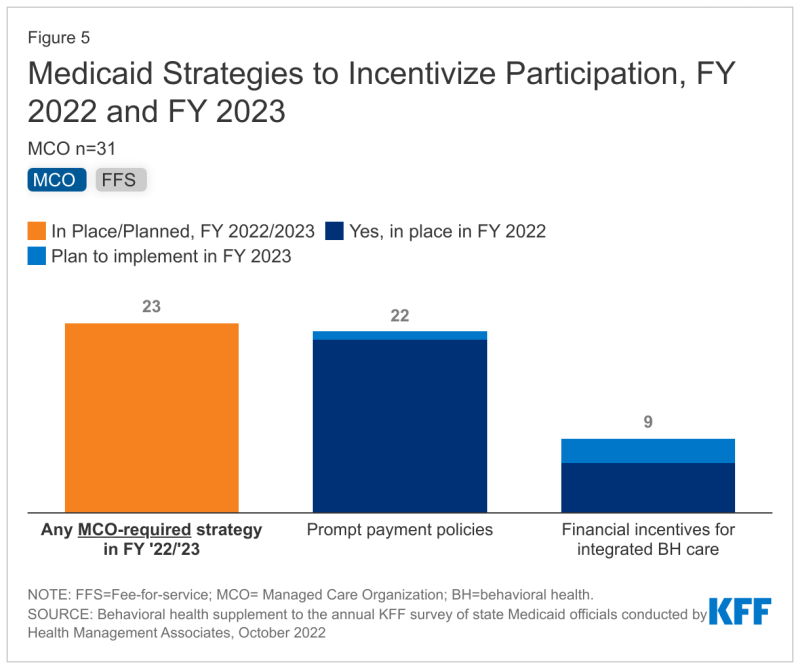
“State strategies to address the behavioral health workforce shortage fall into four key areas: increasing rates, reducing burden, extending workforce, and incentivizing participation,” the KFF analysis said.

Because most Medicaid enrollees receive coverage through health insurance plans, those companies will be intricately involved in addressing the crisis. Making sure enrollees have access to mental health specialists such as psychiatrists challenges not only Medicaid but the entire healthcare system.

Health plans Medicaid

Primary care physicians provide most of the mental health care in the country because there are simply not enough psychiatrists and other specialists in that category available.

However, help may be on the way thanks to the Consolidated Appropriations Act (PDF), passed in December. The act authorizes funding for at least 100 new psychiatric residency programs. In addition, the act allows more providers to subscribe buprenorphine for the treatment of opioid use disorder.

Psychiatrists are paid about the same as PCPs for delivering the same services, a fact that discourages their taking on Medicaid patients, according to KFF. In Medicaid fee-for-service, states have more leverage to ensure psychiatrists are paid more. 

“Managed care plans, which now serve most Medicaid beneficiaries, are responsible under their contracts with states for ensuring adequate provider networks and setting rates to providers, but states have several options to ensure that rate increases are passed to the providers that contract with managed care organizations,” the KFF analysis said.

Most states that contract with MCOs told KFF that they would start requiring that MCOs implement FFS rates for psychiatrists and other mental health professionals. “A smaller share of MCO states do not require, but may encourage, MCOs to implement FFS rate increases,” the analysis said.

Some states targeted pay increases for providers that deal with specific problems, such as substance use disorder. Other states made across-the-board moves, such as Oregon, which directed MCOs to increase payments by 30% for providers who get 50% of their revenue from Medicaid.

To extend the workforce, some states will widen their scope of practice, allowing more providers to care for mental health patients. Some providers, such as social workers in New Jersey, will now be able to bill Medicaid directly for serving mental health patients.

“Most states with MCOs reported that requirements in FFS were also required for MCOs,” the KFF analysis said. “Adding peer or family specialists as providers was the most commonly reported strategy for expanding the workforce.”

Interprofessional consultation will be given more leeway. For instance, PCPs in rural areas would be reimbursed for consulting with psychiatrists to discuss medication management. CMS recently ruled (PDF) that such consultations can be billed as a distinct service. “While access to specialty care has been a challenge across a range of specialties, access to specialty care for mental health and substance use disorders has been a particular challenge,” CMS states.

CMS pointed out that Medicaid enrollees have higher rates of chronic diseases in general, conditions that behavioral health problems exacerbate. “While interprofessional consultation is key to expanding access to behavioral health services, it can also be an effective component of expanding access to specialty care for physical health conditions, particularly in rural and remote areas that may be lacking specialists,” CMS said.

CMS also encourages the use of telehealth for mental health services for increasing “retention in substance use disorder treatment, including medication-assisted treatment, especially when treatment is not otherwise available or requires lengthy travel,” CMS stated.

The “hassle factor” vexed physicians, since managed care via health plans first rose to prominence in the early 1990s. It covers many plan-mandated requirements that doctors didn’t face before and don’t appreciate now, such as needing to get prior authorization to do certain procedures, the implementation of capitation—which detractors complain pays doctors based on the volume of patients treated rather than quality—and having to maneuver through a bureaucratic minefield if they accept patients from different health insurance plans, which most doctors do.

In dealing with mental health in 2023, states encourage managed Medicaid to reduce the administrative burden responsible for that paperwork. 

administrative burden Kaiser

“Providers contracting with multiple MCOs may notice that administrative requirements and processes vary between MCOs due to the lack of standardization at the state level,” the KFF analysis said. “Varying administrative burdens may be particularly challenging for smaller behavioral health providers/organizations. Thus, addressing administrative burdens could reduce time associated with unbillable provider time and resources and result in higher rates of Medicaid acceptance.”

About three-quarters of states tell KFF that they want to decrease administrative burden in both FFS and managed Medicaid. Some want providers to tell them how best to do that. “Somewhat fewer states reported standardized prior authorization, treatment plan forms, or initial number of units or days for prior approved services,” the KFF analysis said.

Still, reducing the hassle factor when it comes to serving Medicaid enrollees with behavioral health issues will require a changed approach, and it certainly won’t be easy. “As an example,” the KFF analysis said, “one state noted that their state’s behavioral health authority also regulates documentation, so efforts to streamline documentation require collaboration between the two agencies."

State Medicaid officials told KFF that to effectively care for individuals with behavioral health problems, providers need to be paid fairly and in a timely manner in both FFS and managed Medicaid.

“In North Carolina, for instance, health plans must notify providers within 18 calendar days of any additional information needed to process a claim and they must pay for approved clean claims within 30 calendar days,” the KFF analysis said. “Some states may choose to use financial incentives to encourage providers to participate in integrated physical and behavioral health systems, with some incentives aimed at increasing behavioral health screenings or developing the workforce.”

Of course, Medicaid is a joint state and federal program, and KFF researchers argue that the Consolidated Appropriations Act ensures that the federal arm will do its share in fostering improvements in mental healthcare for managed Medicaid. The act requires “additional training on treating and managing patients with OUD or SUD for all prescribers of controlled substances. Other relevant provisions include grants for mental health peer support providers and requirements to improve the accuracy and usability of Medicaid provider directories, which have been shown to be particularly inaccurate for mental health.”

HHS: Uninsured rates decline for younger Americans from 2019 through 2021

 More Americans in key demographics that have been historically uninsured saw coverage gains from 2019 through 2021, a new federal report finds. 

The Department of Health and Human Services (HHS) released a report Friday detailing gains in coverage from 2019 through 2021. Officials attributed a decline in the uninsured rate from 11.1% in 2019 to 10.5% in 2021 due to expansions in Medicaid and other gains via the Affordable Care Act’s (ACA's) marketplace. 

“We know that access to quality, affordable healthcare is key to healthier lives, economic security, and peace of mind” said HHS Secretary Xavier Becerra in a statement. “As we move forward, [HHS] will continue to do everything we can to protect, expand and strengthen the programs that provide the quality, affordable healthcare Americans rely on and deserve.”

The report found that the decline in the uninsured rate in 2021 was the largest among people with household incomes between 100% and 250% of the federal poverty level. In 2021, the White House engaged in a special enrollment period as well as enhanced and expanded premium tax credits.

The enhanced credits were recently extended through 2025 as part of the Inflation Reduction Act passed last year. 

Those credits helped lower the cost of insurance for low-income ACA consumers and are a key driver of record enrollment of 15.9 million people for the latest 2023 open enrollment

There were also larger gains in coverage among demographic groups that had high uninsured rates historically. 

For example, adults ages 19 to 34 and 35 to 49 uninsured rates both declined by one percentage point. Latino individuals also saw the uninsured rate decline by one percentage point. 

The gains in coverage varied at times between states, with ones that expanded Medicaid under the ACA having the largest increases.

Maine saw the largest decline in its uninsured rate by 3.2 percentage points from 2019 through 2021. Idaho came in second with 2.1 percentage points during the same time period. 

Researchers analyzed data from 2019 and the newly released 2021 American Community Survey, which surveys Americans on several topics including insurance coverage.

The report also investigated the reasons people go without health coverage. 

“The most common barrier cited by people without insurance is cost, with more than 70% of uninsured people reporting that health coverage was unaffordable,” the report said. 

It remains unclear what impact upcoming changes could leave on uninsured rates, especially among those who got coverage via Medicaid. 

States have not dropped anyone off Medicaid since early 2020 in exchange for a boost to its federal matching rate payment for Medicaid. The continuous coverage requirement was supposed to run through the COVID-19 public health emergency, but Congress passed a law late last year that enabled states to start Medicaid eligibility redeterminations this April. 

https://www.fiercehealthcare.com/payers/hhs-uninsured-rates-decline-younger-americans-2019-through-2021

Biden COVID-19 adviser David Kessler to step down

 David Kessler, who for the last two years has served as a top adviser to President Biden on the COVID-19 pandemic and vaccine distribution, will leave his job at the end of the month, administration officials confirmed Friday.

“Whether he was leading our effort to develop and distribute safe and effective COVID-19 vaccines and treatments, or sharing his perspective during daily strategy sessions and data deliberations, Dr. Kessler’s contributions to our COVID-19 response have helped save lives,” Health and Human Services Secretary Xavier Becerra said in a statement. “I am grateful for the wisdom he has shared with us and wish him the best in his future endeavors.”

Kessler co-chaired Biden’s coronavirus task force during his transition into the White House, and he worked as Food and Drug Administration commissioner from 1990-1997 under former Presidents George W. Bush and Clinton.

Over the past two years, Kessler has served as chief science officer of the COVID-19 response and spearheaded federal efforts to vaccinate millions of Americans. The Biden administration came into office at a time when relatively few Americans were vaccinated and distribution of the shots was still being ramped up.

Kessler and his team oversaw Biden’s goal of getting 100 million shots in arms his first 100 days in office, even after use of the single dose Johnson & Johnson vaccine was paused.

Upon Kessler’s departure, roughly 80 percent of the U.S. population has gotten at least one dose of the vaccine. 

“There has been no more valued and trusted wise advisor to the @POTUS on scientific and medical matters than Dr. Kessler.  He will be GREATLY missed,” White House chief of staff Ron Klain tweeted.

But getting the public to get booster shots that are updated to guard against new strains has been more difficult as pandemic fatigue sets in three years after it began, and just 16 percent of Americans over the age of 5 have gotten their updated booster shot, according to Centers for Disease Control and Prevention data.

Kessler leaves shortly after the retirement of Dr. Anthony Fauci, who spent decades as the director of the National Institute of Allergy and Infectious Diseases and served as Biden’s top medical adviser on the pandemic.

Health officials have warned new variants could emerge at any given time, with swaths of the world less vaccinated than others, and Congress has been unwilling to provide additional requested funds to address the current pandemic and prepare for the next one.

https://thehill.com/homenews/administration/3812901-biden-covid-19-adviser-david-kessler-to-step-down/

McCarthy says he will look at expunging Trump impeachment

 Speaker Kevin McCarthy (R-Calif.) said on Thursday that he would consider expunging one or both of former President Trump’s impeachments.

“I would understand why members would want to bring that forward,” McCarthy said in response to a question at a press conference on Thursday, before listing off several other key priorities for House Republicans. 

“But I understand why individuals want to do it, and we’d look at it,” he added.

In the last Congress, a group of more than 30 House Republicans led by Rep. Markwayne Mullin (Okla.) put forward a resolution to expunge Trump’s impeachment in the wake of the Jan. 6, 2021, attack on the Capitol. The resolution was supported by the fourth-ranking Republican in the House, Republican Conference Chairwoman Elise Stefanik (N.Y.).

A smaller group, again led by Mullin, also introduced a resolution to expunge Trump’s December 2019 impeachment for allegedly attempting to withhold military aid from Ukraine in an effort to pressure the country to investigate the business dealings of President Biden’s son Hunter Biden.

The Senate ultimately acquitted Trump in both impeachments, after failing to reach the two-thirds majority required to convict him.

https://thehill.com/homenews/house/3811952-mccarthy-says-he-will-look-at-expunging-trump-impeachment/