Search This Blog

Monday, January 16, 2023

Adams inks deal to offer abortion pills at NYC clinics — sparking ‘tourism’ fears

 City-run health clinics will soon be able to provide “medical abortions” with pills to terminate a pregnancy — a move critics charge will turn New York into an abortion tourist mecca.

The city Department of Health and Mental Health, in a legal notice, said it intends to enter into a “sole source” contract with Nixon-Shane LLC/ R&S Northeast LLC., to buy 200 milligram mifepristone tablets — the abortion pill.

Mifepristone is used with another pill, misoprostol, to abort a pregnancy within the first 11 weeks of gestation.

In the public notice, the health department said it’s buying the abortion pill “to mitigate the threat to public health posed by the recent Supreme Court decision that overturned Roe vs Wade, which provided a constitutional right to abortion.” The nation’s high court ruling said states should determine legalization or restriction of abortion.

New York state had among the strongest abortion rights and access laws in the country even before Roe vs. Wade was struck down, with sweeping legislation approved in 2019. State lawmakers are now pushing for a constitutional amendment to protect abortion rights.

Mifepristone is not the same as the “morning after” pill, which is considered emergency contraception — and can have side effects.

The city's Department of Health and Mental Health announced that it will sign a deal to buy 200 milligram mifepristone tablets for "medical abortions."
The city’s Department of Health and Mental Health announced that it will sign a deal to buy 200-milligram mifepristone tablets for “medical abortions.”
AP Photo/Jeff Roberson

“These are usually mild and last between a couple of days and two weeks. They can include cramping, spot bleeding and nausea/vomiting. If you are having more severe side effects, call your provider immediately,” the health department says in the “abortion hub” section on its website.

Opponents argue the city is looking to become an abortion tourist destination and pill mill as other states limit or ban abortion.

“Abortion is the killing of an innocent human life,” said Dennis Poust, executive director of the New York State Catholic Conference, which includes the Archdiocese of NY and Brooklyn-Queens Diocese.

“Abortion, unfortunately, is New York’s answer to everything concerning pregnancy. Abortion is promoted as a social good. Why won’t New York help pregnant women who wish to keep their babies bring them to term and escape poverty?”

State Conservative Party chairman Gerald Kassar fumed, “This is abortion tourism. New York has gone way too extreme on abortion.”

Mifepristone is used with the pill misoprostol to abort a pregnancy within the first 11 weeks of gestation.
AP Photo/Victor R. Caivano, File

“We respect the sanctity of life. We believe life begins at conception and government funds should not be used for abortion,”  he added.

City Hall defended stockpiling and providing medical abortion pills for women who want to terminate a pregnancy. 

“Mayor Adams and the Health Department have made no secret of their commitment to reproductive rights,” the Health Department said in a statement. “With New York state’s abortion protections codified, our city launched into action in support of residents from other states whose freedom of choice was once again restricted after the Dobbs v. Jackson Women’s Health Organization ruling and doubled down on support for New Yorkers.”

The health department wouldn’t say how many abortion pills it’s buying to stock at its clinics — or how much the contract is for.

Adams signed a law passed by the City Council last year requiring the health department to offer federal medicine for medication abortions, at no cost to patients, at city-run health clinics, with $1 million made available to boost abortion access.

“I’m definitely supportive. Access to abortion is important,” said Upper West Siide Councilwoman Gale Brewer, a co-sponsor of the law to provide abortion pills at city clinics.

“Our city health clinics are a good place for patients that provide professional medical advice and counseling. The fact that the pills are being offer at the health clinics is a good thing.”

New York state had among the highest abortion rates in the country in 2020 among females 15 to 44 years old, with 110,0360 pregnancies terminated — 28.18 per 1,000, or double the national rate, according to a study by the Guttmacher Institute, a pro-choice group.

The city Health Department reported 49,784 abortions in 2019.

The decision to stock the pills at city-run health clinics has critics worried about "abortion tourism."
The decision to stock the pills at city-run health clinics has critics worried about “abortion tourism.”
Googlle Maps

The city reported the number of medical or non-surgical abortions — via pills — jumped 51.7% from 2010 to 2019, to 8.8 per 1,000 females of child bearing age as the pills became more available.

By comparison, the number of surgical abortions plummeted 50.9% to 18.4 per 1,000 females of child rearing age, the health department report said.

Gov. Hochul is requiring that abortion pills be stocked at SUNY and CUNY campuses.

“Students at SUNY and CUNY deserve comprehensive access to reproductive health care, including abortion services,” Hochul’s 2023 State of the State policy book stated. “That is why Governor Hochul will ensure all public colleges and universities in the SUNY and CUNY systems either offer medication abortion in their college health centers or establish a relationship with a local reproductive health care provider to directly refer students to a trusted facility for abortion services, an approach that will improve students’ access to abortion while allowing institutions to meet their needs in the way that best fits their campus infrastructure.”

https://nypost.com/2023/01/15/adams-inks-deal-to-offer-abortion-pills-at-nyc-clinics-sparking-tourism-fears/

NY lawmakers vow to tackle cyber hack attacks against hospitals, schools

 New York state lawmakers have promised to make helping local governments, schools and hospitals protect against cyber ransomware attacks a top priority during the 2023 legislative session.

It comes after a wave of such attacks hit institutions across the Empire State, with the computer systems of a major Brooklyn hospital network and those of the Suffolk County government disabled by hackers last year.

“This is a top item on my agenda for 2023,” said Steven Otis, chairman of the Assembly Science and Technology Committee.

“I am especially sensitive to local government and school districts being targets of ransomware attacks,” said Otis. “We have to get into prevent mode.”

study just published in the Journal of the American Medical Association found that the number of ransomware attacks against hospitals and other medical institutions more than doubled from 2016 to 2021 —  from 43 to 91 nationally, and that figure is likely under-reported.

Hospitals are among the top targets of hackers because of all the personal information they have stored about patients.

The computer database systems for Brooklyn One Health System containing private patient information and medical records were disabled by hackers last November. The hospital network — which includes Brookdale, Interfaith and Kingsbrook Jewish hospitals — was forced to go back to a manual system of pen and paper.

The hacking forced Interfaith Medical Center and other hospitals in the system to have to use a manual system for records.
Paul Martinka

Hackers also breached a Suffolk County web server in a cyberattack on Sept. 8, 2022, demanding a $2.5 million ransom. An investigation found that the hackers had initially breached Suffolk’s database in December 2021, exploiting a flaw in the software and remaining there for nine months before posting a ransomware note demanding $2.5 million.

Even the Metropolitan Opera’s Box Office was hacked last month.

“Ransomware attacks and cyber hackers are the existential threat of our times,” said former state Sen. Diane Savino, who chaired the committee on Internet and technology and is now a senior adviser to New York City Mayor Eric Adams.

“In some cases you’re dealing with terrorist organizations. Hackers are aiding and abetting criminal enterprises. The federal government has done almost nothing.”

Gov. Kathy Hochul last year appointed the state’s first chief cyber officer, Colin Ahern, to oversee anti-hacking efforts, and said the state had beefed up hacking defenses after Russian invaded Ukraine.

State senators who oversee homeland security and technology are considering holding hearings on cybersecurity ransomware threats this year.

“We should be doing more to protect local governments and state government as well from ransomware attacks,” said Sen. Jessica Scarcella-Spanton (D-Staten Island/Brooklyn), the new head of the committee on veterans, homeland security and military affairs.

Aides to Mayor Adams said they have anti-hacking programs in place.

“The Adams administration is taking bold, proactive steps to protect the City and its nearly 9 million residents from damaging cyberattacks to our critical infrastructure and essential services,” said a spokesperson for the city Office of Technology and Innovation.

“From establishing a Joint Security Operations Center to coordinate cybersecurity efforts across city, state, and federal entities, to launching an academy to train City employees to investigate cyber incidents in their agencies, the City has prioritized efforts to combat today’s complex — and increasingly costly — cyber threats.”

The agency also encourages New Yorkers to download Cyber Command’s NYC Secure app to protect their phone from cyber threats.

https://nypost.com/2023/01/15/ny-lawmakers-vow-to-tackle-cyber-hack-attacks-against-hospitals-schools/

Merck talks up subcutaneous Keytruda ahead of phase 3 data drop

 Merck has talked up the value of its subcutaneous version of Keytruda, arguing that the investigational therapy will increase access to treatment by untethering patients from infusion centers. 

Roche has taken the lead in the race to bring a subcutaneous immune checkpoint inhibitor to market in the U.S., but Merck, which dominates the existing market for intravenous infusions, and others are giving chase. A phase 3 clinical trial of Merck’s subcutaneous prospect in lung cancer is scheduled to reach its primary completion date next month.

Ahead of that milestone, Dean Li, president of Merck Research Laboratories, used the J.P. Morgan Healthcare Conference to make the case for switching from intravenous to subcutaneous administration.

“I think about it as scientific innovation that drives access to a life-saving medicine. Especially in the early stage, you have patients [who] don't want to be tethered. They can't be tethered to an infusion center. If you can remove that for them, you will increase access not just in the cities, but in the world, throughout the United States, but in other countries. So this is [an] important innovation,” Li said.

Li acknowledged that “there’s some debate” about subcutaneous checkpoint inhibitors. Today, Keytruda is given as a 30-minute infusion every three or six weeks. In some indications, the monoclonal antibody is used in combination with other treatments.

If a patient needs to visit an infusion center to receive another treatment, the impact of switching to a subcutaneous checkpoint inhibitor could be negated. However, Li thinks subcutaneous Keytruda will still have value in that scenario. 

“I believe that even when you have an infusion medicine plus infusion Keytruda, if I change it to subcu, I can really, really limit the time that you spend in an infusion center and also stage it in the quite correct sequence depending on the sequencing of other drugs,” Li said.

The push to bring a subcutaneous version of Keytruda to market comes as Merck prepares for the loss of exclusivity on the intravenous formulation in 2028. At that point, biosimilar companies will be able to sell copies of Keytruda, creating an incentive for Merck to differentiate its drug and establish new intellectual property. 

https://www.fiercepharma.com/pharma/chasing-roche-merck-talks-subcutaneous-keytruda-ahead-phase-3-data-drop

Base Editing Shows Promise In Treating Heart Disease

 Researchers from the University of Texas Southwestern Medical Center have successfully used base editing technology to repair damaged heart tissue, according to a study published last week in the journal Science.

The team, led by Simon Lebek and Eric Olson, used a CRISPR-Cas9 nucleotide base editing system to modify an enzyme called the calcium calmodulin-dependent protein kinase IIδ (CaMKIIδ). The researchers designed a editing system to ablate the oxidative activation sites of CaMKIIδ, which cause pathological enzyme activation.  

CaMKIIδ is a form of CaMKII, a protein involved in signaling pathways across various body functions. For instance, CaMKII has been shown to play a role in learning and memory, CD8 T-cell activation and calcium homeostasis in the heart.

In the study, the base edits to CaMKIIδ conferred “protection from ischemia/reperfusion injury” to cultured heart muscle cells, the researchers reported.

They then tested this approach in mouse models, in whom ischemia or reperfusion injuries were induced through surgery. The CRISPR-Cas9 base editor was then injected into the injured area. The hearts of treated mice were able to “recover function from otherwise severe damage,” the researchers wrote.

Overall, these findings suggest that “CaMKIIδ gene editing may thus represent a permanent and advanced strategy for heart disease therapy,” they concluded.

A Burgeoning Field

Base editing employs chemical reactions to bypass the need to make double-stranded breaks on the DNA molecule to induce genetic changes. In turn, base editors are hypothesized to be both safer and more efficient at correcting point mutations than other types of gene editing platforms.

Several biopharma companies have been quick to leverage this technology to develop potentially marketable therapies. One of them is Beam Therapeutics, which is advancing its anti-CD7, multiplex-edited, allogeneic CAR-T candidate BEAM-201 in the clinic, testing it as a treatment for relapsed/refractory T cell acute lymphoblastic leukemia/T cell lymphoblastic lymphoma.

Last month, the FDA lifted its clinical hold on BEAM-201, which the agency had first imposed in August 2022, after it had requested more information regarding genomic rearrangement and off-target effects.

Another player in the base editing space is Verve Therapeutics, which uses the same technology as Beam. In November, VERVE-101, the company’s candidate for heterozygous familial hypercholesterolemia, was also put on hold by the FDA.

https://www.biospace.com/article/study-base-editing-shows-promise-in-treating-heart-disease-/

Walgreens removes purchase limits on children's fever medicines


Pharmacy chain Walgreens Boots Alliance Inc said on Monday it has removed online-only purchase limits for its over-the-counter pediatric fever-reducing products, as supply conditions improve.

Pharmacy chains including CVS Health Corp and Walgreens as well as U.S. grocer Kroger Co had last month limited purchases of children's pain and cold medicines at a time when the country was experiencing one of the worst flu seasons in a decade.

Walgreens had put a limit of six over-the-counter pediatric fever reducer products per online transaction.

https://www.marketscreener.com/quote/stock/WALGREENS-BOOTS-ALLIANCE-19356230/news/Walgreens-removes-purchase-limits-on-children-s-fever-medicines-42742322/

FEMA Didn’t Stop $3.7B in Improper Payments

 The Federal Emergency Management Agency did not have controls in place to prevent over $3.7 billion of improper payments from the lost wages assistance program, a recent report from the Office of the Inspector General for the Department of Homeland Security found.

In 2020, in response to the Covid-19 pandemic, FEMA took funds from the Disaster Relief Fund for lost wages assistance to “help ease the economic burden for people who lost work because of coronavirus disease.” FEMA partnered with 54 state workforce agencies to rush $44 billion out the door to people who lost their jobs due to Covid-19.

OpentheBooks.com

Thanks to a lack of basic accounting controls, 21 of those 54 agencies distributed more than $3.7 billion in improper payments — in just six weeks. Included in the $3.7 billion of improper payments is $3.3 billion in potentially fraudulent payments, $21.6 million in overpayments, and $403 million in payments made without required self-certification attestations.

The report found FEMA did not institute policies to ensure state workforce agencies would not make improper payments, despite being required to do so by federal law. It also failed to ensure these agencies promptly reported allegations of fraud to appropriate agencies.

The report blamed the rushed implementation of this program for its failures, citing the short time of 11 days that the agency had to begin disbursing $44 billion worth of funds.

Unfortunately, this carelessness is part of a broader trend of improper payments. In 2021, the Government Accountability Office found $281 billion worth of improper payments across government agencies in just one year.

While it’s understandable that there will be some improper payments in Covid-era programs, it’s unacceptable to make $3.7 billion in improper payments in just six weeks because of a lack of basic accounting controls.

The #WasteofTheDay is brought to you by the forensic auditors at OpentheBooks.com

https://www.realclearpolicy.com/articles/2023/01/16/fema_didnt_stop_37b_in_improper_payments_875657.html

No, new study does not link gas stoves with asthma in children

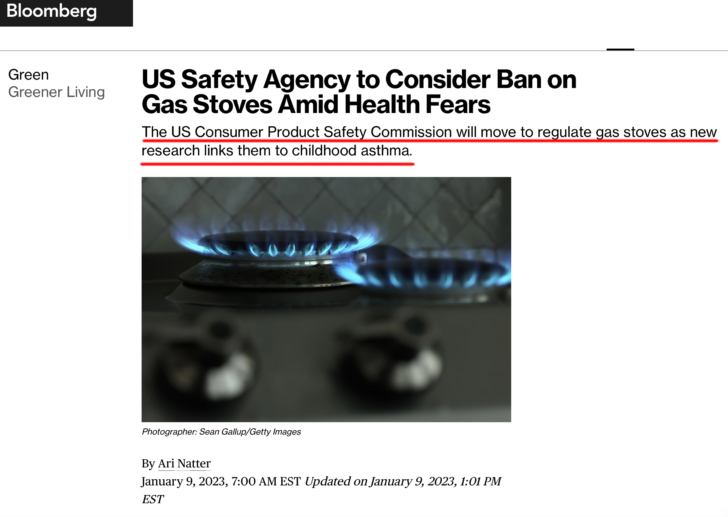
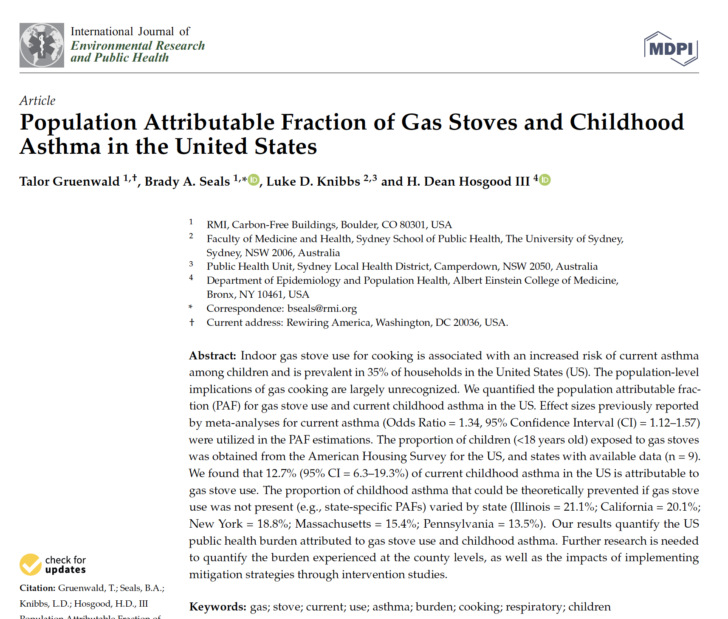
 The new study the Consumer Product Safety Commission wants to rely on to ban gas stoves is classic junk science.

Here is the study. The abstract is below.

Here is a quick summary of the some of study’s principle flaws, in no particular order:

  • It’s not actual research on children. It is a meta-analysis of previously published (and ignored) studies — a study of otherwise unpersuasive studies. The authors did a literature search for previous epidemiologic studies on gas stoves and asthma in kids and then just mixed those results together in an effort to contrive statistical significance. This is a bogus technique for a number of reasons including publications bias in the component studies — i.e., studies with null results aren’t published.
  • The study results, including the component studies, are weak statistical associations — i.e., noise range correlations. The study results, likely including the component studies, are not statistically significant either.
  • Asthma is an allergic disease. There are no allergens in natural gas. So the study has no biological plausibility. No one knows what causes asthma in children and so competing causes could not be ruled out.
  • The claim that gas stoves are responsible for 12% of childhood asthma – an epidemiologic concept called “attributable risk” – is entirely bogus because epidemiological studies can only be used to associate exposures with disease. They cannot be used to determine risk of disease because (1) the underlying data is not representative of the population; and (2) epidemiologic studies are just statistics (i.e., correlation is not causation) and cannot be used by themselves to determine cause-and-effect relationships.

If none of that means anything to you. you need to read “Junk Science Judo: Self-defense Against health Scare and Scams.”

https://junkscience.com/2023/01/no-new-study-does-not-link-gas-stoves-with-asthma-in-children/