Search This Blog

Sunday, April 9, 2023

AI Therapy Is Here, But The Oversight Isn't

 by Kate Farmer via RealClear Wire,

Since ChatGPT’s buzzy entrance into the tech world in late 2022, artificially intelligent text generation models have exploded in popularity, prompting one of history’s largest tech booms since the debut of the World Wide Web. AI is now popping up in every corner of modern life — even therapy.

Patients frustrated by long wait times and high prices in mental healthcare are increasingly turning to AI apps, websites, and chatbots for therapy. But despite their novelty, consumers should be wary. These young AI systems lack the regulatory oversight essential to ensure their safety, which can put vulnerable users at risk.

While the technology has rapidly developed in recent months, AI chat therapy is not new. The first computerized forms of AI therapy came in the 1960s and 70s, where programs like Eliza and ALICE could respond to basic user inputs and offer a rudimentary form of a ‘listening ear.’ Their creators, pessimistic about the ability of computers to recreate actual human conversation, generally regarded them as satire. But more advanced modern-day Natural Language Processing (NLP) models can generate highly convincing dialogues that pass the Turing test with flying colors. 

AI therapy systems have since left the realm of scientific experimentation and entered public markets, advertising their services as would a real clinic. Today, dozens of apps such as Woebot, Wysa, and Limbic offer a wide range of therapy services, mostly for free or at a small subscription fee. They exercise what Alexandrine Royer of the Montreal AI Ethics Institute calls “emotionally intelligent computing,” engaging empathetically with user inputs and responding with established therapy techniques like Cognitive Behavioral Therapy (CBT). The sites all present the same disclaimers: that they are not a substitute for a real professional, that they cannot diagnose conditions or prescribe medicine, and to please seek emergency help in times of crisis. They also emphasize that the content of users’ sessions will be kept private.

But this unique “non-professional” space occupied by AI therapy apps and websites is almost entirely unregulated. AI therapy services, even highly sophisticated sites like Woebot, are still classified by the FDA as “general wellness” products — the regulatory category for “low risk products that promote a healthy lifestyle.” General wellness products are not subject to oversight in the way foods, cosmetics, or medical care are. They are held only to a set of vague “nonbinding recommendations” published by the FDA for suggested use (and that haven’t been updated since 2019). As long as AI therapy sites continue to disclaim the ability to treat specific conditions like anorexia or anxiety disorders, they are allowed to allege certain mental health benefits without verification from the FDA. 

It’s no secret AI makes mistakes. Every month, high-profile AI systems make news with laughable blunders. But the stakes are higher for mental health. AI therapists, and AI chatbots in general, cannot understand a user’s nuance and precise meaning every time, so they are forced to guess. Typically, this guesswork results in dialogue that is clunky and frustrating. At their worst, however, they can accidentally give out harmful advice — errors that can be life-threatening when issued to vulnerable users. High-profile AI therapy companies are aware of these blunders: some, like Woebot, have even issued press releases condemning other AI therapy models, while continuing to defend their own. 

But the confidentiality of user data, combined with the lack of transparency measures for AI therapy sites, makes it difficult for users and regulators to determine the safety and effectiveness of care. AI therapy systems often advertise positive statistics proving the effectiveness of their product, but the data is self-reported, and the studies are usually conducted internally by the companies themselves. Because of their FDA status as “general wellness products” (GWPs), not legally marketed devices, they are not held to any federal transparency requirements over the claims they make. Traditional FDA approval requires sufficient, valid scientific evidence assuring a product’s safety and efficacy — but no such requirements apply for GWPs. Without this oversight, AI therapy providers can make unsubstantiated claims about their model’s safety and benefits without repercussions.

This isn’t to say AI therapy services should be abandoned entirely. When actually used for “general wellness” — not for serious conditions, and certainly not for crisis episodes — they have the potential to offer unique, on-demand benefits that a regular therapist cannot. Their high degree of confidentiality, ease of access, zero wait times, and extremely low cost can make AI therapy sites a decent option down the line. However, until better user protections are in place, we cannot fully trust AI therapy systems to provide safe and effective care.

AI systems, as a whole, are popping up faster than the speed of regulation. It remains up to the FDA and other federal agencies to determine where and how AI therapy services will be subject to oversight. But, as in any period of great technological advancement, the oversight will eventually catch up, along with mechanisms for systems transparency and user protection. For now, however, the best medicine for users is probably to wait.

https://www.zerohedge.com/technology/ai-therapy-here-oversight-isnt

Ports Of Los Angeles And Long Beach Close Due To Widespread Worker Shortages During Contract Talks

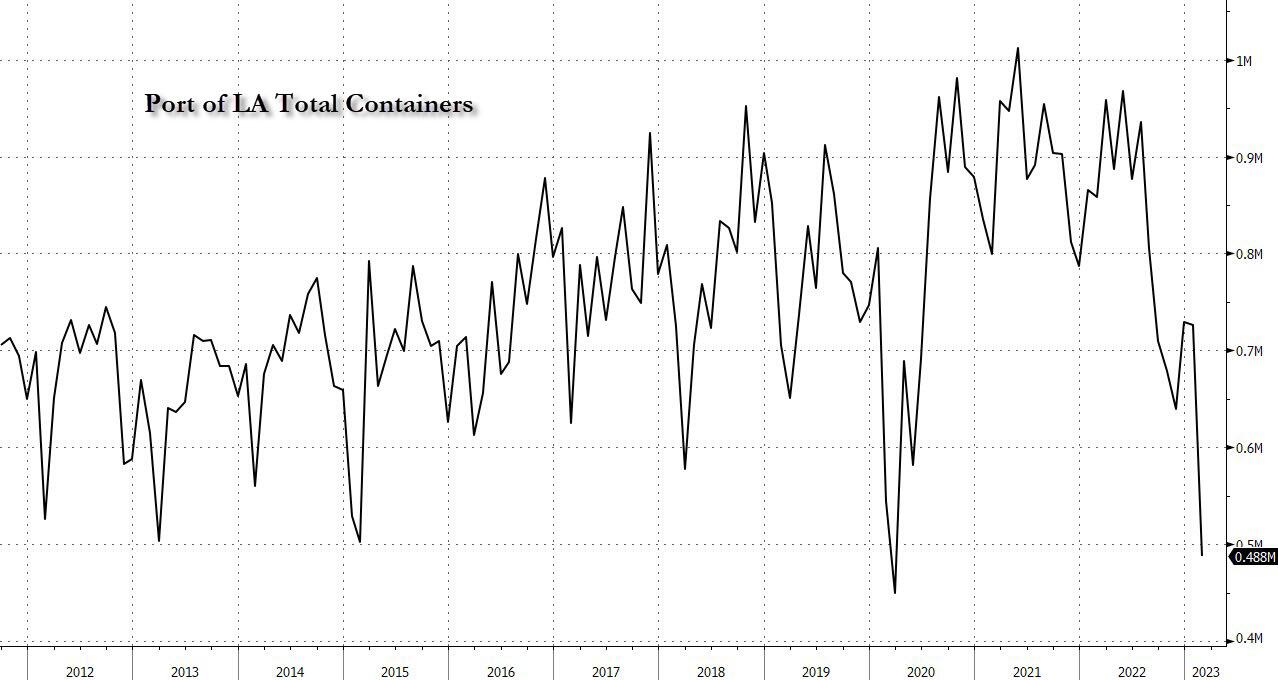
 The ports of Los Angeles and Long Beach have closed due to widespread worker shortages apparently linked to ongoing contract talks, ABC7 news reported. Unions representing workers at the two ports are in talks for a new contract.

The ILWU Local 13 withheld workers from their shifts starting Thursday evening, according to the Pacific Maritime Association, which represents shipping employers on the West Coast.

"The action by the Union has effectively shut down the Ports of Los Angeles and Long Beach - the largest gateway for maritime trade in the United States," the PMA said. The union, however, released a statement making no mention of any formal work action.

The organization said Thursday several thousand members were in attendance at the organization's regular monthly meeting, at which a new president was sworn in. It said on Friday many members were observing religious holidays with their families.

"On Friday, April 7, 2023, union members who observe religious holidays took the opportunity to celebrate with their families," read a statement from ILWU. "Cargo operations are ongoing as longshore workers at the Ports remain on the job."

Port officials and shippers, however, believe the absences are a deliberate, if unspoken, message from the union to put pressure on the talks. The union has been working without a new contract since July.

The closures come as cargo volumes have already dropped from peak levels a year ago.

Trade experts say some shippers have already started diverting cargo traffic away from the two ports.

"A lot of the cargo has been shifted away from the West Coast ports, into the middle of our country and the East Coast," said Nick Vyas, executive director of the Kendrick Global Supply Chain Institute at the University of Southern California. "So we have a seen a significant drop in volume at our West Coast ports, which is not a good sign."

He noted that some 40% of the foreign goods arriving to the United States are processed through the two ports.

The Port of Los Angeles released a statement saying it is continuing to communicate with the ILWU and the PMA to support a return to normal operations.

"Resuming cargo operations at America's busiest port complex is critical to maintaining confidence to our customers and supply chain stakeholders," Port of Los Angeles officials said.

Port officials remain optimistic that operations will resume Saturday.

Port of Long Beach Executive Director Mario Cordero released a statement: "Four of the Port's container terminals are closed for the day, today, April 7. Terminal operators at the affected sites said they made the decision to close when workers did not report for their shifts this morning. We have no further information as to the situation, but it is expected that normal, regularly scheduled hours and operations will resume tomorrow."

https://www.zerohedge.com/markets/ports-los-angeles-and-long-beach-close-due-widespread-worker-shortages-during-contract

Ukraine suggests Russia altered leaked US intelligence documents

 Ukraine on Sunday accused Russia of altering the Pentagon documents that have surfaced on social media in an apparent U.S. intelligence leak. 

“In recent decades, the most successful operations of the Russian special services took place in Photoshop,” Ukrainian Defense Ministry’s intelligence directorate representative Adriy Yusov said in televised remarks posted to the directorate’s website.

The leaked documents include details on U.S. aid to Ukraine and Kyiv’s military activities, but experts have noted discrepancies that call the documents’ accuracy into question.

“From the preliminary analysis of these materials, we see false figures on losses from both sides,” Yusov said.

In some of the documents, estimates of Russian troop deaths have been noted to be significantly lower than the figures given by U.S. officials, according to the Associated Press.

Yusov also sought to downplay concerns raised in the documents about Ukrainian ammunition supplies and air defense capabilities, saying “it is not a secret for anyone that Ukraine asks questions about aviation, tanks, ammunition and other things.”

U.S. officials confirmed to the New York Times, which first reported the leaked documents, that the materials appear to be legitimate intelligence briefs, though at least one was flagged as being modified. 

“The aim of secret data ‘leaks’ is obvious: divert attention, cast doubts & mutual suspicions, sow discord,” said Ukrainian presidential adviser Mykhailo Podolyak on Twitter.

“It’s an ordinary game of ru-secret services. To take open briefings, add fake info or certain parts of interceptions & publish them on social networks legalizing the ‘leak,’” Podolyak said.

https://thehill.com/policy/international/3941432-ukraine-suggests-russia-altered-leaked-us-intelligence-documents/

Biden’s health chief says ‘everything is on the table’ to fight abortion pill ruling

 President Biden’s health chief said “everything is on the table” to fight the Texas abortion pill ruling last week that blocked the prescribing and distribution of mifepristone, including ignoring the ruling as some Democrats have suggested.

Mifepristone is one of two medications used for medicated abortions for more than 20 years. Rep. Alexandria Ocasio Cortez (D-N.Y.) is among a number of Democrats who have argued there is precedent for ignoring the ruling if the Biden administration fails to halt it in court.

CNN’s Dana Bash asked Health and Human Services Secretary Xavier Becerra on “State of the Union” whether having the Food and Drug Administration (FDA) ignore the ban was being considered.

“Everything is on the table,” the secretary responded. “The president said that way back when the Dobbs decision came out. Every option is on the table.”

A federal judge in Texas blocked the abortion pill approval on Friday, giving the government a weeklong window to appeal and seek emergency relief before the ruling is enacted. The FDA appealed the decision later the same day to the 5th Circuit Court of Appeals.

Separately on Friday, a federal judge in Washington state blocked the FDA from “altering the status quo and rights as it relates to the availability of Mifepristone” after 17 states and Washington, D.C. filed a lawsuit arguing the drug was too regulated.

These duel rulings have thrown the future availability of the drug into question, with the fight likely to move quickly to the Supreme Court.

Becerra said the administration would take the fight to court, and believed it would prevail. Asked if he was concerned about the conservative Supreme Court issuing a ruling on the abortion pill ban, Becerra said that it is the justices’ role to “apply the law to the facts and the evidence.”

“And so I don’t care who the nine justices are on the Supreme Court or any court of appeal,” he said. “They should be able to discern the difference between inserting their personal judgment and using the facts and evidence to make a legal ruling.”

https://thehill.com/homenews/sunday-talk-shows/3941426-bidens-health-chief-says-everything-is-on-the-table-to-fight-abortion-pill-ruling/

Leaked documents detail dire assessments of Ukrainian army

 The classified documents apparently leaked last week detail the weaknesses in the Ukrainian army, specifically shortfalls of ammunition and air defense, according to reports.

The Washington Post reported that one of the leaked Pentagon documents detailed that Ukraine’s air defense may not be able to protect the front lines through the end of May. One of the documents included an assessment from February from the Defense Department’s Joint Staff, which said Ukraine’s “ability to provide medium range air defense to protect the [front lines] will be completely reduced by May 23,” according to the Post. 

The reported classified document also says once Ukraine’s first layer of defense munitions run out, the “2nd and 3rd Layer expenditure rates will increase, reducing the ability to defend against Russian aerial attacks from all altitudes.”

Both the Justice Department and the Defense Department are investigating the apparent leak of classified documents after Russian sources posted them to online websites, like Twitter. The documents are dated from March or earlier of this year, and appear to include information on Ukrainian training, munition expenditures and estimated casualties from both Ukraine and Russia. The documents do not appear to have plans for a Ukrainian counter offensive expected for this spring.

The Post also reported that another document shows how quickly the Ukraine’s air defense projectiles will deplete, saying that  SA-11 systems will be depleted by April 13, NASAMs, made by the U.S., will be expended by April 15 and SA-8s will be gone by May. Another chart appears to suggest that Ukrainian air defense focus on Russian jets and helicopters and ignore smaller threats, like drones, in light of the expected shortfalls, according to the Post.

The New York Times reported that the trove of documents includes an assessment on the state of fighting in Bakhmut, a city in Ukraine’s eastern Donetsk region that has been under siege for seven months. The Times said that the documents appear to show that the U.S. is spying on Ukraine’s top military and political leaders.

The document outlined how Ukrainian forces “were almost operationally encircled by Russian forces in Bakhmut,” as of Feb. 25, the Times reported. The documents show top Ukraine leaders offering grim assessments in the ongoing fight for Bakhmut, with General Kyrylo Budanov, Ukraine’s director of military intelligence, saying that the situation was “catastrophic” at the time of the report.

The Times also reported that Roman Mashovets, an advisor to Ukrainian President Volodymyr Zelensky’s chief of staff Andriy Yermak, said that Ukrainian forces esteem was low in Bakhmut.

“Mashovets reported that, for those reasons, the morale in Bakhmut was low, with the Ukrainian forces under the impression that they were almost operationally encircled,” the assessment read.

https://thehill.com/policy/defense/3941106-leaked-documents-detail-dire-assessments-of-ukrainian-army-reports/

Fred Hutch at AACR: New targets for cancer therapies

 Experts from Fred Hutchinson Cancer Center will present their latest findings on targets in RIT1-driven cancers, ROR1 CAR T-cell immunotherapy, interplay of the microbiome and genetics in colorectal cancer and more at the annual meeting of the American Association for Cancer Research, to be held April 14-19 in Orlando, Florida. 

Other meeting highlights include:

Philip Greenberg, M.D. of Fred Hutch will become AACR president.

Public health researcher and biostatistician Ruth Etizioni, Ph.D. will discuss new and emerging tests for early detection of cancer.

Christopher Li, M.D., MPH, a national leader in diversity, equity and inclusion efforts at cancer centers, will best practices and strategies to enhance diversity. 

https://www.newswise.com/articles/fred-hutch-at-aacr-new-targets-for-cancer-therapies-experts-available-in-diversity-and-cancer-screening-tests-and-fred-hutch-s-philip-greenberg-becomes-aacr-president

Mirati To Present at AACR for 2 Potentially First-in-Class Clinical Stage Programs

 Mirati Therapeutics, Inc. (NASDAQ: MRTX), a commercial stage biotechnology company, today announced a presentation demonstrating in preclinical models the ability of MRTX0902, a selective and potent SOS1 inhibitor, to enhance anti-tumor activity and overcome acquired resistance in combination with either adagrasib, a potent and selective KRASG12C inhibitor, or an epidermal growth factor receptor (EGFR)  inhibitor (e.g. osimertinib).

Findings will be presented on April 17 at the American Association for Cancer Research (AACR 2023) Annual Congress as an oral presentation at 3:36 p.m. -3:51 p.m. ET / 12:36 p.m.- 12:51 p.m. PT (Presentation #3499) during the Molecular Pathway Discovery and Translation in Solid Tumors mini session. The full abstract for the presentation can be found here.

In addition, Mirati will share poster presentations featuring MRTX1719, the company's novel MTA cooperative PRMT5 inhibitor. These posters highlight the mechanism by which MRTX1719 elicits potent and selective synthetic lethality in MTAP deleted tumors as well as the further enhancement of antitumor activity via rational targeted combination strategies (Posters #2778/1 and 2779/2). Posters can be viewed on April 17 from 1:30 p.m. - 5:00 p.m. ET10:30 a.m. - 2:00 p.m. PT during the Experimental and Molecular Therapeutics Session and will be available here.

https://www.prnewswire.com/news-releases/mirati-to-present-research-at-the-aacr-annual-congress-for-two-potentially-first-in-class-clinical-stage-programs-301788788.html