Search This Blog

Friday, August 4, 2023

'How to get health insurance if you've lost Medicaid coverage'

 The nation’s health insurance system is undergoing tremendous upheaval as an estimated 8.2 million people will need to find new coverage since pandemic protections for Medicaid enrollees came to an end this spring.

That’s leaving many patients confused about how to get new medical insurance.

“It’s an overwhelming task,” said Taffy Morrison, who is working to connect Louisiana residents to new coverage through the nonprofit Southwest Louisiana Area Health Education Center. But Morrison reminds people: “Don’t panic. There is help.”

For many of those kicked off Medicaid, a state-federal health insurance program that covers people with low incomes and disabilities, new insurance will come from their employers. Others may need to turn to the Affordable Care Act online marketplaces to replace their coverage.

Elevance insurance officials told investors in mid-July they were seeing signs of movement from Medicaid to exchange plans as states ramp up reviews of who still qualifies for the public insurance program. The company, formerly called Anthem, reported 18.2% growth in its exchange plans from the year before, with its marketplace plans now covering at least 949,000 people.

To prevent gaps in insurance coverage, some states, such as California and Rhode Island, will automatically enroll people who lose Medicaid in such marketplace plans. But elsewhere, Morrison and workers at similar nonprofit health groups nationwide are helping people navigate the difficult administrative process of finding the right plan. Known as “navigators” or “assisters” and publicly funded, they work with patients free of charge.

Consumers should be wary of anyone charging to assist them in finding coverage — or pushing a particular plan. Misleading marketing has led some people to plans that aren’t actually insurance, such as health care sharing ministries, which don’t necessarily cover members’ medical bills.

The dramatic reshuffling of insurance coverage comes with the end of federal Covid pandemic protections. States were barred from kicking enrollees off Medicaid during the pandemic to ensure people had access to health care. As a result, the program swelled by 30% from February 2020 to December 2022 to cover about 92 million people, including children who receive coverage under CHIP, the Children’s Health Insurance Program. Now, for the first time since 2020, states have resumed checking whether enrollees remain eligible.

The first batch of numbers are rolling in. So far, more than 3.7 million people have lost coverage in 39 states and the District of Columbia. And in June alone, more than 50,000 of them lived in Louisiana, according to state data. Of the more than 151,000 beneficiaries’ files the state reviewed in a single month, nearly 13,000 people no longer qualified for Medicaid but roughly 38,000 additional people lost coverage because they did not submit a renewal packet for the state to determine whether they still qualified.

Morrison’s group of 50 navigators across the state will now try to make a dent in those numbers as coverage losses are expected to grow.

Patient advocates in Louisiana and elsewhere agree on one crucial first step Medicaid enrollees must take regardless of eligibility status: They must fill out and return their Medicaid renewal packets.

“That Medicaid paperwork, it’s beneficial for everybody to finish it up,” said Geoffrey Oliver, who leads Connecting Kids to Coverage, a program of Legal Services of Eastern Missouri that helps families navigate the enrollment process.

If people return the forms and are found to be ineligible, states pass along their information to online insurance exchanges such as healthcare.gov. The exchanges will follow up with people and share health plan options, functioning as another tap on the shoulder to prevent people from becoming uninsured.

People shouldn’t assume they can’t afford marketplace plans, insurance experts say. Many can enroll in low- to no-cost coverage. Roughly 2.7 million people are likely to be eligible for discounted plans, federal estimates show, representing about one-third of all those expected to be ineligible for Medicaid. Of those, about 1.7 million will qualify for zero-premium plans.

Another reason to fill out the packet: Even if adults in a household no longer qualify for Medicaid coverage, or now have employer coverage, children may still be eligible for public plans.

A message plastered on a billboard in Randolph County, Missouri, reminds people about Medicaid renewal in big, bold letters: “Don’t miss this letter.” About 34% of people living in the central Missouri county are covered by Medicaid, according to a tracker maintained by Washington University in St. Louis.

If people throughout the country fail to turn in the renewal packet, they run the risk of falling through the cracks, said Adrianna McIntyre, an assistant professor of health policy at Harvard. Being uninsured can lead people to postpone preventive care — and cause them to end up in debilitating medical debt if emergencies happen.

Most of the millions cut from Medicaid so far lost their benefits because they didn’t complete the paperwork, not that they were deemed ineligible, according to KFF. And patient advocates worry enrollees may never have received the packet. Many recipients have likely moved and changed addresses but have not updated their contact information with states. Advocates fear those issues may be felt harder in places such as Louisiana, where many people have been displaced by floods and hurricanes in the past three years.

In some states, Medicaid recipients can check their eligibility status online. Elsewhere, they can ask free navigators, such as Morrison, for help checking on their packets.

What to know about navigating the path to insurance coverage

The most important step: Fill out, sign, and return your Medicaid renewal packet.

If you no longer qualify for Medicaid, that denial triggers a special enrollment period for you to find another source of coverage. You typically have 60 days before the loss of your Medicaid coverage to enroll in a new plan; the packets should arrive ahead of losing any coverage, so that should serve as a warning that a change in your benefits may be coming.

You also have 60 days from when you report the loss of coverage, not the date when you actually lost it, to enroll in a new plan. That clock starts when you submit a new application via healthcare.gov, according to federal guidelines.

To avoid gaps in coverage, plan ahead. Most marketplace coverage begins the first day of the following month.

Here are potential coverage options for you and your family:

  • Enroll in insurance through your job. Losing Medicaid triggers a special sign-up window for you to enroll in your employer’s insurance, if available.
  • Enroll in an Affordable Care Act plan. If employer-based coverage is not available or affordable, you and your family may be eligible for a discounted plan on the exchange. If your portion of the monthly premium for the lowest-cost family plan exceeds 9.12% of your household income, your family members would qualify for an exchange plan that offers financial assistance.

Workplace insurance may be affordable for a father, for example, but not for the rest of the family. “In that situation, Dad should enroll in the employer-sponsored insurance plan and then they should go to the marketplace for the rest of the family,” said Geoffrey Oliver, a navigator who leads Connecting Kids to Coverage, a program of Legal Services of Eastern Missouri.

Your kids may still be eligible for Medicaid even if you no longer qualify:

Even if parents or guardians no longer qualify for Medicaid coverage, their children might. In some places, kids can qualify for the Children’s Health Insurance Program, known as CHIP, with an annual household income of up to 400% of the federal poverty level, which equates to an income of $120,000 for a family of four.

What to do before you turn 19 and lose CHIP coverage:

Some young adults will age out of CHIP coverage at age 19. For them, especially those with chronic health conditions, it’s important to take advantage of the special enrollment period for an Affordable Care Act plan before losing public coverage.

If you turn 19 in the middle of the month — say, September — you should choose an exchange plan in August because most marketplace coverage begins the first day of the following month. This ensures you will not experience a gap in coverage when CHIP coverage expires.

https://www.nbcnews.com/health/health-care/get-health-insurance-lost-medicaid-coverage-rcna97969

Why Shares of Twist Bioscience Are Up

 Shares of Twist Bioscience (TWST 11.18%) were up more than 14% as of 1 p.m. on Friday after the company reported third-quarter earnings before the markets opened on Friday. The stock is up less than 1% so far this year.

Twist is a biotech company that makes synthetic biology and next-generation sequencing tools to help drug companies find novel therapies for treatments.

  • The company reported third-quarter revenue of $63.7 million, up 14% year over year.
  • Twist also reported a net loss of $57.4 million, or an earnings-per-share (EPS) loss of $1.01 a share, compared to a loss of $60.5 million, or an EPS loss of $1.08, in the same period last year.
  • The earnings numbers also beat consensus picks by analysts.

The combination of improved revenue and reduced losses was enough to help the stock rise. The company cited increased orders of its products for the improved financials. It shipped products to 2,200 customers compared to 1,900 in the third quarter of 2022. It also shipped 171,000 genes compared to 163,000 in the same period a year ago.

Twist is a growth company that is edging closer to profitability. It expects to break even in adjusted earnings before interest, taxes, depreciation, and amortization (EBITDA) by the fourth quarter. It also increased annual guidance for revenue of between $241 million and $242 million compared to earlier guidance of between $235 million and $238 million. The company reported $203.6 million in revenue last year.

https://www.fool.com/investing/2023/08/04/why-shares-of-twist-bioscience-are-up-friday/

Oppenheimer Adjusts iRhythm Technologies Price Target to $165 From $125

 Maintains Outperform Rating

https://www.marketscreener.com/quote/stock/IRHYTHM-TECHNOLOGIES-INC-31670646/news/Oppenheimer-Adjusts-iRhythm-Technologies-Price-Target-to-165-From-125-Maintains-Outperform-Rating-44526223/

Biocryst upped to Buy from Hold by Jefferies

 Target $11

https://finviz.com/quote.ashx?t=BCRX&ty=c&ta=1&p=d

NHC reports strong Q2

 For the quarter ended June 30, 2023, the reported GAAP net income attributable to NHC was $16,281,000 compared to $3,203,000 for the same period in 2022. Excluding the unrealized gains or losses in our marketable equity securities portfolio and other non-GAAP adjustments, adjusted net income for the quarter ended June 30, 2023 was $13,658,000 compared to $7,172,000 for the same period in 2022 (*). The increase in non-GAAP earnings for the quarter ended June 30, 2023 compared to the second quarter of 2022 was primarily due to the continued occupancy increase in our skilled nursing and assisted living facilities, skilled nursing per diem increases from some of our government payors, and the continued reduction of nurse agency staffing expense within our operations. The GAAP diluted earnings per share was $1.06 for the quarter ended June 30, 2023 compared to $0.21 for the quarter ended June 30, 2022. Adjusted diluted earnings per share were $0.89 and $0.46 for the quarters ended June 30, 2023 and 2022, respectively (*).

https://finance.yahoo.com/news/nhc-reports-second-quarter-2023-103000698.html

Deepfake Fraud Surges More Than 1000%, Insiders Say It's Just The Beginning

 by Autumn Spredemann via The Epoch Times (emphasis ours),

As the line between fact and fiction gets harder to distinguish, online criminals need just two hours to create a realistic, computer-generated "deepfake" product that can ruin someone's life.

The surge in popularity of hyper-realistic photos, audio, and videos developed with artificial intelligence (AI)—commonly known as deepfakes—has become an internet sensation.

It's also giving cyber villains an edge in the crime world.

Between 2022 and the first quarter of this year, deepfake use in fraud catapulted 1,200 percent in the United States alone.

Though it's not just an American problem.

In the same analysis, deepfakes used for scam purposes exploded in Canada, Germany, and the United Kingdom. In the study, the United States accounted for 4.3 percent of global deepfake fraud cases.

Meanwhile, AI experts and cybercrime investigators say we're just at the tip of the iceberg. The rabbit hole of deepfake fraud potential just keeps going.

"I believe the No. 1 incentive for cyber criminals to commit cybercrime is law enforcement and their inability to keep up," Michael Roberts told The Epoch Times.

Mr. Roberts is a professional investigator and the founder of the pioneer company Rexxfield, which helps victims of web-based attacks.

He also started PICDO, a cyber crime disruption organization, and has run counter-hacking education for branches of the U.S. and Australian militaries as well as NATO.

Mr. Roberts said legal systems in the Western world are "hopelessly overwhelmed" by online fraud cases, many of which include deepfake attacks. Moreover, the cases that get investigated without hiring a private firm are cherry-picked.

"And even then, it [the case] doesn't get resolved," he said.

The market for deepfake detection was valued at $3.86 billion dollars in 2020 and is expected to grow 42 percent annually through 2026, according to an HSRC report.

Sleight of Hand

Imagine getting a phone call from a loved one, tearfully claiming they've been kidnapped. Naturally, the abductors want money and the voice of your family member proceeds to give instructions on how to deliver the ransom.

You may be convinced it's the voice of your beloved on the other end, but there's a chance it's not.

Deepfake audio or "voice cloning" scams have spread like wildfire across the United States this year, blindsiding compassionate, unprepared individuals in multiple states.

But it doesn't stop there. Deepfake attacks can arrive in many forms. These clever scams can also pop up as video chats with someone you know.

They can appear as the social media post of a long-time colleague, discussing how a cryptocurrency investment allowed them to purchase the beautiful new home they're excitedly pointing at in a photo.

"We have lots of cryptocurrency scams," Mr. Roberts said.

Deepfakes are also used for blackmail. It usually involves the creation of a passable video or photo of the victim in a lewd or compromising situation.

Then attackers demand a ransom, lest they distribute the fake to the victim's coworkers, boss, family, and friends.

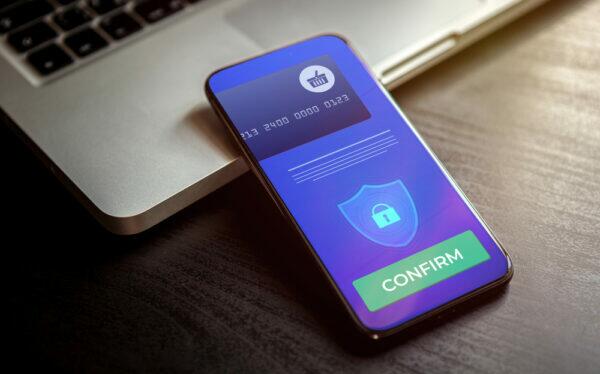
Increasing your online security can help stop you being scammed or keep you safe after a data breach. (Shutterstock)

Every single one of those examples is already happening.

But to create these realistic fakes, criminals need access to material like photos, audio, and video. Unfortunately, these things aren't hard to get.

"If someone gets into your private photos, in your iCloud, that gives all the sampling, all the technology … to make hyper-realistic fakes," Mr. Roberts said.

Social media profiles are a treasure trove for criminals looking to create these products.

Recovering lost assets and the victim's reputation can be grim. Roberts noted litigation against cyber crimes is an uphill battle. “It’s long, it’s arduous, it’s drawn out, and it’s emotionally and financially taxing."

Other AI industry insiders say it's not just the quality of fakes that are a problem but also the quantity.

"Sooner or later, people will be able to generate any combination of pixels of any type of content. And it’s up to you to filter it," Alan Ikoev told The Epoch Times.

Mr. Ikoev is the CEO of Fame Flow, which creates licensed celebrity and influencer ads.

As a pioneer of authorized AI-generated content involving celebrities, he's all too familiar with the work of his nefarious counterparts.

But to counter these increasingly sophisticated scams, people need to be suspicious of everything they see online. "If they don’t question, then they’re easily convinced," Ikoev said.

Discerning what's real or fake online is already challenging. Eighty-six percent of internet users admitted to being hoodwinked by fake news, according to an Ipsos survey of more than 25,000 participants in 25 countries.

This is compounded by a recent cyber security study, which revealed nearly half of all internet traffic is now generated by bots.

But it's not all bad news. Mr. Roberts maintains criminals haven't caught up with how fast technology is moving forward, which is currently outpacing the "bad actors."

However, vigilance and having a plan are needed to repel or counter deepfake attacks.

Moves And Counter Moves

The rapid advancement of technology in fraud almost evokes nostalgia for the days when internet scams were just an email from a self-proclaimed prince in a foreign land who needed help transferring money.

AI has given cybercriminals better tools, but it can also be used against them.

"The development of advanced deepfake detection tools using AI-driven algorithms is crucial to combat this threat. Collaborative efforts among AI developers, researchers, and tech companies are essential for creating robust security measures and raising awareness," Nikita Sherbina, CEO of AIScreen, told The Epoch Times.

Mr. Sherbina said businesses can protect themselves by doubling down on tech. Essentially fighting digital fire with fire.

"Implement advanced AI-based authentication systems, including voice and facial recognition with multi-factor authentication. Continuous monitoring and analysis of communication patterns using AI algorithms can also help detect and prevent fraudulent activities," he said.

But for individuals, disrupting or preventing a deepfake scam is simpler.

Some phone scams claim to be from a financial services organization and ask you to update information—but don’t do it! This may be a phishing attack aimed at stealing your personal information. (BestForBest/Shutterstock)

In the event of a suspected voice clone attack, Mr. Roberts said, "The first thing you do is say, ‘honey, I’m going to call you right back.'"

He noted that scammers will invent an excuse why you can't call back to verify their identity. Another trick to derail criminals using cloned audio to fake a kidnapping is to ask the caller questions that aren't in the public domain.

“Have this conversation with your family before it actually happens so they understand what you’re doing,” Mr. Roberts added.

He stressed the importance of not using individual email addresses with full names or numbers relevant to the user's date of birth.

Further, a person should never reuse a login password. Mr. Roberts noted the first thing hackers do when they snag a password is try logging into every possible site to see where else it works.

This includes bank accounts, cloud storage, social media, and more.

But while deepfakes have raised the bar high for online scammers, the methods of tracking them down haven't changed.

"The process doesn’t change. AI is just the content … but the breadcrumbs the criminals left, they’re always the same," Mr. Ikoev said.

Tracking scammers may be well established, but a clear path for victims to recover lost money is not.

Financial scams from deepfakes can range from $243,000 to $35 million, according to one analysis.

One example was a cryptocurrency hustle using a forged likeness of Elon Musk that reportedly cost U.S. consumers around $2 million over six months.

Perhaps more troubling is that anyone can create them. Mr. Ikoev explained all someone needs to create a deepfake on their smartphone is a graphics card and to watch a few web tutorials.

"Then you're good to go," he said.

World of Possibilities

The timing of the upcoming U.S. presidential election in 2024 is precarious, given the surge in deepfake material.

Mr. Roberts said Americans should expect an election race chock full of swindlers wielding an arsenal of deepfakes.

The U.S. Department of Homeland Security also expressed concern over the technology's use, stating: "The threat of deepfakes and synthetic media comes not from the technology used to create it, but from people’s natural inclination to believe what they see."

Yet Pandora's box is already open.

Earlier this year, videos emerged of U.S. politicians making strikingly out-of-character remarks.

One involved Hillary Clinton endorsing Republican presidential candidate hopeful, Ron DeSantis.

Another depicted President Joe Biden hurtling angry remarks at a transgender person.

According to Mr. Roberts, this is just the beginning.

“It’s going to be used in a lot of political interference," he said, adding this technology will make the next COVID-level event much worse for the public.

"I’m not talking misinformation as described by the liberal Left. I’m talking about deliberate lies to social engineer the whole world.”

https://www.zerohedge.com/technology/deepfake-fraud-surges-more-1000-percent-insiders-say-its-just-beginning

AMN HEALTHCARE Q2 REVENUE FALLS 30.5% AMID TRAVEL NURSE DECLINE, SEES LOWER Q3 REVENUE

 AMN Healthcare Services Inc. (NYSE: AMN) reported second-quarter revenue that fell 30.5% to $991.3 million year over year and forecast third-quarter revenue would drop between 24% and 26%. 

Travel nurse revenue fell, while the company’s locum tenens business revenue rose. The company said it saw stable demand trends and indications of client demand coming in the winter. 

“Contingent labor costs are stabilizing, and we are strengthening our ability to provide strategic talent solutions that offer labor flexibility at sustainable costs,” said AMN President and CEO Cary Grace in a press release. 

Overall, the company’s “nurse and allied solutions” segment revenue declined 37.4%, while travel nurse segment revenue dropped 38% year over year. In addition, “technology and workforce solutions” results slipped 15.6%.  

However, revenue edged upward 0.3% in its “physician and leadership solutions” segment. AMN noted revenue rose in the locum tenens portion of this segment by 15% year over year, but interim leadership revenue fell by 24% and its “physician and leadership search” businesses saw revenue decline by 19%. Vendor management system revenue fell 38% year over year. 

Click chart to enlarge.

AMN Healthcare second-quarter earnings data

Guidance 

Looking ahead to the third quarter, the company said it expected nurse and allied solutions revenue to be down between 31% and 33% and physician and leadership solutions revenue to decline by 3% to 5%. Technology and workforce solutions segment revenue is expected to slip between 10% to 12% year.  

Share price and market cap 

Shares in AMN were down 9.8% to $91.68 as of 12:26 p.m. Eastern time, according to FT.com. They were nearly 13.0% above their 52-week low.

https://www2.staffingindustry.com/Editorial/Daily-News/AMN-Healthcare-Q2-revenue-falls-30.5-amid-travel-nurse-segment-decline-forecasts-lower-Q3-revenue-66380?cookies=disabled