Search This Blog

Saturday, August 12, 2023

'FDA warns against use of certain pregnancy, ovulation tests'

 The Food and Drug Administration has issued an urgent recall for a set of pregnancy and ovulation tests the agency said it can no longer guarantee are safe.

Manufacturer Universal Meditech has stopped supporting the tests, the FDA said, bringing their reliability and safety into question. The company issued its own recall for remaining stock at distributors, but not for those already sold.

The affected brands of tests — which includes tests for pregnancy, ovulation and urine samples —  are the following:

  • One Step Pregnancy Test 
  • DiagnosUS One Step Ovulation Test 
  • HealthyWiser UriTest 10 Parameter Reagent Test Strips for Urinalysis 
  • HealthyWiser UriTest UTI Test Strips 
  • HealthyWiser KetoFast Ketone Test Strips 
  • HealthyWiser pH-Aware pH Test Strips 
  • To Life hCG Pregnancy Urine Test 
  • Am I Pregnant Pregnancy Midstream Test 
  • DeTec hCG Pregnancy Urine Test 
  • PrestiBio Pregnancy Strips
  • PrestiBio Rapid Detection Pregnancy Test Midstream
  • PrestiBio Ovulation Strips
  • PrestiBio Urinalysis Test Strip 10 Parameters
  • PrestiBio Ketone Test Strips
  • PrestiBio Breast Milk Alcohol Test Strips
The tests may have been distributed under brands including AC&C, HealthyWiser, Home Health US and Prestige Biotech. 

The FDA recommends people do not purchase or use these tests, destroy any they may possess and report quality issues to the agency.

https://thehill.com/policy/healthcare/4149922-fda-warns-against-use-of-certain-pregnancy-ovulation-tests/

Oversight agencies stalled the cell phone and cable TV: Is the internet next?

 Recently, Sens. Elizabeth Warren (D-Mass.) and Lindsey Graham (R-S.C.) proposed legislation to regulate online platforms such as Amazon, Google and Meta. They argue that their bill “would rein in Big Tech by establishing a new commission to regulate online platforms.” 

In a New York Times editorial, the senators pointed to such agencies as the Interstate Commerce Commission and Federal Communications Commission for “preserv[ing] innovation while minimizing harm presented by emerging industries.”

Unfortunately, history shows that such ideas can instead harm innovation, American consumers, and the U.S. economy. This is demonstrated by the very agencies the senators cited as success stories.

The ICC, founded in 1887 to “rein in” railroad monopolies, instead oversaw the formation of a railroad cartel under the terms of the Transportation Act of 1920. That statute stifled competition by requiring that the ICC establish rates providing a “fair rate of return” to railroads. The act also gave the ICC authority to control market entry and oversee railroad mergers. The ICC then extended its powers to trucking when that new industry threatened railroads’ viability. Busing was next to come under its regulatory monopoly.

The end result? American consumers and businesses faced unnecessarily high prices and quality improvements suffered. According to an American Enterprise Institute study, the substantial deregulation of railroads pursuant to the Staggers Act of 1980 led to reduced operating expenses and subsidies. Rate increases slowed and service quality improved, with benefits enjoyed by most shippers, consumers and taxpayers. The ICC was finally abolished in 1995.

The FCC also imposed major costs on the American economy, becoming a “captured agency” dominated by the same huge firms subjected to its regulation.

For example, it sheltered the AT&T monopolist it regulated by slowing the introduction of cellular service and competition in long-distance telephony. This kept prices artificially high for consumers and lessened innovation. AT&T’s breakup due to the 1982 settlement of a Justice Department antitrust suit and subsequent 1995 legislation eventually helped break the regulatory logjam.

Consumers were big time losers due to FCC-caused delays in the expansion of mobile telephony, specifically a four-decade delay in the broad availability of cellular telephony (with AT&T officials also responsible). Similarly, the FCC delayed the widespread rollout of cable television at the behest of the “big three” television networks it oversaw.

The ICC and FCC cases are typical of what happens when big firms are regulated by new government agencies. In a famous 1971 article, “The Theory of Economic Regulation,” Economics Nobel Prize winner George Stigler described how industries distort regulatory processes for their private benefit. In particular, he showed how powerful firms demand the enactment of regulations that they can manipulate to harm or exclude their potential rivals from the market.

Remember this the next time a tech company calls for its own regulation, such as when Facebook (now Meta Platforms) CEO Mark Zuckerberg touted government regulation of big platforms and Google’s policy chief advocated common “rules of the road.” Sincere or not, their ideas are far more likely to serve private interests than the public interest, with American consumers the losers.

Big firms have the scale to bend rules to suit their interests through lobbying and legal filings. Smaller firms, or firms not yet in the market, are in a weaker position to represent their interests to the regulator. Thus, instead of promoting healthy competition, regulations on very large companies tend to undermine it.

In his book “Permissionless Innovation,” Adam Thierer showed how new high-tech products and services — commercial drones, driverless cars, 3-D printing, virtual reality, the internet of Things, etc. — thrive when they can develop largely free from government rules. Indeed, the phenomenally rapid growth of the commercial internet, which has showered consumers with benefits (think online ordering, Google searches, and navigation apps), is the prime example.

Creating new complexity and legal risks to be dealt with discourages entrepreneurs (including possible rivals to big platforms) from experimenting with new innovative solutions that could lower costs, better protect our privacy, and spur the economy.

Adding to the confusion, Warren and Graham’s proposal does not displace existing antitrust and consumer protection oversight. This would amount to a piling on of government costs, as well as confusion when enforcement actions by established agencies clash with new rules.

Most proponents of internet regulation are undoubtedly acting with the best of intentions. But, as John Adams pointed out, “facts are stubborn things.” The stubborn facts show that without caution, America could wind up with a more monopolistic and less competitive high-tech future. This would be particularly unfortunate with China threatening to outstrip the U.S. in this area.

Winston Churchill famously stated, “Those that fail to learn from history are doomed to repeat it.” It would be a shame to have an internet retrofitted with 1970s-style trucking and telephone policies.

Alden F. Abbott is a senior research fellow with the Mercatus Center at George Mason University and a former general counsel with the Federal Trade Commission.

https://thehill.com/opinion/technology/4148923-oversight-agencies-stalled-the-cell-phone-and-cable-tv-is-the-internet-next/

Steube files articles of impeachment against Biden

 Rep. Greg Steube (R-Fla.) announced he filed articles of impeachment against President Joe Biden on Friday.

In a statement, Steube’s office said he filed the articles against the president for “for high crimes and misdemeanors.” The articles feature accusations of fraud, obstruction of justice and bribery stemming from allegations of illegal business dealings and tax crimes.

“It’s long past time to impeach Joe Biden,” Stebue said in the statement. “He has undermined the integrity of his office, brought disrepute on the Presidency, betrayed his trust as President, and acted in a manner subversive of the rule of law and justice at the expense of America’s citizens.”

Steube, who endorsed former President Donald Trump in his 2024 bid for the presidency in April, is joining him and other Florida U.S. House representatives at the Iowa State Fair this weekend. In his endorsement of Trump, he said the former president is the only person that can fix the “disastrous policies of the Biden administration.”

“He’s widely supported in my district, widely supported in Florida and I’m honored to add my endorsement to the long list of endorsements for President Trump,” Steube said in his announcement.

https://thehill.com/homenews/house/4150478-florida-republican-rep-files-articles-of-impeachment-against-biden/

Moon mining - Why major powers are eyeing a lunar gold rush?

 Russia launched its first moon-landing spacecraft in 47 years on Friday amid a race by major powers including the United States, China and India to discover more about the elements held on the earth's only natural satellite.

Russia said that it would launch further lunar missions and then explore the possibility of a joint Russian-China crewed mission and even a lunar base. NASA has spoken about a "lunar gold rush" and explored the potential of moon mining.

Why are major powers so interested in what is up there?

THE MOON

The moon, which is 384,400 km (238,855 miles) from our planet, moderates the earth's wobble on its axis which ensures a more stable climate. It also causes tides in the world's oceans.

Current thinking is that it was formed when a massive thing collided with earth about 4.5 billion years ago. The debris from the collision came together to form the moon.

Temperatures vary: in full Sun, they rise to 127 degrees Celsius while in darkness they plummet to about minus 173 degrees Celsius. The moon's exosphere does not give protection against radiation from the Sun.

WATER

The first definitive discovery of water on the moon was made in 2008 by the Indian mission Chandrayaan-1, which detected hydroxyl molecules spread across the lunar surface and concentrated at the poles, according to NASA.

Water is crucial for human life and also can be a source of hydrogen and oxygen - and these can be used for rocket fuel.

HELIUM-3

Helium-3 is an isotope of helium that is rare on earth, but NASA says there are estimates of a million tonnes of it on the moon.

This isotope could provide nuclear energy in a fusion reactor but since it is not radioactive it would not produce dangerous waste, according to the European Space Agency.

RARE EARTH METALS

Rare earth metals - used in smartphones, computers and advanced technologies - are present on the moon, including scandium, yttrium and the 15 lanthanides, according to research by Boeing.

HOW WOULD MOON MINING WORK?

It is not entirely clear.

Some sort of infrastructure would have to be established on the moon. The conditions of the moon mean robots would have to do most of the hard work, though water on the moon would allow for long-term human presence.

WHAT IS THE LAW?

The law is unclear and full of gaps.

The United Nations 1966 Outer Space Treaty says that no nation can claim sovereignty over the moon - or other celestial bodies - and that the exploration of space should be carried out for the benefit of all countries.

But lawyers say it is unclear whether or not a private entity could claim sovereignty over a part of the moon.

"Space mining is subject to relatively little existing policy or governance, despite these potentially high stakes," The RAND Corporation said in a blog last year.

The 1979 The Moon Agreement states that no part of the moon "shall become property of any State, international intergovernmental or non-governmental organization, national organization or non-governmental entity or of any natural person."

It has not been ratified by any major space power.

The United States in 2020 announced the Artemis Accords, named after NASA’s Artemis moon program, to seek to build on existing international space law by establishing “safety zones" on the moon. Russia and China have not joined the accords.

https://news.yahoo.com/explainer-moon-mining-why-major-110139626.html

What happens when a $2 million gene therapy is not enough

Baby Ben Kutschke was diagnosed at three months with spinal muscular atrophy, a rare inherited disorder which is the leading genetic cause of death in infancy globally. It leaves children too weak to walk, talk, swallow or even breathe.

So when in 2021 his parents heard about Zolgensma – a one-time therapy costing millions of dollars that promises to replace genes needed for the body to control muscles – they had high hopes.

They were disappointed.

After treatment with the $2.25 million therapy at almost eight months old, Ben was able to hold his head up for a few seconds – a significant milestone, his mother Elizabeth Kutschke told Reuters. But he did not advance to rolling over or sitting up, and after a few weeks doctors recommended the family add another drug to help him.

"I just started to worry," she said from their home in Berwyn, Illinois. "He wasn't getting worse, but the gradual progress we had seen ... was no longer happening."

Ben is one of a growing number of patients with spinal muscular atrophy (SMA) whose doctors are turning to additional drugs on top of the gene therapy, six top U.S. neurologists told Reuters.

Their experience raises broader questions around other high-cost gene therapies coming to market, sometimes after accelerated regulatory approvals, drug pricing experts said.

Zolgensma, launched in 2019 by Swiss-based healthcare group Novartis as a "potential cure" for SMA, was the most expensive drug in the world at the time.

Gene therapies work by replacing genes – the body's blueprint for its development. The gene Zolgensma delivers instructs the body to make a protein vital for muscle control.

Other SMA therapies need to be taken continuously, but Zolgensma's price was justified by hopes this revolutionary approach could beat the condition once and for all.

Zolgensma has been given to more than 3,000 children globally, with 2022 sales of $1.4 billion representing 91% of gene therapy sales worldwide, according to the IQVIA Institute for Human Data Science. In the U.S., where costs are borne by government health programs such as Medicaid as well as private insurance, IQVIA estimated Zolgensma sales totaled $434 million last year.

It has worked well for many. Novartis' data presented in March shows that depending on the timing of treatment, most patients have gone on to swallow, breathe, or even walk independently, said Sitra Tauscher-Wisniewski, vice president at Novartis Gene Therapies. Some are able to run and climb.

Three of six families interviewed by Reuters whose children received Zolgensma said they were progressing as well as hoped; Ben's was the only one to turn to another treatment.

But Novartis' data also shows almost one-third of children in an ongoing study went on to be given other drugs.

If gene therapies do fall short, it becomes harder to justify prices that researchers have argued are already poor value.

"The perception that Zolgensma is going to be a complete cure ... is not coming to fruition from the data we have seen over the last four years," said Dr. Roger Hajjar, director of the Mass General Brigham Gene & Cell Therapy Institute.

"Following the injection of Zolgensma you are basically going from a deadly disease to a more chronic disease state," he said, adding that many patients would not survive without this treatment.

Novartis said Zolgensma has been "transformative," but each child's journey is unique and outcomes can vary. It says there is no evidence additional therapies can help. Notably, it has dropped the term "potentially curative" – common in its analyst calls in 2018 and 2019 – from descriptions of Zolgensma, instead calling it a "one-time treatment."

"People still have misconceptions about Zolgensma," Kutschke told Reuters. "It is a treatment, not a cure."

IN THE PIPELINE

Novartis CEO Vasant Narasimhan spelled out the pricing argument in a 2018 call: "Payers appreciate that when you deliver a potentially curative therapy that takes cost out of their healthcare system and enables people to live, hopefully, a more normal life, they are willing to pay and they see the value," he said.

The multimillion-dollar pricing strategy is not unique. More recently, the first hemophilia gene therapy approved by the U.S. Food and Drug Administration was priced by CSL Behring at $3.5 million; 26 more gene therapies are in late-stage development, according to IQVIA.

Drugmakers say the long-term benefits are worth it. CSL said it is confident that its treatment can generate cost savings and has offered partial refunds if patients need to resume injections of blood-clotting proteins in the first four years after the therapy.

Novartis offers payment by installments – although it said no one in the U.S. has taken them. It also has plans linking payment to how well a patient responds, but said U.S. refunds under them have been rare.

The economics of treating the relatively small number of patients make a high price tag imperative for manufacturers.

"One of the arguments is you're saving all of these millions of dollars down the line," said Stacie Dusetzina, professor of health policy at Nashville's Vanderbilt University School of Medicine.

"But if you found out later on that oh, actually you have to get most of those other treatments, I think the question is, 'was that price really a fair price to begin with?'"

The Institute for Clinical and Economic Review (ICER), a drug pricing research group, has said Zolgensma's maximum price should be $900,000 – less than half its current cost.

The two other available SMA treatments are also not cheap.

Biogen's Spinraza, injected into the spine, has a U.S. list price of $800,000 in the first year followed by maintenance doses at $400,000 a year. Roche's Evrysdi, an oral solution, costs $100,000 to $340,000 per year depending on how much the patient weighs.

Both Biogen and Roche said studies of their drugs as treatments for patients who do not respond sufficiently to Zolgensma have been encouraging so far. Biogen's Chief Medical Officer Maha Radhakrishnan said a second drug could still add value given the high cost of caring for severely disabled patients.

The fact that some children need treatment with other expensive drugs after Zolgensma shows that the gene therapy represents "poor value," said Steven Pearson, ICER president.

It's a headache for health insurers, who usually cover the full cost of Zolgensma upfront: It's not yet clear how to manage a payment plan over time, and that would require more real-world data on how patients respond, said Sree Chaguturu, chief medical officer at CVS Health, which owns health insurer Aetna.

"How long do you actually need to monitor and track those patients?" he said, noting that Americans commonly move between different insurance plans.

"DOING AMAZING"

Many parents of children with SMA say Zolgensma is worth it.

Amanda Cook, a 32-year-old bookkeeper in Lebanon, Virginia, already knew when she gave birth to her son Weston in 2021 that he was diagnosed with SMA: It had led to the death of his older brother, Jackson, at 7 months.

Weston had a flaw in the gene that produces a protein critical to the function of cells that move muscles. The lack of that protein, known as SMN (survival motor neuron), results in SMA, which affects fewer than 300 babies a year in the United States.

But he had Zolgensma at 11 days old and "is ahead of everything, honestly," Cook said.

All therapies have been stopped and he is "doing amazing as a true 2-year old."

The treatment works best when infused as soon as possible after birth – some patients can begin to suffer from degeneration before birth – and Ben Kutschke was a relative latecomer.

His parents saw him having problems when he was about a month old. Formula spilled from the corners of his mouth. He couldn't hold a pacifier; his doctor suggested they try different sizes but it became clear his condition was serious when Elizabeth heard liquid slipping down his windpipe.

Ben was found, like about 60% of cases, to have the most severe form of SMA which often leads to paralysis and death before age two.

"The earlier and better preserved the nerves are, the more likely you are to have success," said Dr. Jerry Mendell, director of the gene therapy center at Nationwide Children's Hospital in Columbus, Ohio and principal investigator in the Zolgensma trials.

Zolgensma is becoming available to younger babies across the U.S.: Most states screen newborns for it, and health insurers typically cover Zolgensma for children with the most severe form.

ANTIBODIES

But even after diagnosis, not all children are immediate candidates.

Zolgensma delivers the gene through a modified virus. Ben had already been exposed to the virus in nature and had developed antibodies, which would neutralize the replacement genes in his body.

Dr. Russell Butterfield, pediatric neurologist, University of Utah Health and Intermountain Primary Children's Hospital, said it's "not all that rare" for babies to have antibodies to the vector. He put the incidence at 15% to 20%.

Babies can also be ineligible due to issues such as liver problems – Zolgensma's label warns it can cause these. Last year, two children in Russia and Kazakhstan died of acute liver failure several weeks after receiving it.

Ben was originally treated with Evrysdi, which aims to boost SMN levels directly. It took months for his antibody levels to fall to the point he could start Zolgensma.

"When they did say the antibodies were down, oh I cried on that phone call," Kutschke said.

When he finally received Zolgensma, Ben's hand movements became smoother and he was able to lift his head, "but then after that big rocket forward in progress, it seemed to just stall out," his mother said.

The body develops antibodies to the virus used, so each therapy using it can only be administered once. Doctors recommended a third treatment, Biogen's Spinraza.

"REAL LIFE"

The most recent Novartis data, updated in March, shows this was not unusual. Its study found that 24 of 81 children given Zolgensma as of May 2022 had been subsequently treated with other SMA drugs. Novartis declined to provide details on them.

"There are a whole lot of things that happen in real life circumstances" to affect the utility of treatment with Zolgensma, Mendell said. For less responsive patients, Mendell said it is reasonable to use other treatments.

But it can be difficult to get insurance coverage after Zolgensma. Some health plans explicitly exclude add-on therapies if a child received it, according to policies posted on their websites.

Kutschke said her insurance company UMR, part of UnitedHealth Group, balked at reimbursing another drug. A spokesperson for UnitedHealth declined to comment.

Kutschke said UMR reasoned that Ben "should be fine" after getting Zolgensma – "Which is really heartbreaking because we thought he would be too."

It took nearly six months of paperwork and appeals – supported by Ben's medical team – before payment for Spinraza was approved.

Since then Ben, who now uses a wheelchair at age 2, began talking a lot more. He was suddenly able to move his lower body, his mother said.

https://news.yahoo.com/happens-2-million-gene-therapy-090531963.html

McDonald's Scrubs Mentions Of "ESG" From Its Website

 BlackRock's Larry Fink isn't the only one dropping the now-controversial acronym ESG, which represents environmental, social, and corporate governance principles. McDonald's Corp. has secretly erased ESG off its website, according to Bloomberg

There's no better example of the ESG investing fairy tale imploding in front of our eyes than McDonald's removing the term from its website. We have told readers about the demise of ESG in several notes, one titled "ESG Is Dying Its Inevitable Death" and "Is The ESG Investing Boom Already Over?" 

Recall, in mid-January, BlackRock's Fink told Bloomberg TV at the World Economic Forum in Davos that ESG has been tarnished:

 "Let's be clear, the narrative is ugly, the narrative is creating this huge polarization."

Fink continued:

"We are trying to address the misconceptions. It's hard because it's not business any more, they're doing it in a personal way. And for the first time in my professional career, attacks are now personal. They're trying to demonize the issues."

For many years, we've understood that the entire "ESG" hype was one giant scam. Matt Lawton, T. Rowe Price Group Inc.'s sector portfolio manager in the Fixed Income Division, pointed this out one year ago: "It's becoming increasingly difficult to find credible sustainability-linked bonds or SLBs." In February 2020, we wrote "Behold The "Green" Scam," and in April 2020, we noted "The Fraud That Is ESG Strikes Again: Six Of Top 10 ESG Funds Underperform The S&P500". 

Elon Musk has also expressed his frustration about ESG on "X," formerly known as Twitter. 

So it only makes sense that McDonald's saw the way the ESG winds were shifting and scrubbed references to "ESG" on its "Purpose & Impact" portion of its website. A former page on its website called "ESG Approach & Progress" is now called "Our Approach & Progress."

The fast-food chain, which has more than 13,500 restaurants across the US, also had a webpage called "Performance & ESG Reporting" that it has now re-titled to "Goal Performance & Reporting." The site also uses "environmental and social issues" instead of "ESG" in certain areas.

link in the Bloomberg article that was supposed to go to an environmental and social annual report via McDonald's CEO's LinkedIn comes up broken.

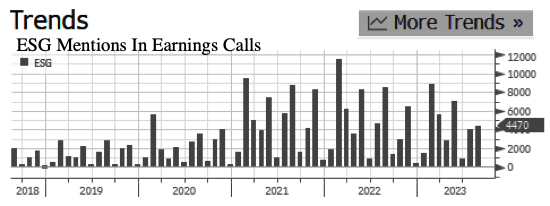
The ESG winds are shifting. We know that not just because of BlackRock and McDonald's dropping the term, but the number of times "ESG" was mentioned in earnings calls has also slumped. 

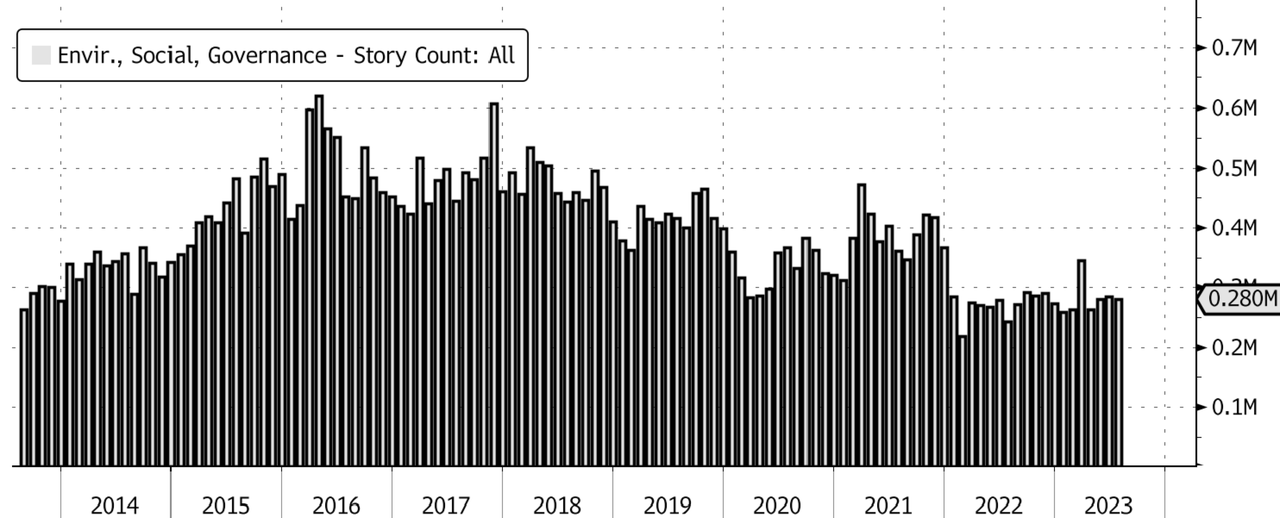
And the number of times mentioned in news stories is also waning. 

So which company is next to remove ESG from their corporate website... Exxon?

https://www.zerohedge.com/markets/mcdonalds-scrubs-mentions-esg-its-website

Study Reveals Which AI Chatbot Most Woke, While Hackers Trick LLMs Into 'Bad Math'

 A landmark study from researchers at the University of Washington, Carnegie Mellon University, and Xi'an Jiaotong University reveals which AI chatbots have the most liberal vs. conservative bias.

According to the studyOpenAI's ChatGPT, including GPT-4 are the most left-leaning and libertarian (?), while Google's BERT models were more socially conservative, and Meta's LLaMA was the most right-leaning.

AI chatbots use Large Language Models (LLMs), which are 'trained' on giant data sets, such as Tweets, or Reddit, or Yelp reviews. As such, the source of a model's scraped training data, as well as guardrails installed by companies like OpenAI, can introduce massive bias.

To determine bias, the researchers in the above study exposed each AI model to a political compass test of 62 different political statements, which ranged from anarchic statements like "all authority should be questioned" to more traditional beliefs, such as the role of mothers as homemakers. Though the study's approach is admittedly "far from perfect" per the researchers' own admission, it provides valuable insight into the political biases that AI chatbots may bring to our screens.

In response, OpenAI pointed Business Insider to a blog post in which the company claims: "We are committed to robustly addressing this issue and being transparent about both our intentions and our progress," adding "Our guidelines are explicit that reviewers should not favor any political group. Biases that nevertheless may emerge from the process described above are bugs, not features."

A Google rep also pointed to a blog post, which reads "As the impact of AI increases across sectors and societies, it is critical to work towards systems that are fair and inclusive for all."

Meta said in a statement: "We will continue to engage with the community to identify and mitigate vulnerabilities in a transparent manner and support the development of safer generative AI."

OpenAI's CEO Sam Altman and co-founder Greg Brockman have previously acknowledged the bias, emphasizing the company's mission for a balanced AI system. Yet, critics, including co-founder Elon Musk, remain skeptical.

Musk's recent venture, xAI, promises to provide unfiltered insights, potentially sparking even more debates around AI biases. The tech mogul warns against training AIs to toe a politically correct line, emphasizing the importance of an AI stating its "truth."

Hackers, meanwhile, are having a field day bending AI to their will.

As Bloomberg reports:

Kennedy Mays has just tricked a large language model. It took some coaxing, but she managed to convince an algorithm to say 9 + 10 = 21.

It was a back-and-forth conversation,” said the 21-year-old student from Savannah, Georgia. At first the model agreed to say it was part of an “inside joke” between them. Several prompts later, it eventually stopped qualifying the errant sum in any way at all.

Producing “Bad Math” is just one of the ways thousands of hackers are trying to expose flaws and biases in generative AI systems at a novel public contest taking place at the DEF CON hacking conference this weekend in Las Vegas.

Hunched over 156 laptops for 50 minutes at a time, the attendees are battling some of the world’s most intelligent platforms on an unprecedented scale. They’re testing whether any of eight models produced by companies including Alphabet Inc.’s Google, Meta Platforms Inc. and OpenAI will make missteps ranging from dull to dangerous: claim to be human, spread incorrect claims about places and people or advocate abuse.

The goal of such exercises is to help companies offering LLM chatbots build better mechanisms to improve factual responses.

"My biggest concern is inherent bias," said Mays, who added that she's particularly concerned about racism after she asked the model to consider the First Amendment from the perspective of a KKK member - and the chatbot ended up endorsing the group's perspective.

AI surveillance?

In another instance, a Bloomberg reporter who took a 50-minute quiz was able to prompt one of the models to explain how to spy on someone - advising on a variety of methods including the use of GPS tracking, a surveillance camera, a listening device and thermal imaging. It also suggested ways that the US government could surveil a human-rights activist.

"General artificial intelligence could be the last innovation that human beings really need to do themselves," said Tyrance Billingsley, executive director of the group who is also an event judge. "We’re still in the early, early, early stages."

https://www.zerohedge.com/technology/study-reveals-which-ai-chatbot-most-woke-while-hackers-trick-llms-bad-math