Search This Blog

Saturday, August 19, 2023

Stroke Patient Transfer Times Longer Than Recommended

 The median interhospital transfer time for stroke patients needing targeted therapy is 174 minutes, which is longer than the recommended 120 minutes, results of a new US registry-based study show.

The study also uncovered age, racial, and gender disparities in transfer times.

Dr Shyam Prabhakaran

The study exposed transfer delays in US stroke systems that "dramatically" affect patients, study author Shyam Prabhakaran, MD, professor and chair of neurology, University of Chicago, told Medscape Medical News. "There are effective treatments for stroke, and many, many patients are getting them too late or not at all because of delays."

To reduce such lags, "we need to really be proactive like we have been in other processes," for example, improving "door to needle" time, he added, referring to time to administer thrombolytic therapy.

The findings were published online August 15 in JAMA.

Stroke patients who present at hospital emergency departments (EDs) often need to be transferred to another institution to access time-dependent therapies, including intravenous (IV) thrombolysis and endovascular therapy, as well as neurosurgical or neurocritical care services. The recommended time from initial check-in at the ED to such a transfer ― the door-in, door-out time ― is less than 120 minutes.

Understanding disparities and modifiable factors associated with door-in, door-out times could help reduce delays in interhospital transfer times, the researchers write.

The study included US hospitals participating in the Get With the Guidelines–Stroke registry, a national database for voluntary quality improvement maintained by the American Heart Association/American Stroke Association. About a third of the move than 6000 hospitals in the US are part of this registry.

The analysis included 108,913 patients (mean age, 66.7 years; 71.7% White; 50.6% men) who had a stroke between January 2019 and December 2021 and were transferred from 1925 hospitals to another acute care hospital. Most patients had initially presented to teaching hospitals (62.9%), in urban areas (68.5%), and during the COVID-19 pandemic (59.6%).

Of the total patients who were transferred, 67,235 had acute ischemic stroke, and 41,678 had hemorrhagic stroke. The most common reasons for transfer were advanced stroke care (70.7%), evaluation for endovascular therapy (20.3%), and IV thrombolysis management (10.8%).

Priming the ED

Emergency Medical Services (EMS) prenotification, by which ambulance staff alert the receiving hospital that a patient suspected of having had a stroke is en route, was used in 43.9% of patients overall. Although not performed uniformly, this protocol is recommended, because it "primes the emergency room to get their teams ready and move their patient more efficiently," said Prabhakaran.

The median door-in, door-out time, the primary outcome, was 174 minutes overall: 178 minutes for patients with hemorrhagic stroke; 201 minutes for those with ischemic stroke (and other); and 132 minutes for those with ischemic stroke who were eligible for endovascular therapy.

Prabhakaran noted that patients eligible for endovascular therapy are "very identifiable" through imaging, which can pick up large-vessel occlusions. This helps explain their relatively short transfer time.

On the other hand, ischemic stroke patients who are not candidates for endovascular therapy may need additional workup and treatment, including CT angiogram and IV thrombolysis, so the decision-making is "not as straightforward," and this may affect transfer time, he said.

Patients with hemorrhagic stroke have relatively fast door-in, door-out times, possibly because imaging shows immediately whether the patient has a hemorrhage, and guidelines recommend emergency transfer of such patients to centers with dedicated stroke expertise, which significantly streamlines the transfer algorithm for such patients.

Lagging Behind Target

For only 27.3% of patients was the door-in, door-out time within 120 minutes. "This shows the degree to which current hospital performance lags behind the recommended time and gives us a motivation and rationale to pursue a large-scale initiative to get hospitals to try to reduce these times," commented Prabhakaran.

Characteristics that were significantly associated with longer door-in, door-out times included the followng: age 80 years or older vs those aged 18–59 years (14.90 minutes longer; 95% CI, 12.32 – 17.47 minutes), female vs male (5.21 minutes; 95% CI, 3.55 – 6.86 minutes), Black non-Hispanic vs White non-Hispanic (8.21 minutes; 95% CI, 5.67 – 10.75 minutes), and Hispanic vs White non-Hispanic (5.37 minutes; 95% CI, 1.77 – 8.97 minutes).

Urban hospital location was also significantly associated with prolonged door-in, door-out times. This might be because city hospitals have more resources to use for patients, which could delay the transfer, said Prabhakaran.

The study took place during part of the COVID-19 pandemic, when many hospitals were unable to accommodate transfers. This likely contributed to some delays picked up by the study, said Prabhakaran.

Aside from being White and being eligible for endovascular therapy, having a National Institutes of Health Stroke Scale (NIHSS) score greater than 12 was also linked to having a door-in, door-out time of 120 minutes or less, as was having EMS prenotification.

Aiming to Tackle Barriers

The research team will be investigating ways to reduce transfer delays, aiming to "protocolize this in a standardized way that tackles many of the barriers we think affect this door-in-door-out process," said Prabhakaran.

This should start with EMS prenotification and should include standardized screening for stroke upon ED arrival, protocols for moving patients to imaging, and rapid communication with the receiving center, he said.

While the current door-in, door-out target is a maximum of 120 minutes, that could be reduced to 90 minutes and perhaps even 60 minutes, he added. "The door to needle time used to be 60 minutes as a goal; now it's 30 minutes."

Missing or incomplete data were a limitation of the study; for example, the NIHSS score wasn't available for 21.4% of the study sample, and for nearly half of patients, variables related to vascular imaging were missing. Other limitations included the fact that hospitals participating in the Get With the Guidelines–Stroke registry have an interest in improving stroke care; some potential determinants of door-in, door-out time, such as distance to a comprehensive stroke center and bed availability, were not considered in the analysis; and an association between door-in, door-out times and clinical outcomes was not evaluated.

Extremely Important Data

Commenting on the study, Michael Mullen, MD, associate professor of neurology, Lewis Katz School of Medicine, Temple University, and director of the stroke program at Temple University Hospital, said the data "are extremely important," as they highlight important disparities in stroke care.

"Get With the Guidelines has a track record of success as a tool to quantify, trend, and improve stroke care," said Mullen. "Hopefully these data can be leveraged for future quality improvement programs to reduce door-in, door-out time overall and to reduce or eliminate the observed disparities."

Mullen noted that the study doesn't provide the level of detail needed to understand why stroke transfer delays occur. The reasons are likely multifactorial and may vary by region and hospital.

Because race and gender disparities exist in other areas of stroke care ― and medical care in general ― "it's certainly possible that implicit and explicit bias and structural racism are contributing factors," he added.

And although the authors attempted to account for factors such as geographic region and hospital characteristics, "systematic differences in where people live and the hospitals and healthcare systems that care for them may be driving some of these disparities," said Mullen.

He agreed it's difficult to know how much the COVID-19 pandemic influenced the results, given the strain placed on the entire healthcare system during that time.

Prabhakaran has received grants from National Institute of Neurological Disorders and Stroke and the Agency for Healthcare Research and Quality and personal fees from UpToDate. Mullen is an American Heart Association volunteer.

JAMA. Published online August 15, 2023. Full text

https://www.medscape.com/viewarticle/995630

Why the AAP gender-care review must be handled with caution

 The American Academy of Pediatrics (AAP) Board of Directors announced last week they are maintaining their 2018 policy statement on gender-affirming care (GAC).

That policy recommends that gender dysphoric minors begin a process of social transition, which can include new names and pronouns – followed by medical interventions such as puberty blockers, cross-sex hormones, and surgery, to resolve a child’s gender-related distress.

While their words may sound confident and considered, the AAP Board’s other announcement actually suggests an undercurrent of uncertainty. Along with reaffirming that existing policy, the AAP revealed its intention to carry out a systematic review of the evidence for pediatric GAC.

This move has perplexed many; how can the AAP endorse GAC before such a review has even taken place, especially when reviews conducted in Sweden, Finland, and the U.K. have found insufficient evidence to support the benefits of GAC, causing them to prioritize psychotherapy over social, hormonal, and surgical transition procedures. 

The AAP review of Gender Affirming Care comes as the organization noted that it still supports medical interventions for gender dysphoric kids.

Even more eyebrow-raising was the AAP’s admission that their sudden itch to conduct their GAC review stems from the dozens of “restrictions” and “bans on gender-affirming care recently enacted in some 20 states.” Laden with political implications, such revelations raise concerns over potential biases and the overall integrity of the impending review.

While “better late than never” may capture the attitude that many GAC critics have regarding the AAP review, it’s essential to stay engaged and not wait passively for up to 18 months while the review runs its course. Because the only thing worse than no systematic review is a biased or poorly executed systematic review.

This is why it’s imperative for organizations critical of GAC — such as Genspect, the Society for Evidence-Based Gender Medicine (SEGM), and Do No Harm — to closely monitor and collaborate with the AAP to ensure the review maintains the most transparent and unbiased scientific process possible. 

Systematic reviews epitomize the pinnacle of evidence-based medicine. Although they employ stringent protocols to prevent biases, they nevertheless have their own vulnerabilities.

Some are obvious, such as the need to eliminate conflicts of interest and enlist an impartial review team with diverse viewpoints on GAC. Other vulnerabilities are subtler, such as the process of framing the central questions the review hopes to answer.

The AAP review of Gender Affirming Care could take up to 18 months and, say GAC critics, must include vigorous defenses against bias or political interference.
Health officials across Europe have undertaken similar GAC reviews and have determined that surgical interventions are not the best course of action. Above, trans-rights protestors in England, one of the countries to advise against pediatric medical procedures.
Alamy Live News.

In shaping these core questions, systematic reviews commonly utilize the “PICO” framework (Population, Intervention, Comparator, Outcome). Though none of these components are immune to bias, the ways in which the “outcomes” are measured are likely the most vulnerable avenue for GAC proponents to manipulate the system to their advantage.

This vulnerability arises largely from GAC’s emphasis on evaluating short-term feelings over long-term objective measures of mental health. The AAP has a history of suppressing dissent on GAC, which is why concerns that they might try to tip the scales in their favor are valid.

For instance, outcomes of “gender-affirming” double mastectomies are often evaluated by asking patients to contrast their before-and-after attitudes to having their breasts removed. This approach is vastly different from evaluating such procedures against objective measures of long-term improvement in anxiety, depression, suicidal ideation, and overall quality of life.

Logically, it would be rather difficult, for example, to remain dysphoric about having breasts after they’ve been removed. Extraordinary interventions, such as mastectomies require extraordinary evidence of benefit. 

Moreover, GAC is increasingly ignoring the question of clinical benefit altogether in favor of sidelining the medical “gatekeepers”—otherwise known as “doctors” and other medical professionals—to allow patients unfettered access to cosmetic procedures in order to achieve their personal “embodiment goals.”

As reported in the Journal of Medical Ethics, “Medically transitioning is not all about gender dysphoria,” but can include achieving “gender euphoria and creative transfiguration.”

The debate over surgical interventions for gender dysphoric minors is taking place against a backdrop of dozens of new laws nationwide targeting the transgender community.
ZUMAPRESS.com

Given this trajectory, it is vital that the AAP’s systematic review upholds strict standards emphasizing objective and measurable long-term physical and mental health outcomes.

For instance, does GAC significantly alleviate symptoms of depression, anxiety, suicidal ideation, and actual suicides in gender dysphoric youth compared to youth with similar levels of depression, anxiety, and other mental health issues who are not gender dysphoric?

These are the basic questions a systematic review of GAC should be able to address.

By adhering strictly to an impartial and transparent process, the AAP can ensure that its decisions on patient care are anchored in sound scientific understanding rather than wavering under external political pressures.

A failure to do so would be ruinous to their credibility and put the lives and well-being of gender-distressed youth at risk of serious harm.

Dr. Colin Wright is an evolutionary biologist and a fellow at the Manhattan Institute.

https://nypost.com/2023/08/19/why-gender-affirming-care-for-transkids-is-under-review/

Transgender Powerlifter Smashes Women's World Record By More Than 440 Pounds

 by Jackson Elliott via The Epoch Times (emphasis ours),

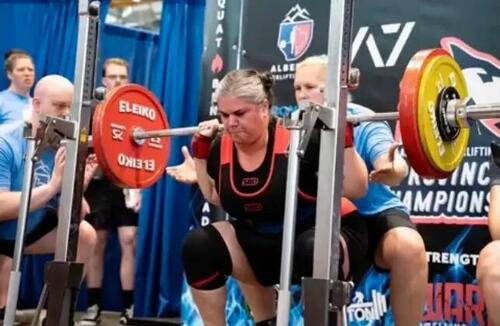
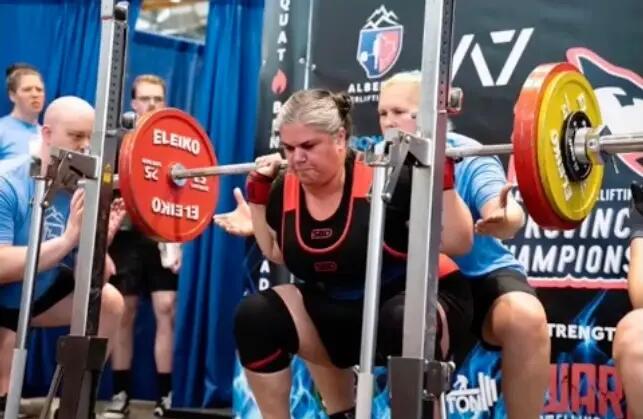
A male powerlifter who identifies as a woman just set a new world record—in women's powerlifting.

In the Canadian Powerlifting Union's (CPU) championships from Aug. 10 to Aug. 17, Anne Andres lifted 597.5 kilograms or 1317 pounds, according to advanced results.

This weight was at least 440 pounds more than the top-performing woman, SuJan Gill, lifted.

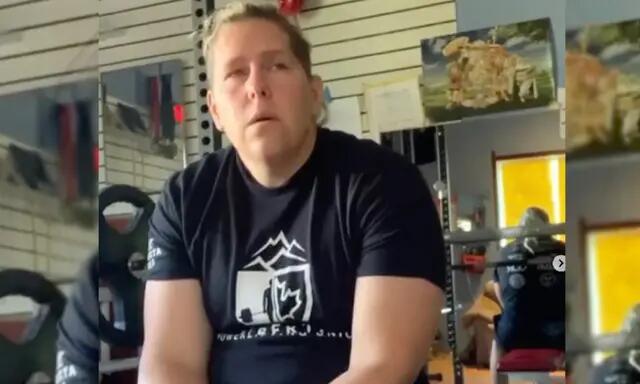
Anne Andres, a male powerlifter who identifies as a woman. (Instagram/Screenshot via the Epoch Times)

Mr. Andres, a 40-year-old, gender transitioned at 20 years old, after going through male puberty, according to an Instagram post.

"[I] didn't touch a barbell in my entire life until seven years ago," he said in the post. "In theory, I will be representing Canada at IPF Masters Worlds in October 2024. Unless I get hurt, I will win by a good margin."

Mr. Andres attributes his record-breaking lifts to a strong training ethic, not strong hormones. He has always had deficient testosterone, he said in another post.

"My test [testosterone] is lower than almost every human on this planet," he said. "It was low during puberty, it is non-existent now. These are the first tests you run as a transwoman to find out how much you need to suppress. Didn't take much. So, not exactly valid."

He added that he has gone through "menopause" three times.

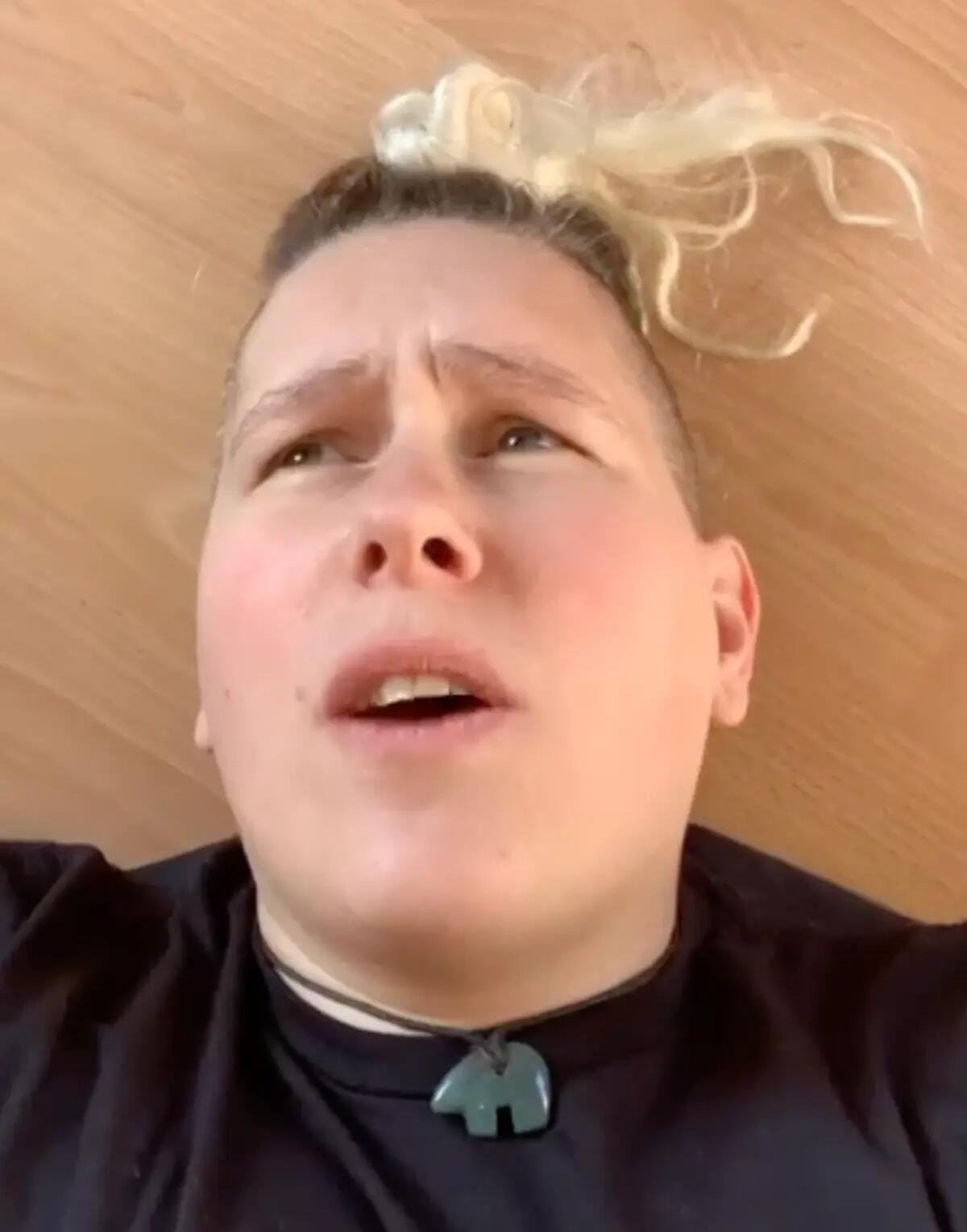
SuJan Gill, a Canadian powerlifter who got second place to Anne Andres, a transgender-identifying man. (Instagram/Screenshot via the Epoch Times)

Women's Sports Gives Support

For the most part, women in Canadian powerlifting have supported his participation in the sport, he told The Epoch Times in an Instagram message.

At the North American Powerlifting Federation, women wore transgender flag socks to support him, Mr. Andres said.

"I highly recommend ignoring me entirely and focus on the women who I have been allowed to share the platform with," Mr. Andres said. "My opinion is worthless. The women who want me there are the ones who matter."

Ms. Gill, who got second place, agreed.

"My view is that everyone is forgetting that Anne Andres is a human being with emotions, and a desire to be accepted, as we all are," she told The Epoch Times in an Instagram message. "As a fellow human being, I chose to support her, as she chooses to support me and all of our fellow lifters."

Anne Andres, a male powerlifter who identifies as a woman, trains for a lifting competition.(Instagram/Screenshot via the Epoch Times)

Qualifying the statement, Ms. Gill added that she doesn't know "the science behind transgender athletes and if they have biological advantages."

She declined comment on any potential physical advantage Mr. Andres may have.

Scientific studies show male biology provides powerful athletic advantages.

Government studies found that men outperformed women by about 36.8 percent in their separate Olympic weightlifting events.

Studies also show that men have significantly more skeletal muscle mass than women, especially in the upper body.

Male puberty gives boys such a physical advantage that high school boys often outcompete female Olympians in many sports.

"I train very, very, stupidly hard," Mr. Andres said in an Instagram post.

Gender Gains

Some women have expressed outrage that transgender-identifying men now compete in women's sports.

Canadian women's sports coach Dr. Linda Blade condemned Canadian sports groups for failing to preserve women's sports in a post on X, formerly known as Twitter.

"Dear Sports Federations in Canada. It's not hard to have two sports categories and be 100 percent inclusive," she said.

The CPU's policy on transgender powerlifters allows any man who says he is a woman to participate without getting surgery, hormone therapy, or a history of transgender identification.

"Individuals participating in development and recreational sport should be able to participate in the gender with which they identify and not be subject to requirements for disclosure of personal information beyond those required of cisgender athletes," the group's site reads.

In March of 2023, male powerlifting coach Avi Silverberg identified as a woman and broke the women's world record for powerlifting.

Mr. Silverberg hasn't commented on his action. He has no record of identifying as transgender.

While male biological advantage may be extremely visible in powerlifting, it's present in other sports too.

Former world champion tennis player Martina Navratilova condemned the U.S. Tennis Association (USTA) for opening the sport to transgender-identifying men.

"Women's tennis is not for failed male athletes—whatever age," Ms. Navratilova said. "This is not right and it is not fair. Would this be allowed at the U.S. Open this month? Just with self-ID? I don't think so."

https://www.zerohedge.com/political/male-transgender-powerlifter-smashes-womens-world-record-more-440-pounds

Soros-Backed UT Austin Initiative Embraces Advocacy Journalism

 by Jonathan Turley,

We have discussed the rise of advocacy journalism where objectivity and neutrality are discarded in favor of social justice. Despite public trust (and profits) crashing in the media, faculty members are plowing ahead with the new model of journalism to the peril of their profession. The latest such example is found in the “Solidarity Journalism Initiative” at the University of Texas at Austin.According to its website, the new initiative is being financed by tech companies and George Soros’ Open Society Foundations to help “journalists, journalism educators, and journalism students improve coverage of marginalized communities.”The College Fix reports that the program was brought over from Santa Clara University after UT hired Professor Anita Varma.

The school is pushing students to use their “lived expertise” and to “leave[] neutrality behind.” Instead, of neutrality, they are pushing “solidarity [as] ‘a commitment to social justice that translates into action.’”

In 2021, Varma wrote an article titled, “Solidarity Eclipses Objectivity as Journalism’s Dominant Ideal” in which she explained:

“objectivity as an aspirational ideal ends up encouraging journalists to avoid addressing what matters...

In coverage of issues like immigration, Covid-19, police brutality, and housing instability, the idea that observations will objectively speak for themselves is quickly off the table.”

That view has been in vogue within the mainstream media for years. We have often discussed the increasing bias and advocacy in major media in the United States.

What is most striking about this universal shift toward advocacy journalism (including at journalism schools) is that there is no evidence that it is a sustainable approach for the media as an industry. While outfits like NPR allow reporters to actually participate in protests and the New York Times sheds conservative opinions, the new polling shows a sharp and worrisome division in trust in the media. Not surprisingly, given the heavy slant of American media, Democrats are largely happy with and trusting of the media. Conversely, Republicans and independents are not. The question is whether the mainstream media can survive and flourish by writing off over half of the country.

A 2021 study from the non-partisan Pew Research Center showed a massive decline in trust among Republicans. Five years ago, 70 percent of Republicans said they had at least some trust in national news organizations. In 2021, that trust was down to just 35 percent. Conversely, and not surprisingly, 78 percent of Democrats and Democratic-leaning independents saying they have “a lot” or “some” trust in the media. When you just ask liberal Democrats, it jumps to 83 percent.

This latest polling shows that the problem is only getting more acute for the media. Yet, publishers and editors are still pandering to the mob in calling for more advocacy and less objectivity.

For example, we previously discussed the release of the results of interviews with over 75 media leaders by former executive editor for The Washington Post Leonard Downie Jr. and former CBS News President Andrew Heyward. They concluded that objectivity is now considered reactionary and even harmful. Emilio Garcia-Ruiz, editor-in-chief at the San Francisco Chronicle said it plainly: “Objectivity has got to go.”

Saying that “Objectivity has got to go” is, of course, liberating. You can dispense with the necessities of neutrality and balance. You can cater to your “base” like columnists and opinion writers. Sharing the opposing view is now dismissed as “bothsidesism.” Done. No need to give credence to opposing views. It is a familiar reality for those of us in higher education, which has been increasingly intolerant of opposing or dissenting views.

Downie recounted how news leaders today

“believe that pursuing objectivity can lead to false balance or misleading “bothsidesism” in covering stories about race, the treatment of women, LGBTQ+ rights, income inequality, climate change and many other subjects. And, in today’s diversifying newsrooms, they feel it negates many of their own identities, life experiences and cultural contexts, keeping them from pursuing truth in their work.”

There was a time when all journalists shared a common “identity” as professionals who were able to separate their own bias and values from the reporting of the news.

Now, objectivity is virtually synonymous with prejudice. Kathleen Carroll, former executive editor at the Associated Press declared “It’s objective by whose standard? … That standard seems to be White, educated, and fairly wealthy.”

In an interview with The Stanford Daily, Stanford journalism professor, Ted Glasser, insisted that journalism needed to “free itself from this notion of objectivity to develop a sense of social justice.” He rejected the notion that journalism is based on objectivity and said that he views “journalists as activists because journalism at its best — and indeed history at its best — is all about morality.”  Thus, “Journalists need to be overt and candid advocates for social justice, and it’s hard to do that under the constraints of objectivity.”

Lauren Wolfe, the fired freelance editor for the New York Times, has not only gone public to defend her pro-Biden tweet but published a piece titled I’m a Biased Journalist and I’m Okay With That.” 

Former New York Times writer (and now Howard University Journalism Professor) Nikole Hannah-Jones is a leading voice for advocacy journalism.

Indeed, Hannah-Jones has declared “all journalism is activism.” Her 1619 Project has been challenged as deeply flawed and she has a long record as a journalist of intolerance, controversial positions on rioting, and fostering conspiracy theories. Hannah-Jones would later help lead the effort at the Times to get rid of an editor and apologize for publishing a column from Sen. Tom Cotton as inaccurate and inflammatory.

All of these voices show a complete disconnect from readers and viewers who do not want advocacy journalism and no longer trust what they are reading in the media. Yet, these calls remain personally popular for writers and editors alike. It is reminiscent of how executives at companies like Disney have pursued woke policies to the detriment of their shareholders and the alienation of many of their customers. The same is true for the push for censorship on social media despite the clear preference of users for more free speech and fewer speech controls.

As with brands like BudLight, the abandonment of actual consumers will not deter media executive in pushing this “new journalism.” As Downie explained “objectivity” is “keeping them from pursuing truth in their work.”

So they will do their jobs even when viewers and readers no longer are interested in their work.

While this type of vanity press can count on subsidies from billionaires like Jeff Bezos and George Soros, the public may balk at a media that is increasingly writing for itself.

https://www.zerohedge.com/political/leave-neutrality-behind-soros-backed-ut-austin-initiative-embraces-advocacy-journalism

Georgia Senator Demands Special Session To Investigate, Possibly Impeach Fani Willis

 by Tom Ozimek via The Epoch Times (emphasis ours),

Georgia Republican state Sen. Colton Moore is demanding a special emergency legislative session to investigate the actions of Fulton County District Attorney Fani Willis with regard to former President Donald Trump, in a move that Mr. Moore said could lead to Ms. Willis's impeachment.

This week, Ms. Willis charged President Trump and 18 others with a litany of alleged crimes in connection with their efforts to challenge the results of the 2020 election.

Ms. Willis charged each defendant under Georgia's Racketeer Influenced and Corrupt Organizations (RICO) Act, a law drafted to fight organized crime, with the indictment alleging that President Trump and his co-conspirators did "constitute a criminal organization," which has provoked controversy.

President Trump and his co-defendants have denied any wrongdoing, with the former president accusing Ms. Willis of corruption.

"So, the Witch Hunt continues! 19 people indicated tonight, including the former President of the United States, me, by an out of control and very corrupt District Attorney," President Trump posted on social media platform Truth Social.

And now, Mr. Moore has accused Ms. Willis of corruption and of weaponizing the justice system to pursue a political prosecution, while calling for a special emergency legislative session to investigate her actions and possibly recommend impeachment.

'Weaponization of Our Justice System'

Mr. Moore said he has urged Georgia Republican Gov. Brian Kemp to call a special session to investigate the actions of the Fulton County district attorney.

"As a Georgia State Senator, I am officially calling for an emergency session to review the actions of Fani Willis," Mr. Moore said in a statement obtained by The Epoch Times.

"America is under attack. I’m not going to sit back and watch as radical left prosecutors politically target political opponents," he added, echoing rhetoric expressed by numerous critics of Ms. Willis's decision to charge President Trump, namely that it amounts to interference in the 2024 presidential election.

Mr. Moore elaborated in a statement that accompanied an online petition demanding the investigation of Ms. Willis, this time explicitly mentioning the prospect of impeachment.

"Corrupt District Attorney Fani Willis is potentially abusing her position of power by pursuing former President Donald J. Trump, and I am calling on my colleagues in the Georgia legislature to join me in calling for an emergency session to investigate and review her actions and determine if they warrant impeachment," Mr. Moore wrote.

The Republican lawmaker also called for Ms. Willis's office to be defunded until the investigation runs its course.

"The politically motivated weaponization of our justice system at the expense of taxpayers will not be tolerated. I am demanding that we defund her office until we find out what the hell is going on. We cannot stand idly by as corrupt prosecutors choose to target their political opposition," Mr. Moore wrote.

In a letter to Mr. Kemp that was obtained by The Epoch Times, the Republican lawmaker said that, in his opinion, "an emergency exists in the affairs of the state, requiring a special session to be convened" under Georgia law "for all purposes, to include, without limitation, the review and response to the actions of Fani Willis."

In Georgia, a special legislative session can be called by the governor or if three-fifths of both legislative chambers sign a letter—such as the one written by Mr. Moore—demanding that an emergency session be convened.

Ms. Willis's office declined to comment.

Asked for comment, a spokesperson for Mr. Kemp referred to remarks made earlier in the day by Cody Hall, one of the governor’s senior advisers, who dismissed calls for a special session as pointless.

Reactions

Kandiss Taylor, former Georgia Republican gubernatorial candidate and current Georgia GOP district chair, expressed her support for an emergency session to investigate Ms. Willis.

"State Senator calls for a special session to secure GA elections!" she wrote on X, formerly known as Twitter. "[Colton Moore] you are amazing! Thank you for not bending the knee. Thank you for representing GA voters. We see you. We stand with you."

Conservative commentator Rogan O'Handley, widely known by his X handle DC Draino, hailed Mr. Moore's announcement, even suggesting that the Republican lawmaker is governor material.

"A rare example of political courage in the GOP," Mr. O'Handley wrote on X.

"State Sen. [Colton Moore] is calling for an emergency session to review & possibly impeach Fani Willis after she indicted Pres. Trump & his team. Bravery like this is what makes future Governors."

Ms. Willis has asked for a March 4, 2024, trial date for President Trump and his co-defendants, a proposal that would put the former president—the front-runner in the race for the Republican presidential nomination—on trial just one day before the "Super Tuesday" primary contests.

Besides President Trump, the defendants are his former White House chief of staff Mark Meadows; his former attorneys Rudy Giuliani and Jenna Ellis; attorneys Sidney Powell, John Eastman, Kenneth Chesebro, Ray Smith III, and Robert Cheeley; former Justice Department attorney Jeffrey Clark; GOP strategist Michael Roman; Georgia alternate electors Shawn Still, Cathleen Latham, and former head of the Georgia Republican Party David Shafer; Illinois pastor Stephen Lee; Harrison Floyd, vice president for the Black Conservative Federation, who is also involved in Black Voices for Trump; Trevian Kutti, former publicist for Kanye West; Scott Hall, a Georgia bail bondsman and Fulton County Republican poll watcher; and Misty Hampton, also known as Misty Emily Hayes, former Coffee County elections supervisor.

Arrest warrants have been issued for the defendants, and Ms. Willis said at a press conference that they have until noon on Aug. 25 to voluntarily surrender.

https://www.zerohedge.com/political/america-under-attack-georgia-senator-demands-special-session-investigate-possibly-impeach