Search This Blog

Monday, August 21, 2023

Boehringer latest to sue US over drug price negotiation plan

 Boehringer Ingelheim sued the U.S. government in an attempt to block a program that gives the Medicare health insurance plan the power to negotiate lower drug prices, joining other drugmakers and business groups claiming that it would stifle development of new medicines.

In a complaint filed on Friday in federal court in New Haven, Connecticut, the privately-held German drugmaker said the program violates the U.S. Constitution by giving federal regulators too much power to dictate drug prices.

The U.S. Department for Health and Human Services (HHS), which oversees the Medicare program for Americans age 65 and older, did not immediately respond to a request for comment.

The drug price negotiation program is part of President Joe Biden's signature Inflation Reduction Act (IRA).

Americans pay more for prescription medicines than people in any other country, and the program aims to save $25 billion annually by 2031 through price negotiations for the drugs most costly to Medicare.

The program already faces several court challenges, including from leading industry groups and drug companies.

Unless it is blocked by a court, HHS will begin negotiations next month over 10 high-priced drugs, to be chosen by the agency. The negotiated prices would take effect in 2026.

Type 2 diabetes treatment Jardiance, which Boehringer shares with U.S. drugmaker Eli Lilly, is considered among the most likely drugs to be chosen for the first round of negotiations.

Other companies that have sued over the program include Johnson & Johnson, Merck & Co and Bristol Myers Squibb.

https://www.marketscreener.com/quote/stock/ELI-LILLY-AND-COMPANY-13401/news/Boehringer-latest-to-sue-US-over-drug-price-negotiation-plan-44662587/

Sickle cell gene therapies from Vertex, bluebird can be cost-effective at $1.9M: ICER

 The world’s first CRISPR-based gene-editing therapy appears to be nearing the market. And an influential drug cost watchdog has an early idea of how the treatment should be priced to be considered cost-effective in sickle cell disease (SCD).

Vertex and CRISPR Therapeutics’ gene editing-based exa-cel—and bluebird bio’s gene replacement therapy lovo-cel—can be priced up to $1.93 million to be cost-effective, the Institute for Clinical and Economic Review said in a draft report (PDF) published Wednesday. The figure accounts for the drugs’ net prices after discounts and rebates.

The report comes shortly after Vertex and CRISPR last week said they had completed their rolling FDA applications for exa-cel in SCD and beta thalassemia with a request for priority review. If approved, exa-cel would become the first therapy based on the Nobel-winning CRISPR technology.

It’s not immediately clear how bluebird or Vertex-CRISPR will price their therapies. A Vertex spokesperson said the company is still reviewing the report. In a separate statement, a bluebird spokesperson said the company hasn’t set a price for lovo-cel and is currently focused on completing its FDA application.

During an interview with Fierce Pharma, ICER’s chief medical officer, David Rind, M.D., stressed that the cost-effectiveness analyses are preliminary and may change. ICER is gathering public comments until May 9 and pushed back its final report publish date to July 13 in anticipation of more data on exa-cel.

The novelty of the CRISPR technology doesn’t factor into ICER’s cost assessment other than to add some uncertainties about safety, Rind said. But “that is not in any way to detract from how incredibly exciting it is to have a CRISPR therapy and a more traditional gene therapy for this genetic disease that we’ve all been wanting to cure forever,” he said.

In ICER’s draft report, the organization said exa-cel and lovo-cel should be treated similarly because both have very limited clinical data. But it also suggested that future research may identify differences between the two therapies.

In lovo-cel’s registrational trial, 90% of 31 participants were free of any vaso-occlusive events between six months and 18 months after a one-time infusion, and 30 patients didn’t experience severe crises. In exa-cel’s case, only seven participants had 12 months of follow-up, and all of them were free of severe vaso-occlusive events, ICER noted.

ICER put exa-cel in a lower confidence rating in its comparison with standard of care because of a smaller dataset and the limited experience with the CRISPR technology.

In a Thursday note, analysts at Evercore ISI said that exa-cel’s data pool is larger now. The team estimated that Vertex and CRISPR had 23 to 31 patients with 12 months of data when they completed the FDA submission.

Given that both gene therapies offer the promise of a potential cure, ICER compared them with standard of care over a lifetime.

The health economics reviewers figured the two therapies could cost between $1.58 million to $1.72 million under commonly used cost-effectiveness thresholds that only look at benefits within the healthcare system.

The range goes up to between $1.79 million to $1.93 million when considering broader societal value.

ICER is only offering an economic analysis to help people make their own decisions about value, Rind said. Pointing to how SCD disproportionally affects Black people, Rind said that it’s possible that some of ICER’s voting experts might suggest a therapy has good value under a higher range of cost-effectiveness because of historical discrimination and inequities in the U.S.

Under an even higher possible threshold, the drugs could be fairly priced at up to $2.32 million, according to ICER’s calculations.

Gene therapies typically cost multiple millions of dollars per treatment. Bluebird recently launched Zynteglo, a sister med to lovo-cel, at $2.8 million. Zynteglo is approved for beta thalassemia, a rare blood disorder that affects about 1 in 100,000 individuals.

Bluebird makes pricing decisions for its gene therapies “based on measures of positive clinical outcomes, quality-of-life improvements, and the potential societal impact of patients and families living their lives more fully, engaging in meaningful work, and using the health care system less,” the company spokesperson said.

SCD is more prevalent, affecting about 100,000 Americans, or 1 out of about 400 Black people at birth. By Vertex’s esimtate, treatment costs for severe SCD patients can reach around $4 million to $6 million over a lifetime.

https://www.fiercepharma.com/pharma/sickle-cell-disease-gene-therapies-vertex-crispr-bluebird-can-be-cost-effective-19m-icer

Hunter's Lawyers Threatened To Force Joe To Testify Unless Plea Deal Reached

 Hunter Biden's lawyers played heavy with the Department of Justice, effectively threatening to force President Joe Biden to testify in any criminal trial against the First Son if a plea agreement wasn't reached over his multiple alleged crimes.

"President Biden now unquestionably would be a fact witness for the defense in any criminal trial," wrote Hunter Biden attorney Chris Clark in a 32-page letter last fall, Politico reports, calling the news that there was enough evidence to charge Hunter an "illegal" leak.

That letter, along with more than 300 pages of previously unreported emails and documents exchanged between Hunter Biden’s legal team and prosecutors, sheds new light on the fraught negotiations that nearly produced a broad plea deal. That deal would have resolved Biden’s most pressing legal issues — the gun purchase and his failure to pay taxes for several years — and it also could have helped insulate Biden from future prosecution by a Republican-led Justice Department.

The documents show how the deal collapsed — a sudden turnabout that occurred after Republicans bashed it and a judge raised questions about it. The collapse renewed the prospect that Biden will head to trial as his father ramps up his 2024 reelection bid. -Politico

According to Clark, putting Joe Biden on the stand would create political and constitutional chaos by pitting Joe Biden against his own DOJ.

"This of all cases justifies neither the spectacle of a sitting President testifying at a criminal trial nor the potential for a resulting Constitutional crisis," reads the letter, which was shared with Politico along with several other documents.

Backstory

In the spring of 2022, Hunter Biden's legal team was on the war path - using a PowerPoint presentation that invoked the looming ghost of Trump right from their opening slide. Their point was clear: Trump's ceaseless haranguing of Hunter makes any charges against the younger Biden appear as yielding to political pressure, thus damaging the integrity of the Justice Department.

Of course, Hunter put himself in the spotlight by taking tens of millions of dollars from Ukraine, China and Russia in exchange for zero identifiable benefit aside from access to his father.

While initial concerns surrounded possible charges of influence peddling or money laundering, the actual case circled around late tax payments from 2014 to 2019. Biden’s lawyers argued that charging Hunter with tax crimes would make the DOJ look like they had capitulated to Trump’s call for an investigation.

Fast-forward to later in 2022, and we discover that Hunter could also face federal gun charges, traced back to 2018 when he was deeply hooked on crack cocaine. As things escalated, Hunter’s attorneys sought meetings with the highest echelons of the DOJ. These were not mere fishing expeditions but highly strategic maneuvers designed to corner the department into a position where it had to make a call: either it would take a reputation hit for being "politically influenced" or face accusations of providing “preferential treatment” to the President’s son.

By spring 2023, it seems the DOJ was looking for an exit strategy, and were open to cutting a deal that would save face for everyone involved - especially the department itself. The proposed agreement doesn't require a guilty plea from Hunter but has its own laundry list of requirements.

From the fall of 2022 through the spring of 2023, Clark sought meetings with people at the highest levels of the Justice Department — almost entirely without success. In multiple emails, he asked to meet with the head of the Criminal Division, the head of the Tax Division, the Office of Legal Counsel, the Office of the Solicitor General, Deputy Attorney General Lisa Monaco and the attorney general himself. On Feb. 21, 2023, Clark’s team reached out to multiple officials at Main Justice, who passed his request from one person to the next.

The search ended when Clark sent Associate Deputy Attorney General Bradley Weinsheimer an exasperated email, saying he had asked the government over and over to tell him who at headquarters they could appeal to if Weiss decided to charge their client. -Politico

"Please advise whether you would be the appropriate person to hear our client’s appeal, in the event that the U.S. Attorney’s Office decides to charge Mr. Biden," wrote Clark.

Weinsheimer caved, meeting with Clark and Weiss on April 26. While it's not clear what happened during the meeting, the Wall Street Journal reported that an IRS supervisor was prepared to testify that there was internal political pressure to slow walk and stonewall the investigation. Unlike Biden's lawyers who argued that their client was being treated too harshly because of politics, the IRS supervisor was set to testify that Hunter was receiving "preferential treatment."

After that, a deal emerged in May which would see Hunter admit to filing taxes late in 2017 and 2018, that he owned a gun while using drugs, and that he would both pay back-taxes and never own a gun again. If Hunter could stick to these basic agreements until January 2025, the DOJ would promise not to prosecute him for anything they'd investigated thus far.

"The Department of Justice agrees not to criminally prosecute Robert Hunter Biden and the affiliated businesses (namely: Owasco P.C.; Owasco LLC; and Skaneateles LLC): (a) for any federal crimes arising from the conduct generally described in the attached Statement of Facts (Attachment A); or (b) for any other federal crimes relating to matters investigated by the United States," reads the now-dead plea deal.

Then, IRS investigator Gary Shapley testified that the DOJ had "slow-walked" the investigation.

Within days of the interview airing, Justice Department prosecutors made clear to Biden’s lawyers that the deal would have to change and that Biden would need to plead guilty to tax charges, according to two people familiar with the talks who were granted anonymity to share sensitive details.

Biden’s team acceded to the new demand, agreeing he would plead guilty to two misdemeanor counts of willfully failing to pay his taxes. But he wouldn’t plead guilty to the gun charge; instead, that issue would be resolved through a pretrial diversion agreement that could result in withdrawal of charges after a few years. -Politico

Then, on the evening of June 2, Clark emailed Wolf to say that immunity from prosecution was vital to the deal - sending language to include saying that the US would not prosecute Hunter Biden for "any federal crimes arising from the conduct generally described" in the two documents that would be included in the final deal.

"This language or its functional equivalent is very critical to us," Clark added.

Reading between the lines - the deal would protect Hunter from a potential Trump administration, or that of another Republican who might win the 2024 election. The language Clark insisted on would have immense consequences:

"The United States agrees not to criminally prosecute Biden, outside of the terms of this Agreement, for any federal crimes encompassed by the attached Statement of Facts (Attachment A) and the Statement of Facts attached as Exhibit 1 to the Memorandum of Plea Agreement filed this same day. This Agreement does not provide any protection against prosecution for any future conduct by Biden or by any of his affiliated businesses."

Then, after a judge asked several questions about the deal at a hearing last month, the deal completely unraveled - and the prosecutor overseeing the probe has been made a special counsel, who says that the case is heading to trial.

On Thursday, the judge greenlighted a motion by prosecutors to withdraw the tax charges so they can be filed elsewhere. She also approved Clark's request to leave Biden's legal team because he may be called as a witness at a potential trial.

Whether Joe Biden could become a witness is now the big question.

https://www.zerohedge.com/political/quid-pro-f-you-dad-hunters-lawyers-threatened-force-joe-testify-unless-plea-deal-reached

Cruz Demands Anheuser-Busch Hand Over Dylan Mulvaney Info in Kid-Marketing Probe

 by Jack Phillips via The Epoch Times,

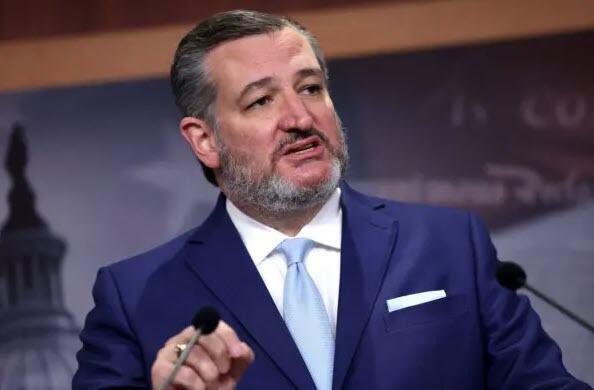
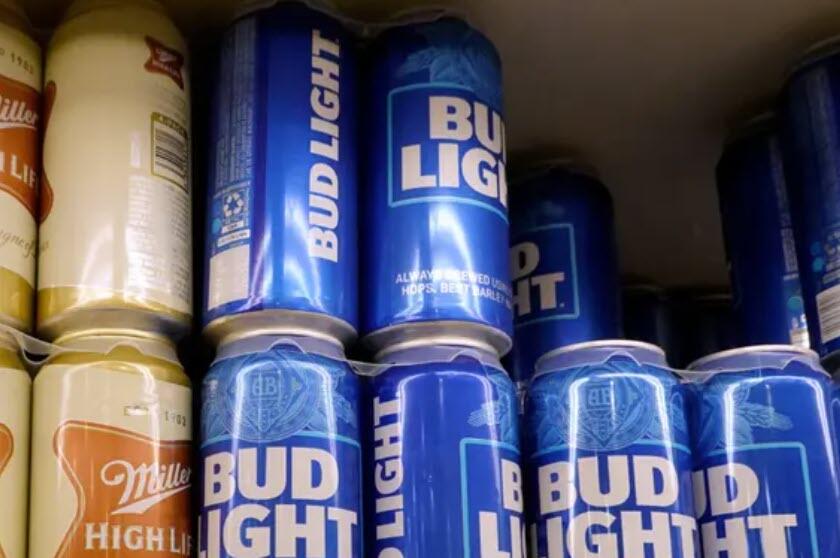
Sen. Ted Cruz (R-Texas) has ramped up demands that Anheuser-Busch hand over documents in relation to an investigation of whether Bud Light's marketing promotion with a transgender influencer was marketing beer to kids.

“The level of cooperation the Committee receives will bear significantly on my assessment of whether this is part of a broader problem across the Anheuser-Busch InBev product line and whether changes to federal law are necessary to prohibit Anheuser-Busch InBev from marketing beer to children,” the Republican senator wrote in a letter (pdf) to Anheuser-Busch InBev CEO Michael Doukeris last week, claiming that AB InBev hasn't sent over the documents three months after he asked the firm.

Mr. Cruz is seeking communications between the company and the transgender influencer, Dylan Mulvaney, as well as social media content scripts, the firm's corporate policy for advertising, and data the beer company possesses on the age demographics of the influencer's following on social media.

The senator made note of Code Compliance Review Board (CCRB) member's dissenting opinion that found that "Mulvaney appeals to persons below the legal drinking age with a ‘special attractiveness’ ... is especially attractive to young teens and girls; is often recognized as preadolescent; and caters to very young people.” Ultimately, the CCRB majority found there was nothing in the Instagram posts that would "have special attractiveness below the legal drinking age,” according to its report.

The board also found that the influencer's audience age demographics were more than 80 percent aged 21 or older. The board has a compliance standard of over 73 percent.

Sen. Ted Cruz (R-Texas) speaks on Title 42 immigration policy in Washington, on May 3, 2023. (Kevin Dietsch/Getty Images)

"Moreover, even now that the CCRB has completed its review, Anheuser-Busch persists in refusing to provide the requested documents,15 revealing plainly that the ongoing CCRB review was never the real reason for Anheuser-Busch’s refusal to cooperate. Anheuser-Busch is now suggesting that CCRB review was sufficient, and that it need not cooperate with congressional document requests," said Mr. Cruz's letter.

"This position is untenable; Anheuser-Busch does not decide whether and when a congressional investigation is concluded."

Giving Anheuser-Busch an Aug. 29 deadline to comply, his letter said that "these dilatory tactics by your subsidiary must end. Otherwise, Anheuser-Busch InBev will leave Congress no choice but to infer this obstructionism is intended to shield inculpatory information from the Committee’s investigation."

But in a statement to the Washington Times, Anheuser-Busch said it takes “its role in promoting responsible drinking very seriously, and our marketing is directed to adults of legal drinking age.”

Over the past several months, Bud Light's sales have seen weekly declines following the Mulvaney social media posts were made as conservatives called for a boycott of the brand, accusing it of caving in to "woke" culture. Last week, an analyst forecast that Bud Light will not see its prospects improve in 2023.

“We assume no recovery in Bud Light [this year],” RBC Capital Markets analyst James Jones wrote in a note this week, according to Yahoo Finance.

Recent sales data show that retail-store dollar sales of the brand dropped 26.1 percent in the week ending July 15 and 26.8 percent in the week ending July 22, compared with the previous year. At the same time, the beer lost its No. 1 spot to Modelo Especial in May and June, according to figures.

In May, the CEO of AB-InBev, Michel Doukeris, attempted to distance the beer brand with the Mulvaney incident and said that only “one can” with the influencer’s face was produced.

“It was one post. It was not an advertisement,” Mr. Doukeris told Financial Times in May.

The influencer was not part of an official marketing campaign, Mr. Doukeris said. He added that social media-driven “misinformation” and “confusion” were part of the problem without elaborating.

https://www.zerohedge.com/political/sen-ted-cruz-demands-anheuser-busch-hand-over-dylan-mulvaney-information

New York, California each lost $1T in assets as financial firms fled south

 The steady exodus of Wall Street banks and big tech firms from California and New York over the past several years has cost the states nearly $1 trillion apiece in managed assets, according to a new analysis by Bloomberg News.

The departure of companies like Elliott Management, AllianceBernstein and Charles Schwab has drained the two states of thousands of high-paying jobs, further burdening city and state finances by sapping tax revenue. 

Commercial property markets have also buckled under the weight of the sudden exit of the finance industry, at the same time they are struggling to find new tenants amid the surge in remote work. 

Bloomberg conducted the analysis by going through the corporate filings from more than 17,000 firms since the end of 2019. 

The moves out of major metros like Los Angeles, San Francisco and New York City were often borne out of the desire for lower taxes and warmer weather.

From the start of 2020 through the end of March 2023, more than 370 investment companies – managing about $2.7 trillion in assets – moved their headquarters to a new state, according to Bloomberg. The overwhelming majority of the migration was from high-tax states in the Northeast and on the West Coast and into lower-tax states like Florida and Texas, which boast no income tax. 

Florida was the top destination for companies that left New York, with the Sunshine State drawing the likes of Icahn Capital Management and AKR Investment Management. Texas, meanwhile, has shown to be the top destination for companies leaving California. 

placeholder
A general view of Lower Manhattan

A general view of Lower Manhattan as buildings overlook New York Harbor on February 16, 2022, in New York City. ((Photo by Spencer Platt/Getty Images) / Getty Images)

Not only businesses are leaving California and New York: A growing number of Americans are also migrating to places like Florida and Texas, according to a Bank of America analyst note that is based on aggregated and anonymous internal customer data.

"We constructed near real-time estimates of domestic migration flows and found that pandemic migration trends are not reversing," the analysis said. Since the first quarter of 2023, the data "suggests that cities that saw a large influx of people during the pandemic have still been growing faster than other cities in recent quarters."

The analyst note found that San Francisco experienced a big drop in population at the start of the year, with a more than 1% drop in the first quarter of 2023 and a more than 3% decline from 2020 to 2022.  

The city has been plagued by a spike in property-related crime, according to the California Department of Justice’s Criminal Justice Statistics Center.

New York City also posted a big population decline, losing about 1% of its population in early 2023 and 3% in the prior two years.

"This population shift paints a clear picture," said Janelle Fritts, a policy analyst at the nonpartisan Tax Foundation. "People left high-tax, high-cost states for lower-tax, lower-cost alternatives."

https://www.foxbusiness.com/economy/new-york-california-each-lost-assets-financial-firms-fled-south

Krystal Sells Priority Review Voucher for $100 M

 Krystal Biotech, Inc. (NASDAQ: KRYS) (the “Company”), a commercial-stage biotechnology company focused on the discovery, development, and commercialization of genetic medicines to treat diseases with high unmet medical needs, announced that it has completed the sale of its Rare Pediatric Disease Priority Review Voucher (PRV) for $100 million.

The Company was awarded the PRV following the U.S. Food and Drug Administration (FDA) accelerated approval of VYJUVEKTM (beremagene geperpavec-svdt) for the treatment of recessive or dominant dystrophic epidermolysis bullosa (DEB) for patients 6 months of age and older.

Under the Rare Pediatric Disease Priority Review Voucher Program, the FDA awards priority review vouchers to sponsors of rare pediatric disease product applications that meet certain criteria. The program is intended to encourage development of new drugs and biologics for the prevention and treatment of rare pediatric diseases. A PRV can be redeemed to receive priority review of a subsequent marketing application for a different product, or alternatively, sold or transferred.

https://finance.yahoo.com/news/krystal-biotech-announces-sale-priority-110000231.html

Ideaya: IND Application for Pol Theta Helicase Development Candidate OKd


  • GSK101 (IDE705) is being developed as a potential first-in-class Pol Theta Helicase Inhibitor in combination with niraparib in GSK-sponsored Phase 1/2 clinical trial

  • GSK101 and niraparib combination development will focus on advanced solid tumors with HR mutations or HRD, pursuant to the clinical protocol

  • IDEAYA to receive a $7 million milestone payment upon IND acceptance, and potential future aggregate milestones of up to $950 million related to GSK101 Pol Theta inhibitors