By increasing the number of authorized shares of the company’s capital stock, Curis has expanded its potential and opened new doors for future growth. The amendment elevates the authorized shares from 232,812,500 to an impressive 460,625,000. Moreover, the common stock has also experienced a substantial surge, soaring from 227,812,500 to an astonishing 455,625,000.
SeaStar Medical’s groundbreaking Selective Cytopheretic Devicefor Cardiorenal Syndrome has been granted an esteemed Breakthrough Device Designation by the FDA, acknowledging its immense potential in addressing the pressing clinical needs of acute kidney injury patients. This remarkable designation is anticipated to accelerate the device’s clinical development and regulatory review, paving the way for its utilization in this specific patient population.
Moreover, SeaStar Medical has taken a significant step forward by submitting an application for HDE (Humanitarian Device Exemption) approval from the FDA, with the intention of extending the benefits of their Selective Cytopheretic Device to children. However, it is important to note that the FDA has not yet granted approval for this HDE application, indicating that further evaluation and deliberation are required.
Furthermore, SeaStar Medical has achieved yet another milestone as they have successfully secured FDA approval to commence a groundbreaking study utilizing the Selective Cytopheretic Device. This study aims to mitigate hyperinflammation in adults suffering from acute kidney injury, a condition that poses significant challenges in the medical field.
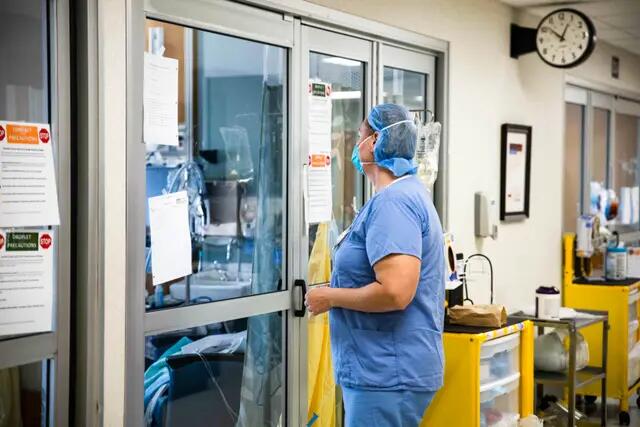
After multiple weeks of increasing COVID-19 hospital admissions, federal data show that the figure is now falling.
In the week ending Sept. 16, U.S. Centers for Disease Control and Prevention (CDC) data show hospitalizations are down 4.3 percent. The number had been increasing since July, although the CDC's historical trends shows that hospitalization numbers were relatively low compared with previous increases in the virus—notably compared with a prior "surge" that occurred in the summer of 2022.
Meanwhile, the latest figures show that emergency department visits are down 19.3 percent and test positivity is down 1.6 percent. Deaths are up by about 12.5 percent, the data show, but that figure is also relatively low when compared with previous years.
The EG.5 variant, which has been dubbed Eris, accounts for about 24.5 percent of all cases, according to the CDC's variant tracker. FL.1.5.1, known as Fornax, is estimated to be responsible for about 13.7 percent of COVID-19 infections, the CDC figures show.
About a month ago, amid a steady rise in hospitalizations, some health officials suggested that it doesn't appear to be as bad as before.
"Looking at that graph [of] hospitalizations, even though it's on an upward trend, that's still lower than it was last year at this time," Dr. John Segreti, an epidemiologist and the medical director of infection control and prevention at Rush University Medical Center in Chicago, told ABC News. "The fact that the numbers are going up fairly slowly, I think is a good sign."
Responding to the figures last month, Dr. Shira Doron, chief infection control officer for Tufts Medicine, said that the recent "upswing is not a surge; it's not even a wave."
"What we're seeing is a very gradual and small upward trajectory of cases and hospitalizations, without deaths really going along, which is great news," the doctor added.
Last week, the Biden administration announced it would use $600 million to produce new COVID-19 tests that it will send out for free to people who order them via the U.S. Postal Service.
Twelve manufacturers that employ hundreds of people in seven states from California to Maryland have been awarded funding and will produce 200 million over-the-counter tests to replenish federal stockpiles for government use, in addition to producing enough tests to meet demand for tests ordered online, the Department of Health and Human Services said.
Dawn O’Connell, assistant secretary for preparedness and response at HHS, said that though some portions of the public may be tired of the pandemic and its implications, at-home testing remains a key way to slow the spread of new cases.
“Whether or not people are done with it, we know the virus is there, we know that it’s circulating. We know, if past is prologue, it’ll circulate to a higher degree and spread, and cases will go up in the fall and winter seasons,” Ms. O’Connell said. “Anticipating that that would be true again, or something similar, we want to make sure the American people have these tools.”
Mandates?
The publication of the new data comes after a handful of hospitals, county governments, and a small number of schools and colleges mandated mask requirements starting in August. The CDC and Food and Drug Administration (FDA) again recommended new COVID-19 booster shots for anyone aged six months and older earlier this month.
And several Bay Area health agencies in California announced last week that mandatory masking would return to hospitals and health care settings for the fall and winter months.
Contra Costa, Sonoma, Alameda, and San Mateo counties issued mask orders for health care staff in hospitals and other care facilities. The orders start on Nov. 1 and last until April 30, 2024, officials said, citing recent increases in COVID-19, influenza, and other respiratory viruses that are typically commonplace during the colder months, according to statements and local media reports.
“Each year we see that higher rates of influenza, COVID-19 and other respiratory viruses that can cause severe respiratory infections occur annually between late fall and spring,” Dr. Karen Smith, the Sonoma County interim health officer, said in a statement.
Contra Costa Health Services CEO Anna Roth, meanwhile, the Northern California county’s board of supervisors last week that the mandate will be enacted, according to local media reports.
“We are issuing the health order today around masking for high-risk facilities, health care facilities specifically,” Ms. Roth stated, according to a local CBS affiliate station. “So again, masking in hospitals, masking in skilled nursing facilities, masking in high-risk facilities.”
Mask mandates have already been in effect at hospitals in San Francisco. The city is already enforcing year-round masking for health care staffers, visitors, and patients, reported the San Francisco Chronicle. Officials in Santa Clara County, which encompasses much of Silicon Valley, already set a mask mandate back in March.
GSBR-1290 shown to be generally well-tolerated with no adverse event-related discontinuations in Phase 1b multiple ascending dose study
Significant weight loss at 28 days supporting once-daily dosing
Topline data from Phase 2a type 2 diabetes cohort expected in latter half of fourth quarter 2023; topline data from obesity cohort now expected in the first half 2024
Phase 2b studies in type 2 diabetes and obesity planned for initiation in 2024
Company to host conference call today, September 29 at 8:30 a.m. ET
Structure will host a conference call and webcast today, September 29, 2023 at 8:30 a.m. Eastern Time. A live webcast of the call will be available on the Investor Relations page of Structure’s website at https://ir.structuretx.com/events-presentations/events. To access the call by phone, participants should visit this link (registration link) to receive dial-in details. The webcast will be made available for replay on the company's website beginning approximately two hours after the live event. The replay of the webcast will be available for 90 days.
AbbVie said on Friday a late-stage study of its experimental combination therapy to treat a form of blood cancer failed to meaningfully increase the survival rate of patients without the disease worsening.
The combination of AbbVie's Venclyxto and a steroid dexamethasone was being tested in patients with a type of relapsed multiple myeloma who had received two or more prior treatments.
AbbVie's combination improved the median progression-free survival period to 9.9 months, compared with 5.8 months for a combination of Bristol-Myers Squibb's Pomalyst and dexamethasone, but the results were not statistically significant.
The company said 62% of patients treated with the combination therapy showed complete disappearance of tumors or reduction in tumor size, compared with 35% of patients treated with the Pomalyst-dexamethasone combination.
While the trial did not meet its primary endpoint, the company is planning to discuss the data with health authorities in the near future given the potentially favorable trends, Mariana Stirner, AbbVie's head of oncology and hematology therapeutic areas, said in the company statement.
Multiple myeloma, the second-most common blood cancer in the world, starts in plasma cells in bone marrow and ultimately disrupts the production of normal blood cells.
Venclyxto, which is approved in the U.S. to treat two other types of blood cancer, brought in revenues of $2.01 billion in 2022.
It is jointly commercialized by AbbVie and Roche unit Genentech in the U.S. and by AbbVie outside the country.