With rising inflation, American consumers are increasingly turning to the Chinese e-commerce platform Temu for their shopping needs. With its enticing tagline “Shop like a billionaire,” Temu has captured 17% of the U.S. market share, posing a challenge to traditional American retailers such as Amazon.com Inc., Dollar Tree Inc. and Five Below Inc. Therise highlights the lucrative and disruptive nature of startups.
Owned and operated by PDD Holdings Inc. (NASDAQ:PDD), Temu offers a wide range of products, including home decor, pet supplies, beauty and health products and clothing. The platform is known for its competitive pricing, often offering significant discounts on items compared to prices on Amazon. Coupled with Temu’s discount codes, consumers can enjoy even greater savings.
Temu has even become the No. 1 Shopping App on Apple’s App Store, surpassing Amazon, Target Corp. and Walmart Inc., which currently hold the third, fourth and eighth spots, respectively. The No. 2 shopping app is Shein, another Chinese retailer.
Orders purchased on Temu are shipped from China and are estimated to be delivered within 10 days. However, in a bid to compete with Amazon’s fast delivery, Temu opened its marketplace to U.S. warehouses last month. Shopping from these sellers can significantly reduce shipping time, giving U.S. retailers the ability to handle fulfillment and shipping directly.
In December, Reuters reported that Temu was successfully challenging U.S. dollar stores like Dollar Tree and Dollar General Corp., accounting for nearly 17% of the market share in the United States. According to data analytics firm Earnest Analytics, this compares to 8% for Five Below, 43% for Dollar General and 28% for Dollar Tree.
In January, Amazon announced it would lay off 5% of its Buy with Prime workforce, which equips retailers with fulfillment and delivery services.
"Following a recent review, we’ve made the difficult decision to eliminate a small number of roles on our Buy with Prime team. Buy with Prime is a top priority for Amazon, with strong adoption from merchants and positive feedback from customers, and we will continue investing significant resources in Buy with Prime to build on that momentum,” an Amazon statement said.
Quarterly earnings reports from Chinese e-commerce giants Alibaba and JD.com this week will be closely watched as barometers for the mood of consumers in the world's second-largest economy.
Both firms, which combined account for about 69% of China's e-commerce market revenue, according to DBS estimates, have faced increasing competition in recent years from low-cost platforms, such as PDD Holding's Pinduoduo and ByteDance-owned Douyin.
Chinese consumers are seeking discounts and lower-cost shopping because of their cautious attitude toward spending after the COVID-19 pandemic amid lower economic growth and the slowdown in the property sector. Alibaba and JD.com have responded to this trend but they risk lower margins by doing so.
This low-cost battleground presents a challenge for Alibaba's Tmall and JD.com. Both have traditionally sought to move up the consumer value chain by selling increasingly premium products, such as Apple iPhones, Estee Lauder skincare and Tiffany & Co jewellery, but are now forced to defend that space while also offering a wider array of cheap products to stem market share leakage.
"As long as consumers remain highly cost-conscious such policies are likely to further slow revenue growth and erode profit margins," said S&P Global analyst Cathy Lai, adding that both Alibaba and JD.com are moving more into the unbranded goods territory that has been Pinduoduo's stronghold.
Alibaba "cannot ignore PDD, but nor can it quell the competitive threat by wholly adopting PDD's strategy. JD.com is in a similar position," she said.
“Under its user first strategy, Taobao and Tmall Group proactively and aggressively invested in product supply, competitive pricing and quality service to meet all tiers of consumer demands," Alibaba's Taobao and Tmall Group said in statement responding to Reuters request for comment.
JD.com did not respond to a request for comment.
Last year Alibaba's platforms, as well as JD.com pledged billions of yuan to subsidise discounts and coupons across regular sales events.
That effort resulted in mixed returns. In the September to December quarter last year, which included the year's biggest sales festival of Singles Day, revenue at Alibaba's Taobao and Tmall Group increased only 2% year-on-year while JD.com rose only 3.6%.
For the March quarter this year, analysts expect overall revenue at Alibaba, 65% of which is generated by its domestic e-commerce arm, to grow 5.3% year-on-year while JD.com will rise by about 6%, according to LSEG data. That is roughly in line with growth trends in recent quarters.
In contrast, PDD Holdings revenue grew 123% in the December quarter, though this figure includes its fast-growing international platform, Temu, as well as domestic platform Pinduoduo, which generates the vast majority of PDD's revenue. Douyin, which does not regularly disclose sales data, was tipped to grow 60% for 2023, according to research firm eMarketer's estimates.
China's e-commerce companies are again entering a major discounting period, with weeks-long sales for major mid-year event 618, named for the date of JD.com's founding on June 18, to begin at the end of May.
Adding to the current competitive environment facing Alibaba and JD.com, brands are spending more on live-streaming on sites such as Douyin and away from sites such as Tmall, said Jacques Roizen, managing director of China consulting at Digital Luxury Group.
The impact of the continuous discounts will "kill" the profits of brands such as cosmetics makers L'Oreal and Estee Lauder, which garner as much as 30%-40% of their China sales from e-commerce, Roizen said.
"At some point the brands are going to realize that they're not making any money (on low-price platforms)," he said.
"But instead of taking the opportunity to counteract as a more premium, elevated, trustworthy platform, (Alibaba) decided to double down on discounts and promotion and guaranteeing the best price and all that stuff. To me, it's a race to the bottom."
Alibaba will report earnings for the quarter ending in March on Tuesday and JD.com on Thursday.
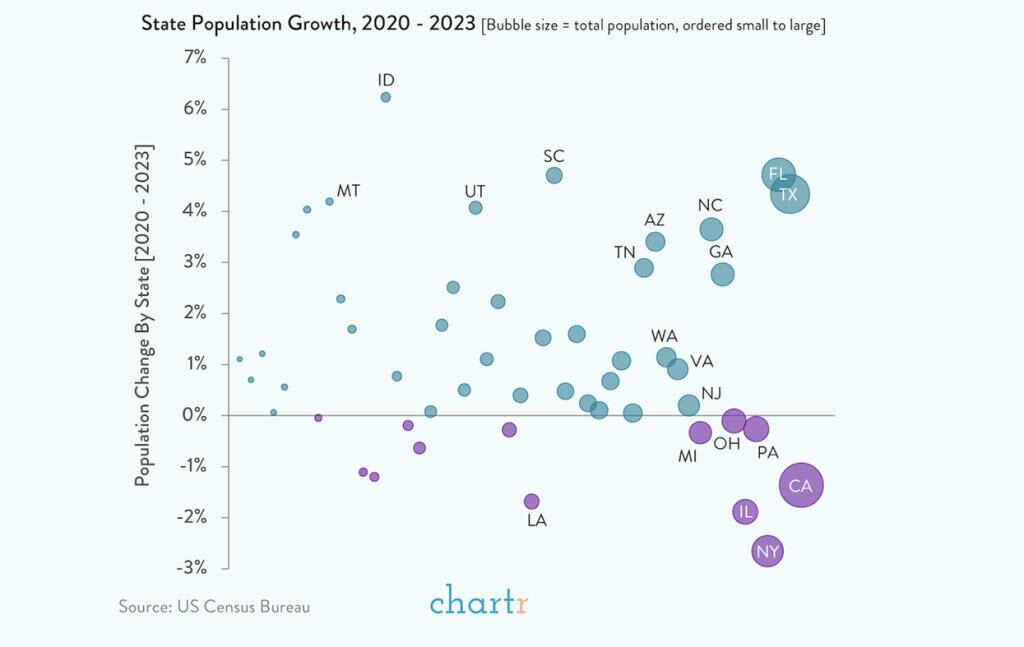
In the course of two years, California has turned a $100 billion surplus into a $73 billion deficit, forcing governor Gavin Newson (D) to propose painful (token) spending cuts on Friday while announcing his revised state budget.
When asked how the state was able to achieve such a monumental fail, Newsom - who claims the deficit is actually $27.6 billion (to which even AP called him out) - blamed a reduction in taxes from capital gains income, which surged in 2021 amid a raging stock market and plummeted in 2022. Then, in 2023, the state 'continued to collect less tax revenue than projected' due to capital loss carryovers. He also blamed "unexpected rain bombs" - which caused the IRS to extend the tax filing deadline for most California taxpayers in 2023 following severe winter storms. When those taxes were eventually collected, they were 22% below expectations, according to the Governor's office.
Watch:
According to AP, Newsom will cut $6.7 billion set aside for doctors who treat Medicaid patients, cut off healthcare to 14,000 disabled migrants in their home, saving $94.7 million, and slashed $550 million that was headed towards state schools in order to build new facilities.
Republican State Senator Brian Dahle called the cuts a "hollow gesture, at best," adding "The governor's national ambitions have triggered a massive exodus of people and businesses creating an enormous revenue shortfall of personal and corporate income taxes."
"You can't have a good government without a strong private sector. Plain and simple, people are being priced out of California from bad policies and mismanagement," Dahle continued.
In total, Newsom is proposing $32.8 billion in cuts over two years - including an 8% cut to state operations, which he says will shore things up.
Of course, we know that's bullshit.
Refreshing your memory from early April, Mike Shedlock gave a sobering view into reality;
While finalizing the upcoming fiscal year’s state budget back in May 2022, California governor Gavin Newsom boasted of an extraordinary projected surplus: $97 billion. The governor immediately collaborated with an enthusiastic state legislature to spend it all. Of course, new spending on new programs and benefits tends to become permanent.
This has happened repeatedly in California. Between fiscal year 2012–13 and fiscal year 2022–23 (the year with the projected $97 billion surplus), per capita general-fund spending doubled, from just over $3,000 per resident to just under $6,000. (All figures are in 2022 inflation-adjusted dollars.)
The State Office of Legislative Analyst’s latest report projects a $73 billion dollar deficit for the next fiscal year. It won’t be easy to paper over this debt, but the state may use its opaque accounting system to hide the ball.
California’s general-fund budgets are reported on a cash basis. The state’s balance sheet, however, uses “accrual-based accounting.” Without getting too far into the weeds, this is an apples v. oranges situation. Instead of the algebraic perfection of private-sector income statements, balance sheets, and cash flows, government accounting provides no easy way to reconcile what you see on the budget.
Some watchdogs, however, have succeeded in cracking the code. John Moorlach, one of the only certified public accountants to serve in the California State Senate, just published a review of the state’s fiscal health, focusing on the balance sheet. According to Moorlach, California’s balance sheet is in trouble.
Moorlach declared in a March California Insider interview that the state “now has the largest unrestricted net deficit in the US: $222 Billion.” In plain English, Moorlach is saying that California’s state government accounts have liabilities that exceed assets by $222 billion. No matter how creative Newsom and his financial wizards may be, someday that money will have to be paid.
A remedy that California has turned to over the years and will undoubtedly turn to now is to accumulate additional long-term debt. Emulating the federal government, but lacking its dollar-printing ability, California’s state and local governments and agencies have racked up over a trillion dollars in debt, primarily in bonds and unfunded pension liabilities. These liabilities, too, must be paid. Since that’s all but impossible, the liabilities must be serviced with payments that, just as at the federal level, will eat up more and more of the operating budgets.
California’s total state and local government debt now stands at almost $1.6 trillion, or about half the state’s GDP.
That isn’t an alarming ratio when compared to the national debt, which has now soared to 128 percent of U.S. GDP with no end in sight. But Californians carry this $1.6 trillion state and local debt ($40,000 per capita) in addition to their share of the national debt (about $90,000 per capita).
That article was from February of 2022. I suspect the liabilities are now close to $2 trillion.
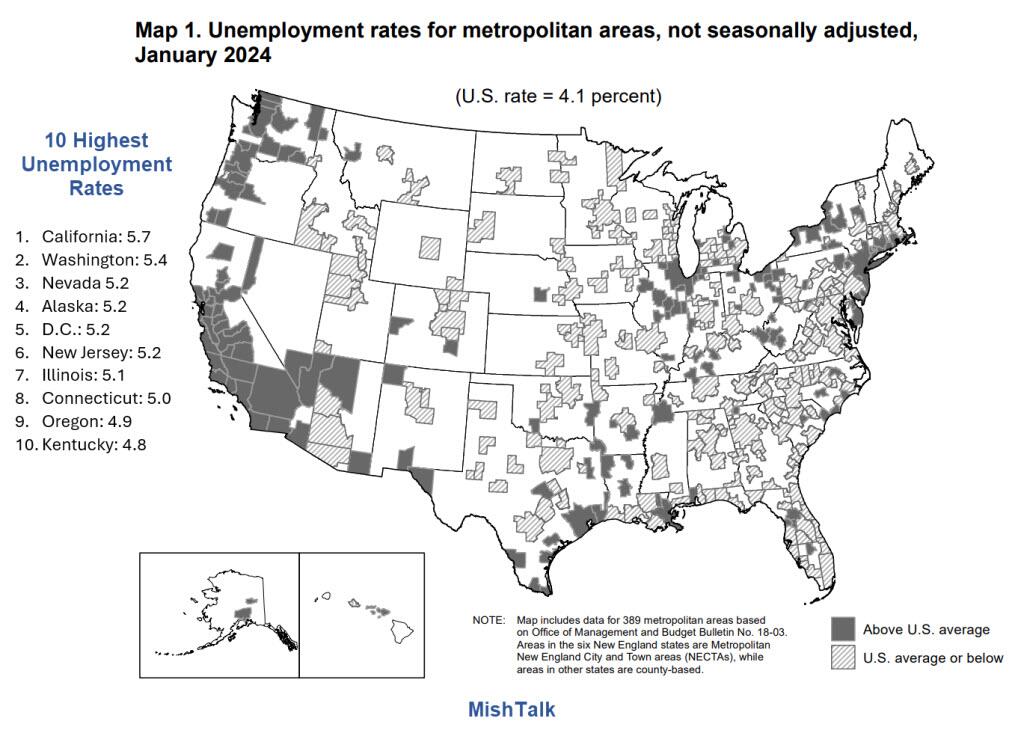
Unsurprisingly, California has the highest unemployment rate in the nation at 5.7 percent vs. 4.1 percent nationally.
A Booming Economy?
California has massive problems although the stock market is at a record high and the economy is allegedly booming. The next recession will hit California exceptionally hard, and it’s not too far off.
A paralegal from Manhattan Attorney General Alvin Bragg’s office testified on Friday during former President Donald Trump’s “hush money” trial that some phone call records between Michael Cohen and Stephanie Clifford’s (a.k.a. Stormy Daniels) lawyer were deleted, raising questions about evidentiary integrity.
In a bid to challenge some of the evidence being put forward in President Trump’s business records falsification trial in Manhattan, Trump attorney Emil Bove asked paralegal Jaden Jarmel-Schneider in court on May 10 about roughly three pages worth of records that the attorney claimed Mr. Bragg’s office had deleted.
Mr. Jarmel-Schneider confirmed some deletions. He acknowledged that some phone call records from 2018 between Mr. Cohen and Keith Davidson (Ms. Clifford’s lawyer) had been deleted, along with some records of conversations between Ms. Clifford’s manager Gina Rodriguez and then-National Enquirer editor Dylan Howard about Ms. Clifford’s claim that she had an affair with President Trump.
The Trump attorney alleged that the deletions were “significant,” prompting Mr. Jarmel-Schneider to dispute that characterization, though he acknowledged that some of the records had indeed been deleted.
Prosecutors have submitted the call records into evidence in a bid to bolster their case that the alleged affair—which President Trump has denied—took place and that the former president falsified business records to conceal payments allegedly made to Ms. Clifford to stay silent.
President Trump has denied any wrongdoing and maintains the case is a politically motivated bid to undermine his 2024 presidential campaign.
The fact that prosecutors submitted the call records into evidence but didn’t tell the Trump defense team that some of them had been deleted raises questions about the integrity of the proceedings, according to Trump attorneys, and others.
“Insanity! How on earth is this not a felony committed by Bragg and his minions? It sure would be if team Trump did it,” the former president’s eldest son, Don Trump Jr., said in a post on X.
Mr. Trump Jr. was presumably referring to the fact that evidence tampering is a class E felony in the state of New York.
Mr. Bragg’s office did not respond to a request for comment on the deleted records.
The development comes at the tail end of an intense week that saw President Trump subjected to gag order sanctions, two failed attempts by the defense team to have a mistrial declared, and Ms. Clifford taking the stand.
Mr. Cohen is expected to take the stand next week.
Trial End in Sight
After four weeks in court, prosecutors signaled that the first-ever criminal trial of a former U.S. president will be coming to an end.
Jurors will soon have to decide whether prosecutors have proved beyond a reasonable doubt that President Trump was involved in falsifying business records as part of a scheme to influence the 2016 election.
President Trump was charged by Mr. Bragg with 34 counts of falsifying business records. Typically, this is a misdemeanor charge, but in this case prosecutors allege the records were falsified to cover up a scheme to influence the 2016 election and therefore amounts to a felony.
A number of legal experts have challenged the way Mr. Bragg elevated the misdemeanor into a felony. This includes retired Harvard law professor Alan Dershowitz, who argued that Mr. Bragg was operating on an invalid legal premise because he invoked federal statutes over which New York has no jurisdiction.
Mr. Dershowitz also recently said that he believes that Mr. Bragg’s office has violated voters’ rights with the Trump prosecution, with the legal scholar arguing that the case amounts to a criminal conspiracy to influence elections.
Prosecuting attorney Joshua Steinglass said Friday that prosecutors plan to call just two more witnesses and that it’s “entirely possible” that the prosecution will rest its case at the end of next week.
Mr. Cohen, [a total liar] who is set to testify next week, made the original claims that led to the case. Specifically, the allegation of falsified business records pertains to 11 checks Mr. Cohen received and their corresponding invoices and vouchers.
The defense team says that Mr. Cohen was paid attorney’s fees, while prosecutors allege that the legal expense categorization of the payments was fraudulent in order to cover up that they were meant to buy Ms. Clifford’s silence about the alleged affair.
Ms. Clifford testified over the course of two days, with attorneys and the judge expressing some frustration that she frequently responded to questions with commentary that did not directly answer the question.
Defense attorneys moved for a mistrial, arguing that her statements were “extremely prejudicial” and would improperly influence the jury.
Sen.Tom Cotton (R-Ark.) took aim at President Biden’s stance on Israel on Sunday, slamming him for the administration’s position on Rafah and its decision to pause some military shipments to the country.
Cotton defended Israel’s actions in Rafah that have set the stage for a potential full-scale invasion into the city — where more than 1 million people had relocated to seek refuge. He said on CBS’s “Face the Nation” that Israel needs to go into Rafah to destroy militant group Hamas.
“Joe Biden’s position is de facto for Hamas victory at this point. Israel’s goal is to destroy Hamas, which committed the worst atrocity against Jews since World War II. Hamas’s goal is to survive. … If Israel does not go into Rafah and destroy Hamas in Rafah, Hamas will survive,” Cotton said.
The Biden administration has repeatedly warned against an invasion of Rafah without putting forward a plan to protect civilians. Israel moved into Rafah and seized a border crossing for humanitarian aid last week but has yet to launch a wider operation.
Biden warned last week that the U.S. would stop sending offensive weapons to Israel if it invades Rafah. The Biden administration said last week it would be delaying the shipment of certain bombs to Israel amid a looming invasion.
Biden took heat from both sides of the aisle after the move to pause a shipment. Cotton railed against the decision to delay some shipments to Israel, labeling it as a “de facto arms embargo” on Israel, which prompted CBS host Margaret Brennan to push back.
“You know, $26 billion in emergency funding was just approved by the president. And there is not an arms embargo on Israel, and there is not a block on intelligence sharing with Israel. You know that,” she told him.
Cotton also discussed Secretary of State Antony Blinken’s comments on “Face the Nation,” in which Blinken said it is “reasonable to assess that in a number of instances, Israel has not acted in a manner that’s consistent with international humanitarian law.”
“No, it doesn’t make any sense at all, Margaret, it sounds like a bunch of weaselly, mealy-mouthed politics,” Cotton said. “He said it’s ‘reasonable to assess,’ he said that like three or four times, it’s like he was coached to say that, as if it was some magic talisman to help them walk the political line they want between the pro-Hamas wing of their party and the vast pro-Israel majority of the American people.”
Blinken was referring to a recent State Department review, which raised “serious concerns” about Israel’s actions in Gaza.
A longtime senior adviser to formerPresident Clinton and former Secretary of State HillaryClinton hit theBiden campaign over its strategy in aNew York Times op-edSunday, arguing the president is siding too much with his base and leaving moderates behind.
Mark Penn, who served as an adviser to the Clintons from 1995 to 2008 and now runs the Harris Poll, said focusing on the left wing of the Democratic Party instead of independent voters could cost him in November.
“If Mr. Biden wants to serve another four years, he has to stop being dragged to the left and chart a different course closer to the center that appeals to those voters who favor bipartisan compromises to our core issues, fiscal discipline and a strong America,” Penn wrote in the op-ed.
Bipartisanship and fiscal responsibility were the core tenets of Clinton’s 1996 reelection campaign, which Penn advised. He said Biden is like a “scared candidate,” convinced to appeal to his left-leaning base to ensure turnout instead of focusing on drawing new voters.
“I believe most of the 101,000 ‘uncommitted’ votes that Mr. Biden lost in Michigan will come home in the end because they have nowhere else to go, and the threat Mr. Trump poses will become clearer and scarier in the next six months,” he wrote, referring to progressive protest votes in state primaries. “But regardless, there’s a much bigger opportunity for Mr. Biden if he looks in the other direction.”
The path to victory, Penn argued, is through former U.N. Ambassador Nikki Haley’s moderate Republican base. Biden has repeatedly reached out to Haley voters since she dropped out of the GOP primary, attempting to bridge the gap for Republicans turned off by former President Trump.
“These people are in the moderate center, and many of them could be persuaded to vote for Mr. Biden if he fine-tuned his message to bring them in,” he said of Haley voters.
Penn said that Biden should instead reinvent his entire policy platform to more closely match what he believes moderates want by being hard on crime and immigration, doubling down on support for Israel and backing off of key promises toward combating climate change — all recommendations that would align with many conservatives’ preferences.
“The 2024 election is a rematch, but Mr. Biden should not assume that he will get the same result as he did in 2020 in Michigan, Pennsylvania, Arizona, Georgia and other battleground states by running the same playbook,” he wrote.
The end of Volodymyr Zelensky's five year term as president of Ukraine isset to end by the close of May, at least according to what was stipulated upon his getting elected, however, the government has made it clearthere will be no new election.
Officials have cited martial law due to the Russian invasion to say that after his five-year term ends on May 21, there won't be a new election until after martial law and wartime regulations are lifted.
Ukraine's Minister of Justice, Denys Malyuska, confirmed this in a fresh weekend interview with BBC News Ukraine. "The president's powers endure until the election of his successor. However, certain provisions of the Constitution are open to interpretation, inviting speculation or conspiracy theories," Malyuska said when asked about ongoing speculation over what happens after May 21st.
He explained, "There may be considerable debate and criticism, particularly considering that the Constitution's framers may not have fully anticipated the possibility of Ukraine being embroiled in a large-scale conflict, leading to some provisions being inadequately formulated."
When asked about appealing to a Constitutional Court in order to seek clarification, Malyuska said that it is ill-timed. Or in essence he said it won't happen and warned against such an effort.
"Such an appeal would imply legitimate questions and doubts, warranting resolution by the Constitutional Court. Given the country's communication and security challenges, openly questioning the president's legitimacy would be a grave error."
"Therefore, I see no merit in approaching the Constitutional Court presently. Perhaps, in the future, under different circumstances, it could be considered, but not at this juncture," Malyuska followed with.
Meanwhile, at a moment that Russia's new cross-border Kharkiv offensive is in full swing, President Zelensky is telling the nation not to panic:
Ukraine’s leader Volodymyr Zelenskiy called on his people not to panic amid Russia’s ongoing advance in the Kharkiv region that’s jeopardizing a local city.
Ukrainians should trust in their army defending the country’s northeastern border area and not “yield to emotions” despite the fierce fight there and the “extremely difficult” situation on the outskirts of Vovchansk, Zelenskiy said in his regular evening statement on Sunday.
"The advance in the Kharkiv region aims to stretch our forces and undermine their morale and motivation," Zelensky said. "Defense battles have never been simple, and they become even more challenging when an enemy manages to instill fear."
There are reports that Russian forces have been rapidly advancing in the north this weekend...
Russia is said to be seeking to create a 10km deep 'buffer zone' inside Ukrainian territory in order to better deter against cross-border mortar and drone attacks on the Belgorod region. According to the latest Sunday headlines:
RUSSIA CLAIMS CAPTURE OF MULTIPLE VILLAGES IN KHARKIV REGION, INCLUDING VOVCHANSK, PROMPTING MASS EVACUATIONS - SOURCES
UKRAINIAN PRESIDENT ZELENSKIY URGES CALM AMIDST RUSSIAN ADVANCES IN KHARKIV, EMPHASIZING TRUST IN THE ARMY'S DEFENSE EFFORTS - SOURCES
DESPITE REPORTS OF RUSSIAN GAINS, UKRAINIAN FORCES RESIST AND ATTEMPT COUNTER-ATTACKS IN THE REGION - SOURCES
FOCUS OF RUSSIAN OFFENSIVE APPEARS TO BE ESTABLISHING A BUFFER ZONE RATHER THAN DIRECT ASSAULT ON KHARKIV CITY, ACCORDING TO ANALYSTS - SOURCES
UKRAINIAN FORCES RESIST AND ATTEMPTCOUNTER-ATTACKS IN THE REGION
Scores of Russian civilians have been killed and wounded over the last several months by such shelling. Moscow has warned it will punish Ukraine for such attacks directly on Russian territory.