Search This Blog

Saturday, March 1, 2025

Russia says IAEA mission arrives at nuclear plant in Ukraine through Russia

 A new monitoring mission from the U.N. nuclear watchdog arrived on Saturday at the Russian-held Zaporizhzhia nuclear power plant in Ukraine for the first time through Russian territory, a Russia-installed head of the plant said.

The IAEA rotation came after weeks of delay caused by military activity around the site with each side blaming the other for violating rules to ensure the team's safe passage to the plant.

"It is fundamentally important that the route passed through the territory of the Russian Federation for the first time," Yuri Chernichuk, the Russia-installed head of the Zaporizhzhia plant in southeastern Ukraine, said in a video on Telegram.

The arrival of three inspectors, he added, was ensured by Russia's defence ministry and national guard and followed "intense" consultations between the heads of Russia's state nuclear power company Rosatom and IAEA.

Reuters could not independently verify the report. The IAEA could not be reached outside business hours to comment on the Russian statement. There was no immediate comment from Ukraine.

Russian troops seized the Zaporizhzhia plant, Europe's largest with six reactors, in the first weeks of their February 2022 full-scale invasion of Ukraine. It produces no electricity at the moment.

Russia and Ukraine have since routinely accused each other of firing on or near the station and risking a nuclear accident. The IAEA has deployed staff to the plant since September 2022 and is also present at Ukraine's other nuclear plants.

Rafael Grossi, the IAEA's executive director, has repeatedly urged both sides to refrain from any actions posing a risk to the plant.

https://www.msn.com/en-ie/news/world/russia-says-iaea-mission-arrives-at-nuclear-plant-in-ukraine-through-russia/ar-AA1A41xB

The Press Falls To Another Record Low In Public Trust

 by Jonathan Turley,

We have previously discussed polling showing the media at record lows in public trust. Well, the latest survey from Gallup shows that the media hit another all-time low. What is most impressive is that plummeting readers, revenues, and layoffs have done little to convince the mainstream media that the problem is not the public but themselves. The only institution with a  lower level of public trust is Congress, and that says a lot. It is like beating Ebola as the preferred communicable disease. Some 69 percent of Americans now say that they have no or little trust in the media. 

Only 31 percent say that they have a great deal or fair amount of trust. The trending line looks like the sales of buggy whips after the introduction of the Model T Ford. Gallop put it into sharp terms:

“About two-thirds of Americans in the 1970s trusted the “mass media — such as newspapers, TV and radio” either “a great deal” or “a fair amount” to “[report] the news fully, accurately and fairly.” By the next measurement in 1997, confidence had fallen to 53%, and it has gradually trended downward since 2003. Americans are now divided into rough thirds, with 31% trusting the media a great deal or a fair amount, 33% saying they do “not [trust it] very much,” and 36%, up from 6% in 1972, saying they have no trust at all in it.”

In my book, The Indispensable Right, I discuss how journalists and journalism schools have destroyed their own profession by rejecting objectivity and engaging in open advocacy journalism. The mainstream media has long echoed the talking points of the left and the Democratic Party, particularly in its one-sided coverage of the last three elections.

While Bob Woodward and others have finally admitted that the Russian collusion coverage lacked objectivity and resulted in false reporting, media figures are pushing even harder against objectivity as a core value in journalism.

We have been discussing the rise of advocacy journalism and the rejection of objectivity in journalism schools. Writerseditorscommentators, and academics have embraced rising calls for censorship and speech controls, including President-elect Joe Biden and his key advisers. This movement includes academics rejecting the very concept of objectivity in journalism in favor of open advocacy.

Columbia Journalism Dean and New Yorker writer Steve Coll decried how the First Amendment right to freedom of speech was being “weaponized” to protect disinformation. In an interview with The Stanford Daily, Stanford journalism professor Ted Glasser insisted that journalism needed to “free itself from this notion of objectivity to develop a sense of social justice.” He rejected the notion that journalism is based on objectivity and said that he views “journalists as activists because journalism at its best — and indeed history at its best — is all about morality.”  Thus, “Journalists need to be overt and candid advocates for social justice, and it’s hard to do that under the constraints of objectivity.”

The Washington Post’s former executive editor Leonard Downie Jr. and former CBS News President Andrew Heyward released the results of their interviews with over 75 media leaders and concluded that objectivity is now considered reactionary and even harmful. Emilio Garcia-Ruiz, editor-in-chief at the San Francisco Chronicle said it plainly: “Objectivity has got to go.”

Lauren Wolfe, the fired freelance editor for the New York Times, has not only gone public to defend her pro-Biden tweet but published a piece titled I’m a Biased Journalist and I’m Okay With That.” 

Former New York Times writer (and now Howard University Journalism Professor) Nikole Hannah-Jones is a leading voice for advocacy journalism. Indeed, Hannah-Jones has declared “all journalism is activism.”

This is why the whole “Let’s Go Brandon” chant was as much a criticism of the media as President Biden.

There is clearly an effort by owners like Jeff Bezos to change this culture rather than bankroll newspapers like the Washington Post vanity projects for the left.

Robert Lewis, a British media executive who joined the Post earlier this year, reportedly got into a “heated exchange” with a staffer. Lewis explained that, while reporters were protesting measures to expand readership, the very survival of the paper was now at stake:

“We are going to turn this thing around, but let’s not sugarcoat it. It needs turning around,” Lewis said. 

“We are losing large amounts of money. Your audience has halved in recent years. People are not reading your stuff. Right. I can’t sugarcoat it anymore.”

The response from staffers was to call for the new editors to be fired.  One staffer complained, “We now have four White men running three newsrooms.” The Post has been buying out staff to avoid mass layoffs, but reporters are up in arms over the effort to turn the newspaper around.

The question is whether viewers and readers can still be brought back into the fold. New media is expanding as citizens have looked elsewhere for news. In the meantime, some media outlets and organizations seem to have doubled down on the bias. Just last year, Washington Post reporter Cleve Wootson Jr. appeared to call upon the White House to censor the interview of Elon Musk with former President Donald Trump. The newspaper did not say a thing about the incongruity of one of its leading reporters calling for censorship.

After Trump was elected, NBC selected Yamiche Alcindor to return to the White House despite a history of alleged bias.  Alcindor, who also worked for PBS, was criticized for often preceding questions with attacks on conservatives or over-the-top praise for Joe Biden or Democrats. While others saw raw political bias, Alcindor explained that it was her job to use journalism to bend the “moral arc toward justice.”

Recently, the White House Correspondent’s Association picked an anti-Trump comedian who promptly encouraged Trump not to come to the dinner, saying that no one wants to be in the same room with him.

In the meantime, “J schools” continue to dismiss objectivity and crank out journalists who are told to embrace activism as the public flees legacy media for new media.

For the moment, it seems like journalists are content to write for each other and about 30 percent of the public. The echo chamber is getting smaller and smaller. So are the staffs on the outlets. Without public trust, the media is just talking to itself as the public turns to citizen journalists and new media on blogs and social media.

As someone who has worked for three networks and written as a columnist for three decades, the decline of American media has been painful to watch. The industry has operated like a ship of fools with no regard for their viewers or readers. However, we need the media. The press plays a central role in our democracy as reflected in the press protections afforded under the First Amendment.

The effort to break this culture at outlets like the Post and L.A. Times is encouraging, but these polls indicate that time is of the essence.

*  *  *

Jonathan Turley is the Shapiro professor of public interest law at George Washington University and the author of “The Indispensable Right: Free Speech in an Age of Rage.”

https://www.zerohedge.com/political/press-falls-another-record-low-public-trust

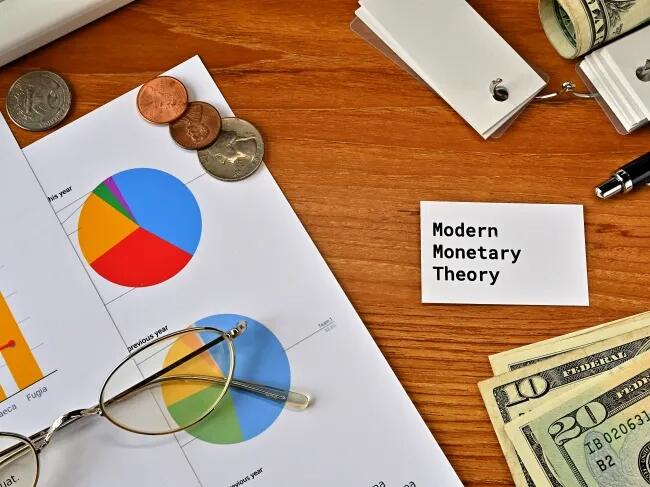
How Modern Monetary Theory Advocates View Money & The State

 by Frank Shostack via Mises.org,

According to the Modern Monetary Theory (MMT), money is something decided by the state. The MMT regards money as a token. For instance, when an individual places a coat in the cloakroom of a theater, he receives a tin disc or a paper receipt. This receipt or a disc is a proof that the individual is entitled to demand the return of his coat.

According to the MMT, the material used to manufacture the tokens is irrelevant—it can be gold, silver, or any other metal or it can even be paper. Hence, the definition of money, according to the MMT, is what the state decides it is going to be. MMT posits that the value of money is the outcome of the state that forces people to pay taxes with the money tokens that the state has decided upon. The state taxes have to be paid with the money tokens issued by it. The state also has the ability to control the value of money through its declaration of how much it is willing to pay for a certain commodity produced by the private sector.
In the MMT framework, the token money is seen as a receipt on the economy’s resources. A token money held by an individual is regarded as his claim on a portion of resources. Individuals have exchanged goods and services for a receipt given to them by the government. Individuals who have generated goods and services are acknowledged for this by the tokens issued to them by the government.

However, could the sovereign state effectively require individuals to use tokens in the transactions among themselvesWhy would anyone accept a fiat-token as a payment simply because the government accepts these tokens as tax payments? To answer these questions, we have to define money.

Defining Money

To establish the definition of money, we have to ascertain how a money-using economy evolved. Money emerged as a result of the fact that barter could not support a complex, modern market economy. The distinguishing characteristic of money is that it functions as the general medium of exchange. It has evolved from the most marketable commodity. On this Rothbard wrote,

“... just as in nature there is a great variety of skills and resources, so there is a variety in the marketability of goods. Some goods are more widely demanded than others, some are more divisible into smaller units without loss of value, some more durable over long periods of time, some more transportable over large distances. All of these advantages make for greater marketability. It is clear that in every society, the most marketable goods will be gradually selected as the media for exchange. As they are more and more selected as media, the demand for them increases because of this use, and so they become even more marketable. The result is a reinforcing spiral: more marketability causes wider use as a medium which causes more marketability, etc. Eventually, one or two commodities are used as general media—in almost all exchanges—and these are called money.”

Money is the thing that all other goods and services are traded for. This fundamental characteristic of money must be contrasted with other goods. For instance, food’s characteristic is that it supplies the necessary sustenance to human beings and people may like the taste. Capital goods’ characteristics is that it permits the expansion of the infrastructure that, in turn, permits the production of a larger quantity of goods and services. Contrary to the MMT, the essence of money has nothing to do with tax payments to the government.

Money functions as a general means of exchange. People pay with goods and services for other goods and services with the help of money. Money facilitates the payments of one good for another good. Also, contrary to the MMT, money is not a claim on resources, but the general medium of the exchange. In his writings Carl Menger raised doubts about the soundness of the view that the origin of money is government proclamation. According to Menger,

“An event of such high and universal significance and of notoriety so inevitable, as the establishment by law or convention of a universal medium of exchange, would certainly have been retained in the memory of man, the more certainly inasmuch as it would have had to be performed in a great number of places. Yet no historical monument gives us trustworthy tidings of any transactions either conferring distinct recognition on media of exchange already in use, or referring to their adoption by peoples of comparatively recent culture, much less testifying to an initiation of the earliest ages of economic civilization in the use of money.”

Mises similarly explains the acceptance of money. In his writings, Mises had shown how the value of money is established. Mises began his analysis by noting that today’s demand for money is determined by yesterday’s purchasing power of money. Consequently, for a given supply of money, today’s purchasing power is established. Yesterday’s demand for money was fixed by the prior day’s purchasing power of money. So, for a given supply of money, yesterday’s price of money was set. The same procedure applies to past periods.

By regressing through time, we will eventually arrive at a point in time when money was just an ordinary commodity where demand and supply set its price. The commodity had an exchange value in terms of other commodities (i.e., its exchange value was established in barter). On the day a commodity becomes money, it already has an established purchasing power or price in terms of other goods. This purchasing power enables us to set the demand for this commodity as money. This process sets its purchasing power on the day the commodity starts to function as money. Once the price of money is established, it serves as input for the establishment of tomorrow’s price of money. It follows then that, without yesterday’s information about the price of money, today’s purchasing power of money cannot be established.

With regards to other goods and services, history is not required to ascertain present prices. A demand for these goods arises on account of the perceived benefits from consuming them. The benefit that money provides is that it can be exchanged for goods and services. Consequently, one needs to know the past purchasing power of money in order to establish today’s demand for it.

Applying the Mises’s framework—also known as the regression theorem—we can infer that it is not possible that money could have emerged as a result of a government decree, government endorsement, or social convention. The theorem shows that money must have emerged as a commodity. According to Rothbard,

“Money is not an abstract unit of account, divorceable from a concrete good; it is not a useless token only good for exchanging; it is not a ‘claim on society’; it is not a guarantee of a fixed price level. It is simply a commodity.”

MMT and Wealth Generation

In the MMT world, where money is generated by the government and—given that the government is able to inflate freely as much money as it requires—then, by implication, the government has command over unlimited amounts of wealth. If the government determines what should be regarded as money and what its value is, this also means that the government dictates the rate of exchanges between money and goods and services. This means that prices are set by the government and bypasses the free market forces. Economic theory shows that such conduct leads to the inefficient use of resources and, in turn, to economic instability and impoverishment.

MMT holds that the role of government policies should be to prevent the emergence of a situation where “idle resources” and unemployment emerge. According to MMT, the key here is to boost the overall demand for goods and services to lift economic growth, eliminate unemployment, and make the full use of resources. This can be achieved by running large budget deficits financed by printing plenty of money. In the MMT world, money printing is not a problem as long as there is unemployment and unutilized resources.

Conclusions

In MMT, money is what the government decides it is. MMT believes that because people are forced to pay taxes with the government’s token money, that the government establishes the value of money. This, in turn, makes it a medium of exchange in the private sector also. Without a freely-established money, it is impossible to form the free rate of exchanges between money and goods and services. Consequently, this makes it impossible to have an efficient allocation of scarce resources. This sets the foundation for economic misery.

https://www.zerohedge.com/economics/how-modern-monetary-theory-advocates-view-money-state

House Republicans Plan To Scrub Anti-American BLM Plaza In DC

 Washington, DC, painted "BLACK LIVES MATTER" across two blocks of 16th Street, near the White House, during the 2020 color revolution riots, fueled by radical leftist, taxpayer-funded NGOs. Each of the 16 bold yellow letters spans the width of the two-lane Street, creating a massive display of toxic wokeness—one that House Republicans may soon move to scrub.

"The House Oversight Committee and the Trump Administration are working on delivering a number of reforms to make our nation's capital safe and end left-wing pet projects. This includes addressing partisan abuses by the District government such as Black Lives Matter Plaza," House Oversight Committee chair Rep. James Comer (R-Ky) stated, quoted by the New York Post

In 2020, painters were contacted by far-left Mayor Muriel Bowser ... 

... a few months after BLM riots unleashed color revolution chaos nationwide.

"President Trump has made rooting out woke ideology from the federal government a top priority. The committee declined to say which other projects could be on the chopping block," NYPost said. 

Let's not forget that the Black Lives Matter Global Network Foundation once trumpeted its Marxist desire to dismantle America and war on the nuclear family by saying on its website: "We disrupt the Western-prescribed nuclear family structure requirement by supporting each other as extended families and 'villages' that collectively care for one another." 

"Mayor Bowser and Democrat-run Washington, D.C. are focused on virtue signaling and spending taxpayer money to paint Black Lives Matter instead of the record spike in homicides, carjackings, and other violent crimes," said Arkansas GOP Sen. Tom Cotton, adding, "Washington DC's failures are a reminder why the city must never become a state." 

How Congress plans to override decisions from the local government may fall under the Home Rule Act of 1973. This act was invoked in 2023 when Congress struck down a law passed by the far-left DC city council, which would have weakened maximum penalties for violent crime in the crime-ridden metro area.

https://www.zerohedge.com/political/house-republicans-plan-scrub-anti-american-blm-plaza-dc

Medicare Advantage growth slows as UnitedHealthcare gains, Humana sheds members


  • Enrollment in privatized Medicare coverage continued to grow at the outset of 2025, despite insurers cutting back benefits to improve the profitability of their plans.
  • Still, year-over-year growth in the Medicare Advantage program appears to be slowing following open enrollment in the fall, according to a Healthcare Dive analysis of data released by the CMS on Tuesday.
  • UnitedHealthcare, which operates the largest MA payer in the country, further solidified its grip on the market, growing its membership from 9.5 million to 9.9 million people. Humana, the second-largest MA payer, lost the most lives during open enrollment, falling from 6.2 million to 5.8 million enrollees.

The data provides the first peek at MA enrollment changes entering 2025 but isn’t the final picture, as MA enrollees can still switch between plans until the end of March.

Still, the release was highly anticipated after major MA insurers promised to shed members to resuscitate flagging margins last year.

Worse benefits and fewer plans available is one explanation for MA’s slow growth rate coming into 2025. Enrollment in the privatized Medicare plans increased 3.8% compared to 2024, a growth rate which, if it holds throughout the year, would be the lowest for MA since 2007, according to health policy firm KFF.

It would also continue the trend of decelerating expansion, as MA enrollment growth has slowed over the last five years. Market watchers say that MA penetration, which surpassed half of all Medicare enrollment last year, could be reaching critical mass.

The Biden administration was also a factor in MA’s slowing growth. Prior to 2021, MA was growing at a rapid clip, thanks to a booming senior population, generous taxpayer funding and heavy insurer investments in marketing and benefits.

That growth translated to massive profits for insurers, which receive a per-member, per-month fee for covering their beneficiaries’ health needs, but also contributed to MA costing taxpayers significantly more than traditional Medicare insurance.

The Biden administration enacted a spate of rules to crack down on overpayments, including curbing reimbursement rates and making it more difficult for insurers to exaggerate the cost of covering their members’ care. Then, in 2023, seniors began using more healthcare than insurers had planned for, causing insurers’ costs to rise.

In 2024, operating profits for insurance divisions of the four largest publicly traded MA insurers — UnitedHealthcare, Humana, CVS and Elevance — fell significantly as a result of higher spending.

UnitedHealthcare, a division of healthcare behemoth UnitedHealth, saw its operating income fall 5% year over year, while Elevance’s was down 10%Humana’s plummeted 51%.

Meanwhile, CVS’ insurance business Aetna actually lost $984 million in 2024, compared to a profit of $3.9 billion in 2023.

Facing investor alarm, insurers promised to cut coverage in unprofitable markets and reduce benefits to improve the margins of remaining plans, in a notable strategic turnaround from the growth-at-all-costs mentality that characterized the MA market in the past.

Tuesday’s data from the CMS gives industry its clearest picture yet as to the impact of those reductions.

UnitedHealth, Elevance and Cigna grew MA enrollment, while Humana, CVS, Centene and Molina discarded members

MA enrollment for large-cap insurers, Dec 2024 versus Feb 2025

Membership losses for Humana, CVS and Centene are in line with targets laid out by executives for the insurers, down 6.5%, 5.8% and 6.2%, respectively.

Humana and CVS in particular were slammed by rising costs in MA last year, and adjusted their plans accordingly: Humana lost about 400,000 members over open enrollment, and expects that number to rise to 550,000 over the course of this year.

Meanwhile, CVS, which lost 250,000 members, expects to lose “a high single digit percentage” in 2025 compared to 2024, CFO Tom Cowhey said in an earnings call earlier this month.

As for growers, Elevance’s membership increased more than most other major MA insurers, at 11.8%. However, the insurer plans to shed some of those members this year, and expects MA enrollment growth over 2025 to be closer to 8%.

UnitedHealthcare — already the largest MA insurer — increased its MA membership by 4%, or roughly 385,000 lives, versus the end of December.

That’s in line with the payer’s guidance: UnitedHealth executives have said the insurer plans to add up to 800,000 MA lives in 2025, with half of that coming from the enrollment period in the fall.

During fourth-quarter earnings calls, executives for Elevance and UnitedHealth tried to reassure investors that the members they’re adding are profitable, after some analysts raised concerns that more seniors than expected may have elected to join low-margin plans in the fall.

UnitedHealth feels “very good” about its membership, CEO Andrew Witty said, while Elevance feels “really good,” according to CEO Gail Boudreaux. Both insurers said they saw outsized growth in HMO products, which give them more visibility into spending on members’ care.

Overall, Cigna’s growth rate of 18.6% topped the pack. However, the payer is selling its MA business to Chicago-based insurer HCSC, and expects that deal to close in the first quarter of this year.

The CMS released an initial version of the enrollment report on Jan. 15 before pulling the data, citing an unspecified issue.

The agency said it would re-release the files during the week of Jan. 20 but failed to amid a broader Trump administration pause on messaging from public health agencies.

https://www.healthcaredive.com/news/medicare-advantage-enrollment-2025-unitedhealth-humana/738048/

Retired air traffic controllers urged to come back

 Tech billionaire Elon Musk is urging retired air traffic controllers to come back to the workforce amid the nationwide shortage of workers. 

“There is a shortage of top notch air traffic controllers. If you have retired, but are open to returning to work, please consider doing so,” Musk said in a Thursday post on X, the social media platform he owns. 

Earlier this month, President Trump’s administration began firing hundreds of workers at the Federal Aviation Administration (FAA), including personnel brought on for the FAA radar as well as landing and navigational aid maintenance. 

Transportation Secretary Sean Duffy defended the terminations, noting that air traffic controllers were not cut in the process. Duffy said less than 400 workers were ousted from the FAA as part of the administration’s push to downsize the federal government, slash costs and improve efficiency. 

These cuts came just weeks after an American Airlines plane collided with a Black Hawk helicopter right before landing at the Reagan Washington National Airport. The crash killed all 67 people and was one of the worst U.S. aviation crashes in the last 20 years. 

Duffy said during an interview in early February that he planned to offer air traffic controllers an option to keep working past 56, the mandatory retirement age, in an effort to bolster safety and retain talent.  

“I’m going to make an offer to air traffic controllers to let them stay longer. That’s my authority. I can offer them the chance to stay longer, past the mandatory retirement age of 56, pay them more, give them a bonus, keep them on the job, make the system safer, alleviate the pressure on the controllers,” Duffy said on Fox News. “They will make more money.” 

Airports are still understaffed with air traffic controllers, and the FAA is looking to fill some 3,000 spots, according to the agency’s data. 

Trump said he would discuss potential legislation with lawmakers that would revamp and improve the country’s air safety systems.  

“I think that’s going to be used for good,” Trump said during a National Prayer Breakfast earlier this month. “We’re going to do a great computerized system for our control towers. Brand new, not pieced together, obsolete.”

“We spent billions and billions of dollars trying to renovate an old broken system instead of just saying, ‘Let’s cut it loose, and let’s spend less money and build a great system,’” he added.

https://thehill.com/policy/transportation/5167261-elon-musk-retired-air-traffic-controllers-return/

Lee Zeldin should trash EPA’s national recycling plan

 Like other Cabinet members in the Trump administration, new Environmental Protection Agency chief Lee Zeldin has hit the ground running, canceling ideology-driven contracts for diversity, equity and “environmental justice.”

But it’s not just these progressive favorites through which the agency has strayed far from its mandate to clean the environment.

One of its less controversial core goals — and one popular with municipalities and corporations across the country — is the vehicle for spreading environmental damage across the world. To reverse that trend, Zeldin should roll back an EPA edict aimed at every city and town in the country: the national recycling goal.

Instead of putting plastic in those blue bins, we should establish systems to recover valuable “e-waste,” the rare earth elements and metals found in cellphones and other electronics — in other words, the very same things the Trump administration is working to get from Ukraine.

Per the EPA, the goal is to increase trash recycling to 50 percent of solid waste by 2030, with the aim of “managing materials more sustainably.” Think here of the plastic, glass and paper piled in the ubiquitous blue bins found on curbsides. It sounds like an admirable goal — but what seems like an unobjectionable practice turns out to be both uneconomical and damaging. 

The picture of just how that works is painted brilliantly in Alexander Clapp’s forthcoming new book, “Waste Wars.” Based on astounding on-the-ground reporting across the globe, “Waste Wars” shines a spotlight on how plastic travels from rich countries to poor, where it is not recycled but dumped or burned.  

Clapp lifts the veil on the “wishcycling” ongoing across the U.S. “The waste that travels across the globe and often inflicts irreversible environmental damage is not the trash that — to much chagrin — goes into the garbage bin and then into the local landfill. It’s the stuff that you place in the recycling bin in the conviction that doing so is helping the planet.”

That’s because the installed capacity to recycle those plastic bottles and other containers is both limited and domestically unprofitable. 

There is no current realistic market for recycled plastic. It’s simply far less expensive to make new plastic than to refine existing stock. “Virgin plastics” are made from byproducts of oil and gas refining, which occurs anyway, and are of higher quality. Markets tend to reward products that are cheaper and better. Only 9 percent of U.S. plastic is nominally recycled at all.  

Internationally, where the rate is higher, this eco-friendly practice relies on the lowest paid workers to do the required cleaning and sorting. U.S. plastic, long shipped to China before it closed its doors in 2017, is likely to wind up in what Clapp describes as a shadowy, informal market of those paid to send “recyclables” in shipping containers bound for countries such as Ghana. It’s what increasingly passes for industry in poor nations. 

This is the environmentally damaging supply chain, which the EPA’s national recycling goal is helping to stock, by pressuring local municipalities to divert plastic to those blue bins and not to send it to dumps or incinerators. As hard as it is to believe, absent a breakthrough in technology and markets, localities would be doing the environment a favor by sending plastic to sanitary landfills or burning it.

As I have described in my report on trends in recycling for the American Enterprise Institute, a new generation of “waste-to-energy” incinerators holds the promise of mining the ash produced for valuable rare earth elements found in electronics, which are not separated at curbside, despite their high value. A February 2020 analysis by Purdue University of the e-waste stream finds 56 elements in electronic devices are routinely sent to dumps.

The current system which the EPA’s broadbrush national goal encourages also does damage to local government finances. It is costly to run separate trucks to pick up what’s in those blue bins — especially when the contents may well have to be sent to landfills anyway, for lack of an existing market. This is not to say that everything placed in the curbside bins is done so foolishly. Per the EPA, some 80 percent of paper and cardboard is actually recycled. This points toward how a pragmatic EPA can lead — encouraging municipalities to separate and sell those materials for which there is a market, while disposing of those for which there is not. 

Those who believe they are saving the earth by not sending plastic to the landfill are currently doing the opposite, as rogue shippers dump “microplastics,” some of which wind up in the water, poison sea life and pollute beaches. Nor is shipping plastic to Third World landfills, far less likely to be safely managed, an act of environmentalism. Just as we should strive to reshore some manufacturing, so should we do so with the disposal of all those Coke and water bottles. 

 Memo to Lee Zeldin: drop the misleading recycling goal. 

Howard Husock is a senior fellow at the American Enterprise Institute. 

https://thehill.com/opinion/energy-environment/5168912-epa-recycling-goal-harmful/