Search This Blog

Saturday, March 8, 2025

European leaders back ‘realistic’ $53B Arab-backed Gaza reconstruction plan rejected by US, Israel

 European leaders are supporting a $53 billion Arab-backed plan for recovery and reconstruction in Gaza that was previously rejected by the US and Israel.

The foreign ministers of France, Germany, Italy and the UK issued a joint statement on Saturday saying they welcome the plan, which was drawn up by Egypt and adopted by Arab leaders at an emergency summit on Tuesday.

“The plan shows a realistic path to the reconstruction of Gaza and promises — if implemented — swift and sustainable improvement of the catastrophic living conditions for the Palestinians living in Gaza,” the foreign ministers’ statement said.

Foreign ministers gathered in Saudi Arabia for a special session of the Organization of Islamic Cooperation to address the situation in Gaza on March 7.AFP via Getty Images

“Recovery and reconstruction efforts must be based upon a solid political and security framework acceptable to both Israelis and Palestinians, which provides long term peace and security for both Israelis and Palestinians alike,” they continued.

The coalition added that it “explicitly” supports the “central role” of the Palestinian Authority and the implementation of its reform agenda in post-war Gaza.

“We are clear that Hamas must neither govern Gaza nor be a threat to Israel any more,” it added.

The plan calls for a committee that would temporarily oversee humanitarian aid and manage the Strip’s affairs under the supervision of the Palestinian Authority.

Egypt’s Foreign Minister Badr Abdelatty at an emergency summit of foreign ministers in Jeddah on March 7.AFP via Getty Images

It has been rejected by Israel and President Trump, who has pushed resettling Palestinians outside the territory and expressed a vision of transforming Gaza into the “Riviera of the Middle East.”

Both parties say the plan fails to address the realities in Gaza.

“Residents cannot humanely live in a territory covered in debris and unexploded ordnance,” Brian Hughes, a spokesperson for Trump’s National Security Council, said in a statement earlier this week.

“President Trump stands by his vision to rebuild Gaza free from Hamas,” he added.

President Trump posted an AI-generated video that depicts the Gaza Strip as a holiday destination in February.@realDonaldTrump/TruthSocial

Separately, Iran also reportedly rejected the plan as it supports only a one-state solution for Palestine, not the proposed two-state solution where it exists alongside Israel.

Iran-backed Houthi rebels threatened Friday to resume attacks on Israeli shipping if the country does not resume aid to Gaza in the coming days, and Hamas has threatened that the Israeli hostages it currently holds will be at risk otherwise, too.

Meanwhile, the Israel Defense Forces carried out a drone strike in Lebanon Saturday targeting an Iranian-backed Hezbollah operative “involved in the rehabilitation of terror infrastructure and directing Hezbollah terror operations in southern Lebanon,” the military said.

It also struck several suspects in Gaza that it said were acting against Israeli forces, according to reports.

Many buildings in Jabalia, which is located in the northern section of the Gaza Strip, have been reduced to rubble.ZUMAPRESS.com

Prime Minister Benjamin Netanyahu’s office announced Saturday evening that it will send a negotiating team to Qatar Monday to continue efforts to extend the cease-fire hostage deal in Gaza, with help from US-backed mediators.

Over the past week, Israel pushed Hamas to release half of the remaining hostages in return for an extension of the first phase, which officially ended last weekend, and to agree to a lasting truth, according to reports.

Hamas is believed to have 24 living hostages and the remains of 34 others.

Demonstrators in Tel Aviv have ramped up protests demanding Israel extend the deal to save more hostages being held by terrorists, fearing that recent threats of renewed fighting will further risk their lives.

https://nypost.com/2025/03/08/world-news/european-leaders-support-53b-arab-backed-gaza-rebuilding-plan/

Missouri Wins $24B COVID-19 Judgment Against China

 Missouri won a $24 billion lawsuit against China on Friday for its role in the COVID-19 pandemic after none of its defendants appeared in court.

U.S. District Judge Stephen Limbaugh Jr. ordered China to pay Missouri $24,488,825,457 "at a rate of 3.91 percent, compounded annually."

Missouri Attorney General Andrew Bailey told the Daily Caller it was "no surprise" the Chinese Communist Party didn't appear in court and instead dispatched "proxy organizations" to litigate, "like the Chinese Society of Private International Law rather than appearing in court to answer for their actions."

"We will not allow the CCP to manipulate the legal process to evade justice — our mission is to fight for the truth and recover damages for the people of Missouri," Bailey said.


https://www.newsmax.com/world/globaltalk/missouri-covid-19-china/2025/03/08/id/1202022/

STUDY - U.S. COVID-19 Vaccine Injury Compensation Program Ranks as the Worst in the World

 by Nicolas Hulscher, MPH

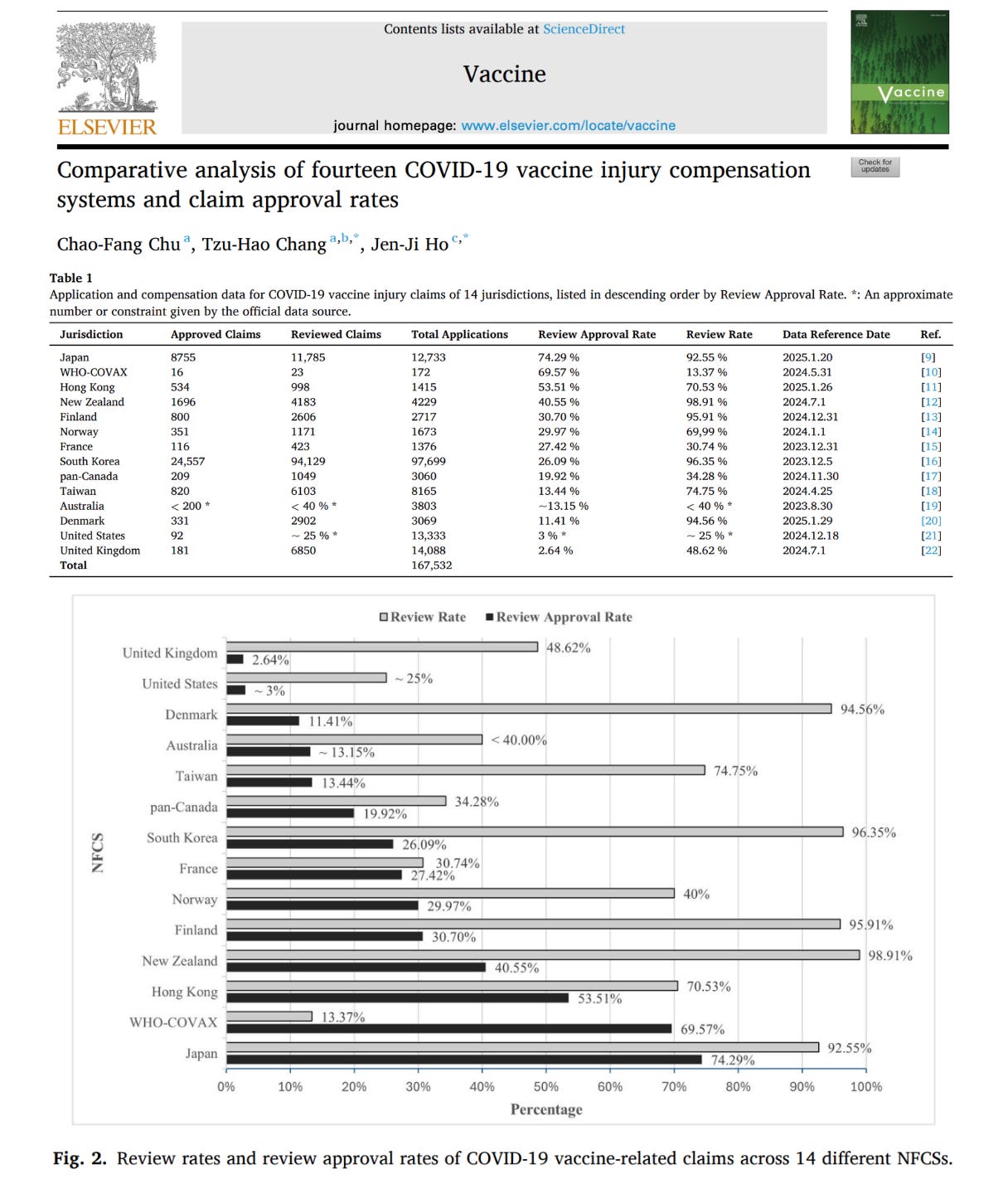
The study titled, Comparative analysis of fourteen COVID-19 vaccine injury compensation systems and claim approval rates, was just published in the journal Vaccine:

Purpose

No-fault vaccine injury compensation schemes provide financial redress for adverse effects from vaccines without establishing fault. Due to the rapid vaccine development and distribution, these programs are crucial for vaccinees during the COVID-19 pandemic. Investigating the performance differences of these schemes worldwide and finding a more balanced approach is essential to responses to future pandemics.

Materials and methods

This study examines the structure and effectiveness of 14 no-fault vaccine injury compensation schemes, analyzing data on approval rates for COVID-19 vaccine injury claims. Data sources include government reports and academic studies to compare diverse operational models and funding sources.

Results

This study included 167,532 COVID-19 vaccine injury compensation applications, with up to 137,076 claims reviewed and up to 38,658 approved, incorporating both exact and approximate official numbers. Approval rates for the reviewed claims vary widely across jurisdictions, with Japan (74.29 %) having the highest rates, and the United States (3 %) and the United Kingdom (2.64 %) the lowest. The median approval rate across all 14 jurisdictions is 26.76 %, between South Korea's 26.09 % and France's 27.42 %. These variations reflect diverse standards and policies. No clear correlation exists between funding sources and approval rates. For example, government-funded schemes in France and Japan show higher approval rates, while similar models in the United States and the United Kingdom have low rates. In New Zealand and other countries with broader medical compensation schemes, approval rates are higher than the international median.

Conclusion

Governments may adopt more flexible standards to redress vaccine injuries by referring to international practices and the latest medical evidence. High-approval-rate countries offer insights into inclusive criteria, while low-approval-rate countries may need to reassess stringent criteria. Middle-ground countries could incorporate new medical findings to refine standards, ensuring equitable outcomes for those affected by vaccine injuries.

While Japan's COVID-19 vaccine injury compensation program boasts an impressive 92.55% review rate and a 74.29% approval rate, the United States lags far behind with just 25% of claims reviewed and only 3% approved. Although the U.K. also performs poorly, with an approval rate of only 2.64%, its review rate is nearly double that of the U.S., demonstrating at least some progress in processing claims. The U.S. program’s combination of the second-lowest approval rate (3%) and the second-lowest review rate (25%) solidifies its position as the worst-performing system among the countries analyzed.

The stark contrast in COVID-19 vaccine injury compensation approval rates between Japan and the United States can partly be attributed to differences in causality assessment criteria and policy approaches. According to the study, Japan employs a more lenient standard, where "strict medical causal relationship is not required," allowing claims to be approved even when the link between vaccination and injury cannot be definitively ruled out. In contrast, the United States applies stringent criteria under the Countermeasures Injury Compensation Program (CICP), which requires "compelling, reliable, valid, medical and scientific evidence" of direct causation.

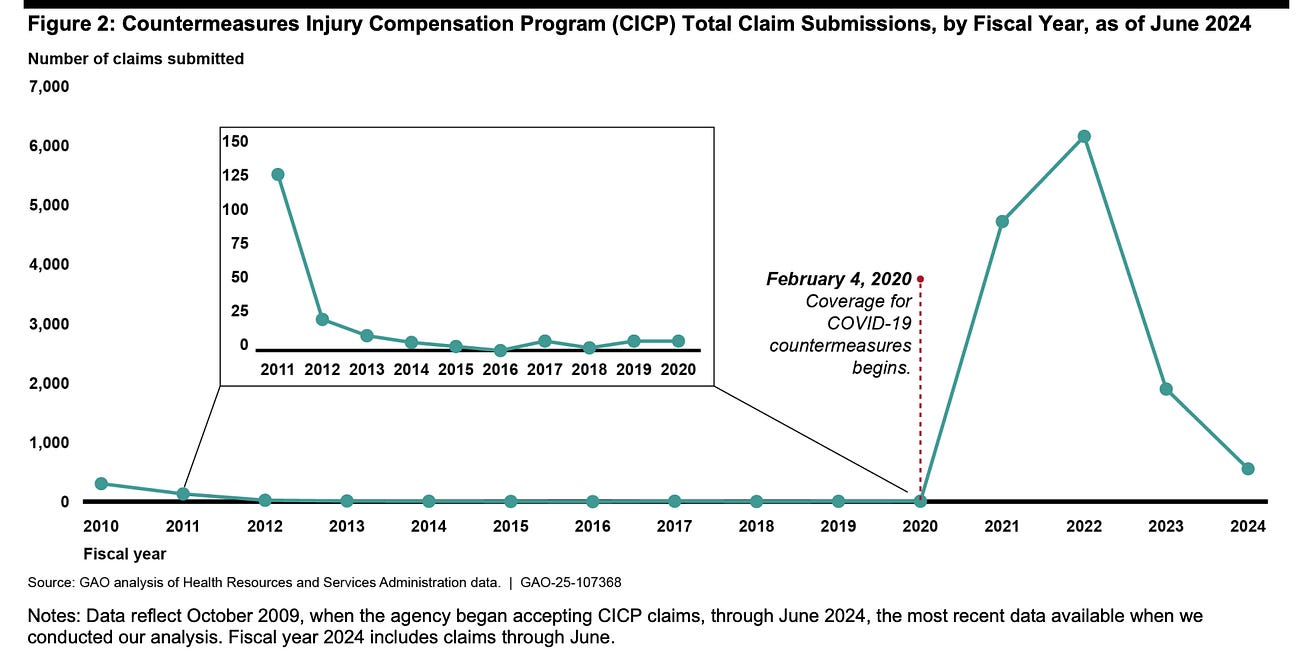
A few months ago, I reported on the U.S. Government Accountability Office (GAO) report titled, COVID-19: Information on HHS’s Medical Countermeasures Injury Compensation Programwhich blamed the striking inefficiencies on a massive influx of injury reports and limited resources:

Nearly all of the challenges Health Resources and Services Administration (HRSA) experienced operating CICP stem from the large influx of claims related to COVID-19 medical countermeasures and limited resources to process and pay claims prior to fiscal year 2022, HRSA officials told GAO. Specifically:

  • shortage of staff to adjudicate the large influx of claims.

  • outdated information systems to process the large number of claims.

  • limited medical and scientific evidence to base decisions about injuries or deaths allegedly caused by novel COVID-19 countermeasures.

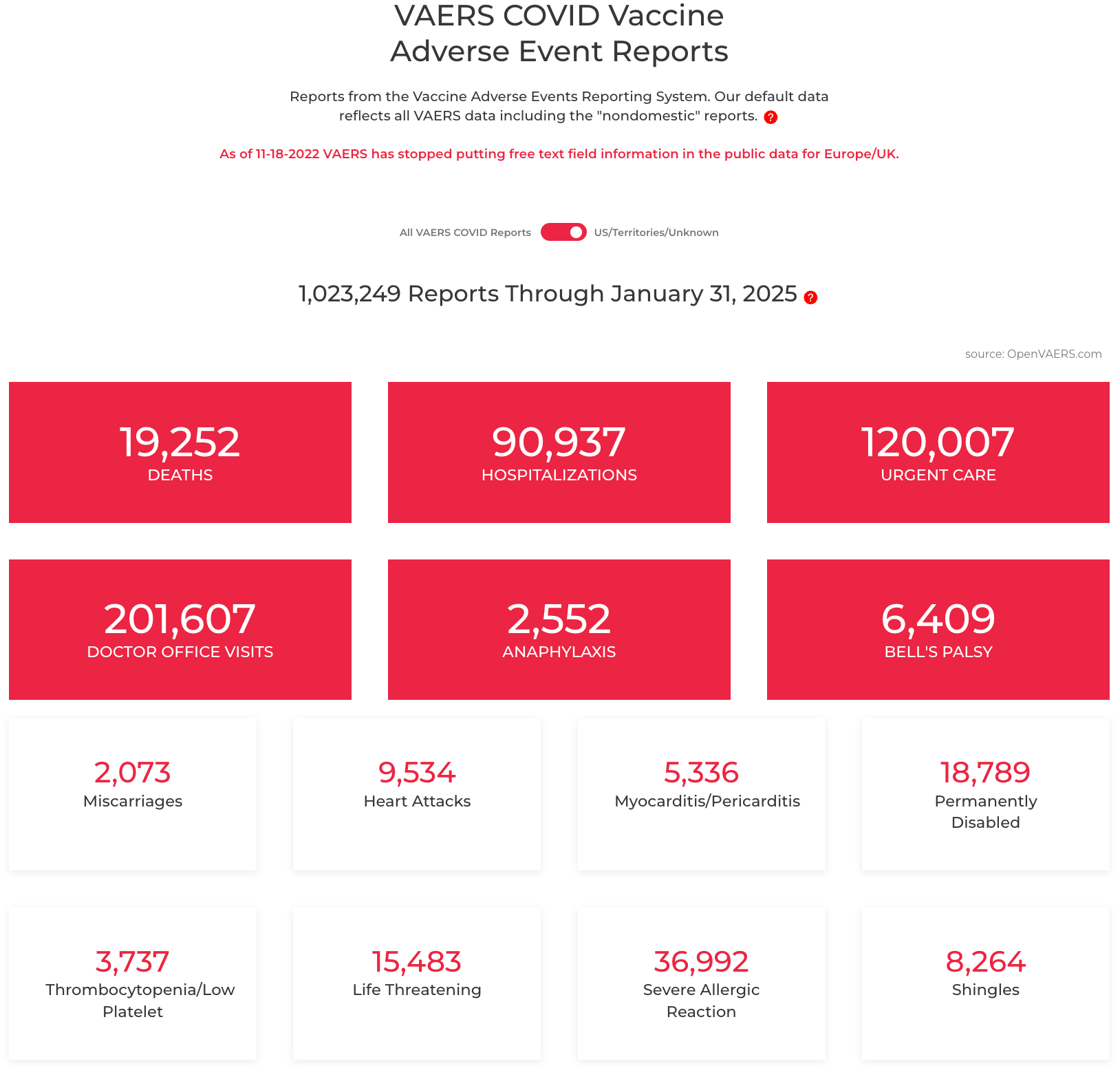
The current U.S. COVID-19 vaccine injury compensation program stands as a stark insult to the more than 1 million Americans suspected to have been killed, injured, or permanently disabled by COVID-19 countermeasures:

There is an urgent need in America for a robust vaccine injury compensation program with adequate staff, abundant funding, and independent COVID-19 vaccine injury experts who are free from industry influence.


https://www.thefocalpoints.com/p/new-study-us-covid-19-vaccine-injury