Search This Blog

Thursday, June 5, 2025

Schumer Dodges Simple Question About Medicaid For Illegal Immigrants

 Senate Minority Leader Chuck Schumer sidestepped a question about whether he supported states giving illegal migrants taxpayer-funded health insurance at a press conference Wednesday.

The House-passed One Big Beautiful Bill Act included a provision to penalize 14 states and the District of Columbia who enroll illegal immigrants in state health insurance programs by reducing their federal Medicaid funding for the Affordable Care Act’s Medicaid expansion population. The Daily Caller News Foundation asked Schumer about the nonpartisan Congressional Budget Office’s (CBO) preliminary projections that 1.4 million illegal immigrants would lose health coverage as a result of this provision in the House-drafted bill.

Schumer immediately reacted by slamming the president’s tax and spending bill before offering a word salad on his opposition to congressional Republicans’ proposed crack down on states who give illegal migrants free healthcare.

“The bottom line is the overall bill is so awful,” Schumer said. “If they want to aim — if they got some specific issues aim it, don’t just do just do a ‘meat axe,’ chainsaw, across the board and cut everything, everything, everything.”

“This goes way beyond what they’re talking about and hurts everybody,” Schumer added.

The DCNF’s Andi Shae Napier attempted to ask a follow-up regarding Schumer’s opposition to the Medicaid reform provision before he declared “next question.”

The Democratic leader also incorrectly said the CBO projections were “GOP numbers” and questioned the accuracy of the congressional scorekeeper’s estimates.

The Medicaid provision specifically lowers the Federal Medicaid Assistance Percentage (FMAP) — the Medicaid match rate the federal government pays to states that expanded Medicaid coverage under the Affordable Care Act — from 90% to 80%. The proposal would force certain blue states to cover 20% of the cost themselves, putting billions of dollars in Medicaid funding they depend on at risk.

GOP lawmakers and Trump administration officials have defended their Medicaid reforms as preserving the entitlement program’s benefits for those who need it most while eliminating waste, fraud and abuse. Savings generated from reforming Medicaid contributed in part to more than $1.5 trillion in spending cuts over a decade in the president’s landmark bill.

“We’re not cutting Medicaid,” Speaker Mike Johnson told “Meet the Press” host Kristen Welker on Sunday. “What we are doing is reducing the program wrought with fraud, waste and abuse to make sure that that program is essential to so many people and ensure that it is available for the most vulnerable, and it’s intended for young, single pregnant women, the disabled and elderly.”

Johnson added that 7.6 million people “will supposedly be affected by this,” referring to preliminary CBO projections. “When you look at the numbers and break them down, this is high on public opinion. You are talking about [removing] 1.4 million illegal immigrants.”

A spokesperson for Schumer did not immediately respond to the DCNF’s request for comment seeking clarification on the Democratic leader’s position.


https://dailycaller.com/2025/06/04/schumer-dodges-question-medicaid-illegal-immigrants/

AI Can’t Yet Be Trusted with High-Stakes Decisions

 As organizations increasingly turn to artificial intelligence to automate tasks, an unsettling reality is coming into focus: our most advanced AI systems often behave in ways we don’t fully understand and can’t reliably control. Large language models (LLMs) have demonstrated remarkable fluency and versatility across a range of tasks. But since we cannot understand how these models arrive at their conclusions, we are ill-equipped to detect, let alone correct, their errors—especially in high-stakes settings.

Take hiring. Many assume AI systems operate with clinical objectivity, immune to the cognitive biases that plague human judgment. Unfortunately, this assumption does not hold up to scrutiny.

In a recent study, I evaluated dozens of cutting-edge LLMs for gender bias by asking them to select the more qualified candidate from pairs of résumés—one containing a male first name, the other a female first name. To control for qualifications, each résumé pair was presented twice, with the assignment of gendered names to résumés reversed on the second presentation. This made the distribution of qualifications statistically identical across genders, so in theory, an unbiased model making selections based on merit should have selected male and female candidates in roughly equal proportions.

But that’s not what happened. All 22 LLMs I tested more frequently selected female candidates as more qualified.

The LLMs’ preference for female candidates was consistent regardless of profession, as the chart below shows.

When I added an explicit gender field to each résumé—in addition to the gendered names, a common practice in countries including Germany, Japan, and South Korea—the preference for female candidates became even more pronounced.

Further analysis revealed other quirks. The models slightly favored candidates whose résumés included preferred pronouns (i.e., “she/her” or “he/him”). They even showed bias when the résumés used genderless identifiers like “Candidate A” and “Candidate B”—“Candidate A” was selected more frequently. Moreover, the models markedly favored whichever résumé appeared first in the prompt, suggesting a superficial decision-making process.

These tendencies persisted regardless of model size or the amount of compute leveraged by the model while generating its responses. This strongly suggests that model bias in the context of hiring decisions is not determined by the size of the model (i.e., the number of model parameters) or the amount of “reasoning” employed (i.e., the amount of compute deployed during inference). The problem is systemic. Models that are larger in terms of parameter count or that engage in more compute-intensive reasoning during inference are not inherently fairer.

These findings suggest a significant flaw in how modern AI systems interpret and respond to information: rather than consistently acting as impartial evaluators, the models may be influenced by subtle prompt cues in ways that impinge on objectivity and fairness. It’s not yet clear whether some of the behaviors described above stem from patterns in the training data that reflect broader cultural dynamics—including efforts to promote diversity. But regardless of their cause, these tendencies merit closer examination.

Despite these vulnerabilities, some companies have already begun using LLMs to screen résumés. Some even claim that their AI models offer bias-free insights into candidates’ résumés. My findings cast serious doubt on those claims. Whether inherited from skewed training data or other sources, hidden biases are embedded in today’s frontier AI systems—and they can lead to harmful and unjust outcomes when deployed in high-stakes scenarios.

As we hand over increasingly consequential decisions to AI, we need to ask whether these systems reflect the values of fairness and justice we claim to uphold. Until we can answer that question with confidence, AI should not be trusted with high-stakes, autonomous decision-making.

How violence against women became an Olympic sport

 When Italian boxer Angela Carini stepped into the ring at the 2024 Paris Olympics, it quickly became clear that there was something off about her opponent, Imane Khelif. That’s because he is a hulking great bloke. Yet he was permitted, thanks to the incoherent policies of the International Olympic Committee (IOC), to compete against women.

Within 30 seconds of the opening bell, Khelif landed a blow so brutal it sent Carini’s chin strap flying and blood streaking down her shorts. After just 46 seconds, the fight was over. Carini dropped to her knees, sobbing. ‘I’ve never felt a punch like this’, she told reporters.

But it wasn’t just Khelif’s fists that shattered Carini’s Olympic dream – it was also the cowardice of the IOC officials and sporting bodies who monstered anyone questioning his place in the ring.

Now, nearly a year on, a newly leaked medical report shared by journalist Alan Abrahamson confirms what was always obvious: Imane Khelif is a man. A chromosome test carried out by an internationally accredited laboratory identified an XY karyotype – a male pattern. In response, he has been banned from competitions run by World Boxing.

This is now the second report that appears to confirm Khelif’s male biology. Last year, French journalist Djaffar Ait Aoudia reported that Khelif has 5-alpha reductase deficiency – a condition that only affects biological males. The test, commissioned by the International Boxing Association (IBA), led to Khelif being banned from the IBA’s women’s category, alongside Taiwanese boxer Lin Yu-ting, who also failed a sex-eligibility test, a few months before the Paris Olympics. But instead of enforcing fairness, IOC president Thomas Bach brushed off those bans as part of a Russian-led fake news campaign. Meanwhile, the IOC’s position is, if your passport says ‘female’, that’s good enough.

As developmental biologist Dr Emma Hilton tells me: ‘Medical evidence points to Khelif being male with a disorder of sex development that provides male sporting advantage. Despite knowing this, the IOC allowed Khelif to compete in Paris 2024, ignoring the serious risks of mixing male and female boxers, and showing a heartbreaking disregard for female safety and fairness.’

Of course, anyone who hasn’t had their common sense knocked out by gender ideology didn’t need a chromosome test to spot what was plain as day. Slim-hipped, flat-chested, broad-shouldered Khelif didn’t only appear to have masculine features, he boxed like a man, too. And when he took gold in Paris, his all-male coaching team hoisted him on to their shoulders in celebration. In Algeria, where physical contact between unrelated men and women is culturally taboo, such a gesture would be unthinkable if they actually believed Khelif to be female.

The sight of a man battering his way to a women’s Olympic title was stomach-turning enough. Yet the conduct of those who enabled it was, in many ways, worse. Human-rights organisations and sports NGOs didn’t just look the other way – they also actively smeared anyone who asked questions. Amnesty International’s Stephen Cockburn claimed Khelif and Yu-ting were being ‘hounded by hatred’, framing public concern as ‘toxic, sexist and racist’. Minky Worden of Human Rights Watch dismissed sex testing as ‘abusive’ and ‘unscientific’. Meanwhile, with a characteristic lack of irony, GLAAD issued a ‘fact check’ decrying all criticism of Khelif as ‘transphobia and misinformation’. None offered a word of concern for the women in the ring.

The media, of course, played their part. From the BBC to the Associated Press, most outlets dutifully referred to Khelif as ‘she’, presenting him as a victim of conservative backlash or of a sinister Kremlin plot. Predictably, the Guardian went one further, publishing a spectacularly unhinged piece that framed concerns about Khelif punching women as the rantings of tradwives and MAGA trolls.

Perhaps the most glaring hypocrisy came from boxing pundit Steve Bunce. Last year, he said of Khelif on the BBC, ‘Despite what you’ve read in the newspapers, she has always been a she’, while condemning the IBA’s sex testing. Yet this week, he attempted a feint. He claimed he supports reliable sex tests while dismissing criticism of Khelif as a ‘witch hunt’ based on his appearance. It’s fair to say, he was bested on social media.

To be clear, Khelif is not claiming to be trans. He is simply a man with a genetic disorder. Yet last year, a legion of commentators and organisations were sure he was a woman and convinced he had been persecuted. Just as with the debates around trans participation in sport, the people who assume they know best decided women’s right to fair competition doesn’t matter.

The IOC and those complicit commentators and journalists could have listened to the women who took the punches. They could have followed the IBA’s lead. They could have used their eyes. But there was more social currency in defending the indefensible. For some supposedly kind and enlightened people, it seems that a man punching a woman in the face is a sign of progress. Their contempt for women’s sport and safety is shameful.

Jo Bartosch is a journalist campaigning for the rights of women and girls.

https://www.spiked-online.com/2025/06/03/how-violence-against-women-became-an-olympic-sport/

The Maturing of Defense Secretary Hegseth


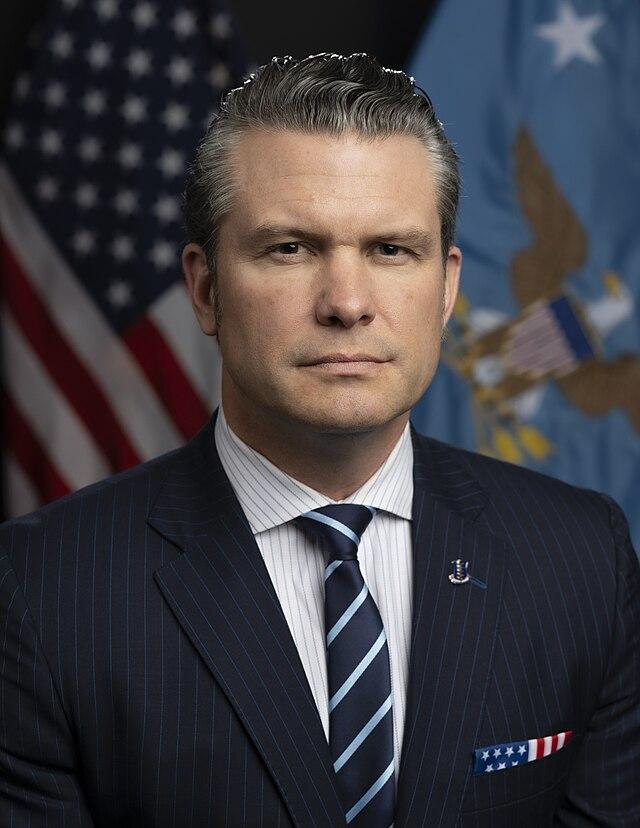
On May 31, Secretary of Defense Pete Hegseth spoke at the annual Shangri-La Dialogue in Singapore. This is the world’s highest profile international meeting of national security officials; and certainly the most watched, because it was the debut appearance of a key cabinet member of President Donald Trump’s second term. Hegseth’s appointment was controversial. He is a decorated combat veteran who stressed the “warrior ethos” against various “woke” notions that degraded the military profession. But as a Fox news anchor, he had expressed naïve strategic views that tended toward isolationism. His message in Singapore calmed these fears.

His primary focus was on threats from China. “It has to be clear to all that Beijing is credibly preparing to potentially use military force to alter the balance of power in the Indo-Pacific. We know. It's public that Xi has ordered his military to be capable of invading Taiwan by 2027,” he warned. Then he pledged “Again, to be clear: any attempt by Communist China to conquer Taiwan by force would result in devastating consequences for the Indo-Pacific and the world. There's no reason to sugarcoat it. The threat China poses is real.” Hegseth also pointed out that Beijing has ambitions across the region, from the Philippines to Japan.

America is responding by increasing the forward deployment of forces in the region, not just the Navy which President Trump started to expand in his first term and is accelerating in his second with a trillion-dollar defense budget, but also with units from all the services. The Marines just deployed a new anti-ship missile battery in Luzon that not only protects the Philippines but would also reach a Chinese Taiwan invasion force. “We must ensure that China cannot dominate us -- or our allies and partners. Maintaining the status quo requires strength. That's just a rational, common-sense goal that all should be able to live with” declared Hegseth. 

A major theme that addressed many concerns was that America First does not mean America alone. Indeed, early in his remarks Hegseth stated “And under President Trump's leadership, the United States is committed to achieving peace through strength. That starts with deterring aggression around the world and here in the Indo-Pacific, here in our priority theater, here with you -- our allies and our partners.” Strategists can still look at how operations in different theaters might play out, but Great Power rivalry drives politics worldwide. Alliances and alignments span the globe, as do the ambitions of the major players. And the preparations for security in a turbulent world must run deep.
(DoD photo by Chad J. McNeeley), Public domain, via Wikimedia CommonsIt should be noted that on May 24, a British carrier strike group, which includes warships from Canada, Norway, and Spain to give it a NATO flavor, entered the Red Sea conflict zone on its way to the Indo-Pacific where it will hold joint exercises with a variety of local navies to demonstrate that the West has friends on a global scale that Beijing can only dream about.

Economics is the material foundation of power. The “trade war” between the U.S. and China is fundamentally different from the commercial disputes that have brought forth President Trump’s broad use of tariffs. China has used its “gains from trade” (capital and tech transfers, expanded industrial capacity supported by trade surpluses) to build a peer geopolitical challenger that threatens not a trade war, but a real war to achieve its regional ambitions. There has been a broad bipartisan consensus in both the Trump and Biden administrations to rebuild strategic industries in America while denying China the means to compete in the development of new technology. As Hegseth stated, “Economic dependence on China only deepens their malign influence and complicates our defense decision space during times of tension. “

This is about industrial policy, not trade policy. We will build what we need. As Hegseth said, “We're reviving our defense industrial base and investing in our shipyards. We're rapidly fielding emerging technologies that will help us remain the world leader for generations to come.” He also talked about integrating economic capabilities with allies, especially India and Australia, which with the U.S. and Japan form “The Quad” of nations responding to China’s increased capabilities. The Trump administration has also talked with South Korea and Japan about industrial cooperation, especially in shipbuilding. Decades of neglect has eroded American shipyards while China has created the largest shipbuilding industry in the world.

Addressing China as our “primary” threat was correct, but Hegseth could not ignore threats outside the Indo-Pacific because Beijing is involved in support of aggression across the world, in particular that of Russia and Iran. Hegseth said little about Ukraine except to blame President Biden for failing to deter Russia’s invasion and to declare that President Trump is seeking “durable peace.” But he did say “It's important for this room to hear today, and all the world -- America First certainly does not mean America alone. Especially alongside so many of our allies, model allies like Poland, Israel, and the Gulf States, the Baltic States. And it does not mean ignoring the world.” The named allies stand in the front line against Russia and Iran. Poland and the Baltic States are vocal in their calls for more aid for Ukraine in its valiant defense against Russia.

Hegseth echoed the Trump view that Europe should take the lead in facing down a much weaker Russia, which is logical and certainly doable given NATO’s much greater economic potential. And while NATO has pledged to increase defense spending to 5% of GDP to match the U.S., it will take time after so many years of neglect based on the false hope of perpetual peace dashed by Vladimir Putin. To bring peace through strength right now will require the application of American power to force Putin to conclude peace is his only viable option.

Again, the Russia-Chinese alignment cannot be ignored. In 2022, just before Russia invaded Ukraine, Moscow and Beijing declared they were “friends without limit.” Last month, the leaders of both dictatorships declared a “friendship of steel” using the same words Hitler’s Germany and Mussolini’s Italy had used on the eve of World War II.

The two anti-western revisionist and revanchist powers have held numerous joint military exercises. Most recently, strategic bombers of Russia and China conducted a joint operation over the Sea of Japan on November 29, a threat to both Japan and South Korea (not to mention U.S. bases in both countries). On July 24 last year, they conducted the same kind of operation off the coast of Alaska. They held a joint naval exercise with Iran in the Gulf of Oman just after President Trump threatened Tehran if it did not dismantle its nuclear program.

In the new June issue of the U.S. Naval Institute’s Proceedings journal, Dr. William Bunn, a retired naval intelligence officer now a professor at the Joint Forces College, warns that Russia could join China in a war over Taiwan. Putin has been modernizing his Pacific Fleet. While it has always been assumed that an Indo-China conflict would tempt Moscow into fresh aggression in Europe, Bunn believes “U.S. forces must include a combined Russian-Chinese force in future Pacific wargames.” More proof that to deter China, Russia must be defeated in Ukraine to give credence to a “peace through strength” American policy and posture. Actions not only speak louder than words, they are usually the only things adversaries understand.

William R. Hawkins is a former economics professor who has worked for conservative think tanks and on the Republican staff of the U.S. House Foreign Affairs Committee.

https://www.americanthinker.com/articles/2025/06/the_maturing_of_defense_secretary_hegseth.html

The genie is out: 24-hour trading gaining momentum, Interactive Brokers chairman says

 Interactive Brokers Chairman Thomas Peterffy on Thursday said 24-hour trading has become more acceptable, calling it a genie that is hard to put back into the bottle, at the Piper Sandler Global Exchange & Trading Conference.

Global interest in the lucrative U.S. equity market has surged in recent years, driven by rising retail participation, prompting exchanges and financial firms to seek new methods to expand access, particularly by extending trading hours.

"Twenty-four hours' trading is obviously very important to many people in the far Middle and near East, much more so than in the U.S. or even in Europe," Peterffy said at the conference.

In May, about 2.2% of Interactive Brokers' volume was done in overnight trading, Peterffy said, adding that he expects the number to rise to 25% to 30% in the next 20 years.

Interactive Brokers launched overnight trading in November 2022, while exchanges like Nasdaq, Cboe Global Markets and Intercontinental Exchange, the operator of the New York Stock Exchange, have announced plans for extended trading hours.

Ken Griffin's Citadel Securities had flagged risks of 24-hour trading to the Securities and Exchange Commission in April, highlighting the need for a clear regulatory framework and market infrastructure to support its implementation.

Peterffy said IBKR has created a forecast trader to follow event-driven data that can be used to forecast future outcomes, using climate change and weather patterns as an example.

"The climate is under our control, but it is under our control communally and not individually. So the question is, how to provide the individuals in our society with a tool to be able to exert great control over these forces in unison in a coordinated manner, while still under their own individual self-determination," said Peterffy.

https://finance.yahoo.com/news/genie-24-hour-trading-gaining-162123692.html

Ukrainian Capital Burning After Heavy Russian Cruise Missile Strikes

 Update(1932ET): Overnight in Kyiv, emergency air sirens are ringing out, and there are reports of sections of the capital burning, after cruise missile strikes.

There are further unverified reports of a combined attack underway, resulting in powerful explosions, and keeping the city's population awake.

Meanwhile there have also been powerful explosions observed near Russia's Bryansk airport.

Below: things blowing up at Bryansk airfield in southern Russia:

And earlier in the day - after repeat strikes on Kherson...

Did the big expected Russian retaliation for Ukraine's Sunday major drone strikes begin?

* * * 

Russia says that President Putin is preparing to retaliate at 'a time of our choosing' for all the latest drone and 'terror attacks' - including the targeting of trains and bridges with explosives.

"Russia will respond to Ukraine's latest attacks as and when its military sees fit," the Kremlin said Thursday. Spokesman Dmitry Peskov confirmed what President Trump revealed of the Putin phone call Wednesday - that the Russian leader made clear that Moscow is obliged to retaliate.

Via Reuters

Peskov, speaking of Putin's first televised address since the devastating Sunday drone attacks deep inside Russian territory said, "The president described the Kyiv regime as a terrorist regime, because it was the regime's leadership that consciously gave the order, the command, the order to blow up a passenger train."

"This is nothing other than terrorism at the state level. This is an important statement by the president," he added.

Putin had accused Ukraine's leadership of orchestrating a terrorist attack on trains carrying civilians in Russia’s Bryansk region, which left seven dead and dozens injured in the derailment of the train and collapse of the bridge due to planted explosives on Sunday. The operation appeared in parallel to the 'Operation Spinder's Web' drone attacks.

Putin asserted that Ukrainian political leadership was directly behind the strike.

He also made clear in the address that Ukraine's offer of a summit with Zelensky and an immediate ceasefire has been rejected. It marked a clear rhetorical escalation when compared to prior comments when he said:

"Who has negotiations with terrorists?" 

As we reported earlier, the US Embassy in Kyiv has issued an updated security alert, warning all Americans who remain in Ukraine to be prepared to seek shelter and take emergency preparedness measures as major aerial attack could be imminent.

A senior NATO official who spoke to The Moscow Times agrees that significant retaliation is coming. "There will certainly be retaliatory actions that Russia will take. And there will be defensive things that Russia will do,” the official said.

"Russia hasn't seemed to need much excuse for pretty severe strikes so far. But I think Russia will use this to cover and justify additional, heavier strikes and stalling negotiations," the NATO source added. Mostly likely Russia will go after 'command HQ centers' - and important cities like Kiev and Odessa could see shock and awe level of bombings.

https://www.zerohedge.com/geopolitical/no-negotiations-terrorists-well-retaliate-time-our-choosing-kremlin

Supreme Court Unanimously Rejects Mexico's $10 Billion Lawsuit Against U.S. Gunmakers

 The U.S. Supreme Court unanimously tossed out Mexico's 2021 lawsuit against seven U.S. gunmakers and one wholesaler, ruling that firms like Smith & Wesson and Glock are shielded from liability under the federal Protection of Lawful Commerce in Arms Act (PLCAA).

Mexico's lawsuit accused U.S. gunmakers of knowingly enabling illegal firearm sales to dealers linked to drug cartels, fueling cartel violence. The government sought $10 billion in damages and a court order imposing stricter rules on the marketing and distribution of firearms.

Mexico attempted to use PLCAA's narrow "predicate exception," claiming the gunmakers knowingly violated federal firearms laws by aiding and abetting illegal sales by U.S. dealers.

Here's the Supreme Court's rationale that went into their unanimous decision: 

  • The Court, led by Justice Elena Kagan, found that Mexico's complaint did not plausibly allege that the manufacturers took deliberate, affirmative steps to facilitate crimes — a requirement for aiding and abetting liability.

  • Allegations that manufacturers failed to monitor dealers or cut off suspected "bad apple" dealers were deemed insufficient. Passive nonfeasance or general market activity does not amount to aiding and abetting.

  • Design and marketing choices (e.g., Spanish-language branding, military-style weapons) were not enough to imply culpability under U.S. law.

Justice Elena Kagan, writing for the majority, acknowledged rampant cartel violent crime, but found that Mexico failed to present allegations strong enough to overcome PLCAA's liability shield, rejecting claims that the gunmakers aided and abetted illegal firearm sales.

"The question presented is whether Mexico's complaint plausibly pleads that conduct. We conclude it does not," Kagan wrote.

Meanwhile, Democrats in Congress have introduced legislation intended to reduce the flow of guns across the border. Yet Democrats facilitated four years of disastrous open borders under the Biden-Harris regime era... 

*   *   * 

Read the Supreme Court's ruling.