Search This Blog

Saturday, June 14, 2025

The Undervalued Medical Power of Muscle

 The exponential rise of our aging population. The pandemic. The explosion of GLP-1s. It’s a trifecta that’s making muscle — and the serious implications of not having enough of it — part of a larger health conversation.

Yet when I recently asked my 65-year-old mom whether her doctor had ever talked to her about resistance training or protein intake, I was surprised to hear that the topic wasn’t coming up. (And for the record: My parents’ doctor has always been an attentive, caring, and in-the-know practitioner.) 

“Muscle span” and “strength span” aren’t just trendy new buzzwords being used to shill protein powder on Instagram. A growing body of research has strengthened the case for the unique and protective benefits of building and maintaining muscle mass over your lifespan.

“Because of the importance of muscle, both as a functional organ and as a metabolic organ, muscle depletion (or low muscle mass) is an independent predictor of poor health outcomes,” said Carla Prado, PhD, RD, director of the Human Nutrition Research Unit at the University of Alberta in Edmonton.

Sure, you say, it’s true and makes sense, but try motivating unmotivated patients to strength train. Exercise adherence is historically one of the biggest challenges. (Roll out the standard stat that fewer than a quarter of Americans get the recommended two strength-training sessions per week, according to the CDC.)

So let’s talk about muscle — as a reminder and motivator — and while looking good at the beach takes up a lot of oxygen in that conversation, the plain truth is what muscle does on the inside is more important than what people see on the outside.

The Massive Lift of Muscle 

Skeletal muscle is the largest organ in the body by mass, taking up 30%-50% of our total body mass depending on age, sex, and fitness level. It’s not slacking off, either. While its performance benefits are obvious, skeletal muscle is an endocrine organ with wide-reaching effects on the body — from metabolic function, hormonal regulation, and disease prevention.

One of the most important roles it plays is in glucose metabolism. Skeletal muscle regulates more than 75% of insulin-mediated glucose disposal, helping control glucose and lipids while reducing the risk for metabolic diseases like type 2 diabetes. (Conversely, the loss of muscle mass — particularly as we age — leads to reduced glucose clearance from the bloodstream, increasing the risk for metabolic disorders.)

Muscle mass is a heavy hitter when it comes to our daily calorie burn, too. Our resting energy expenditure is the biggest piece of the metabolic puzzle, with the thermic effect of food and the energy expenditure from exercise playing far smaller supporting roles. And while the energy used by our brain, skin, and internal organs doesn’t vary a ton, the calories tied to muscle metabolism can shift the equation considerably.

Case in point: The average muscle mass of a young, healthy man ranges from 35 to 50 kg (77 to 110 lbs). An elderly woman? Maybe 13 kg (29 lbs). That means the energy released per day as a result of muscle protein synthesis can range from 485 calories per day (in the muscular young man) to 120 calories per day (in an active elderly woman). A 365 calorie difference.

Researchers stress that even small differences in lean mass — say, 10 kg (22 lbs) —translates to a 100-calorie difference in energy expenditure per day, which if held consistent comes out to a little over 10 pounds of fat mass per year.

“Muscle is truly valuable and we need to be figuring out how to maintain it as much as we can throughout our lives,” said board-certified family medicine doctor (and viral social media influencer) Mikhail Varshavski

The problem? Adults reach peak muscle mass levels somewhere between our 20s and 40s — before it begins to progressively decline. On average, humans lose 0.5% of their skeletal muscle mass per year in their 40s, 1-2% after age 50 years, and approximately 3% per year after age 60 years.

Without proper nutrition and exercise interventions, this progressive loss of muscle mass and strength with age — better known as sarcopenia and dynapenia — can have massive consequences.

We’re not talking about struggling to screw a lid off a jar, walk up a flight of stairs, or show off our wash-board abs, either. Sarcopenia is a major contributor to frailty, falls, and loss of independence in older adults. 

Age and frailty have become a wild card in this discussion, as well, as frailty rates in the US have crept upward, for sure, but more problematic is that frailty and prefrailty are now more common in younger people. We’re becoming physically compromised at younger and younger ages.

“Survival is shorter for people with low muscle mass across the continuum of care — whether they are older adults, hospitalized patients, or patients with cancer or liver diseases,” said Prado. “If they are hospitalized, for example, they are more likely to develop complications and stay at the hospital for longer periods of time.”

This is largely due to skeletal muscle’s role as the center of protein and amino acid metabolism in the body, said Robert Wolfe, PhD, director of the Center for Translational Research in Aging and Longevity at the Reynolds Institute on Aging in Little Rock, Arkansas.

During periods of stress, trauma, or illness, muscle can be broken down to supply the body with necessary proteins for immune function and tissue repair. Individuals with limited reserves of muscle mass respond poorly, explained Wolfe.

“For example, survival from severe burn injury is lowest in individuals with reduced lean body mass,” he said. “Loss of muscle mass is also known to be detrimental to survival from cancer: In patients with lung cancer receiving radiation therapy, the amount of body protein predicted recurrence.”

Herein lies the rub: We can’t predict when an accident or critical illness may hit, yet the state of our skeletal muscle at that time can play a dramatic role in our recovery. “If there is a preexisting deficiency of muscle mass before trauma, the acute loss of muscle mass and function may push an individual over a threshold that makes recovery of normal function unlikely to ever occur,” said Wolfe. This is why 50% of women 65 years old or older who break a hip in a fall never walk again.

The takeaway? “We’re all going to lose muscle as we age, but not all of us will reach the threshold below which is associated with clinical implications,” said Prado. “That’s what we’re trying to avoid here.”

How to Hold On

Maintaining muscle demands early and proactive interventions, as age-related anabolic resistance is inevitable without it.

“While it can be somewhat reversed in those who are anabolically resistant, it can be mostly avoided by adopting a lifelong approach to muscular health,” said Brad Schoenfeld, PhD, researcher and professor of exercise science at Lehman College in New York City. “This involves regular resistance training and consuming adequate dietary protein.” 

Not cardio? While cardiovascular exercise has been much more well researched over the years and indisputably has powerful effects on your health, strength training goes well beyond what you can achieve through aerobic training.

“In my opinion, resistance training is one of the most important interventions you can do for overall health and wellness,” said Schoenfeld. “It positively affects virtually every organ system and is key to preventing a loss of physical independence as we age.”

For starters, resistance training directly stimulates mitochondrial biogenesis and improves mitochondrial function, he said. Mitochondria are critical for energy production, and their decline is linked to aging and chronic disease. Resistance training helps maintain mitochondrial health by increasing both the number and function of mitochondria in muscle cells. This has been shown to improve energy metabolism and reduce oxidative stress. For older adults, this can translate to not only better endurance but also a lower risk for metabolic diseases and improved longevity.

Resistance training is strongly linked to the prevention and management of osteoporosis, as well. The mechanical load placed on bones during resistance exercises stimulates bone remodeling and increases bone mineral density (BMD). Numerous studies have shown that resistance training is effective in preventing osteoporosis and reducing the risk for fractures in older adults. While weight-bearing exercises like walking and running are beneficial, resistance training targets areas at high risk for fractures, such as the hips and spine, making it a key intervention for maintaining bone health.

​​Skeletal muscle is also a major regulator of inflammation. During exercise, muscles release myokines, such as interleukin-6, which have anti-inflammatory effects. These myokines help regulate the immune system, improve fat metabolism, and contribute to better metabolic health. This means that beyond strength and mobility, muscle health plays a key role in modulating chronic, low-grade inflammation — a driver of many age-related diseases including cardiovascular disease, arthritis, and Alzheimer’s disease.

And despite cardio getting all the glory when it comes to heart health, a 2023 study in Sports Medicine revealed that low to moderate load resistance training has been associated with lower rates of adverse cardiovascular complications than aerobic exercise in older adults with cardiovascular disease. In fact, with strength and skeletal muscle independently associated with risk for cardiovascular disease and mortality, researchers posit that resistance training is an important interventional strategy for mitigating cardiovascular risk.

Challenges in Care

Impressive results in a research setting is one thing. Achieving them in the real world? Way tougher, of course.

Varshavski has some doubts when it comes to the realities of monitoring muscle mass or using it as a vital sign in the same way we use measures like heart rate and blood pressure. “I don’t think we have enough evidence to say we have a method to do this well,” he said. “It definitely needs to be incorporated and we perhaps have neglected it at times, but to say that it will be at the forefront of all the things that ail us — I think that’s jumping the gun.”

It doesn’t need to be the holy grail, but the evaluation of muscle health needs to be an important piece of the puzzle, said Prado. “I think that every healthcare professional has the duty to look into it.” 

More techniques are becoming available from dual-energy x-ray absorptiometry and bioelectrical impedance, to surrogate assessments such as calf circumference. Even simple questions (“Do you do any form of resistance training?”) or screening tools (like observing patients’ mobility) can go a long way to establishing a baseline.

One simple measure is grip strength, using an inexpensive dynamometer to monitor progress over time. Grip strength can be a decent proxy for overall strength, though not muscle mass.

These are imperfect measures and estimates, for sure. “But as my dear colleague Dr Christina Gonzalez likes to say: Instead of taking a picture, we can make a movie,” said Prado. “So even techniques that have some limitations, if we’re looking at change over time, some of those limitations will be offset.”

In other words, let’s not let perfect be the enemy of good.

Getting the Gains

Shifting into a more pro-muscle mentality will take time and adherence — both for practitioners and patients. “When you make one change here, it has drastic implications everywhere else,” said Varshavski. “That’s why it’s important when we’re talking with patients about the need for muscle, we talk about how it helps all parts of the body — how it can help them stay independent, help them stay mobile.”

“When it comes to muscle, what’s interesting is that we’ve seen it be a protective factor in aging and in disease prevention (or at least, lower risk evaluation for disease) irrespective if someone perhaps doesn’t have a healthy BMI,” he continued. “That sort of paradoxical relationship gets people excited and allows them to listen in.”

It’s no secret many physicians don’t get into specifics with patients on what they should be doing. One survey showed exercise prescribing rates as low as 17% with 84% of doctors saying they felt inadequately trained in the subject of resistance training. Referrals to other pros with strength training backgrounds, particularly physical therapists, can help. (See also: Medscape’s “How to Prescribe Exercise in 5 Steps”).

Schoenfeld’s research (he’s published more than 300 studies) reveals two key areas that may make strength training more palatable to patients: First, data now show that using lighter weights can build just as much strength as heavier weights, so long as the lifter pushes to near failure in the last few repetitions (aka “the hard reps”). So there is no barrier to entry for folks who can’t lift, or may be intimidated by heavy weights.

And second: It’s never too late to start. In a meta-analysis of adults aged 70 years or older (including nonagenarians), Schoenfeld’s team saw profound improvements in muscle strength and muscle hypertrophy within 8- to 12-week training programs. “These were novice trainees who’ve never done anything before,” he said.

Important caveat: It’s always better to start today. Because while you can always improve on where you are at a given point in time, once you start losing, it’s harder to get it back.

“The analogy I like to use is having a retirement account,” he said. “Yeah, it’s never too late to start, technically. But if you start when you’re in your 50s, your retirement isn’t going to be what it is if you start in your 20s.”

https://www.medscape.com/viewarticle/undervalued-medical-power-muscle-2025a1000fux

No more cars on 34th Street: Busway clears final hurdle, despite wild opposition from transit users

 City Hall’s latest anti-car crusade cleared its final hurdle this week, despite fierce opposition from actual bus riders, who accused community board leaders of being in bed with the city and private interests.

The wildly controversial plan to ban cars on 34th Street — a vital crosstown route for commuters from New Jersey and Long Island — to make way for a dedicated busway between 3rd and 9th Avenues, will take effect as early as the end of the summer.

Stacy Rauch, a lifelong Murray Hill resident who takes the 34th Street crosstown bus daily, says car traffic isn’t the problem.

Rauch, who rides the 34th Street bus, says a dedicated busway isn’t the answer.Stacy Rauch/ Facebook

“The bigger problem is we don’t have enough buses,” she said during a heated community meeting Wednesday night.

Rauch was among dozens of angry Murray Hill residents who said the plans were rushed through with zero data or traffic analysis, and that the rerouted traffic from motorists coming out of the Midtown tunnel will make their local residential streets unlivable.

City officials have drawn comparisons to 14th Street, where a similar car ban was implemented after a court battle. But Rauch notes 14th Street has four or five buses running in each direction during rush hour, while 34th Street only has two and doesn’t need the busway.

“I have waited for the 34th Street bus at Park Avenue for 21 minutes, to go to 10th Avenue,” Rauch raged.

“I got there in 10 minutes. How much faster do you want it to go?”

“Before you start telling me that this will fix it, you better get more buses,” she vented.

The car lane on 34th Street will be gone and replaced by another reserved bus lane.NYC DOT

Arguments descended into a full-blown shouting match, with accusations about conflicts of interest flying.

“This is a sham!” exclaimed Samuel “Peter” Panuccio, a retired NYPD sergeant and Murray Hill resident, as he turned to the board. “We’re getting blindsided.”

Panuccio and other residents said they only learned about the major overhaul planned for 34th Street a week ago — and that private interests are pushing it through against the will of the neighborhood.

“I have a question for you people,” Panuccio continued as he addressed the board. “Are there people on this community board that are actually members of Transportation Alternatives?”

Cars will be required to turn off the busway at specific intersections to avoid a traffic violation.NYC DOT

The powerful anti-car group, which critics say has an incestuous relationship with the DOT, wields a lot of power with progressive elected officials.

Jason Froimowitz, the transportation committee chair — a 35-year-old self-described bike advocate — has frequently promoted the group’s work and appeared at its rallies. Barak Friedman, vice chair of Manhattan Community Board 6’s transportation committee, is a former Volunteer Co-chair with Transportation Alternatives.

Board members didn’t respond to Panuccio’s question at the meeting.

Froimowitz said he never received any compensation from Transportation Alternatives.Jason Froimowitz/ X

When contacted by The Post, Friedman and Froimowitz both denied ever receiving money from Transportation Alternatives.

“My participation in events organized by Transportation Alternatives has always been publicly visible. It reflects my personal views and commitment to safer streets,” said Froimowitz.

“That’s not a conflict of interest — that’s a record of civic engagement,” defended Friedman.

Friedman said his work with Transportation Alternatives was strictly volunteer.Mount Sinai

But that did little to quell neighbors’ concerns.

“You have an activist that voted. That’s wrong!” Panuccio fumed at the meeting. “You think the community’s not mad?”

The board overwhelmingly passed the resolution in favor of the busway by vote of 31-5, ignoring arguments brought by residents.

“I’m disgusted,” Rauch told The Post. “I’m so angry.”

The DOT says it will talk with the community before sharing its final plan this summer, but the vote means the project is effectively a done deal, neighbors said.

https://nypost.com/2025/06/14/us-news/34th-st-busway-clears-final-hurdle-despite-opposition/

'Open Secret': Zuckerberg’s New AI Chief Warns Of China's Unprecedented Tech Theft Operation

 Alexandr Wang, co-founder of Scale AI and Meta’s new AI chief, warned that China is orchestrating a sophisticated, large-scale intelligence operation targeting the U.S., with the objective of achieving global technological dominance. 

Gerry Miller | CNBC

Wang, in an interview with Shawn Ryan, walked through China's strategy that combines state-driven data dominance with large-scale espionage wage by the country’s vast intelligence agency. 

"They are way ahead on power and power generation. They're behind on chips, but catching up on chips. They are ahead of us on data. China has had, again since 2018, a large-scale operation to dominate on data. I think there were over 2 million people in China who were working inside data factories, basically as data labelers or annotators, basically creating data to fuel into those AI systems,” Wang told Ryan. "I think that number in the U.S., by comparison, is something like 100,000. They're outspending us 12 to 1 on data. They have over seven cities, full cities in China, that are dedicated data hubs, um, that are basically powering, you know, this broad approach to data dominance. And then on algorithms, I think they are on par with us because of large-scale espionage.”

Wang said it was “open secret” in the tech industry that Chinese intelligence is systematically stealing U.S. intellectual property and secrets, detailing how a former Google engineer, Leon Ding, allegedly copied critical AI chip designs into Apple Notes, printed them, and walked out to start a company in China, undetected for months.

Wang then explained how roughly one-sixth of Chinese students in the U.S. are on CCP-sponsored scholarships requiring them to report findings to handlers or risk losing funding. This mandate, he claims, fuels a massive effort to collect technological secrets from America’s top institutions. 

About a sixth of Chinese students, so, like, Chinese citizens who are students in America, are on scholarships sponsored by the CCP itself. And for those on these scholarships, they have to report back to a handler, basically, what are the things they find, what are the things they're learning, otherwise their scholarships get revoked,” the billionaire said. "There's an incredibly large-scale intelligence operation running against the US tech industry, which is just collecting all the information and secrets and technological secrets from our greatest research institutions, our universities, our AI labs.” 

There’s no shortage of reports detailing Chinese intelligence gathering against the U.S. 


The Wall Street Journal recently revealed a stunning admission from Chinese officials, who, during a clandestine December 2024 meeting in Geneva, Switzerland, indirectly acknowledged their involvement in the Volt Typhoon cyberattacks targeting U.S. critical infrastructure. Though their statements were described as “somewhat ambiguous,” the Journal reported they were clear enough to link the Chinese government to the sophisticated cyber campaign disrupting American systems.

Believed to have begun no later than 2023, the Volt Typhoon operation, alongside the related Salt Typhoon group, has wreaked havoc, infiltrating major U.S. telecommunications providers, electric utilities, IT companies, internet service providers, and government agencies.

How to Grab IPO Shares Before Everyone Else

 Last week, Circle Internet Group (CRCL) made a blockbuster IPO debut.

On its first day of trading, the stock surged 168%. By the following day, it was trading 270% above its IPO price of $31.

In other words, anyone who invested at the IPO price could have turned $1,000 into $3,700 in just two days. Not bad!

Now, what if I told you that you could have been one of those early investors in Circle, with no special requirements or insider connections?

For decades, individuals have been locked out of the IPO process while accredited investors and institutions grabbed these explosive first-day gains. But that’s all changing.

Newer brokerages like Robinhood are quietly handing you the same access that was once reserved for Wall Street’s inner circle.

A member of our research team, James, was able to use a Robinhood trading account to get in early on the Circle IPO. And he’s here to walk you through exactly how it worked.

I’ll pass it over to James now so he can tell you all about it so you don’t miss out on the next one.

By James Welch

As Enrique mentioned, I was able to participate in the Circle IPO on Thursday as a regular retail investor simply because I have a trading account with Robinhood.

First, a quick bit of background. I recently switched over to Robinhood because I was frustrated with Schwab for not offering interest on my cash balance.

I went to mostly cash just before “Liberation Day.” And not earning interest on those funds was driving me nuts.

Then I read somewhere that Robinhood was offering a 4.5% APR on cash balances if you paid $5 per month for their “gold” account. That was all it took for me to make the leap.

Unlike Schwab, Robinhood’s site and app are very visual. To my surprise, one of the features I quickly discovered was called “IPO Access”.

As you can imagine, I immediately clicked on it. Being locked out of IPOs because I’m just a retail investor has always ticked me off.

It turns out that Robinhood has been offering its members the chance to opt into featured IPOs as far back as May 2021 — before Robinhood was even a publicly traded company itself.

And when the company did go public later that year, Robinhood offered an unprecedented 35% of its IPO shares to its users.

That made history as the largest portion ever designated for retail investors in a traditional underwritten offering.

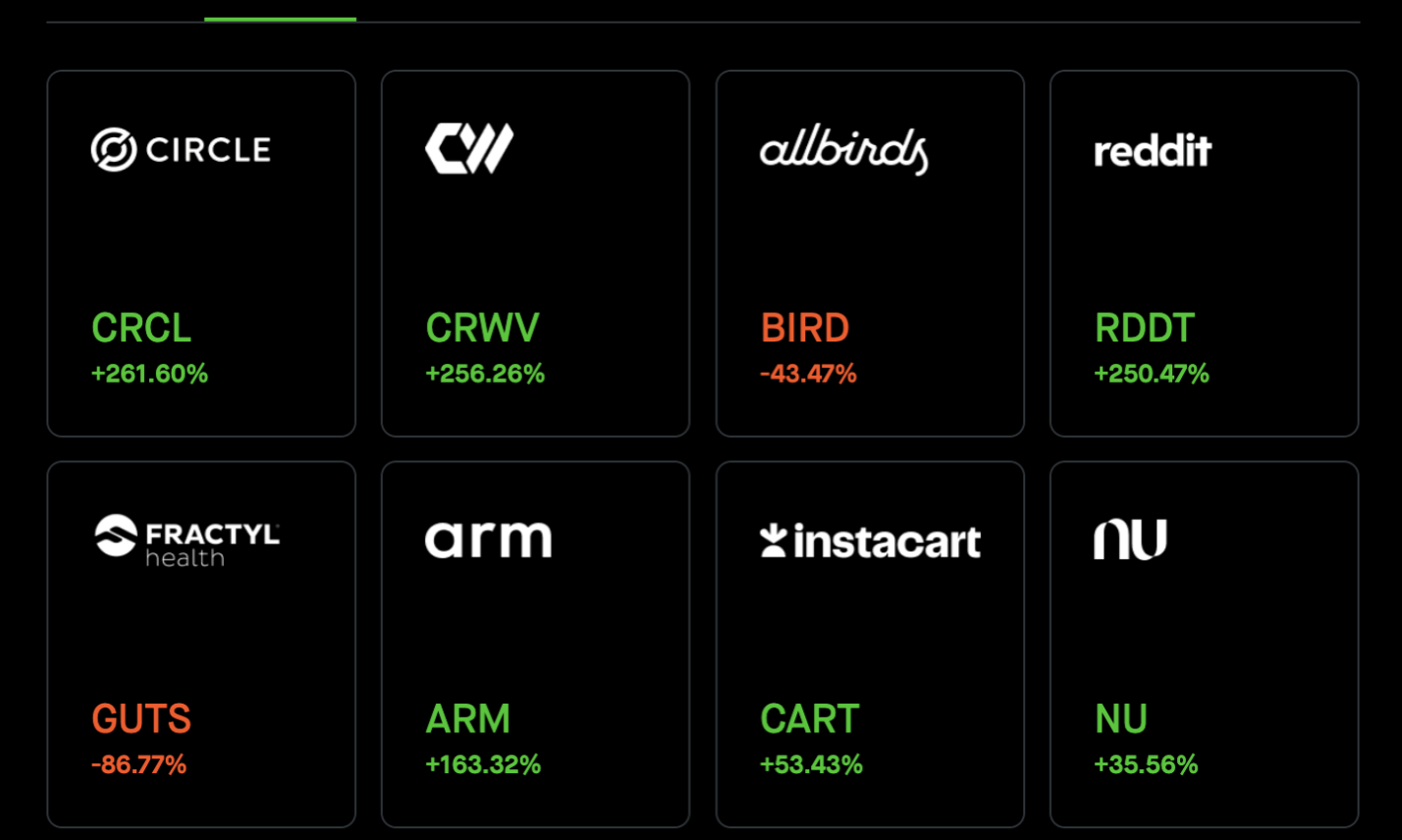
Here are some of the companies they’ve offered “IPO Access” to:

image 1

As you can see, there are some big names on the list. I counted 24 companies on their list of completed IPO offerings.

So, you may be wondering, how does it work?

Well, it was really quite simple from a user perspective. I signed up for IPO alerts within the platform. On May 27, I received a notification that Circle was going public soon.

Clicking on the notification brought me to an internal web page that offered details about the company, the initial share offering range, plus a link to a prospectus and other info.

After doing some research for a few days, I decided to go for it. So I clicked back into the page. From there, I was able to enter as many shares as I liked.

The platform made sure to inform me that the funds would be held from my cash balance until the IPO date.

It also explained that I may get all, some, or none of the shares I’d opted in for based on demand versus the shares they had to allocate.

image 2

As you can see in the screenshot, I requested 100 shares. The original asking price range was $27-$28, but they wisely built in a 20% buffer you must agree to.

This protects you from getting priced out if the share prices increase due to demand. So, how did it go?

Well, I waited until the morning of the IPO, and I eventually got another notification in my account.

image 3

I ended up getting only 19 shares at $31. Sure, I was a little disappointed. But I have absolutely zero complaints. In fact, I feel quite grateful to Robinhood for the opportunity.

I’m grateful for the quick increase in share price, of course. But I’m even more grateful that Robinhood gave me, an average retail investor, access to one of the biggest IPOs of the year.

Better yet, Robinhood hooked up a lot of other investors just like me that day. As you can see in the image above, I was the 39,660th investor that day to get shares.

To be clear, we’re not here to sell you on Robinhood — or any platform, for that matter. But it’s clear that something big is shifting.

Brokerages like Robinhood, Fidelity, and Webull are quietly breaking down one of Wall Street’s longest-standing barriers: IPO access.

That means everyday investors now have a shot at buying shares at the same price institutions pay before the big day-one pop.

If you’re serious about growing your wealth, this is something worth paying attention to.

So, check if your brokerage offers IPO access. If not, consider opening an account with one that does. Set up alerts. Keep cash on hand. And above all, stay ready.

Because the next breakout IPO could be here soon.

https://dailyreckoning.com/how-to-grab-ipo-shares-before-everyone-else/

Israel Attack Targets Refinery At Iran's Giant South Pars Gas Field

 A fire broke out at Kangan Port in Iran’s Bushehr province following an Israeli drone strike targeting on onshore refinery at Phase 14 of the South Pars gas field in the Persian Gulf on Saturday. It was the first attack by Israel specifically targeting Iran's critical energy sector. 

“Phase 14 of the South Pars gas field was targeted by a strike from the Zionist regime,” Fars news agency reported.

As a result, “parts of this phase caught fire, and fire trucks are currently working to extinguish the blaze,” the agency said.

The news agency, citing local sources and witnesses, said the attack was carried out using a small drone resembling a UAV. 

The fire at the refinery at Phase 14 has halted production from one of its offshore platforms, amounting to 12 million cubic meters per day, Tasnim reported adding that firefighters have prevented the blaze from spreading to other units.

The strike caused a powerful explosion and fire, the semi-official Tasnim news agency reported, adding that a separate fire also broke out at the Fajr Jam gas refinery, which processes gas from South Pars as well as the Nar and Kangan fields and is one of Iran’s largest refineries.

Iran shares South Pars with Qatar, where it’s known as North Field. It’s the world’s largest gas field and provides roughly two-thirds of Iran’s natural gas.

On Friday, Iranian authorities said the country’s oil refineries and storage tanks were unharmed, with fuel supplies stable nationwide.

South Pars is Iran's half of the world's largest natural gas field. It is located in the very middle of the gulf. The other half is owned by Qatar, which they call the North Dome. South Pars Phase 14 is divided into an offshore (gas field) and an onshore (processing plant) component, which is fed by pipeline. Iran doesn't export natural gas to the extent Qatar does because Iran doesn't yet have any LNG terminals in operation. 

Israel launched a series of strikes against Iranian territory, targeting nuclear and missile facilities early Friday, killing senior military figures and scientists. The wave of attacks has continued and resulted in the deaths of at least 78 people with 320 others injured, according to figures earlier announced by Iran's UN envoy. The unofficial death toll, however, could be much higher.

https://www.zerohedge.com/markets/israel-attack-targets-refinery-irans-giant-south-pars-gas-field