Search This Blog

Wednesday, June 18, 2025

Trump taps Kentucky lawyer for judgeship after scrapped Biden nomination

U.S. President Donald Trump on Wednesday announced his intent to nominate Chad Meredith (NYSE:MDP) to serve as a judge on the U.S. District Court for the Eastern District of Kentucky.

He described Meredith, who previously served as Kentucky’s solicitor general and has worked as a litigation attorney in Ohio since 2021, as "highly experienced and well qualified."

"Chad is a courageous Patriot who knows what is required to uphold the Rule of Law, and protect our Constitution," Trump said in a post on Truth Social.

Meredith has held various roles in the legal field in Kentucky, including chief deputy general counsel for the state’s governor. He also clerked for a judge serving on the same circuit he’s being nominated to, according to his LinkedIn page.

U.S. Senator Mitch McConnell, who represents Kentucky, praised Trump’s decision to nominate Meredith to the bench. He called him "an outstanding choice" with a stellar resume and distinguished record of public service.

During his first administration, Trump vetted Meredith for a judicial nomination but later dropped him from consideration, according to The Courier-Journal.

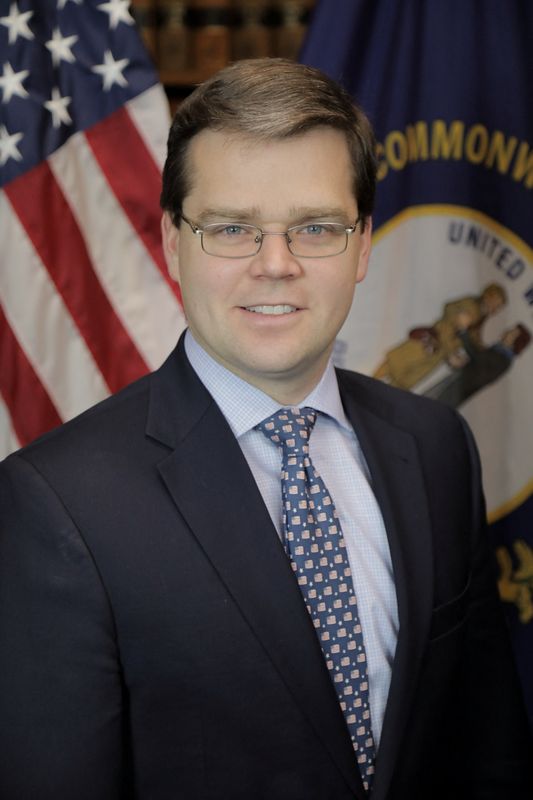
© Reuters. FILE PHOTO: Chad Meredith, a Republican former Kentucky solicitor general, is shown in this undated handout photo. Kentucky Attorney General records/Handout via REUTERS/File Photo

Joe Biden, who succeeded Trump as president, also considered nominating Meredith, who has defended abortion restrictions, but he decided against doing so after progressives and abortion-rights supporters came out strongly against the nominee.

Trump has so far announced 12 judicial nominees in his second term, after securing Senate confirmation in his first term of 234 judicial nominees.

https://www.investing.com/news/world-news/trump-taps-kentucky-lawyer-for-judgeship-after-scrapped-biden-nomination-4102435

MA governor eyes spend of over $1B in F'25 on ‘emergency shelter’ plan that largely serves illegals


To be honest, I for one am completely underwhelmed by the “largest deportation operation in American history.” Wake me up when we start deporting more illegals than Obummer and Crooked Joe, but, here’s a tip for ICE: Start at the shelters and hotels of Massachusetts.

A new item out at Fox News reveals that state governor Maura Healey’s administration is on-track to spend more than one billion dollars on its “Emergency Assistance” program, which largely services illegal migrants, just in Fiscal Year 2025. Here’s the story:

Gov. Maura Healey’s administration has already spent $830 million so far in FY25 – which started on July 1 – accommodating more than 4,000 families who have been receiving taxpayer-funded shelter, food, education, legal aid and case management.

The costs work out at about $3,496 per week per family, or around $1,000 per person per week for the program, known as the Emergency Assistance (EA) system.

The report only identifies 1,600 of the 4,000 families being migrants, but considering that the state categorizes illegal aliens as “Massachusetts residents” for the sake of eligibility, there’s no doubt that number is way off. Consider this, from an article at NBC:

Fueled by the highest immigration levels in decades, Massachusetts saw its largest population increase in 60 years between 2023 and 2024, according to Census data. Between July 1, 2023 and July 1, 2024, the state’s population increased 69,603 from 7,066,568 to 7,136,171 – a increase of just under 1% (0.985%).

As a reader/contributor pointed out: If Massachusetts has that much money to throw around, they don’t need any federal funding—finally! Harvard can stop whining about Donald Trump and go right to Healey’s office. If she can hand out a billion to pampering criminal aliens, she can surely come up with a billion to offset the federal shortfall for one of the most prestigious colleges in the nation!

Now, when you look at those numbers, you see that the “average” family is costing taxpayers around $182,000 per year. That is far above the cost of living in the U.S.’s most expensive city: to live comfortably in Manhattan, a family of four spends on average, $12,845 per month, or $154,140 per year.

But the EA-enrolled families? They’re living in shelters or hotels, not some fancy Big Apple high-rise—as Andrea Widburg commented, “the graft must be amazing.”

https://www.americanthinker.com/blog/2025/06/ma_governor_on_track_to_spend_more_than_1_billion_in_fy2025_on_emergency_shelter_program_that_largely_serves_illegal_migrants.html

Marijuana is proven again to be more dangerous than the left says


I despise marijuana. For that reason, I’m very glad when seemingly reputable studies back up my visceral sense that marijuana is a terrible drug that destroys people’s lives and, along the way, destroys American society.

First, I went to ChatGPT for it to sum up the obvious, which is that a drug that alters people’s temporal and spatial perception makes them lousy drivers:

  • Key Effects of Cannabis on Driving:
    • Slower reaction time: Drivers may take longer to respond to unexpected events, like a car stopping suddenly.
    • Impaired coordination: THC, the psychoactive component in cannabis, affects motor control.
    • Reduced attention and focus: Cannabis can make it harder to concentrate on multiple tasks at once (like watching the road, checking mirrors, and managing speed).
    • Distorted perception of time and distance: This can result in misjudging how far away a car is or how fast it's moving.
    • Drowsiness: Especially with higher doses or edibles, which can produce longer-lasting effects.
  • What the Research Shows:

·       Driving under the influence of cannabis doubles the risk of a crash, according to meta-analyses.

·       The impairment is most significant within 1 to 4 hours after use, especially when smoked or vaped.

·       Regular users may experience less obvious impairment subjectively but still show measurable deficits in reaction time and lane control.

All of that falls into the “Duh” category.

What should also be a “duh” is that a new study from AAA’s Foundation for Traffic Safety says that pot users have absolutely no idea how dangerous they are on the road. I already knew this from having had dealings with stoners, but seeing it in black and white is still disturbing:

In the Phase 2 survey, 84.8% of consumers indicated that they drive the same day that they consume cannabis, compared to never driving after use (defined by either waiting 8 hours or more and sleeping or not the same day). This is slightly lower in legal states (78.4%) compared to the other state categories (medical, 86.5%; not legal, 87.9%).  About 1 in 5 (19.0%) thought their driving was worse after use, while others viewed their driving as the same (46.9%), a little better (14.7%), or much better (19.4%). Only 29.2% of respondents believed a police officer could detect the influence of cannabis, 46.7% did not believe they could detect it, and 24.1% were unsure.

If a stoner dies in a one-car crash, so be it. That’s an assumption of the risk, but there are innocents out there who are dying at their hands. After all, with an average increase of 4% in the number of fatal car crashes in states that have legalized marijuana, you know there are a lot of unwilling victims sent Heaven-ward.

In addition, a new study establishes that pot use dramatically increases heart disease in regular users:

People who use marijuana are putting themselves at up to twice the risk of having a heart attack, stroke or dying from heart disease.

University of California researchers reviewed 24 studies involving 200 million people to investigate the relationship between weed and cardiovascular disease, stroke and acute coronary syndrome (ACS) - a group of heart conditions in which there is reduced or blocked blood flow to the heart, such as a heart attack.

They found there was a 29 percent higher risk of ACS, a 20 percent higher risk for stroke and double the risk of dying from cardiovascular disease, which includes coronary artery disease, heart failure and irregular heartbeats.

Again, if this were a burden only the users, so be it. But in a country in which everyone is insured, whether by private companies or the government, it is a burden on the nation, and I resent that.

You see, the problem with marijuana is that it’s not just physically dangerous to users, it destroys them psychologically and our country with it. It destroys energy, ambition, intellectual curiosity...everything. It makes people, especially young men, inert. It is as much a war on men as the left’s vicious shticks about “toxic masculinity. There is a reason the left is so gung-ho to legalize marijuana, and it’s not to relieve certain populations of the burden of illegality. It is to weaken America.

https://www.americanthinker.com/blog/2025/06/marijuana_is_proven_again_to_be_more_dangerous_than_the_left_says.html

Lilly to appeal after UK agency opposes reimbursement for Alzheimer's drug

 Eli Lilly said on Thursday it would appeal against a UK agency's recommendation to not reimburse the cost of Alzheimer's drug Kisunla, blocking access for patients seeking treatment under the country's state-run health service.

The U.S.-based drugmaker plans to appeal on the grounds that the National Institute for Health and Care Excellence's (NICE) recommendation was unreasonable based on the evidence the company, clinical experts and patient groups have submitted.

Kisunla was approved in the UK last year to treat mild cognitive impairment and mild dementia caused by Alzheimer's disease. NICE, which determines the cost-effectiveness of treatments paid for by public funds, had at the time deemed Lilly's drug too expensive for wide use.

Leqembi, a rival drug from Eisai and Biogen, was also deemed too costly for UK's state-run health service in August last year.

NICE's reimbursement recommendation marks another hurdle for Lilly's drug, after the EU medicines regulator in March rejected Kisunla saying the treatment's ability to slow cognitive decline was not significant enough to outweigh the risk of serious brain swelling in patients.

Both Kisunla and Leqembi are designed to clear sticky clumps of a protein called amyloid beta in the brain, believed to be a hallmark of Alzheimer's.

They entered the market after decades of failed attempts to combat the mind-wasting disease.

Adoption of the drugs has been slow in the United States due to the complexities involved with their use, such as the need for extra diagnostic tests and regular brain scans to monitor for potentially serious side effects.

https://www.msn.com/en-gb/health/other/lilly-to-appeal-after-uk-agency-opposes-reimbursement-for-alzheimer-s-drug/ar-AA1GZlTz

LA District Attorney Announces Charges Against 30 People Over Anti-ICE Protests

 by Katabella Roberts via The Epoch Times,

Los Angeles County District Attorney Nathan Hochman said on June 17 that charges have been filed against 30 people in connection with recent protests in downtown Los Angeles against Immigration and Customs Enforcement (ICE) operations targeting illegal immigrants.

Hochman said during a news conference that there have been hundreds of arrests in Los Angeles since the protests began, with most involving misdemeanor charges such as curfew violations and failure to disperse.

He said the latest charges were being brought against individuals who “wanted to commit crimes” and “looked at the protest as a cover, an opportunity to go ahead and ply their illegal trade and commit a whole variety of crimes that, in many ways, has done a huge disservice to the legitimate protesters out there.”

The charges include assaulting police officers, using a destructive device to cause injury, and looting, Hochman said.

Hochman said William Rubio, 23, is among those charged. Rubio faces two felony counts—assault on a police officer and use of a destructive device to injure or destroy—after allegedly throwing fireworks at officers during the demonstrations in Los Angeles, Hochman said.

Police allegedly found 20 individual fireworks in Rubio’s backpack, including 11 M-1000 quarter sticks, which Hochman said are “basically a quarter stick of dynamite” and “lethal devices.”

He faces up to eight years and eight months in prison if convicted.

Another person, 39-year-old Adam Palermo, was charged with four felony counts of assault with a deadly weapon on a peace officer and one felony count each of arson and vandalism.

Margaris said Palermo is accused of throwing a rock at officers of the California Highway Patrol (CHP) and participating in the arson of a CHP vehicle that was parked on a freeway.

If convicted, Palermo faces up to nine years and eight months in state prison.

California Highway Patrol officers arrest an unidentified demonstrator during protests in Los Angeles on June 10, 2025. David Pashaee/Middle East Images/AFP via Getty Images

Three other cases were highlighted by Hochman’s office. Terrill Tillis, 30, was charged with one felony count of possession of a firearm by a felon and one misdemeanor count of giving or receiving a large-capacity magazine. Antonio DeLaRosa, 44, was charged with one felony count of discharge of a laser at an aircraft.

Eddie Lee Baldwin, 39, was charged with one felony count of second-degree commercial burglary after allegedly forcing his way into an Apple Store in Los Angeles and looting items, Hochman’s office said.

It is not clear whether any of the individuals charged have legal representation. The Epoch Times contacted Hochman’s office for further comment but did not receive a response by publication time.

The district attorney’s office noted in the statement that the charges filed in these cases are allegations.

“The defendants are presumed innocent unless and until proven guilty in a court of law,” the office stated.

Hochman said legitimate protesters had helped his office identify the criminals and that more than 45 law enforcement agencies throughout the country have helped to maintain order throughout Los Angeles as the protests continue.

He added that 99 percent of the individuals who protested against ICE operations did so legitimately and peacefully.

“While we will always defend the right to peacefully protest, we will not disregard criminal behavior that puts the lives of officers and others at risk or compromises public safety,” Hochman said. “There is a clear and distinct line between lawful expression and unlawful conduct. Our job as prosecutors is to ensure those who engage in violence and destruction are held accountable for their actions.”

https://www.zerohedge.com/political/la-district-attorney-announces-charges-against-30-people-over-anti-ice-protests

Petrobras Strives to Pay Extra Dividends Brazil Needs for Budget


State-controlled oil producer Petrobras is making an effort to pay extraordinary dividends that the government is counting on this year to shore up public finances.

The ability to pay extra dividends will depend on the level of oil prices, which are still lower than a year ago even with geopolitical tensions in the Middle East, Chief Executive Officer Magda Chambriard told reporters in Rio de Janeiro on Wednesday.

https://www.bloomberg.com/news/articles/2025-06-18/petrobras-strives-to-pay-extra-dividends-brazil-needs-for-budget

Ohio AG approves sale of Summa Health to General Catalyst's HATCo, with some conditions

 Ohio Attorney General Dave Yost gave the greenlight for General Catalyst subsidiary Health Assurance Transformation Company to move ahead with its acquisition of Summa Health, but with a list of 10 conditions.

Venture capital firm General Catalyst made waves in October 2023 when it announced the launch of HATCo to provide advisory services to health systems with ambitions to buy a hospital system. Three months later, General Catalyst announced its intent to acquire Akron, Ohio-based Summa Health.

In November, HATCo announced it signed a definitive agreement to buy Summa Health for $485 million.

The purchase price, when added to Summa Health’s current cash, will enable the health system to eliminate $850 million in existing debt, according to the organizations.

Akron-based Summa Health is among Ohio’s largest integrated healthcare delivery systems with two acute care hospital campuses, 15 community medical centers, a rehab hospital, a health insurance arm, a multispecialty group practice and a research and medical education program. It employs more than 8,000 people, and reported almost $1.9 billion in total revenues and an $8 million operating loss in 2024.

In releases and blog posts, General Catalyst has characterized the purchase as “not a quick flip but a long-term commitment to transformation that benefits the community”—an effort to distance the transaction from private equity hospital purchases that critics say cripple hospitals in pursuit of quickly extracting value. 

Because the sale involves the transfer of nonprofit assets from the health system to a for-profit entity, the Attorney General’s Office — as the agency charged under Ohio law with protecting charitable assets — is statutorily responsible for approving or denying the sale.

“My role in this process is to protect Ohio’s charities,” Yost said in a press release. “After a comprehensive review by the Charitable Law Section of my office, we’re confident that the agreement includes enforceable commitments that will secure Summa’s nonprofit mission, protect patient care, and ensure continued investment in the greater Akron community.

“With proper safeguards in place, this has the potential to strengthen health care in northeastern Ohio for years to come.”

After being notified in November 2024 of the proposed sale, the Charitable Law Section assessed whether the parties are in compliance with fiduciary duties, whether the nonprofit will receive full and fair market value, and whether the proceeds will be used in a manner consistent with Summa Health’s original charitable purpose.

Yost’s office approved the sale provided that HATCo and Summa Health meet 10 conditions, including increasing the sale price by $15 million, according to a letter sent to both organizations. 

The conditional approval requires the transfer of an additional $15 million in cash, with another $15 million in equity to be transferred to Summa's existing nonprofit foundation to "benefit people who are served by the system in Summit County and surrounding areas," the AG's office said.

Yost's office wants changes to ensure sale proceeds will carry on the charitable purpose of supporting the health of the community, and that make certain that the new owner honors its promises to continue operating Summa’s healthcare operations, according to the letter.

The other conditions require that the charitable purpose of the foundation receiving the proceeds of the sale be consistent with Summa’s original charitable purpose and the majority of the foundation’s board members have no affiliation with Summa Health.

For three years after closing, the Foundation will agree not to sell its $15 million equity interest, according to the conditions. The Ohio Attorney General will retain for 10 years the jurisdiction to enforce HATCo’s ongoing obligations to the hospital system.

HATCo also will agree to cooperate with any future Attorney General investigation.

And, for 10 years after the sale’s closing, HATCo will provide the Attorney General a copy of an annual report outlining its compliance with its post-closing obligations. During that same period, HATCo will notify the Attorney General of certain transactions that could trigger antitrust concerns, as outlined in the sale conditions.

With the sale now approved, the organizations must provide notice and conduct a public hearing within 45 days to field comments on the proposed use of the proceeds, according to the AG's Office.

The proposed acquisition deal is getting pushback from local advocates who want state officials to impose stronger checks on the deal’s price tag and impact on local care.

In April, members of Summa Is Not For Sale, which describes itself as “a coalition of concerned Ohio residents,” wrote to the state AG asking Yost's office to investigate the deal and demand assurances from General Catalyst and Summa before giving it the go ahead.

One key concern for Summa Is Not For Sale highlighted in Friday’s letter is the deal’s $485 million price tag, which is based on General Catalyst’s assessment of fair market value.

The letter’s authors—Matthew Charlebois and David Guran, both affiliated with the group—said that number “appears to reflect only the hospital’s debt and not the enterprise value of the organization or its substantial net assets.” Publicly available filings show the system’s net assets to be nearly $970 million, while its total liabilities land at just over $1 billion.

In a statement issued on Wednesday, Summa Is Not For Sale coalition member Jeff Barge, a Cleveland resident, said Ohio AG Yost made a number of important improvements to this deal, including a $30 million increase in the sale price.

"We're pleased that the Akron community will continue to hold an equity position in Summa Health for at least the next three years, even if it is just 3 percent. That means the new community foundation will have access to all financial reports to ensure that all conditions of the sale are met and public health is being improved,” Barge said.

The coalition continues to believe that the true market value of Summa Health exceeds $800 million, the organization said.

https://www.fiercehealthcare.com/providers/ohio-ag-approves-sale-summa-health-general-catalysts-hatco-some-conditions