Search This Blog

Friday, December 12, 2025

Can Anyone Believe Anything?

 by James Howard Kunstler,

"The fire consuming you is the fire that tempers."

- EKO on "X"

'Tis the season to be flummoxed.

Now you see what it’s like when all authority is suspect and nobody can believe anything.

The question, of course, is how much of that is engineered by interested parties. . . and who are those parties?

There’s the legion of monied orgs and foundations supported by sinister billionaires, starting with George and Alex Soros’s Open Society Foundations, a bewildering matrix of worldwide political activism ops aimed at sowing Marxist-inflected chaos wherever a polity is threatened by stability and coherence. Or Singapore-based Neville Roy Singham, the American tech honcho (Thoughtworks) who funds the Socialist Revolutionary Workers Party, the Shut It Down for Palestine org, and Code Pink, for spicing up every political quarrel in Western Civ with Feminist psychodrama. Or Arabella Advisors (re-branded in November as Sunflower Services), founded by Clinton alum Eric Kessler, a “dark money” spigot for social justice and equity initiatives (i.e., race and gender hustles), climate agitation, ballot harvesting, and anti-deportation efforts. Or Linked-In billionaire Reid Hoffman’s cattle-drive of Democratic party-aligned political action committees, starting with super-PAC Future Forward — more ballot harvesting and other election shenanigans. (Hoffman notoriously financed the E. Jean Carroll fake rape defamation lawsuit brought against Donald Trump — for denying the incident took place.) Or the Bill and Melinda Gates Foundation with its tentacles suckered onto Big Pharma and government medical bureaucracies around the world, including the USA (until Robert F. Kennedy, Jr., came on the job), especially vis-a-vis Covid-19 vaccine advocacy.

All of the above orgs have a bought-media component, meaning news designed to subvert reality.

The object is to prevent Mr. Trump from interfering with any of the racketeering activities run by the Democratic Party benefitting its clients (the “marginalized”).

Case in point: the recently revealed billion-dollar welfare fraud case perped for years by Somali Immigrants in Minnesota through fake billing for undelivered services in child nutrition, autism therapy, and housing programs, all under the watch of Governor Tim Walz.

The state’s news media ignored the story until it got too garish to cover up. Now they’re suitably humiliated.

At the national level, it’s unclear who is serving whom.

Do the managers of The New York Times actually still believe the Russia Collusion story they were awarded a Pulitzer for, or their 1619 Project Woke-rewrite of US history?

Or their mulish defense of the Covid vaccines. Or their florid esteem for the leadership of “Joe Biden.” Or are they simply ruled by blind Trump derangement?

(Or do they receive instructions from nefarious others about how to report and opine on things?)

The so-called deep state is a set of interested parties not directly controlled by billionaires but with agendas of their own. For instance, the millions of bureaucrats at every level — federal, state, and local — who receive comfortable salaries and first-rate benefits (pensions, medical insurance), in many cases for doing little-to-nothing in their offices all day every day (or else obstructing Americans not in government from making a living).

Mr. Trump, who would like to fire many of them, is a clear and present danger to their cushy sinecures. Unsurprisingly, they have taken to styling themselves as “the Resistance.”

There are the mysterious denizens of the furthest, darkest backwaters of the Swamp: the CIA, with its fabulous black budget for black ops, and the purported sixteen other nodes of the Intel Community, the folks who have — as Sen. Schumer mis-put it to Mr. Trump years ago — “. . . six ways from Sunday to get you. . . ”).

Rumors are flying around that John Brennan is still running the CIA, or at least some operational wing of it. CIA Director John Ratcliffe has not been exactly reassuring on this.

There are likewise rumors that Mr. Ratcliffe is “compromised.” Something about a “honeypot.”

This is no time to lack faith in the authority of the CIA Director, but you must for now because hardly anybody commands authority except Mr. Trump, the president, and he has been busy frittering it away on childish tweets, calling his enemies names as though we were back in the third grade.

He better cut that out and show some decorum or his enemies will peel away the authority that he has left in this epic battle to preserve the republic from utter ruin.

His role in this ghastly melodrama is to play the lonely figure that people still have faith in. Perhaps the strain is getting to him.

He’s had his moments of remarkable pluck, but the forces arrayed against him are many, and vicious, and determined, and a bit worried about going to jail for their crimes, and this is no time for presidential tantrums.

And, just sayin’, perhaps he might also shut up about how much people love him.

(There are plenty who don’t, and who would like to act-out how much they don’t.)

Mr. Trump needs to take a cue from the name of that desk he sits behind in the Oval Office: it’s called Resolute.

Please stop yapping idly and just be resolute in the face of your enemies.

https://www.zerohedge.com/markets/can-anyone-believe-anything

Ex-NY Aide Did China's Bidding To 'Get Rich', Prosecutor Says In Closing Arguments

 by Nicholas Zifcak & Eva Fu via The Epoch Times (emphasis ours),

Linda Sun, former aide to New York governors, did Beijing’s bidding to enrich herself and her family, prosecutors said in closing arguments on Dec. 10 after a month-long trial.

Linda Sun and her husband, Chris Hu, depart from the U.S. District Court for the Eastern District of New York in New York City on Nov. 19, 2025. Flora Hua/NTD

In his summing-up, Assistant U.S. Attorney Alexander Solomon described Sun, who served under both New York Gov. Kathy Hochul and former New York Gov. Andrew Cuomo, as a “valuable asset” for New York state’s Chinese Consulate.

Sun faces allegations of acting as a Chinese agent and of bribery in connection with state contracts, among other charges. Her husband, Chris Hu, is charged as a co-conspirator.

Due to procedural delays, the jury will begin deliberating on her case on Dec. 12.

The prosecution alleged that Sun sold her access in the state government to China to “grease the wheels” and aid her husband’s seafood export business in that country.

Hu’s business was a flop in early 2016, but when a Chinese businessman with state connections stepped in, Hu’s business boomed, Solomon said.

[Sun] did the bidding of the Chinese government so that she and her husband, Hu, could get rich,” he said.

The defense argued that the government failed to provide evidence of a clear quid pro quo agreement between Sun and Chinese Communist Party officials. The defense argued that there was no link between Hu’s business and Sun’s assistance to the consulate.

“The government wants you to assume that because Chris Hu’s business started doing well, it was connected to Linda,” said Ken Abell, Sun’s attorney, in closing arguments.

Abell said Sun’s actions were not contrary to the interests of the United States or New Yorkers. Sun’s connection with the consulate helped secure a donation of 1,000 ventilators at the start of the COVID-19 pandemic, he said.

However, the government characterized Sun’s work at the start of the COVID-19 pandemic as self-interested.

As COVID-19 was wreaking havoc on New York City, she thought to enrich herself,” Solomon said.

Sun first received benefits from Chinese officials in May 2016, Solomon said. As a representative of New York state, she traveled to Jiangsu Province, China, to promote business ties with New York state, according to prosecutors. While in China, Sun allegedly met with the chairman of the China Council for the Promotion of International Trade, an organization under the United Front Work Department. The chairman agreed to hire Sun’s cousin, who was looking for a job, according to prosecutors.

Almost immediately thereafter, Sun began to reciprocate, prosecutors said. In June 2016, she alerted the Chinese Consulate that Taiwan had invited then-Lt. Gov. Hochul to a banquet in Washington. Hochul ended up attending a banquet hosted by the Chinese Embassy instead, the prosecution said.

Solomon cited several other incidents in which Sun allegedly exerted her influence to thwart Taiwan from reaching the governor’s office, including blocking an invitation to Cuomo to join a banquet with Taiwanese President Tsai Ing-wen in New York City and convincing Hochul’s staff to decline an invitation to visit Taiwan.

Sun’s attorney Abell said the “government left out facts that didn’t fit its narrative.” He argued that important context was not presented and that Sun, at times, had pushed back on Chinese Consulate requests.

The defense argued that Sun was just doing her job and that the Asian American community was her portfolio.

Linked to Consul

Solomon said Sun was answerable to Huang Ping, the consul general of the Chinese Consulate in New York from 2018 to 2024.

But who’s the boss?” Solomon asked. “The people she keeps in the dark, or the people she’s reporting back to? She’s talking to her real boss, Huang Ping.”

Sun was in frequent contact with Huang, as email communications released by prosecutors show.

After assisting Huang with a welcome event for Chinese officials at John F. Kennedy International Airport, she told the consul general, “I want to eat salted duck,” according to text messages.

Sun was telling Huang that “she did her job” and should be compensated, Solomon said.

[Sun] bragged repeatedly to her handlers [about] what a good asset she had been,” he said.

Solomon said that in communications with the Chinese Consulate, Sun did not hesitate to share the inner workings of the governor’s office, including the fact that in 2018, Cuomo was considering replacing Hochul on the ticket in the coming election.

“Did she want to be viewed as an important person in the relationship between New York state and the Chinese consulate?“ Abell asked. ”Maybe she did.”

He argued that Sun did make inappropriate comments in text messages but that they should be seen as self-promotion, not as betrayal.

Sun also revealed to the Chinese Consulate that the governor was reconsidering a trip to China in 2018 when Chinese leader Xi Jinping was getting rid of term limits, telling the Chinese officials that she spent a long time arguing on their behalf, Solomon said.

Solomon argued that revealing such internal discussions of the governor’s office is an example of Sun’s familiarity with the consulate, demonstrating which team she was really on.

https://www.zerohedge.com/political/ex-ny-aide-did-chinas-bidding-get-rich-prosecutor-says-closing-arguments

Social Justice Gone Wild: Oklahoma BLM Leader Indicted On Fraud, Money Laundering Charges

 A federal grand jury has unsealed a 25-count indictment against the leader of the far-left Marxist group Black Lives Matter in Oklahoma City over allegations of wire fraud and money laundering.

Tashella Sheri Amore Dickerson, 52, served as Executive Director of Black Lives Matter OKC (BLMOKC). As Executive Director, Dickerson had access to BLMOKC’s bank, PayPal, and Cash App accounts, where federal prosecutors allege she looted the organization “for her personal benefit,” including travel to Jamaica and the Dominican Republic, tens of thousands of dollars in retail shopping, more than $50,000 in food deliveries, a vehicle, and six properties.


According to a Department of Justice (DOJ) press release, BLMOKC raised millions of dollars to support its woke mission from online donors and national bail funds.

In total, BLMOKC raised $5.6 million, including grants from Community Justice Exchange, the Massachusetts Bail Fund, and the Minnesota Freedom Fund. Most of those funds were routed through Alliance for Global Justice (AFGJ), as a fiscal sponsor, to BLMOKC.

The indictment said that BLMOKC was supposed to deploy these national bail fund grants to those who were arrested in connection with riot/protests after the death of George Floyd.

Yet federal prosecutors allege that, despite the organization’s stated mission, Dickerson diverted $3.15 million for her own use, financing luxury travel, extensive shopping sprees, food deliveries, a personal vehicle, and multiple real estate purchases:

  • recreational travel to Jamaica and the Dominican Republic for herself and her associates;

  • tens of thousands of dollars in retail shopping;

  • at least $50,000 in food and grocery deliveries for herself and her children;

  • a personal vehicle registered in her name;

  • and six real properties in Oklahoma City deeded in her own name or in the name Equity International, LLC, an entity she exclusively controlled.

Corporate structure of BLMOKC. Jesse Jackson, founder??

Related:

The wild, wild West of the nonprofit world: you can hate America, start riots, burn down city streets, and do it all behind a 501(c)(3). What has captured our attention is AFGJ …

https://www.zerohedge.com/political/social-justice-gone-wild-oklahoma-blm-leader-indicted-fraud-money-laundering-charges

Newsom's 'National Model' For Homeless Wracked By Fraud

 by Ana Kasparian via RealClearInvestigations,

Gov. Gavin Newsom has made reducing the homelessness crisis in California a top priority, saying the scale of the state’s efforts is “unprecedented” and calling for the continued expansion of his signature effort – Project Homekey – that has already cost $3.75 billion. 
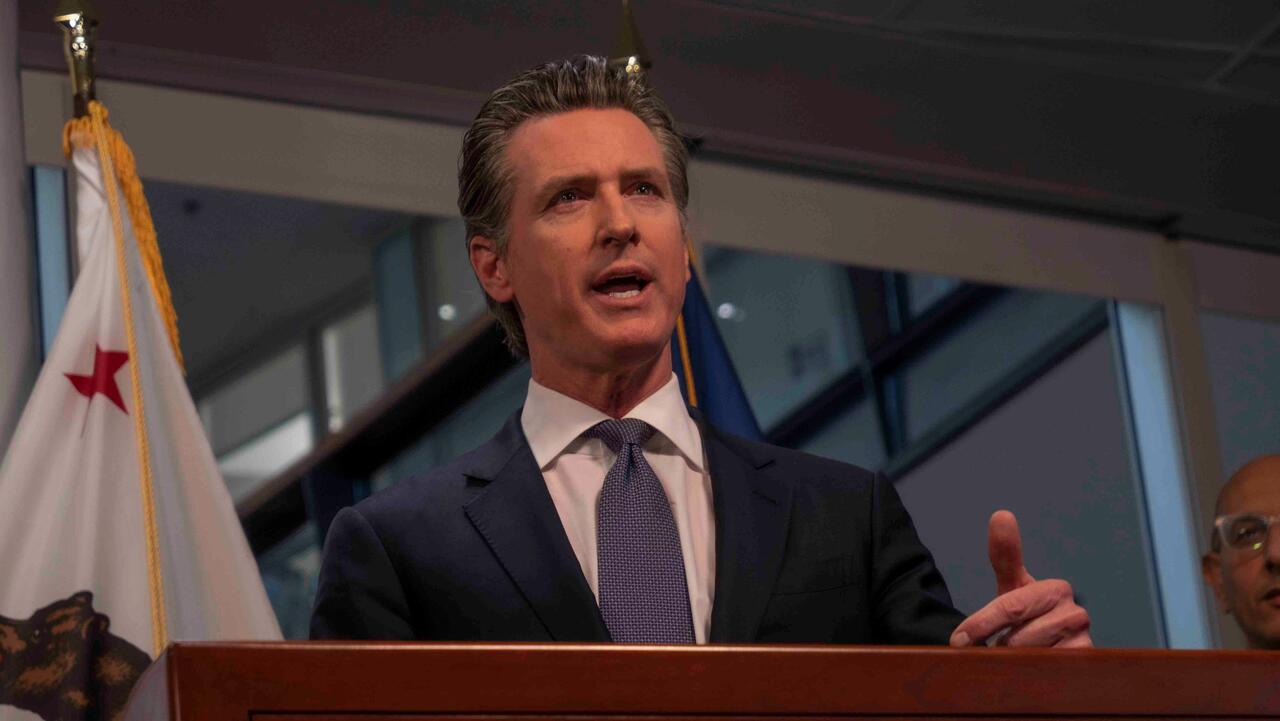
But in a state with more than 181,000 homeless individuals, or about one-third of the U.S. total, Homekey has been marred by failures and scandals, including a lack of government oversight and accountability as well as a federal investigation into allegations of fraud in Los Angeles. 

Newsom, who appears to be preparing for a presidential bid in 2028, could make Homekey, which he calls a “national model,” a talking point in his campaign. The state claims the program has created almost 16,000 permanent housing units that will serve over 175,000 people. But since the state doesn’t track outcomes – whether people placed in housing saw their lives improve or if they returned to the streets – the program’s effectiveness is unclear, according to a critical 2024 state auditor’s report. 

“[Our budget] is bloated with homeless spending, a bottomless pit and taxpayer boondoggle that doubles down on failure year after year,” the Republican-turned-Democrat Los Angeles Councilwoman Traci Park said at a meeting in May. “Hundreds of millions of dollars on bridge homes and Homekeys and interim housing sites, and no one can even tell us which ones are operational.”

What is clear is that homelessness in California has skyrocketed in the five years Homekey has been in place, growing by more than 20%, according to the Public Policy Institute of California. That’s an increase of some 36,000 people between 2019 and 2024.

Homekey has been touted by officials as a more cost-effective way to house the homeless. By hiring developers to convert excess motel and hotel rooms and other existing structures into permanent housing, the costs are two to three times lower than building new units, according to the auditor’s report.

But with huge contracts available to developers and very little oversight of their activities, some of that cost savings was lost to fraud, according to federal prosecutors. First Assistant U.S. Attorney Bill Essayli for the Central District of California launched a fraud and corruption task force to find out where the money went, and in October filed criminal charges involving two developers who allegedly defrauded the system.

In one case, Cody Holmes, the former CFO of developer Shangri-La Industries, allegedly falsified bank records to obtain $26 million in Homekey funds, only to siphon off more than $2 million to pay his own credit card bill, Essayli told the media

Accountability begins today,” Essayli said. “Too often, this money has been wasted, mismanaged or outright stolen.”

A COVID Baby

Homekey began in 2020 as a FEMA-funded program to provide temporary housing in response to the COVID-19 emergency. Hotel rooms were rented to get homeless people out of encampments and shelters where the virus could spread rapidly. The high rental costs were justified to avoid mass casualties from infection. In San Francisco, City Journal reported that rooms were rented at $6,000 a month, nearly double the average cost of a one-bedroom apartment.

Before the emergency measure ended in late 2020, Newsom announced that the program would morph into a provider of permanent housing for the homeless. “We’ve long dreamed about scooping up thousands of motel rooms and converting them into housing for our homeless neighbors,” Newsom said at the time. “The terrible pandemic we’re facing has given us a once-in-a-lifetime opportunity to buy all these vacant properties, and we’re using federal stimulus money to do it.”

Under Homekey, the California Department of Housing and Community Development (HCD) began administering grants to local governments to help fund the purchase of commercial buildings to be converted into housing units. The money came from federal and state sources, including the American Rescue Plan and California’s general fund. Critics say one problem with Homekey is that it didn’t pay for the mental health and drug treatment services that most homeless people desperately need to truly benefit from housing and get back on their feet. 

2023 study found that 66% of California’s homeless population suffers from mental illnesses. Twelve percent reported experiencing hallucinations. And 31% reported regular use of methamphetamines and 11% non-prescribed opioids. Sixteen percent reported heavy episodic drinking.

Rather than helping the homeless, Homekey units have allowed people to privately take drugs and overdose. Drug overdose was the cause of death in seven out of eight cases at the Airtel Plaza Hotel in Van Nuys from April 2020 through June 2021, according to L.A. agencies.

“I think local leaders knew that there was a risk in placing people addicted to hard drugs like heroin or fentanyl or meth into private rooms where no one is around to act in case of an overdose,” a former Homekey service provider from Oakland said on the condition of anonymity. “Think about how stupid it is to place an addict in a room alone where no one can administer Narcan,” a medicine that can prevent overdose death.

Homekey relied on local governments to provide mental health services, although they have a severe shortage of treatment spots, according to an L.A.-based mental health professional whose office provides services at several Homekey buildings. Social workers and therapists meet with clients assigned to Homekey units and sign them up for Medicaid, but most of them haven’t received the treatment they need, the professional said. 

State officials didn’t return calls seeking comment about Homekey. 

The latest version of Homekey aims to bolster mental health services. Newsom recently announced Homekey+, made possible by a $6.4 billion Behavioral Health Bond approved by voters. Half of the money is for projects that serve homeless veterans, and some of the resources will help fund other mental health services within Homekey.

Overpaying and Underperforming

Homekey’s main pitch was that it would save taxpayers money by rehabbing existing buildings rather than constructing new housing. But those calculations are based on developers charging market rates and units being occupied, which hasn’t always been the case. 

L.A. County received $550 million in Homekey funds between 2021-2024, which was used to acquire 32 buildings with 2,157 rooms. An investigation by Westside Current found that 71% of units remained vacant as of May 2025 due to construction delays.

In the city of L.A., the housing authority used $48.9 million in Homekey money to acquire and complete a building that was under construction. Developer Haroni Investments was chosen to construct a 75,105-square-foot building with 127 housing units. A similar project in the area would typically cost roughly $18.8 million, according to experts who spoke to local reporters. HACLA’s purchase price of $48.9 million represents a 165% profit at taxpayer expense, the story noted.

A June 2025 memo from L.A. Mayor Karen Bass’ office estimated that the building would be completed later that month. In August, city officials held a ribbon-cutting ceremony even though the building was not yet finished. As of December, the LA Housing Department’s website says the building “is not yet built,” and there are no listings for available units. Requests for comment from Bass’ office have not been returned. 

In addition to overspending and delays, there are allegations of fraud. One case involves homeless service provider Weingart Center Association using $27.3 million in Homekey grants to purchase a 76-unit senior living complex in L.A., which it planned to convert into housing units with additional funding from the city.

But federal prosecutors say the deal was shady and shrouded in secrecy. Steven Taylor, the real estate developer who sold the property to the Weingart Center, used fake bank statements to obtain loans and credit to buy the property for $11.2 million, just months before flipping it for a $16.1 million markup. Taylor made no improvements or renovations to the building. A contract clause ensured that his involvement would be kept secret.

While the property was in escrow, the Weingart Center submitted an application for additional Homekey funds. The application, according to prosecutors, made no mention of the pending sale involving Taylor. Bass allocated $20 million in city dollars toward the project. 

Bass and Newsom celebrated the purchase as a critical tool in solving homelessness. A spokesperson with the Weingart Center said the property isn’t expected to open until next year, even though the grant agreement required it to be fully occupied by February 2025. 

In August, federal authorities arrested Taylor, who is facing nine felony counts of bank fraud and money laundering. Taylor maintains his innocence and is free on a $3.6 million bond. Bass is cooperating with the ongoing federal investigation.

The case highlights the lack of oversight into Homekey-related grants to the Weingart Center, which has been out of compliance with federally required annual audits. The most recent audit, submitted in July 2025 for fiscal year 2023, did not disclose over $50 million in federally funded Homekey grants. A 2023 fiscal audit of the Weingart Center found that it has repeatedly failed to properly document cash flows into the organization. 

Calls for comment to the Weingart Center were not immediately returned. In November, the homeless service provider placed its CEO, Kevin Murray, who was previously a state senator, on leave as an independent law firm investigates the valuation of its homeless housing projects. 

Homekey ran into other problems with L.A.-based developer Shangri-La Industries, which was hired to purchase and convert properties across the state. Federal prosecutors allege that the developer defrauded the HCD by misrepresenting its financial assets in order to qualify for a $26 million Homekey grant related to a housing project in Thousand Oaks. After securing the money, Holmes, the CFO, allegedly spent lavishly on himself and his girlfriend. Prosecutors say that Holmes rented a sprawling $46,000-a-month mansion in Beverly Hills, where Holmes was ultimately arrested.

Overall, the HCD awarded the Shangri-La a total of $117 million in grants for seven housing projects. The only two projects that Shangri-La managed to complete amount to 174 homeless housing units, costing the state $672,000 a pop. Holmes pleaded not guilty in November, and a trial is set for Jan. 5. 

Essayli says his investigation into Shangri-La is “just the beginning” in the Justice Department’s quest to recoup billions in misused public funds for the homeless. 

Newsom Rejects Accountability

By the summer of 2024, the lack of progress in reducing homelessness in California spurred Newsom to issue a threat to local leaders across the state. The governor gathered a group of reporters at a homeless encampment in the Pacoima neighborhood of L.A. so cameras could capture him picking up piles of trash. 

If we don’t see demonstrable results [in reducing homelessness], I’ll start to redirect money,” Newsom said. 

But today, Californians continue to see headlines revealing more alleged fraud within the state’s prolific homeless housing programs, most of which involve the misuse of Homekey funds.

The latest example involves the nonprofit Urban Alchemy, which was awarded a $2.3 million Project Homekey contract to provide 88 designated tent spaces in a parking lot so homeless individuals can legally set up tents and access meals, bathrooms, and other services. A city inspection revealed that the lot was operating at half capacity, with only 44 bare wooden platforms on site.

One of the state audit’s main critiques centered on how officials weren’t tracking the progress of its homeless programs. California is not ensuring “that it collects accurate, complete, and comparable financial and outcome information from homelessness programs,” according to the report.

Following the audit, California’s lawmakers unanimously passed legislation requiring the Newsom administration to submit annual evaluations of the homeless programs that receive public grants. But Newsom vetoed the bill, saying it “creates an unnecessary ongoing workload for the Department without providing additional accountability or transparency to taxpayers.”

Our state has spent billions of taxpayer dollars in recent years only to see homelessness get worse,” Republican Assemblyman Josh Hoover said in a September 2024 statement. “We will not solve this crisis and get people the help they need until we get serious about accountability.”

One year later, Newsom hasn’t lost faith in Homekey. He announced the allocation of $106.2 million toward six Homekey+ awards to pay for the development of 321 permanent supportive homes.

“No more excuses,” Newsom declared in a press release announcing the grants. “Everyone must step up to address this crisis.”

https://www.zerohedge.com/political/newsoms-national-model-homeless-wracked-fraud

SNAP junk food ban expands to 6 more states

 Six more states have joined the growing list across the country approved for Supplemental Nutritional Assistance Program food-choice waivers that will prevent benefits from being used on certain processed foods and drinks.

On Wednesday, U.S. Secretary of Agriculture Brooke L. Rollins and U.S. Secretary of Health and Human Services Robert F. Kennedy Jr. announced the approval for Hawai'i, Missouri, North Dakota, South Carolina, Virginia and Tennessee to "amend the statutory definition of 'food for purchase'" under the federal program in 2026.

This brings the list of states approved for SNAP food-choice waivers under the Make America Healthy Again initiative up to 18.

These waivers allow states to amend what the food assistance benefits -- colloquially referred to as food stamps -- can be used for at the grocery store by beneficiaries.

"President Trump has made it clear: we are restoring SNAP to its true purpose -- nutrition. Under the MAHA initiative, we are taking bold, historic steps to reverse the chronic diseases epidemic that has taken root in this country for far too long," Rollins said in the announcement.

"America’s governors are answering that call with courage and innovation, offering solutions that honor the generosity of the taxpayer while helping families live longer, healthier lives. With these new waivers, we are empowering states to lead, protecting our children from the dangers of highly-processed foods, and moving one step closer to the President’s promise to Make America Healthy Again," Rollins added.

RFK Jr. thanked the governors of the 18 states who he said "are leading the charge on SNAP reform to restore the health of Americans -- especially our kids."

"We cannot continue a system that forces taxpayers to fund programs that make people sick and then pay a second time to treat the illnesses those very programs help create," he said.

In August, Rollins and Health and RFK Jr. announced restrictions on the purchase of so-called "junk food" with SNAP funds in Texas, Oklahoma, Louisiana, Colorado, Florida and West Virginia starting in 2026.

Arkansas, Idaho, Indiana, Iowa, Nebraska and Utah were granted waivers for SNAP reform earlier this year.

On her first day in office, Rollins announced a "Laboratories of Innovation" initiative encouraging governors to put forth "state-driven solutions to strengthen federal nutrition programs and protect taxpayer resources," the USDA stated.

https://abcnews.go.com/GMA/Food/6-states-approved-waivers-remove-unhealthy-foods-snap/story

With Obamacare premium hikes, more people opting for no coverage or cheaper plans

 More people appear to be walking away from Affordable Care Act coverage or switching to cheaper plans for 2026 compared to this time last year, according to early enrollment data from several states.

State health officials in New York, Pennsylvania, Idaho, Colorado and California shared numbers from the first month of ACA open enrollment, which began Nov. 1 and runs through Jan. 15 in most states. Idaho opened two weeks earlier.

It’s too early to know whether the trend will hold, the officials said, noting that some people don’t finalize their plans until the final days of open enrollment — Dec. 15 for those who want their coverage to start Jan. 1. But the preliminary numbers could reflect signs of financial strain for people who can’t afford to pay hundreds of dollars more in monthly premiums once enhanced federal subsidies expire at the end of the year.

Those concerns likely deepened Thursday after the Senate voted against a Democratic bill that would’ve extended the subsidies for another three years, making it unlikely the tax credits will continue in 2026. Without them, millions of people are expected to face double-digit premium increases.

“There’s a lot yet to be seen, but there are definitely some early warning signs in terms of the decisions consumers are having to make in reaction to the changing federal policy,” said Jessica Altman, executive director of Covered California, a state-based marketplace for ACA coverage.

Last week, the Centers for Medicare and Medicaid Services released data showing nationwide sign-ups are running moderately higher compared to last year. Experts caution that early snapshots — both state and federal — may not offer the full picture.

Ellen Montz, the former deputy administrator and director at the Center for Consumer Information and Insurance Oversight at CMS, said there’s even more uncertainty over the data this year because many people may be waiting to see what happens with the enhanced subsidies before finalizing their coverage decisions.

People may also be worried about higher premiums and are logging in earlier to shop for cheaper plans, she said.

“This open enrollment is unlike any we have ever experienced,” Montz said in an email. “In typical years we would caution against making conclusions on total enrollment from the first few weeks of data and this year that caution is even greater.”

Nearly 5.8 million people have selected an ACA plan in the first 29 days of open enrollment, according to the CMS data, up almost 400,000 compared to this time last year. About 4.8 million people have renewed their coverage.

Early state warnings

In Pennsylvania — where monthly premiums are projected to rise more than 100% next year — sign-ups for first time ACA enrollees is pacing about 20% lower compared to the last two years, according to Devon Trolley, executive director of Pennie, the state’s health insurance marketplace.

She said the number of people who have dropped coverage has more than doubled the total from last year’s entire open enrollment period — about 40,000 people so far this year, compared to 19,000 last year.

Overall, about 30,000 fewer people have signed up for ACA coverage compared to last year.

“I think there’s just a lot of uncertainty about what to do, given the ongoing discussions federally,” Trolley said. “I think some people are ending their coverage and might come back, if the enhanced tax credits are extended.”

In Idaho, which began its open enrollment Oct. 15, state health officials are seeing a shift from gold and silver plans to bronze, which offer lower monthly premiums but a higher deductible.

Selections of bronze plans are up about 5% compared to this time last year, said Pat Kelly, executive director of Your Health Idaho, the state’s ACA marketplace. Most of that shift — about 4.5 percentage points — is coming from silver plans, and 1 percentage point is coming from gold.

“That increase in bronze is a strong indicator of affordability concerns,” he said.

People are also dropping their coverage, Kelly said. Calls to cancel plans are mentioning affordability about three times more often than they did at this point last year. About 25,000 Idahoans are expected to drop coverage by the end of open enrollment.

But Kelly added that most of the people dropping coverage are being replaced by new sign-ups, although he said it’s still unclear what’s driving that pattern.

Trolley said she’s worried some people are signing up now because they don’t want to go without coverage, only to drop their plans in the coming months when they realize they can’t afford them.

“We could see pretty big drop-offs in February and March because people try to pay their premium but realize they can’t,” she said.

Montz, the former CMS official, said a clear picture of enrollment may not emerge until HealthCare.gov automatically renews people’s plans Dec. 15, and people have several weeks to decide whether to cancel those renewals.

“When those numbers are eventually reported by the administration, I would expect that we will see disenrollments much larger than we have ever seen,” she said.

Coverage is too expensive

In New York, enrollment is trending down roughly 8% compared to this time last year, said Danielle Holahan, executive director of New York State of Health.

The state hasn’t yet parsed the data on people dropping coverage or switching to cheaper plans, although Holahan said they are seeing more people not renewing their coverage.

A large share of New Yorkers, she added, are already enrolled in bronze plans. New York officials are hoping enrollment picks up as the Dec. 15 deadline approaches.

“We’re seeing a lot of volume to our website and our call center, where people are shopping and looking to see what their plan options are,” Holahan said, “and, we suspect, experiencing sticker shock.”

Altman, of Covered California, said enrollment is significantly down, more than 30% lower compared to this time last year.

“They’re looking at their options and they’re saying it’s too expensive,” she said.

State officials are also seeing a “heavy movement” to bronze plans, with more than a third of new ACA enrollees choosing bronze, compared to about 1 in 5 last year, she said.

People are also dropping coverage: about 74,000 cancellations so far, compared to 68,000 at this point last year. But Altman said that number is still “pretty level” and will likely stabilize as the state moves closer to the end of open enrollment.

Colorado is seeing lower enrollment as well, running about 5% below this time last year, said Nina Schwartz, chief policy and external affairs officer at Connect for Health Colorado, the state’s ACA marketplace.

“Some customers who previously were enrolled in a plan in the Gold or Silver metal tiers are selecting plans in the Bronze metal tier for Plan Year 2026,” she said in an email.

https://www.nbcnews.com/health/health-news/aca-health-insurance-premium-many-switch-obamacare-subsidies-expire-rcna248660

'New chair of CDC vaccine panel fired from pediatric practice, wife says'

 The wife of the newly appointed chair of the vaccine advisory panel that recently voted to roll back infant hepatitis B vaccination guidelines said Thursday that he had been fired from his pediatric cardiology practice because of his position on the committee.

Kimberly Milhoan, the wife of the recently appointed chair of the Advisory Committee on Immunization Practices (ACIP) at the Centers for Disease Control and Prevention (CDC), Kirk Milhoan, wrote on her Substack post titled “Irony” that she and her husband were in Hong Kong this week for the World Congress of Pediatric Cardiology and Cardiac Surgery.

“While here, we found out he was being dismissed from his current practice of pediatric cardiology solely because of his service as Chair of the Advisory Committee on Immunization Practice (ACIP) of the Centers for Disease Control (CDC),” Kimberly Milhoan wrote. “He disclosed to his employer when he accepted the appointment to this committee, and then again when he accepted the role of chairman.”

Her husband was appointed to be the ACIP chair shortly before the panel voted to no longer recommend a birth dose of the hepatitis B vaccine to all newborns, reserving that recommendation only for those born to mothers who test positive for the virus. The vote was widely derided by medical societies such as the American Medical Association and the Infectious Diseases Society of America.

Kimberly Milhoan claimed the dismissal was due to the practice receiving an “overwhelming number of calls to their organization demanding his firing for his role on ACIP.”

“The greatest irony is my husband has been a vaccine advocate throughout his career. He never denied risk, and respected principles of autonomy and informed consent, but believed, and recommended, that in most cases the benefit outweighed the risk associated with vaccines,” she wrote.

On the ACIP’s roster, Kirk Milhoan is listed as medical director at the For Hearts and Souls Free Medical Clinic, which he runs with his wife. He’s also publicly listed as being affiliated with Christus Health in Irving, Texas, in the pediatric cardiology department.

“Dr. Kirk Milhoan is an independent medical staff member of multiple CHRISTUS hospitals, and he continues to be a member in good standing,” Christus Health said in a statement when reached by The Hill.

“Like many of our independent medical staff members, he has never been employed by CHRISTUS, and we therefore cannot comment on his current employment,” they added.

https://thehill.com/policy/healthcare/5645398-milhoan-cardiology-termination-acip-cdc/