The “good” news about the Islamic terrorism and domestic urban violence that have rocked Western nations in recent months is that the attacks were foreseeable—and thus preventable. The bad news is that the fear of being called “racist” will stymie many governments’ ability to act on that foresight.
The December 14 massacre at Sydney’s Bondi Beach is the latest in a grim series of Islamist attacks across Europe, the U.S., and Australia. An Egyptian immigrant and his son opened fire on beachgoers during an annual Hanukkah celebration, killing 15 and wounding another 39.
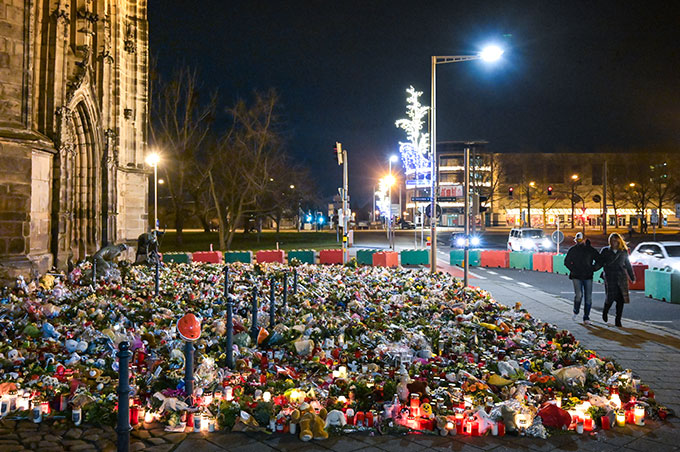
Antecedents to this assault are too numerous to lay out here, but they include the Thanksgiving Eve shooting of two National Guard soldiers in Washington, D.C.; the 2025 Yom Kippur synagogue attack in Manchester, England; the June immolation of an elderly woman in Boulder, Colorado, during a pro-Israel charity run; the murder of two Israeli Embassy staffers in Washington, D.C. in May 2025; the New Year’s Day 2025 truck ramming in New Orleans that killed 14 people; and the 2024 Magdeburg, Germany Christmas market rampage, which killed six people. Other attacks, including more Christmas market rampages, have been foiled in recent weeks across the West.
These are not random events. No one is surprised to learn of the religion and ethnic background of the perpetrators, once the authorities deign to disclose those facts to the public. A few perpetrators, being second- or third-generation immigrants, share the nationality of their targets, but they conform to the template in other respects.
The same wearying predictability applies to the grotesque street crimes in American cities committed weekly by mentally ill vagrants, whether the fatal stabbing of a young woman in a Charlotte subway train in August or the near-fatal immolation of a young woman on a Chicago subway train in October. We are not surprised to learn of the perpetrators’ long criminal records and their avoidance of significant confinement, either in a prison or a mental institution. The exact time and location of the next atrocity may be unknown, but that more such attacks by the same class of perpetrators are coming is certain.
This predictability should be a boon to any official who puts public safety ahead of more recent priorities such as promoting diversity and tolerance. Only Donald Trump, however, among Western leaders, possesses the indifference to elite opinion to enact the obvious prophylactic measures. On December 16, two days after the Bondi Beach pogrom, Trump imposed a partial or full travel ban on 20 more countries, on top of the 18 already subject to such restrictions. The countries now facing full bans are Afghanistan, Burkina Faso, Chad, Equatorial Guinea, Eritrea, Haiti, Iran, Laos, Libya, Mali, Myanmar, Niger, Republic of Congo, Sierra Leone, Somalia, South Sudan, Sudan, Syria, and Yemen. Countries facing partial bans are Angola, Antigua and Barbuda, Benin, Burundi, Cuba, Dominica, Gabon, Gambia, Ivory Coast, Malawi, Mauritania, Nigeria, Senegal, Tanzania, Togo, Tonga, Venezuela, Zambia, and Zimbabwe. The mainstream media have noted ominously that a large portion of the disfavored countries are in Africa, from which fact the usual inferences are expected.
Though only a Third World romantic would worry that these bans will deprive the U.S. of a particularly concentrated source of future Nobelists, it may be readily admitted: the bans are overinclusive. They will exclude Third World natives who pose no threat of terrorism and who, under current lax expectations for assimilation, may even have the capacity to assimilate. So what? If the choice is between an overinclusive policy that keeps out non-terror-inclined immigrants and an underinclusive policy that lets through radicals and terror sympathizers, any national leader who puts the interest of his country’s citizens first will opt for over-inclusivity.

The United States owes entry to no one. People born and residing outside the country possess no constitutional rights. They should be excludable on any ground or on none at all. Citizens should not bear the burden of risk from a wrong immigration decision; that risk should fall exclusively on foreigners.
But putting the interests of citizens first has become alien to Western elites. According to that transcontinental class, the real specter raised by the Bondi Beach attacks was “racism.” “I think the average Australian feels incredibly sad and really worried about the effect this has on not just victims but society more broadly,” Jill Sheppard, an associate professor of politics at the Australian National University, told the New York Times. According to the Times, the murders have people “fearing more anti-Jewish violence—and an Islamophobic backlash.” The murders raised questions about the “nation’s approach to immigration, antisemitism, gun control and racism,” the paper reported.
The only question that the attack should have raised about Australia’s approach to racism is: How quickly can it be jettisoned? But the Australian elites believe themselves surrounded by incipient vigilantes, who can be kept in check only through anti-white-privilege curricula and by the country’s endless commissions and reparations measures to protect the indigenous population. They could not believe their luck, therefore, when a Good Samaritan who tried to disarm one of the two Bondi Beach attackers proved to be a Syrian-born fruit vendor. “God, what a blessing,” Simon Chapman, emeritus professor of public health at the University of Sydney, told the Times. “As soon as I saw his nationality, I thought this is going to be so, so important for dampening down the racist debate.”
Actually, there was no sign of what Chapman and his colleagues would deem a “racist debate.” So wary are Australia’s politicians of privileging the country’s legacy population and of slowing down its demographic transformation that a conservative opposition leader, Susan Ley, put on hold a previously proposed migration policy that would have modestly tightened migration rules. Debating the policy at this moment would be inflammatory, her thinking went.
It turns out that an elderly Russian Jew had also sought to disarm the Bondi Beach killers, confronting them at the onset of their rampage. He and his wife became the attack’s first casualties. Another Soviet-born Jew ran toward the attackers hoping to stop them and was also fatally gunned down.
But after brief media notice of their heroism, these three martyrs have been memory-holed, and attention has recentered on the “blessing” of the Syrian fruit vendor, who is invoked totemically as an argument for multiculturalism and against immigration reform.
Instead of examining the immigration regime, Australia’s leaders turned reflexively to irrelevancies. The day after the massacre, Prime Minister Anthony Albanese recommended “tightening“ Australia’s strict gun laws; he put nothing else on his cabinet’s agenda. Gun control is even more overinclusive than a travel ban. Few if any of Australia’s native gun owners from its traditional Anglo heritage commit Islamic terrorism. Better to constrict their freedoms, however, than to narrow the flow of foreigners out of which terrorists sooner or later emerge.
Australia’s politicians also jumped on the need to crack down further on “hate speech,” which is already criminalized under Australian law. Given the zest for thought control so vividly on display during the Covid lockdowns, seizing the pretext for more such power undoubtedly came easily to the country’s ruling class.
The concept of “hate speech” is used overwhelmingly against conservative dissenters from elite ideology and will continue to be so used. The Tackling Hate Lab at Deakin University in Victoria, for example, investigates “anti-trans and anti-drag mobilisation in Australia,” to show how “Australian far-right networks disseminate hate.” American podcaster Matt Walsh is on the global hatemonger list tracked by the Lab. This academic surveillance outfit is the very model of technology-driven thought monitoring, “integrat[ing] emerging technologies, AI, econometric methods and agent-based modelling with social and psychological science” to counter “ideology-driven and prejudice-driven behaviours” [italics in the original].
Asked a few days after the Bondi Beach Jew killings if radical Islam were Australia’s greatest domestic security threat, Albanese pivoted immediately to the “need to take action” against “neo-Nazis,” however thin their ranks, and reached back to a 1989 attempt on the life of an African National Congress representative to show how enduring the right-wing threat has been.
Even if the concept of “hate speech” were not primarily a tool of the Left, however, suppressing speech does nothing to cure the underlying malady. It only drives that malady underground. As repugnant as Australia’s pro-Hamas demonstrations have been, it is better to see and hear the extent of anti-Jewish animus than to guess at its scope. Rather than further policing what Home Affairs Minister Tony Burke called “dehumanizing” language (cue the anti-”white supremacy” industry in academia and business), it would be more efficient and less inimical to core Western traditions to shrink the population from which the majority of terrorists are drawn.
And now the state of New South Wales has imposed a two-week ban on public assemblies in certain areas of Sydney, extendable at the will of the authorities. Better to try to hide the hatreds that unchecked immigration has fostered than to check that immigration in the first place.
Preventing violence by America’s street vagrants is even more straightforward. These attacks are routinely referred to as “random.” They actually are as predictable as clockwork. Every untreated schizophrenic wandering the streets and public transit systems is another potential subway pushing, stabbing, and unprovoked clubbing waiting to happen. The next assailant will have been recognizable from far away—disheveled, disoriented, talking to himself or screaming at passersby, trailing items of detritus, redolent of bodily waste.
Before the rights revolutions of the 1960s, it would have been unthinkable to allow these drug-addicted, psychotic unfortunates to colonize public spaces. That they continue to occupy sidewalks, parking lots, commuter train stations, and subway cars is the product of deliberate policy. Their serial crimes earn them no extended sentences because the architects of our current criminal-justice system have decided that too many blacks are in prison. To avoid disparate impact, criminals should be allowed to commit larceny, trespass, fare evasion, assault, and a host of other crimes repeatedly with minimal punishment or, ideally, virtually no punishment at all. If these deranged repeat offenders are arrested by unjustifiably conscientious police officers, they will be almost invariably put back on the streets by progressive prosecutors and judges, eager to display their racial sensitivity.
Activists ensure that mentally ill drug addicts, magically rechristened “the homeless,” are left in plain view, as testaments to the failings of capitalism, as stimulants to nonprofit fundraising, and as the pretext for hiring legions of government-funded, feckless “outreach” workers who simply enable human degradation.
The fight against “racism” also plays a role in allowing these escapees from Bedlam to destroy civilized urban spaces. If it appears that a disproportion of crazed street wanderers are black, your eyes are not deceiving you. The rate of schizophrenia among blacks in the U.S. is at least 2.4 times higher than among whites, according to a 2018 meta-analysis; efforts to blame that disparity on diagnostic racism have failed. The incidence of schizophrenia among blacks from the Caribbean living in the U.K. is nine times higher than among whites; it is 5.8 times higher among black Africans than among whites in the U.K. Robust reinstitutionalization would thus have a disparate impact, another reason for the elites to fight it.
The predictable attacks continue: a woman stabbed to death in a Florida Barnes and Noble on December 24 by a mentally ill vagrant; a man struck in the face with a bat on December 21 while walking on Manhattan’s West End Avenue; a man stabbed in the back on a subway platform in Manhattan’s Upper West Side on December 19; a mother stabbed in the back in a bathroom of Macy’s in New York on December 11 by a mentally ill woman who had been recently discharged from a psychiatric ward.
These could all be avoided if every part of the law enforcement system cooperated to lock up serial offenders as soon as their predilection for repeat crimes manifests itself—ideally at the second offense—and if the hallucinating mentally ill were put into institutions rather than being turned loose to decompose on the streets. The costs of creating humane mental asylums pale in comparison with the costs of death, maiming, and the urban depopulation caused by vagrant squalor. To be sure, legal barriers erected in the post-1960s era stand in the way of reforming policing and mental health protocols to protect the law-abiding and the functional instead of the antisocial and deviant. But tearing down those barriers should be the stated goal of every public official, and progress toward achieving that goal should be the litmus test for reelection.
Thanks in large part to racial politics, the U.S. lags its Western counterparts in preserving order in the face of street vagrancy and psychotic crime. That willed disorder is set to worsen markedly in Zohran Mamdani’s New York. But the U.S. has leapt ahead of most European and Anglosphere allies in restoring national borders. Western voters, including in Australia, are tired of having their desire for immigration enforcement decried as “racist.” As predictable as the next terror and vagrant attacks may be, so, too, is the rising tide of nationalist revolt.

No comments:
Post a Comment
Note: Only a member of this blog may post a comment.