Search This Blog

Friday, August 24, 2018

The youngest smoke more


“Since 1970, campaigns against smoking seem to have been largely successful, but the message has not been able to reach the youngest ages,” says professor Cecilie Svanes at Centre for International Health at The University of Bergen (UiB).
The researchers in the large EU research project ALEC, have studied the age of 120,000 persons from 17 European countries. One of the questions asked the ALEC participants was when they started smoking between 1970 and 2009.
The data showed that all age groups have experienced a decline in the numbers starting smoking in this time span, except for the age group 11 — 15 years old, especially during the last 10 years.
The results showed that smoking increased most amongst young women in Western Europe, where 40 per 1000 start smoking every year, compared to 20 in 1970. For young men in Northern Europe, the numbers have remained relatively constant.
The study is published in PLOS ONE. Svanes is co-writer and partner in the EU-project.
The younger the age, the stronger the addiction
Svanes points out that earlier studies have shown that nicotine addiction is stronger the younger one is when staring smoking. It is therefore important to focus the anti-smoking campaign on the youngest age groups.
“Society has more to win by focusing anti-smoking campaigns on the youngest. Of course, one reduces the risk of heart attack and lung cancer if you stop smoking at an old age, but society as a whole gains more by keeping the youngest age groups healthy for the rest of their life,” Svanes says.
Impact on future offspring
Svanes is leading one of the project in ALEC, which focus on father´s smoking habits and how it influence the health of their future offspring.
“We have seen that for men who start smoking before they are 15, there are influences on any future children. For example, their offspring get asthma more often than others,” Svanes explains.
“In animal tests we have also seen that it is the nicotine itself that causes the higher risk. If this is the case for human as well, it means that neither snuff nor e-cigarettes are good alternatives to cigarettes, at least not for the youngest age groups,” Cecilie Svanes points out
Story Source:
Materials provided by The University of Bergen. Original written by Kim E. Andreassen. Note: Content may be edited for style and length.

Journal Reference:
  1. Alessandro Marcon, Giancarlo Pesce, Lucia Calciano, Valeria Bellisario, Shyamali C. Dharmage, Judith Garcia-Aymerich, Thorarinn Gislasson, Joachim Heinrich, Mathias Holm, Christer Janson, Deborah Jarvis, Bénédicte Leynaert, Melanie C. Matheson, Pietro Pirina, Cecilie Svanes, Simona Villani, Torsten Zuberbier, Cosetta Minelli, Simone Accordini. Trends in smoking initiation in Europe over 40 years: A retrospective cohort studyPLOS ONE, 2018; 13 (8): e0201881 DOI: 10.1371/journal.pone.0201881

Cardio exercise and strength training affect hormones differently


Every day a lot of people cycle to and from work or visit the gym to lift heavy weights. Regardless of the form of training they choose, almost everyone does it to improve their health. But we actually know surprisingly little about exactly how different forms of training affect our health.
However, now researchers from the University of Copenhagen have come closer to understanding the diverse effects of different forms of training. In a new study published in the scientific Journal of Clinical Investigation — Insight, the researchers show that cardio training on an exercise bike causes three times as large an increase in the production of the hormone FGF21 than strength training with weights. FGF21 has a lot of positive effects on metabolism.
‘Of course it is very exciting for us researchers to see how different forms of physical activity actually affect the body differently. We have known about the effects of various forms of training on more well-known hormones like adrenalin and insulin for a long time, but the fact that strength training and cardio exercise affect FGF hormones differently is new to us’, says Associate Professor from the Novo Nordisk Foundation Center for Basic Metabolic Research Christoffer Clemmensen, who is one of the researchers behind the study.
No Changes from Strength Training
The researchers have studied the effects on 10 healthy young men, who had been randomly divided into two groups and did both forms of training once a week. Both training forms were relatively hard and lasted 60 minutes. The cardio exercise consisted of cycling at a level of 70 percent maximum oxygen intake, while the strength training consisted of five exercises repeated 5 x 10 times and involving the main muscle groups in the body.
Subsequently, eight blood samples were taken from the participants over a period of four hours in order to measure the development in blood sugar, lactic acid, various hormones and bile acid in the body. It was these measurements that revealed a significant increase in the production of the hormone FGF21 in connection with cardio exercise, while strength training showed no significant change with regard to this hormone.
‘Endurance training on a bicycle has such a marked effect on the metabolic hormone that we know ought to take a closer look at whether this regulation of FGF21 is directly related to the health-improving effects of cardio exercise. FGF21’s potential as a drug against diabetes, obesity and similar metabolic disorders is currently being tested, so the fact that we are able to increase the production ourselves through training is interesting’, Christoffer Clemmensen elaborates.
Muscle Hormone Surprised the Researchers
The researchers also measured the content in the blood of another hormone, FGF19, which among other things has been linked to muscle growth in animal tests. Due to these previous studies the researchers expected the strength training to have an effect on this hormone. However, the results proved them wrong.
‘Directly contrary to our hypothesis the production of the growth hormone FGF19 actually dropped slightly after strength training. To me, that stresses that there is something about the effect of strength training that we simply have too little knowledge of. And of course that gives rise to more research’, says co-author of the study Jørn Wulff Helge, Professor of Physical Activity and Health at the Center for Healthy Aging and the Department of Biomedical Sciences.
The researchers will now look more closely at other links between hormones involved in both metabolism and exercise.
About the Study
The study is a so-called randomised crossover study, which means that it holds greater weight evidence-wise than studies performed on animals and cell cultures, but less than large cohort studies on humans.
The researchers point out that their results are limited by the fact that the blood samples were not taken more than four hours after the training, and that they can say nothing about the effects of a full training programme on these hormones. However, the results, especially regarding the metabolic hormone FGF21, are so significant that they provide a solid foundation for studying whether similar effects can be seen in other groups of test persons.
Story Source:
Materials provided by University of Copenhagen The Faculty of Health and Medical SciencesNote: Content may be edited for style and length.

Journal Reference:
  1. Thomas Morville, Ronni E. Sahl, Samuel A.J. Trammell, Jens S. Svenningsen, Matthew P. Gillum, Jørn W. Helge, Christoffer Clemmensen. Divergent effects of resistance and endurance exercise on plasma bile acids, FGF19, and FGF21 in humansJCI Insight, 2018; 3 (15) DOI: 10.1172/jci.insight.122737

Bills Mount for Breast Cancer Survivors


Surviving breast cancer is certainly its own reward, but a new study finds that many who do are saddled with thousands in out-of-pocket expenses for years.
On average, breast cancer survivors get hit with an extra $1,100 in yearly out-of-pocket cancer-driven costs, researchers found.
But interviews with 129 breast cancer survivors further revealed that the so-called “financial toxicity” of breast cancer is an especially burdensome problem for those who, following treatment, end up with a side effect known as lymphedema.
The condition is sometimes triggered by cancer surgery, chemotherapy, radiation and/or infection, and it is characterized by chronic inflammation due to the build-up of lymphatic fluid throughout the upper body.
For these patients, who make up 35 percent of the nation’s 3.5 million breast cancer survivors, out-of-pocket expenses rocket up to roughly $2,300 per year.
“Even 10 years after breast cancer treatment, women who have lymphedema have over double the yearly health care costs compared with women who don’t have lymphedema,” said study author Lorraine Dean. She’s an assistant professor of epidemiology at the Johns Hopkins Bloomberg School of Public Health in Baltimore.
Dean noted that the “higher costs for women with lymphedema is only partially due to costs for actual lymphedema-related needs,” with more study needed to better understand why the condition drives up costs so dramatically.
But what’s already clear, said Dean, is that “high costs leads those with lymphedema to not manage their lymphedema as well as they could, and even affects women who have insurance.
“[So] we need better policies to protect people from high costs, and that includes policies that offer more comprehensive insurance coverage for the aftereffects of cancer treatment,” she said.
Dean and her colleagues noted that prior efforts to assess cancer-related costs either focused on patient expenses that occurred shortly after a diagnosis or those processed through insurance claims.
But to gain better insight into out-of-pocket expenses, the team studied a pool of cancer survivors in New Jersey and Pennsylvania. On average, the women were 63 years old and 12 years past their initial cancer diagnosis, and all had insurance. Half of them had lymphedema.
For six months, the women noted any related expenses, including visits to health care providers, drugs and physical fitness costs. Those with lymphedema were asked to tally condition-specific costs, such as for compression garments or bandages.
The inability to perform daily tasks was also noted, quantified and tallied as a “productivity loss” in the final expense estimate, as were three months of paid receipts and patient estimates for three additional months of likely future expenses.
When all such expenses were added, breast cancer patients without lymphedema were found to pay an average of about $2,800 a year more than a decade after their diagnosis, compared with more than $3,300 among those with lymphedema.
The findings were published recently in the Journal of Supportive Care and Cancer.
Dean said those in financial straits could seek help from organizations such as the American Cancer Society, Susan G. Komen for the Cure, LIVEstrong, CancerCare and the National Lymphedema Network.
“But most of the help that people can get ends closer to the time of diagnosis or treatment,” she warned, “so while these programs help prevent people from having greater burden early on in their care, they may not be as helpful for women facing long-term costs.
“Rather than putting the burden on patients to navigate the high costs, we should be looking to make changes to keep costs lower,” Dean added.
Sarah Hawley is an associate professor of internal medicine at the University of Michigan Medical School. She agreed that while there is increasing awareness about the problem, “resources for patients are still limited,” she said.
“I think this study supports the need for patient-focused tools and resources to help them prepare for the potential of long-term financial impact, and to support them having those discussions with providers throughout their cancer care,” Hawley said.
Susan Brown, senior director for education and patient support with Susan G. Komen for the Cure in Dallas, agreed that “financial stress is a reality for many people living with breast cancer.”
But she suggested that in addition to reaching out to organizations such as her own, patients seeking financial help should explore options with a wide range of caregiver contacts, including hospital discharge planners and patient service officers.
“A doctor, nurse or social worker may have information about financial resources,” Brown said. “Most hospitals and treatment centers have financial counselors. They can help people understand the details of their insurance paperwork and give an estimate of the cost of the treatment.”
More information
There’s more on one resource for financial assistance at Susan G. Komen for the Cure.

SOURCES: Lorraine Dean, Sc.D., assistant professor, epidemiology, Johns Hopkins Bloomberg School of Public Health, Baltimore; Sarah Hawley, Ph.D., M.P.H., associate professor, internal medicine, University of Michigan Medical School, Ann Arbor, and research investigator, Ann Arbor VA Health System; Susan Brown, M.S., R.N., senior director, education and patient support, Susan G. Komen for the Cure, Dallas; Aug. 18, 2018, Journal of Supportive Care and Cancer

CDC Updates Flu Vaccine Advice for Upcoming Season


For the upcoming 2018-2019 influenza season, the quadrivalent live attenuated influenza vaccine (LAIV4; FluMist Quadrivalent) is an option for appropriate individuals, according to updated recommendations from the the US Centers for Disease Control and Prevention’s Advisory Committee on Immunization Practices (ACIP).
That’s a change from the past two influenza seasons (2016-2017 and 2017-2018), during which the ACIP recommended that LAIV4 not be used, owing to concerns about effectiveness against (H1N1)pdm09 viruses.
For the upcoming season, vaccination providers may choose to administer any licensed, age-appropriate influenza vaccine, the ACIP says.
The 2018-2019 ACIP recommendations for prevention and control of seasonal influenza with vaccines were published online August 24 in the Morbidity and Mortality Weekly Report.
The ACIP continues to recommend that all persons aged ≥6 months receive routine annual influenza vaccination with a licensed, recommended, and age-appropriate vaccine, unless they have specific contraindications.
Inactivated influenza vaccines (IIVs), recombinant influenza vaccine (RIV), and LAIV are expected to be available for the upcoming season, the ACIP says. Standard-dose, unadjuvanted, inactivated influenza vaccines will be available in quadrivalent (IIV4) and trivalent (IIV3) formulations. Recombinant influenza vaccine (RIV4) and LAIV4 will be available in quadrivalent formulations. High-dose inactivated influenza vaccine (HD-IIV3) and adjuvanted inactivated influenza vaccine (aIIV3) will be available in trivalent formulations.
“No preferential recommendation is made for one influenza vaccine product over another for persons for whom more than one licensed, recommended, and appropriate product is available,” the ACIP says.
For the 2018-2019 season, US trivalent influenza vaccines will contain the following:
  • An A/Michigan/45/2015 (H1N1)pdm09–like virus;
  • An A/Singapore/INFIMH-16-0019/2016 (H3N2)–like virus; and
  • A B/Colorado/06/2017–like virus (Victoria lineage).
Quadrivalent vaccines will contain these three viruses and an additional influenza B vaccine virus, a B/Phuket/3073/2013–like virus (Yamagata lineage).
The ACIP continues to advise that individuals with a history of egg allergy of any severity may receive any licensed, recommended, and age-appropriate influenza vaccine (IIV, RIV4, or LAIV4). IIV and RIV4 have been previously recommended.
The updated recommendations also make note of two recent regulatory actions:
  • In August 2017, the US Food and Drug Administration (FDA) approved an expanded age indication for Afluria Quadrivalent (IIV4). Previously licensed for persons aged ≥18 years, Afluria Quadrivalent is now licensed for persons aged ≥5 years.
  • In January 2018, FDA approved an expanded age indication for Fluarix Quadrivalent (IIV4). Previously licensed for persons aged ≥3 years, Fluarix Quadrivalent is now licensed for persons aged ≥6 months. Children aged 6 through 35 months may receive Fluarix Quadrivalent at the same 0.5 mL per dose (containing 15 µg of hemagglutinin [HA] per vaccine virus) as is used for older children and adults. This licensure creates a third option for inactivated influenza vaccines for children aged 6 through 35 months, in addition to the previously available 0.5 mL per dose (containing 15 µg of HA per vaccine virus) presentation of FluLaval Quadrivalent (IIV4) and 0.25 mL per dose presentation (containing 7.5 µg of HA per vaccine virus) of Fluzone Quadrivalent (IIV4).
A summary of these recommendations and a background document containing additional information on influenza-associated illnesses and influenza vaccines are available online.
MMWR Morb Mortal Wkly Rep. Published online August 24, 2018. Full text

Want to Save a Billion Dollars? Avoid Combo Meds


Hi. I’m Perry Wilson and this is Impact Factor, your weekly commentary on the most interesting or important articles appearing in the medical literature.
This week: Would you like to save about a billion dollars?
This article, appearing in the Journal of the American Medical Association,[1]may have the solution.
Many of the studies I discuss are complex, with advanced statistical concepts and lots of subtleties of interpretation. This one? Well, it can basically be summed up as follows:
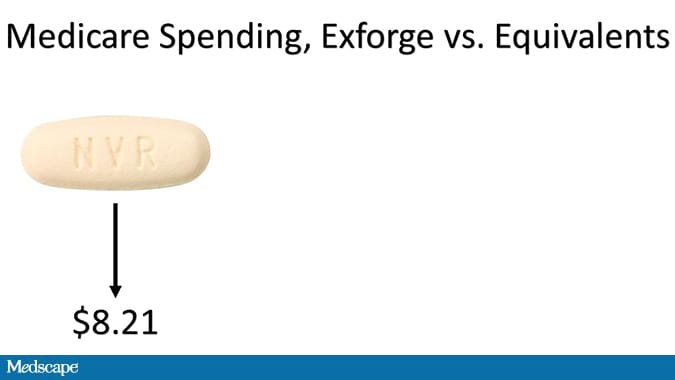
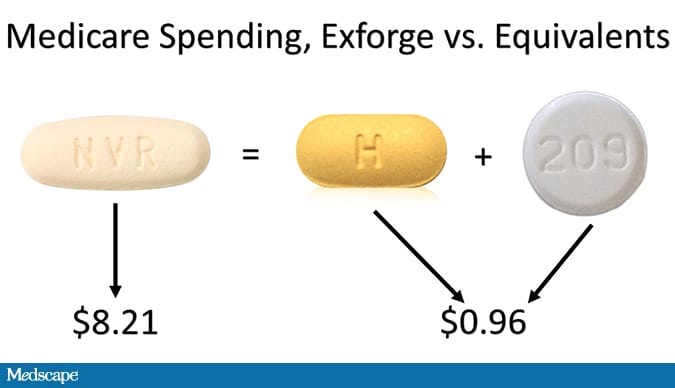
This is Exforge, a pill containing both the angiotensin receptor blocker valsartan and the calcium-channel blocker amlodipine. It costs $8.21 per pill.
This is two pills, the angiotensin-receptor blocker valsartan and the calcium channel blocker amlodipine. Together, they cost 96 cents.
You get it, right? The combo drug is way, way more expensive.
And that’s largely because, as current law stands, pharmaceutical companies can extend some market exclusivity of a drug that is nearly about to come off patent by mixing it with some other drug.
The authors of the JAMA paper asked a simple question: How much money could we save if Medicare bought the constituent pills instead of the combo pill?
The answer? About a billion dollars.
The authors used data published by Medicare, which identifies the number of individuals taking various drugs and the price.
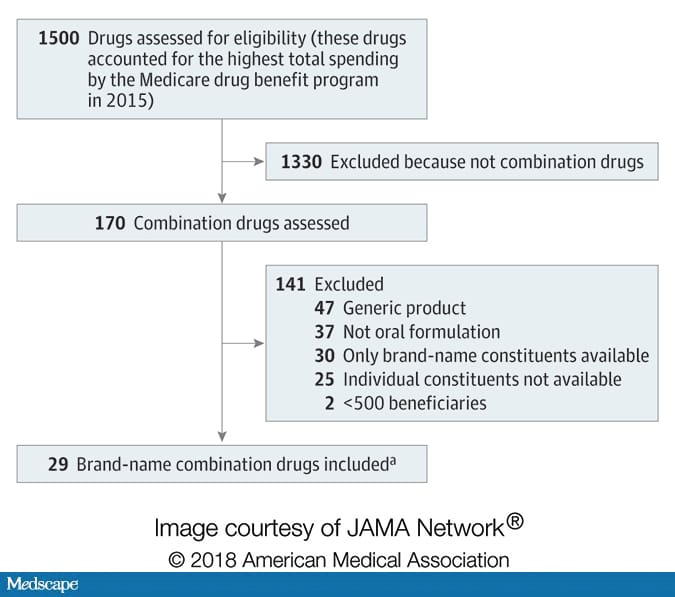
They focused on the 1500 drugs that accounted for the most spending in the Medicare program. Of those, 170 were combo drugs. But most were either already generic or one of the components didn’t have a generic equivalent. In fact, there were only 29 brand-name combo drugs that you could conceivably break down into its generic parts.
You know a lot of these names—I have prescribed some of them: Diovan-HCT, Percocet, Fosamax plus D. And I suppose, in the back of my head, I know that the combo pills are more expensive, but I really didn’t appreciate just how much more expensive they are.
If I prescribe oxycodone and acetaminophen, CMS pays 38 cents per dose. If I prescribe Percocet, CMS pays $14.23 per dose—a 37-fold increase. You may, of course, ask why Medicare agrees to such exorbitant prices for these combo pills, but that, my friends, is a topic for another time.
We’re not talking about a lot of drugs here, but we are talking about a lot of money. If we split up all of these 29 combo pills, we’d save Medicare $925 million.
Now, some of you may be thinking that one pill is way more convenient than two or three, and maybe that would even increase adherence, which might improve outcomes. There’s not much data supporting that idea, actually, as this Cochrane review shows.[2]
But look at it on the patient level.
If we took all of our patients on Diovan-HCT and switched them to valsartan and hydrochlorothiazide, we could give them each $1750 a year in cash and still come out even. That might be worth a bit of inconvenience, right?
How does this problem get fixed? Three solutions. First, Medicare can put its foot down and stop paying for combination pills. Second, the FDA can stop granting market exclusivity for combination pills when the constituents are not novel agents.
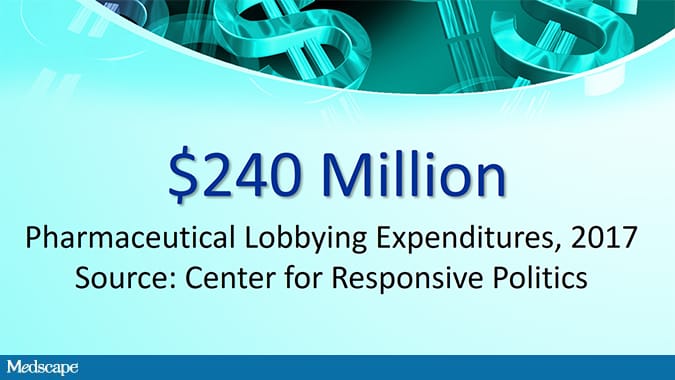
I’m not sure why these changes haven’t happened, but this figure might have something to do with it.
So, as ever, it’s up to us—those with the power of the prescription pad—to peddle pills more perspicaciously.

McCain discontinues cancer treatment


Sen. John McCain, the Arizona Republican who has been fighting an aggressive form of brain cancer for more than a year, will discontinue treatment for the disease, his family announced Friday.
That decision suggests the 81-year-old McCain could be nearing death.
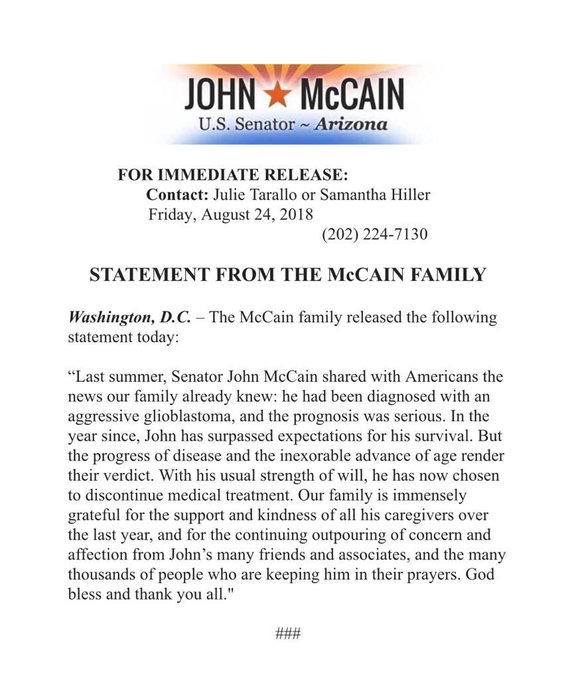
“John has surpassed expectations for his survival. The progress of disease and the inexorable advance of age render their verdict,” McCain’s family said in a statement. “With his usual strength of will, he has now chosen to discontinue medical treatment.”
“Our family is immensely grateful for the support and kindness of all his caregivers over the last year, and for the continuing outpouring of concern and affection from John’s many friends and associates, and the many thousands of people who are keeping him in their prayers,” the family continued. “God bless and thank you all.”
In July 2017, McCain revealed that he’d been diagnosed with a form of brain cancer called glioblastoma and began an aggressive treatment regimen.
While he returned to the U.S. Capitol in the months after his diagnosis, McCain has largely remained at home in Arizona in 2018.
McCain’s last vote in the Senate was on Dec. 7, 2017, when he was one of just six Republicans to vote no on a two-week stop-gap government funding bill, which he said put the military at risk. He missed votes the following week, and on Dec. 13 his office released a statement saying he was undergoing treatment at Walter Reed Medical Center for “normal side effects of his ongoing cancer therapy.”
Four days later, McCain’s office released another statement saying he would be returning to Arizona to undergo physical therapy and rehabilitation at Mayo Clinic, and planned to return to Washington in January. McCain never made it.
The senator, the 2008 GOP presidential nominee, said in an audio excerpt aired by NPR in May, “I don’t know how much longer I’ll be here.”
His wife, Cindy, and daughter, Meghan, both tweeted personal messages along with the family’s statement Friday.
“I love my husband with all of my heart. God bless everyone who has cared for my husband along this journey,” Cindy McCain wrote.
“My family is deeply appreciative of all the love and generosity you have shown us during this past year,” Meghan McCain wrote. “Thank you for all your continued support and prayers. We could not have made it this far without you — you’ve given us strength to carry on.”
Support from McCain’s Senate colleagues, as well as members of Congress and governors, also poured in.
Senate Majority Leader Mitch McConnell, R-Ky., tweeted that he was “very sad to hear this morning’s update from the family of our dear friend ⁦‪@SenJohnMcCain‬⁩” and that “the entire McCain family are in our prayers at this incredibly difficult hour.” Senate Minority Leader Chuck Schumer, D-N.Y., tweeted, “My thoughts and prayers are with Senator McCain and his family.”
House Speaker Paul Ryan, R-Wis., tweeted that McCain “personifies service to our country,” while John Kerry, a former secretary of state and Democratic senator from Massachusetts, and the party’s 2004 presidential nominee, called him “a brave man showing us once again what the words grace and grit really mean.”
Mitt Romney, the GOP’s 2012 presidential nominee, tweeted, “No man this century better exemplifies honor, patriotism, service, sacrifice, and country first than Senator John McCain.” Former Arizona Gov. Jan Brewer called the news “heartbreaking.”
McCain first emerged as a household name during the Vietnam War, when he was shot down and held as a prisoner of war by the North Vietnamese from October 1967 until March 1973. His captors tortured him and held him in solitary confinement. Still, he declined an offer of early release until those who had been at the prison longer than he was were let go.
He took his seat in the U.S. Senate in 1987, replacing the venerable conservative Barry Goldwater, and has been regarded during his more than three decades in the chamber as a tell-it-like-he-sees-it voice open to crossing the aisle to reach bipartisan agreement.
McCain, however, has consistently attracted the ire of President Donald Trump, who in 2015, as a candidate, said McCain was considered a war hero only “because he was captured” during the Vietnam War and that Trump preferred military figures who avoided being taken prisoner by the enemy.
Trump has also repeatedly criticized McCain for his “no” vote that helped doom a key Obamacare repeal bill in the Senate.
In addition, in May a top White House communications aide, Kelly Sadler, made fun of McCain’s brain cancer diagnosis, saying, “He’s dying anyway.”
NBC News reported in May that people close to McCain told the White House that the ailing senator did not want Trump to attend his funeral and wanted Vice President Mike Pence to attend instead.
And last month, during the signing of the John S. McCain National Defense Authorization Act for Fiscal Year 2019, Trump chose not to mention McCain’s name at all, even omitted McCain’s name when citing the title of the bill.

Warnings About Benzodiazepine Use in the Elderly Go Unheeded


Despite years of warnings about the hazards of prescribing benzodiazepines for the elderly, these drugs continue to be used at a higher rate than what is considered appropriate in older Americans — particularly older women, new data show.
A recent report released by Athena Health shows that individuals older than 65 years are prescribed benzodiazepines — including alprazolam (multiple brands), lorazepam (multiple brands), diazepam (multiple brands), and clonazepam (Klonapin, Roche) — more than other age groups are.
In 2017, 8.4% of individuals aged 65 and older were prescribed one of the drugs, a drop from 8.7% the previous year. Just over 8% of 50- to 64-year-olds were prescribed a benzodiazepine in 2017, compared to 7.5% of those aged 40 to 49 and 6.6% of those aged 30 to 39.
Ten percent of women older than 65 were prescribed a benzodiazepine, compared to just under 6% of men.
The data come from a sample of 3 million patients treated by primary care providers who are part of the Athena Health data network.
The data “are consistent with earlier research that suggests significant benzodiazepine overuse, especially among older adults,” Mark Olfson, MD, MPH, professor of psychiatry and epidemiology, Columbia University, New York City, told Medscape Medical News.
Since 2012, the American Geriatrics Society (AGS) has urged clinicians to avoid use of benzodiazepines in older adults. That recommendation is being reiterated in the AGS 2018 prescribing guidelines (called the Beers Criteria), which are under final review.

Physicians Not Getting the Message

The AGS notes that benzodiazepines increase the risk for cognitive impairment, delirium, falls, fractures, and motor vehicle crashes. The drugs can be appropriate for seizure disorders, rapid eye movement sleep behavior disorder, benzodiazepine withdrawal, ethanol withdrawal, severe generalized anxiety disorder, and periprocedural anesthesia, the AGS says.
Since benzodiazepines were first introduced in the 1960s, prescribing authorities and public health agencies have periodically issued warnings about the potential for addiction and other side effects.
In May, the deprescribing guidelines for the elderly project, based at the Bruyère Research Institute in Ottawa, Ontario, Canada, launched an effort to help clinicians wean long-term users off benzodiazepines and the benzodiazepine receptor agonists zolpidem (multiple brands), zopiclone (Zunesta, Suovion), and zaleplon (Sonata, Pfizer).
“We need to be a little bit more judicious with these,” Nicole Brandt, PharmD, MBA, BCGP, BCPP, FASCP, executive director of the Peter Lamy Center on Drug Therapy and Aging, University of Maryland, Baltimore, told Medscape Medical News. Brandt said she continues to be concerned about the persistence of benzodiazepine use in the face of so many warnings and guidelines.
Robert Roca, MD, chair of the American Psychiatric Association’s Council on Geriatric Psychiatry, said he was surprised — but not entirely — at the Athena data indicating that women received benzodiazepines at twice the rate of men.
“Women are more willing to express distress, and they’re more likely to receive psychotropics of all kinds,” Roca, vice president and chief medical officer, Sheppard Pratt Health System, Baltimore, told Medscape Medical News.
Women also have a higher risk for dementia, and, given the pressure to reduce the use of antipsychotics in patients with dementia, it’s possible that benzodiazepines are being substituted, said Roca. But, he added, benzodiazepines “are not a particularly good alternative.”
Olfson said that women “have higher rates of insomnia, anxiety disorders, and mood disorders, all of which are related to benzodiazepine use.” He also noted, however, that “because women assume more caregiver roles than men, they are under greater stress, which contributes to anxiety and sleep problems.”

Dementia Risk

Brandt agrees that caregiving is a major stressor for women. He noted that “it’s easier to get a medication paid for than to get counseling paid for or respite care paid for.” Benzodiazepines are prescribed for many medical problems, but “there are also lots of psychosocial issues where they may be the go-to agent,” she said.
She added that she’s seen benzodiazepines prescribed to help older people cope with losses, including the loss of mobility and the loss of friends or family members.
“I think benzodiazepines are a surrogate for a much bigger issue,” she said.
Many factors account for the continuing popularity and persistent use of benzodiazepines. Olfson said there is limited access to alternative evidence-based treatments for insomnia and noted that there’s “an unwillingness of some older people to consider reducing or discontinuing” the drugs.
In addition, said Olfson, “for some primary care physicians who have competing clinical demands on their time, given common comorbid medical problems in older adults, pharmacological options for managing insomnia and anxiety may be attractive.”
Roca noted that they are generally safe and effective in reducing anxiety and generally are not abused, although “there is no question they are potentially addictive.”
Benzodiazepines can also be a bridge therapy for patients who need an antidepressant, which can take weeks to start working, said Roca. He favors short-acting benzodiazepines, which, unlike long-acting ones like diazepam, are not taken up by adipose tissue.
But that type of analysis may not be familiar to physicians who more often prescribe the medications to younger people. “They are not so tuned in to the risks of prescribing to older people,” said Roca.
Besides the risks outlined by the AGS, some data now suggest that long-term exposure may increase the risk for dementia, he said. “There are all kinds of reasons to be careful,” said Roca.
Medicare has kept an eye on benzodiazepine use among older people who participate in the federal health plan. The Affordable Care Act initially banned coverage of benzodiazepines through Medicare Part D drug plans. That prohibition was lifted in January 2014; the drug class is now covered under Part D for any medically accepted indication.

A Hidden Epidemic?

The agency has taken an even closer look since it became clear that the drugs were often being prescribed in tandem with opioids. In 2015, the Centers for Medicare & Medicaid Services reported that 17% of Medicare beneficiaries were using benzodiazepines and that about a quarter were using them in conjunction with opioids.
A study published in JAMA Psychiatry in June found that rates of new opioid prescriptions written for adults using a benzodiazepine skyrocketed from 189 to 351 per 1000 persons from 2005 to 2010.
Although it decreased to 172 per 1,000 by 2015, “the likelihood of receiving a new opioid prescription during an ambulatory visit remained higher for patients concurrently using benzodiazepines compared with the general population after adjusting for demographic characteristics, comorbidities, and diagnoses associated with pain,” the authors note.
The dual use — and continued high use of benzodiazepines — has alarmed many clinicians and public health officials.
“Despite the many parallels to the opioid epidemic, there has been little discussion in the media or among clinicians, policymakers, and educators about the problem of overprescribing and overuse of benzodiazepines and z-drugs, or about the harm attributable to these drugs and their illicit analogues,” Anna Lembke, MD, Jennifer Papac, MD, and Keith Humphreys, PhD, wrote in an editorial published in the New England Journal of Medicine in February.
Overdose deaths related to benzodiazepine use continue to rise. Lembke noted that data from the National Institute on Drug Abuse (NIDA) show that overdose deaths involving benzodiazepines increased from 1135 in 1999 to 8791 in 2015. In 2016, NIDA reported 10,684 overdoses in which benzodiazepines were involved. Most of the deaths occurred in people who were also taking opioids, said NIDA.
Brandt said the opioid crisis provides lessons for how benzodiazepines should be monitored and prescribed. Benzodiazepines are not villains, however, she said. Like opioids, they are “a tool to address a problem,” said Brandt. She noted that she would not want to see them blacklisted.
Both Roca and Olfson said they supported adding benzodiazepines to state prescription drug monitoring programs. Including them would help flag those people who are using benzodiazepines and opioids, said Olfson. He also said that because a lot of the risk with the drug class is associated with long-term use, “policies should be considered and evaluated that restrict the days’ supply of benzodiazepines in a single prescription.”
Roca expressed concern about overly restrictive policies. “If you put a target on the back of these medications, you may make it difficult for patients who need them,” he said.
Dr Brandt, Roca and Dr Olfson have disclosed no relevant financial relationships.