Search This Blog

Monday, July 22, 2019

Adaptimmune up on promise of low-dose radiation to aid SPEAR T-cell therapy

Thinly traded micro cap Adaptimmune Therapeutics plc (ADAP +10.4%) is up on modestly higher volume, albeit on turnover of only 306K shares, in reaction to the initiation of a 10-subject radiation sub-study evaluating its ADP-A2M4 SPEAR T cells in patients with solid tumors.
The company says published data show that low-dose radiation may enhance T-cell responses in these patients.
It expects to launch a new trial, SPEARHEAD-1, assessing ADP-A2M4 in sarcoma patients later this year.

Teladoc up on positive mention on CNBC

Teladoc (TDOC +2.5%) is up on modestly higher volume in apparent response to positive comments by investor Josh Brown on CNBC’s Halftime Report.
The company is scheduled to release Q2 results after the close on Wednesday, July 31. Consensus view is a loss/share of ($0.41) on revenue of $129.6M.
Shares have rallied over 30% since early June.

Glaxo’s ViiV Healthcare Finds Positive Data In HIV Drug Study

GlaxoSmithKline PLC (GSK.LN) said Monday that has found positive data over a 96-week period from phase 3 study of investigational Fostemsavir in patients with HIV.
ViiV Healthcare, of which GlaxoSmithKline is a majority shareholder, said rates of virologic suppression and immunologic response increased from week 48 to week 96 in a difficult-to-treat population with multi-drug resistant HIV-1.
The study found that at week 96, 60% of patients receiving Fostemsavir as well as optimized background treatments in the randomized cohort achieved virologic suppression–an increase of 6% from week 48 results.
ViiV plans to begin the submission of regulatory applications for Fostemsavir with the U.S. new-drug application later this year.

Yale, Mayo, FDA aim to rethink heart failure trials with Apple Watch


Yale, Mayo and FDA experts aim to rethink heart failure trials with Apple Watch
A group of scientists from Yale University and the Mayo Clinic are to use an Apple Watch app in a bid to rethink clinical trial design in heart failure.
Digital therapeutics firm Biofourmis has joined with the Yale University-Mayo Clinic Center of Excellence in Regulatory Science and Innovation (CERSI) to see if greater emphasis should be placed on functional capacity and quality of life measures in trials.
The partnership will use Biofourmis’ app-based mobile platform BiovitalsHF in the project, which could allow regulators to use these “patient-centric” endpoints when approving heart failure drugs, potentially hastening the process.
CERSI is a joint effort that also involves the FDA experts as well as academics, to advance drug regulation through training and scientific exchanges.
The project has come about following guidance from the FDA recognising that an effect on symptoms or physical function, without a favourable effect on survival or risk of hospitalisation can be a basis for approving drugs to treat heart failure.
These patient-centric endpoints can be identified much faster than the traditional “hard” endpoints based around survival outcomes or hospitalisation risk.
To demonstrate the feasibility and capturing these endpoints, Biofourmis and Yale-Mayo CERSI will begin a multicentre study next month, of recently discharged patients with heart failure who will be screened and then monitored at home for 60 days.
Vitals will be captured using BiovitalsHF, to capture multiple physiology biomarkers and physical activity continuously in the real world.
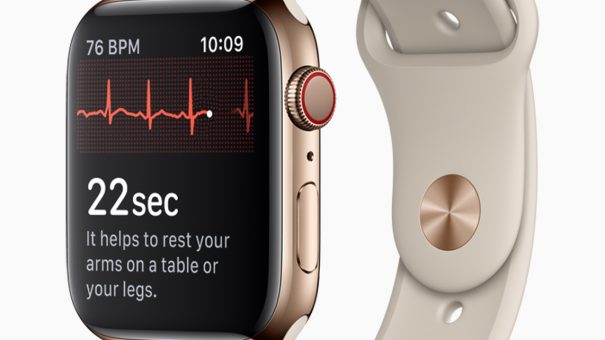
Two wearable sensors will capture readouts – a medical-grade device called Everion and the Apple Watch Series 4.
As well as synching data from the sensors, the app will be used to capture patient-reported outcomes such as medication adherence, symptoms, the Kansas City Cardiomyopathy Questionnaire (KCCQ) responses, and the guided mobile-based 2-minute step test.
The primary goal of the study is to measure the correlation between physiology and actigraphy biomarkers with clinical endpoints such as lab results, the KCCQ, and the six-minute walk test.
The data also will be used to assess medication adherence, dose changes and percentage of patients on target dosages of certain therapies.

UK’s NHS sitting on patient record gold mine worth billions

Patient records held by the UK’s NHS may be worth several billion pounds to commercial organisations, according to a new report.
The Ernst and Young (EY) report noted that the NHS is in a unique position as the single largest integrated health care provider in the world.
The NHS patient records cover the entire UK population from birth to death, with around 55 million patient records held in total.
This current value of the patient data could be as much as £5 billion per annum, and could deliver around £4.6 billion in benefits each year, according to the report entitled How can we place a value on health care data?
This includes potential operational savings for the NHS, enhanced patient outcomes, and wider economic benefits to the UK.
EY said that several billion pounds could be generated by selling NHS data at market value – this includes the 55 million primary care records, 23 million records from episodic care, and the 100,000 DNA codes of patients with cancer, rare diseases, and infectious diseases, gathered by Genomics England.
The report suggested a framework for the NHS to harness the patient data in an ethical manner, where the NHS remains controller of the patient data, which is not sold or transferred to a third party.
The report noted that there are no universal digital standards in the health industry, adding that the variety and volume of data being generated is huge.
In the absence of a comprehensive infrastructure, more limited individual arrangements have started to appear.
Health and life sciences organisations will need to consider how their products and services will align with the emerging data infrastructure.
The British AI technology company, Sensyne Health, welcomed the report, noting that it is an early signatory to the government’s code of conduct on data-driven health and care technology.
Lord Drayson, CEO of Sensyne Health plc, said: “Data driven innovation will transform how healthcare is delivered in future. The quality and scale of NHS data, covering a population of over 50 million people from birth to death, provides the UK with a major competitive advantage and is a very valuable national asset.
“Enlightened policy that encourages ethical and fair collaborations between the NHS and the life sciences industry that use NHS data, could help to fund NHS services in future, as well as significantly improving the quality and affordability of care for patients.”
Sensyne Health is involved with a collaboration between Oxford University and German biotech Evotech, working to translate research into new AI drug discovery and digital health firms.

ZOLL acquires Mobilize RRS LLC interactive first aid system

ZOLL Medical Corporation, an Asahi Kasei Group Company that manufactures medical devices and related software solutions, today announced it has acquired substantially all of the assets of Mobilize RRS LLC., of Pittsford, N.Y., a privately held company that markets the Mobilize Rescue Systems app and associated rescue kits, which are designed to help bystanders deliver acute critical care in emergency situations.
COMPREHENSIVE rescue system from Mobilize RRS (Photo: Business Wire)COMPREHENSIVE rescue system from Mobilize RRS (Photo: Business Wire)

Mobilize RRS’s interactive trauma and first aid systems are designed to help untrained bystanders assess, manage, and help injured people during medical emergencies. There is a universal need to help bystanders play a more active role in responding to emergencies that result from accidents, medical emergencies, and acts of violence.
Since the average ambulance response time is around 7-15 minutes, a bystander is frequently a victim’s best hope for survival. However, bystanders don’t always have the knowledge or equipment they need to intervene.
“ZOLL is a leader in providing high-quality AEDs to help people save the life of someone suffering from sudden cardiac arrest,” said Elijah A. White, President of ZOLL Resuscitation. “Mobilize Rescue Systems are a natural extension for ZOLL, in that they give people the ability to help victims of nearly every type of emergency.”
“This transaction will have a positive impact on saving more lives,” said Jeffrey Gerstner, CEO of Mobilize RRS. “With ZOLL’s extensive network, our emergency technology will be brought to a greater number of patients worldwide.”
Mobilize Rescue Systems provides easy-to-use solutions that guide lay rescuers through the best way to provide assistance to victims of various emergencies. The systems include step-by-step instructions and supplies to help bystanders manage severe bleeding, cardiac arrest, seizures, choking, chest trauma, hypothermia, burns, and more—all while an ambulance is en route.
Each Mobilize Rescue Systems product contains medical equipment that pairs with interactive software to help bystanders manage emergencies. The Mobilize Rescue Systems app helps individuals have the knowledge necessary to save lives using the supplies in the rescue kit. The program asks mostly yes/no questions to assess the victim, points to the proper color-coded and labeled equipment, and then provides simple instructions on how to help the victim.

Mallinckrodt continues slide

Mallinckrodt (MNK -6.1%) slumps on modestly higher volume. Shares have sold off almost 30% in a month.
On Friday, it terminated its $250M receivables securitization facility after repaying $200M of borrowings. Bloomberg Intelligence’s Mike Holland says the elimination of cheap financing under the facility is a negative, adding that the company has now lost half of the ~$1B of liquidity it had at the start of the year.
Last week, it terminated a study of Acthar Gel in ALS due to a safety signal and uncertain efficacy.
SA Authors rate the stock Neutral as do Sell Siders.