Search This Blog

Tuesday, May 5, 2020

Hepatitis drug could be tested against COVID-19 in India

India’s Zydus Cadila wants to test a form of interferon, usually used against hepatitis B and C, as a potential treatment for the virus that causes COVID-19. 
According to press reports the company has asked the regulator, the Drugs Controller General of India (DCGI) to test the antiviral pegylated interferon alpha 2-b in adults with COVID-19. 
The drug has already been used to treat COVID-19 in China and Cuba and is included in treatment guidelines laid down by the Chinese government. 
Press reports cite a senior official from the Indian government, who said that talks are under way and the application is being considered by an expert committee. 
Research in the cell cultures in a laboratory in the US found that the SARS-CoV-2 virus is “remarkably sensitive” to recombinant human interferons, reducing viral concentrations by more than 99.99% in certain cells. 
The reports noted research in China, Australia and Canada that showed a short-acting form of interferon reduced duration of viral shedding and levels of the inflammatory cytokine Il-6. 
IL-6 is a target in other research involving drugs from Roche and Sanofi, as it is thought to overstimulate the body’s immune system in seriously ill COVID-19 patients. 
The research suggests that a long-acting version of interferon such as that suggested by Zydus Cadila could be given early in the disease to reduce viral load, reducing the amount of IL-6 produced by the virus and eliminating the harmful immune response. 
The drug is not approved in COVID-19 but is marketed under the brand name PegiHep for treatment of hepatitis B and C. 
Ahmedabad-based Zydus Cadila is already manufacturing hydrochloroquine, which used in India to treat asymptomatic healthcare workers caring for suspected or confirmed COVID-19 cases, asymptomatic household contacts of laboratory-confirmed cases, and COVID-19 patients with severe disease and requiring ICU management. 
According to a COVID-19 therapy tracker from the Milken Institute think tank, there are 199 treatments in consideration for the disease, and 123 vaccines. 
According to the World Health Organization, there are eight potential vaccines for COVID-19 that have made it through to clinical trials.
Hepatitis drug could be tested against COVID-19 in India

Army offers $25M for development of wearable coronavirus detector

The US Army has put out a $25 million bid to speed up the development of wearable coronavirus detectors that can identify early signs of the illness, according to a new report.
The military put out a request for project proposals through its Medical Technology Enterprise Consortium on Monday — and hopes to award up to 10 contracts within weeks, Stars and Stripes reported. The contagion has already infected nearly 5,000 service members.
“There is a dire and urgent need for development of rapid, accurate wearable diagnostics to identify and isolate pre-symptomatic COVID-19 cases and track/prevent the spread of the virus,” said the Army’s proposal, according to the outlet.
The “minimally invasive” kits should not affect the user’s daily activity — and must be capable of monitoring for symptoms including elevated temperature, respiratory difficulty, antibodies against COVID-19 and molecular biomarkers that indicate exposure, the bid says.
The Army is seeking existing, proven technology rather than a new system — and companies involved in development should be ready and able to produce on a large scale, according to the bid.
The Army is hoping the detectors could help identify those without symptoms who unknowingly spread the virus, which has been a problem in the past, the outlet reported.
“Physiologic surveillance for COVID-19 positive individuals that do not yet show clear medical symptoms is an ultimate goal,” the proposal said.
The winning bidders must work to obtain any necessary FDA approvals — including an Emergency Use Authorization within the first 45 days of the contract, Nextgov.com reported.
https://nypost.com/2020/05/05/us-army-wants-to-develop-wearable-coronavirus-detectors/

Experimental gene-based COVID-19 vaccine advancing

Massachusetts Eye and Ear and Massachusetts General Hospital (MGH), members of Mass General Brigham, today announced progress towards the testing and development of an experimental vaccine called AAVCOVID, a novel gene-based vaccine candidate against SARS-CoV2, the virus that causes COVID-19.
The AAVCOVID vaccine program was developed in the laboratory of Luk H. Vandenberghe, Ph.D., director of the Grousbeck Gene Therapy Center at Massachusetts Eye and Ear and Associate Professor of Ophthalmology at Harvard Medical School. It is currently in preclinical development with a plan to begin clinical testing in humans later this year. Mason Freeman, MD, director and founder of the MGH Translational Research Center is leading the efforts to develop the clinical studies intended to establish safety and efficacy of the experimental vaccine.
The AAVCOVID Vaccine Program is a unique, gene-based vaccine strategy that uses adeno-associated viral (AAV) vector, a clinically established leveraging the properties of a harmless viral carrier. AAV is used to deliver genetic sequences of the SARS-CoV-2 Spike antigen so the body can develop an immune response to the coronavirus. AAV technology has been used extensively in the field of gene therapy, and substantial experience and capacity exists for manufacturing and clinical use of AAV-based medicines. Two AAV-based drugs have been approved by U.S. Food and Drug Administration in recent years.
The AAVCOVID vaccine candidate will be administered by an intramuscular injection. Currently, tests are underway in animal models, and initial manufacturing activities have begun. Based on the preclinical findings, one or more candidates will advance into the clinical phase of testing in humans.
While several types of COVID-19 vaccines are in development worldwide, AAV technology offers several distinct advantages, including its adaptability and potential to elicit a beneficial immune response in people. In addition, other versions of AAV technology have been tested in the clinic for more than two decades with a favorable safety record.
“AAV is a superior technology for safe and efficient gene delivery, and the unique technologies we are applying in AAVCOVID support the potential for a potent immunity to be induced to SARS-CoV-2 from a single injection,” said Dr. Vandenberghe. “In a crisis, we can harness the power of molecular biology and develop a draft of a vaccine in weeks, and that’s what was done here. Now, are needed to establish safety and efficacy of our novel approach,” he said.
“While many organizations are engaged in generating vaccine candidates to prevent COVID-19 disease, it is very far from certain what the best approach will be,” said Dr. Freeman. “Dr. Vandenberghe’s unique vaccine method brings an elegant, novel and extremely creative approach to meeting our goal: to protect our most vulnerable patients as well as the healthcare workers who care for them during this and future viral outbreaks.”
The team is advised by experts at Massachusetts General Hospital and the Mass General Brigham Innovation Fund and includes deep involvement of experts from industry with experience in vaccine development, regulatory affairs, and manufacturing. The research is funded by philanthropic support led by Wyc Grousbeck, Boston Celtics lead owner and CEO and Mass. Eye and Ear Chairman, his wife Emilia Fazzalari, CEO of Cinco Spirits Group LLC, the Grousbeck family, and others.
“This is what innovation looks like. It is a combination of both the scientific insight of Dr. Vandenberghe and his team as well as the nimble and collaborative spirit of the institutions and donors who have come together to move this program from idea to promising at lightning speed,” said Joan W. Miller, MD, Chief of Ophthalmology at Mass. Eye and Ear, Massachusetts General Hospital, and Brigham and Women’s Hospital, and Chair of Ophthalmology and David Glendenning Cogan Professor of Ophthalmology at Harvard Medical School.
“We are deeply grateful to all involved in this collaboration, and especially to the donors who generously stepped up to spearhead the initial funding of this program,” said John Fernandez, President of Mass. Eye and Ear.
“The unprecedented coronavirus pandemic has challenged us all, and overcoming it demands the best thinking and the most creative ideas from our scientific and clinical teams supported and strengthened by our philanthropic communities,” said Peter L. Slavin, MD, President of MGH. “This collective spirit of innovation, resolve and generosity is the most powerful weapon we have to fight this formidable virus.”
About the AAVCOVID Technology
The AAVCOVID Vaccine Program is a gene-based vaccine strategy that seeks to deliver genetic sequences of the SARS-CoV-2 using an adeno-associated virus (AAV) vector, a harmless virus that serves as a delivery vehicle into the body.
Vaccination with AAVCOVID delivers the gene code for antigens from the SARS-CoV-2 Spike protein following a low dose intramuscular injection, which is designed to elicit an immune response to prevent infection. This approach is supported by extensive experience with the safety of the AAV technology platform in other diseases, including the use of AAVs in two FDA-approved medicines, and preclinical studies on immunogenicity.
Dr. Vandenberghe and his laboratory began work on the vaccine in mid-January following the Wuhan outbreak and the first publication of genetic sequences of the new . Using a specific AAV with desirable vaccine properties, the program seeks to induce immunity to prevent infection and or disease in healthy populations.
AAV is also a rapidly adaptable technology. If a new strain of the SARS-CoV-2 virus emerges, the genetic code inside the AAVCOVID vaccine can be exchanged for an updated genetic code and processed into an updated in weeks, according to the researchers.


More information: For more information on AAVCOVID vaccine and the researchers’ biographies, see masseyeandear.org/covid-19/vaccine

How Apple, Google will warn you if you’ve been exposed to COVID-19

Apple and Google, which control the world’s most popular smartphone operating systems, gave a first look Monday at how public health apps will alert you if you’ve been exposed to the coronavirus.
The two have been working on new contact tracing tools for public health organizations that can tell you if you’ve crossed paths with someone who later tests positive for the deadly virus.
How it works: The new COVID-19 tools on iPhones and Android devices will use Bluetooth to sense nearby smartphones. When you’ve tested positive, you enter the test result into the app.
With your consent, anyone who was near you over the past 14 days will get a push notification that they have been potentially exposed: “You have recently come into contact with someone who has tested positive for COVID-19. Tap for more information.”
Public health authorities have used contact tracing for years to interview infected people, learn who they’ve been in contact with and advise them on what to do.
The smartphone version could help authorities more quickly lift social distancing constraints or respond to a new outbreak.
Participation is voluntary. Effectiveness of smartphone contact tracing hinges on how many people choose to use it.
Privacy advocates warn the technology being developed is potentially invasive and raises important questions of how to safeguard people’s sensitive health information.
Apple and Google say they’ve taken precautions to make sure tracking data is anonymous and they say apps will not be permitted to track your specific location.
https://techxplore.com/news/2020-05-apple-google-youve-exposed-covid-.html

COVID-19 symptom tracker app released

A consortium of scientists with expertise in big data research and epidemiology recently developed a COVID Symptom Tracker app aimed at rapidly collecting information to aid in the response to the ongoing COVID-19 pandemic. As reported in the journal Science, early use of the app by more than 2.5 million people in the U.S. and the U.K has generated valuable data about COVID-19 for physicians, scientists, and public officials to better fight the viral outbreak.
“The app collects daily information from individuals in the community about whether they feel well, and if not, their specific symptoms and if they have been tested for COVID-19,” said senior author Andrew T. Chan, MD, Ph.D., Chief of the Clinical and Translational Epidemiology Unit at Massachusetts General Hospital (MGH) and Director of Cancer Epidemiology at the MGH Cancer Center. The app is designed to provide insights on where the COVID-19 hot spots are and new symptoms to look out for, and it may be useful as a planning tool to inform guidelines around self-isolation, identify regions in need of additional ventilators and expanded hospital capacity, and provide real-time data to prepare for future outbreaks.
The COVID Symptom Tracker was launched in the U.K. on March 24th and became available in the U.S. on March 29th. Since launch, it has been used by more than 3 million people.
“This work has led to the development of accurate models of COVID-19 infection rates in the absence of sufficient population testing,” said Dr. Chan. “For example, the U.K. government has acted upon these estimates by providing advanced notice to local health authorities about when to expect a surge of cases.” Researchers are also using results from the app to investigate for infection, as well as the effects of COVID-19 on patients’ health.
Dr. Chan also pointed out that the app does not have any contact tracing function in contrast with software that is being rolled out in the future by some states in collaboration with Apple and Google. “Our app is designed to be entirely voluntary so that they can share information about how they are feeling in a way that safeguards their privacy.”
The team is asking individuals, even those who are feeling well, to download the app and participate in this effort to provide critically valuable information related to COVID-19. The study was conducted by a team led by researchers at Massachusetts General Hospital (MGH), King’s College London, and Zoe Global Ltd.


More information: Rapid implementation of mobile technology for real-time epidemiology of COVID-19, Science (2020). DOI: 10.1126/science.abc0473 , science.sciencemag.org/content … 5/04/science.abc0473

Monitoring COVID-19 from hospital to home with symptom tracker


The more we learn about the novel coronavirus (COVID-19), the more unknowns seem to arise. These ever-emerging mysteries highlight the desperate need for more data to help researchers and physicians better understand—and treat—the extremely contagious and deadly disease.
Researchers at Northwestern University and Shirley Ryan AbilityLab in Chicago have developed a novel and are creating a set of data algorithms specifically tailored to catch early signs and symptoms associated with COVID-19 and to monitor patients as the illness progresses.
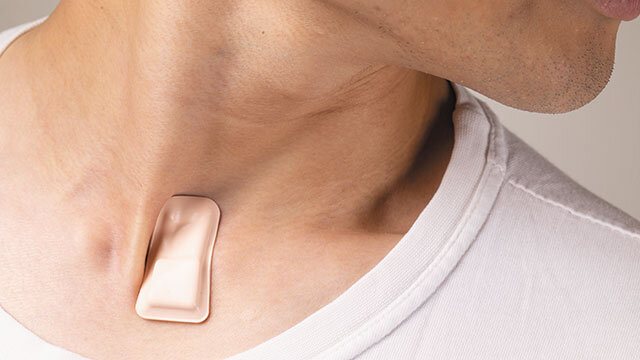
Capable of being worn 24/7, the produces continuous streams of data and uses artificial intelligence to uncover subtle, but potentially life-saving, insights. Filling a vital data gap, it continuously measures and interprets coughing and respiratory activity in ways that are impossible with traditional monitoring systems.
Developed in an engineering laboratory at Northwestern and using custom algorithms being created by Shirley Ryan AbilityLab scientists, the devices are currently being used at Shirley Ryan AbilityLab by COVID-19 patients and the healthcare workers who treat them. About 25 affected individuals began using the devices two weeks ago. They are being monitored both in the clinic and at home, totaling more than 1,500 cumulative hours and generating more than one terabyte of data.
About the size of a postage stamp, the soft, flexible, wireless, thin device sits just below the suprasternal notch—the visible dip at the base of the throat. From this location, the device monitors coughing intensity and patterns, chest wall movements (which indicate labored or irregular breathing), respiratory sounds, heart rate and body temperature, including fever. From there, it wirelessly transmits data to a HIPAA-protected cloud, where automated algorithms produce graphical summaries tailored to facilitate rapid, remote monitoring.
“The most recent studies published in the Journal of the American Medical Association suggest that the earliest signs of a COVID-19 infection are fever, coughing and difficulty in breathing. Our device sits at the perfect location on the body—the suprasternal notch—to measure respiratory rate, sounds and activity because that’s where airflow occurs near the surface of the skin,” said Northwestern’s John A. Rogers, who led the . “We developed customized devices, data algorithms, user interfaces and cloud-based data systems in direct response to specific needs brought to us by frontline healthcare workers. We’re fully engaged in contributing our expertise in bioelectronic engineering to help address the pandemic, using technologies that we are able to deploy now, for immediate use on actual patients and other affected individuals. The measurement capabilities are unique to this device platform—they cannot be accomplished using traditional watch or ring-style wearables that mount on the wrist or the finger.”
“We anticipate that the advanced algorithms we are developing will extract COVID-like signs and symptoms from the raw data insights and symptoms even before individuals may perceive them,” said Arun Jayaraman, a research scientist at Shirley Ryan AbilityLab, who is leading the algorithm development. “These sensors have the potential to unlock information that will protect frontline medical workers and patients alike—informing interventions in a timely manner to reduce the risk of transmission and increase the likelihood of better outcomes.”
Continuous monitoring from hospital to home
The mysterious ways that COVID-19 affects the body seem to get stranger and stranger. Many patients’ symptoms fully disappear before they suddenly and unexpectedly begin deteriorating—sometimes within a matter of hours. Other patients have recovered and tested “negative” but later test “positive” again.
The unknowns underscore the need for continuous patient monitoring to ensure that physicians can intervene at the slightest sign of trouble. The Northwestern and Shirley Ryan AbilityLab teams’ device provides around-the-clock monitoring for COVID-19 patients and those exposed to them.
“Having the ability to monitor ourselves and our patients—and being alerted to changing conditions in real time—will give clinicians a new and important tool in the fight against COVID-19,” said Dr. Mark Huang, a physician at Shirley Ryan AbilityLab, who has worn the sensor. “The sensor also will offer clinicians and patients peace of mind as it monitors COVID-like symptoms, potentially prompting earlier intervention and treatment.”
The device can monitor hospitalized patients and then be taken home to continue 24/7 supervision. The real-time data streaming from patients gives insights into their health and outcomes that is currently not being captured or analyzed by traditional monitoring systems.
“Nobody has ever collected this type of data before,” Rogers said. “Earlier detection is always better and our devices provide important and unique capabilities in that context. For patients who have contracted the disease, the value is even more clear, as the data represent quantitative information on respiratory behavior, as a mechanism to track the progression and/or the effects of treatments.”
“This opens up new telemedicine strategies as we won’t have to bring in patients for monitoring,” Jayaraman said. “Physicians can potentially review the patients’ data for hours, days or weeks, immediately through a customized graphical user interface to a cloud data management system that is being set up for this purpose, to see an overall image of how the patient is doing.”
Although the wearable device is currently unable to measure blood oxygenation levels, which is an important component of lung health, the team plans to incorporate this capability in its next round of devices. The Rogers lab has already suc … ntensive care units. Rogers believes they can easily apply that research to the COVID-tailored devices.
Warning system for the most at-risk
Not only can the device monitor the progress of COVID-19 patients, it could also provide early warning signals to the frontline workers who are most at risk for catching this remarkably infectious disease. The device offers the potential to identify symptoms and to pick up trends before the workers notice them, thereby providing an opportunity to engage in appropriate precautionary measures and to seek further testing as quickly as possible.
“People with obvious, severe symptoms are going to the hospital, being tested or being told to self-isolate,” Jayaraman said. “For those who have symptoms they perceive as mild or seasonal allergies, there is no warning system. They could be in contact with others and unknowingly spread infection.”
Assessing efficacy of new therapeutics
As researchers rush for a COVID-19 cure, physicians have been trying exploratory, sometimes unproven, treatments to help their patients. This is another area where Rogers’ and Jayaraman’s device can play a role.
“Early reports of certain proposed treatments suggest that they can eliminate coughing symptoms more quickly than a placebo,” Rogers said. “Nobody, however, is quantifying certain key symptoms, such as coughing—duration, frequency, amplitude, sounds, etc. Our device allows for precision measurement of this essential, yet currently unquantified, aspect of the disease.”
In the future, this sensor package could help researchers and physicians quantify which therapeutics are working best.
“At the simplest level, our systems allow assessments based on data, in a quantitative way, without relying on human judgment of whether a patient is coughing more or less,” Rogers said.
Device initially conceived for stroke patients
The new device builds on recent research from a collaboration between Rogers’ and Jayaraman’s labs, first published on the cover of the February 2020 issue of Nature Biomedical Engineering, with a focus on monitoring swallowing and speech disorders in patients recovering from stroke. These sensors work by precisely measuring vibratory signatures from the throat and chest. By measuring vibrations rather than acoustics, the team avoids noise from background sounds and it bypasses privacy issues.
In response to requests and inquiries from the medical community, Rogers and Jayaraman realized they could use this technology to measure the vibratory signatures of COVID-like symptoms, including chest wall movements and cough.
Jayaraman’s team is developing custom signal processing and machine-learning algorithms to train the device how to recognize coughs in the data.
“As the algorithm becomes smarter, our hope is that it will begin to discriminate among which coughs are COVID-like and which are from something more benign,” Jayaraman said. “The most basic approach, already deployed on COVID-19 patients and health care workers, simply counts coughs and their intensity.”
More advanced analytics packages will be available within the next few weeks.
Bypassing already-stressed supply chains
Thanks to a generous gift from Northwestern University trustees Kimberly K. Querrey and Louis A. Simpson, Rogers and his team are able to respond quickly to requests for devices. Leveraging a set of manufacturing tools available in the
new Simpson Querrey Biomedical Research Building in Chicago, the team is already producing dozens of devices per week. Rogers estimates that his team could produce up to hundreds of devices per week—all in house, largely bypassing the need for external vendors and complex supply chains.
“Quickly developing new technologies internally has never been more crucial,” Querrey said. “This work proves the power of STEM and why it’s so critical to the University and beyond to have world-class researchers like John. I am so proud of John and his team, while working remotely, for thinking outside the box and using their collaborations to help protect our healthcare workers. We are excited to be able to develop these devices within the University and get them in the hands of those needing them most. The ability to measure vibratory signatures could really help with early detection of COVID-19.”
“This crucial philanthropic support has allowed us to develop and deploy the devices and an associated software infrastructure almost immediately, within days, after we started receiving requests from the medical community—without waiting for external vendors, most of which are mostly shut down with the stay-at-home orders,” Rogers said. “In this way, we avoid already-stressed supply chains. We just do it ourselves.”
Comfortable and easy to use
In mid-March, Kelly McKenzie felt foggy and developed a low-grade headache. Having recently returned from a work-related trip overseas, she assumed it was jetlag. But as her symptoms progressed to include cough and congestion, she started to worry. Although her symptoms were not severe enough to seek COVID-19 testing, she knew she should self-isolate.
“Between my international travel and the symptoms, my director and I decided it was best for me to stay home from work, so I wasn’t bringing anything contagious into the hospital,” said McKenzie, who is a research physical therapist at Shirley Ryan AbilityLab.
McKenzie joined the pilot study to test the device and train the algorithm with her symptoms. After wearing the sensor around the clock for a week, she was amazed by the comfort of the soft silicone material and ease of use. Wearers simply charge the device, put it on and it immediately begins to work—streaming real-time data to a smartphone or tablet.
“When you first put it on, you can feel it just because it’s new and different,” McKenzie said. “But after you have worn it for a while, you don’t even notice it.”
Because it is fully encased without wires, electrodes, charge ports or removable batteries, the device can be worn while exercising or in the shower. It turns out this also is important for sterilization and reuse.
“This is absolutely critical for use in the context of this extremely contagious disease,” Rogers said. “Because it is fully sealed in a soft biocompatible silicone material, it can be completely immersed in alcohol, and then exposed to a gas-based system for rigorous sterilization. If there were exposed regions, or plugs or ports or other physical interfaces, the device would not be relevant for this application.”
What’s next?
In the coming weeks, the Northwestern and Shirley Ryan AbilityLab teams will continue collecting patient data to strengthen their algorithms—through deployments both in the clinic and at home. They also are responding to other requests for access to the technology, across the medical complex in Chicago. Additional deployments are starting now.
Rogers and Jayaraman also are examining data from patients recovering from COVID-19, attempting to determine when they are no longer contagious. Some of the patients wearing the device have been dismissed from the acute-care hospital and are rehabilitating at Shirley Ryan AbilityLab. In the future, this device could help determine whether post-COVID patients still have minor, perhaps imperceptible symptoms.
Rogers hopes the device will not just tell physicians how to best treat COVID-19 but also inform researchers about the nature of the virus itself.
“The growing amount of information and understanding around COVID-19 as a disease will be critically important to containing and treating the current outbreak as well as those that might occur in the future,” he said. “We hope, and we believe, that these devices may help in these efforts by identifying and quantifying characteristics and essential features of cough and respiratory activity associated with this disease.”
To accelerate the deployment of this device, the team recently launched a lean engineering-centric company, Sonica Health, based on intellectual property jointly developed by Northwestern and the Shirley Ryan AbilityLab and licensed through Northwestern’s Innovation and New Ventures Office. Exploring use of the device for the COVID-19 response is supported by the Biomedical Advanced Research and Development Authority (BARDA), part of the Office of the Assistant Secretary for Preparedness and Response at the U.S. Department of Health and Human Services.
BARDA invests in the innovation, advanced research and development, acquisition and manufacturing of medical countermeasures—vaccines, drugs, therapeutics, diagnostic tools and non-pharmaceutical products needed to combat health security threats. To date, 54 BARDA-supported products have achieved regulatory approval, licensure or clearance. DRIVe (Division of Research, Innovation and Ventures) within BARDA, catalyzes the development of innovative products and approaches, like the Sonica Health technology, with the aim of solving major health security challenges.

Explore further
Stretchable electronics a ‘game changer’ for stroke recovery treatment

Alexion goes in a new direction with $1.4bn Portola buy

Alexion’s move on the anticoagulant reversal specialist is not the most intuitive deal – but is 2020’s second biggest so far.
In unpredictable times, the appeal of a safe and steady sales stream cannot be denied. Despite Alexion’s talk of portfolio diversification and strategic fit, the reliable, if less than gobsmacking, revenue from the recombinant clotting factor Andexxa is likely one of the major reasons behind its $1.4bn acquisition of Portola Pharmaceuticals.
Andexxa, the only approved Factor Xa inhibitor reversal agent, is forecast to attain blockbuster status in 2025 according to consensus compiled by EvaluatePharma. Alexion is relying on geographical and label expansion of this drug to make the Portola acquisition work, but the sales model underlying Andexxa is very different from that followed by Alexion’s current products, and it could be difficult to adapt.
Andexxa is used to reverse the effects of blood thinners should a patient suffer a life-threatening bleed. As such it is kept in stock in hospitals and is used in the emergency room, probably only once in a patient’s lifetime. Alexion’s other therapies are generally intended for the chronic treatment of rare diseases.
Thicker than water
Speaking on a conference call today, Alexion’s management dismissed this, saying that the therapy fits with its other critical care products such as Soliris and Ultomiris, used to treat haemolytic uremic syndrome. Alexion has an established acute care hospital platform since HUS patients tend to present to the emergency room, allowing its reps to offer Andexxa to the ER doctors and trauma surgeons with which it already does business.
And it has big plans for expanding Andexxa’s reach. Alexion reckons it can expand the product in Europe, with “wave one” markets including Germany and the UK. After that it will push into other countries including France, Spain and Italy where the group says there are high rates of factor Xa inhibitor use. In April BMS and Pfizer returned Japanese rights to Andexxa, allowing Alexion a clear shot at the 2.5 million Factor Xa inhibitor patients in that country.
The company also wants to obtain expanded approval. Andexxa can currently be used to reverse the effects of Xarelto or Eliquis, but “has the potential” to also be used with Daiichi Sankyo’s Savaysa and Sanofi’s Lovenox, according to Alexion’s chief financial officer Aradhana Sarin.
The casual observer might wonder why Portola was not pursuing those opportunities itself. The company’s full-year results in January which revealed disappointing sales of Andexxa point to the answer. The drug generated $111m in 2019 against estimates in the $130m range. This caused the unprofitable company to haemorrhage nearly half its value.
Portola’s stock, which was trading as high as $25m at the start of the year, closed yesterday at $7.76, which must have made Alexion’s all-cash offer, at $18 per share, look pretty appealing.
As to whether the acceleration of Andexxa sales can happen in the way Alexion hopes, analysts from Stifel reserved judgement, saying it “will truly be a ‘show-me story’”. The other open question is whether the company will be able to attract hospital administrators’ attention to point out the availability of Andexxa in new markets, or for new indications, during the current pandemic.
Portola’s marketed products and R&D pipeline
Product Status Mechanism  2020e 2022e 2024e 2026e
Andexxa Marketed Factor Xa regulator 233 522 827 1,143
Bevyxxa Marketed Factor Xa inhibitor 3 18 40 45
Cerdulatinib Phase III Jak inhibitor; Syk inhibitor 8 28 43
Cerdulatinib topical Phase II Jak inhibitor; Syk inhibitor
PRT2761 Phase II Syk inhibitor
SX-PCK9 Preclinical PCSK9 inhibitor
Note: Jak = Janus kinase; Syk = spleen tyrosine kinase. Source: EvaluatePharma.
https://www.evaluate.com/vantage/articles/news/deals/alexion-goes-new-direction-14bn-portola-buy