Hagai Rossman, Smadar Shilo, Tomer Meir, Malka Gorfine*, Uri Shalit*, Eran Segal*
Abstract
Studies on the real-life impact of the BNT162b2 vaccine, recently authorized for the prevention
of coronavirus disease 2019 (COVID-19), are urgently needed. Here, we analysed the temporal
dynamics of the number of new COVID-19 cases and hospitalization in Israel following a
vaccination campaign initiated on December 20th, 2020. We conducted a retrospective analysis
of real-world data from March 2020 to February 2021, originated from the Israeli Ministry of
Health (MOH). In order to distill the effect of the vaccinations from other factors, including a
third lockdown imposed in Israel on January 2021, we compared the time-dependent changes in
number of COVID-19 cases and hospitalizations between (1) individuals above 60 years old
eligible to receive the vaccine earlier and younger individuals (0-59 years old) and (2) cities who
vaccinated early compared to late-vaccinated cities. and (3) the current lockdown versus the
previous lockdown, imposed on September 2020. By February 2nd 2021, 42.8% and 27.6% of
the entire Israeli population (88.9% and 77.7% of individuals older than 60 years old) received
the first dose or both doses of the vaccine, respectively, or recovered from COVID-19. In
mid-January, the number of COVID-19 cases and hospitalization started to decrease, with a
larger and earlier decrease among older individuals. This trend was more evident in
early-vaccinated compared to late-vaccinated cities. Such a pattern was not observed in the
previous lockdown. Our analysis demonstrates early signs for the real-life effectiveness of a
national vaccination campaign in Israel on the pandemic dynamics. Although our findings are
preliminary, we decided to publish them as they have major public health implications in the
struggle against the COVID-19 pandemic. More studies aimed at assessing the effectiveness of
vaccination both on the individual and on the population level, with larger followup are needed.
Just before the first cases of the novel coronavirus began popping up in the U.S. around this time last year, public-health agencies’ biggest concern seemed to be e-cigarettes.
In January 2020, the Food and Drug Administration announced stringent bans on many of these nicotine-vapor products, teenagers’ use of which former FDA director Scott Gottlieb called an “epidemic.” That same month, the Centers for Disease Control ended its months-long recommendation that all Americans avoid e-cigarettes, after mistakenly blaming them for causing several thousand cases of lung injury nationwide. Other CDC initiatives in 2019 had included examining what foods should be sold at highway rest stops, encouraging urban planners to build more walking-friendly cities, and trying to influence how Hollywood portrays epidemics.
For all this activity, though, the CDC was failing in its core public-health functions. Despite an $11 billion budget, the agency had never produced useful modeling of how a novel virus might spread and be contained. In March 2020, Anthony Fauci, the nation’s top public-health official, was telling Americans not to wear masks. CDC arrogance and bureaucracy led to contaminated and delayed testing. A recent Reuters investigative report highlights how the agency missed early opportunities to identify asymptomatic spread of Covid-19.
The restrictions that public-health officials have put on American public life have been ad hoc and ineffective. How are liquor stores essential, but not schools? Despite imposing some of the nation’s strictest Covid lockdowns, California has a 45 percent higher hospitalization rate than Florida, which has remained relatively open.
When President Trump promised that a Covid vaccine would be developed within months, the nation’s top public-health experts scoffed. “At the earliest, a year to a year and a half, no matter how fast you go,” said Fauci last March. Private pharmaceutical companies proved the naysayers wrong—but then public-health officials botched the vaccine rollout, contributing to even more suffering and death.
U.S. public health must return to its core function of protecting Americans from transmissible diseases—not from themselves. A downsized CDC should rebrand under its original name, the Communicable Disease Center, and stop trying to control behavioral health decisions like vaping.
Bureaucracies always resist reform, but philanthropy can play a role here, funding innovative private alternatives to public health. Ample historical precedent exists for such an effort. Philanthropy played a role in building the nation’s public-health infrastructure. A local businessman’s idea and generosity led to the founding in 1912 of Tulane’s School of Hygiene and Tropical Medicine, the first institution of its kind. The Rockefeller Foundation founded the nation’s second, the Johns Hopkins School of Hygiene, once known as the “West Point of Public Health.” The Milbank Memorial Fund helped model municipal health departments, including Syracuse’s. Before these foundations existed, wealthy individuals built public baths, clinics, and dispensaries in impoverished neighborhoods of major cities.
Philanthropists can once again lead the way in remodeling our public-health institutions. The effort might start with a nonpartisan citizens’ committee to engage in a military-style “after-action” analysis of the pandemic response to identify shortcomings and fixes. Such a report might identify problems like the CDC’s monopolization of testing and lack of early contact tracing as targets for future philanthropic efforts.
A new infectious-disease school—devoted to science rather than fashionable political causes—could also catalyze a renaissance in the theory and practice of public health. More ambitious philanthropy could support private alternatives to the CDC or even to the feckless World Health Organization.
We can’t control when the next pandemic will strike, but we can vastly improve our response by empowering private institutions to bolster, if not surpass, our sclerotic public-health bureaucracy.
Carl Schramm is University Professor at Syracuse University. He was CEO of the Kauffman Foundation from 2002 to 2012. His most recent book is Burn the Business Plan.
USC researchers have developed a new method to counter emergent mutations of the coronavirus and hasten vaccine development to stop the pathogen responsible for killing thousands of people and ruining the economy.
Using artificial intelligence (AI), the research team at the USC Viterbi School of Engineering developed a method to speed the analysis of vaccines and zero in on the best potential preventive medical therapy.
The method is easily adaptable to analyze potential mutations of the virus, ensuring the best possible vaccines are quickly identified—solutions that give humans a big advantage over the evolving contagion. Their machine-learning model can accomplish vaccine design cycles that once took months or years in a matter of seconds and minutes, the study says.
"This AI framework, applied to the specifics of this virus, can provide vaccine candidates within seconds and move them to clinical trials quickly to achieve preventive medical therapies without compromising safety," said Paul Bogdan, associate professor of electrical and computer engineering at USC Viterbi and corresponding author of the study. "Moreover, this can be adapted to help us stay ahead of the coronavirus as it mutates around the world."
The findings appear today in Nature Research's Scientific Reports
When applied to SARS-CoV-2—the virus that causes COVID-19—the computer model quickly eliminated 95% of the compounds that could've possibly treated the pathogen and pinpointed the best options, the study says.
The AI-assisted method predicted 26 potential vaccines that would work against the coronavirus. From those, the scientists identified the best 11 from which to construct a multi-epitope vaccine, which can attack the spike proteins that the coronavirus uses to bind and penetrate a host cell. Vaccines target the region—or epitope—of the contagion to disrupt the spike protein, neutralizing the ability of the virus to replicate.
Moreover, the engineers can construct a new multi-epitope vaccine for a new virus in less than a minute and validate its quality within an hour. By contrast, current processes to control the virus require growing the pathogen in the lab, deactivating it and injecting the virus that caused a disease. The process is time-consuming and takes more than one year; meanwhile, the disease spreads.
USC method could help counter COVID-19 mutations
The method is especially useful during this stage of the pandemic as the coronavirus begins to mutate in populations around the world. Some scientists are concerned that the mutations may minimize the effectiveness of vaccines by Pfizer and Moderna, which are now being distributed. Recent variants of the virus that have emerged in the United Kingdom, South Africa and Brazil seem to spread more easily, which scientists say will rapidly lead to many more cases, deaths and hospitalizations.
But Bogdan said that if SARS-CoV-2 becomes uncontrollable by current vaccines, or if new vaccines are needed to deal with other emerging viruses, then USC's AI-assisted method can be used to design other preventive mechanisms quickly.
For example, the study explains that the USC scientists used only one B-cell epitope and one T-cell epitope, whereas applying a bigger dataset and more possible combinations can develop a more comprehensive and quicker vaccine design tool. The study estimates the method can perform accurate predictions with over 700,000 different proteins in the dataset.
"The proposed vaccine design framework can tackle the three most frequently observed mutations and be extended to deal with other potentially unknown mutations," Bogdan said.
The raw data for the research comes from a giant bioinformatics database called the Immune Epitope Database (IEDB) in which scientists around the world have been compiling data about the coronavirus, among other diseases. IEDB contains over 600,000 known epitopes from some 3,600 different species, along with the Virus Pathogen Resource, a complementary repository of information about pathogenic viruses. The genome and spike protein sequence of SARS-CoV-2 comes from the National Center for Biotechnical Information.
COVID-19 has led to 87 million cases and more than 1.88 million deaths worldwide, including more than 400,000 fatalities in the United States. It has devastated the social, financial and political fabric of many countries.
The study authors are Bogdan, Zikun Yang and Shahin Nazarian of the Ming Hsieh Department of Electrical and Computer Engineering at USC Viterbi.
SARS-CoV-2 mutations similar to those in the B1.1.7 UK variant could arise in cases of chronic infection, where treatment over an extended period can provide the virus multiple opportunities to evolve, say scientists.
Writing inNature, a team led by Cambridge researchers report how they were able to observe SARS-CoV-2 mutating in the case of an immunocompromised patient treated with convalescent plasma. In particular, they saw the emergence of a key mutation also seen in the new variant that led to the UK being forced once again into strict lockdown, though there is no suggestion that the variant originated from this patient.
Using a synthetic version of the virus Spike protein created in the lab, the team showed that specific changes to its genetic code—the mutation seen in the B1.1.7 variant—made the virus twice as infectious on cells as the more common strain.
SARS-CoV-2, the virus that causes COVID-19, is a betacoronavirus. Its RNA—its genetic code—is comprised of a series of nucleotides (chemical structures represented by the letters A, C, G and U). As the virus replicates itself, this code can be mis-transcribed, leading to errors, known as mutations. Coronaviruses have a relatively modest mutation rate at around 23 nucleotide substitutions per year.
Of particular concern are mutations that might change the structure of the 'spike protein', which sits on the surface of the virus, giving it its characteristic crown-like shape. The virus uses this protein to attach to the ACE2 receptor on the surface of the host's cells, allowing it entry into the cells where it hijacks their machinery to allow it to replicate and spread throughout the body. Most of the current vaccines in use or being trialed target the spike protein and there is concern that mutations may affect the efficacy of these vaccines.
UK researchers within the Cambridge-led COVID-19 Genomics UK (COG-UK) Consortium have identified a particular variant of the virus that includes important changes that appear to make it more infectious: the ΔH69/ΔV70 amino acid deletion in part of the spike protein is one of the key changes in this variant.
Although the ΔH69/ΔV70 deletion has been detected multiple times, until now, scientists had not seen them emerge within an individual. However, in a study published today in Nature, Cambridge researchers document how these mutations appeared in a COVID-19 patient admitted to Addenbrooke's Hospital, part of Cambridge University Hospitals NHS Foundation Trust.
The individual concerned was a man in his seventies who had previously been diagnosed with marginal B cell lymphoma and had recently received chemotherapy, meaning that that his immune system was seriously compromised. After admission, the patient was provided with a number of treatments, including the antiviral drug remdesivir and convalescent plasma—that is, plasma containing antibodies taken from the blood of a patient who had successfully cleared the virus from their system. Despite his condition initially stabilizing, he later began to deteriorate. He was admitted to the intensive care unit and received further treatment, but later died.
During the patient's stay, 23 viral samples were available for analysis, the majority from his nose and throat. These were sequenced as part of COG-UK. It was in these sequences that the researchers observed the virus's genome mutating.
Between days 66 and 82, following the first two administrations of convalescent sera, the team observed a dramatic shift in the virus population, with a variant bearing ΔH69/ΔV70 deletions, alongside a mutation in the spike protein known as D796H, becoming dominant. Although this variant initially appeared to die away, it re-emerged again when the third course of remdesivir and convalescent plasma therapy were administered.
Professor Ravi Gupta from the Cambridge Institute of Therapeutic Immunology & Infectious Disease, who led the research, said: "What we were seeing was essentially a competition between different variants of the virus, and we think it was driven by the convalescent plasma therapy.
"The virus that eventually won out—which had the D796H mutation and ΔH69/ΔV70 deletions—initially gained the upper hand during convalescent plasma therapy before being overtaken by other strains, but re-emerged when the therapy was resumed. One of the mutations is in the new UK variant, though there is no suggestion that our patient was where they first arose."
Under strictly-controlled conditions, the researchers created and tested a synthetic version of the virus with the ΔH69/ΔV70 deletions and D796H mutations both individually and together. The combined mutations made the virus less sensitive to neutralization by convalescent plasma, though it appears that the D796H mutation alone was responsible for the reduction in susceptibility to the antibodies in the plasma. The D796H mutation alone led to a loss of infection in absence of plasma, typical of mutations that viruses acquire in order to escape from immune pressure.
The researchers found that the ΔH69/ΔV70 deletion by itself made the virus twice as infectious as the previously dominant variant. The researchers believe the role of the deletion was to compensate for the loss of infectiousness due to the D796H mutation. This paradigm is classic for viruses, whereby escape mutations are followed by or accompanied by compensatory mutations.
"Given that both vaccines and therapeutics are aimed at the spike protein, which we saw mutate in our patient, our study raises the worrying possibility that the virus could mutate to outwit our vaccines," added Professor Gupta.
"This effect is unlikely to occur in patients with functioning immune systems, where viral diversity is likely to be lower due to better immune control. But it highlights the care we need to take when treating immunocompromised patients, where prolonged viral replication can occur, giving greater opportunity for the virus to mutate."
More information:Kemp, SA et al. SARS-CoV-2 evolution during treatment of chronic infection.Nature; 5 Feb;DOI: 10.1038/s41586-021-03291-y
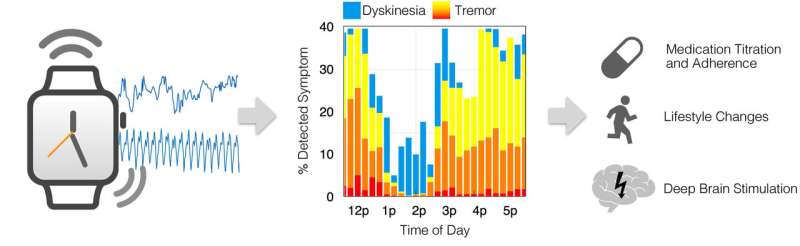
The smartwatch system is based on sensors that can capture changes in movement patterns and tremors, which can help clinicians tailor treatments such as medications and lifestyle changes. Credit: R. Powers et al., Science Translational Medicine (2021)
A team of engineers from Apple Inc. working with researchers from several institutions in the U.S. has found that smartwatches could provide a valuable resource in helping to track the progression of Parkinson's disease in patients. In their paper published in the journal Science Translational Medicine, the group describes a pilot trial of an app created for the Apple smartwatch and an informal experiment with 225 Parkinson's patients using the smartwatch and app for six months.
Parkinson's disease is a progressive disease impacting the nervous system. As basal ganglia in the brain degenerate, people with the disease begin to experience tremors, muscle problems and difficulty moving about. There is no cure for the disease, but there are several medications that slow its progression and reduce symptoms. Medical researchers have noted that one more data regarding the degree of symptoms a patient is experiencing could improve treatments, offering guidance to alter medication doses to meet individual needs. Currently, doctors must rely on tests and accounts from the patient that are conducted when patients come to the office for updates. These visits are often spaced many months apart. In this new effort, Apple and the team working with them looked into the possibility of using smartwatches to monitor movements characteristic of tremors around the clock, using data from the smartwatch gyroscope and accelerometer. The team created an app for Apple's smartwatch called Motor Fluctuations Monitor for Parkinson's Disease.
The team began with a pilot study to determine whether their app worked as desired along with 118 volunteers and several clinicians trained to track Parkinson's symptoms. Emboldened by their results in the pilot, the researchers conducted a larger study with 225 Parkinson's patients who agreed to wear the smartwatch for six months. The researchers found that the smartwatches were able to spot some symptoms missed by their caregivers. They suggest that the smartwatch and app could be used as a tool to help doctors plot out medication dosages that align with symptoms as the disease progresses.
Apple has not announced whether it will proceed with testing of the device or attempt to conduct clinical trials. If they do, the company will likely need to seek approval of their system by the FDA.
More information:Rob Powers et al. Smartwatch inertial sensors continuously monitor real-world motor fluctuations in Parkinson's disease,Science Translational Medicine(2021).DOI: 10.1126/scitranslmed.abd7865
PTC Therapeutics appears to have hit another hurdle in its quest to prove its Duchenne muscular dystrophy drug Translarna, reporting Thursday the treatment didn't significantly increase the amount of a key muscle building protein in a group of 18 boys.
The Food and Drug Administration has already rejected Translarna three times, but had agreed to consider new results under "accelerated review" procedures, leading to the data the biotech presented on Thursday. In spite of the miss, the company intends to discuss "potential approval pathways" for Translarna in the U.S. based on other data from the trial as well as earlier research.
If that plan doesn't work, the company would need to wait until a bigger, placebo-controlled trial that can generate data, which is not expected to happen until the second half of 2022. Translarna is only approved for use the European Union.
Patients with Duchenne muscular dystrophy have limited treatment options. Sarepta's Exondys 51 and Vyondys 53 have been shown to spur production of small amounts of the muscle-building protein dystrophin in boys with specific mutations, while PTC's own Emflaza, a steroid, can increase muscle strength.
The promise of Translarna is its potential to boost dystrophin in a larger group of patients, those with so-called nonsense mutations. However, the FDA hasn't been persuaded. The agency refused to review it on two occasions and agreed a third time only after PTC invoked a rarely used rule allowing it to protest a refusal — an effort that resulted in an outright rejection and a request for more clinical data.
Following that setback, PTC and the FDA agreed that if the company could show, using new analytical methods, that dystrophin production significantly increased in patients treated with Translarna, the results would be sufficient for review under accelerated approval. The company would then have to confirm those findings in a larger, placebo-controlled trial.
PTC, however, hasn't succeeded in the first part of that plan. In the 18 patients who completed the study, dystrophin production increased 9%, but not at a level that researchers considered statistically significant. PTC also didn't specify how much dystrophin subjects produced at the start of the trial, making any benefit difficult to gauge.
Nonetheless, the company plans to go back to the FDA.
"We'll plan to discuss to discuss the dystrophin results, and the totality of the existing clinical and real-world data with the FDA to determine that there's a potential accelerated path to approval," CEO Stuart Peltz said in a call with Wall Street analysts.
Analysts were less optimistic. "We are cautious on the regulatory pathway forward given the primary miss here, and given the transition of the FDA commissioner, we are unclear how flexible the FDA could be," Cantor Fitzgerald analyst Alethia Young wrote in a note. RBC Capital Markets analyst Brian Abrahams added that the numbers seen weren't close to the bar the company believed the FDA has set.
Abrahams, instead, deemed the results "more likely to be a component" of a future U.S. approval filing, should the placebo-controlled study produce positive results next year.
Data from a trial of a Phase 1 Huntington's disease drug, due in the first half of this year, could be a more significant event for PTC, Young wrote, than another possible FDA review of Translarna.
For nearly 30 years, the hunt for a cure for Alzheimer’s disease has focused on a protein called beta-amyloid. Amyloid, thehypothesisgoes, builds up inside the brain to bring about this memory-robbing disorder, which afflicts some47 million people worldwide.
Billions of dollars have poured into developing therapies aimed at reducing amyloid — thus far, to no avail. Trials of anti-amyloid treatments have repeatedly failed to help patients, sparking a reckoning among the field’s leaders.
All along, some researchers have toiled in the relative shadows, developing potential strategies that target other aspects of cells that go awry in Alzheimer’s: molecular pathways that regulate energy production, or clean up cellular debris, or regulate the flow of calcium, an ion critical to nerve cell function. And increasingly, some of these scientists have focused on what they suspect may be another, more central factor in Alzheimer’s and other dementias: dysfunction of the immune system.
With the field’s thinking narrowed around the amyloid hypothesis, immunological ideas have struggled to win favor — and funding. “There was no traction,” says Malú Tansey, a University of Florida neuroscientist whose work focuses on immunology of the brain. The committees that review grant applications didn’t want to hear about immunological studies, she says.
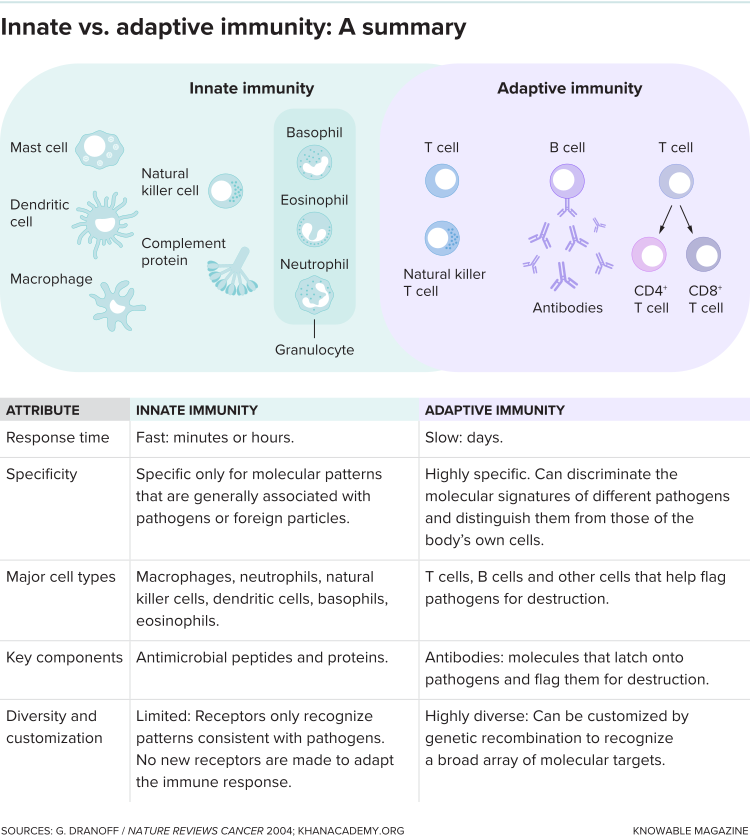
But over the past decade, the immune system connection to Alzheimer’s has become clearer. In several massive studies that analyzed the genomes of tens of thousands of people, many DNA variants that were linked to heightened Alzheimer’s risk turned out to be in genes involved in immunity — specifically, a branch of the body’s defenses known as the innate immune system. This branch attacks viruses, bacteria and other invaders quickly and indiscriminately. It works, in part, by triggering inflammation.
A further connection between inflammation and Alzheimer’s turned up in March 2020, in an analysis of electronic health records from 56 million patients, including about 1.6 million with rheumatoid arthritis, psoriasis and other inflammatory diseases. When researchers searched those records for Alzheimer’s diagnoses, they found that patients taking drugs that block a key molecular trigger of inflammation, called tumor necrosis factor (TNF), have about 50 to 70 percent lower odds of having an Alzheimer’s diagnosis than patients who were prescribed those drugs but did not take them.
This newer wave of studies opened people’s eyes to the idea that the immune system might be a major driver of Alzheimer’s pathology, says Sharon Cohen, a behavioral neurologist who serves as medical director at the Toronto Memory Program in Canada. Over time, Cohen says, researchers began thinking that “maybe inflammation is not just an aftereffect, but actually a pivotal, early effect.”
Tansey is trying to harness this growing realization to develop new therapies. A drug she helped to develop nearly 20 years ago relieved Alzheimer’s-like features in mice and recently showed encouraging results in a small study of people with the disease. “I think we were onto something way back when,” she says.
Two branches of the immune system — innate and adaptive — cooperate to help the body fight disease. Here are some of the players and features of each branch.
Early hunch
Tansey got interested in neurodegenerative disease in the late 1990s, while working as a postdoctoral fellow at Washington University in St. Louis. Her research focused on molecules that promote the survival of certain neurons that degenerate in Parkinson’s disease — in lab dish experiments, anyway. But after six years on a meager postdoc salary, and with her husband about to start neurology training at UCLA, she took a job at a biotech company in the Los Angeles area, called Xencor. She tackled a project that the company had on the back burner: designing new drugs to inhibit that inflammatory molecule TNF.
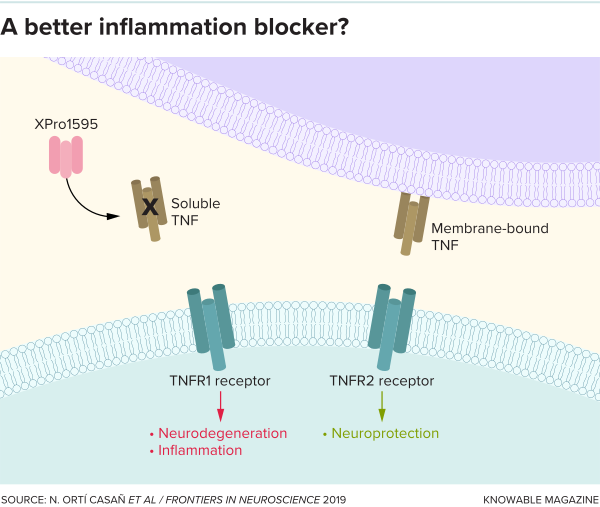
At the time, doctors already used two such drugs to treat autoimmune disorders such as psoriasis and rheumatoid arthritis. But these drugs have harmful side effects, largely owing to TNF’s complicated biology. TNF comes in two forms: one that’s anchored to the membranes of cells, and a soluble form that floats around in the spaces in between. The soluble TNF causes inflammation and can kill cells infected with viruses or bacteria — it’s a necessary job but, in excess, destroys healthy tissues. The membrane-bound form of TNF, on the other hand, confers protection against infection to begin with. The drugs in use at the time inhibited both forms of TNF, leaving people at risk for infections by viruses, bacteria and fungi that typically only cause problems for people with weakened immune systems.
Using genetic engineering, Tansey and her Xencor colleagues designed a drug that prevents this potentially dangerous side effect by targeting only the harmful, soluble form of TNF. It gloms onto the harmful TNF and takes it out of circulation. In tests, injections of the drug reduced joint swelling in rats with a condition akin to arthritis.
By the time the work was published in Science in 2003, Tansey had returned to academia, starting up her own lab at the University of Texas Southwestern Medical Center in Dallas. And as she scoured the scientific literature on TNF, she began to think again about those experiments she’d done as a postdoc, on neurons destroyed during Parkinson’s disease. She read studies showing that the brains of Parkinson’s patients have high levels of TNF — and she wondered if TNF could be killing the neurons. There was a clear way to find out: Put the TNF-blocking drug she’d helped to develop at Xencor into the brains of rats that were manipulated to develop Parkinson’s-like symptoms and watch to see what happened.
Her hunch proved correct — the drug slowed the loss of neurons in Parkinson’s rats. And that led Tansey to wonder: Could TNF also be involved in the loss of neurons in other forms of neurodegeneration, including Alzheimer’s disease? Mulling over the nuanced roles of innate immune cells, which seem to help or hurt depending on the context, she started rethinking the prevailing amyloid hypothesis. Perhaps, she thought, amyloid ends up clumping in the Alzheimer’s brain because immune cells that would normally gobble it up get sluggish as people age: In other words, the amyloid accumulated as a consequence of the disease, not a cause.
The double-edged nature of immune activity also meant that our immune systems might, if unchecked, exacerbate problems. In that case, blocking aspects of immune function — specifically, inflammation — might prove helpful.
The idea that blocking inflammation could preserve cognition and other aspects of brain function has now found support in dozens of studies, including several by Tansey’s lab. Using an approach that induced Alzheimer’s-like neurological symptoms in mice, neuroscientist Michael Heneka, a researcher at Germany’s University of Bonn, and his colleagues found that mice engineered to lack a key molecule of the innate immune system didn’t form the hallmark amyloid clumps found in Alzheimer’s.
Tansey and colleagues, for their part, showed that relieving inflammation with the drug Tansey helped develop at Xencor, called XPro1595, could reduce amyloid buildup and strengthen nerve cell connections in mice with Alzheimer’s-like memory problems and pathology. Her team has also found that mice on a high-fat, high-sugar diet — which causes insulin resistance and drives up Alzheimer’s risk — have reduced inflammation and improved behavior on tests of sociability and anxiety when treated with XPro1595.
All told, hints from human genetic and epidemiologic data, combined with growing evidence from mouse models, “was shifting or pointing toward the role of the immune system,” says Heneka, who coauthored a 2018 article in the Annual Review of Medicine about innate immunity and neurodegeneration. And the evidence is growing: In 2019, a study of more than 12,000 older adults found that people with chronic inflammation suffered greater mental losses over a period of 20 years — a clue, again, that inflammation could be an early driver of cognitive decline.
The accumulating data convinced Tansey that it was time to test this idea in people — that “instead of targeting amyloid, we need to start targeting the immune system,” she says. “And it needs to be early.” Once too much damage is done, it may be impossible to reverse.
Researchers have been working on an experimental drug (XPro1595) that they hope will help block brain inflammation more efficiently than other anti-inflammatory medications and thus help to combat Alzheimer’s disease. XPro1595’s key feature is that it selectively blocks only one form of a molecule called tumor necrosis factor (TNF): the harmful, soluble form that is associated with neurodegeneration. On the left, a molecule of XPro1595 is blocking soluble TNF so that it cannot go on to bind to a receptor (TNFR1) and trigger inflammation. The membrane-bound TNF shown on right is left alone, enabling it to activate a second receptor (TNFR2), which has a neuroprotective role.
Targeting innate immunity
Immune-based strategies against Alzheimer’s are already being pursued, but most are quite different than what Tansey was proposing. Companies mostly work with the “adaptive” immune system, which attacks pathogens or molecules very specifically, recognizing them and marking them for destruction. Experimental therapies include antibodies that recognize amyloid and target it for removal.
INmune Bio, in La Jolla, California, is one of several biotech companies taking a different approach: trying to fight degenerative brain disease by targeting the less specific innate immune system. “The immune system is a 50-50 partnership,” says RJ Tesi, the CEO. “If you’re about to have a prize fight, you’re not going to jump in with one hand tied behind your back. Likewise, with Alzheimer’s or cancer, you don’t want to go into the ring with half the immune system being ignored.” To pursue this strategy, INmune Bio bought commercial rights to XPro1595. (Tansey is a paid consultant for INmune Bio but is not involved in any of the company’s trials.)
INmune Bio initially focused on cancer, so when it designed its Alzheimer’s trial, it used a strategy commonly used in cancer drug trials. In Tesi’s view, a key reason that experimental cancer drugs succeed far more often than experimental neurology drugs is the use of molecular disease indicators called biomarkers. These are measures such as genetic variants or blood proteins that help to distinguish patients who, from the outside, may all seem to have the exact same disease, but may actually differ from one another.
By using biomarkers to select participants, cancer researchers can enroll the patients most likely to respond to a given drug — but many neurology trials enroll patients based solely on their diagnosis. And that’s problematic, says Tesi, because scientists are coming to realize that a diagnosis of Alzheimer’s, for instance, might actually encompass various subtypes of disease — each with its own underlying biology and each, perhaps, requiring a different treatment.
In an ongoing trial of XPro1595, INmune Bio aims to enroll 18 people with mild to moderate Alzheimer’s disease, all of whom have elevated levels of biomarkers for excessive inflammation, including one called C-reactive protein. In July, the company reported early data from six participants who were treated with the TNF inhibitor once a week for 12 weeks and assessed for brain inflammation using a specialized magnetic resonance imaging (MRI) technique.
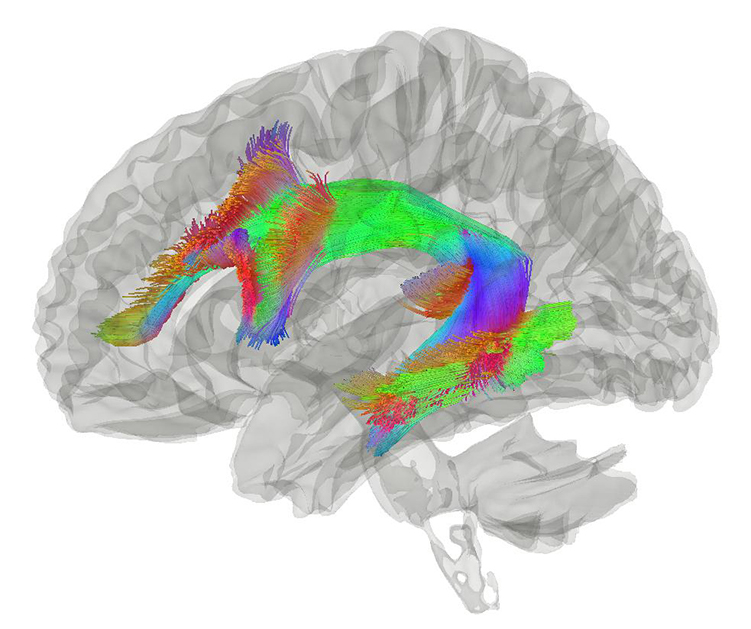
Over the 12-week period, brain inflammation fell 2.3 percent in three participants who received the high-dose TNF inhibitor — compared with a 5.1 percent increase in 25 Alzheimer’s patients whose data were collected previously as part of a major long-term study of Alzheimer’s disease. Three participants who got a low dose of XPro1595 had a smaller — 1.7 percent — increase in brain inflammation. In this small trial, the researchers did not track changes in cognition. But their MRI analysis showed that inflammation was reduced by about 40 percent in a particular bundle of nerve fibers called the arcuate fasciculus that is important for language processing and short-term memory.
In a small trial of Alzheimer’s patients, an experimental drug slowed inflammation in a brain region called the arcuate fasciculus (colored), which is important for language processing and short-term memory.
CREDIT: F.C. YEH ET AL / NEUROIMAGE 2018
“It’s early days,” Cohen says — interim results in just six people. “However, in a small sample size like that, you might not expect to see anything.” Past studies of anti-inflammatory drugs did not show a benefit in Alzheimer’s patients, but scientists are now reexamining these trial failures, Cohen says. “Maybe the idea of the immune system is important, but our therapies were too blunt,” she says.
It’s not just INmune Bio that has researchers excited about the prospect of tinkering with innate immunity to tackle brain disease. Alector, a South San Francisco biotech company, is developing potential therapeutics to activate the innate immune system to fight Alzheimer’s. Some of their experimental drugs are intended to boost the activity of innate immune cells in the brain called microglia. Tiaki Therapeutics in Cambridge, Massachusetts, meanwhile, is using computational methods to identify potential treatments for people with neuroinflammatory diseases who have specific gene signatures. And another company, Shanghai-based Green Valley, is investigating a drug that includes a mix of seaweed sugars that, the company claims, alters gut bacteria to tamp down brain inflammation.
It’s encouraging to see so many different approaches to harnessing the innate immune system to fight Alzheimer’s, Heneka says. He predicts, however, that a variety of treatments will be needed to tackle such a multifaceted, complicated disease.
But Tansey suspects that chronic inflammation is a crucial factor that takes a toll on the brain over the course of many years. Although lowering inflammation will not solve everything, she says, “I think it will buy you a lot. Because it’s the dark passenger of the journey.”