Search This Blog

Saturday, March 27, 2021

China outlines COVID-origin findings, ahead of WHO report

 Chinese officials briefed diplomats Friday on the ongoing research into the origin of COVID-19, ahead of the expected release of a long-awaited report from the World Health Organization.

The briefing appeared to be an attempt by China to get out its view on the report, which has become enmeshed in a diplomatic spat. The U.S. and others have raised questions about Chinese influence and the independence of the findings, and China has accused critics of politicizing a scientific study.

"Our purpose is to show our openness and transparency," said Yang Tao, a Foreign Ministry official. "China fought the epidemic in a transparent manner and has nothing to hide."

The report, which has been delayed repeatedly, is based on a visit earlier this year by a WHO team of international experts to Wuhan, the city in central China where infections from a new coronavirus were first reported in late 2019.

The experts worked with Chinese counterparts, and both sides have to agree on the final report. It's unclear when it will come out.

Feng Zijian, a Chinese team member and the deputy director of China's Center for Disease Control and Prevention, said the experts examined four possible ways the virus got to Wuhan.

They are: a bat carrying the virus infected a human, a bat infected an intermediate mammal that spread it to a human, shipments of cold or frozen food, and a laboratory that researches viruses in Wuhan.

The experts voted on the hypotheses after in-depth discussion and concluded one of the two animal routes or the cold chain was most likely how it was transmitted. A lab leak was viewed as extremely unlikely, Feng said.

His remarks were reported by state broadcaster CCTV, which said envoys from 50 countries and the League of Arab States and the African Union attended the briefing at the Foreign Ministry.

"China firmly opposes certain countries' attempts to politicize the origin tracing issue and make groundless accusations and hold China accountable," the ministry said in an online post about the briefing.

Separately, Foreign Ministry spokesperson Hua Chunying said, "I would like to stress that virus tracing is a scientific issue that should be studied by scientists through cooperation."

She told reporters that the experts are still discussing the contents and translation of the report, and she did not know when it would be released.

At a press briefing later Friday in Geneva, the World Health Organization expert who led WHO's China mission said the nearly 400-page report was finalized and in the process of being fact-checked and translated.

"I expect that in the next few days, that whole process will be completed and we will be able to release it publicly," WHO expert Peter Ben Embarek said.

At a Biden administration health briefing Friday, U.S. CDC Director Dr. Rochelle Walensky said the agency was looking forward to the release of the WHO report.

Dr. Anthony Fauci said the explanation that "most public health officials agree with" about how COVID-19 appeared in humans is that the virus was likely spreading in China below the radar for several weeks, allowing it to be well adapted by the time it was recognized.

The government's top infectious disease expert's comments came in response to speculation by former CDC head Robert Redfield on CNN that COVID-19 came from a lab.

"What he likely was expressing is that there certainly are possibilities ... of how a virus adapts itself to a efficient spread among humans," Fauci said.

https://medicalxpress.com/news/2021-03-china-outlines-covid-origin.html

Adjuvants: The unsung heroes of vaccines

 Emerging from vague familiarity into the spotlight as the only route out of the pandemic, vaccines have become an everyday topic of conversation. Most of us now understand the principle of vaccination: our immune system is presented with a part of a pathogen and instructed to create a lasting immune response to it, safeguarding us against future infection. But few people know about vaccine ingredients that can be essential for inducing a potent immune response: adjuvants.

Named from the Latin "adiuvare" meaning "to help," adjuvants have been lending a helping hand to vaccinologists for many decades. Yet a lack of a clear understanding of how they work has tainted their reputation, leading to epithets such as "alchemy" and "the immunologist's dirty secret".

The concept emerged in 1925 when Gaston Ramon, a French vet, discovered that horses vaccinated against diphtheria had a stronger immune response if inflammation developed at the site of injection. Ramon then set out to test a range of common materials and foodstuffs for their ability to cause irritation and inflammation as vaccine additives.

Believed to be safe to inject if they are safe to eat, various substances from breadcrumbs and oil to agar and soap were shown to improve antibody responses in vaccinated animals. Perhaps surprisingly, some of today's adjuvants are still based on related substances, only manufactured using more controlled and regulated methods.

A similarly serendipitous discovery followed a year later when Alexander Glenny, a British immunologist, used aluminum salts to purify the diphtheria protein. This preparation also resulted in superior antibody responses compared with previous diphtheria vaccines and paved the way for aluminum salts to become the most widely used  to date.

Over the next 60 years, aluminum salts were added to many licensed protein-based vaccines, including those against diphtheria, tetanus, pertussis, hepatitis, pneumococcal and meningococcal diseases.

Notoriety

However, with prominence came notoriety. In the 1970s, false claims emerged that aluminum salts in pediatric vaccines can cause aluminum metal to accumulate in the brain, causing harm. Several large studies followed, but no such effects were found. Although we still don't fully understand how they work, and reports of side-effects still occasionally crop up, aluminum salts remain a trusted and widely used adjuvant. Indeed, the Chinese Sinopharm vaccine against COVID contains dead coronavirus combined with an aluminum salt.

Partly because of the controversies, but mostly because aluminum salts don't effectively stimulate the cellular arm of the —the T cells—scientists continued to work on new types of adjuvants, aiming for high potency with minimal side-effects. During the past few decades, many new formulations have been in development, based on old and new substances: oils and fats, saponins (plant-derived compounds), polymers, but also combinations of active components, guided by our increasing understanding of the immune system.

A new class of adjuvants has emerged, based on common molecules found in viruses and bacteria that stimulate our innate immune system—the immune system's first line of defense. Just a handful of receptors on our immune cells can detect generic features across a vast range of pathogens, from surface molecules to RNA or DNA. This recognition leads to the second half of our defense system, known as adaptive immunity, being activated to recognize and neutralize a specific invading pathogen. Adjuvants that mimic molecules common to many pathogens can be used to kickstart our immune response to the vaccine.

Over the past couple of decades, the regulators have approved only a few adjuvants, other than aluminum salts. Novartis's MF59—an emulsion containing naturally occurring squalene oil and water—has been licensed as part of the seasonal flu vaccine. And three adjuvant systems by GlaxoSmithKline (GSK) are approved as part of vaccines against shingles, pandemic flu and HPV.

Another potent and safe adjuvant is a compound called immunostimulating complex (Iscom). Iscoms are cage-like nanospheres that form when saponin is mixed with two types of fats. An example is Matrix M, included in the COVID vaccine, made by the US biotech company Novavax.

The authorized mRNA vaccines against COVID—made by Pfizer and Moderna – also contain an adjuvant. Messenger RNA (mRNA) is a set of genetic instructions for our cells to make the spike protein, which is found on the surface of the coronavirus. The adjuvants in mRNA vaccines are lipid or polymer-based nanoparticles that protect and stabilize the fragile mRNA and improve its uptake by our immune cells.

Not a one-trick pony

Adjuvants are versatile. They can make vaccines more effective in certain age groups, such as babies or , where it is harder to induce a strong immune response. A notable example is GSK's Shingrix vaccine, which contains an adjuvant cocktail, AS01. Shingrix has shown remarkably good efficacy against shingles, which generally strike the elderly—a notoriously difficult population to protect because immunity fades in old age.

Adjuvants can also modify and broaden the . This can be important for pathogens that need many arms of the immune system to defeat them, as is the case with COVID-19 and complex diseases such as malaria—or for pathogens that mutate a lot, such as flu and HIV. Adjuvants can even enable using a half vaccine dose—an important consideration in a pandemic where huge numbers of doses need to be made and administered in a short timeframe.

In the face of existing and emerging pathogens, and the demand for highly protective and safe vaccines, vaccinologists will need all the help they can get. We might finally be able to dispel any remaining doubts about adjuvants, which are now becoming a mainstream tool in  development.

https://medicalxpress.com/news/2021-03-adjuvants-unsung-heroes-vaccines.html

Reality check: Amazon Care may not be that big of a deal

 Amazon's expansion of its virtual care pilot, Amazon Care, to employees and third party employers nationwide is sparking fears the e-commerce giant could represent a significant threat to telehealth vendors after a year of unrestrained growth in the sector.

But though the idea of Amazon offering virtual care nationwide is unsettling for incumbents, Amazon Care's current offerings and structure aren't that disruptive, experts say, and shouldn't noticeably affect market giants like Teladoc Health, Amwell or Doctor on Demand —​ at least in the near term.

"I don't necessarily think that we see the big Teladoc and Amwells of the world shaking in their boots," Arielle Trzcinski, principal analyst at Forrester, said. "They have a pretty strong hold on the market."

Amazon started piloting Amazon Care 18 months ago as an on-demand preventative, urgent and wellness service for employees. Then last week, the Seattle-based behemoth announced plans to offer the program's virtual care benefit to employers across the U.S. beginning this summer, and would offer its in-home primary care service to other Washington state-based companies and the cities of Washington, D.C. and Baltimore in subsequent months.

Analysts say the scale Amazon can bring to bear and the implications of its entrance for pricing, marketing and capital access in the telemedicine sector are indeed concerning, but the virtual care space is big enough to support multiple winners.

Despite surging demand caused by COVID-19, it's still a massively underpenetrated market. Teladoc, the largest virtual care provider in the U.S., expects to provide between 12 million and 13 million visits in 2021, but the country sees about 850 million outpatient visits annually, Cowen analysts said in a research note on Amazon Care's expansion.

That wiggle room bodes well for existing players, which also enjoy a significant first-mover advantage over Amazon.

Teladoc, for example, has had 19 years to build out its suite of telemedical services and capture market share. The New York-based company has thousands of clients amid major health systems, payers and employers, including over 40% of the Fortune 500.

Teladoc had been ramping up its offerings to become a one-stop virtual shop even before the pandemic, but exponentially accelerated growth plans in 2020 amid mounting consumer demand. With its $18.5 billion acquisition of chronic care manager Livongo last year, the vendor has expanded into previously niche and specialty areas like behavioral health and chronic care, and is testing other adjacencies like virtual-first primary care.

It's likely Teladoc will maintain the competitive advantage moving forward, according to SVB Leerink analyst Stephanie Davis. Though its stock took an initial hit late last week following the news, shares in Teladoc have ticked back up since as Wall Street digests the peripheral near-term implications of Amazon Care's nationwide rollout.

"They're not going to be knocked out of place," Davis said.

At the moment, Amazon Care is a more direct threat to employer-facing virtual point solutions, instead of the more comprehensive offerings peddled by larger, more entrenched vendors, analysts say.

Such small companies like Omada, Cleo, Hinge Health and Kaia that focus on select conditions like diabetes, muscluoskeletal, hypertension or behavioral health generally have a few important employer clients and compete on price. Going toe-to-toe against Amazon, which brought in $386 billion in revenue last year, is likely a daunting prospect for the crop of digital health startups.

"The employer space is the closest thing to the wild, Wild West in the health sector," Davis said. Employers are more willing to shop around or bet on unestablished players than health insurers or providers, which are more directly culpable for quality of care.

Amazon says it's in discussions with numerous employers about Amazon Care, but isn't sharing specifics. It's likely Amazon will target smaller employers that need to save money as a starting point for sales efforts for Amazon Care, or mid-sized or large companies with concentrated workforces, Michael Abrams, managing partner at Numerof & Associates, said.

Amazon isn't currently disclosing pricing for its virtual care platform, but will likely argue they can provide cost savings to employers that feel their current vendors aren't delivering.

Looking strictly at the virtual visit component of Amazon Care, there's very little distinguishing it from other large vendors. Most telehealth platforms are available right now at little to no cost and offer short wait times, though Amazon says it provides free access to a medical professional in 60 seconds or less — and will eventually link telehealth with in-home care across the U.S.

It's also angled more as a virtual-first primary care option, treating patients through groups of providers matched with each patient based on their needs.

There's an appetite for this on the consumer side, analysts say. Research has shown people like connecting with their own doctors, and telemedicine vendors are banking on their ability to build a sense of familiarity with virtual providers without sacrificing the convenience of an in-home visit.

Teladoc does something similar, allowing patients to connect with a preferred provider — and can match patients with chronic conditions to coaches and other support, including connected devices, thanks to the Livongo buy.

However, Amazon Care does offer some services that have been overlooked by larger vendors, including joint care. Existing joint conditions have likely been exacerbated by non-ergonomic work from home settings, Trzcinski said.

That could be a major plus for Amazon, as employers are starting to face the risk of potential short- and long-term disability claims bubbling up over the next year or so due to work from home, and may be willing to pay a premium to head those off.

Pharmacy is another key differentiator, experts say. Amazon Pharmacy, which allows consumers to complete a transaction on their desktop or smartphone through the Amazon app and get medications delivered to the home, is an option to fill scripts on Amazon Care.

That could greatly simplify the process for existing Amazon customers, linking prescription fulfillment and making it easier to order and receive all kinds of over the counter and durable medical equipment products at the same time.

With its Livongo tie-up, Teladoc checked the box on chronic care management, but pharmacy overall is "a piece I don't see filled yet," Trzcinski said, noting how successfully Amazon threatens existing telehealth vendors is a question of which is most effective —​ and most affordable. "There's a couple of areas I think Amazon is positioned well. That doesn't mean Teladoc or Amwell couldn't step in and close those gaps if they wanted to."

And familiarity with the brand is, of course, a significant competitive advantage. In the 25 years since its creation, Amazon has grown to capture almost 40% of the U.S. e-commerce market, according to eMarketer. As many as 82% of American households may have a Prime subscription according to one estimate, and that convenience — the linchpin of its brand — could smooth Amazon Care's path in the opaque healthcare sector.

But despite these differentiators, Amazon Care has a ways to go before it's ready to compete with the likes of Teladoc, experts say. And Amazon has been burned in healthcare before, disbanding its joint venture with J.P. Morgan and Berkshire Hathaway to lower medical costs, called Haven, earlier this year after failing to move the needle on prices.

Amazon Care could run into similar roadblocks.

"This is Amazon's first foray into direct care delivery, and the complexities of the business more than rival those of mail order merchandizing," Abrams said. "Amazon has a steep hill to climb."

https://www.healthcaredive.com/news/reality-check-amazon-care-may-not-be-that-big-of-a-deal/596973/

Japan to issue digital vaccine passport

 Japan is set to issue digital health certificates to citizens who have been vaccinated against COVID-19, joining China, the EU and other countries that have adopted similar measures aimed at opening up overseas travel, the Nikkei reported on Saturday.

In line with international standards, the certificate can be managed on a mobile app, allowing the carrier to present the proof of vaccination when boarding a plane or checking in to a hotel, the report said.

The app is also focused on foreigners staying in Japan and returning to their respective home countries, according to the report.

https://www.reuters.com/article/us-health-coronavirus-japan-passport/japan-to-issue-digital-vaccine-passport-nikkei-idUSKBN2BJ0Q2

Infected Saliva May Be Pushing COVID Through the Body

 SARS-CoV-2's infection sites are well known in the airways and other parts of the body, but new research indicates that the virus also infects mouth cells.

The findings by Ni Huang, PhD, from the Wellcome Sanger Institute in Cambridge, United Kingdom, and Paola Perez, PhD, from the National Institutes of Health (NIH), and colleagues, published online in Nature Medicine on Thursday, may help explain the taste and smell loss, dry mouth, and blistering some patients experience, the authors say.

Previous studies have suggested that testing saliva is nearly as accurate as deep nasal swabbing in diagnosing COVID-19, but little was known about where the virus in the saliva comes from.

The scientists say the mouth should be added to the airways in addition to the digestive system, blood vessels, and kidneys as infection sites for COVID-19.

Saliva Is Infectious

"This is really the first direct evidence that we have that SARS-CoV-2 can not only infect and replicate in cells of the mouth but the fluid generated by the mouth is also infectious," coauthor Blake Warner, DDS, PhD, MPH, from the NIH's National Institute of Dental and Craniofacial Research, told Medscape Medical News.

Warner said that the international team of researchers discovered that the salivary glands were working essentially as a virus production factory.

"This is the prime environment for a SARS-CoV-2," he said. "The salivary glands are not only good at making proteins, they are also good at secreting fluids. Those fluids have the ability to transfer the virus to other people but also spread it to other parts of the body."

The findings also help confirm the necessity for mask-wearing, proper personal protective equipment, and social distancing, Warner noted.

He said it also may have implications for testing.

"We need to have folks who are tested routinely, prospectively in the nasal cavity and in saliva until they get infection, especially if they are a high-risk cohort," he said. "Only then will we understand whether this early infection is happening first in the mouth or first in the nose and then follow them forward.

"Part of our data suggest that you might miss some folks if you're only testing one site," he added.

"Rabbit Hole" Tests Led to Discovery

Warner described the "rabbit hole" experiments that led to the discovery. First they used saliva from testing facilities and donated tissue from autopsies of COVID-19 patients to prove that the virus was present and could replicate in the salivary glands.

Then they used tissue from acutely infected live donors and were able to confirm that the salivary glands and mucosae could support both infection and replication.

Researchers then tested the saliva from a small group of people with asymptomatic COVID-19 to see if it could infect other healthy cells in a lab dish and found that it could.

Finally, to explore the link between oral symptoms and virus in saliva, the researchers collected saliva from a separate group of 35 NIH volunteers who had mild or asymptomatic COVID-19.

Of the 27 people who had symptoms, those with virus in their saliva were more likely to report loss of taste and smell, suggesting that oral infection might explain oral symptoms of COVID-19.

Understanding of the mouth's involvement in COVID-19 infection can help lead to answers on reducing transmission within and outside of the body, the team concludes.

William Schaffner, MD, an infectious disease specialist at Vanderbilt University School of Medicine in Nashville, Tennessee, told Medscape Medical News that he found the series of experiments "fascinating."

The paper makes it clear that "an unappreciated area of the body may play a role in COVID infections," he said, and it also helps answer the puzzling question of why many COVID-19 patients lose their sense of taste.

"I think for the average person I don't think it means all that much except you don't want to kiss someone who's got COVID," he said.

But Schaffner says he's intrigued by the paper's implications regarding how the virus is transmitted — and even more concerned about young crowds flocking to southern shores.

"Now we have all these people on spring break," he said. "They're not just staying on the beaches, they're not just going to the bars, some will have romantic relationships and this may be yet another way this virus could go from one person to another very efficiently."

https://www.medscape.com/viewarticle/948240

Quality Sleep Elusive for Most During Pandemic

 Fewer than 1 in 10 people report they are getting "very good sleep" at night — just one of several eye-opening findings about the state of sleep quality during the COVID-19 pandemic in new data from University College London researchers.

In a survey of more than 70,000 people, only 7.7% now report their sleep as "very good," for example, down from 39.4% in March 2020.

Many factors could be driving this drop in sleep quality. Lead author Daisy Fancourt, PhD, and colleagues found people with lower household incomes, with a mental or physical health condition, with lower levels of education, and those from ethnic minority backgrounds were more likely to report "very poor" sleep quality.

"This could be due to a wide range of factors, such as disruption to routines and the changes in living circumstances that lockdown has caused," co-author Elise Paul, PhD, UCL senior research fellow in Epidemiology & Health Care, stated in a news release.

"Stress is also likely to be a factor," she added, particularly for people living with lower household incomes or in other challenging circumstances.

Possible protective factors include age greater than 60 years, male sex, and absence of children in the home, according to the weekly report posted online March 25 by UCL COVID-19 Social Study Investigators.

Stress around unemployment and finances was higher among those living with children, they noted.

The proportion of people reporting "very poor sleep" varied over time, almost doubling from 5.4% in autumn 2020 to 10.1% in January 2021, for example. Although the proportion dropped somewhat since the beginning of this year, it remains at approximately the same level it was last summer.

Vaccine Hesitancy Also Dropping

The UCL investigators also evaluated COVID-19 vaccination rates. More than half (52.5%) of people have already received at least one dose of the vaccine, for example.

At the same time, the proportion of people hesitant to get a COVID-19 vaccine "has decreased substantially since the autumn," the researchers stated in the release.

Approximately one third of the most hesitant respondents in the autumn have received at least one vaccine dose since then. Furthermore, more than 1 in 5 of people in the "very unlikely" group have now changed their minds, reporting they are "very likely" to get vaccinated by the end of this month.

At the same time, only 1% of the "very likely" group moved to the "very unlikely" vaccination group.

Despite these positive trends, continued public health messaging remains essential to maximize the number of people getting vaccinated, the researchers note.

The Nuffield Foundation, Wellcome, and UK Research and Innovation (UKRI) provided funding for the study.

https://www.medscape.com/viewarticle/948242

$13 Anti-Fog Spray is a Life-Saver if You Wear Glasses and a Mask


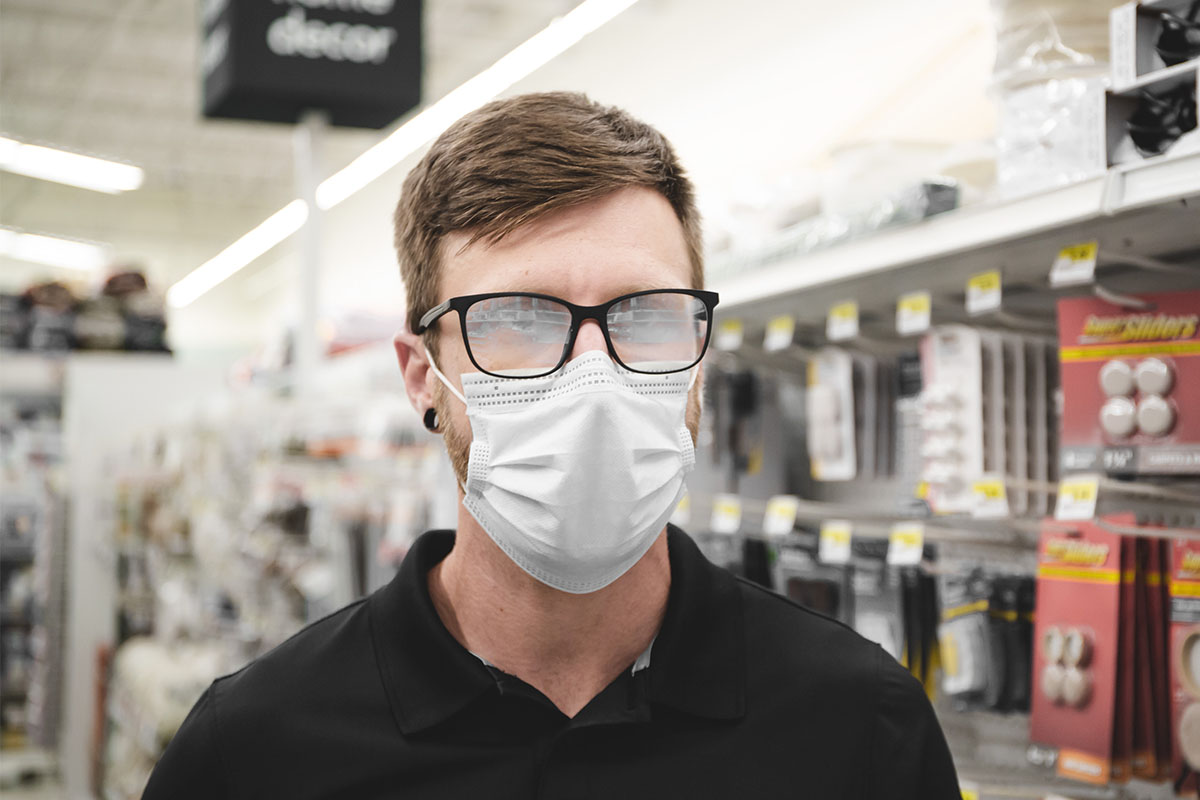
The struggle is real for New Yorkers who wear glasses. Glasses plus a face mask make for foggy lenses and reduced visibility. You want to be a good person and wear your mask, but you also need to see where you're going. The masking-up of the pandemic has been difficult for those who need to wear glasses most of the time.

The good news is that there is a way to get around it: FogBlock™Anti-Fog Solution for PPE Masks & Glasses is on sale right now for only $12.99. The spray enables you to carry on wearing your personal protective equipment and keep your vision aids in place. Why didn't we think of this sooner?

FogBlock is easy to apply and among the best anti-fog sprays available, designed to keep your glasses clear when you wear a mask — and when you go from cold to hot environments. It's a non-toxic and streak-free formula that needs no wiping. The spray's effects last for up to 24 hours, so you don't need to keep applying it constantly, either. 

Using it is simple: Spray it on your lenses, let it dry for five minutes, and then wear your glasses. That's it. There's no tricky application process nor do you need to remove the coating before reapplying. The solution is safe for all lens types — it works on spectacles, sunglasses, and even goggles — and comes in a handy small size.

https://gothamist.com/arts-entertainment/13-anti-fog-spray-life-saver-if-you-wear-glasses