Search This Blog

Monday, March 29, 2021

'60 Minutes': COVID May Have Leaked From Wuhan Lab, Slams 'Curated' WHO Report

 Roughly one year ago, Zero Hedge was "permanently" banned from Twitter for daring to suggest that the novel coronavirus outbreak rocking the globe might have originated with a lab called the Wuhan Institute of Virology, a Level 4 Biosafety facility where scientists were - as fate would have it - researching coronaviruses, including viruses gleaned from bats.

When Chinese authorities identified a massive "wet market" in the city as ground zero for infections, suggesting the virus originated with some of market's wares, which including live civets and bats, considered delicacies by many Chinese, it was a scientist who first pointed out the lab's proximity to the market, and noted the likelihood that the virus had probably leaked from the lab via an unsuspecting scientists.
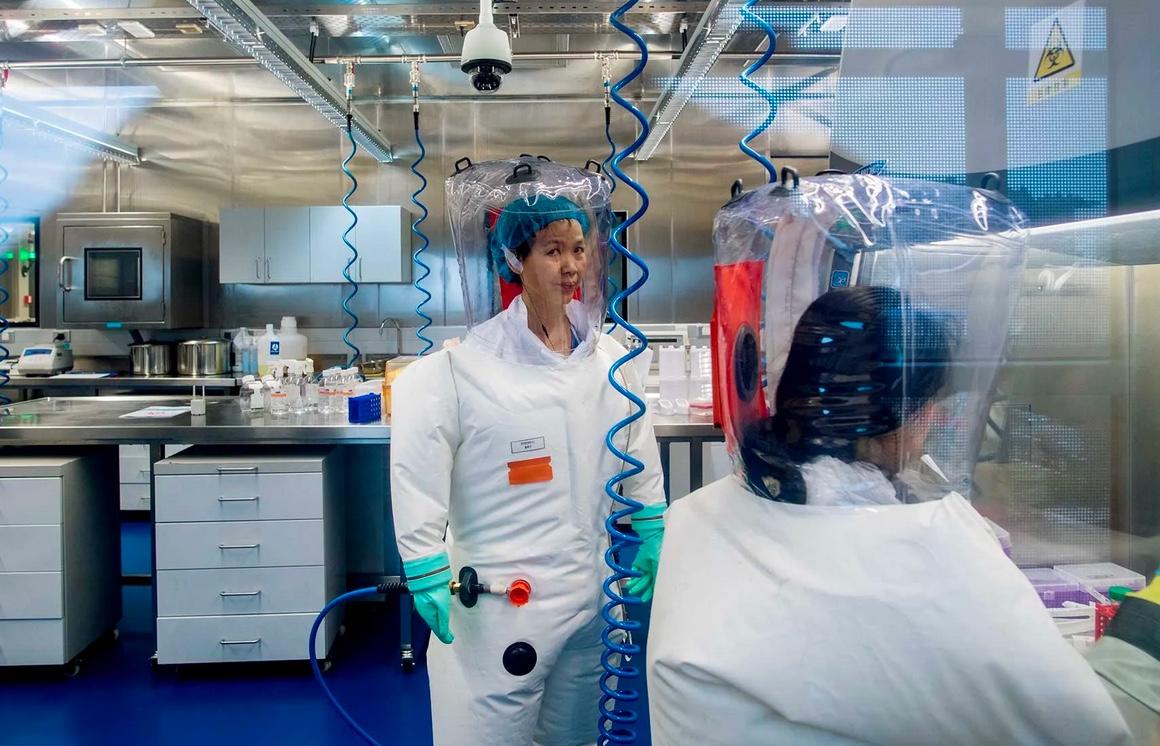
What followed was a barrage of US media stories claiming the lab leak hypothesis was "unsubstantiated" and a "conspiracy theory". NPR went so far as to publish a piece quoted a handful of scientists (almost all of whom had deep financial and professional ties to China) talking up China's lab-security protocols and dismissing the theory as completely baseless. Yet, reporting since then has confirmed official complaints about safety at the lab.

Yet, here we are, one year later, and after at least two attempts to send teams of WHO scientists to investigate the origins of the virus, no foreigners were ever allowed to freely investigate.

Despite this, the team compiled a report on the origins of the coronavirus - a report that essentially confirms the "official narrative" that was reported early last year: that the virus likely originated in bats with an unknown "intermediary" (some have suggested a civet) likely transferring it to humans. The report, which was reviewed and, according to reports, heavily censored by Chinese authorities, insists that a lab leak was "extremely unlikely," according to an advanced copy leaked to the AP.

Well, after taking Beijing's word for it (with a few notable exceptions) for the last year, the American press is finally showing some skepticism about the virus's origins. Case in point: on Sunday night, CBS's "60 Minutes" ran a feature story questioning the offiicial narrative about the virus's origins, citing the latest delay of the WHO report (which, again, was leaked last night), as suspicious.

Lesley Stahl interviewed Jamie Metzl, who complained Friday that the report was "compromised", and Wuhan Lab-affiliate Peter Daszak, as she poked holes in the official narrative more efficiently than any mainstream reporter we have seen.

Metzl started by claiming that the WHO "investigation" was completely useless, comparing it to a "study tour" where scientists only saw "what the CCP wanted them to see."

Jamie Metzl: I wouldn't really call what's happened now an investigation. It's essentially a highly-chaperoned, highly-curated study tour.

Lesley Stahl: Study tour?

Jamie Metzl: Study tour. Everybody around the world is imagining this is some kind of full investigation. It's not. This group of experts only saw what the Chinese government wanted them to see.

As 60 Minutes points out, Metzl, a former NSC official in the Clinton administration and member of a WHO advisory committee on genetic engineering, is one of more than two dozen scientists and officials (including virologists) who signed an open letter earlier this month calling for a new investigation to return to China. Obviously, at this point, Beijing has had more than a year to effectuate a cover-up.

During their converstaion, Metzl explained just how much control Beijing has had over what the investigators saw and weren't allowed to see.

Jamie Metzl: We would have to ask the question, "Well, why in Wuhan?" To quote Humphrey Bogart, "Of all the gin joints in all the towns in all the world, why Wuhan?" What Wuhan does have is China's level four virology institute, with probably the world's largest collection of bat viruses, including bat coronaviruses.

Lesley Stahl: I had seen that the World Health Organization team only spent 3 hours at the lab.

Jamie Metzl: While they were there they didn't demand access to the records and samples and key personnel.

That's because of the ground rules China set with the WHO, which has never had the authority to make demands or enforce international protocols.

Jamie Metzl: It was agreed first that China would have veto power over - over who even got to be on the mission. Secondly -

Lesley Stahl: And WHO agreed to that.

Jamie Metzl: WHO agreed to that. On top of that, the WHO agreed that in most instances China would do the primary investigation.

And then just share its findings -

Lesley Stahl: No.

Jamie Metzl: - with these international experts. So these international experts weren't allowed to do their own primary investigation.

Lesley Stahl: Wait. You're saying that China did the investigation and showed the results to the committee and that was it?

Jamie Metzl: Pretty much that -

Lesley Stahl: Whoa.

Metzl followed this up with a powerful comparison: Imagine if the US had let the Soviets run an international investigation into Chernobyl? Metzl added: despite evidence of past deadly lab leaks in China, Metzl said no one on the team was trained to identify signs of a lab leak.

Also, while the team went on a four-week mission, two of those weeks were spent holed up at this hotel in quarantine. Once out, they had some tense exchanges with their counterparts, a team of Chinese experts, over their refusal to provide raw data. If the virus originated in animals, the key unanswered question is: how did the virus travel the thousand miles from the bat caves in southern China to Wuhan?

Unsurprisingly, the WHO team thinks it has an alternative explanation for this that doesn't involve a lab leak. Infected animals were simply captured at farms near the bat caves, and shipped the stock to the Huanan market in Wuhan.

To argue the other side, 60 Minutes brought in Peter Daszak, a member of the WHO team. Daszak has close ties to Chinese labs, and has frequently appeared in the American press to argue against the leak narrative. But after several minutes of equivocating, Stahl forced Daszak to admit the incontrovertible truth: that the WHO has no real evidence to disprove the lab leak. Essentially, the team is just taking China's word for it, according to Daszak. What choice did they have?

What's more, Daszak said Chinese government "minders" were in the room with the investigators at all times.

Peter Daszak: We met with them. We said, "Do you audit the lab?" And they said, "Annually." "Did it you audit it after the outbreak?" "Yes." "Was anything found?" "No." "Do you test your staff?" "Yes." No one was--

Lesley Stahl: But you're just taking their word for it.

Peter Daszak: Well, what else can we do? There's a limit to what you can do and we went right up to that limit. We asked them tough questions. They weren't vetted in advance. And the answers they gave, we found to be believable-- correct and convincing.

Lesley Stahl: But weren't the Chinese engaged in a cover-up? They destroyed evidence, they punished scientists who were trying to give evidence on this very question of the origin.

Peter Daszak: Well, that wasn't our task to find out if China had covered up the origin issue.

Lesley Stahl: No, I know. I'm just saying doesn't that make you wonder?

Peter Daszak: We didn't see any evidence of any false reporting or cover-up in the work that we did in China.

Lesley Stahl: Were there Chinese government minders in the room every time you were asking questions?

Peter Daszak: There were Ministry of Foreign Affairs staff in the room throughout our stay. Absolutely. They were there to make sure everything went smoothly from the China side.

Lesley Stahl: Or to make sure they weren't telling you the whole truth and nothing but the truth--

Peter Daszak: You sit in a room with people who are scientists and you know what a scientific statement is and you know what a political statement is. We had no problem distinguishing between the two.

To be sure, Metzl acknowledged that the WHO theory is "plausible," and that his own theory has some holes ("it's incomplete" he says, adding that he would need more data from Beijing, which the CCP has been reluctant to turn over). But most importantly, Daszak has a conflict of interest, Metzl said, because of his long-time collaboration with the Wuhan lab.

"60 Minutes" also interviewed Matt Pottinger, the former Trump Administration national security official and head of Asia policy who has been one of the most vocal skeptics of the official narrative. Beijing didn't share the genetic sequences of the virus from the WIV. Pottinger also said Beijing had ordered scientists to destroy all viral samples.

Now, none of that is in itself evidence that the virus leaked from the lab. But it's a clear sign that a major cover-up has taken place. And the US media's unwillingness (until now) to reckon with that has been difficult to explain.

https://www.zerohedge.com/covid-19/60-minutes-reports-covid-may-have-leaked-wuhan-lab-slams-curated-who-report

Celldex CDX-0159 Shows 80% Response Rate In Early-Stage Skin Allergy Study

 Celldex Therapeutics Inc (NASDAQ: CLDXhas reported interim data from the ongoing Phase 1b trial, evaluating CDX-0159 in patients with antihistamine refractory cold contact urticaria (ColdU) and symptomatic dermographism (SD), the two most common forms of chronic inducible urticaria (CIndU).

  • CIndU are forms of urticaria (red, itchy welts that result from a skin reaction) with an attributable cause or trigger associated with them, typically resulting in wheals (hives) angioedema.

  • Eight out of ten patients treated and assessed for at least 15 days after treatment experienced a complete response (CR) to provocation testing post-treatment. One patient experienced a partial response (PR).

  • Enrollment is near completion in the ColdU and SD cohorts, and now the study will be expanded to include ten patients with cholinergic urticaria.

  • CDX-0159 was generally well tolerated. A single severe infusion reaction was observed (brief loss of consciousness, followed by shaking and sweating).

  • The patient was treated with antihistamines and steroids; no epinephrine was administered, who recovered rapidly.

  • No evidence of mast cell activation was observed shortly after the infusion and further at a later time point.

  • Through day 15, three patients had transient, mild decreases in hemoglobin, and no patients had meaningful declines in white blood cells.

  • CDX-0159 is a humanized monoclonal antibody that binds the KIT receptor with high specificity and potently inhibits its activity.

  • The KIT receptor tyrosine kinase is expressed in various cells, including mast cells, which mediate inflammatory responses such as hypersensitivity and allergic reactions.

  • Celldex hosted a conference call/webcast today at 7:45 a.m. ET.

UniQure gene therapy 'highly unlikely' to be liver cancer trigger

 An independent investigation has found uniQure’s hemophilia B gene therapy is “highly unlikely” to have caused the liver cancer developed by a recipient of the investigational candidate.

In December, the FDA put uniQure’s hemophilia B gene therapy on clinical hold in response to a case of hepatocellular carcinoma in a patient in the pivotal trial of etranacogene dezaparvovec. UniQure had already completed dosing in the affected studies, but the safety concern threatened the chances of the therapy in an indication targeted by Pfizer and Spark Therapeutics' fidanacogene elaparvovec.  

Now, uniQure has shared the findings of an investigation into the liver cancer case. The investigation determined the gene therapy is highly unlikely to have triggered the cancer after uncovering multiple pieces of evidence that point to other causes. Bluebird bio recently reported a similar outcome after assessing a case of cancer in a recipient of its sickle cell disease gene therapy. 

UniQure said cells with AAV vector integration accounted for 0.027% if the patient’s tissue sample. The integration events that were present were randomly distributed. There were no signs of clonal expansion or any dominant integration event. None of the integrations happened at sites linked to the development of hepatocellular carcinoma.

The findings diminish concerns that the gene therapy caused the liver cancer. Other analyses provide evidence that other factors drove development of the tumor. The patient’s tumor had several genetic mutations characteristic of hepatocellular carcinoma and unrelated to vector integration. Analyses of the tumor and adjacent tissue suggest the liver was in a precancerous state.

That state is consistent with factors that put the patient at greater risk of hepatocellular carcinoma. The patient has a history of hepatitis B and C, evidence of nonalcoholic fatty liver disease and other risk factors associated with the cancer. Generating further evidence that those factors are the likely cause of the cancer positions uniQure to push ahead with plans to get the gene therapy to market. 

“We are prepared to discuss with the FDA the recently submitted analyses and the status of the clinical hold as expeditiously as possible. As stated previously, we do not anticipate any impact to the HOPE-B pivotal study or our regulatory submission timeline as a result of the clinical hold,” uniQure CEO Matt Kapusta said in a statement.

UniQure presented top-line data from the pivotal study in December linking its gene therapy to an 83% reduction in bleeding events. The biotech is set to publish more data in the second quarter. A deal with CSL Behring could clear antitrust review and close around the same time. 

https://www.fiercebiotech.com/biotech/uniqure-gene-therapy-highly-unlikely-to-liver-cancer-trigger

Oscar Health started at buy by 4 of 5 sell-siders

Mar-29-21InitiatedMorgan StanleyOverweight$44
Mar-29-21InitiatedGoldmanBuy$44
Mar-29-21InitiatedCredit SuisseOutperform$34
Mar-29-21InitiatedCowenMarket Perform$29
Mar-29-21InitiatedBofA SecuritiesBuy$39

 https://finviz.com/quote.ashx?t=OSCR

Orphazyme shares sink as late-stage test of 'heat shock protein' flops

 Orphazyme saw its stock sink more than 30% in Europe Monday morning after it failed to to hit any of the endpoints in a phase 2/3 trial.

The experimental drug, arimoclomol, was being tested in 150 patients against placebo for inclusion body myositis, a progressively debilitating muscle-wasting disease, but failed to hit its primary or secondary endpoints.

The primary was to see how well the med could prevent disease progression as measured by the inclusion body myositis functional rating scale.

The Copenhagen, Denmark-based biotech said “no important safety concerns were detected” but gave no more data as it combs over the trial. Full findings from the study will be “shared in a future scientific forum,” it added in a statement.

The drug is designed to boost production of so-called heat shock proteins, which can “rescue” defective misfolded proteins, clear protein aggregates and improve the function of lysosomes.

This also comes just a few days before new CEO and Amgen veteran Christophe Bourdon is set to take the top seat, replacing interment chief and Chief Financial Officer Anders Vadsholt on April 1.

“We recognize these data are disappointing for patients and families who continue to eagerly await a promising option for IBM. We believe the data collected will be useful to the community, since this trial represents one of the largest, long-term studies ever conducted in this disease and will help inform future research in the category,” said Thomas Blaettler, M.D., chief medical officer at Orphazyme.

This is certainly not the end of the road for arimoclomol, with a readout from a pivotal phase 3 trial of the drug in amyotrophic lateral sclerosis, a neurodegenerative disease, slated in the coming weeks.

More importantly for its commercial future, it is also under a speedy review at the FDA for Niemann-Pick disease type C, a rare disorder in which cholesterol builds up in patients' cells and leads to neurological problems that often prove fatal, with a decision expected by late June.

https://www.fiercebiotech.com/biotech/orphazyme-shares-sink-as-late-stage-test-heat-shock-protein-flops

J&J to Supply Up to 400 Million Covid-19 Vaccine Doses to Africa

 Johnson & Johnson's Janssen Pharmaceutica NV on Monday said it agreed to make as many as 400 million doses of its single-shot Covid-19 vaccine candidate available to the African Union's 55 member states.

The company said it signed an agreement with the African Vaccine Acquisition Trust to supply up to 220 million doses beginning in the third quarter.

Janssen said the trust also has the potential to order an additional 180 million doses, for a total of up to 400 million doses through next year.

Janssen said availability of the vaccine is subject to approval or authorization by the regulatory authorities of Africa Union member states. The vaccine is already approved for use in the U.S. and European Union.

https://www.marketscreener.com/quote/stock/JOHNSON-JOHNSON-4832/news/J-J-to-Supply-Up-to-400-Million-Covid-19-Vaccine-Doses-to-Africa-32826265/

Lilly, Vir, Glaxo Report Positive Topline Data From COVID-19 Trial

 LILLY, VIR BIOTECHNOLOGY AND GSK ANNOUNCE POSITIVE TOPLINE DATA FROM THE PHASE 2 BLAZE-4 TRIAL EVALUATING BAMLANIVIMAB WITH VIR-7831 IN LOW-RISK ADULTS WITH COVID-19

* IN COMBINATION, TWO MONOCLONAL ANTIBODIES DEMONSTRATED A 70% RELATIVE REDUCTION IN PERSISTENTLY HIGH VIRAL LOAD AT DAY 7 COMPARED TO PLACEBO

* NO SERIOUS ADVERSE EVENTS WERE SEEN WITH CO-ADMINISTRATION OF BAMLANIVIMAB AND VIR-7831

* DATA SUGGEST ADMINISTRATION OF BAMLANIVIMAB & VIR-7831 TOGETHER MAY PROVIDE PROTECTION AGAINST CURRENT VARIANTS OF SARS-COV-2 THAT ARE RESISTANT TO BAMLANIVIMAB Source text for Eikon: Further company coverage:

https://www.marketscreener.com/quote/stock/VIR-BIOTECHNOLOGY-INC-66771988/news/Vir-Biotechnology-nbsp-Lilly-Vir-And-GSK-Report-Positive-Topline-Data-From-COVID-19-Trial-Of-Baml-32827533/