Search This Blog

Sunday, July 4, 2021

Arrowhead ENaC News 'Not Thesis Changing', RBC Says; PT Lowered to $83

 RBC Capital analyst Luca Issi lowered the price target on Arrowhead Pharma (NASDAQ: ARWR) to $83.00 (from $90.00) while maintaining a Outperform rating following news the company is voluntarily pausing the Phase I/II trial for ENaC due to local lung inflammation seen in rats. Issi said while unfortunate, the news is not "thesis changing."

The analyst commented, "While this is unfortunate, we have always been cautious on ENaC (we had it at 15% PoS) given IONS's recent discontinuation and the many prior failures. We are buyers into weakness as setbacks like this are part of drug development, and continue to like a rich pipeline that balances fairly de-risked liver targets (A1AT, APOC3, ANG3, HSD, LpA, HBV) with higher risk/reward extra-hepatic targets (HIF, DUX4, EnAC, Lung2). PT lowered by $7 to $83 as we remove EnAC and lower platform PoS."

https://www.streetinsider.com/Analyst+Comments/Arrowhead+Pharma+%28ARWR%29+ENaC+News+Not+Thesis+Changing%2C+RBC+Says%3B+PT+Lowered+to+%2483/18638479.html

Zymeworks (ZYME) Explores Potential Sale Following Takeover Approach

 Biopharmaceutical company Zymeworks Inc. (NYSE: ZYME) has received a takeover approach and is working with an investment bank

https://www.streetinsider.com/Hot+M+and+A/Zymeworks+%28ZYME%29+Explores+Potential+Sale+Following+Takeover+Approach+-+Source/18633227.html

Lundbeck sells off flopped Alzheimer's drug as Aduhelm approval ups interest

 Taking a cue from the many Big Pharmas rushing to revive failed or mediocre Alzheimer's disease drugs, China’s Denovo Biopharma has picked up a discarded candidate from Lundbeck. 

Lundbeck has offloaded the rights to a 5-HT6 receptor antagonist that failed three phase 3 clinical trials in 2016 and 2017. Denovo has claimed the global rights, but Lundbeck will retain an option to reacquire the asset down the line.

Denovo focuses its business on resurrecting failed therapies that other companies have cast aside by taking a fresh look at different biomarker signals that may suggest efficacy in certain populations. Eli Lilly’s enzastaurin and pomaglumetad are among the prospects Denovo is trying to rehabilitate.


In the Lundbeck deal, Denovo will rescue idalopirdine, which was a key late-phase asset going into the first of three phase 3 readouts in 2016. However, neither dose improved cognitive function in patients in that initial study. When Lundbeck revealed two other phase 3 trials failed early the next year, idalopirdine looked to have joined the long, ever-growing list of discarded Alzheimer’s candidates. 

The addition of idalopirdine to the pipeline reflects Denovo's belief that the identification of a genetic biomarker for drug efficacy can enable Denovo to limit enrollment to subsets of patients in which the molecule is most likely to work. An independent analysis found idalopirdine might be more effective at high doses and in moderate Alzheimer’s subgroups, while cautioning the effect size is small.

But Denovo will now get the chance to test the idea in an environment that has become increasingly open to new—and unproven—approaches to Alzheimer's. Last month, Biogen made waves when the company's Alzheimer's disease therapy was approved by the FDA on biomarker evidence. Other Big Pharmas have scrambled back into the race with drugs they once considered hopeless. 

Denovo, which operates out of sites in Beijing and San Diego, has put together an undisclosed financial package to secure the right to test its idea. The deal gives Lundbeck the option to reacquire the asset for predetermined but undisclosed financial terms. If that happens, Lundbeck will share the rights to idalopirdine in China and control the asset outright in the rest of the world. 


Full details of Denovo’s plans for the development of idalopirdine are yet to emerge. The first step is to use a biomarker platform to look for pharmacogenomic predictors of the efficacy of the drug, now known as DB109.

https://www.fiercebiotech.com/biotech/lundbeck-sells-rights-to-alzheimer-s-drug-failed-3-late-phase-trials

Biotech Losers In 2021 That Could Bounce Big In The Second Half

 Biotech stocks are tricky investment bets that require careful analysis and scrutiny. A stock that has fallen off a cliff in reaction to a binary event can neither be written off entirely nor picked as a bargain buy. A lot of background research should go into the stock, company pipeline, cash runway, and other factors before an investment decision can be made.

Here's a list of biotech stocks that were among the worst performers in the first half but have the potential to come back stronger:

Immunovant, Inc IMVT 3.08%

Year-to-date loss: (-77%)

Immunovant is a one-trick pony. Its investigational product candidate IMVT-1401 is a novel, fully human monoclonal antibody. It has the potential to address a variety of IgG-mediated autoimmune diseases as a subcutaneous injection.

The company's shares nearly halved in early February when it announced a voluntary pause of dosing in its ongoing clinical trials. The pause followed identification of physiological signal consisting of elevated total cholesterol and LDL levels in IMVT-1401-treated patients in ASCEND GO-2, a Phase 2b trial in thyroid eye disease.

The stock came under further pressure in mid-February when it released its fourth-quarter results for 2020. The first-quarter results reported in early June resulted in more selling off. 

Upcoming Catalyst: Resumption of clinical development of IMVT-1401, including in a potentially pivotal trial in myasthenia gravis and a phase two study of warm autoimmune hemolytic anemia, could positively impact the stock. The company has indicated a late 2021 or early 2022 timeline for the resumption.

ChemoCentryx, Inc. CCXI 0.15%

Year-to-date Loss: (-77%)

ChemoCentryx, which focuses on developing inflammatory and autoimmune diseases and cancer treatments, was once a high flier. The company's shares began a downtrend in early March following its financial results for the fourth quarter of 2020.

A steeper sell-off ensued in early May following the release of a briefing document ahead of an Adcom meeting to review its new drug application for avacopan to treat antineutrophil cytoplasmic autoantibody-associated vasculitis. ANCA-associated vasculitis is the inflammation of small blood vessels that can eventually lead to organ failure due to the reduced blood flow through the inflamed blood vessel. The split Adcom verdict announced May 6 pressured the stock further.

The company has a diverse pipeline, consisting of assets targeting orphan diseases, oncology, inflammatory and autoimmune diseases, and chronic kidney diseases.

Upcoming Catalyst: Avacopan will face another key test when the FDA decides on the drug's potential approval on July 7. Expectations are muted given the lukewarm Adcom reaction. European regulators are likely to rule on the drug in the second half.

The company is also planning a Phase 3 trial of avacopan in severe hidradenitis suppurativa patients and discuss evidence of clinical benefit of avacopan in C3 glomerulopathy with the FDA following ACCOLADE results.


Sigilon Therapeutics, Inc. SGTX 2.45%

Year-to-date Loss: (-77%)

Shares of Sigilon have been on a secular downtrend since peaking at $45 in mid-February. The company's clinical programs focus on rare blood disorders, lysosomal diseases, and endocrine and other chronic diseases. Most of the pipeline candidates are preclinical assets, except for SIG-001, which is in Phase 1 development for severe-to-moderate hemophilia A.

Upcoming Catalyst: Sigilon expects to disclose up to nine months of follow-up data for three to four patients from the Phase 1/2 hemophilia A study in the third quarter of 2021. It also expects to complete enrollment of the study in the second half of 2021.

Athira Pharma, Inc. ATHA 0.47%

Year-to-date Loss: (-69%)

Athira is a clinical-stage biopharma focused on developing therapies for neurodegenerative diseases. It pursues a novel approach called neuronal health that uses small-molecule treatments designed to work by targeting specific, naturally occurring repair mechanisms.

The company's pipeline consists of ATH-1017, which is in Phase 2 development for Alzheimer's disease and Parkinson's disease dementia. It has two preclinical assets, namely ATH-1020 and ATH-1018.

Athira shares came under pressure in January after it raised $90 million through a common stock offering. From a rangebound phase, the stock dipped sharply in early June, when the company placed its then-CEO Leen Kawas on temporary leave pending a review of actions stemming from doctoral research she conducted while at Washington State University.

Upcoming Catalyst: Athira targets an IND submission for ATH-1019 and ATH 1020 by the end of 2021. The removal of the overhang over the scandal concerning its ex-CEO could also be optimistic for the stock.

Imara Inc. IMRA 2.09%

Year-to-date Loss: (-63%)

Imara, a biopharma developing therapies for rare genetic disorders of hemoglobin, saw its shares slide early this year. The negative catalyst was data from the Phase 2a clinical trial of IMR-687 in adult patients with sickle cell disease.

Following the data release, SVB Leerink analyst Joseph Schwartz said COVID-19 impacted the quality of data due to aspects such as failed hospital visits. Additionally, the dosage evaluated was much lower than the company's dose to move ahead with the Phase 2a open-label expansion and the Phase 2b studies.

According to the analyst, the dataset represented a rearward-looking view of IMR-687's development and is likely not a good indicator of the robustness of data we expect to see in IMR-687's future readouts.

"Therefore, we see the stock's weakness on the news as a potential buying opportunity ahead of IMRA's multiple data readouts in 2021," Schwartz said in the note.

Upcoming Catalyst: Imara is scheduled to report interim analyses for Ardent sickle cell disease and Forte beta-thalassemia Phase 2b clinical trials in the second half of 2021.

https://www.benzinga.com/general/biotech/21/07/21796177/biotech-losers-in-2021-that-could-bounce-big-in-the-second-half

Saturday, July 3, 2021

Foxconn's Terry Gou, TSMC reach initial agreements for BioNTech vax in Taiwan


Terry Gou, the billionaire founder of Taiwan's Foxconn, along with TSMC reached initial agreements to each buy 5 million doses each of BioNTech SE's COVID-19 vaccine on Friday, three sources with knowledge of the situation told Reuters.

Taiwan's government has tried for months to buy the shots directly from Germany's BioNTech and has blamed China, which claims the self-ruled island as its own territory, for nixing a deal the two sides were due to sign earlier this year. China denies the accusations.

Last month, facing public pressure about the slow pace of Taiwan's inoculation programme, the government agreed to allow Gou and Taiwan Semiconductor Manufacturing Co to negotiate on its behalf for the vaccines, which would be donated to Taiwan's government for distribution.

Gou and TSMC reached the agreements with a subsidiary of Shanghai Fosun Pharmaceutical Group Co Ltd, which has a contract with BioNTech to sell the COVID-19 vaccines in China, Hong Kong, Macau and Taiwan, the sources said.

The deal is not final and will still take some time to close the deal, one source said.

It includes "related legal documents" needed to finalise the deal but does not specify a delivery date, as global demand for vaccines continues to outstrip supply, this person said. 

The vaccines will be shipped directly to Taiwan from the German manufacturer, the person added.

Taiwan's government has said any BioNTech vaccines should be "produced in the original factory with the original packaging" and be directly delivered to Taiwan.

Fosun did not respond to a request for comment.

Foxconn, a major Apple Inc supplier, said it was continuing to "work hard" on the vaccine purchase plan. It did not elaborate.

TSMC said in a brief emailed statement it was still a work in progress and "no further information is available at this time".

BioNTech declined to comment.

Taiwan Health Minister Chen Shih-chung said on Saturday the government was very thankful for the hard work Foxconn and TSMC were putting into getting the shots but that buying vaccines was "quite difficult" and the process challenging.

Another source said the German government, which has said it was trying to help Taiwan obtain the BioNTech vaccines, had been trying to speed up the talks.

"The German government doesn't want to leave the impression that they didn't sell vaccines to Taiwan due to the Chinese pressure, so it has been pushing the company to speed up its talks with Taiwan," the source said, referring to BioNTech.

The German Foreign Ministry declined to immediately comment.

Both sources said although global supplies are tight, Fosun, as an exclusive dealer for the vaccine in China and Taiwan, is able to secure higher priority for the vaccine distribution.

Only around 9% of Taiwan's 23.5 million people have received at least one of the two-dose COVID-19 vaccine regimen, a need made more urgent by a spike in domestic infections on the island, though numbers remain relatively small.

https://www.marketscreener.com/business-leaders/Terry-Gou-1167/news/Exclusive-Taiwan-s-Terry-Gou-TSMC-reach-initial-agreements-for-BioNTech-vaccines-sources--35778103/

Asking Good Questions In Your Trading


In recent meetings with traders, I've heard a similar question:  When are stocks going to come down?  Those traders have been frustrated by the seeming steady march higher, as time and again, they have tried to sell "overbought" stocks and indexes.

When I hear the same question again and again, I've found it's usually the wrong question.

Here's an example of a good question, which I define as a question coming from a fresh, unexpected perspective:

"Last week, we saw a majority of SPX stocks trading below their 50-day moving averages, according to the Index Indicators site.  After such a correction, what has the market done when we've returned to a situation where over 50% of stocks are trading above their 50-day moving averages?"

Note why this is a good question:  It ignores what the chart looks like and instead defines correction as any period in which the majority of stocks trade below their moving average.  By that definition, a correction has already occurred, even though it looks as though we've simply moved higher.

Good questions often are grounded in what is not obvious.

Well, according to the backtesting function of Index Indicators (see the MarketCharts.com site for even more extensive backtesting), we've had 10 instances over the past two years in which stocks have traded below their 50-day moving averages and then crossed back above.  All 10 instances were profitable 10 days later, by an average of +3.16%.  Indeed, just these 10 instances accounted for well over half of all SPX gains over the two year period.

So far, it's been a good trade.

To be sure, 10 instances does not constitute proof, and one would not build an algorithmic trading system on such limited data.  But I'm not looking for proof or systems; I'm looking for promising hypotheses.  Once I have those and I notice that everything I look at intraday is confirming the hypothesis, I have an idea worth trading.  

Very often, when I have traded poorly, I have not grounded my trading in good questions.

There's no sense working on your "trading psychology" if you're looking at the same charts and trading the same way as everyone else.  Our edge comes from uniqueness of perception and analysis.  That's true in every human endeavor.

How Has The Flood Of Information Changed Wall Street Since 1990

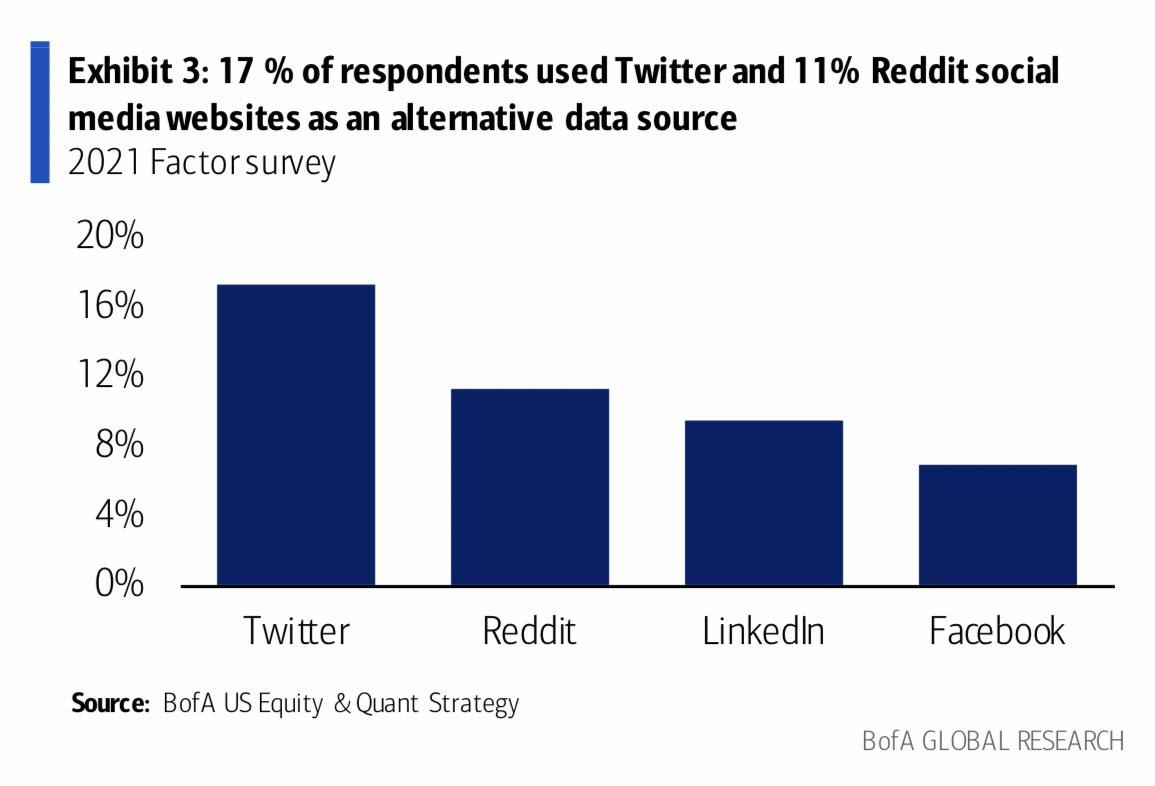
 In a world where Wall Street admits that it increasingly gets its most precious commodity - information - from social networks such as Twitter, Reddit and Facebook...

... it got us thinking about the changing nature of information flow in finance and how it may be impacting markets.

Conveniently, in a recent note from DataTrek's Nick Colas, the former SAC portfolio manager takes a big picture look at just this topic, writing that when he started covering stocks in 1991 back at Credit Suisse, there was no Internet, no smartphones, no “Big Data”, no quarterly earnings conference calls, and no real regulation around how companies disseminated potentially market-moving information. All those things exist today, and according to Colas, the fact that the world's financial decision-makers are flooded with instant (and constant) information may well explain part of why US stocks trade at such premiums to prior cycles. But, as Colas also notes, more information can also make investors overconfident.

Below we excerpt from the DataTrek founder's latest note about the changing nature of information as it relates to the investment process over the last 30 years.

Too Much Information, by Nicholas Colas

We’ll start in late 1991 when these words first came out of a CFO’s mouth: “We should do a conference call after the quarter.” The speaker was Jerry York, then Chrysler’s chief financial officer. The company had just done a “save the firm” equity issuance to fund production of the then-new Grand Cherokee.

He felt that the institutional buyers of that deal should hear directly from the management team right after Q4 earnings were made public. They had taken a big risk buying Chrysler, which at the time was essentially insolvent. Keeping the lines of communication open with this group of investors was important. After all, the company might need to tap them again if the US economy didn’t continue to rebound.

I was at that first call, which was a hybrid in-person/teleconference held at the old Sky Club on top of what was then the Pan Am building in New York City. Some big investors in the deal traveled to New York to attend, and others dialed in. It did what Jerry wanted. Investors got to ask their questions directly and also hear management’s take on the business.

As effective as that form of shareholder communications was, quarterly earnings conference calls only slowly caught on through the 1990s. For many years, analysts more commonly waited for earnings reports to come through on PR Newswire. We would then print those out on a dot matrix printer and call the company’s CFO or investor relations person. We’d then wait for a call back and ask our questions about the numbers. Sometimes it would be the same day, sometimes the next. And if the company didn’t like you, that return call would simply never come.

Other differences between 1991 and now, as far as the investment process goes:

  • No Internet back then, at least as far as its utility to Wall Street. No Google, no Wikipedia, no “Big Data”.
  • No smartphones. If you were on the road and wanted a price quote or the latest news, you called your trading desk.
  • No email – analysts’ reports were printed and mailed/messengered to clients.
  • No Fed press conferences after FOMC meetings. Only Fed Chair Alan Greenspan spoke on policy, and infrequently at that.
  • No regulations requiring analysts to share their views with all clients at once.
  • No regulations requiring that companies disseminate market-moving information broadly. Most just used their favorite Wall Street analysts to update investors on earnings guidance.

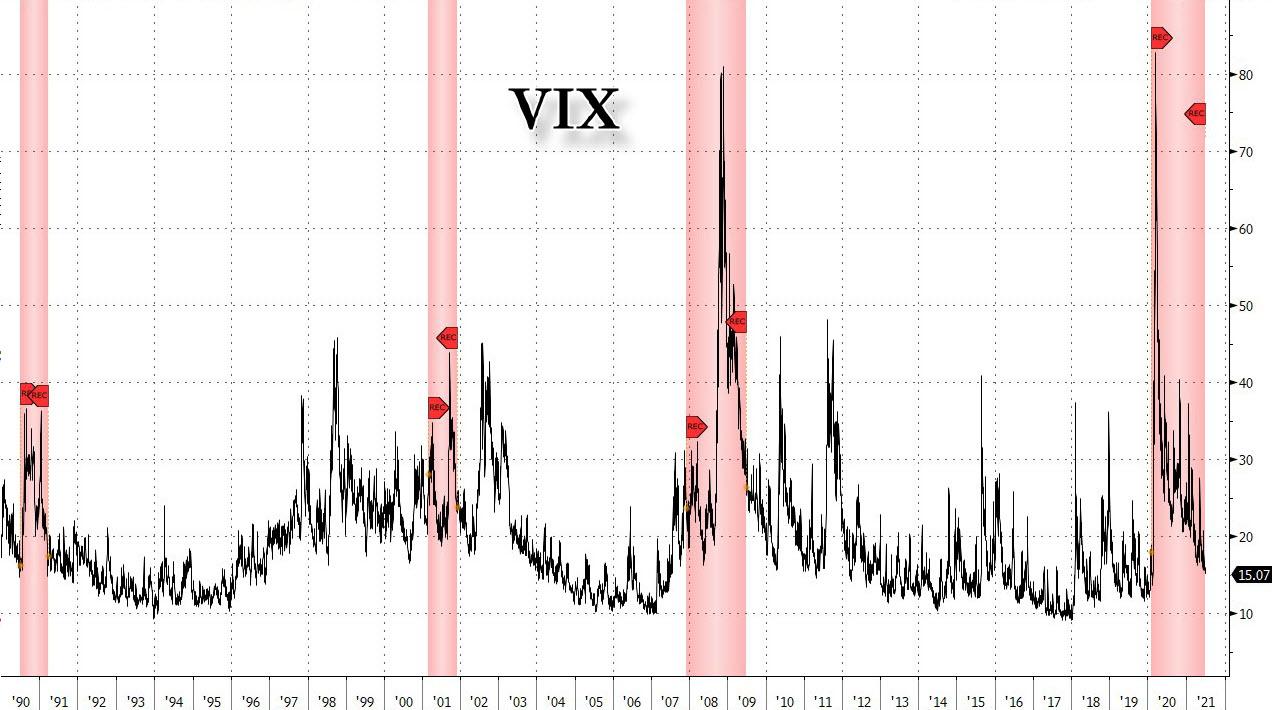
I think about all these differences every time I look at a 1990 – present history of the CBOE VIX Index. Has more, and more-widely available, information made US stocks less volatile? In theory, it should. Volatility is, first and foremost, a function of how much relevant fundamental information is embedded in stock prices.

Here’s that VIX history back to 1990, which shows that the period from 2012 to 2019 did see generally lower volatility than the prior 2 economic up cycles. There were other forces at work, certainly … A long expansion makes for more predictable corporate earnings, which should make for lower equity price volatility. But seeing a VIX that reliably traded below 19 (its long run average) for the better part of a decade is still notable. The truly “different” thing about this period versus the previous ones is the change in the quantity and speed of information flow.

What’s also striking about that chart is that volatility shocks (which always bring lower asset prices) still routinely occur despite the much greater amount of information available to markets and investors. Chalk that up to human nature. Prospect Theory says humans “feel/fear” loss about twice as much as equivalent gains. That asymmetry explains the old trader’s saying that “the market takes the stairs up, but the elevator down” when an unexpected event occurs.

Now, what does all this mean for current US equity market dynamics? Three thoughts:

  1. Everything else equal, more complete information about company/macro fundamentals should make for higher equity valuations now relative to prior cycles. It’s hard to prove statistically that this is the case, but it makes intuitive sense to me.
  2. More information now should also allow markets to reset more quickly after a shock than prior cycles. Imagine if we’d had the Pandemic Recession in pre-Internet 1990 instead of 2020. Would investors have as much confidence in a global economic recovery if they couldn’t see it forming through data from Google Trends, smartphone-enabled mobility tracking, and other 21st century sources of data? I doubt it.
  3. Greater levels of available information can, however, lead to investor overconfidence.

We’ll close out with a cautionary tale about “too much information” that relates to that last point:

  • Back in the 1970s, US researchers ran a study with 8 professional horse racing handicappers as their subjects.
  • They had the subjects list all the horse-specific datapoints they found most useful in predicting the outcome of a race, ranked from most to least important.
  • The handicappers received their top 10 data choices for the horses in an upcoming race and were asked to predict the winners.
  • For the next race, they saw their top 20 choices and made predictions based on that now-larger base of information.
  • Finally, they got their top 40 choices for relevant predictive data and forecast the outcome of the last race.

The surprising finding: while the handicappers’ confidence about their predictions increased with larger amounts of information, their accuracy in picking winners did not.

The lesson, profoundly relevant to investing: use the wealth of information available in a 21st century world with caution. More is not always better.

https://www.zerohedge.com/markets/how-has-flood-information-changed-wall-street-1990