Search This Blog

Wednesday, January 19, 2022

Pfizer awarded a $2B+ modification to contract additional 300M doses of COVID-19 vaccine

 Pfizer Inc., New York, New York, was awarded a $2,047,500,000 modification (P00007) to contract W58P05-21-C-0002 for an additional 300 million doses of COVID-19 vaccine for international donation to low and low-middle income countries. Work will be performed in New York, New York, with an estimated completion date of Sept. 30, 2022. Fiscal 2021 Coronavirus Response and Relief Supplemental Appropriations Act funds in the amount of $2,047,500,000 were obligated at the time of the award. U.S. Army Contracting Command, Aberdeen Proving Ground, Maryland, is the contracting activity.

https://www.defense.gov/News/Contracts/Contract/Article/2904544/

SIEMENS HEALTHINEERS : Raised to Buy by Jefferies

 Jefferies's analyst James Vane-Tempest upgrades his rating from Neutral to Buy. The target price is increased from EUR 62 to EUR 75.

https://www.marketscreener.com/quote/stock/SIEMENS-HEALTHINEERS-AG-42379342/news/SIEMENS-HEALTHINEERS-Raised-to-Buy-by-Jefferies-37593074/

EVOTEC : Upgraded to Buy by Berenberg

 Berenberg's analyst Igor Kim upgrades his rating from Neutral to Buy. The target price is still set at EUR 51.

https://www.marketscreener.com/quote/stock/EVOTEC-SE-436047/news/EVOTEC-Upgraded-to-Buy-by-Berenberg-37593128/

Understanding drug, virus interactions is key to readiness for variants, next pandemic

 New research shows for the first time why the antiviral drug remdesivir works against some viruses but not others—a finding that improves our understanding of how antiviral drugs interact with viruses at a molecular level, which will be key to developing the broad-spectrum therapies needed to battle against the SARS-CoV-2 pandemic and get ready to fight the next one.

The paper, published in the Journal of Biological Chemistry, reveals the inner workings of the  remdesivir against different families of viruses. Remdesivir has been given to more than nine million COVID-19 patients worldwide, and is so far the only small-molecule antiviral drug that has received Health Canada approval to treat the disease.

Until now it was not understood why remdesivir works in lab tests against some viruses including coronaviruses, Ebola, hepatitis C and Nipah virus, but not against others such as influenza and Crimean-Congo hemorrhagic fever virus.

Matthias Götte, professor and chair of medical microbiology and immunology at the University of Alberta, noted that it all comes down to how well the drug tricks the polymerase, which is the replication engine of the virus and the target of remdesivir.

"Remdesivir is very well incorporated by the polymerase of SARS-CoV-2 and not so well by other viruses where it does not work," he said, adding that once it is incorporated, the drug inhibits all viral polymerases tested in the study.

Now that the interactions between remdesivir and several other viruses are better understood, the next step will be to modify the compound to be better accepted by the polymerase of a broader range of other viruses.

"What we would like to have when the next pandemic strikes—and it's not a question of if, it's a question of when—what we need to have on the first day is a broad-spectrum antiviral agent," Götte said.

Timing is everything

Another key to successful antivirals is timing. Clinical trials have shown that remdesivir reduces the risk of hospitalization by 87 percent when it is given early in the course of illness, but because it is currently only available intravenously, it's sometimes given too late to have its full effect, Götte explained. The United States and Europe recently recommended remdesivir for early use in outpatients with mild to moderate disease, and Götte hopes Canada will follow suit. While vaccination remains the most important available tool against SARS-CoV-2, he said remdesivir continues to be effective against the Omicron variant and could play an important role in reducing the burden on our health system.

Götte said the new Pfizer oral antiviral drug that is awaiting Health Canada approval appears to be just as effective as  at preventing hospitalizations when given early. Another orally available antiviral drug, molnupiravir, has just been given FDA approval for use against COVID-19 in the United States, even though it appears to prevent only about 30 percent of hospitalizations. It also shows activity against other viruses, including influenza.

For Götte, the more antiviral options we have available, the better. If a new virus strikes, it will take time to develop a vaccine, and treatments will be needed around the world while we wait. The ideal situation would be to treat patients with more than one antiviral at a time, much like the "cocktails" used for HIV and hepatitis C.

"When you combine , it is more efficacious, more potent, and you reduce the likelihood of the  developing resistance to any one drug," he said.


Explore further

Lab uncovers new mechanism of action against SARS-CoV-2 by antiviral drug remdesivir

More information: Calvin J. Gordon et al, Efficient incorporation and template-dependent polymerase inhibition are major determinants for the broad-spectrum antiviral activity of remdesivir, Journal of Biological Chemistry (2021). DOI: 10.1016/j.jbc.2021.101529
https://medicalxpress.com/news/2022-01-interactions-drugs-viruses-key-readiness.html

Is there risk of long COVID after omicron infection?

 With record numbers of Americans getting infected with the omicron variant now, will a large segment of the U.S. population soon suffer from "long COVID," also known long-haul COVID?


"Unfortunately, it's just too early to know how many omicron infections will lead to long-haul symptoms," says Michael Lin, MD, MPH, an infectious disease specialist and associate professor at Rush University Medical Center. "We're really only about four to six weeks into this really fast-moving surge. It will be important for the  to evaluate, but we don't have good data right now."

What is long COVID?

According to the Centers for Disease Control and Prevention, post-COVID conditions (another name for long COVID) include a range of health problems that people may experience four or more weeks after being infected with the coronavirus. These may be new or ongoing symptoms that can last for weeks or months, including:

  • Shortness of breath
  • Fatigue
  • Cough
  • Headaches
  • Joint and muscle aches
  • "Brain fog"
  • Headaches
  • Stomachaches
  • Sleep disturbances
  • Dizziness
  • Changes in smell or taste
  • Rashes

These long-term symptoms can affect anyone who was infected, not just those who had severe COVID-19. "It is hard to predict who will have persistent symptoms," Lin says.

What would be the impact long COVID from omicron?

Unlike previous COVID-19 variants, omicron causes infections that appear to have a different pattern of illness, specifically less severe disease.

"The reasons for this are unclear," Lin says. "It could be the virus itself from a biological perspective. It also may reflect greater immunity that we have gained through prior infections and vaccines. So there's certainly the possibility that the proportion of people with long-haul symptoms will be different for omicron compared with other variants, but whether that is the case is still unknown."

As scientists collect and analyze more data on people who have been infected by  in the coming weeks, they will have a better understanding of how much impact the variant has had, including differences in potential post-COVID conditions and the populations affected, he says.

To reduce your risk for developing long COVID, Lin suggests that you and your family stay "up to date" on your vaccinations (meaning being fully vaccinated and boosted if you are eligible) and continue face masking, social distancing and hand hygiene per current CDC recommendations.

https://medicalxpress.com/news/2022-01-covid-omicron-infection.html

Potential broad-spectrum anti-coronavirus cocktail therapy eyed

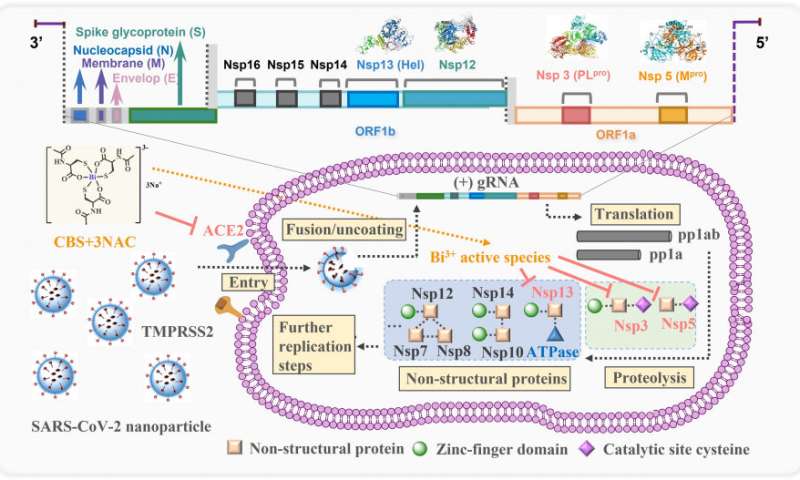
 A research team led by Professor Hongzhe Sun, Norman & Cecilia Yip Professor in Bioinorganic Chemistry from the Department of Chemistry, Faculty of Science, the University of Hong Kong (HKU), in collaboration with Dr. Shuofeng Yuan, Assistant Professor from the Department of Microbiology, Li Ka Shing Faculty of Medicine, discovered that orally administrated bismuth drug colloidal bismuth subcitrate (CBS) together with N-acetyl cysteine (NAC) could be a broad-spectrum anti-coronavirus cocktail therapy

Oral administration of the cocktail suppresses the replication cycle of the virus, reduces  in the lung and ameliorates virus-induced pneumonia in a hamster infection model. Not only could NAC stabilize -containing metallodrugs at stomach-like conditions but also enhance the uptake of bismuth drugs in tissues (e.g. lung) and antiviral potency through oral administration. Bismuth subsequently suppressed virus replication of a panel of clinically relevant coronaviruses, including Middle East respiratory syndrome-related coronavirus (MERS-CoV), Human coronavirus 229E (hCoV-229E) and Severe acute respiratory syndrome coronavirus 2 (SARS-CoV-2) and its alpha variant (B.1.1.7) by inactivating multiple essential viral enzymes. The findings provided insights into the development of inorganic pharmaceutics and a new therapeutic approach for viral infections. The ground-breaking findings have been published in the journal, Chemical Science and a related patent has been filed in the US.

Background

SARS-CoV-2 is the causative agent of the Coronavirus Disease 2019 (COVID-19) pandemic which leads to around five million confirmed cases, including 323,000 deaths globally. Although several vaccines have been approved for emergency use worldwide, increasing cases of people getting infected with COVID-19 are reported despite being fully vaccinated. The emergence of SARS-CoV-2 variants like Omicron and Delta variants associated with enhanced transmissibility and reduced sensitivity to vaccine-induced protection poses a continuous threat to global health. There is an urgent need for safe and effective therapeutic options for COVID-19 which remain scarce.

Remdesivir was the first drug approved by the US Food and Drug Administration (FDA) for the treatment of COVID-19. However, patients can only receive remdesivir treatment via intravenous route as in-patients as the oral formulation of this drug is still not available. For most COVID-19 patients with mild to moderate disease, an orally available anti-SARS-CoV-2 drug would help to facilitate out-patient treatment and reduce the burdens of healthcare facilities. Even though the US FDA issued emergency use authorisation for the oral tablet-form candidates from pharmaceutical giants Pifzer and Merck which reported significant reduction of the risk of hospitalization or death, their antiviral efficacy, long-term safety and worldwide availability spark uncertainties. Therefore, it is of utmost urgency for renewed efforts to evaluate the existing repertoire of FDA-approved drugs on a wider scale and by a novel strategy.

Researchers report potential broad-spectrum anti-coronavirus cocktail therapy
Proposed mechanism of action for orally administrated colloidal bismuth subcitrate together with N-acetyl cysteine as a broad-spectrum anti-coronavirus cocktail therapy. The pan-inhibitory activity of bismuth drugs against various CoVs may stem from their abilities to target multiple viral enzymes in the viral replication cycles. CBS as well as related metallodrugs could inactivate the viral cysteine protease through either targeting the key cysteine residue in the active site (PLpro and Mpro) or structural zinc-finger domain (PLpro and Hel) or even other zinc metalloproteins in human cells (ACE2) that are tightly associated with viral entry. Credit: The University of Hong Kong

Key findings

The research team previously screened a set of metallodrugs and related compounds and identified ranitidine bismuth citrate (RBC, commercial name: Pylorid), a drug in clinical use for the treatment of Helicobacter pylori infection, as a potent anti-SARS-CoV-2 agent both in vitro and in vivo. Pylorid exhibited low cytotoxicity and protected SARS-CoV-2-infected cells with a high selectivity index which demonstrated the high clinical potential of bismuth(III)-drugs or other metallodrugs for the treatment of SARS-CoV-2 infection. The related works were published in Nature Microbiology in 2020.

RBC, as well as other related bismuth (s), e.g., colloidal bismuth subcitrate (CBS) and bismuth salicylate (BSS), acts to precipitate in gastric juice and form a protective coating on the gastric wall, which leads to a hindered absorption in gastrointestinal tract. The findings revealed that NAC could prevent the hydrolysis of CBS in simulated gastric juice buffer (pH 1.2) and sodium bicarbonate buffer (pH 9.2), which form a highly stable and water-soluble Bi(III) thiolate complex, [Bi(NAC)3]. The combined use of NAC could significantly enhance the permeability of bismuth in parallel artificial membrane model, the human intestinal epithelial cancer cell line (Caco-2) model, and a modified ex vivo everted rat gut sac model. The thiolated bismuth could undergo fast thiol exchange with thiol groups in glycoproteins, which potentially increase both the lipophilicity and membrane permeability of bismuth, thus further enhancing the oral absorption of bismuth drugs. The in vivo pharmacokinetics data also consistently demonstrate that compared with the administration of CBS in the absence of NAC, the co-administration of CBS with NAC led to a remarkably improved bismuth uptake profile in both blood and lung tissues.

The studies demonstrated the oral efficacy of CBS+3NAC as well as BSS+3NAC on the suppression of SARS-CoV-2 replication in vivo as evidenced by the substantial reduction of viral loading in the lungs based on viral RNA genome copy number and the ameliorated virus-associated lung pathology after oral administration of CBS+3NAC. The therapeutic dosage of drugs induced only reversible nephrotoxicity and no systematic toxicities. More importantly, CBS+3NAC inhibits the replication of a broad range of epidemic and seasonal CoVs, including SARS-CoV-2 (B.1.1.7), MERS-CoV, and hCoV-229E. The pan-inhibitory activity of bismuth drugs against various CoVs may stem from their abilities to target multiple key viral cysteine enzymes in the viral replication cycles, including papain-like protease (PLpro), main protease (Mpro), helicase (Hel) and angiotensin-converting enzyme 2 (ACE2).


Explore further

Novel antiviral strategy for treatment of COVID-19

More information: Runming Wang et al, Orally administered bismuth drug together with N-acetyl cysteine as a broad-spectrum anti-coronavirus cocktail therapy, Chemical Science (2021). DOI: 10.1039/D1SC04515F
https://medicalxpress.com/news/2022-01-potential-broad-spectrum-anti-coronavirus-cocktail-therapy.html

Australia says no to 16-year-old forklift drivers as remedy to COVID supply chain pain


Australia has ruled out letting teenagers as young as 16 drive forklift trucks to tackle a shortage of workers in coronavirus-hit supply chains, as it scrambles to scoop up millions of home testing kits needed to keep businesses functioning.

A sudden surge in coronavirus cases in recent weeks has seen hundreds of thousands of workers benched by illness or the need to isolate, leading states to quickly lower the isolation requirement to seven days.

Prime Minister Scott Morrison had floated a proposal to lower the minimum age of forklift drivers from 18 to 16, seeking solutions for a shortage of workers now hobbling the economy. Earlier this week he scrapped visa fees for foreign backpackers and students wanting to work and study in Australia.

But most States consider forklift operation to be high-risk work which requires a licence available only to 18s and over, and after a meeting with State premiers on Thursday, Morrison said the proposal had proved a non-starter.

"We had a good discussion today and it is not something that we believe, collectively, we should be pursuing at this time," Morrison told a media conference.

The National Cabinet did agree to consider recognising New Zealand licenses for truck drivers to meet a shortage in that sector.

Morrison's Liberal-National coalition government is seeking ways to loosen regulations in Australia's transport and food sectors to ease supply chain and workforce disruptions that have led to empty supermarket shelves.

The problem has been exacerbated by a widespread shortage of rapid antigen tests (RATs), limiting the ability of workers to test themselves, which has become a hot button issue for voters ahead of an election expected by May.

Addressing criticism the government had acted too late on securing RATs, Morrison had on Wednesday promised to procure up to 52 million kits this month and urged state leaders to drop requirements for workers in most industries to take daily tests.

He was upstaged on Thursday by Victoria Premier Dan Andrews, who announced the state had ordered 166 million test kits, on top of 44 million already on the way.

The government is still having to defend its slow start last year to procuring vaccines, blaming a worldwide shortage of shots and the need for the drugs to be properly approved.

Australia's Therapeutic Goods Administration (TGA) on Thursday provisionally approved Novavax Inc's COVID-19 vaccine, and two oral treatments for vulnerable patients.

The country on Thursday reached the grim milestone of 2 million cases since the start of the pandemic, though deaths have been low by international standards at just over 2,900.

The three most populous states of New South Wales, Victoria and Queensland on Thursday reported 69,600 new coronavirus cases and more than 4,800 patients in hospital.

NSW at least did see the first drop in hospitalisations since mid-December, a possible sign the Omicron wave could be peaking in the state.

https://www.marketscreener.com/quote/stock/NOVAVAX-INC-58256108/news/Australia-says-no-to-16-year-old-forklift-drivers-as-remedy-to-COVID-supply-chain-pain-37592693/